IISPPR

Peace, Justice, and Strong Institutions
Sneha Majhi

Public Awareness of the National Green Tribunal’s Role in Environmental Conservation

This article evaluates the role of the National Green Tribunal (NGT) in promoting environmental justice in India while underlining the urgent need for increased public awareness and community involvement. It outlines the functions and jurisdiction of the NGT, some of the most important legal frameworks, and strategies for increasing public knowledge and involvement in environmental conservation. This article calls for an aware citizenry that can actively participate in the conservation of the environment towards sustainable development through grassroots movements and effective partnerships.

Read More »
Industry, Innovation, and Infrastructure
Sneha Majhi

Misconceptions About Environmental Impact Assessment (EIA)

This article explores common myths associated with Environmental Impact Assessments (EIA), which is an important process in assessing the potential environmental impacts of proposed projects and actions. It clears up misconceptions about the purpose, methodology, and importance of EIA in promoting sustainable development, dispelling the myths regarding its efficiency, scope, and influence on decision-making. By debunking these myths, the article seeks to increase understanding of EIAs and their critical role in environmental protection.

Read More »
Climate Action
Ekta .

The Hidden Costs of Climate Action: Economic Inequality and Just Transition

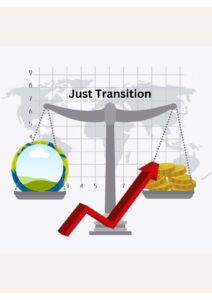
This article examines the concept of a “just transition” in climate action, emphasizing the importance of protecting economically disadvantaged communities during the shift to a green economy. It highlights how these communities bear a disproportionate burden due to limited resources, vulnerability to climate impacts, and reduced access to green technologies. Challenges such as job loss, economic insecurity, and rising living costs further increase inequalities. To address these disparities, the article proposes solutions including targeted financial aid, community-led initiatives, job training programs, and inclusive policy-making. These measures aim to ensure that sustainability efforts are fair and equitable for everyone.

Read More »
Life on Land
Abhishek Kumar

“Microplastics: The Hidden Pollution Crisis of the Modern World”

Introduction The rapid growth of the human population has led to an enormous increase in plastic waste, with plastic becoming integral to human progress (Evode et al., 2021). Despite their versatility, lightweight nature, and convenience, plastic pollution has emerged as a significant environmental challenge. The production of plastic surged from 15 million tons in 1964 to 335 million tons in 2016, and projections suggest that this figure may double within the next 20 years (Su et al., 2022). The World Economic Forum (2016) predicts that by 2050, plastics in the oceans could outnumber fish (Dowarah & Devipriya, 2019). Rivers are increasingly recognized as major conduits for plastic pollution, with studies showing that the Yangtze and Ganges Rivers are leading contributors, discharging approximately 0.33 million tons and 0.12 million tons of plastic waste per year, respectively (Sarkar et al., 2021). Types and Sources of Microplastics Microplastics, defined as plastic particles smaller than 5 mm, originate from both primary and secondary sources. Primary microplastics are manufactured as small particles, commonly found in cosmetics and personal care products, while secondary microplastics result from the breakdown of larger plastic debris (Horton et al., 2017). Common types of plastics include polyethylene (PE), polypropylene (PP), polystyrene (PS), and polyethylene terephthalate (PET), among others (Khalid et al., 2021). The disposal of disposable items, such as water bottles and food containers, has significantly contributed to the microplastic problem. Factors such as washing synthetic textiles, tire wear, and improper waste management exacerbate microplastic pollution, with an estimated eight million tons entering marine systems annually from land-based sources (Hu et al., 2022). Impacts of Microplastics on Ecosystems and Human Health Microplastics pose significant threats to aquatic ecosystems and human health. In marine environments, they can cause mortality in marine mammals and seabirds, with estimates suggesting that plastic pollution contributes to the death of 100,000 marine mammals and one million seabirds annually (Maheswaran et al., 2022a). These tiny particles can accumulate in aquatic organisms, leading to physical blockages in digestive tracts, impaired nutrient absorption, and potential starvation (Hitchcock & Mitrovic, 2019). Furthermore, microplastics can carry harmful pollutants, which may bioaccumulate through trophic transfer, ultimately impacting human consumers (Vendel et al., 2017). The long-term health effects of microplastics in humans are still under investigation, but their potential to disrupt metabolic functions and cause inflammation raises serious concerns (Lin et al., 2024). The presence of microplastics in food and drinking water further highlights the urgency for more research and intervention strategies to mitigate their impact on health and ecosystems (Blackburn & Green, 2022) Microplastics in Recent news: Microplastic pollution is a significant environmental issue today. A recent article published by Business Standard on August 14, 2024, highlights the alarming presence of microplastics in all brands of salt and sugar in India, whether packaged or unpackaged. These tiny plastic particles either originate from the breakdown of larger plastic items or are intentionally produced for use in various products. Unlike other materials, microplastics do not decompose easily; instead, they become smaller when exposed to sunlight. Research indicates that the concentration of microplastics in the oceans has doubled from 1993 to 2019, posing threats to marine life and human health. The environmental research organization “Toxics Link” reported that tests conducted on ten types of salt and five types of sugar, sourced from online and local markets, detected microplastics in every sample. The sizes of these microplastics ranged from 0.1 millimeter to 5 millimeters and were found in various forms, including fibers, pellets, and films. According to the findings, the highest concentration of microplastics was found in iodized salt, with 89.15 pieces per kilogram. The overall quantity in salt samples ranged from 6.71 to 89.15 pieces per kilogram of dry weight, with organic rock salt showing the lowest at 6.70 pieces per kilogram. In sugar samples, the levels of microplastics varied from 11.85 to 68.25 pieces per kilogram, with non-organic sugar having the highest concentrations. A PTI report studies suggest that, on average, Indians consume about 10.98 grams of salt and around ten teaspoons of sugar daily, exceeding official recommended levels. Indians consume microplastics through sugar and salt, with calculations indicating their daily intake. For sugar, with a microplastic concentration of 11.85 to 68.25 pieces per kilogram and an average daily intake of 0.04 kg (about one spoon), the intake ranges from 0.47 pieces (minimum) to 2.73 pieces (maximum). For salt, the consumption ranges from 0.07 to 0.97 pieces, based on similar calculations. When combining both sources, the total daily intake of microplastics for an average Indian ranges from 0.55 to 3.71 pieces. This highlights the concerning presence of microplastics in commonly consumed foods.  Microplastics In water bodies : A recent report published by Down to Earth on April 30, 2024, warns that by the end of 2024, 217 countries are expected to release over 3.15 million tonnes of microplastics into waterways, with China, India, the United States, and Japan accounting for 51% of this pollution. India alone is projected to contribute 391,879 tonnes, making it the second-largest polluter after China. Microplastics, defined as tiny plastic particles under 5 millimeters, primarily originate from sources such as tire wear, textile shedding, and inadequate waste disposal. These microplastics can carry harmful chemicals that contaminate water bodies and pose serious health risks, including neurotoxicity, inflammation, and cancer. In 2024, nearly 291,071 tonnes of harmful chemical additives are expected to be released into waterways, with 40% originating from China, India, Russia, and Brazil. India will discharge 31,483 tonnes of these chemicals, ranking second after China. India’s Ganga River is notably one of the most polluted by microplastics. In 2023, India’s pollution control authority recognized the issue of microplastic contamination in water. Despite this challenge, India is actively involved in global initiatives to combat plastic pollution, including efforts to create an international plastics treaty. At a recent conference, India advocated for domestic waste management reforms and emphasized that countries should manage their own plastic waste. While there has been some improvement in global plastic waste management, plastic waste generation continues to

Read More »
Gender Equality
sanjna senthilkumar

Understanding Victim Blaming in India

Abstract
This paper explores the multifaceted issue of victim blaming in India, drawing upon theoretical frameworks from psychology, sociology, and media studies. It examines the psychology behind victim blaming, the sociocultural factors that contribute to its prevalence, and media’s involvement in it. The paper also discusses the need for stricter media regulations and legal reforms to address this harmful practice.

Read More »
Zero Hunger
Neal Bharadwaj

Hunger and the World: How India and Germany are performing in SDG 2

Introduction
Sustainable Development Goal 2 is part of the United Nations’ Agenda for Sustainable Development 2030, on ending hunger; ensuring food security; improving nutrition; and promoting sustainable agriculture. Hunger has become a joint issue that greatly merges with the foremost public health crises relating to undernutrition, malnutrition, and the emergence of NCDs (FAO 2021, “State of Food Security and Nutrition in the World.”).  Hunger, notably in countries like India, is a multidimensional issue; it is a product of the agricultural system, socio-economic inequalities, and health infrastructure. (National Family Health Survey (NFHS-5), 2021)

This implies that the real test is whether sustainable agriculture meets the short-term concerns of food security and provides guarantees for sustainability in the long run. Regions such as India have witnessed both advantages and disadvantages of the Green Revolution: A movement which significantly boosted crop yields but also led to an overreliance on monocultures such as rice and wheat which resulted in the depletion of soil health and biodiversity. (Government of India, Ministry of Agriculture, 2021. “Green Revolution’s Impact.”)  The need is to revive diverse, nutrient-rich crops such as millets and pulses, and addressing these concerns lays a potential solution to both undernutrition and malnutrition. An important lesson for the world of sustainable food production is Germany’s capability to produce sustainable technology-driven agriculture systems.

The legacy of the Green Revolution: From the 1960s onwards, Green revolution transformed the face of Indian agriculture with the beginning of modern farming practices and high-yielding crop varieties. It began with an emphasis on increasing rice and wheat production, through which, over time, famine was eradicated and the availability of food increased in the country. However with this emphasis on staple grains also came some problems in terms of soil degradation, lower crop diversity, and dependence on chemical inputs such as fertilizers and pesticides. All these now pose a huge challenge to sustainable food production and long-term food security for India.

The policy environment focuses on diversification. Millets have also been recognized as “nutri-cereals” owing to their high level of nutrition, but there is also recognition of their drought hardness and their capacity for growth in marginal soils. (FAO, 2021) Alternately, crops that are less thirsty, such as millets, ragi, and sorghum, can be substituted for water-guzzling crops like rice and sugarcane, mainly in water-scarce areas. Similarly, pulses with high content of protein and micronutrients have been highlighted as essential for the elimination of so-called hidden hunger or lack of nutrients arising from diet diversity.

Read More »
Decent Work and Economic Growth
Roshni Agrawal

Effects of policies on the economy

The goal of both monetary and fiscal policy is to create a stable economic environment with low inflation and positive growth. This environment allows households to feel secure about their spending and saving decisions, and corporations to focus on investment and making profits.

Read More »
Climate Action
Yogita Dhall

Green Finance in India: A New Normal to Sustainable Development

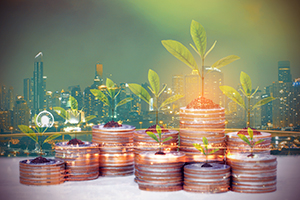
This image beautifully illustrates the concept of green finance, merging the themes of sustainable urban development, financial investment, and environmental stewardship. The juxtaposition of modern buildings symbolizes innovative urban infrastructure, while the representation of money highlights the vital financial support needed for green initiatives. Lush plants interwoven into the design serve as a reminder of our commitment to fostering eco-friendly practices that enhance both economic growth and ecological health. Together, these elements embody the promise of a sustainable future where cities thrive in harmony with nature.

Read More »
Decent Work and Economic Growth
Roshni Agrawal

Global Economy and its impact

The global economy refers to the interconnected economic activities of countries worldwide, shaped by trade, investment, production, and consumption across borders. It involves the flow of goods, services, capital, and labor among nations, facilitated by institutions like the World Trade Organization (WTO) and the International Monetary Fund (IMF). Key features include globalization, economic interdependence, and the rise of multinational corporations.

Read More »
Health
Palak Parashar

Resilience and stress

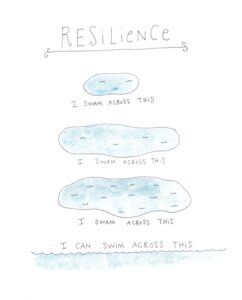
Contemporary Concept of Resilience and Stress Introduction This research has been conducted with respect to the relevance of resilience in managing stress as contemporary society experiences more complicated forms of stressors. Indeed, referring to a process of positive coping with adversity, trauma, or significant stress, stress is defined as the response of the body to outside pressures. Fletcher & Sarkar (2020); González-Torres et al. (2021). Research concentration is on the fact that resilience is not innate and can be developed through interventions as well as environmental exposures (Lee et al., 2020; Wang et al., 2022). In this manner, mastery of stress-regulating mechanisms must be learned in order to survive the modern hectic way of living. Conceptualization of Resilience and Stress Resilience is a process that is fluid, integrating aspects such as emotional regulation, cognitive flexibility, and social support (Poudel & Gautam, 2022; Zhou & Yu, 2020). Stress, on the other hand, is a psychological and physiological response to real or perceived threats. Chronic stress leads to unhealthy outcomes, such as anxiety and depression. It has been well known that high resilience is always associated with low stress levels, and hence it must be some mechanism through which resilience reduces the damage caused by stress (Kim & Park, 2021; Poudel & Gautam, 2022). Role of Resilience in Handling Stress Resilience helps individuals cope with stress more efficiently by providing adaptive coping strategies, such as solving problems and the regulation of emotions. Individuals with elevated resilience are likely to adopt optimistic coping strategies, such as seeking social support, which reduces their perceived level of stress (Smith et al., 2021; Zhou & Yu, 2020). Resilience also enhances cognitive flexibility, in that it provides the individual with the option of changing stressful situations with a more positive explanation of the situation (Rutter et al., 2020; Wang et al., 2022). Another resilience element is emotional regulation, which helps a person cope with the stress process by maintaining psychological stability (Kim & Park, 2021; Smith et al., 2021). Social Support: Buffer for Resilience Against Stress Social support is the most significant resilience factor because it has direct access to any needed emotional and practical resources that help people cope with the stress process. The findings suggest that people who have robust social networks experience more resilient events than others and have limited consequences of stress (Wang et al., 2022; Thompson et al., 2021). Relations that are supportive can lead people to use resilient behaviors such as emotional regulation during stress events (Thompson et al., 2021). Social support is also a kind of resistance to work-related stress and prevents burning out, particularly in stressful professions like healthcare (Li & Zhang, 2020; Bakker et al., 2020). Resilience Training and Interventions There are different types of intervention, including resilience training, whose techniques build up emotional regulation and increase cognitive flexibility, making it easier for a person to face stress. Williams et al. (2021) noted that resilience training decreases stress and fosters mental well-being significantly. Among some of the interventions promising results with their attempt to enhance resilience and reduce stress among individuals, especially for healthcare professionals, are mindfulness-based interventions (Johnson & O’Connor, 2021; Robinson et al., 2020). Within cognitive-behavioral strategies highlighted within resilience training, this can reduce burnout in high-stress jobs (McEwen et al., 2022). COVID-19 Impact on Resilience and Stress The unprecedented stress of the COVID-19 pandemic underlined the role of resilience in maintaining mental health. People with better resilient levels could cope with pandemic-related stress and uncertainty (Sullivan & Ryan, 2021; Lee et al., 2020). Low stress and strong adaptive coping skills such as social support and self-care were also observed in resilient people during the pandemic (Lee et al., 2020; Zhao et al., 2021). Finally, the level of resilience was said to reduce symptoms of anxiety and depression in dealing with a crisis (Zhao et al., 2021; Sullivan & Ryan, 2021). Conclusion Resilience is vital to stress management as it encompasses regulation of emotions, cognitive flexibility, and social support (Fletcher & Sarkar, 2020; Kim & Park, 2021). Stress reduces not only the negative effects of stress on mental health but also improves adaptive coping mechanisms to enhance wellness (Wang et al., 2022; Smith et al., 2021). Resilience training along with mindfulness-based interventions also proved to have a highly positive influence in high-stress conditions on affected individuals, hence reducing stress and burnout prevention (Johnson & O’Connor, 2021; Robinson et al., 2020). Resilience was further stressed on due to the COVID-19 pandemic, which navigates crises while maintaining mental health (Zhao et al., 2021; Lee et al., 2020). References  1. Fletcher, D., & Sarkar, M. (2020). Psychological resilience: A review and critique of definitions, concepts, and theory. European Psychologist, 25(4), 231-243.  2. González-Torres, M., et al. (2021). The role of stress in mental health. Journal of Clinical Psychology, 77(2), 456-467. 3. Poudel, S., & Gautam, A. (2022). Resilience as a predictor of academic success and well-being. Psychology Research and Behavior Management, 15, 231-244. 4. Zhou, Y., & Yu, M. (2020). The role of resilience in managing stress: A systematic review. Stress and Health, 36(3), 207-221. 5. Kim, J., & Park, S. (2021). Resilience in the face of adversity: Stress management in clinical settings. Journal of Mental Health Counseling, 43(1), 42-55. 6. Rutter, M., et al. (2020). Resilience as a process in stress management. Psychological Review, 127(4), 622-638. 7. Smith, J., et al. (2021). Emotional regulation as a mediator in the resilience-stress relationship. Emotion, 21(5), 936-949 8. Bakker, A. B., et al. (2020). Proactive coping and resilience in the workplace. Journal of Occupational Health Psychology, 25(6), 419-433. 9. Wang, X., et al. (2022). Social support and resilience during the COVID-19 pandemic. Journal of Affective Disorders, 296, 21-29. 10. Thompson, R., et al. The role of social support in promoting resilience. Psychology and Aging, 36(1), 48-62. 11. Li, Q., & Zhang, H. The role of resilience in burnout and stress: A study on Chinese workers. Occupational Health Psychology Review, 30(2), 101-118. 12. Dawson, A., et al. University students’ longitudinal academic

Read More »