

IISPPR

Health
Kimneicheing Houkip

Neuropsychology of Opioid Use Disorder

By Kimneicheing Houkip Neuropsychology of Opioid Use Disorder Opioids are a sort of medication used to treat and manage pain. (Cohen B., 2023) They are composed of chemicals that may be found in natural, semi-synthetic, or fabricated states. These chemicals interact with receptors in the body and brain and act to reduce pain perception. Opioids are generally prescribed, therefore, to treat acute and chronic pain. They are used also in active-phase cancer treatment, palliative care and end-of-life care. While reducing the perception of pain, opioids bring about an extreme sense of euphoria which is a major cause of its addictive nature.  However, once the pleasurable feelings fade out with time after continuous use, users become tolerant of them and try to regain that euphoria or “high” by taking them more frequently and in larger amounts. This then leads to varying degrees of addiction and cessation results in withdrawal symptoms.  The American Psychological Association specifies that Opioid use disorder (OUD) consists of a pattern of opioid use that is problematic and leads to significant distress and dysfunction. Symptoms include failure or inability to quit, misusing more than intended, and excessive cravings. It may consist of tolerance for the drug and showing symptoms of withdrawal.   Prevalence A report given by The Ministry of Social Justice and Empowerment, Government of India titled, “Magnitude of Substance Use in India, 2019.” has found that opioid use in India is 2.1% of the country’s population which is three times the global average. (Om Prakash Singh, 2020) Opioid usage varies across Indian states with Uttar Pradesh having the highest number of people with opioid use disorders. Mizoram and Nagaland stand as the worst affected states. (Singh, Rao, 2021)  Singh & Rao notes that India may be “going through an opioid epidemic” (Singh, Rao, 2021) This is no surprise as the country is located between the world’s two main illicit opium-producing regions, the “Golden Crescent” and the “Golden Triangle,” making it susceptible to being the route and destination of the substances. Moreover, India is itself one of the biggest legal opium producers which is why it is no surprise that India has a well-established pattern of opioid drug use. As a result, opioid dependence is a significant problem in many areas of India. (United Nations Office on Drugs and Crime, n.d. 2005) Causal Factors Though the exact cause of opioid misuse is still unknown, factors that may contribute to it include family history, environmental and lifestyle factors, as well as how opioids affect a person’s brain. The use of drugs causes chemical changes in the brain, behaviour, and motivational hierarchy in a process called neuroplasticity (Gold et. al, 2020) Neuroplasticity is “the ability of the nervous system to change its activity in response to intrinsic or extrinsic stimuli by reorganising its structure, functions, or connections.”(Matt Puderbaugh; Prabhu D. Emmady., 2023)  Neurotransmitters like dopamine can be lacking in patients, which increases their propensity to seek out external sources of endorphins. Given that these drugs bring about intense feelings of pleasure and act as burst dopamine by triggering the same biochemical processes of reward in the brain,  people may use opioids to self-correct this shortcoming. Constant rewards-seeking behaviour like long-term self-administering opioids leads to a decrease in dopamine receptors, leading to a decrease in sensitivity to rewarding stimuli.(Wise & Robble, 2020; Koob, 2020) Moreover, it leads to alterations in brain functions with negative side effects such as dysphoria, anhedonia, and depression. (Lee et. al, 2023) Individuals with substance use disorder find it extremely challenging to maintain abstinence as it involves resisting powerful cravings and habitual behaviours.(Beaulieu et al. 2021; Parvaz et al. 2022) Aversion plays a role in addiction where users drive out unpleasant feelings (withdrawal symptoms) to avoid discomfort. (Wise; Robble, 2020) Several researches show that a patient has a greater likelihood to develop an opiate use disorder (OUD) if they have first-degree relatives who suffer from a substance use disease (SUD) Patients with opioid use disorders who are exposed to opioid usage may be more susceptible to developing drug addiction disorders. (Dydyk et. al. 2024)  Peer relationships or a doctor’s prescription for a prior injury may have an environmental influence on opiate addiction. As well as individuals with histories of childhood trauma mental distress, and abuse, patients with comorbidities are prone to engage in substance misuse (Cruden and Karmali 2021) Opioid dependence can be physical, mental, or even both. According to studies, even the first dose can have physiologic effects that increase a person’s risk of developing an opioid use problem. Users can become physically dependent on opioids in as little as 4 to 8 weeks of opioid use; with the body beginning to struggle to function without them and an abrupt cessation leading to the experience of withdrawal symptoms. Because these sentiments are so strong, utilising opioids to prevent withdrawal is strongly driven by them (Wise; Robble, 2020) Effects The use of opioids in the United States (U.S.) and other countries led to a large number of opioid use disorders (OUD). A recurrent disorder driven by neural circuits that inflict detrimental emotional states and trigger relapses (Strang et al., 2020) and could lead to overdose (Schiller et al., 2021). Patients with opioid use disorder often show cognitive deficits (Blackwood, 2021) Opioid use affects memory (verbal, episodic,  and working memory),  fluency, and decision-making abilities. Studies show that toxic levels of oxycodone, which is a type of opioid, can cause damage to the brain of both children and adults, with MRI scans exhibiting grey and white matter defects. OUD also leads to damage to neuronal axons. (Blackwood et. al, 2021) Recent studies delve into certain brain cells, called glial cells, that affect addiction and worsen opioid effects through inflammation, disrupting brain balance and increasing pain sensitivity.  (Spencer et. al, 2022) Addiction impacts the brian way beyond the reward system to severely damage the prefrontal cortex (PFC) which is responsible for higher-order functioning (Cecili et. al, 2022) Mortality in opioid dependence is generally caused by respiratory depression, and a


Read More »
Life on Land
Sneha Majhi

Earth Overshoot Day and Biodiversity Loss: A Symbiotic Crisis

The loss of biodiversity and Earth Overshoot Day are intertwined crises based on human over-consumption of finite resources. Overconsumption of finite resources causes an imbalance in the environment, health issues, and economic instability. Some of the vital mitigating actions are the use of renewable energy and sources, sustainable agriculture, and the restorative choices of 30×30. It is thus necessary that public awareness and conducive government policies be a prior aspect to encourage sustainable behavior. This involves not only rethinking our relationship with the earth but also a relationship that has reduced consumption and, at the same time, is oriented to prospects of conservation. Immediate action is essential to prevent consequences worsening, making the embrace of sustainability necessary for a worthwhile future of both humankind and Earth.

Read More »
International Relations
Sifat Patel

International Labour Standards for Protecting Migrant Workers: A Global Perspective.

This article delves into the role of international labour standards in protecting migrant workers, with a focus on frameworks developed by the International Labour Organization (ILO) and the United Nations (UN). It highlights key conventions like ILO’s Migration for Employment Convention and the UN’s International Convention on the Protection of the Rights of All Migrant Workers. Additionally, it addresses challenges in implementing these standards, particularly in regions like the Gulf Cooperation Council (GCC) and the European Union, while advocating for a core rights approach to enhance migrant worker protections globally.

Read More »
Good Health and Well-being
Abhishek Kumar

Air Pollution and Human Health

By Abhishek Kumar Abstract:  Air pollution is a major issue affecting both climate change and public health, leading to increased disease and mortality. Key pollutants like particulate matter (PM), ground-level ozone, nitrogen oxides, sulfur dioxide, volatile organic compounds (VOCs), and heavy metals can cause serious health problems, including respiratory and cardiovascular diseases, cancer, and central nervous system disorders. Climate change exacerbates the spread of infectious diseases and natural disasters. Addressing this crisis requires public awareness and a collaborative effort from scientific experts and organizations to find sustainable solutions. Introduction Air pollution” refers to the harmful impact of chemicals, gases, or particles on the atmosphere. These contaminants are so dangerous that they contribute to millions of deaths and health issues every year. In addition, they can harm living organisms, including crops, animals, and plants. Air pollution also leads to problems such as haze, acid rain, cancer, respiratory diseases, and the depletion of the ozone layer, which exacerbates global warming. Studies show that air pollution impairs children’s cognitive abilities in school, reduces the working hours of farm laborers, and negatively affects overall economic productivity (Almetwally  et al., 2020). Air pollution serves as a key driver of climate change and is viewed as one of the most pressing environmental challenges that humanity faces in the twenty-first century. Its impacts are far-reaching, affecting ecosystems, human health, and the stability of our climate, making it a critical issue that requires urgent attention and action (Matson 2001). The primary reason for conducting studies on air pollution is its significant impact on health. Air pollution has serious and harmful effects on well-being, leading to various health issues and illnesses. As a result, it has become a major global threat to human health and overall welfare, highlighting the urgent need for research and intervention in this critical area (Kampa and Castanas 2008). The pollutants can lead to discomfort, various diseases, and millions of fatalities annually. Additionally, they can harm vegetation and affect other living organisms, including animals and food crops. Air pollution can affect the quality of soil and water bodies by contaminating precipitation that falls into these environments (Change, 2023) . The Air Quality Index (AQI), established by the Central Pollution Control Board (CPCB), measures daily air pollution levels and assesses their short-term health impacts. It is based on standards set by the United States Environmental Protection Agency (USEPA) and focuses on pollutants like PM2.5 or PM10, requiring data from at least three pollutants. The AQI is divided into six categories to help people understand how air quality affects health. An AQI of 0-50 is considered excellent, with minimal risk to health, while 51-100 indicates moderate air quality with some concern for sensitive individuals. AQI levels between 101-150 are classified as unhealthy for sensitive groups, such as those with lung disease, the elderly, and children. When AQI reaches 151-200, it becomes unhealthy for everyone, with more severe effects on vulnerable groups. Levels between 201-300 are very unhealthy, posing serious health risks to all. An AQI above 300 is hazardous, signaling emergency conditions that can affect the entire population. Air pollutants types Air pollutants are classified into four primary categories. Gaseous pollutants, such as sulfur dioxide (SO2), nitrogen oxides (NOx), carbon monoxide (CO), ozone, and volatile organic compounds (VOCs), are emitted by vehicles and industrial activities, leading to problems like smog, acid rain, and respiratory diseases. Persistent organic pollutants (POPs), including substances like dioxins and PCBs, are long-lasting compounds that pose health risks through bioaccumulation and are produced by industrial processes and waste incineration. Heavy metals, such as lead and mercury, are toxic elements released in small amounts from vehicles and industries, but they can still cause significant harm to human health. Lastly, particulate matter (PM) consists of microscopic solid or liquid particles suspended in the air, which can cause respiratory issues when inhaled (Kampa & Castanas, 2008) .  Sources of Air Pollution  Air pollution stems from various sources: mobile sources like vehicles, stationary sources such as power plants and factories, area sources including agricultural and urban areas, and natural sources like wildfires and volcanoes. Each contributes uniquely to air quality degradation, highlighting the diverse origins of pollutants in the atmosphere. Air pollution is a major global issue, causing a significant number of deaths each year. The World Health Organization reports that around 2.4 million people die annually due to air pollution, with indoor pollution responsible for 1.5 million of these fatalities. In the U.S., over 500,000 deaths per year are linked to inhaling fine particles from pollution. Studies reveal a strong connection between pneumonia-related deaths and vehicle emissions. Remarkably, air pollution claims more lives globally than traffic accidents. It also worsens asthma, respiratory, and cardiovascular diseases, while reducing life expectancy. However, advancements in diesel engine technology offer the potential to save many lives and reduce hospitalizations annually.(Sharma et al., n.d.). Impact on Human health Air toxics pose serious health risks across various organ systems, including the respiratory, cardiovascular, neurological, and dermatological systems. Prolonged exposure increases the risk of cancer and disproportionately impacts vulnerable groups, such as children, the elderly, and individuals with pre-existing conditions. Respiratory conditions like asthma and lung cancer are commonly linked to pollutants such as particulate matter and ozone. Cardiovascular problems, including heart disease and hypertension, are closely associated with air pollution, particularly traffic-related pollutants like nitrogen dioxide. Neurological and psychiatric disorders, along with long-term effects such as skin aging and potential carcinogenic risks, have also been observed. There is strong evidence suggesting a link between air pollution and autism spectrum disorders, possibly due to endocrine disruption (Ghorani-Azam et al., 2016). Air pollution is a major global issue, causing a significant number of deaths each year. The World Health Organization reports that around 2.4 million people die annually due to air pollution, with indoor pollution responsible for 1.5 million of these fatalities. In the U.S., over 500,000 deaths per year are linked to inhaling fine particles from pollution. Studies reveal a strong connection between pneumonia-related deaths and vehicle emissions. Remarkably, air pollution claims

Read More »
Climate Action
Sneha Majhi

Carbon Accounting: Measuring and Managing Emissions for a Sustainable Future

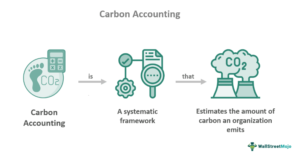
This post clearly outlines a methodology for carbon accounting to support effective calculation and control of greenhouse gas emissions by organizations. Firstly, it defines the organizational boundaries and identifies sources of emissions in three scopes: direct, indirect, and supply chain emissions. The methodology focuses substantially on systematic data collection as well as relevant application of emission factors to all entities with consequent calculation of the total carbon footprint in CO2e. Additionally, it requires that reduction targets are brought down, continued tracking and reporting, as well as stakeholder engagement, meaning that companies need to meet their compliance in addition to becoming better at enhancing their efforts towards sustainability. By so doing, companies will be able to make systematic contributions to mitigating climate change while furthering environmental responsibility.

Read More »
Blog
Theresa Jose

Delhi’s Monsoon: An Urban Nightmare

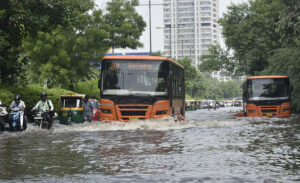
By Theresa Jose Delhi is a very densely populated city and there has been a growth of informal settlements throughout the city which has led to many urban challenges including waterlogging. These challenges mainly arise due to poor urban planning by the civic authorities which is creating a nightmare for the people living in the city. Especially in the areas which are the main hubs of the UPSC coaching centres like Karol Bagh, Patel Nagar and Rajinder Nagar which have recently been in the media for the concerns raised by the residents and people on the issues of exposed open wires, overflow of manholes and sewage and the problem of high rents but with poor facilities. This lack of quality living conditions has increased the demand for affordable study spaces for students, resulting in many libraries being set up in basements (Bhandari, 2024). So when the new centre of Rau’s IAS was established in the Old Rajinder Nagar on the request of the students they also set up a library that was illegally operating in the basement of the building which was supposed to be utilised for parking and storage (Menon, 2024).  On July 27th night, heavy rainfall led to waterlogging in Old Rajinder Nagar. The high force of water led to it entering the basement of  Rau’s IAS Study Circle in Old Rajinder Nagar and this led to flooding in the library which had 30 students in it but only 27 managed to escape or were rescued by the fire department, National Disaster Response Force (NDRF) and Delhi Police while the 3 UPSC aspirants who were trapped lost their lives (Tewari, 2024; ET Online, 2024). The gross negligence by the MCD officials was brought to light by the revelation that a month before this tragic incident a student from the coaching centre filed a complaint regarding the illegally operating library in the basement but the authorities did not take any appropriate actions (Herald, 2024). The negligence of the MCD officials was strongly reprimanded by the Delhi High Court  (The Hindu Bureau, 2024). In the aftermath, immediate actions were taken by the Municipal Corporation of Delhi (MCD) including shutting off at least 13 coaching centres which were violating the rules under the Delhi Master Plan 2021 which mandates statutory clearance to use the basement and was strongly against using the basement for commercial purposes (Sharma, 2024; Tewari, 2024).  In Old Rajinder Nagar the property owners construct buildings which cover the drains which is also a common issue in Delhi as revealed by the MCD’s investigation. This obstruction by buildings on the drains has made it difficult to clean the drains and also affects the flow of stormwater which results in waterlogging. So there is a need to implement legislative frameworks like the ‘Storm Water and Drainage Act for the NCT of Delhi’ which emphasizes preventing any future illegal barrier on the city’s drainage system (Press Trust of India & Business Standard, 2024). The Coaching Centre tragedy is alleged to be mainly due to the inefficient drainage system and the violation of the building laws but this is not an isolated incident. 27 people’s lives were claimed due to electrocution past year as per the reports  (Ujwal Jalali et al., 2024). On July 22nd, a UPSC aspirant was electrocuted when he slipped while walking on a waterlogged street of Patel Nagar and held on to an iron gate which was in contact with an exposed motor wire (Tewari, 2024). The city also witnessed an incident where two fires broke out in Mukherjee Nagar last year which resulted in 61 students of a caching centre injured, the latter incident led to the fire department conducting a survey which showed that 461 coaching centres did not have any proper safety measures (Tewari, 2024). All this put the city’s civic body authorities in the spotlight for their failure to address the urban crisis that has been affecting the city’s residents and their lack of action against the violation of building regulations.  The solution to the recent waterlogging in the capital city when there are heavy downpours is not just by desilting the drains which is just a temporary solution but also through revamping the city’s drainage system which could help prevent the recurring waterlogging in the long term. However, the construction of a new drainage system that has to be suitable for the densely populated and unplanned colonies of Delhi could be a task that needs at least 4 years to be fulfilled and large investments (Mathur, 2024). When it comes to funds required to implement the new project the city authorities don’t have enough because of the freebie culture that is supported by the government which keeps the revamping of the city’s infrastructure on hold and this action of the government was strongly reprimanded by the Delhi High Court. Presently the existing drainage system of the city faces problems like outdated design with the sewerage system being combined and the inability of the system to handle heavy rains as the existing one’s designed to only handle 50 mm of rainwater within 24 hours in a city which has witnessed a downpour of 228 mm of rainwater in a day which underscores the immediate need to design a drainage system which could help handle more water and lessen the vulnerability of the city to the monsoon waterlogging crisis (Ujwal Jalali et al., 2024). The sewerage system is of two types, combined and separate sewerage with the former which carry both the stormwater and wastewater together while the latter carries both separately. Currently, separate sewage systems are in demand as they help in controlling the stormwater separately, prevent combined sewer overflow and stop sewage from getting into the environment. This could help in avoiding flooding during heavy downpours in low-lying areas, even after this flooding occurs it would just be rainwater and not sewage waste which could spread diseases (Stauffer & Spuhler, n.d.). However, there is a downside to the construction of a separate

Read More »
Blog
Theresa Jose

The Unseen Victims: Environmental Casteism and India’s Marginalized

By Theresa Jose India is united by its diverse cultures, languages and religions but divided by a caste system. This is a deeply ingrained social structure that determines occupation, status, and access to resources. While the Brahmins occupy the highest position, Dalits (formerly known as untouchables) occupy the lowest and they face great discrimination due to their position in the social hierarchy. Consequently, the ramifications of caste extend beyond the socioeconomic disparity but also to how citizens experience environmental challenges like climate change and natural disasters. The marginalised communities are disproportionately impacted by environmental action while the discrimination and exploitation they face due to environmental injustices are overlooked by mainstream society. This harsh reality of the marginalised communities especially the Dalits in India gives rise to the phenomenon of Environmental Casteism which addresses the intersection between caste-based discrimination and environmental injustice. Environmental injustice perpetuates unequal access to clean water and air which results in heightened exposure to pollution and other hazards by the marginalised communities compared to the higher castes within the society. A major factor contributing to these injustices is spatial segregation. The marginalised groups are often relegated to the peripheral spaces away from the affluent neighbourhoods and they are exposed to the harmful effects of industries, factories and landfills where they reside and work. Consequently, they bear a disproportionate burden of health risks and life-threatening conditions.  Despite the illegality of caste-based discrimination, it persists in many parts of the country. The marginalised individuals remain oppressed with them being forced into dehumanising jobs like manual scavenging. Despite the skills, they face obstacles to alternate jobs due to caste prejudice. This points out the inability of the marginalised section to escape the caste system and the immediate need for a societal transformation (Taylor, 2022). Manual scavenging exemplifies environmental casteism as it addresses the intersection between caste-based discrimination and environmental injustice. Despite being illegal still, people born into a lower caste were forced to do this dehumanising work. The Nara-Maveshi movement held in the 1950s and 1960s was the Chamar caste’s protest to the traditionally assigned jobs which were dehumanising tasks. However, their wish for alternate jobs where met with opposition, including economic sanctions and denial of employment opportunities (Sharma, 2022). Consequently, this has led to perpetual poverty, poor health and social exclusion for Dalits whose issues remain invisible to the mainstream society. To break free from this cycle of oppression there is a need for a transformative shift in societal attitudes and action. The marginalised communities have long struggled to get equal access to clean water. The Mahad Satyagraha of 1927, led by Dr. B.R Ambedkar was one of the earliest civil rights movements. Dalits gathered at the Chavdar Lake in Mahad, Maharashtra to assert their moral and legal right to access water and challenge the discriminatory norms practised by the higher caste. Despite the victory of the Mahad struggle the present reality shows that the marginalized communities still face difficulties in securing equal water access (Kashwan, 2024). In North Gujarat, the marginalised communities have historically relied heavily on groundwater for their needs. However, the construction of tube wells that are often built on private lands owned by upper castes has exacerbated water scarcity. These communities, unable to own land struggle for groundwater as it is now in the control of the upper caste who are known as “Water Lords”. This shows the reality of how social structure continues to dictate access to fundamental resources and perpetuate inequalities and exploitation. The very source that sustains life becomes a tool of oppression which fuels environmental injustice (Kashwan, 2024).  As discussed earlier, deep-rooted caste-based discrimination points out that Environmental casteism remains a prominent issue in our country. This phenomenon mainly arises due to the absence of Dalits in Environmental studies as the majority of the researchers and scholars are from the upper castes which leads to them overlooking the experiences and perspectives of the marginalized  (Waghre, 2023). Srilata Sicar, in a lecture on Environmental casteism, points out that people when discussing environmental policies and caste justice in India ignore the impact of the caste system which is to be considered while addressing the environmental issues. She also explains the idea of Bourgeoisie environmentalism, a phenomenon where the upper class are concerned about the environment and tries to practice eco-conscious activities but tends to overlook the setting up of businesses and industries, the major polluters which exacerbate this issue. The marginalised communities are disproportionately affected by disasters due to the lack of well-planned infrastructures which result in loss of houses, livelihoods and even loss of lives (Chhaya, 2024). Ignoring the caste perspectives’ interaction with the environment exacerbates structural inequalities as marginalized communities are denied their fundamental right to access resources. According to Suprakash Majumdar, a Pulitzer-Grantee Journalist, climate-related disasters get categorized based on who gets affected by it, if it is the low-income areas and people from low-castes who get affected it may be overlooked but if it impacts the upper-castes then it is declared as a disaster by the government. The triangle model of the caste system is still practised when it comes to urban planning, the Brahmins reside in the safest area and the lower castes live in the periphery of the city which makes them the most vulnerable to climate destruction (Chhaya, 2024). For instance, the cyclone that struck Orissa and Tamil Nadu impacted the landless Dalits, and farm workers the most as these people were the ones who were living on the outskirts of the villages, and were not provided with relief materials which shows how caste can influence even the distribution of compensations (“Environmental Cateism”, 2021). The lack of representation of Dalits in influencing environmental policies exacerbates their issues with their needs being overlooked by the government. So it is important to acknowledge the intersectionality of caste-based discrimination and environmental injustices so that it could lead to a more equitable society.  The influence of caste in ecological experiences was first recognised by Gati Omvedt an anti-caste scholar,

Read More »
Blog
Theresa Jose

Protection of Right to Life and Livelihood: The Landmark Judgement of Olga Tellis Case

By Theresa Jose Introduction India, saw large migrations from villages to cities by poor people seeking better job opportunities, these cities do not provide affordable housing for these groups and they are forced to settle on pavements. The main reason for the lack of housing is the lack of strict laws for the state to provide affordable housing to the poor which results in the creation of slums and the residents live every day in fear of eviction by the authorities as this could result in homelessness and deprivation of their livelihood (Thara et al., 2022). It is important to realize that these dwellers are the pillar of the city as they contribute immensely to the development of the cities (Tellis, 2015), despite the important role they play in the city, they are pushed out of the city when their labour is not necessary anymore. This paper will look into the case of Olga Tellis V Bombay Municipal Corporation, 1985 and the way the judiciary took action on the lives of the inhabitants of pavement and slum dwellings. The main issues raised due to the process of forced eviction without prior notice and rehabilitation are the violations of Articles 19(1)(e) which provides the right to reside anywhere within the country, 19(1)(g) which provides the right to practice any profession, occupation, trade or business and Article 21 which talks about the protection of life and personal liberty which shall not be deprived for any individual except according to the procedure established by the law (Olga Tellis et al. V Bombay Municipal Corporation et al.,1985). These Fundamental Rights will be analyzed through this paper in relation to the landmark Olga Tellis case (1985) to understand the rulings put forward by the court on the pavement and slum dwellers living on public lands and how the court viewed the right to life and livelihood of the slum dwellers through this case and how it impacted the future cases related to the informal settlers and the need for rehabilitation or resettlement.  Case Law and Analysis  The State of Maharashtra and the Bombay Municipal Corporation (BMC) in 1981 jointly imposed an order on the pavement dwellers to evict them by force from Bombay and drive them out to their place of origin or force them to move anywhere outskirts of the city (Olga Tellis et al. V Bombay Municipal Corporation et al.,1985). The municipal commissioner of the BMC under section 314 of the Mumbai Municipal Corporation Act, 1888 has the power to remove the encroachers without prior notice (Garg & Maheswari, 2020).  So the announcement of eviction of these pavement dwellers was justified by the CM of Maharashtra giving the reason that the government did not want these dwellers to live in this inhumane condition during the monsoon even though these dwellers have been residing here for many years, but as the government failed to give them rehabilitation this justification was not expected by the pavement and slum dwellers and was met with resistance. This led to Olga Tellis, a journalist filing a Public Interest Litigation (PIL) on the issue of the forced eviction of the pavement dwellers conducted by the BMC, this is the 1985 landmark Supreme Court judgement, Olga Tellis Vs Bombay Municipal Corporation (BMC) (Olga Tellis et al. V Bombay Municipal Corporation et al.,1985; Thara et al., 2022).  The petitioners were Olga Tellis and others who resided in these dwellings and the respondents were the BMC and others, who initiated the demolishing of these dwellings, this action was challenged by the petitioners as a violation of Fundamental Rights Articles 19 and 21 of the Constitution of India, a deprivation of their livelihood and right to life. Olga Tellis in a 2016 interview gave her views on the injustices faced by the slum dwellers of Bombay, she explained that “These dwellers were refugees of bad economic policies as it gave importance to the development of urban areas rather than the villages that were neglected which result in these people coming to Bombay looking for work” (Olga Tellis, 2016). As these people were not able to afford better housing facilities they settled in these pavements and slums near their workplace as it saves time and cost of commuting. The arguments given by the petitioners were that eviction and demolition of these dwellings lead to deprivation of their livelihood as they will lose their jobs when they are forced to be evicted from the pavements and live far from their workplace which is a means to survival (Olga Tellis et al. V Bombay Municipal Corporation et al.,1985). They also argued that without protecting their right to livelihood, protection of their right to life is futile (Garg & Maheswari, 2020). The respondents argued that these pavement dwellers have no right to reside on public property and if the BMC want to evict them they can do it as the petitioners are encroaching on the public space which is a violation of the municipal laws. The respondents argued that the fundamental right article 19(1)(e) should not be used as a permit to trespass on public spaces (Naukarkar, 2021). The BMC’s eviction process was carried out without providing prior notice or any proper rehabilitation to the pavement dwellers which deprived them of their right to livelihood which led to the endangerment of their right to life. The pavement dwellers’ rights under Article 21 were violated as they were by force evicted from their settlements where they were living for a long time without providing any kind of resettlement, this is a violation of the right to livelihood and life (Naukarkar, 2021). Also, their rights under articles 19(1)(e) and 19(1)(g) were also violated through this process of eviction by the authorities as their freedom to reside and do the job which has been their means of sustenance was taken away from them. The judgement of the Olga Tellis case led to expanding the ambit of the right to life under Article 21 by adding the right to livelihood

Read More »
No Poverty
VASUNDHRA B

Changing scenario of poverty centric policies in India

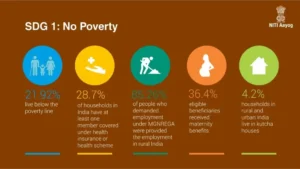
By Vasundhra B A Review of India’s Policy Initiatives and Research Gaps in Achieving Sustainable Development Goal 1 Sustainable Development Goal 1 (SDG 1) aims to “end poverty in all its forms everywhere” by 2030. The objective of SDG 1 is to eradicate extreme poverty, reduce poverty by at least half, implement social protection systems, ensure equal rights to economic resources, and build resilience to environmental, economic, and social disasters. In view of that, India has taken various policy initiatives to address SDG 1. The National Institution for Transforming India (NITI Aayog) is monitoring the progress of SDG 1 in the country. Some of the major initiatives include the Rashtriya Swasthya Bima Yojana (RSBY), a health insurance scheme for the poor. The government has also focused on slum rehabilitation and crop diversification for poverty alleviation. Notable case studies include the Pradhan Mantri Jan Dhan Yojana (PMJDY), which has significantly increased financial inclusion by opening millions of bank accounts for the unbanked, and the Direct Benefit Transfer (DBT) scheme, which aims to reduce leakages in welfare schemes by transferring subsidies directly to the beneficiaries’ bank accounts. However, challenges such as lack of awareness, poor implementation, delayed wage payments, and limited access to healthcare have hindered the success of these initiatives. The review highlights the need for better monitoring, improving infrastructure, market linkages, and financial support for sustainable livelihood programs. Additionally, it emphasizes the importance of research on income diversification strategies, improving the quality of veterinary services, and addressing discomfort and distress during slum rehabilitation.  Historical Context of Poverty Alleviation in India  Following its 1947 declaration of independence, India encountered formidable economic obstacles. The economy of the nation was undeveloped, with most of the advancements occurring in the robust cities. For 83% of those living in rural areas, agriculture was their primary source of income, although productivity was low (Thakur et al., 2021). Growing populations combined with the shortage of alternative jobs led to rural residents facing long-term unemployment and low incomes. Since 80% of India’s deprived lived in rural areas, the government realised the need to tackle this issue, thus in 1952, India introduced Community Development as its first initiative to reduce poverty (Thakur et al., 2021). This initiative marked the beginning of systematic efforts to uplift the rural poor. As a result, more focused job initiatives were introduced in the 1980s. In an effort to facilitate more jobs for the underemployed and unemployed in rural areas, the National Rural Employment Programme (NREP) was launched in 1980. It aimed to produce 300–400 million man-days of work in one year’s period of time while fostering the development of useful communal resources. The Rural Landless Employment Guarantee Programme (RLEGP) was also introduced in 1983. Its main objectives were to give every landless rural household member 100 days of work and to build durable assets that would support rural infrastructure. In 1989, these initiatives were combined to become the Jawahar Rozgar Yojana (JRY). JRY prioritised freed bonded labourers, Scheduled Castes and Scheduled Tribes, and the population below the poverty line. The program established a target of 30% employment for women and prioritised unskilled labour over mechanised jobs to expand employment prospects. The program involved Panchayat Raj Institutions in the construction of assets based on rural needs and functioned primarily during lean crop seasons.  Later, a part of JRY was combined with the Employment Assurance Scheme (EAS), which was implemented in 1,775 backward blocks, in 1993–1994. For 100 days of unskilled labour during low agricultural seasons, the EAS paid minimum wage. However, many of these programs prioritised wage employment as opposed to asset building and thus led to poorly planned, short-term development. The first program was the government’s answer to increasing urban poverty at the time that was partly caused by rural-urban migration in 1985. This meant a significant shift in strategies for poverty reduction because it recognized that being poor is not only confined to rural areas. As per Mahatma Gandhi National Rural Employment Guarantee Act (MGNREGA) of 2005, every rural household with adult members volunteering for unskilled manual work has the opportunity to be guaranteed 100 wage days within a financial year. It marked a substantial change in approach from earlier welfare-oriented programmes that focused on employment rights instead of welfare needs. In recent years India has adopted a more holistic set of policies towards reducing poverty that is consistent with Sustainable Development Goals (SDGs) as enshrined by the UN. Under this premise, the current Indian government’s policy also features targeted anti-poverty schemes implemented with a view to achieving full employment; which are assessed through national SDGs target indices and sustaining robust GDP growth rates. Employment, social security and meeting basic needs constitute three main kinds of existing government action today. The National Food Security Mission, Ayushman Bharat, Deendayal Upadhyay Grameen Kaushalya Yojana, Pradhan Mantri Jeevan Jyoti Beema Yojana (PMJJBY), National Rural Livelihood Mission, National Social Assistance Programmes (NSAP), and Pradhan Mantri Awas Yojana (PMAY) are some of the notable initiatives. In brief, the chapter discusses India’s poverty alleviation efforts since 1947. It brings focus on the transition from projects with a rural focus to more all-encompassing approaches, such as urban poverty initiatives. The Community Development program of 1952, the many employment schemes of the 1980s, and the MGNREGA of 2005 are considered significant milestones. Current strategies address employment, social security, and basic services through a number of programs that are in line with the UN Sustainable Development Goals.  Poverty alleviation programmes from 1950s to 1970s  India’s post-independence era witnessed the introduction of the Community Development Programme in 1952, marking the start of the country’s serious actions to reduce poverty. At the time, 80% of India’s impoverished lived in rural areas, so this project represented the first organised attempt to combat poverty (Thakur et al., 2021). Accepting the salient assumptions of the regulated system, during the first fifteen years of its premise, the economy appeared optimistic, as highlighted by an average absolute GDP per annum growth rate of 4.1%. While this did

Read More »