Author: Darpan Kumari
ABSTRACT
The growth of digital platform economies, seen in services like Uber, Zomato, and Deliveroo, has changed labor markets in urban areas. This paper introduces the “paradox of convenience.” The literature review looks at a focused research question: how does the platform economy’s structure of consumer convenience depend on and reproduce unstable conditions for gig workers, and which regulatory actions can best close that gap? It argues that the ease of convenience relies on unstable labor conditions. While platform services provide consumers with easy access to goods and services, they turn time and leisure into commodities. This puts workers—often from immigrant communities and financially disadvantaged backgrounds—at higher risk. Workers face lower wages, increased vulnerability, and a lack of standard job protections. Using labor process theory, platform capitalism, Marxist political economy, digital labor theory, and Foucauldian ideas of surveillance and control, along with research from labor studies, digital sociology, and urban political economy, this review discusses the decline of employer-employee relationships, the ethical issues around outsourced domestic work, and how platforms impact daily life. The COVID-19 pandemic served as a stress test that highlighted both consumer dependence on these services and the instability faced by the workers who provide them. It exposed the weakness of market self-regulation in this area.
This paper proposes the concept of “platform-living,” defined here as a unique social practice broader than platform capitalism’s focus on value extraction and platform society’s emphasis on infrastructure. It includes the everyday moral, spatial, and political connections between consumers and workers in algorithmically organized city life. Ultimately, the review suggests that the growing divide between consumer leisure and worker insecurity requires a serious rethink of current regulatory approaches. It identifies employment reclassification, algorithmic transparency requirements, and portable social welfare benefits as the most promising actions to reduce this trade-off.
Keywords:- gig economy, platform labor, labor precarity, paradox of convenience, digital platforms, independent contractors, regulatory frameworks, platform-living.
1.INTRODUCTION
Today’s global economy is increasingly shaped by digital platforms that enable the exchange of goods and services. This has led to what many call the “gig economy.” This literature review examines the important socio-economic changes characterized by the “paradox of convenience.” The growth of consumer leisure and easier access to domestic services impacts the stability of those providing these services.
Since this field includes consumer behavior, labor conditions, platform ethics, regulation, and urban change, this review focuses specifically on the causal mechanisms behind consumer-facing convenience. These mechanisms involve algorithmic management, shifting costs, and the erosion of employment status. The review will also assess which regulatory responses can effectively disrupt this mechanism. Consumer leisure and urban change serve as context for the main question of labor precarity, rather than as equally important objectives.
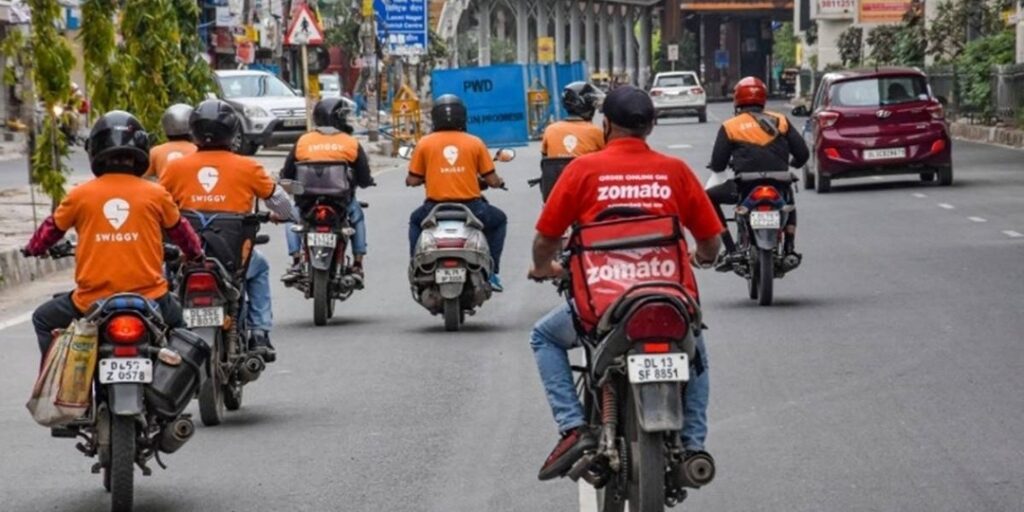
Platforms like Uber, Zomato, and Deliveroo are now part of everyday life. They alter how people perceive time, work, and social responsibility. The platform economy represents not just a technological shift, but a fundamental change in the labor market. It uses affordable internet access and the widespread adoption of smartphones to create a new group of “delivery partners” or “independent contractors.” This shift significantly impacts consumers, who move from self-service to purchasing every service, and workers, who face greater instability and fewer job protections.For consumers, the platform economy provides relief from routine tasks, effectively marketing time and convenience as luxury items. However, for workers, this same system often leads to a decline in wages, benefits, and autonomy. Research indicates that while platforms are considered the “future of work,” they often rely on the vulnerabilities of particular groups, such as immigrants and those with limited access to traditional jobs. These individuals find themselves surviving, but not thriving. This review brings together existing research to show how the ease of convenience is rooted in precarious labor conditions while addressing ongoing debates in the literature about how much autonomy platform work really offers. This discussion will be revisited in later sections rather than settled upfront.
The COVID-19 pandemic became a major turning point, exposing the weaknesses of this model. While lockdowns boosted demand for delivery services, they also heightened the instability of gig work. Many workers lost their jobs and saw their earnings decline, lacking the safety nets typical in traditional employment. This literature review will argue that the current direction of the platform economy requires a new examination of regulatory frameworks. The failure of the market to self-correct shows that without proactive measures and appropriate regulations, the gap between consumer leisure and worker insecurity will continue to grow. This review conceptualizes “platform-living” as a social practice that transcends simple transactions, encompassing urban infrastructure and moral responsibility; this concept will be defined clearly and differentiated from related ideas later in the paper
2.Methods
This paper employs a narrative literature review method to synthesize existing research on the socio-economic aspects of platform and gig economy labor. Due to the diverse nature of the inquiry, sources span across labor studies, digital sociology, and urban political economy. Most were sourced from Google Scholar and JSTOR. Search terms included combinations of “gig economy,” “platform labor,” “labor precarity,” “digital platforms,” “independent contractors,” and “platform-living.”
Literature was selected based on its relevance to three main themes: (1) the consumer experience of platform-based convenience, (2) the working conditions and vulnerabilities of gig workers, and (3) regulatory and policy responses to platform capitalism. To ensure selection was systematic, sources were included only if they were peer-reviewed, published from 2015 onward (to reflect the development of app-based gig platforms), and focused on platform-mediated labor rather than gig work broadly. Sources were excluded if they discussed pre-platform informal labor markets without any digital mediation, if they were opinion pieces lacking a solid evidence or theoretical basis, or if they repeated findings already covered by a more comprehensive source on the same platform and region. The review prioritized peer-reviewed journal articles, supported by policy reports and real-world case studies involving platforms like Uber, Zomato, and Deliveroo in various urban settings. The period of the COVID-19 pandemic (2020–2022) was treated as a specific case within the review. This allowed for an exploration of how an external shock uncovered hidden vulnerabilities in the platform labor model. A thematic synthesis approach helped identify shared arguments, conceptual conflicts, and gaps in the literature, leading to the development of the concept of “platform-living.”
3.THEORETICAL FRAMEWORK
Rather than viewing platform labor as simply a new concept, this review places it within four established theoretical traditions. Labor process theory, linked to Braverman’s ideas on deskilling and managerial control, helps us understand how platforms break work into smaller, trackable tasks, reducing workers’ control over their pace and methods. Platform capitalism, as explored by scholars like Nick Srnicek, presents platforms as a unique business model focused on collecting and making money from data and network effects. This model explains why platforms try to cut direct employment costs while keeping managerial oversight. Marxist political economy offers a structural view of surplus extraction. Workers pay for their own tools, like vehicles and phones, which effectively subsidizes the platform’s profits. This dynamic is often masked by terms like “partnership” and “entrepreneurship.” Lastly, Foucault’s idea of disciplinary surveillance helps us see algorithmic management as a continuous form of control where workers self-regulate their actions, anticipating being watched and rated, even without a human manager present. These frameworks do not represent a single agreement; they have different views on where power lies—whether in technology, capital structure, or disciplinary practices. This review selectively draws on each framework to clarify specific mechanisms discussed in the following sections.
4.The Architecture of Convenience and Consumer Leisure
4.1 The Shift from Self-Help to Commodified Service Consumption
The move from self-help to commodified service consumption marks an important change in the 21st-century home economy. In the past, tasks like cooking, grocery shopping, and local transport were handled by individuals or families. However, the emergence of labor platforms has led to outsourcing these duties to third-party providers using digital tools. For consumers, this shift means transitioning from self-reliance to a more commodified form of service use. This change is driven by the desire for convenience. It allows consumers to reclaim time that would otherwise be spent on routine tasks. The platform acts as a smooth intermediary, concealing the labor behind the service and making it appear easy to use. Importantly, this commodification extends beyond luxury services; it now encompasses basic daily activities like picking up items from convenience stores or ordering takeout from restaurants. This shift significantly impacts daily life and our perceptions of domestic labor. When services once offered for free at home become market transactions, the essence of home evolves. It transforms from a place for living into a space for consumption. Scholars describe this change as the “platformization” of cities, where digital systems become the primary means for accessing mobility, food, and care. However, there is debate among scholars about the extent of this transformation: some argue it genuinely restructures domestic life, while others suggest it merely re-labels services (like laundry, food prep, or errands) that have been partly commodified for years, even before app mediation. The ease of accessing services with a single click fosters a culture of immediacy and entitlement. However, this convenience relies on a large, flexible workforce that must be ready to respond to fluctuating demand. The rise in consumers’ free time is closely tied to the constant availability required of workers, showing a direct cause-and-effect relationship rather than a mere coincidence. Platforms achieve low wait times for consumers by ensuring an excess supply of labor, which in turn depresses each worker’s earnings per hour worked.
The psychological impact of this shift is also considerable. As consumers grow accustomed to having their daily needs met through commodification, their reliance on these platforms increases. This dependence is not just a personal choice; it becomes part of urban life. Outsourcing personal tasks is often promoted as empowerment or “life hacking.” Yet, it fundamentally alters the social contract between individuals and their communities. By moving away from self-help, consumers create distance from the physical labor and the people providing these services. This distancing is a key element of the architecture of convenience. It allows consumers to enjoy services without confronting the difficult conditions faced by workers. In the end, what is marketed as freedom and efficiency is built on a foundation of inequality. These claims are viewed in this review as propositions supported by the cited qualitative and ethnographic literature. The Future Work section highlights the comparative wage and survey data needed for stronger empirical backing.
4.2 Technological Mediation and the Valuation of Time-Saving
Technological mediation shapes the value of time-saving in the platform economy. The growth of affordable internet, smartphones, and advanced algorithms has allowed platforms to create a new labor market that operates with remarkable speed and efficiency. For consumers, the benefits are clear: platforms save time. In busy cities, time is viewed as a limited and valuable resource. Platforms capitalize on this by presenting themselves as tools to optimize time, helping users avoid the hassle of errands. However, this value is not universal; it is often those with more wealth who buy the time of those with less economic power. The algorithm serves as the mechanism through which this exchange is organized. It manages matching, pricing, and delivery routes, creating the illusion of a perfectly efficient market. This technological layer removes the human component from the transaction, making the service feel like automated output instead of a result of real human effort. Consequently, waiting is increasingly seen as a system failure, and the demand for speed is directly imposed on workers, who must navigate the world according to strict algorithmic rules. Consumers do not merely experience leisure as time off from work; they gain control over their personal time through the platform by managing workers’ time.
Technological mediation also reshapes the urban landscape. The rise of delivery vehicles and facilities like dark stores and cloud kitchens showcases the digital architecture of convenience, aiming to shrink the gap between a consumer’s request and its fulfillment. As platforms embed themselves in city life, they prioritize logistics and flow over social interactions and community stability. The platform, therefore, becomes a social, material, and moral object, consistently valuing consumer convenience over labor rights and worker welfare.
4.3 Socio-Material Impact of Platform Integration into Daily Life
The integration of platforms into daily life has far-reaching socio-material consequences that go beyond immediate service transactions. This review defines “platform-living” as the social practice where access to transportation, food, care, and other essential services is routinely mediated by algorithms. This includes everyday behaviors, urban infrastructure, and moral judgments. This term is intentionally narrower than “platform capitalism,” which describes the business model and accumulation strategies of platform companies, and narrower than “platform society,” which refers to the broader restructuring of public life around platforms. “Platform-living,” on the other hand, focuses on the first-person, everyday experience of living in a city where platform mediation has become the norm. It revolves around lived practice rather than corporate strategies or institutional structures, even though it relies on both. The presence of gig workers in public spaces—waiting on street corners, navigating traffic, and entering buildings—makes labor visible and marginalized, prompting consumers to reflect on the ethical implications of their consumption in the digital age.
The material impacts are also evident in the changing physical environment of cities. The growth of food delivery platforms has sparked a “takeout culture,” affecting traditional restaurants and public spaces. While platforms offer connectivity and ease, they also lead to fragmentation and instability, revealing a paradox at the core of the “platform society.” The convenience provided to consumers is part of a broader structural change that influences community dynamics and individual interactions.
Furthermore, platforms normalize precarious labor in modern urban life. As consumer dependence grows, worker instability becomes a constant reality. Consumers may feel guilt toward workers, yet the convenience of platforms and the lack of alternatives encourage ongoing use. The socio-material integration of platforms thus raises complex ethical questions, showing that the platform economy is not a separate digital realm but a tangible social and physical reality that calls for new approaches to urban regulation.
5.Dimensions of Precarity in Platform-Based Labor
5.1 Erosion of Traditional Employer-Employee Relationship
One major aspect of precarity in the platform economy is the intentional weakening of traditional employer-employee relationships. Platforms label workers as “delivery partners” or “independent contractors” instead of employees. This tactic lets companies avoid responsibilities like minimum wage, health insurance, and paid leave. Viewed through the lens of Marxist political economy, this classification isn’t just a simple label; it’s a method for shifting production costs—such as vehicles, fuel, maintenance, and insurance—from the company to the individual worker. Meanwhile, the platform keeps control over pricing and work distribution through its algorithm. This situation turns workers into micro-entrepreneurs in name, while leaving them without the social safety nets associated with conventional jobs.
Unlike consumers, who see more services becoming commodities, workers encounter a piecework-based labor model that lacks job security. They can be terminated at any moment without options for recourse. The COVID-19 pandemic pointed out these vulnerabilities, as millions of platform workers lost income and protections during lockdowns. Additionally, without legal employee status, gig workers are largely excluded from laws that protect their right to unionize. The platform model depends on a widely distributed and technology-managed workforce, making collective organization quite difficult. Thus, the weakening of the employer-employee relationship isn’t just a side effect of technological change; in the framework of platform capitalism, it is a necessary condition for profitability. It shifts labor costs to workers while presenting the decline in worker protections as a form of innovation.
5.2 Economic Vulnerability and the Absence of Social Welfare
Economic vulnerability defines life in the platform economy, particularly for those who depend on it as their main source of income. Many gig workers face low and unpredictable earnings, which are affected by algorithm changes and market shifts. The piecework nature of platform labor ties income directly to completed tasks, resulting in long hours and physical strain for little pay. For many, especially immigrants and marginalized individuals, platform work becomes a means to survive rather than thrive. Economic precarity worsens as workers must buy their own tools, like vehicles and smartphones, further cutting into their already low earnings.
The absence of social welfare highlights a significant part of this vulnerability. Excluded from employee status, platform workers cannot access unemployment insurance, workers’ compensation, or sick pay. Even a minor injury or illness can lead to financial disaster. The COVID-19 crisis underscored this issue, as delivery workers labeled “essential” lacked sufficient protection or financial support if they fell ill. The broader social implications are even more concerning. When many workers are cut off from welfare systems, families and public services bear the burden while platforms continue to profit. This review views the resulting situation—where consumer convenience effectively subsidizes systemic worker insecurity—as a fundamental aspect of the business model, not a random outcome. However, accurately confirming its scale would require the type of wage and welfare uptake data outlined in the Future Work section.
5.3 Algorithmic Management and the Loss of Workers’ Autonomy
Algorithmic management is how platforms primarily control their workforce, significantly reducing worker autonomy. Unlike traditional managers, algorithms use data-driven methods to assign tasks, monitor performance, and determine pay. Labor process theory helps explain why this setup acts as control rather than just coordination. By breaking work into discrete, timed, and measurable units, the algorithm achieves a disciplinary effect similar to assembly-line supervision in industrial labor, without needing in-person oversight. Workers interact with gamified interfaces that reward longer hours or less desirable tasks through ratings, bonuses, and penalties.
Although platforms promote their services as flexible, the reality is that algorithms dictate when, where, and how work gets done. The option to log on whenever one wants is mostly an illusion since workers must work during peak demand to earn enough. In this area, scholars genuinely disagree: some argue this represents a meaningful, if limited, form of autonomy compared to shift-based employment, while others contend that “flexibility” mostly serves as a managerial narrative that justifies what is, in practice, algorithmically compelled availability. This review treats the disagreement as unresolved, rather than assuming the more critical view is automatically correct. The “black box” nature of algorithmic decision-making keeps workers from understanding task assignments or rating systems, leading to feelings of helplessness and frustration.
Foucault’s account of disciplinary power provides a useful explanation for this dynamic. Since workers cannot see how or when they are evaluated, they adjust their behavior continuously as if under constant observation. This produces compliance without the platform needing to monitor every worker all the time. This invisible surveillance leads to a stressful environment reminiscent of a digital assembly line, allowing little room for individual agency. Furthermore, algorithmic management reduces the human aspect of work. Interactions between workers and employers shrink to notifications and data points, allowing platforms to treat workers as interchangeable units rather than individuals with rights. The loss of autonomy extends beyond daily tasks, affecting a worker’s broader professional identity and future opportunities.
6.The Socio-Economic Tradeoff and Ethical Implications
6.1 The Moral Economy of Outsourcing Domestic and Personal Tasks
Outsourcing domestic tasks through digital platforms creates a complicated moral landscape that reflects broader societal values and inequalities. As consumers rely more on gig workers for food delivery, grocery shopping, and cleaning, the ethical divide between consumers and labor widens. This moral economy requires balancing the desire for convenience with an awareness of the challenging conditions under which services are provided. The platform serves as a barrier, allowing consumers to enjoy convenience while remaining disconnected from workers’ struggles—both physical and economic.
The ethical implications are significant. By outsourcing domestic labor, consumers participate in a system that often takes advantage of marginalized groups, such as immigrants and low-income individuals. The convenience of the platform depends on affordable labor, which is enabled by deep-rooted economic inequalities. This situation raises important questions about social responsibility: Is it right to save time at the expense of someone else’s fair wage or benefits? The paradox of convenience is not just about economics; it has a moral dimension that highlights the growing gap between those who can afford to buy time and those who must sell it under poor conditions. Moreover, normalizing this outsourcing weakens community ties. When domestic tasks shift from mutual assistance to commercial transactions, human connections are replaced with app-mediated interactions. This change reduces social empathy and promotes a sense of entitlement among consumers. To address these ethical issues, we need to look beyond market efficiency and confront the human costs of turning everyday life into a commodity.
6.2 Disparities in Flexibility Between Consumers and Workers
A notable tension in the platform economy is the clear difference in flexibility between consumers and workers. For consumers, platforms genuinely offer choices and access to services anytime, anywhere. They market this as a way for consumers to take control of their schedules and leisure time. In contrast, for workers, this so-called flexibility often comes with drawbacks, and experts do not agree on the extent of these drawbacks. While workers have the freedom to choose when to log on, their ability to work is limited by demand patterns, algorithm-driven incentives, and the need to earn enough to survive. This creates a contradiction where workers are technically “free” but remain closely tied to the app. Some labor economists argue that even limited flexibility can benefit workers who are balancing caregiving or education. Therefore, this review views worker autonomy as a complex issue rather than a settled matter.
This difference is a core aspect of the platform model, with the causal relationship being this: consumer flexibility relies on worker availability. For services to be truly on-demand, there needs to be a surplus of labor ready at a moment’s notice. Consequently, workers often spend significant unpaid time waiting for tasks—this is a form of hidden labor. Dynamic pricing and surge incentives compel workers to be available when consumers want them, making worker “flexibility” more about managed availability that prioritizes platform efficiency over workers’ well-being.
The effects on workers’ lives are significant. Unpredictable schedules hinder their planning, family care, and pursuit of other job opportunities. The freedom to work anytime often turns into working all the time—nights, weekends, and holidays. The socio-economic tradeoff is clear: consumers enjoy leisure gains while workers lose stability. Recognizing this imbalance is essential to understanding the true cost of digital convenience.
6.3 Regulatory Challenges and the Failure of Market Self-Correction
The rapid growth of the platform economy has outstripped current regulatory frameworks, posing significant challenges in protecting workers and ensuring fair competition. Platforms have often operated in a regulatory vacuum, using their status as tech companies to sidestep labor laws and industry-specific regulations. By presenting themselves as neutral intermediaries, platforms have resisted reclassifying workers as employees, shifting labor and social welfare costs elsewhere while establishing dominant market positions.
Market self-correction has proven inadequate, and the issue is structural, not just a result of poor corporate decisions. Platforms compete primarily on price and delivery speed. If one platform raises worker pay or benefits, it raises its own costs compared to competitors who don’t, making voluntary improvements a disadvantage rather than a practical strategy. Without external intervention, the market will prioritize convenience over labor stability, reinforcing the convenience paradox through systems that profit from worker insecurity.
The challenges of regulation are further complicated by the global and decentralized nature of platforms. Different regions have adopted various strategies, from reclassifying workers as employees to creating intermediate “third-way” labor categories. However, platforms often invest heavily in lobbying against reforms or finding ways to evade new rules. Among the regulatory approaches examined in this literature, three stand out as particularly effective in disrupting the mechanisms described: (1) employment or “third-way” reclassification, which restores access to minimum wage and social insurance without necessarily eliminating scheduling flexibility; (2) algorithmic transparency requirements that compel platforms to reveal how task allocation, ratings, and deactivation decisions are made, directly countering the black-box dynamic mentioned earlier; and (3) portable, platform-funded social welfare entitlements that stay with workers across platforms, addressing welfare gaps irrespective of employment classification disputes. Effective regulation must be innovative and flexible, considering local political and social contexts. It should combine these three strategies rather than relying on any single one in isolation. The shortcomings of market self-correction highlight the urgent need for a new social contract that acknowledges the realities of 21st-century work and safeguards the most vulnerable participants in the platform economy from systemic exploitation.
Conclusion and Future Work
The platform economy’s paradox of convenience showcases a fundamental conflict between consumers’ increasing leisure and gig workers’ worsening precarity. This review traces a specific causal chain: platforms deliver consumer-friendly convenience by ensuring an oversupply of available labor, managed through algorithms that shift risk and capital costs onto workers while denying them the legal protections of employment status. Viewed through labor process theory, platform capitalism, Marxist political economy, and Foucauldian theories of surveillance, this situation emerges as a structural shift in labor that puts market efficiency and customer satisfaction ahead of the fundamental rights and security of those who actually do the work.
This trade-off carries significant ethical implications. In today’s platform society, there is a disconnect between the perceived moral economy and the reality faced by most workers. Though gig workers have some level of nominal flexibility, the reviewed literature—while not unanimous about how restricted that flexibility really is—largely agrees that workers experience a form of managed availability tailored mainly to meet the desires of wealthier consumers. Moreover, without corrective actions from the market, the ongoing evolution of the platform economy heavily relies on regulatory processes that will encounter continual challenges before achieving sustainable growth. The coronavirus pandemic highlighted the importance of social safety nets and the platforms’ systematic evasion of those same supports.
As platforms become more entrenched in urban life, the demand for a flexible and responsive approach to their regulation grows. This review identifies employment reclassification, algorithmic transparency mandates, and portable social-welfare entitlements as vital interventions for bridging the gap between convenience and precarity. Future research should concentrate on several key areas to empirically test and build on these claims. First, longitudinal, comparative studies across different platforms are essential to monitor the socio-economic impacts of platform work on various demographic groups, especially in the Global South, where platform growth is swift. Such studies should incorporate worker surveys and platform-level wage data to validate the exploitation and moral-economy claims advanced here, rather than relying solely on qualitative accounts. Second, research should explore platform cooperativism and governance models that emphasize worker ownership and democratic decision-making as alternatives to the prevailing corporate-led approach. Third, increasing algorithm transparency and developing worker-centered algorithms should be central to both technology design and policy research, aiming to restore fairness and autonomy in the workplace. Finally, scholars and policymakers must collaborate to develop regulatory frameworks that can keep up with the rapid pace of digital platforms while ensuring all workers have access to a living wage, healthcare, and the right to organize. By pursuing these research avenues together, we can envision a platform economy that serves everyone, not just those at the top of the digital hierarchy.
References
[4] L Lam. Surviving, but not thriving? Lives of immigrants in the platform economy, 2020