Authors: Manya Sharma, Rupali Maurya
Abstract
Online education has changed the way students access learning in India. Smartphones, online classes, educational apps, and digital platforms have made it possible for students to continue their studies even when they cannot attend school or college in person. However, this access is still not the same for everyone. Students living in rural areas often face problems such as poor internet connectivity, lack of suitable devices, high data costs, electricity shortages, and limited knowledge of digital tools.This paper examines the main difficulties faced by rural students in accessing online education. The study is based on secondary data collected from government reports, educational surveys, research studies, and other published sources. Along with students, the study also looks at some of the difficulties experienced by teachers and schools while adopting digital methods of teaching. The study finds benefits of online education for rural students as access to learning materials, classes, and resources that may not be available in their local areas. However, several practical problems can prevent students from making full use of these opportunities. For example, some students have to share a smartphone with other family members, while others may have an unreliable internet connection or may not be even able to afford mobile internet data regularly. Electricity problems in some villages can also interrupt online classes and other learning activities. In addition, students, parents, and teachers who are not comfortable with digital technology may find online learning more difficult. The paper suggests that improving digital education in rural India will require better internet and electricity services, affordable devices and data plans, digital literacy programs, and proper training for teachers. Support from schools and local communities can also help students use digital learning resources more effectively. Addressing these problems can improve access to education in rural areas and contribute to the broader goal of inclusive education under NEP 2020.
Keywords
Rural India, Online learning, Digital divide, Covid-19, Socio-Economic Inequality, Inclusive Education
INTRODUCTION
Digital technology has become an integral part of education in India. Since the last few years, the use of smartphones, internet, online classes, YouTube, and various other educational applications has seen a boost . The COVID-19 pandemic accelerated this change because schools and colleges were closed for a long period. During this time, online education became a crucial way for students to continue their studies. However, the experience of online education also showed that all students did not have the same access to digital facilities. Rural students,especially those from poor families, faced numerous difficulties in continuing their education through digital platforms. The digital divide means the difference between people or communities in their access to digital devices, internet services and the ability to use digital technology. In India, this divide can be seen clearly between rural and the urban areas. Urban students generally have better access to smartphones, computers, high-speed internet and other digital learning resources. In rural areas, many students depend on a shared mobile phone at home. Poor internet connectivity, lack of electricity, the cost of mobile data and limited digital knowledge are some of the common problems faced by rural students. Different studies have tried to comprehend this problem in India. The ASER 2020 report highlighted that access to digital technology was not equal among children during the COVID-19 period. The reportrevealed that existing social and economic differences also affected children’s ability to use digital resources for education. This means that the digital divide is not only a technology related issue but is also connected with the economic and social condition of families. A study conducted in Tamil Nadu also found differences between rural and urban students in access to online education. At one stage, the difference in online education access between rural and urban students was 16.2 percentage points, which later reduced to 12.8 percentage points. However, rural students continued to have lower access compared to urban students. The study also found that mobile phones were the main devices used by students for online learning, while the use of Laptops, desktops and tablets was comparatively low. The ASER 2024 report gives a more recent picture of digital access among children In rural India. The survey covered more than 6.5 lakh children across 26 states and 2 Union Territories. It also collected information about smartphone access and digital Skills among children aged 14–16 years. According to the report, 89.1% of children in This age group had a smartphone available in their household. However, only 65.9% Could bring a smartphone with them for carrying out digital tasks. Around 82.2% said That they knew how to use a smartphone, but only 31.4% had their own smartphone. There were notable distinctions between boys and girls. Around 36.2% of boys had Their own smartphone compared to 26.9% of girls. These figures are crucial because having a smartphone at home does not always Imply that a student has proper access to online education. In many rural families, One smartphone is used by several members of the family. Parents may need the Phone for their work, communication or other purposes. Because of this, children may Not always get the phone when they need it for studying. This becomes more difficult For students who do not have a personal device. Internet connectivity is another major issue in rural areas. In some villages, students Have to go to another place to access better network connectivity. Sometimes online Classes are interrupted because of poor network speed or lack of mobile data. Electricity supply can also affect online learning. Therefore, access to online Education depends not only on having a smartphone but also on having regular Internet, electricity, sufficient data and the knowledge to use digital platforms. School-level digital infrastructure is also important. According to UDISE+ 2023–24,There were 14,71,891 schools in India, but only 1,10,877 schools reported having a Digital library. This shows that digital learning facilities at the school level still need Improvement. Rural schools may also face problems related to computers, internet Facilities, trained teachers and other digital resources. Research from rural areas has also shown similar problems. A study conducted Among 431 senior secondary students in rural areas of Varanasi district in 2022 found Several difficulties related to online education. The study reported that 39% of Students initially lacked awareness regarding online classes . Mobile phones were The main devices used by students for online learning. The study also found that Many students were worried about their academic progress and future. From these studies, it can be understood that the digital divide is not only about Whether a student has a mobile phone or not. It is also about the quality of internet Connectivity, availability of a personal device, digital skills, electricity, family income And the learning environment at home. Gender can also influence digital access, as The ASER 2024 findings show a difference between boys and girls in personal Smartphone ownership. Although digital connectivity has improved in India, rural students still face several Challenges in using online education effectively. Therefore, this study focuses on Digital Divide and Access to Online Education in Rural India. The study tries to Understand the major issues faced by rural students, their access to smartphones And internet services, additionally the factors that affect their participation in online Education. The study also aims to look at possible ways to improve the situation. Better internet Connectivity, affordable mobile data, regular electricity, availability of digital devices, Digital literacy and proper training for teachers can help rural students. Support from Parents, schools and the local community is indispensable. If the necessary Improvements are made in these areas , digital education can prove to be a miracle For rural education and can help reduce the educational gap between rural and urban students in India.
Literature Review
Multidimensional perspective of Digital Exclusion
The sudden transition of the Indian education towards digital platforms during the covid-19 pandemic reveals a profound reality that not every individual in the society has the same privilege to access and learn digitally. The literature on the digital divide and access to online education in rural India shows that unequal access to technology is closely linked with existing socio-economic and educational inequalities. The digital divide is no longer understood merely as a lack of internet connectivity, it also includes unequal ownership of devices, digital literacy, quality of use, availability of relevant content and the capacity of teachers and students to use technology effectively. This is reflected clearly through our National data: (Murmu2025nternational Journal for Multidisciplinary Research IJFMR, Volume 7, Issue 5,pp. 1–10.) reports that the rural internet consumption is limited at 37% in contrast to 72% consumption in urban areas moreover ,this gap expands in terms of income with only 24% of low income households having access to digital education and learning during the pandemic in comparison to 86% of high –income households.] reports that the rural internet consumption is limited at 37% in contrast to 72% consumption in urban areas moreover ,this gap expands in terms of income with only 24% of low income households having access to digital education and learning during the pandemic in comparison to 86% of high –income households. Krupamani’s study (Krupamani, ”Digital Divide and Digital Literacy-A study with Reference to India, volume 10 Issue 1, Pg.327-330)on digital divide and digital literacy in India emphasizes that infrastructure, capacity building and meaningful resource use are interconnected angles of digital inclusion. It also highlights that income, education, gender, location and other social characteristics influences access to and use of ICTs(Information and Communication Technologies). This is further backed by Murmu (Murmu, A. (2025). International Journal for Multidisciplinary Research (IJFMR), Volume 7, Issue 5, pp. 1–10.) who illustrated that caste based disparities exacerbate these inequalities, for the general category-the digital literacy rests at 64%(NFHS-5 and Oxfam Report) , but drops to 38% for SC and just 31% for ST ,implying that social identity adds another distinguished layer to the exclusion Krupamani describes. The rural urban divide is a major theme in the literature. Banwari and Singh (Dr. Banwari and Dilip Kumar singh (2024) “Digital Divide and Inequality in Education : A Comparative Study in India (Rural vs. Urban)”, Vol-12/62, Pg.285-293) says that rural students face disadvantages due to weaker internet connectivity, limited availability of digital devices, unreliable electricity and lower levels of digital literacy. National sample survey tells 67% of Urban residents and only 31% of rural residents uses Internet actively. Their study further shows that the digital divide reinforces existing inequalities and negatively affecting low income households, rural communities, women and socially marginalized groups. Thus, differences in access to technology can create an unequal learning opportunities, skill development and future educational prospects.
Pedagogical Impact:
In research (Shaifali Garg, Dr. Parul Jhajharia,”Pedagogical Impact of Digital Education in Indian Rural Areas(2025), vol. 5 Issue 2, Pg.4238) the pedagogical impact of digital education also identifies 3 major barriers in rural India i.e inadequate infrastructure, limited technical knowledge among teachers and students, and socio-economic disparities. It also notes that gender inequality, language barriers and limited availability of suitable devices further restrict effective participation in digital learning. This raises an imperative but commonly overlooked distinction: accessibility to a device does not equate to effective usage. Mandal( Mandal, B. (2025). Digital Crossroads: Integrating Humanities, Science and Technology, Chapter 12, pp. 135–151.)highlight that rural students tends to spend fewer hours invested towards online education than urban students –as low as 3.9 hours per week in UP in contrast to 10 hours in urban Karnataka moreover , the 80 to 90% of rural household rely solely on smartphones rather than laptops or desktops. Consequently, treating both students as having equal access masks the vast disparity in their actual learning experience The article (K.Jafar, Kripa Ananthpur and L.Venkatachalam,”Digital divide and access to online education : new evidence from Tamil Nadu(2023), vol 25, Issue 2, page 313-333) provides important empirical evidence from Tamil Nadu during the COVID-19 pandemic. This study shows that the sudden shift to online education deepened existing inequalities because access to devices and digital infrastructure was unevenly distributed. Survey findings indicate that urban students had better access to online education than rural students, while mobile phones became the dominant medium for attending classes. Vulnerable section with fewer resources faced higher risks of exclusion. However, the study also demonstrates the potential of alternative and low cost delivery mechanisms. Government of Tamil Nadu initiative “KalviTV” was particularly useful for rural students, suggesting that television based and other hybrid models can complement internet based learning where connectivity and device access remain limited. This finding presents a contrast with the finding presented by MURMU[Mandal, B. (2025). Digital Crossroads: Integrating Humanities, Science and Technology, Chapter 12, pp. 135–151], whose data indicates relentless and largely unresolved rural urban disparities even where formal infrastructure programs exists . Jafar etc al.(2023) using empirical data of Tamil Nadu Covid Pulse Survey(TNCPS) suggests that low cost solutions like Kalvi TV were able to reach rural students in a way that connectivity focused schemes like Bharatnet often could not, prompting the question of whether expanding internet infrastructure or investing in alternatives and non internet delivery methods offer a more strategic roadmap.
Government Initiatives:
Government data and policy discussions presented across these studies indicate that India’s digital education initiatives, including DIKSHA, SWAYAM has expanded access toeducational resources but their benefits remain uneven because infrastructure and digital capability vary widely across regions. The Economic Survey and other government reports have increasingly recognized digital infrastructure and human capability as important for inclusive growth, while education policies emphasize technology enabled learning. The literature therefore suggests that government interventions should move beyond simple expansion of online platforms towards affordable devices, reliable connectivity, teacher training, local-language content and offline or hybrid learning solutions.
Research gaps:
What these studies collectively reveals ,but do not test together , is how overlapping downsides – caste or tribal status , income , gender,and rurality work alongside the quality of digital use to shape learning outcomes. The existing studies treats intersectional exclusion and the distinction that exists between digital access and actual usage as separate observations rather than as interacting factors.
RESEARCH METHODOLOGY
1.Research Design
This study adopts a structured narrative literature review to examine how the digital divide affects access to online education in rural India. No primary data were collected from students, teachers, parents or households. The analysis is based on evidence reported in selected scholarly publications, which form the documentary evidence base for the review. Relevant information from each publication was entered into a structured evidence-extraction matrix. The review proceeded through source identification, relevance screening, application of the inclusion and exclusion criteria, evidence extraction and thematic comparison. After extraction, related findings were grouped under broader themes and compared across the selected studies. The comparison focused on recurring patterns, differences and contradictions, which were then interpreted in relation to the research question. This approach is appropriate because digital inequality in online education extends beyond internet availability. It also involves access to suitable devices, affordability, digital capability, household and socioeconomic conditions, social inequalities and institutional support. The review is described as structured rather than systematic. It uses explicit procedures for selecting and analysing sources, but it does not involve an exhaustive multi-database search, statistical pooling or a PRISMA-based systematic-review process.
2. Nature of Research
The research is secondary, qualitative and analytical. It is secondary because it uses evidence already reported in published studies rather than data collected directly from respondents. The analysis is qualitative because findings are organised and interpreted through themes instead of being statistically pooled, although numerical results from individual publications are discussed where relevant. It is analytical because findings are compared across publications rather than presented only as separate study summaries. The analysis covers material and infrastructural access, digital capability, quality and conditions of digital use, socioeconomic and geographical inequality, social and intersectional inequality, institutional and pedagogical factors, educational participation, and psychosocial or household conditions. These dimensions are defined in Section 7. The present review is not classified as mixed-methods research; the use of quantitative, qualitative or mixed methods in the original publications does not determine the design of this study.
3. Source Selection and Study Selection Procedure
3.1 Unit of Analysis
The unit of analysis in the present study is the scholarly publication. Students, teachers, parents and households discussed in the selected publications were participants in the original studies and were not respondents in the present research.
3.2 Study Selection Process
Publications were selected for their relevance to the digital divide, online education and rural India. Potentially relevant scholarly publications were identified through Google Scholar and ResearchGate. Initial screening was based on titles, abstracts and available publication details. Publications that appeared relevant were then assessed against the inclusion and exclusion criteria, with attention to geographical setting, educational relevance, methodology and the type of evidence reported. A total of 15 potentially relevant publications were considered during development of the review corpus. The selection process proceeded through the following stages: Identification of potentially relevant publications → initial relevance screening → application of inclusion and exclusion criteria → methodological and source verification → final relevance assessment → selection of the analytical sample. Following this process, 10 of the 15 publications were retained as the final analytical sample. Five of the 15 publications considered were not retained. Three were excluded during final relevance or source-verification assessment because they did not sufficiently meet the rural- online-education focus or because methodological or data-source concerns remained unresolved. Two others were relevant to the topic but were not included in the final purposive corpus after comparison of their methodological scope, recruitment limitations and overlap with evidence already represented in the retained studies. The two comparatively non-retained publications were not treated as invalid. Their omission reflected the aim of constructing a focused purposive corpus rather than disagreement with their findings. The selection was therefore relevance-based rather than statistically representative of all research on digital education. The final corpus was intended to provide evidence directly applicable to the review question. The studies included in the final sample were published between 2021 and 2025. This period was not set in advance as a publication-year restriction. Rather, it reflects the publication range of the studies that met the final eligibility requirements.
4. Data Sources and Search Strategy
Google Scholar was used as the main academic search engine for locating relevant publications. ResearchGate was used to identify potentially relevant research and, where available, to access publication copies. The literature search used different combinations of keywords related to the main concepts of the study. These included: digital divide; digital inequality; online education; digital education; ,rural India; rural students; digital access; digital literacy; gender; tribal students; and teacher digital competence. Representative combinations included terms such as “digital divide” + “online education” + “rural India”, “digital inequality” + “rural students”, “digital divide” + “gender” + “tribal students”, and “teacher digital competence” + “rural India” + “digital education.” Search results were assessed for relevance to rural India, digital or online education and at least one dimension of digital inequality. Where necessary, publication details were checked against journal, publisher, institutional or repository sources. These sites were used to verify bibliographic information or obtain access to individual studies, not as additional literature- search databases. Only English-language scholarly publications were used in the final review.
5. Inclusion and Exclusion Criteria
Publications were assessed against criteria designed to keep the final evidence base closely aligned with the research question.
5.1 Inclusion Criteria
1. India as the main geographical context
The publication had to focus substantially on India, because the research question concerns digital inequality and online education in the Indian context.
2. Rural relevance
The publication had to examine a rural population, a rural educational setting or a rural-urban comparison that provided meaningful evidence about rural conditions or disadvantage.
3. Educational relevance
The publication had to address online education, digital learning, e-learning or a closely related form of technology-mediated education. Studies dealing only with general digital technology, without a meaningful educational component, were not retained.
4. Digital-divide relevance
The publication had to provide evidence on at least one aspect of digital inequality relevant to the review, including connectivity, device access, affordability, digital literacy or capability, socioeconomic or geographical disadvantage, gender or other social inequalities, institutional support, or participation in online education.
5. Sufficient methodological information
The publication had to provide enough information about its research setting, evidence or methodology for its findings to be interpreted in the present review.
5.2 Exclusion Criteria
A publication was excluded where:
1. India was not a substantial focus.
2. Rural populations or rural–urban differences were not meaningfully addressed.
3. The educational component was absent or only incidental.
4. Digitalisation was discussed without providing relevant evidence on digital inequality or educational access.
5. The methodology or evidence could not be sufficiently established.
6. A serious methodological or data-source problem prevented the evidence from being used confidently.
For the final purposive selection, methodological scope, recruitment characteristics and substantive overlap with studies already retained were also considered. This additional comparison was used to judge whether an otherwise relevant publication added distinct analytical value to the 10-study corpus. This comparative non-retention was treated separately from exclusion for failure to meet the core eligibility criteria.
5.3 Language of Publications
Language was not set in advance as a formal eligibility criterion. However, the literature considered and retained for the final review consisted of English-language scholarly publications. The resulting language restriction is therefore treated as a practical limitation of the review and is acknowledged in Section 10.
6. Data Extraction and Documentary Review Procedure
Because the study uses secondary evidence, the researcher did not administer a questionnaire, interview schedule or observation checklist. The main research tool was a structured document- review and evidence-extraction matrix. The same broad framework was applied to all 10 selected publications so that information could be recorded and compared consistently. The documentary evidence base includes a study-level extraction matrix for all selected publications. The following information was recorded where it was reported in the original study:
• author and year;
• study location;
• population or educational group;
• sample size and characteristics;
• research design;
• sampling or recruitment procedure used in the original study;
• data-collection method used in the original study;
• internet connectivity;
• electricity and infrastructure;
• device availability and sharing;
• affordability or data cost;
• digital literacy and capability;
• socioeconomic factors;
• gender and relevant social characteristics;
• caste or tribal status where examined;
• teacher and institutional factors;
• participation in online education;
• learning difficulties or outcomes; and
• relevant psychosocial or household conditions.
If an item was absent from an original publication, the matrix recorded it as “not reported”; missing information was not inferred. Interpretation also took account of each study’s methodology, including research design, sample size, geographical scope, sampling procedures, reliance on self-reported information and limitations identified by the original authors. No numerical quality score or formal weighting algorithm was applied. Findings were interpreted in light of the nature, scope and limitations of the evidence provided by each study.
7. Analytical Dimensions and Rationale
The review does not define conventional statistical independent and dependent variables. Instead, the extracted evidence is organised into eight analytical dimensions derived from recurring issues across the selected studies. The documentary coding trail links study-level findings to these broader themes.
7.1 Material and Infrastructural Access
Material and infrastructural access covers internet connectivity and reliability, electricity where reported, device availability and type, affordability, and device sharing. These factors describe whether the basic technological resources needed for online learning were available to students.
7.2 Digital Capability
Digital capability concerns the ability of students to operate digital devices, access internet services and use online educational platforms. The capability of parents and teachers is also considered where the original studies reported it, since access to a device does not by itself establish an ability to use it effectively for education.
7.3 Quality and Conditions of Digital Use
Quality and conditions of digital use covers the reliability and continuity of internet access, bandwidth, interruptions, device limitations and conditions in the home learning environment. This dimension distinguishes nominal access from access that is sufficiently stable and suitable for sustained participation in online education.
7.4 Socioeconomic and Geographical Inequality
Socioeconomic and geographical inequality includes household income, parental education, household resources, rural location and geographical remoteness. These factors can shape the ability to obtain devices, pay for data, maintain connectivity and secure educational support.
7.5 Social and Intersectional Inequality
Social and intersectional inequality covers gender, caste, tribal status and other forms of social marginalisation where they were examined in the selected publications. It allows the review to consider differences in digital access that may remain even among students living in broadly similar economic or geographical conditions.
7.6 Institutional and Pedagogical Factors
Institutional and pedagogical factors include teacher preparedness, institutional support, school or institution type, the availability and language of digital content, and the mode through which online or digital education was delivered. These factors capture the contribution of schools, institutions and teachers to the accessibility and usability of digital learning.
7.7 Educational Participation and Consequences
Educational participation and consequences includes access to online classes and learning materials, attendance, participation, engagement, continuity of learning, and reported learning difficulties or outcomes. This dimension connects differences in digital access with students’ actual participation in education.
7.8 Psychosocial and Household Conditions
Psychosocial and household conditions include stress, anxiety, distraction, isolation or digital disconnection, household responsibilities and family support where these were reported. These conditions are relevant because a substantial part of online learning takes place within the home environment. Not every analytical dimension was investigated by every study. The evidence was interpreted only in relation to the issues actually investigated or reported by each study.
8. Method of Data Analysis: Thematic Narrative Synthesis
The extracted documentary evidence was analysed through thematic narrative synthesis. Analysis began with a review of the extraction matrix to identify recurring findings related to digital access and participation in online education. Related findings were coded and grouped under the analytical dimensions described above. Within each dimension, evidence was compared across studies to identify convergence, variation and contradictory or qualifying findings, while differences in geographical location, study population and research design were taken into account. The resulting patterns were then interpreted in relation to the research objectives and research question.
9. Ethical Considerations
Because the study relies on published secondary research, no participants were recruited and no personally identifiable information was collected. The main ethical responsibilities therefore concerned accurate citation and fair representation of the source studies. Findings reported by the original authors were kept distinct from interpretations developed in the present review, and conclusions were kept within the methodological scope of the evidence on which they werebased.
10. Limitations
The study has several methodological limitations.
a) The final analytical sample contains 10 publications. The review therefore provides a focused examination of the topic rather than an exhaustive account of research on the digital divide and online education in rural India.
b) The literature search relied mainly on Google Scholar and ResearchGate and was targeted rather than exhaustive across specialist bibliographic databases. Relevant publications that were not readily identifiable through these sources may have been missed, so the findings represent a synthesis of the selected evidence rather than all available scholarship.
c) The corpus-development process can be reconstructed as 15 potentially relevant publications considered and 10 retained, but a complete contemporaneous record of every early search result, duplicate and exclusion decision was not maintained. The search process therefore cannot be reproduced to the standard expected of a formal systematic review.
d) The final review contains only English-language scholarly publications. Relevant work published in Hindi or other Indian languages may therefore be absent from the evidence base.
e) The selected studies differ in research design, sample size, geographical coverage,sampling procedures and measures of digital access and educational participation. Their findings cannot be treated as statistically equivalent. Geographical coverage is also uneven, so the synthesis should not be assumed to represent all rural areas of India uniformly.
f) A substantial part of the available evidence was generated during the COVID-19 period, when online education often developed as an emergency response to institutional closures. Some reported barriers may therefore reflect emergency remote learning rather than planned digital or blended education more generally.
g) Several original studies rely on self-reported questionnaires or interviews, which may be affected by respondents’ perceptions, recall or response bias.
h) Thematic narrative synthesis can identify patterns, similarities, differences and relationships across studies, but it cannot independently establish causal relationships. Any conclusions about infrastructure, socioeconomic conditions, gender, digital capability or institutional factors must remain proportionate to the strength and scope of the original evidence.
DATA ANALYSIS AND FINDINGS
1.Analytical Approach
The study uses a structured thematic narrative synthesis to analyse evidence from the selected literature. The unit of analysis is the individual scholarly publication, and the evidence is organised across eight analytical dimensions: material and infrastructural access; digital capability; quality and conditions of digital use; socioeconomic and geographical inequality; social and intersectional inequality; institutional and pedagogical factors; educational participation and consequences; and psychosocial and household conditions. The analysis does not statistically pool the findings of the reviewed studies. Instead, numerical findings reported by individual studies and official secondary datasets are presented as supporting evidence, while recurring qualitative findings are compared across the selected literature. The integrated evidence base combines findings from the final literature review with relevant official secondary indicators used to provide broader contextual information on connectivity, household access, and digital capability. The final review included 10 relevant publications selected from 15 potential publications, with the final studies published between 2021 and 2025. Official secondary data from the Telecom Regulatory Authority of India (TRAI) and the Ministry of Statistics and Programme Implementation (MoSPI) are used to contextualise the reviewed evidence. Because this is a secondary narrative review, the findings are interpreted as patterns and relationships identified across existing evidence rather than as independently established causal relationships.
2. Rural–Urban Connectivity Gap
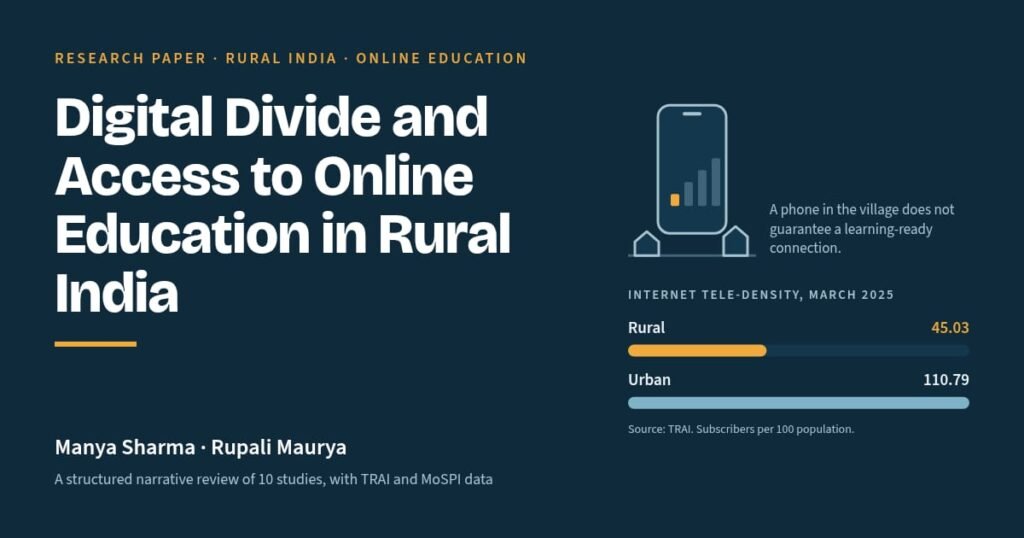
The quantitative evidence from official TRAI data shows that rural internet connectivity has expanded, but a substantial rural–urban gap remains. Rural internet subscribers increased from 331.81 million in March 2022 to 407.69 million in March 2025, representing an increase of approximately 22.9%. During the same period, urban internet subscribers increased from 493.08 million to 561.42 million, representing an increase of approximately 13.9%. Despite the faster growth in the rural subscriber base, rural internet tele-density remained considerably lower than urban tele-density. Rural tele-density increased from 37.06% in March 2022 to 45.03% in March 2025, whereas urban tele-density was 102.82% in March 2022 and 110.79% in March 2025.
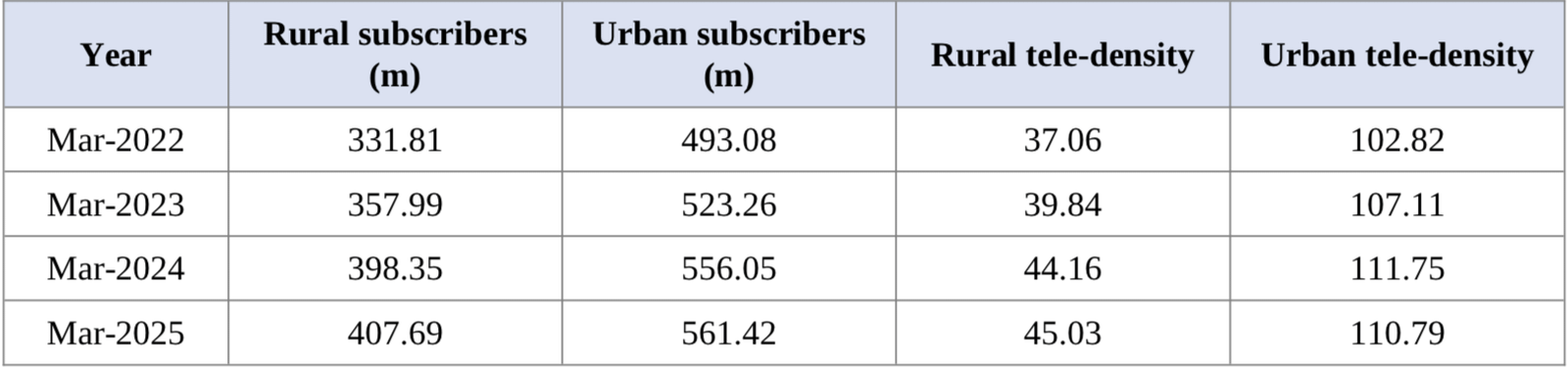
The difference between rural and urban internet tele-density was approximately 65.76 percentage points in March 2022 and 65.76 percentage points in March 2025. However, tele- density represents the number of internet subscribers per 100 population and should not be interpreted as the percentage of individuals or households with meaningful internet access. TRAI also notes that rural and urban subscriber data are based on operator-provided classifications and that population projections are used in calculating subscriber density.
Interpretation: These figures indicate continued structural differences in connectivity despite overall network expansion. Therefore, growth in the number of subscribers should not by itself be interpreted as evidence that the rural–urban digital divide has been eliminated.Source: TRAI, The Indian Telecom Services Yearly Performance Indicators, Table .
3. Household Access and Device Constraints
The literature review indicates that access to online education depends on more than network availability. Household device ownership, device quality, affordability, and sharing arrangements influence the ability of learners to participate effectively. Official MoSPI data from the 75th Round National Sample Survey (July 2017–June 2018) reported that 14.9% of rural households and 42.0% of urban households had internet facilities. The same survey reported that 4.4% of rural households and 23.4% of urban households had a computer. These figures demonstrate that household-level access was substantially lower in rural areas than in urban areas. They also illustrate why internet subscriber growth cannot be treated as equivalent to household-level access to devices and educational resources. The reviewed literature further indicates that smartphones are often an important or primary means of accessing digital educational content in rural contexts. However, access through a smartphone does not necessarily guarantee effective participation in online education. Learners may face limitations related to small screens, device sharing, affordability of data, battery availability, network reliability, and difficulties in typing or accessing learning materials.
Interpretation: The evidence therefore suggests a quality-of-access problem, in which having some form of digital connectivity may still be insufficient for sustained and meaningful educational participation.
Source: MoSPI, Key Indicators of Household Social Consumption on Education in India, NSS 75th Round.
4. Digital Capability:Access Does Not Mean Effective Use
A major finding across the reviewed evidence is the distinction between having access to digital technology and being able to use it effectively for learning. According to the Comprehensive Annual Modular Survey (CAMS), 2022–23, conducted by the Ministry of Statistics and Programme Implementation (MoSPI), 53.6% of persons aged 15 years and above in rural areas were able to use the internet, compared with 74.0% in urban areas. Among persons aged 15–24 years, the corresponding figures were 82.1% in rural areas and 91.8% in urban areas. These figures indicate that substantial rural–urban differences remain in internet-use capability, although the gap is narrower among younger people. The finding is consistent with the literature’s broader distinction between material access, digital skills, and meaningful use. Rural students may therefore cross the basic material-access threshold by obtaining a smartphone or internet connection but may continue to experience disadvantages in digital skills and meaningful educational use. The analysis consequently treats digital capability as a separate analytical dimension, rather than assuming that connectivity automatically produces educational participation.
Source: MoSPI, NSS Report No. 590: Comprehensive Annual Modular Survey, 2022–23.
5. Socioeconomic, Caste and Gender Inequality
The reviewed literature indicates that digital inequality is closely associated with wider socioeconomic and social inequalities. Access to and use of digital technologies can vary according to income, education, gender, geographical location, and social-group characteristics. Murmu (2025), drawing on figures attributed to Sharma (2022), reports differences in digital literacy across social groups: 64% for the General category, 52% for Other Backward Classes, 38% for Scheduled Castes, and 31% for Scheduled Tribes. These figures should be understood as study-level evidence reported by Murmu, rather than as a new national estimate generated by the present study. Gender also emerges as an important dimension of digital inequality. The reviewed literature indicates that household-level access does not necessarily translate into equal access for all household members. Where smartphones or other devices are shared, access may be influenced by household responsibilities, social norms, and gender roles. The evidence therefore suggests that the digital divide is shaped not only by whether a device or connection is available, but also by who controls the resource, who is able to use it, and for what purpose.
Important: Since the 64%, 52%, 38% and 31% figures in Murmur’s paper are attributed to Sharma (2022), you should either add the original Sharma reference to your bibliography after verifying it, or clearly retain the wording “Murmu (2025), reporting figures attributed to Sharma (2022)”. Do not present these figures as your own national estimates.
6. Regional Variation
The national rural average also conceals substantial regional variation. TRAI’s March 2025 data show considerable differences in rural internet tele-density across states, including 248.13 in Kerala, 59.16 in Himachal Pradesh, 57.36 in Karnataka, 53.92 in Punjab, 43.05 in Rajasthan, 33.66 in Bihar, and 34.88 in Madhya Pradesh, as reported in the study’s secondary data analysis. These figures represent subscriber-density measures, rather than the percentage of individuals attending online education. They should therefore not be interpreted as direct measures of educational participation.
Interpretation: The regional variation indicates that geography, infrastructure, affordability, and socioeconomic conditions may interact to shape digital access. A single national indicator may therefore not adequately capture the diversity of rural digital experiences across India.
Source: TRAI, March 2025 telecom indicators.
7. Institutional and Pedagogical Factors
The reviewed literature identifies teachers and educational institutions as important components of the digital education ecosystem. The challenges reported across the literature include limited teacher preparedness, inadequate institutional support, unreliable connectivity, language barriers, and differences in the availability and suitability of digital educational content. Government initiatives have attempted to address these challenges through multiple digital and multimodal platforms. PM e-VIDYA brings together DIKSHA, SWAYAM, television channels, radio, podcasts, and other forms of digital and on-air educational delivery. DIKSHA provides digital educational resources, while SWAYAM provides online courses. However, the existence of these platforms does not by itself establish equal educational use or outcomes. Their effective use depends on connectivity, device availability, digital capability, teacher preparedness, language accessibility, and institutional support. The reviewed evidence therefore suggests that digital infrastructure and pedagogical capacity need to be considered together.
8.Educational Participation and Learning Consequences
The combined evidence suggests that digital inequality can restrict participation through multiple pathways: Students may be unable to join classes because of weak connectivity; they may miss classes because a phone is Shared; they may struggle to use platforms because of limited digital skills; or they may disengage because the Home learning environment is not supportive. Jafar, Ananthpur and Venkatachalam Tamil Nadu evidence shows That urban students had better access to online education than rural students and that mobile phones became a Dominant mode of participation. Vulnerable groups with fewer resources faced greater risks of exclusion. At the same time, the literature provides an important contrasting finding: alternative and low-cost delivery Mechanisms can reduce exclusion. Kalvi TV in Tamil Nadu was reported as useful for rural students, indicating That television-based and hybrid approaches may complement internet-based learning where connectivity and Device access remain weak.
9.Psychosocial and Household Conditions.
The digital divide also has a psychosocial dimension. The literature review reports isolation, anxiety, distraction And loss of motivation among some rural students during prolonged remote learning. First-generation learners May be particularly disadvantaged when no family member is able to guide them through unfamiliar digital Platforms. Household responsibilities and family support therefore influence whether technical access is Converted into meaningful learning.
10.Integrated Thematic Summary
Analytical dimension Main evidence pattern Educational implication Infrastructure & material access Rural connectivity expanded, but density and household access remain below urban levels. Students may remain unable to access classes consistently. Digital capability Rural internet-use capability remains lower than urban capability. Device ownership alone does not guarantee effective learning. Quality of use Weak bandwidth, interruptions, device limitations and sharing affect continuity. Participation may be irregular and learning materials harder to use. Socioeconomic inequality Income and household resources shape device and data affordability. Low-resource households face higher exclusion risks. Social inequality Gender, caste and tribal status can create additional layers of disadvantage. Students with similar connectivity may still experience unequal access. Institutional factors Teacher preparedness, support and suitable content vary. Digital education quality depends on school/institutional capacity. Participation Rural and vulnerable students face greater risk of disengagement. Digital inequality can translate into unequal educational opportunities. Psychosocial/household Stress, isolation, domestic responsibilities and limited family support matter. Learning outcomes depend partly on the home learning environment.
11.Overall Findings
The integrated analysis establishes that the rural digital divide in India is multidimensional. Rural connectivity has Grown considerably, yet rural tele-density, household internet facilities and individual internet-use capability Remain below urban levels. The literature adds dimensions that cannot be captured by subscriber data alone: Device quality and sharing, affordability, digital skills, gender and social inequality, teacher preparedness, content And language, and household and psychosocial conditions. The strongest conclusion supported by the combined evidence is that digital inequality creates a significant Structural barrier to equal access to online education. However, the evidence does not justify the stronger claim That lack of internet access alone causes unequal learning outcomes. The different indicators measuredifferent Aspects of the digital divide, and the reviewed studies vary in design, sample, geography and measurement.
12.Research Gap Emerging from the Combined Analysis
The literature identifies many individual barriers, but the reviewed studies generally examine them separately. The Research gap is therefore not simply the absence of evidence about connectivity or device access. Rather, there is Limited empirical examination of how overlapping disadvantages—income, rurality, gender, caste or tribal status, Device quality, digital capability and quality of use—operate together to shape educational participation. The Present study can position this gap as its central analytical contribution.
13. Policy Implications
• Expand reliable rural connectivity while recognising that network expansion alone .
• Improve affordability and availability of suitable learning devices, especially where smartphones are shared among several learners.
• Strengthen digital skills of students, parents and teachers through practical, locally relevant training.
• Support teachers with institutional resources, training, data support and mechanisms for following up with digitally disconnected students.
• Increase local-language, low-bandwidth and downloadable learning content.
• Use television, radio, offline materials and hybrid delivery as complementary modes in areas where internet-based learning is unreliable.
• Design digital education policies with gender, caste, tribal status, income and household conditions in mind.
14. Methodological Note for Final Dissertation/Research Paper
To keep the final paper internally consistent, the methodology should describe the TRAI, MoSPI and Department of School Education and Literacy indicators as supplementary secondary documentary evidence rather than as a pooled quantitative dataset. The core analysis remains a qualitative thematic narrative synthesis of the 10 selected publications. Numerical indicators should be presented as contextual evidence and interpreted according to what each source actually measures.
Sources used for integration: LR final.docx; RESEARCH METHODOLOGY NEW.pdf; Digital Divide and Access to Online Education in Rural India –Dataset Analysis Report. Figures and study-level findings are retained as reported in the supplied documents.
Discussion
The findings of the present study demonstrate that the digital divide in rural India is a multidimensional issue that extends beyond the simple availability of internet connectivity. The analysis of the selected literature and secondary evidence indicates that rural students continue to face disadvantages in terms of connectivity, household internet access, availability and quality of digital devices, digital capability, affordability and the conditions under which digital technologies are used for education. The evidence on rural and urban internet subscribers shows that connectivity in rural India has expanded over time. Rural internet subscribers increased from 331.81 million in March 2022 to 407.69 million in March 2025, indicating substantial growth. However, this growth has not eliminated the structural difference between rural and urban areas. The continued difference in tele-density suggests that network expansion alone cannot be considered sufficient for achieving equal digital access. Importantly, tele-density measures subscriber density and should therefore not be interpreted as the percentage of individuals who have internet access. The findings further indicate that having an internet connection does not necessarily mean having meaningful access to online education. The household-level evidence shows considerable differences in internet facility and computer possession between rural and urban households. The NSS 2017–18 data reported internet facility in 14.9% of rural households compared with 42.0% of urban households, while computer possession was 4.4% in rural households compared with 23.4% in urban households. This demonstrates that household resources and device availability remain important conditions for participation in digital learning. Another important finding is the distinction between digital access and digital capability. MoSPI data indicate that the ability to use the internet among people aged 15 years and above was lower in rural areas than in urban areas. Among the 15–24 age group, internet-use capability was 82.1% in rural areas compared with 91.8% in urban areas. Therefore, students may cross the first level of the digital divide by obtaining access to a smartphone or internet connection but may still experience difficulties in using digital platforms effectively for educational purposes. The literature also demonstrates that socioeconomic and social inequalities interact with digital inequality. Income, parental education, gender, caste, tribal status and geographical location can influence access to devices, affordability of internet services and opportunities for digital learning. The evidence cited in the review reports differences in digital literacy across socialcategories, with higher levels reported for the General category than for SC and ST groups. These figures are study-level findings and should not be treated as a national estimate. TheNfindings nevertheless indicate that social disadvantage can add another layer to digital exclusion. Gender also appears to influence meaningful digital access, particularly in households where smartphones are shared among family members. In such situations, the existence of a device within the household does not guarantee equal access to it. Household responsibilities and family priorities may influence who can use the device, when it can be used and for what purpose. Thus, digital inequality may operate even when basic technological resources are physically available. Regional variation further strengthens this argument. The selected TRAI figures show substantial differences in rural subscriber density across states, with Kerala reporting considerably higher rural subscriber density than Bihar and several other states. This suggests that the national rural average can conceal important regional differences in infrastructure and digital access. Therefore, digital education policies need to consider local socioeconomic, geographical and infrastructural conditions rather than assuming that rural India represents a uniform context. The findings also highlight the role of teachers and educational institutions. Digital education requires not only student access but also teacher preparedness, institutional support, appropriate digital content and suitable modes of delivery. During the COVID-19 period, many teachers and students had to adapt rapidly to digital education, sometimes with limited training and resources. This indicates that improving digital education requires investment in human capabilities alongside technological infrastructure. An important finding from the reviewed literature is that alternative and hybrid approaches can help reduce exclusion. Evidence from Tamil Nadu suggests that initiatives such as educational television can reach students who face difficulties with internet connectivity or device access. This indicates that television, radio, offline resources and other low-bandwidth approaches can complement internet-based education, particularly in areas where reliable connectivity remains limited. The study therefore supports the understanding of the digital divide as a progression from material access to skills access and finally to meaningful usage. A student may have a smartphone but lack sufficient data, stable connectivity, digital skills, appropriate educational content or a supportive learning environment. Consequently, improving the number of internet connections alone may not automatically result in equal educational participation. Finally, the study identifies an important research gap. Existing studies frequently examine connectivity, device ownership, socioeconomic inequality, gender, caste or digital literacy separately. There is comparatively limited empirical examination of how these disadvantages overlap and interact to influence educational participation. The present study therefore contributes by bringing these dimensions together within a thematic framework. However, because the study is based on secondary evidence and thematic narrative synthesis, the findings establish patterns and relationships in the reviewed evidence rather than independently proving causal relationships.
Conclusions
The present study, based on a secondary narrative review of existing literature, concludes that the digital divide in rural India remains persistent, multidimensional, and closely connected with existing social, economic, and educational inequalities. The reviewed evidence indicates that, although rural internet connectivity has expanded substantially, significant rural–urban disparities remain in household internet access, device availability, digital skills, and the meaningful use of technology for education. The reviewed studies suggest that digital access should not be understood simply as the presence or absence of an internet connection. Effective access to online education is influenced by the affordability and quality of devices, reliability of connectivity, digital skills, household circumstances, gender and social inequalities, teacher preparedness, institutional support, and the availability of appropriate and accessible educational content.The evidence further suggests that connectivity expansion alone may not be sufficient to address educational inequalities. Policies aimed at reducing the digital divide should therefore combine reliable and affordable rural connectivity with access to learning devices, digital-skills training, teacher capacity building, local-language and low-bandwidth educational content, and alternative learning modes such as television, radio, and offline learning resources. However, because this study is a secondary narrative review, it does not establish a direct causal relationship between internet access and learning outcomes. The reviewed studies differ in their geographical coverage, research designs, samples, populations, and measurement approaches. Therefore, the findings should be interpreted as evidence of structural and multidimensional digital inequality and recurring patterns across the reviewed literature, rather than as a direct causal estimate of the effect of connectivity on learning outcomes. Overall, the reviewed evidence highlights the need to move beyond a “connectivity-only” approach towards a more inclusive digital education framework that considers infrastructure, affordability, skills, quality of use, and social conditions together. Future research should empirically examine how factors such as income, gender, caste or tribal status, rurality, device quality, digital capability, and quality of use interact with one another to influence student’s participation and educational experiences. Such research can provide stronger empirical evidence for designing equitable and context-sensitive digital education policies in rural India.
REFERENCES
1. Dadhe, P. P., & Kuthe, G. D. (2021). Assessment of availability and use of technology by students for online education during COVID-19 pandemic in rural India: A case study. Library Philosophy and Practice (e-journal), Paper 6005.
2. Garg, S., & Jhajharia, P. (2025). Pedagogical impact of digital education in Indian rural areas. Journal of Informatics Education and Research, 5(2), 4233–4241. DOI: 10.52783/jier.v5i2.2908
3. Jafar, K., Ananthpur, K., & Venkatachalam, L. (2023). Digital divide and access to online education: New evidence from Tamil Nadu, India. Journal of Social and Economic Development, 25, 313–333. DOI: 10.1007/s40847-023-00236-1
4. Kumari, P., & Mishra, P. (2024). Online education among senior secondary students of rural area of Varanasi district: Prevalence and challenges. Indian Journal of Extension Education, 60(2), 71–76. DOI: 10.48165/IJEE.2024.60214
5. Malla, H. A., Noor-ul-Amin, S., & Malla, R. A. (2024). Digital learning and digital divide: Scaling the gap of access and equity among Schedule Tribe students during Covid-19 pandemic: A case study approach. Indian Journal of Educational Technology, 6(II), 145–154.
6. Mariya, K., Shakeel, A., Shazli, T., Naqvi, H. R., Akhtar, N., & Siddiqui, M. A. (2022). Analysing the role of gender and place of residence in acceptability and satisfaction towards e-learning among university students during COVID-19 pandemic in India. SN Social Sciences, 2, Article 233. DOI: 10.1007/s43545-022-00544-z
7. Murmu, A. (2025). Unequal access and unequal outcomes: Digital inequalities and the knowledge divide in India. International Journal for Multidisciplinary Research, 7(5), 1–10. DOI: 10.36948/ijfmr.2025.v07i05.53000
8. Nayak, K. V., & Alam, S. (2022). The digital divide, gender and education: Challenges for tribal youth in rural Jharkhand during Covid-19. DECISION, 49(2), 223–237. DOI:10.1007/s40622-022-00315-y
9. Sarkar, B., Islam, N., Das, P., Miraj, A., Dakua, M., Debnath, M., & Roy, R. (2023). Digital learning and the lopsidedness of the education in government and private primary schools during the COVID-19 pandemic in West Bengal, India. E-Learning and Digital Media, 20(5), 473–497. DOI: 10.1177/20427530221117327
10. Srinivasan, M., Jishnu, D., & Shamala, R. (2021). COVID-19 and online education: Digital inequality and other dilemmas of rural students in accessing online education during the pandemic. World of Media, 4, 34–54. journal pages.
To download the copy of paper, click below
Digital Divide and Access to Online Education in Rural India