
IISPPR

Category: Blog

International Relations
PRIYANSHU KESHRI

A GEOPOLITICAL AND STRUCTURAL ANALYSIS OF THE IRAN–ISRAEL–UNITED STATES CONFLICT AND ITS IMPACT ON INDIA’S ENERGY SECURITY

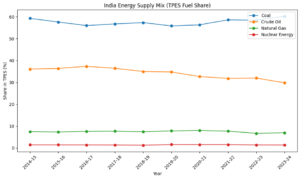
This paper examines the causal architecture of the ongoing West Asia conflict involving the United States, Israel, and Iran, and its cascading effects on global energy markets and India’s energy security. With crude oil import dependency reaching nearly 89 percent in FY 2023–24, India remains acutely vulnerable to disruptions along the Strait of Hormuz. The paper argues that the resulting LPG supply shock stems from calculated escalation rooted in four interlocking causes: Iran’s contested nuclear ambitions, the collapse of the JCPOA, militarization dynamics seen in the Twelve-Day War, and the theoretical relationship between petrostates and militarized interstate disputes — situating India’s predicament within a condition of “dual energy dependency.”

Read More »
International Relations
Tavishi Jasaiwal

India’s Export Potential in a Post-China Global Economy

This paper examines India’s export potential in the context of the changing global trade landscape shaped by the “China Plus One” strategy and global supply chain diversification. It aims to evaluate whether India possesses the structural, institutional, and policy capacity to emerge as a competitive manufacturing alternative to China by analysing export trends, policy initiatives, logistics, and integration into global value chains. Using a mixed-method approach and a comparative case study of Vietnam, the study finds that while India has made sector-specific gains, particularly in electronics and pharmaceuticals, persistent structural constraints continue to limit broad-based manufacturing competitiveness and export-led growth.

Read More »
SOCIOLOGY
Neshat Parvin

Data Acquisition to Moulding Behaviour: How Algorithms and Surveillance Shape User Behaviour

This paper examines how algorithmic systems and digital surveillance shape user behaviour in contemporary digital environments. Drawing on critical theory, surveillance studies, and qualitative interviews with university students, it explores how data extraction, personalised content, and algorithmic opacity influence autonomy, decision-making, and democratic accountability.

Keywords: Surveillance Capitalism; Digital Surveillance; Algorithmic Systems; Behavioural Modification; Algorithmic Opacity; Data Privacy; Democratic Accountability
logic – one

Read More »
Public Policies
Ashish Kumar Swain

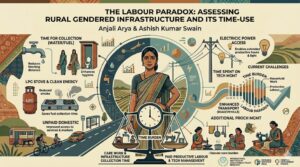
THE LABOUR PARADOX: ASSESSING RURAL GENDERED INFRASTRUCTURE AND ITS TIME-USE

This study interrogates the paradox of rural infrastructure and women’s labour in India, showing that time-saving schemes do not automatically translate into economic participation. Through a mixed-methods, intersectional lens, it argues that patriarchal norms and care burdens often absorb freed time, producing intensification rather than empowerment.

Read More »

Political Psychology of Leadership Perception

This paper examines how cognitive and psychological factors shape perceptions of political leaders and influence political processes. By linking psychoanalytic theories with historical events, it highlights the role of political psychology in governance, policy-making, social stability, national development, and international positioning.

Read More »
Public Policies
Ritika Singh Thakur

Beyond the 2% Rule: Reimagining CSR for Biodiversity and Sustainability in India

India’s mandatory CSR regime recognises biodiversity conservation but drives symbolic, expenditure-driven compliance over genuine ecological outcomes. Governance gaps between CSR law and the Biological Diversity Act weaken accountability. This study argues for outcome-based metrics, biodiversity risk integration, and alignment with global frameworks like TNFD and CSRD to transform CSR from philanthropy into ecological responsibility.

Read More »