
Public Policies

AI Automation and Its Impact on the Indian Job Market
The paper studies the implication of AI-driven automation on the Indian job market. It examines the complex relationship between automation and human labor.

The paper studies the implication of AI-driven automation on the Indian job market. It examines the complex relationship between automation and human labor.
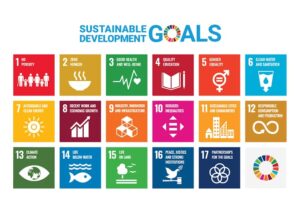
The Sustainable Development Goals (SDGs) serve as a global blueprint for addressing critical socio-economic and environmental challenges. In India, SDG localization has become a key strategy to ensure effective implementation at the state and district levels. This paper intends to present an analysis of the progress on SDG localization in the selected comparative cases, i.e., Delhi (North-West), Telangana (Hyderabad), Uttar Pradesh (Greater Noida), and West Bengal (Kolkata). It aims to quantitatively track and qualitatively assess the profiles of the district’s adaptation, customization, budgeting, and performance made so far on the local development plans and strategies in sync with the SDGs.
India and Africa share a historic bond that has evolved into a dynamic development partnership. Through collaboration in agriculture, health, education, renewable energy, and infrastructure, India supports Africa’s progress while aligning with Agenda 2063. Despite challenges like political instability, corruption, and China’s growing influence, India remains a key partner in Africa’s pursuit of sustainable development and regional integration.

India and France share a strong strategic partnership spanning defense, trade, and the Indo-Pacific region. Their collaboration in nuclear energy, space technology, and military cooperation highlights their commitment to global stability, economic growth, and technological advancement.

The digital age has reshaped communication, but it has also fueled online hate speech, state-sponsored trolling, and disinformation campaigns that undermine democracy and social cohesion. Governments manipulate narratives through digital propaganda, while social media amplifies extremism. Legal frameworks struggle to balance free speech with content regulation, as seen in Germany’s NetzDG and France’s Avia Law. Popular culture, from music to film, reflects these tensions—sometimes countering hate, other times normalizing it. Concerts, like Ariana Grande’s in Manchester, have even become targets of radical extremism. Addressing these issues requires accountability, regulation, and collective action to safeguard democratic values and global stability.

Explore India’s legislative, administrative, and military strategies in countering terrorism. This in-depth analysis covers key laws like UAPA, POTA, and TADA, intelligence measures, cross-border infiltration tactics, and technological advancements in anti-terror operations. Stay informed on India’s evolving fight against terrorism.
The Sustainable Development Goals (SDGs) set forth and adopted by the United Nations in 2015 are essentially the blueprints for achieving or bringing about world peace, prosperity, and environmental sustainability. The specific focus of the 2030 Agenda, however, is to put such agreements into action, demanding international cooperation in several areas such as poverty and economic disparities, climate change, and governance.
While global partnerships under SDG 17 regarding mobilization of resources, requisite channels of knowledge exchange, and economic collaboration are really good, it makes use of very poor tools such as Official Development Assistance (ODA) and South-South cooperation that one can see their heads hanging low in terms of innovation and infrastructural development of poor countries. Not that they do not have the potential to take these facilities to greater heights; they have the potential, although cut down by the following factors: financial disparity, political instability, and governance inefficiency. WTO has a major role in the integration of trade policies with the SDG objectives, but this integration needs to be overhauled to meet future sustainability imperatives.
Though remarkable progress has been made in areas of poverty alleviation, education, and renewable energy, enormous challenges such as financing gaps, weak governance, and fragmented policy implementation persist. Strengthening institutional frameworks and participation and making promises stand up in the cash are all necessary for achieving the 2030 Agenda. This article, through various visions, evaluates whether or not the SDGs and its member institutions have led to effective global partnerships through institutional and financial mechanisms and policy frameworks.

Intersectionality in Indian Politics: Beyond Age and Gender Anmol Yadav, Nandini Singh & Divyasri S N 1.Introduction By Anmol Yadav A crucial perspective for comprehending how caste, class, age, gender, and other characteristics interacting to influence political inclusion in India is intersectionality. This chapter compares the advantages enjoyed by others with the exacerbated obstacles encountered by marginalized groups, such as young women from underprivileged castes or rural areas. It draws attention to the systemic difficulties and achievements of people negotiating these intersections through case studies and historical research. The chapter examines present policies, highlighting their inadequacies in dealing with the complexities of crossing identities, and advocates for a more integrated approach to policy making. Intersectionality-based quotas, capacity-building efforts, and increased data collecting are among the recommendations for promoting inclusive government. Moving beyond isolated issues of youth and gender, this chapter advocates for a comprehensive framework that promotes equal representation and guarantees that India’s political system reflects its population’s variety. 2.Defining Intersectionality By Anmol Yadav The term “intersectionality” coined by Kimberlé Crenshaw describes how overlapping social identities result in distinct experiences of privilege or disadvantage. Intersectionality is very important in India, as caste, religion, gender, class, and geography all influence society. Just as young tribal men face different hurdles than urban youth, Dalit women face different political obstacles than upper-caste women. By providing insights into systemic disparities, intersectionality aids in the dissection of these overlapping inequalities. It finds chances for alliances and group efforts in addition to examining marginalization. By incorporating intersectionality into Indian politics, officials may promote inclusive representation and address the underlying causes of inequality. 3.Understanding Intersectionality in Indian Politics By Anmol Yadav 3.1 Historical Perspective Since the independence movement brought disparate groups together, intersectional identities have developed in Indian politics. While individuals like Jawaharlal Nehru and Mahatma Gandhi promoted an inclusive worldview, leaders like B.R. Ambedkar tackled caste-based inequality in addition to colonial tyranny. Women, Dalits, Muslims, and tribal people made substantial contributions while being marginalized in popular narratives; figures such as Sarojini Naidu, Begum Rokeya, and Ambedkar brought attention to the interaction of caste, class, gender, and religion. Demands for linguistic and cultural recognition led to the linguistic restructuring of states in 1956, which was a turning point in identity politics. Caste and class dynamics interacted with regionalism, as seen by statehood movements in Gujarat, Maharashtra, and Andhra Pradesh. Crucial events highlighted the links between caste and class, such as the Mandal Commission’s recommendations for OBC reservations in the 1980s. Similarly, the 1985 Shah Bano case brought attention to the linkages of religion and gender in political discourse. These instances show how caste, gender, and religion have a significant impact on Indian politics. 3.2 Theoretical Framework Kimberlé Crenshaw’s introduction of the idea of intersectionality offers a useful prism through which to examine the overlapping and interconnected systems of privilege and discrimination. Ambedkar’s views on gender and caste in India are highly relevant to intersectional research. Caste, according to Ambedkar, was a system of gradated inequality that afflicted women and Dalits in diverse ways. Additionally, intersectionality is consistent with feminist ideas that challenge gender-based inequalities and Marxist theories that tackle class injustice. Scholars such as Gopal Guru, Kancha Ilaiah, and Uma Chakravarti have developed similar frameworks in India, looking at the ways that gender, caste, and class interact to influence the lived experiences of marginalized groups. Guru’s idea of “Dalit women’s standpoint” draws attention to the unique difficulties that Dalit women encounter as a result of being marginalized in both patriarchal and caste systems. The ability of intersectionality to examine the interactions between many identities within the socio-political environment makes it applicable to comprehending Indian political systems. REFERENCES Intersectionality and Political Mobilization: Exploring How Gender Intersects with Other Identities, such as Ethnicity, Religion, and Economics Psychology of Intersectionality of Gender as Well as Other Forms of Identity: Obstacles and Dilemmas Confronting Women’s Participation in Policy Making-Vandana Singh Electing Women in Ethnically Divided Societies: Candidates, Campaigns, and Intersectionality in Bihar, India Mapping the Margins: Intersectionality, Identity Politics, and Violence Against Women of Color- Kimberle Crenshaw “Intersectionality in Practice: Reflecting on India’s Affirmative Action Policies” by Surinder Jodhka in Economic and Political Weekly (EPW). 4. Contemporary Relevance of Intersectionality in Politics By Nandini Singh 4.1. Case Studies of Political Leaders Several political leaders in India embody the principles of intersectionality, challenging multiple axes of marginalization. Mayawati, a Dalit woman leader, redefined political power structures as the four-time Chief Minister of Uttar Pradesh. Chandrashekhar Azad, the leader of the Bhim Army, has emerged as a voice for Dalit rights while aligning with broader issues of constitutional democracy and social justice. Grace Banu, a Dalit transgender activist, challenges systemic exclusion through advocacy for transgender rights. Her political engagement highlights how caste and gender identity compound discrimination, reinforcing the need for inclusive policy making. 4.2. Discussion (Palanithurai, 2005) Studies have shown that female political representatives are more concerned with social issues such as health, poverty alleviation, community development, and family welfare. Gender equality is an essential element for the sustainable progress of any nation. The goal of all- round development of the nation can be achieved only by ensuring the equal participation of both genders in various fields. In India, women are worshiped as goddesses and on the other hand, they are discriminated against. If seen, the root cause of gender inequality in Indian society lies in the patriarchal system. Eminent sociologist Sylvia Walby studied the patriarchal system prevalent in Indian society, stating that “Patriarchalism in the process and system of social structure in which man dominates, oppresses and exploits women”. The exploitation of women due to gender differences is an age-old cultural phenomenon of Indian society. The patriarchal system in the society has gained its legitimacy and acceptance from our religious beliefs, be it Hindu, Muslim or any other religion. Gender-based discrimination is widespread in India. Here, from birth to death, from education to employment, from family to political level,

The article, “Redefining Algorithmic Governance: AI for People, Policy, and Progress,” explores the evolving role of artificial intelligence in shaping public policy in India. It examines how AI is being integrated into governance, from predicting drought patterns to streamlining welfare distribution; while highlighting the challenges of algorithmic opacity, data privacy, and systemic bias. The piece raises critical questions about power dynamics in AI-driven decision-making, questioning whether true authority lies with the coder designing the algorithm, the policymaker implementing it, or the AI system itself. It draws comparisons with global AI governance models, such as the EU’s risk-based regulations, China’s state-driven approach, and the US’s corporate-influenced strategies to position India’s path forward.
Going beyond mere critique, the article presents concrete policy recommendations. It calls for the creation of an Independent AI Ethics Authority (AIEA) to oversee AI deployment, the adoption of Algorithmic Impact Assessments (AIA) to evaluate AI’s social and economic consequences, and the promotion of inclusive AI design to safeguard marginalized communities. Ultimately, the article argues that AI is not just a technological tool but a political force, capable of either reinforcing inequalities or driving inclusive progress. It emphasizes the need for transparent, accountable, and people-centric AI governance to ensure that technological advancements serve democratic values and the public good.
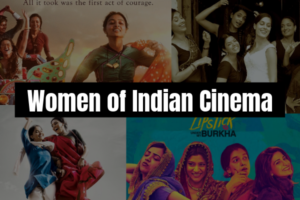
How Does Bollywood and Regional Cinema Portray Women and Violence in Films? Divyasri SN, Anmol Yadav & Nandini Singh 1. Introduction Anmol Yadav India’s perception of women and violence is shaped by cinema, a potent cultural medium that both reflects and shapes societal attitudes. Both Bollywood and regional films have an impact on public opinion in India, frequently feeding negative preconceptions. Cinema is compared to dreams in Sigmund Freud’s psychoanalytic theory, emphasizing how it shapes social conventions. Many movies still normalize violence and uphold gender inequity, even though some have progressive themes. According to a 2017 Geena Davis Institute study, women in Bollywood are significantly underrepresented, receiving only 31.5% of the screen time compared to male actors. 2. Historical Perspective Anmol Yadav Social conventions and cinematic tropes have greatly influenced how women are portrayed in Indian movies. Indian films have long employed these clichés to establish a strong emotional connection with viewers, drawing on Carl Jung’s theory of archetypes and universal symbols like the mother or the hero. Women were frequently portrayed in Bollywood’s early years (1930s–1950s) as selfless individuals who embodied virtue and parenting ideals. Devdas (1955) reaffirmed the idea that women’s value is correlated with their interactions with males, while Mother India (1957) depicted strong but conventionally constrained female roles. Nuanced depictions of women were first seen in Indian film during its heyday, which spanned the 1950s to 1970s. As an unmarried mother, Sharmila Tagore’s role in Aradhana (1969) defied social expectations. Hypermasculine themes, such as Amitabh Bachchan’s “angry young man” in Zanjeer (1973) and the action-packed Sholay (1975), which combined violence with justice, also became more popular during this time. Bollywood tended toward marketed entertainment from the 1980s to the 1990s, eschewing nuanced female characters in favor of stereotypical ones as victims or romantic interests. Negative preconceptions were reinforced by the frequent romanticization or trivialization of violence against women. Regional film, on the other hand, provided more varied representations. Bengali, Malayalam, and Tamil films explored women’s lives in more detail while capturing local sociocultural quirks. The 1964 film Charulata by Satyajit Ray delicately examined the inner lives of women. However, patriarchal storylines continued to exist, with some movies using honor or tradition to defend violence. A change has been brought about by the emergence of streaming services like Netflix and Amazon Prime, which provides room for unusual storylines and nuanced female characters. This development is changing how movies are told and how the industry makes money. 3. Bollywood and the Normalization of Violence Against Women Anmol Yadav Stalking is commonly portrayed in Bollywood as a respectable and romantic kind of courting. Male heroes who persistently seek women are portrayed in movies like Dilwale Dulhania Le Jayenge (1995) and Raanjhanaa (2013) as romantic rather than harmful. DDLJ’s famous quote, “Jaa Simran jaa, jee le apni zindagi,” for example, seems empowering at first but ultimately casts the father as Simran’s protector. With lines like “Shaadi ke baad patni ki izzat pati ke haath mein hoti hai” from Raja Ki Aayegi Baraat (1997) and “Pati Parmeshwar hota hai” from Biwi No. 1 (1999), Bollywood further reinforces negative gender stereotypes by reducing women to subservient positions. In movies like Baaghi (2016) and Kabir Singh (2019), women are also employed as plot elements for male retaliation, with their misery serving as an excuse for male violence. The assumption that women must experience pain in order to regain power is further supported by movies like Bandit Queen (1994), which examine domestic abuse through extreme retribution scenarios. Sheila Ki Jawani and Munni Badnaam Hui are two examples of item songs that further objectify women by treating them as objects for males to consume. (References – https://epgp.inflibnet.ac.in/epgpdata/uploads/epgp_content/women_studies/gender_studies/10.women_media_and_films/28._women_in_regional_films/et/6359_et_et_28.pdf Role of women in contemporary Indian cinema: A psychological perspective -Berlin school of business and innovation- https://www.berlinsbi.com/blog/role-of-women-in-contemporary-indian-cinema-a-Psychological-perspective Critical Analysis of the Representation of Women in Indian Cinema Dr. Ruchika Chaudhary https://research-communications.cmpcollege.ac.in/wp-content/uploads/2024/02/10-Dr.-Ruchika-chaudhary-Critical-Analysis-of-the-Representation-of-Women-in-Indian-Cinema-Modified.pdf The Impact of Gender Representation in Indian Films https://geenadavisinstitute.org/research/the-impact-of-gender-representation-in-indian-films/ Study on the Impact of Bollywood Films on the Youth Population in India https://www.researchgate.net/publication/383177362_The_study_on_impact_of_bollywood_films_on_the_youth_population_in_India https://www.shethepeople.tv/film-theatre/regional-films-on-feminism-jhimma-uyare-sinjar/ ) 4. Gender Stereotypes and Tropes in Indian Cinema Nandini Singh 4.1. The “Damsel in Distress” Trope Hindi cinema or should we say the whole Indian cinema has been male-oriented, it has always been in search of such a hero who talks about everyone and fights for everyone. In the inception of Indian cinema, female characters remained in historical, mythological, religious and traditional roles. The earliest change in this theme is visible in 1935 when Dadasaheb Phalke produced the film Hunterwali. Indian cinema seems to be changing with the changing society.Early years after independence, films like Patita, Ek Hi Raasta and Sadhna etc. depicted the indecisiveness of a woman, her chastity and her position in the hegemonic system of a male dominated society, but herchanged forms come to the fore in the movies made in later years.This was the period in the story of Indian cinema when women were out of the field of producing and directing films and this field was completely in the hands of men. 4.2. The “Item Girl” Phenomenon The objectification and sexualization of women in Indian films have been normalized to the extent that it is hard to imagine a film without the mandatory item number or a scene that shows the female lead in a provocative outfit. In most films, women are portrayed as mere objects of desire, and their characters are often reduced to their physical appearance and sexuality. One of the most egregious examples of this is the item number. In an item number, a woman dances to a sexually charged song, dressed in revealing clothes, and is often surrounded by men. The item number is meant to be a highlight of the film, and filmmakers believe that it is necessary to include it to attract audiences. However, it reduces women to sexual objects and sends a message that women’s bodies are for male consumption. This portrayal not only diminishes the value of women but also reinforces gender stereotypes that limit women’s choices and