AUTHORS: KAVYA MISHRA AND NISHAT NAWAL
ABSTRACT:
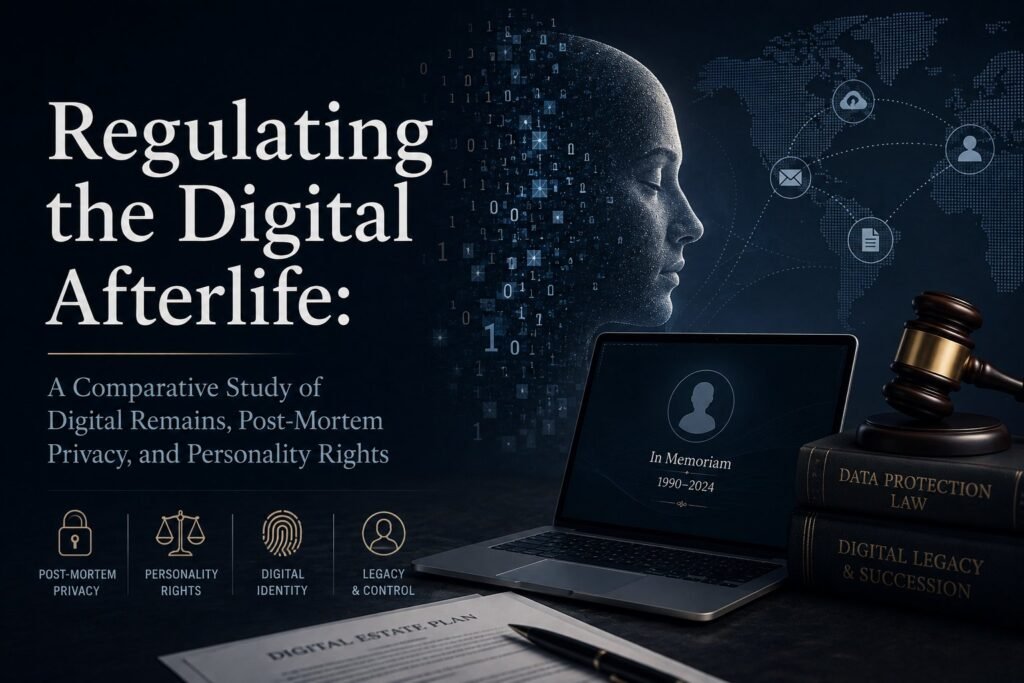
Emergence of digital technologies has also come up with new legal and ethical challenges concerning digital remains, post-mortem privacy, and the commercial exploitation of a deceased person’s likeness. We knowingly and unknowingly leave many digital footprints behind, and those remain forever. This paper does a doctrinal and comparative analysis and tries to answer the question if India’s existing legal frameworks are sufficient or does India needs new legislation specifically dedicated to these issues. This study finds that unlike foreign jurisdiction like France or Germany, there are no legislation and neither does India relies on case laws. Most laws in India are outdated in context of the rapid growth of AI and digital technologies and are also only in favor of living individuals. This paper argues for a comprehensive legal framework for protection of privacy rights for individuals even after death, therefore ensuring that Indian laws are always in par with the advancement in technology, while also preserving the constitutional values of dignity, autonomy, and informational privacy.
Keywords: Digital remains, post-mortem privacy, commercial exploitation, autonomy, privacy, France post-mortem, Germany post-mortem, GDPR.
1. INTRODUCTION:
The world is growing rapidly in every sector, especially in technology. With growing technology, the world is achieving great heights, but it is at the same time increasing the harm on normal citizens of the world who are unaware of how their data is circulating throughout. The world is in a digital age and unintentionally people leave behind extensive online footprints which remain in the world even after they are dead. An individual’s Instagram, Facebook, emails, cloud storage, cryptocurrency and various other online assets collectively form something that is known as a person’s “digital remains.” These digital remains are different from physical property as they remain in this world indefinitely. Even after someone’s death, these remains influence the deceased as well as the family members surviving them.
The digital remains of a dead person hold the power to socially, emotionally and even maybe economically influence the family members who are left behind. It should be an outmost priority to protect everything linked to it as it raises several complex legal and ethical questions. In today’s age, post-mortem privacy is still somewhat a myth as there are no certain answers rightfully so. What is private property? What is an inheritable property? Who should control a deceased person’s digital accounts? Can personal information remain private after death? And most importantly, should family members inherit access to digital assets, or should the deceased’s wishes prevail? With the advancement of technology day by day, a whole different lot of obstacles are rising. Artificial intelligence and digital technologies have enabled the commercialization of a deceased person’s image, voice, and even their personality without any prior consent. Celebrities like Michael Jackson, Marilyn Monroe, etc. have been victims of this, thus creating huge concerns regarding dignity, autonomy, and exploitation.
With this rapid growth, several jurisdictions have either reconsidered or tried to bring in forth legal statutes regarding digital remains and post-mortem privacy. Many countries, especially the ones in the European Union (EU) have come up with various approaches to tackle these issues. From data protection mechanisms that allow individuals to determine the fate of their digital data after death, to judicial recognition of posthumous personality and publicity rights. While it is impeccable that countries are trying to protect their citizens from harm, it should also be noticed that despite these developments none of the models completely resolves the growing conflict between privacy, inheritance, and commercial exploitation.
As mentioned, that several foreign jurisdictions have begun developing statutory mechanisms to get the grips on the growing concern about digital remains and post-mortem privacy, India’s stand on this matter remains fragmented. Even though the world keeps moving forward, India’s legal framework is still behind. India is very far from having a dedicated legal framework to this cause and the protection of a person’s privacy rights is scattered among constitutional principles, the DPDP Act, intellectual property law, succession law, and judicial doctrines. In India, in the landmark case of Justice K.S. Puttaswamy v. Union of India (2017)1 right to privacy was unanimously declared a fundamental right under Article 21 of the Constitution of India. Even though privacy was made a fundamental right, it only was in favor of the living, for a deceased person; this fundamental right extinguishes. Even in the recent case of Sadhna Shah & Anr. V. Apple Inc. (May 2026)2 it was ruled that a deceased person’s right to privacy extinguishes upon death, and thus no lawful heirs can be blocked from accessing their digital estate.
All the existing resources extensively examine digital remains and their inheritance along with exploitation of a deceased’s likeness independently. However, limited attention is given to the convergence of these concepts. Especially in a huge country like India the absence of a proper dedicated framework to such an important issue leaves uncertainty about ownership, control, and commercial exploitation of a deceased person’s digital identity. This paper examines the legal challenges surrounding these issues through a doctrinal and comparative analysis of Indian law and selected foreign jurisdictions. The paper evaluates existing legal gaps and proposes recommendations for developing a coherent regulatory framework that will suit the Indian context and maybe even the world.
1Justice K. S. Puttaswamy (Retd.) v. Union of India, (2017) 10 SCC 1 (India). 2Sadhna Shaishav Shah v. NIL, 2026 SCC OnLine Dis Crt (Guj) 1
Citation Style: All citations and references in this research are presented in accordance with the American Psychological Association (APA), 7th edition guidelines.
2. RESEARCH METHODOLOGY:
2.1 Research Design
This study followed the comparative doctrinal legal research methodology to examine digital remains, post-mortem privacy, and the commercial exploitation of a deceased person’s likeness. In this paper we have researched to evaluate if the existing legal frameworks adequately protect the privacy, dignity, autonomy, and the commercial interests of the deceased.
Doctrinal legal research involves the systematic identification, interpretation, and synthesis of legal principles, judicial precedents, constitutional provisions, policy documents, and academic scholarship.3 Since in this paper we are focusing on current legal standings, analysis of gaps, and proposing legal reforms, a doctrinal methodology is the most appropriate framework.
The study further does a comparative analysis of different jurisdiction like France, Germany and India to understand the raised issue better as these represent diverse legal responses regarding data protection, personality rights, digital inheritance, and post-mortem privacy. The comparison of these jurisdictions helped in identifying best practices and assessing their potential application in the Indian legal framework.4
Additionally, alongside descriptive function, the research adopts a normative orientation. It examines whether the existing legal standings address the challenges created by digital technologies, AI, and the increasing commercial exploitation of digital identities after death. Based on the analysis, the study puts forward recommendations for strengthening India’s legal framework.5
2.2 Research Paradigm
This paper is situated within the legal doctrinal paradigm, where we focused on analyzing statutes, court judgements, and legal principles to answer our questions.
2.3 Sources of Data
The research relies exclusively on secondary sources of data. Primary legal materials include constitutional provisions, statutes, judicial decisions, delegated legislation, documents relating to privacy, succession, data protection, and personality rights. Secondary sources include books, peer-reviewed journal articles, law commission reports, and scholarly publications concerning digital remains, post-mortem privacy, AI, digital inheritance, and personality rights.
2.4 Method of Analysis
The collected materials are analyzed through doctrinal and comparative legal analysis. Comparative analysis is done to identify similarities, differences, and potentials of selected jurisdictions. The findings then were evaluated to identify the legal gaps in the Indian legal framework and later this was used to formulate recommendations for a comprehensive and dedicated legal framework for governing post-mortem digital rights.
2.5 Scope and Limitations of the Study
The scope of this research is limited to legal regulations of digital remains, post-mortem privacy, and the commercial exploitation of a deceased person’s likeness. The comparative analysis is limited to India, France, and Germany as these jurisdictions provide significant doctrinal and regulatory developments relevant to the research. Furthermore, the study does not include empirical research and interviews; it is limited to doctrinal analysis based on existing legal materials.
3Hutchinson, T., & Duncan, N. (2012). Defining and describing what we do: Doctrinal legal research. Deakin Law Review, 17(1), 83-119. 4Mania, K. (2024). Legal protection of revenge and deepfake porn victims in the European Union: Findings from a comparative legal study. Trauma, Violence, & Abuse, 25(1), 117-129. 5Cunneen, M., Anandfinn, R., Friel, R., Tennent, P., & Brandt, S. S. (2025). From bones to bytes: Anticipating and addressing the governance challenges of human digital remains and posthumous digital human twins. AI & Society. Advanced online publication.
3. LITERATURE REVIEW:
3.1 Unnominated nominees and digital legacies: Evaluating India’s legal framework for postmortem privacy and proposing comprehensive reforms.
In this paper the authors Jayashree & Kamali (2024) examine growing legal challenges surrounding post-mortem privacy and its management in India. In this paper the authors focus on how Indian legal framework does not regulate ownership, access, or even transfer of digital assets after death properly. They observed that the Digital Personal Data Protection Act, 2023 is limited because it doesn’t provide clear provisions regarding these raising concerns of posthumous data protection. The authors refer to Revised Uniform Fiduciary Access to Digital Assets Act (RUFADAA) and recommend the enactment of a comprehensive dedicated legislative framework filling the gaps left in the India framework. This study contributed greatly to Indian context of digital remains and their protection.
3.2 Postmortem Privacy
The authors of this paper Allen and Rothman (2024) challenge the traditional laws regarding privacy laws in relation to individual’s death. They have talked about how the traditional laws follow the principle of “no privacy rights for the dead” and they argued that post-mortem privacy is necessary for not only respecting the deceased but also in protecting the interests of the future decedents. They also argue that the commercial value of celebrities should not be prioritized, but it should extend to every individual. This work is of great importance as it focused on privacy being a legal right applicable beyond celebrity identity and digital assets.
3.3 Digital Remains: Property or Privacy?
Birnhack and Morse (2024) examine the legal characterization of digital remains. They analyzed whether digital remains be governed under property law or privacy law. They argue that digital remains cannot be put under a uniform category and distinguish them into four different categories. They further in the paper argue that a living individual should be providing reasonable protection regarding how they want their data to treated as after death while also balancing public and private interests. However, this paper does not talk about the commercial exploitation of a deceased person’s identity or the practical application of its framework in jurisdictions lacking dedicated legislation, such as in India.
3.4 Protecting post-mortem privacy: Reconsidering the privacy interests of the deceased in a digital world.
The authors Edwards and Harbinja (2013) provide one of the earliest and most influential legal analyses of post-mortem privacy in the digital age. They again argue about traditional law not giving adequate protection to privacy after death. This work also does a comparative analysis of common law and civil law jurisdiction on privacy rights after death including personality rights, defamation, copyrights etc. They observe that these mechanisms only lead to fragmented and inconsistent protection. The study proposes legislative reforms, improved contractual reforms for social media platforms, and better safeguard against technological digital remains.
3.5 What post-mortem privacy may teach us about privacy?
Kohl (2022) examines the issue of post-mortem privacy through the lens of medical confidentiality as it is one of the few legal contexts where it is an obligation to maintain privacy after death. She argues that the exception shows that privacy is not just an individual right that terminates upon death but is also rooted in broader social relationships and institutional responsibilities. The work argues that protecting a deceased’s privacy later safeguards the family surviving him/her. The study further mentions that digital legacies need to be understood in a broader spectrum focusing mostly on conceptual and doctrinal analysis.
3.6 Post-mortem privacy and the latest GDPR legislative shifts.
Terletska (2023) examines the evolution of post-mortem privacy within the European Union by analyzing recent developments in the General Data Protection Regulation (GDPR) and the judicial decisions concerning the issue of digital inheritance. The author talks about how LG Berlin Facebook case has boosted the conversations on complications of inheritance of digital assets by legal heirs due to the absence of a coherent legal framework governing posthumous privacy. The study argues that even though GDPR has protected privacy rights it gives limited protection to deceased’s and about AI and advancing digital technologies, however, it is also highlighted that it gives power to member states for making any law on this issue. The author concludes by mentioning that a common law on this issue is necessary for consistent and better legal protection.
3.7 The Digital Afterlife: Post-mortem privacy and proprietary rights in the information age.
Author Chaturvedi (2026) in this paper talks about the inconsistencies and uncertainties that surrounds digital remains, post-mortem privacy, and digital succession within the Indian legal framework. She argues that the existing succession laws in India were enacted in 1925 and 1956 that thus lacks the addition of digital assets. The traditional laws in India are outdated thus they adequately fail to cover the issues like digital accounts, cryptocurrencies etc. The article also highlights how laws like Information Technology Law, 2000 and Digital Personal Data Protection Act, 2023 both fail to provide a comprehensive mechanism for transfer, management, or even the protection of digital assets after death. The author through this paper contributes to Indian legal system by integrating succession law, privacy, and constitutional dignity into a united framework.
3.8 Rest in Privacy: Legal analysis of posthumous digital afterlife.
The author Anoosha Ali (2026) argues in this paper that digital identities, including social media accounts, emails, cloud storage, and other online financial assets are integral part of person’s identity thus requiring legal protection even after death. The study highlights the inefficiency of existing Indian laws when it comes to protecting the privacy rights of a deceased individual. She observed that neither the DPDP Act 2023 nor the other succession laws have any regulation for post-mortem digital privacy or administration of digital assets. The study also highlights the importance of having digital executors along with providing mechanisms for managing digital assets, and balancing the privacy interests of deceased, legal heirs, and also the platform providers. The author in this paper puts pressure on having a dedicated legislation for the legal vacuum in India.
3.9 India’s take on legal remedy of passing off: A celebrity’s perspective.
Salar and Sinha (2021) examine the legal protection that are available for celebrities against commercial exploitation of their identity through common law remedy of passing off. They observed that in India these rights are mostly protected through judicial interpretation rather than a dedicated statutory framework. The authors also did a comparative analysis with the United States and the United Kingdom and noticed that Indian Courts have increasingly recognized the commercial value of celebrity personas while relying on passing off and other related intellectual property laws. The article primarily focuses on living celebrities, but its discourse is highly relevant to post-mortem privacy and digital legacies as it tries to cover the idea of legal ambiguity surrounding whether personality and publicity rights survive death. The study provides a great foundation for examining the commercial exploitation of deceased’s individuals’ rights in India.
3.10 Digital legacy: Redefining estate law in the age of social media and virtual assets.
Chowdhury (2025) in this paper examines the growing challenges concerning digital legacies in the context of traditional estate law. He argued that old succession laws are not in par with the new era of advanced digital technologies. Through comparative analysis of legal developments in different jurisdictions like the United States or the European Union, the author recommends for a dedicated legislation that will recognize digital assets into inheritance law. While this study’s primary focus is on succession and estate administration, it also underscores the importance of balancing the posthumous privacy interests of the deceased with the rights of heirs. The article has contributed greatly to the area of digital inheritance by demonstrating the urgent need for a modern legal framework.
4. DATA ANALYSIS:
4.1 Conceptual Background.
The study questions whether the current statutory protections are indeed able to regulate the exploitation and commercialization of digital likeness and whether the statutory provisions sufficiently respect the posthumous autonomy of the individual.6 The research in an effort to achieve this, uses a comparative doctrinal approach whereby the strong personality rights of the civil law tradition will be compared with the more divided and property-oriented systems that are characteristic of common law traditions. This approach aims to analyze existing regulations in an analysis of legal judgments and new legislation to determine whether existing regulatory instruments are sufficient.78
The analysis also incorporates an examination of digital estate management policies and existing data protection laws to determine the feasibility of a single post-mortem privacy standard. The aim of the study is to explore whether a consolidated regulatory regime achieved by merging these different legal traditions would be better able to address the problems generated by the commodification of personal data without consent. This study further explores the tension between the commercial interests of the platform providers and the residual privacy expectations embedded in a user’s digital footprint. The study contextualizes these concerns in the wider discourse of digital human rights, highlighting a critical need to re-examine the boundaries between posthumous publicity rights and legitimate interests of service providers. The study in particular raises doubts about the shift from estate law based on legacy to inheritance models based on data. This question investigates how the transition from legacy-based estate law to data-based inheritance models complicates the enforcement of personality rights against corporate interests.9
6Allen, A. L., & Rothman, J. E. (2024). Postmortem privacy. Michigan Law Review, 123(2), 285-354. 7Du, W. (2025). The civil law positioning of data rights and its implementation pathways in the inheritance system. Journal of Modern Educational Theory and Practice, 2 (12). 8Huang, X., & Guo, L. (2025). Navigating the risks of generative AI: A comparative analysis of international regulatory approaches. Problemy Ekorozwoju / Problems of Sustainable Development, 20 (2)
4.2 Meaning of Digital Remains
Digital remains are digital data, online accounts, electronic communications, and virtual assets that remain with a person after they die. These include social media accounts, email, cloud storage, pictures and videos, financial accounts, cryptocurrencies, websites, digital intellectual property, and new forms of digital identity such as content created by AI and virtual avatars.10
Digital remains, unlike physical possessions, are often stored forever on servers owned by private technology companies, as “most content created by users is co-owned by the platform on which it is stored,” and internet corporations often “get full rights to user information upon the event of death.”11 This creates complex issues of ownership, access, privacy and post-death rights that are largely beyond the realm of classical inheritance doctrine.
4.3 Categories of Digital Remains
Today, academic taxonomies identify at least four types of digital remains, which are intangible objects, property-related data, intellectual property, and personal data, all of which raise separate legal questions and require separate regulatory responses.12 With the quick digitalization of human life, online identities have become a part of an individual’s personal, social, and economic existence. As such, digital remains should not be regarded simply as technological artifacts but as extensions of personality, autonomy and property, deserving legal recognition and protection.13 This recognition is justified by several interrelated considerations.
4.4 Privacy and Dignity Concerns
Digital remains first contain information that is very sensitive in nature, such as private correspondence, medical records, financial information and personal photographs. Although the person is deceased, open availability of such information could be a breach of the deceased’s dignity and the privacy interests of their living relatives, which scholarship has identified as the relational-living interest.14 European approaches are increasingly viewing such data through the
9Edwards, L., & Harbinja, E. (2013). Protecting post-mortem privacy: Reconsidering the privacy interests of the deceased in a digital world. Cardozo Arts & Entertainment Law Journal, 32 (1), 1-47. 10 Chowdhury, J. (2025). Digital legacy: Redefining estate law in the age of social media and virtual assets. Legal Research & Analysis, 3(1). 11 Ohman, C., & Floridi, L. (2017). The political economy of death in the age of information: A critical approach to the digital afterlife industry. Minds and Machines, 27(4), 639-662. 12 Birnhack, M., & Morse, T. (2022). Digital Remains: Property or Privacy? International Journal of Law and Information Technology, 30(3), 280-301. 13 Park, Y. J., & Sang, Y., Lee, H., & Jones-Jang, S. M. (2020). The ontology of digital asset after death: Policy complexities, suggestions and critique of digital platforms. Digital Policy, Regulation and Governance, 22(1), 1-14
lens of “informational self-determination,” a principle originally articulated to govern antemortem privacy, but increasingly recognized as valid beyond biological death.15 Thus, legal safeguards are required to prevent unauthorized disclosure, misuse, or exploitation of digital content. Digital remains have become an integral part of modern human life, both in terms of personal identity and valuable digital resources.16 As society, people are becoming more dependent on digital technologies, legal protection should be comprehensive so that privacy and economic interests can be preserved, abuse can be prevented, digital succession can be allowed, and human dignity and autonomy can be protected after death.17 Therefore, it is not only desirable but also necessary to acknowledge digital remains within the existing legal structures in order to respond to the challenges of the digital era.1819
Indian law does not recognize a general right to post-mortem privacy or posthumous personality rights.20 However, judicial precedents and constitutional principles point to a slow movement towards the perception of some rights that survive the death of the individual, particularly with respect to dignity, reputation, and commercial identity.21 The legal setting remains fragmented, and there is no specific law to regulate digital remains or posthumous data protection.22 This absence is not unusual in the common law world: in the English, U.S. and other common law systems, the prevailing principle has traditionally been actio personalis moritur cum persona, i.e. personal causes of action die with the deceased, while economic claims survive and pass to heirs in testacy or intestacy.23 India as a common-law jurisdiction with strong civilian undercurrents, inherits this doctrinal baseline.24
14 Allen, A. L., & Rothman, J. E. (2024). Postmortem privacy. Michigan Law Review, 123(2), 285-354. 15 Buitelaar, J. C. (2017). Post-mortem privacy and informational self-determination. Ethics and Information Technology, 19(2), 129-142. 16 Harbinja, E., Morse, T., & Edwards, L. (2026). Digital remains and post-mortem privacy in the UK: what do users want? International Review of Law, Computers & Technology, 40(1), 4–27. 17 Park, Y. J., & Sang, Y., Lee, H., & Jones-Jang, S. M. (2020). The ontology of digital asset after death: Policy complexities, suggestions and critique of digital platforms. Digital Policy, Regulation and Governance, 22(1), 1-14. 18 Allen, A L., Rothman, J. E. (2024). Postmortem privacy. Michigan Law Review, 123(2), 285-354. 19 Birnhack, M., & Morse, T. (2022). Digital Remains: Property or privacy? International Journal of Law and Information Technology, 30(3), 280-301. 20 Jayashree, A., & Kamali, R. (2024). Unnominated nominees and digital legacies: Evaluating India’s legal framework for postmortem privacy and proposing comprehensive reforms. International Journal for Multidisciplinary Research, 6(6). 21 Chopra, P., Sony, R. A. L., & Chopra, S. (2025). Generative AI, copyright and personality rights: A comparative legal perspective. Legal Issues in the Digital Age, 6(3), 23-51. 22 Birnhack, M., & Morse, T. (2022). Digital remains: Property or privacy? International Journal of Law and Information Technology, 30(3), 280-301
4.5 Constitutional Protection of Privacy and Human Dignity
The Supreme Court of India has also held the right to privacy as a fundamental right under Article 21 of the Constitution of India in the case of Justice K.S. Puttaswamy v. Union of India. The right to privacy is generally considered a personal right and ends on death.25 Hence, the constitutional right to privacy does not explicitly include the dead. However, Indian courts have increasingly emphasized that human dignity, another facet of Article 21, may continue to be entitled to protection even after death, a principle reflected in judicial rulings that mandate respectful treatment of human remains and protection of the dignity of the deceased.26
4.6 Recognition of Personality Rights in India
Personality rights, which include the right to control one’s name, image, likeness, voice, and identity, have been recognized by the courts as protections available primarily to living persons.27 Indian courts have developed these rights through the common law tort of passing off and constitutional principles, not a comprehensive statutory framework.2829 The legal position is especially poor in the case of digital remains.
The absence of a dedicated legal framework concerning digital remains shows a gap in Indian law. The law in India is fragmented and thus shows inconsistencies. In conclusion, post-mortem interests are only recognized in a limited and indirect way in Indian law today, through the principles of dignity, reputation, succession, and in certain situations, personality rights.3031 It does not recognize a separate legal right to post-mortem privacy and does not offer a complete regime for the protection of digital remains.3233
23 Edwards, L., & Harbinja, E. (2013). Protecting post-mortem privacy: Reconsidering the privacy interests of the deceased in a digital world. Cardozo Arts & Entertainment Law Journal, 32 (1), 1-47. 24 Chandra, M. (2025). The business of being you: Evolving law of personality rights in India. Trends in Intellectual Property Research, 3(2), 1-13. 25 Chopra, P., Sony, R. A. L., & Chopra, S. (2025). Generative AI, copyright and personality rights: A comparative legal perspective. Legal Issues in the Digital Age, 6(3), 23-51. 26 Jayashree, A., & Kamali, R. (2024). Unnominated nominees and digital legacies: Evaluating India’s legal framework for postmortem privacy and proposing comprehensive reforms. International Journal for Multidisciplinary Research, 6(6). 27 Chopra, P., Sony, R. A. L., & Chopra, S. (2025). Generative AI, copyright and personality rights: A comparative legal perspective. Legal Issues in the Digital Age, 6(3), 23-51. 28 Salar, N., & Sinha, S. (2021). India’s take on legal remedy of passing off: A celebrity’s perspective. Indian Journal of Law and Technology, 17(2). 29 Mahalwar, V. (2021). Burgeoning right of publicity: An overview of the Indian experiences. Journal of World Intellectual Property, 24(1-2), 28-40. 30 Jayashree, A., & Kamali, R. (2024). Unnominated nominees and digital legacies: Evaluating India’s legal framework for postmortem privacy and proposing comprehensive reforms. International Journal for Multidisciplinary Research, 6(6). 31 Chopra, P., Sony, R. A. L., & Chopra, S. (2025). Generative AI, copyright and personality rights: A comparative legal perspective. Legal Issues in the Digital Age, 6(3), 23-51
5. Comparative Analysis of Foreign Jurisdiction:
5.1 Evolution of Post-Mortem Privacy in today’s age
With the rapid growth of technology, especially digital technology, the way an individual creates stores, or even interacts with their data has drastically changed. Unlike physical possessions, our digital footprints like emails, cloud storage, social media profiles, biometrics, etc. remain in this world indefinitely. Even after the owner of these things dies, they continue to exist, which means that death no longer signifies that one’s informational presence is gone. This raises various legal and ethical questions regarding privacy, inheritance, identity, and the commercial exploitation of digital remains.3435 As we know that digital platforms have started to increasingly retain and even monetize user-generated data, the absence of clear legal framework governing post-mortem data protection has become a significant regulatory issue.
Actio personalis moritur cum persona, a Latin legal maxim which means that “a personal right of action dies with the person”. Traditional legal systems have focused on this principle and have always assumed that personal rights, particularly the right to privacy terminates upon death. However, if we see now, this assumption has increasingly become inadequate in this digital era where personal data generates economic value, shape public memory, and even makes way for AI-generated reactions of deceased.36 Because this is a huge shift, several jurisdictions have reconsidered whether legal protection should be extended beyond living. This extension is necessary to preserve dignity and autonomy of the deceased, alongside it also safeguards the legitimate interests of surviving family members and society. Empirical studies have demonstrated that public opinion favors greater and better post-mortem control over digital data. For instance, Harbinja, Morse, and Edwards (2025) have reported that approximately 80% of the respondents agreed that privacy is an essential component of human dignity,37 while CNIL’s nationwide surveys also reveal that a majority of French citizens preferred the deletion of their personal data rather than its indefinite retention after death.38
32 Jayashree, A., & Kamali, R. (2024). Unnominated nominees and digital legacies: Evaluating India’s legal framework for postmortem privacy and proposing comprehensive reforms. International Journal for Multidisciplinary Research, 6(6). 33 Birnhack, M., & Morse, T. (2022). Digital remains: Property or privacy? International Journal of Law and Information Technology, 30(3), 280-301. 34 Kohl, U. (2022). What post-mortem privacy may teach us about privacy. Computer Law & Security Review, 47, 105737. 35 Bygrave, L. A. (2014). Data privacy law: An international perspective. Oxford University Press. 36 Kohl, U. (2022). What post-mortem privacy may teach us about privacy. Computer Law & Security Review, 47, 105737. 37 Harbinja, E., Morse, T., & Edwards, L. (2025). Digital remains and post-mortem privacy in the UK: What do users want? International Review of Law, Computers & Technology. Advance online publication
5.2 The European Union: GDPR and the Limits of a Harmonized Framework
Within Europe, the General Data Protection Regulation (GDPR) establishes the uniform standards that govern the collection, processing, and transfer of personal information across the Member States.39 Despite its comprehensive protection of living individuals, the GDPR expressly excludes the personal data of deceased persons from its scope under Recital 27, but it gives the Member States the right to enact their own post-mortem data protection regimes.40 Terletska (2024) observes that this deliberate legislative choice reflects the absence of a common consensus regarding whether privacy should survive death.41
This power to the Member States has resulted in fragmented legal protection across Europe. For example, France recognizes post-mortem digital autonomy through statutes whereas, some others including Germany, regulates this by inheritance law rather than privacy legislation. Lee Andrew Bygrave argues that this fragmented rule creates legal uncertainty, especially when digital platforms are spread over different jurisdictions.42 Kuner (2020) also mentions that cross-border governance of data is very complex when the legal framework is based on nationality or residence of the deceased rather than harmonized European standards.43
The absence of a uniform legal framework enables tech companies to assume a quasi-regulatory role by determining post-mortem access, memorialization, or deletion through their own contractual policies. Uta Kohl in her paper argues that when private platforms are allowed to be primary arbiters, a significant concern regarding accountability, commercial misuse, and the protection of individual autonomy rises. Furthermore, GDPR has little guidance on AI-generated materials or posthumous commercial exploitation of personal data. This shows gaps that exist as the law was not originally designed to address this issue.44
5.3 France: A Pioneer in Recognizing Post-Mortem Digital Autonomy
France was one of the first and most progressive legal systems to address the issue of protection of personal data after death. The gap that GDPR left by excluding deceased individuals, France bridged it through Digital Republic Act, 2016 (Loi pour une République numérique).45 Article 85 of this Act enables individuals to leave a digital will mention how they would want their data to be managed as and by whom.46
The French model focuses more on respecting wishes of the deceased rather than leaving the decisions to heirs or digital service providers. The individuals can also appoint an executor to oversee the execution of their wishes. In the absence of a digital will, close relatives are allowed to perform limited rights to settle the deceased’s estate or preserve their memory.47
France has also taken public awareness initiatives, The Commission Nationale de I’Informatiquw et des Libertés (CNIL), through its Our Data After Us48 report highlighted the growing public concern over the management of digital remains. Empirical findings suggest that a good majority of French citizens want their personal data to be deleted after death rather than tech companies retaining those data.49 Such findings reinforce that, along with technological realities, public expectations should also be met.
38 Commission Nationale de l’Informatique et des Libertés. (2025). Our data after us: 10th Innovation and Foresight Report. 39 Kuner, C. (2007). European data protection law: Corporate compliance and regulation (2nd ed.). Oxford University Press. 40 European Parliament & Council of the European Union. (2016). Regulation (EU) 2016/679 of the European Parliament and of the Council of 27 April 2016 on the protection of natural persons with regard to the processing of personal data and on the free movement of such data, and repealing Directive 95/46/EC (General Data Protection Regulation). Official Journal of the European Union, L119, 1–88. 41 Terletska, M. (2023). Post-mortem privacy and the latest GDPR legislative shifts. L’Europe Unie (United Europe), 20, 44–53. 42 Bygrave, L. A. (2014). Data privacy law: An international perspective. Oxford University Press. 43 Kuner, C. (2007). European data protection law: Corporate compliance and regulation (2nd ed.). Oxford University Press. 44 Kohl, U. (2022). What post-mortem privacy may teach us about privacy. Computer Law & Security Review, 47, 105737
Despite being so progressive, the French model isn’t safe from limitations. The effectiveness of this model depends on individuals creating their digital will and many users remain unaware of this or fail to complete the task.50 The model also provides limited guidance on AI-generated replicas, deepfakes, and commercial exploitation of a deceased person’s likeness.5152 Although France is one of the most progressive statutory models, it proves that even advanced legal frameworks continue to struggle with technological developments extending beyond conventional notions of privacy.
45 France. (2016). Loi n 2016-1321 du 7 octobre 2016 pour une République numérique [Digital Republic Act]. Légifrance. 46 Terletska, M. (2023). Post-mortem privacy and the latest GDPR legislative shifts. L’Europe Unie (United Europe), 20, 44–53. 47 Commission Nationale de l’Informatique et des Libertés. (2025). Our data after us: 10th Innovation and Foresight Report. 48 Commission Nationale de l’Informatique et des Libertés. (2025). Our data after us: 10th Innovation and Foresight Report. 49 Commission Nationale de l’Informatique et des Libertés. (2025). Our data after us: 10th Innovation and Foresight Report. 50 Terletska, M. (2023). Post-mortem privacy and the latest GDPR legislative shifts. L’Europe Unie (United Europe), 20, 44–53. 51 Kohl, U. (2022). What post-mortem privacy may teach us about privacy. Computer Law & Security Review, 47, 105737. 52 Conti, Y. (2025). Post-mortem data protection in the digital age: A necessity for human dignity? Bulletin of the Transilvania University of Brașov. Series VII: Social Sciences and Law, 18(67, Special Issue), 251–260
5.4 Germany: The Inheritance-Based Approach to Digital Remains
Germany follows a different approach than France. Germany follows the law of succession to address the issue of digital remains as they treat digital assets as part of the deceased’s inheritable estate. This enables the heirs to exercise rights over digital accounts in the same manner as physical property. This approach was established by the German Federal Court of Justice (Bundesgerichtshof) in the landmark Facebook Case (III ZR 183/17), where the parents of a deceased minor wanted access to her Facebook account.53 The Court rejected Facebook’s argument that memorialization prevented access, observing that digital correspondence should not be treated differently just because it exists in electronic form. This gave heirs full access to the deceased’s account and affirmed that digital assets are part of inheritable estate unless expressly excluded by law.54
Kohl (2024) observes that this approach of integrating digital assets within succession law avoids leaving questions of digital inheritance to huge tech companies and ensures that access to digital property is determined through recognized legal principles. However, even this approach has its own limitations, as it mainly talks about the inheritance of digital assets, not the protection of deceased’s privacy and autonomy. In this model, the interest of heirs may occasionally conflict with the presumed wishes of the deceased.55 This approach also provides limited guidance on challenges emerging with the advancement of technology. The inheritance law, as mentioned above only governs ownership and access, not questions concerning identity, personal rights, and the ethical implications of reconstructing a deceased person through artificial intelligence.56
53 Bundesgerichtshof. (2018, July 12). Facebook Account inheritance case (Case no. III ZR 183/17. Federal Court of Justice (Germany). 54 Terletska, M. (2023). Post-mortem privacy and the latest GDPR legislative shifts. L’Europe Unie (United Europe), 20, 44–53. 55 Kohl, U. (2022). What post-mortem privacy may teach us about privacy. Computer Law & Security Review, 47, 105737. 56 Conti, Y. (2025). Post-mortem data protection in the digital age: A necessity for human dignity? Bulletin of the Transilvania University of Brașov. Series VII: Social Sciences and Law, 18(67, Special Issue), 251–260. 57 Justice K. S. Puttaswamy (Retd.) v. Union of India, (2017) 10 SCC 1 (India)
6. The Indian Legal Framework:
6.1 Existing Legal Framework:
In the previous section, we have seen how foreign jurisdictions have enacted legislation specifically addressing the issue of digital privacy after death; however, India continues to rely upon fragmented legal provisions. The existing legal framework is a combination of constitutional privacy, data protection legislation, succession laws, information technology regulations, and judicial recognition of personality rights. However, on a deeper level this combination leads to indirect, inconsistent, and inadequate practice of law.
The constitutional foundation of this came from the Justice K.S. Puttaswamy vs Union of India (2017),57 where privacy was recognized as a fundamental right under Article 21. However, it is important to notice that India as a common law country does follow the principle of actio personalis moritur cum persona i.e., a personal right of action dies with the person and thus Puttaswamy case also concerned more for the living individuals and doesn’t explicitly clarify whether the constitutional privacy extends beyond death. This is a huge gap in the framework.
The enactment of the Digital Personal Data Protection Act, 202358 marked India’s first comprehensive data protection legislation. However, this act also mostly favors living individuals and only leaves the way of announcing a nominee for a dead person to control their digital accounts and data. Unlike French model or the German model, the DPDP Act neither provides mechanisms for posthumous consent nor regulates access, deletion, memorialization, or transfer of digital accounts after death. Due to this, massive tech companies get all decision-making power. This omission creates uncertainty and inconsistencies regarding digital assets, authority of legal heirs, and the preservation of the deceased’s privacy preferences.59 Similarly, the Information Technology Act, 2000,60 only governs functioning of electronic commerce and online intermediaries but has no provisions for digital remains as a distinct legal category. As a result, the questions regarding social media accounts, emails, cloud storage, etc. remain unanswered. The inadequacy of India’s succession laws only further compounds this problem. The Indian Succession Act, 1925,61 and the Hindu Succession Act, 1956,62 both were made and enacted in an era when property was only physical. Neither of the statutes expressly recognizes digital assets as inheritable estates. The legal heirs fight with the uncertainty regarding whether digital accounts constitute transferable property, contractual rights, or purely personal interests that terminate upon death. The gap in the legislation leaves digital inheritance or protection largely dependent upon the policies of individual online platforms rather than uniform legal principles.
6.2 Judicial Recognition of Personality Rights and Commercial Exploitation
As we have seen that the Indian Legislation remains largely silent on post-mortem digital rights, judicial decision has recognized that an individual’s identity possess both proprietary and dignitary value deserving legal protection. Through various cases like D.M. Entertainment Pvt. Ltd. V. Baby gift House (2010)63 or Amitabh Bachchan v. Rajat Nagi (2022)64 the courts have acknowledged that a person’s name, image, voice, likeness constitute commercial value, but this is primarily for the living individuals. There is limited guidance on whether such rights survive death or extend to digital remains.
58 Government of India. (2023). The Digital Personal Data Protection Act, 2023 (Act No. 22 of 2023). Ministry of Law and Justice. 59 Chaturvedi, S. (2026). The digital afterlife. SCC Online Blog. 60 Government of India. (2000). The Information Technology Act, 2000 (Act No. 21 of 2000). Ministry of Electronics and Information Technology. 61 Government of India. (1925). The Indian Succession Act, 1925 (Act No. 39 of 1925). Ministry of Law and Justice. 62 Government of India. (1956). The Hindu Succession Act, 1956 (Act No. 30 of 1956). Ministry of Law and Justice. 63 D.M. Entertainment Pvt. Ltd. V. Baby Gift House, 2010 SCC OnLine Del 4790 (Delhi High Court, Apr. 29, 2010). 64 Amitabh Bachchan v. Rajat Nagi & Others, 2022 SCC OnLine Del 4110 (Delhi High Court, November 25, 2022
In many models around the world, one thing that has very little guidance is the emergence of artificial intelligence and advanced digital technologies. In the case of Anil Kapoor v. Simply Life India (2023)65 recognized that use of A.I. and technological advancements significantly increase the potential misuse of an individual’s persona. The court acknowledged that deep-fakes, voice cloning, and AI-generated replicas enable commercial exploitation of identity to a very extreme level and thus requires legal protection. However, again it was only mostly limited to living individuals without any mention of what happens to a deceased’s rights and what legal protections they have. Whereas it is commendable that the courts are recognizing personality rights as a valuable proprietary deserving legal protection, however, it is also important to mention that this is only limited as there are hardly any mentions on if personality rights survive death.
Accordingly, even though the judiciary has laid an important conceptual foundation by recognizing these rights for living individuals, there still remains unique legal and ethical challenges posed by digital remains, post-mortem privacy, and the commercial exploitation of deceased persons’ identities.
6.3 Gaps in the Indian Legal Framework
A common thread that runs through contemporary Indian scholarship is that existing protections are fragmented, reactive, and incapable of responding to realities of the digital age.666768 The most significant gap is that there is an absence of statutory recognition and proper guidelines on post-mortem privacy. Various cases have improved the stance on this issue but there are no clear instructions on what happens to person’s digital data and remains after their death. This legislative silence creates uncertainty regarding who may legally access, preserve, delete, or transfer the deceased’s digital information. It is observed that digital accounts are largely dictated by the contractual policies of private tech companies rather than by proper legal principles.69 Also, it is important to focus on that succession laws in India are outdated when it comes to modern digital technologies thus leaving the heirs in confusion about whether such assets are inheritable or contractual rights governed by platforms or private property.
India’s legal framework is also underdeveloped when it comes to artificial intelligence and posthumous usage of it. Although Anil Kapoor v. Simply Life India70 demonstrates the recognition of AI-generated misuse it provides no guidance for AI-generate reproductions of deceased persons. Thus, creating a significant legal vacuum where a deceased individual’s identity is commercially exploited without their prior consent or meaningful oversight. Furthermore, India doesn’t have a dedicated framework which will help govern post-mortem publicity or personality rights, there were different cases which have set some precedent, but they are limited to just living people. Anoosha Ali in her paper says that fragmentation in the law only complicates the situation with uncertainty for everyone involved. In the absence of a dedicated legislation, judicial intervention remains necessarily case-specific and reactive, leaving significant aspect of the digital afterlife unregulated.71
65 Anil Kapoor v. Simply Life India & Others, 2023 SCC OnLine Del 6914 (Delhi High Court September 20, 2023). 66 Chaturvedi, S. (2026). The digital afterlife. SCC Online Blog. 67 Jayashree, A., & Kamali, R. (2024). Unnominated nominees and digital legacies: Evaluating India’s legal framework for postmortem privacy and proposing comprehensive reforms. International Journal for Multidisciplinary Research, 6(6). 68 Ali, A. (2026). Rest In Privacy: Legal analysis of posthumous digital afterlife. Indian Journal of Legal Review, 6(3), 234-245. 69 Chaturvedi, S. (2026). The digital afterlife. SCC Online Blog. 70 Anil Kapoor v. Simply Life India & Others, 2023 SCC OnLine Del 6914 (Delhi High Court September 20, 2023 71 Ali, A. (2026). Rest In Privacy: Legal analysis of posthumous digital afterlife. Indian Journal of Legal Review, 6(3), 234-245
6.4 Need for a comprehensive Legal Framework for Digital Remains and Post-Mortem Privacy in India
A comparative analysis of Europe, mainly France & Germany shows that although they have different jurisdictions when it comes to regulating digital remains and post-mortem rights, they share a common understanding that old traditional laws are insufficient to address the realities of digital age. Their laws and experience provide a valuable guidance for India in designing a coherent and future-oriented legal framework. In answer to the dispersed legal provisions in India a dedicated legislation would be perfect. Something like the enactment of “Digital Legacy and Post-Mortem Privacy Act” is necessary. This act however should be made after careful consideration of India’s constitutional and technological context:
- Such legislation should properly define digital remains and what it encompasses like all digital data, accounts, communications, digital assets, online identities, AI-generated representations etc. This clarification will have solve the uncertainty regarding the legal status of the digital assets.
- The proposed act should also recognize the right to post-mortem privacy, as according to Indian cases and constitution privacy is generally understood as a right enjoyed by living individuals.
- Every individual should be given a right through this legislation which allows them to specify how their digital accounts and personal data are to be managed after death. This should include instructions for deletion, memorialization, preservation, transfer of access to designated beneficiaries, or even prohibition of commercial use.
- If no directives exist, then a clear hierarchy should be established by the legislation for smooth transfer of things later, like that in the RUFADAA of the USA.
- The proposed legislation should also modernize Indian Succession Law’s as it is very necessary in today’s advanced world. Digital assets should be recognized inheritable keeping in mind the deceased’s wishes and applicable privacy safeguards, as this would provide legal certainty for emails, cloud storage, cryptocurrency etc.
- Proper guidelines regarding AI and posthumous commercial exploitation must be there. Voice-cloning, deepfakes, holograms, and digital avatars are all not humans who passed away. It might defame an individual’s image if these AI generated bots say something that the deceased individual might have never said.
- A clear obligation should be imposed on digital platforms through this legislation for establishing transparent procedures for verifying deaths, executing digital directives, providing lawful access to authorized representatives, deleting and memorializing accounts in accordance with the wishes of the deceased and even preserving evidences when necessary.
- An educational drive regarding this should be made on a large scale so that people in India, who mostly live in rural areas get to know about the pros and cons of this system and the framework.
CONCLUSION:
Human existence has been positively and negatively impacted by this modern era of digital advancement. While it’s a boon in some cases, an individual’s identity, personal data and digital footprint are at high risk, especially after their death, when no legal protection is clearly provided. This paper examined the emerging concepts of digital remains, post-mortem privacy, and commercial exploitation of a deceased persons’ likeness as these issues are no longer existing just in books, but in the real world bringing in new questions on legal and ethical contexts both. We have seen that even if countries adopt different regulatory approaches, the collective belief in protection of digital identities should transcend death. In contrast, we have seen that Indian legal framework is very fragmented and relies upon different sources and none of these comprehensively address digital remains or posthumous rights. As digital technology continues to evolve, the absence of a dedicated legal framework creates uncertainty and no safeguard for the citizens who are unaware of how they harmed especially in a country as big as India. Therefore, it is very important for India to adopt a comprehensive framework that safeguards dignity, autonomy, and digital legacy while also balancing interests of legal heirs, digital platforms. This enactment of a dedicated legislation will ensure that even when technological advancement increases day by day, the citizens will have a strong wall of legal protection behind them.
REFERENCES / BIBLIOGRAPHY:
Ali, A. (2026). Rest In Privacy: Legal analysis of posthumous digital afterlife. Indian Journal of Legal Review, 6(3), 234-245. https://ijlr.iledu.in/wp-content/uploads/2026/03/V6l324.pdf
Allen, A. L., & Rothman, J. E. (2024). Postmortem privacy. Michigan Law Review, 123(2), 285-354. https://doi.org/10.36644/mlr.123.2.postmortem
Amitabh Bachchan v. Rajat Nagi & Others, 2022 SCC OnLine Del 4110 (Delhi High Court, November 25, 2022).
Anil Kapoor v. Simply Life India & Others, 2023 SCC OnLine Del 6914 (Delhi High Court September 20, 2023).
Birnhack, M., & Morse, T. (2022). Digital Remains: Property or Privacy? International Journal of Law and Information Technology, 30(3), 280-301. https://doi.org/10.1093/ijlit/eaac019
Bundesgerichtshof. (2018, July 12). Facebook Account inheritance case (Case no. III ZR 183/17. Federal Court of Justice (Germany).
Buitelaar, J. C. (2017). Post-mortem privacy and informational self-determination. Ethics and Information Technology, 19(2), 129-142. https://doi.org/10.1007/s10676-017-9421-9
Bygrave, L. A. (2014). Data privacy law: An international perspective. Oxford University Press. https://doi.org/10.1093/acprof:oso/9780199675555.001.0001
Chandra, M. (2025). The business of being you: Evolving law of personality rights in India. Trends in Intellectual Property Research, 3(2), 1-13. https://doi.org/10.69971/tipr.3.2.2025.47
Chaturvedi, S. (2026). The digital afterlife. SCC Online Blog. https://www.scconline.com/blog/post/2026/02/27/digital-afterlife-post-mortem-privacy-succession-india/
Chowdhury, J. (2025). Digital legacy: Redefining estate law in the age of social media and virtual assets. Legal Research & Analysis, 3(1). https://doi.org/10.69971/lra.3.1.2025.57
Chopra, P., Sony, R. A. L., & Chopra, S. (2025). Generative AI, copyright and personality rights: A comparative legal perspective. Legal Issues in the Digital Age, 6(3), 23-51. https://doi.org/10.17323/2713-2749.2025.3.23.51
Commission Nationale de l’Informatique et des Libertés. (2025). Our data after us: 10th Innovation and Foresight Report. https://linc.cnil.fr/en/10th-ip-report-our-data-after-us
Conti, Y. (2025). Post-mortem data protection in the digital age: A necessity for human dignity? Bulletin of the Transilvania University of Brașov. Series VII: Social Sciences and Law, 18(67, Special Issue), 251–260. https://doi.org/10.31926/but.ssl.2025.18.67.3.26
Cunneen, M., Anandfinn, R., Friel, R., Tennent, P., & Brandt, S. S. (2025). From bones to bytes: Anticipating and addressing the governance challenges of human digital remains and posthumous digital human twins. AI & Society. Advanced online publication. https://doi.org/10.1007/s00146-025-02514-4
Digital Personal Data Protection Act, 2023.
D.M. Entertainment Pvt. Ltd. V. Baby Gift House, 2010 SCC OnLine Del 4790 (Delhi High Court, Apr. 29, 2010).
Du, W. (2025). The civil law positioning of data rights and its implementation pathways in the inheritance system. Journal of Modern Educational Theory and Practice, 2 (12). https://doi.org/10.70767/JMETP.V2l12.923
Edwards, L., & Harbinja, E. (2013). Protecting post-mortem privacy: Reconsidering the privacy interests of the deceased in a digital world. Cardozo Arts & Entertainment Law Journal, 32 (1), 1-47. https://larc.cardozo.yu.edu/cardozoaelj/vol32/iss1/5
European Parliament and Council of the European Unionn. (2016). Regulation (EU) 2016/679 (General Data protection Regulation).
Harbinja, E., Morse, T., & Edwards, L. (2025). Digital remains and post-mortem privacy in the UK: What do users want? International Review of Law, Computers & Technology. Advance online publication. https://doi.org/10.1080/13600869.2025.2506164
Harbinja, E., Morse, T., & Edwards, L. (2026). Digital remains and post-mortem privacy in the UK: what do users want? International Review of Law, Computers & Technology, 40(1), 4–27. https://doi.org/10.1080/13600869.2025.2506164
Huang, X., & Guo, L. (2025). Navigating the risks of generative AI: A comparative analysis of international regulatory approaches. Problemy Ekorozwoju / Problems of Sustainable Development, 20 (2). https://doi.org/10.35784/preko.7444
Hutchinson, T., & Duncan, N. (2012). Defining and describing what we do: Doctrinal legal research. Deakin Law Review, 17(1), 83-119. https://doi.org/10.21153/dlr2012vol17no1art70
Hindu Succession Act, 1956.
Indian Succession Act, 1925.
Information Technology Act, 2000.
Jayashree, A., & Kamali, R. (2024). Unnominated nominees and digital legacies: Evaluating India’s legal framework for postmortem privacy and proposing comprehensive reforms. International Journal for Multidisciplinary Research, 6(6). https://doi.org/10.36948/ijfmr.2024.v06i06.31702
Justice K. S. Puttaswamy (Retd.) v. Union of India, (2017) 10 SCC 1 (India).
Kohl, U. (2022). What post-mortem privacy may teach us about privacy? Computer Law & Security Review, 47, 105737. https://doi.org/10.1016/j.clsr.2022.105737
Kuner, C. (2007). European data protection law: Corporate compliance and regulation (2nd ed.). Oxford University Press. https://doi.org/10.1093/acprof:oso/9780199283859.001.0001
Law No. 2016-1321 of 7 October 2016 for a Digital Republic Act, 2016.
Mahalwar, V. (2021). Burgeoning right of publicity: An overview of the Indian experiences. Journal of World Intellectual Property, 24(1-2), 28-40. https://doi.org/10.1111/jwip.12185
Mania, K. (2024). Legal protection of revenge and deepfake porn victims in the European Union: Findings from a comparative legal study. Trauma, Violence, & Abuse, 25(1), 117-129. https://doi.org/10.1177/15248380221143772
Ohman, C., & Floridi, L. (2017). The political economy of death in the age of information: A critical approach to the digital afterlife industry. Minds and Machines, 27(4), 639-662. https://doi.org/10.1007/s11023-017-9445-2
Park, Y. J., & Sang, Y., Lee, H., & Jones-Jang, S. M. (2020). The ontology of digital asset after death: Policy complexities, suggestions and critique of digital platforms. Digital Policy, Regulation and Governance, 22(1), 1-14. https://doi.org/10.1108/DPRG-04-2019-0030
Sadhna Shaishav Shah v. NIL, 2026 SCC OnLine Dis Crt (Guj) 1.
Salar, N., & Sinha, S. (2021). India’s take on legal remedy of passing off: A celebrity’s perspective. Indian Journal of Law and Technology, 17(2). https://doi.org/10.55496/WULP3410
Terletska, M. (2023). Post-mortem privacy and the latest GDPR legislative shifts. L’Europe Unie (United Europe), 20, 44–53. https://doi.org/10.5281/zenodo.15194540