Authors: Kushagra Bhatt, Aparna Nair, Akshita Raghunathan, Sargam Sharma, Lisha
ABSTRACT
Digital resurrection technologies enable the creation of virtual avatars simulating deceased individuals, raising significant legal and ethical challenges. This comparative study examines international legal frameworks addressing digital afterlife services, AI-generated representations, and posthumous data management. India’s Digital Personal Data Protection Act, 2023, lacks explicit provisions governing personal data after death and AI-driven digital resurrection. Global analysis reveals regulatory fragmentation: the United States uses inconsistent state-level statutes; Europe shows variable application; the United Kingdom relies on piecemeal common law; and China implements stronger protections requiring explicit consent from heirs. In India, traditional legal mechanisms prove inadequate for protecting individuals against unauthorized digital resurrection. The paper proposes a multidimensional governance framework combining digital legacy planning, platform accountability, statutory reform recognizing post-mortem privacy rights, and ethical AI oversight. This approach establishes enforceable protections for digital identity after death while balancing user autonomy, family interests, and commercial considerations.
KEYWORDS: Digital Resurrection, Digital Afterlife, Post-mortem Privacy, Personal Data Protection, AI Ethics, Posthumous Personality Rights, Posthumous Intellectual Property Rights, Right of Publicity, Digital Assets, Inheritance Law, Digital Legacy, Data Protection Law
INTRODUCTION
In this contemporary era where economic growth and communication are the key elements driving a society, digital data acts as a powerful tool to fuel such needs. In all aspects of society, digital technologies and interactions have played a major role in accelerating global growth. It has proved to be beneficial in promoting sustainable development, managing poverty, protecting rights, promoting education, and reducing conflicts and chaos by providing a global platform to interact with each other. It has experienced more advancement than any other innovation. Technological tools such as AI, data pooling, and social media have efficiently helped in the health sector and resulted in increased life expectancy; in the education sector, it has made learning convenient for people through virtual technology, and it had helped employment by creating more specialised roles. Every action done online leaves a trace which, if taken together, forms a digital footprint, such as a social media post, a video, or cookies used by a website. An individual’s online activity consists of their personal data, which reveals a lot of information related to their searches, websites they visited, their preferences, location, and much more. It is well said that “What goes online can stay online”. Even if you delete content, copies may still be active, which can influence individual perception and can be used for phishing, fraud, or other cyber issues.
When a person dies, he can dispose of or transfer his physical assets through wills or testaments and personal laws of succession, which can be self-acquired or ancestral, movable or immovable property, but there is no clear connection between digital assets and succession law, which includes data of the users. It can be technical digital assets such as backup logs, web hosting services, and financial assets which include online banking, passwords, or IDs; professional assets such as email accounts, domain names; and personal assets which include photos, videos, and other forms of content stored in mobiles or social media.
When users are alive, they can make use of their data and control access to it, but after their death, there is no such control, which creates a major problem regarding the accessibility and privacy of their data. Internet is a global place of interactions, and maintaining the right to privacy over the personal data of a dead person safeguards against AI misuse such as cloning and deepfakes, prevents fraud, and protects an individual’s relations or notes.
Despite the increasing use of digital technology and the pertinent issue of privacy, the right to protect digital data after death is yet to be recognised.
In 2018, one major attempt was made with the General Data Protection Regulation (GDPR). GDPR applies to all EU member states, and it also has extraterritorial effect, which means that it does not just cover EU companies and residents, but it is also applicable to those located outside the territorial boundary of the EU if they process the data of individuals located in the EU. It ensures strict compliance through an independent supervisory authority and the European Data Protection Board, which would enforce the law to ensure transparency and accountability. The key provision of this measure is the control right it provides to individuals over their data, who may be called data subjects, such as the right to rectify, access, or erase. These rights are detailed and enforceable by clear obligations. It works on six principles before processing personal data: consent, obligation, task, contract, vital interest, or legitimate interests.
The Draft Personal Data Protection Bill 2019 and the Draft Data Protection Bill of 2022 have their roots in the Supreme Court decision made in the Puttaswamy judgment, 2017. It has a wide scope, ensures rights, and puts obligations on data fiduciaries, which are overseen by the Data Protection Board. The data must be free, and users have the right to withdraw their consent as per Section 6. According to Section 9, companies are given the right to protect their data security and notify the authorities if data is breached. Under this Act, protection of digital data of a user after their death is dealt with through the Right to Nominate as per Section 14, where an individual can nominate a person to exercise their rights who acts as a custodian of personal data; they can demand rectification and can file grievances. This is a landmark step towards data protection in India, as it creates a legal way to ensure that the identity does not fall into a vacuum if the person dies.
In India, there was no comprehensive law that explicitly deals with the privacy rights of a dead person concerning their digital data despite increasing concerns about surveillance and data misuse. The Digital Personal Data Protection Act, 2023 is an important step forward.
This paper aims to explore some major issues related to the transmission of digital assets after the death of an individual by comparing Indian law with statutes in other jurisdictions like the United States and European Union. It also covers the legislations that are responsible for safeguarding such rights and lays down the features and limitations of the statute.
RESEARCH GAP AND OBJECTIVES
By reviewing and examining the existing literature on the digital afterlife and the laws of digital resurrection, we have identified the following gaps in research –
- The DPDP Act does not explicitly address digital resurrection or the possibility of exploitation of grieving families by the flourishing Digital Afterlife Industry. Even the literature that points out the limitations of the statute rarely focuses on the Act’s ignorance of the emergence of ‘ghost robots’ or ‘grief bots’.
- There is a fair amount of scholarly debate and discussion on the inadequacy of current digital laws and traditional laws when it comes to protecting post-mortem privacy and regulating the digital afterlife industry internationally, but in India this area remains under-researched. Indian legislation is outdated and stuck on deepfake technology, while AI innovation is outpacing both legislation and discussion surrounding governance of the Digital Afterlife Industry in India.
- Solutions provided by researchers for governing digital resurrection are in conflict with each other. There is no clear-cut solution, and there is no consensus on what is the most effective way of regulating digital resurrection.
Our paper aims to bridge these gaps in the important, yet understudied topic of regulation of the Digital Afterlife Industry in India.
SIGNIFICANCE OF THE STUDY
This study adds to the existing conversations regarding digital afterlives presented by evaluating the sufficiency of legal avenues for control over AI replication of dead lives. It offers a comparative legal perspective that may help inform policymakers, practitioners, and scholars about the ramifications of digital resurrection for consent, posthumous privacy interests, digital identity, and personality rights. This concern is gaining relevance in practice across jurisdictions as AI becomes integrated into everyday life. For instance, by 2026, the growing prominence of this technology can be seen in the AI recreation of the late Jaswinder Bhalla in Carry On Jatta 4 in India. This study integrates existing legal perspectives and emphasizes a critical need for enhanced regulatory clarity to lay the groundwork for future empirical and interdisciplinary research and facilitate informed discourse on developing legal and policy responses to digital resurrection.
METHODOLOGY
Research design: This study uses a qualitative, comparative methodology that examines identity perceptions and focus groups but does not include empirical research. The geographical scope has been limited to three jurisdictions: the United States, the European Union, and India. The US has a developed framework on digital afterlife, but it remains a state-by-state patchwork and isn’t a single federal right. The EU has built enforceable rights over personal data, but this protection stops at the point of death. India has taken an important step towards post-mortem data protection through Section 14, but it is a narrow nomination mechanism rather than a full succession or fiduciary-access framework.
The sources include literature, legislation, and judicial precedents with citations.
The empirical analysis has been a reliable source of public institutions which are used descriptively and establishes the gaps across 4 jurisdictions: the United States (the most legally mature digital-afterlife framework, via RUFADAA), the European Union (the richest enforcement record, via GDPR Article 17), Germany (the principle of universal succession which devolves a deceased person’s assets as a whole, including digital assets, via Section 1922 of BGB) and India (Section 14 is a first for South Asia but is a narrow right-exercise mechanism, with no succession framework and has no enforcement record yet).
Research sources: The data sources that are used to conduct the study include Google Scholar, JSTOR, online research reports, global EU data, which provides reliable quantitative data, and survey results for the research.
We limited our study by using the most relevant terms such as “Digital Resurrection”, “Digital Afterlife”, “Post-mortem Privacy”, “Personal Data Protection”, and “Digital Assets”. We also limited our study to literary sources published between the years 2017 and 2026. We mainly examined two types of legal sources – legislation (RUFADAA, GDPR, and DPDP) and precedents (case law).
Ethical considerations: The study relies on official documents and data, which were collected from reputed sources with the required permission. It is based on relevant citations and case law with descriptive analysis. However, the research was done entirely online with the help of secondary sources searched with the help of electronic tools, which are undoubtedly limited in their function.
LITERATURE REVIEW
DIGITAL RESURRECTION: A COMPARATIVE STUDY OF INTERNATIONAL LAWS:
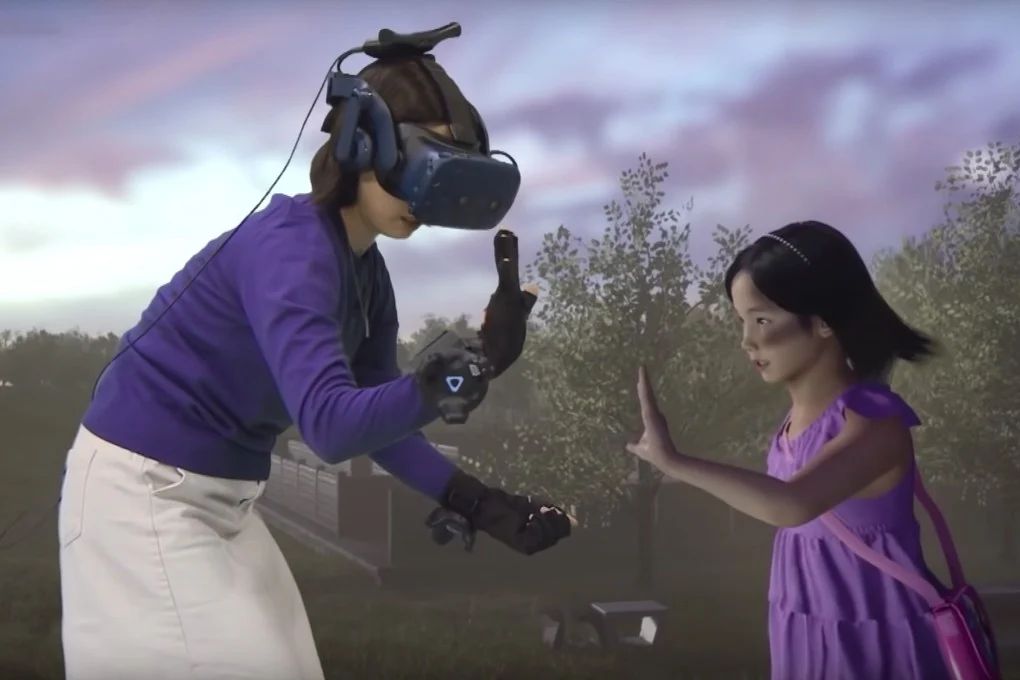
Generative artificial intelligence has spawned a new phenomenon called “digital resurrection”, in which deceased individuals can be recreated as “ghost robots” such as chatbots and virtual avatars (Edwards et al., 2024; V. Haneman, 2025). The digital afterlife industry (DAI) simulates the deceased’s voice, appearance, and personality by drawing on their digital footprints, including emails, text messages, and other similar digital records. While this development offers a new pathway for mourning, it disrupts the traditional boundaries between life and death and exposes a global gap in regulatory oversight (Reséndiz & Reséndiz, 2024; V. Haneman, 2025).
The Digital Personal Data Protection Act, 2023 is India’s first comprehensive law for the processing of digital personal data. It came after the Supreme Court’s significant ruling in K.S. Puttaswamy v. Union of India (2017), which recognized privacy as a fundamental right under Article 21 of the Constitution. The Act aims to balance individual privacy with legitimate state and commercial interests by creating a framework for consent in personal data processing.
While it strengthens data protection rights, the law mainly focuses on living individuals and does not tackle the new problems linked to digital afterlife technologies and AI-driven resurrection. Section 14 of the DPDP Act establishes the Right to Nominate. It allows individuals to legally appoint another person to exercise their data protection rights (such as access, correction, or erasure) on their behalf in the event of their death or medical incapacity. These provisions enhance the idea that individuals should have meaningful control over their digital identity during their lives. The Act also allows for processing for legitimate purposes when individuals voluntarily provide data without objections.
However, it does not clarify what happens to personal data after death. It does not set up any rights for data after a person passes away or create systems that let individuals specify how their digital information should be handled posthumously. This lack of clear legal guidance results in uncertainty about the storage, processing, and commercial use of a deceased person’s digital footprint. This regulatory gap has become more important with the fast growth of AI-enabled digital afterlife services. AI resurrection technologies gather and analyze personal information, such as emails, text messages, voice recordings, videos, photographs, and social media activity, to create chatbots or virtual avatars that mimic deceased individuals and are promoted as ways to preserve memories and offer emotional comfort to grieving families. However, their function relies almost entirely on personal data generated during an individual’s life, raising complicated legal and ethical concerns about consent, privacy, identity, dignity, and commercial use.
Current AI systems do not replicate human consciousness. Many digital afterlife platforms depend on consent obtained from surviving relatives or believe that consent is unnecessary after death. Such practices undermine individual control because deceased individuals cannot manage how their personal data is reused, reconstructed, or profited from. This lack of agency highlights major gaps in India’s current data protection framework.
The DPDP Act also ignores the idea of posthumous privacy or providing legal remedies against unauthorized AI reconstruction. While constitutional values like dignity, autonomy, and privacy should extend beyond just informational control, the Act has no clear rules to protect these rights after death. This legislative silence leaves individuals and their families without effective legal protections.
ETHICAL & PSYCHOLOGICAL DIMENSIONS:
That brings us to the ethical dilemma of digital resurrection. The majority of modern “deadbots” are constructed using passive data aggregation, most notably in a manner that does not require an explicit pre-mortem consent agreement from the “data donor”(Reséndiz & Reséndiz, 2024; Frongia, 2026). This absence of consent infringes upon the post-mortem dignity and self-determination of the deceased, resulting in what has been termed “forced immortality”(Edwards et al., 2024).
Moreover, although a digital replica may facilitate temporary relief from bereavement for mourning relatives, such interactions are also liable to cause psychological distress (Edwards et al., 2024). Extended exposure can hinder healthy bereavement and create emotional attachment as well as “programmed grief,” wherein algorithmic design professionally manages a user’s novel mourning (Fu et al., 2025).
GLOBAL LEGISLATIVE FRAMEWORK:
The literature reviewed so far consistently shows that there is currently no universal framework in international law governing digital resurrection. Rather, a patchwork system based on the separation of various aspects of privacy, personality, intellectual property, and civil laws leaves individuals without adequate protection for our digitally-born evidentia post mortem (Edwards et al., 2024).
In the United States, researchers note a senseless regulatory landscape created by the lack of a common federal framework. Edwards et al.(2024) report that post-mortem protection is largely contingent on state right of publicity statutes; for example, New York and California confer more robust protections against the unauthorized use of living people to create subsequent digital images for commercial purposes than their deceased counterparts. But, at the same time, Haneman (2025) and Heugas (2021) argue that these protections are still limited as personality rights must yield to the freedom of expression guaranteed by the First Amendment. Consequently, researchers determine that the U.S. method varies dramatically in its degree of protection and includes few safeguards to protect against digital resurrections of ordinary people.
Researchers around Europe similarly examine the varying approaches adopted by different jurisdictions. According to Edwards et al. (2024) and Frongia (2026), its exclusion of deceased persons leads to a legal void. Scholars have observed that states responded variably: Germany has post-mortem rights from constitutional principles of human dignity; and France juxtaposed moral and commercial image rights in the Digital Republic Act, allowing individuals to leave binding instructions on their after-death digital data (Heugas 2021).
This is perhaps most starkly illustrated by the UK, which still does not have a proper image rights regime but continues to rely instead on piecemeal remedies under common law (Heugas, 2021). While acknowledging that the EU AI Act creates transparency obligations for deepfakes of human voices or faces generated by an AI, researchers write that it only deals with disclosure surrounding the post-mortem digital identity but not with the post-mortem digital identity itself (Edwards et al., 2024).
China has been identified in the literature as one of the most active jurisdictions with attempts to regulate these types of technology. The Chinese Civil Code prohibits infringements of personality and voice after death, which Cheng (2025) argues reflects an emerging awareness that posthumously-ceded personality interests are increasingly deserving of respect. Likewise, AFP (2023) states that the Deep Synthesis Regulations in China mandate technology providers to get the explicit consent of the heirs of a deceased person before creating AI avatars. Researchers thus consider that, at least in theory, China’s legal framework is stronger for controlling commercial digital resurrection, particularly within its broader system of governance over aspects of the digital economy.
In short, this suggests that while several jurisdictions have implemented new legal tools, none of those currently available provides a comprehensive framework for regulating digital resurrection. Scholars generally agree that a persistent void exists concerning harmonization of international standards to clarify the terms under which consent, post-mortem privacy, personality rights and the regulation of AI-generated digital replica are governed.
CURRENT LEGAL PROTECTIONS AGAINST DIGITAL RESURRECTION:
The unauthorized use of one’s likeness is traditionally protected via personality rights, trademark, and copyright law. But the protection of post-mortem rights in the age of AI resurrection is still mostly uncharted territory, and technological innovation has outpaced legislative protection.
Personality rights can be split into the right to privacy and the right to publicity. The right to privacy is a personal right that dies when you die. It is not descendible or transferable (Bartholomew, 2024).
Publicity rights are those which protect the interests of an individual in their images and identities. Truby, J., & Brown, R. (2021) argue that courts may need to create a new type of tort in the age of AI. The right of publicity can be used when a profit aspect is established, which ordinary people will find hard to argue. Even for celebrities, its use is limited, as it will be difficult to meet the necessary criteria.
In India, there is no statute for the right to publicity. In Krishna Kishore Singh v. Sarla A. Saraogi & Ors, the court said that publicity rights, being inextricably interlinked to and birthed from the right to privacy, are not inheritable and would extinguish at the death of the individual.
Enforcing the right of publicity as a privacy-based right restricts India from providing post-mortem protection, as opposed to the US, which sees it as a property-based right and provides post-mortem protection to some limited degree.
But Vansweevelt & Bubalo (2019) and Bartholomew (2024) both point out that the lack of a federal law results in inconsistent laws across jurisdictions in the US. Without proper legislation in place, India is bound to suffer from similar problems with inconsistent application across courts.
Under the Copyright Act, 1957, there is no recourse in case of non-consensual commercial exploitation of a celebrity’s features such as style, likeness, voice, or persona. For a trademark claim to succeed under the Trademarks Act, 1999, there must be demonstration of the likelihood of consumer confusion and unauthorized commercial gains.
Current law is unlikely to protect non-celebrity plaintiffs from recreations of their persona and image. This further stresses the need for new legislation that will protect normal citizens against risks arising from advancements in technology and data use. (Cohen, 2023; Rothman, 2022).
da Silva, A. P., Feferbaum, M., & Salgado, R. S. (2026) have detected a clash in the core concepts forming the heart of the personality rights doctrine. This doctrine has continuously maintained that personality is non-transferable and eradicated at death, while also acknowledging that the image, the voice, the name, the identity that a person has constructed over a lifetime is something worth protecting and something that survives after death.
In which context Intellectual Property rights are legally binding posthumously remains an open question (Haneman, 2025).
Buitelaar (2017) notes that existing inheritance laws deal only with the economic aspects of personality (the right to publicity or copyright, for instance) but “do not shed any light on the question of who inherits the persistence of the non-economic, digital elements of the deceased’s … personality.”
Recent trends are moving towards recognising digital assets as inheritable property. On May 5, 2026, the Additional Senior Civil Judge in Gandhinagar, Gujarat, decided that the deceased’s digital data, photos, videos, voice, notes, contacts, etc., constitute inheritable property under Indian law.
Laskor, Owen & Charlesworth (2026) observe that digital assets are not protected by law after death beyond testamentary control of the estate of the deceased.
Another way of protecting dead people against digital resurrection can be with regard to human rights under modern international law. International humanitarian law mandates the dignified management of dead bodies, and Rahman (2024) argues that this can be extended to digital remains. The same level of care and respect should be given to a person’s digital remains as is given to their actual body.
Kildeev (2026) asserts that the generative simulation of a person is not just a kind of data processing. It becomes an independent object of legal regulation and should be treated as such. This simulation is a reconstruction based on data and is devoid of any human consciousness, will or intentionality. Hence it goes beyond continuing the existence of the individual. A simulation is created based on algorithms and cannot be a bearer of rights and obligations since it does not coincide with any of the existing legal categories. It reproduces communicative activity and is not information about a person so it is not personal data. It does not fall under the category of intellectual rights since it does not create a work, it simply models an identity. And it cannot be an object of inheritance or succession, since there is no transfer of existing property.
The literature analysed suggests that advancements relating to posthumous digital recreations fall into a governance void.
SOLUTIONS FOR THE MANAGEMENT OF DATA AFTER DEATH:
Recent scholarship on posthumous data management has shifted from identifying legal uncertainties to proposing practical mechanisms for governing digital assets after death. Legal scholars are advocating for an integrated framework combining advanced digital planning, platform accountability, statutory reform, and ethical regulation instead of assigning digital remains the status of objects of inheritance. Such a framework will ensure preservation of user autonomy, dignity, and informed consent beyond the user’s lifetime. (Birnhack & Morse, 2022; Harbinja, 2022).
The idea that advanced digital legacy planning is the most effective way of reducing disputes over digital assets is predominant in legal literature. Rao (2024) states that data platforms should require users to give specific instructions as to what happens to their data after their death at the time of account creation to avoid legal confusion afterwards. The digital data would be deleted, memorialised, or transferred to a nominated individual according to the user’s instructions. Harbinja (2022) argues for digital wills and digital executors that would ensure that digital assets would be dealt with according to the deceased’s wishes. There might be a difference in approach, but the central message is that we need to start thinking about how we want our digital remains to be treated well ahead of time.
But other scholars contend that advanced planning alone cannot solve disputes over digital assets. Brinhack and Morse (2022) have pointed out that although companies have introduced mechanisms that let users give prior instructions regarding management of digital data, these mechanisms remain inconsistent, are not enforced and vary from platform to platform. There is a need to harmonise these mechanisms across all digital platforms. Park et al. (2020) highlight how existing terms of service on these digital platforms prioritise commercial interests over users’ rights. Rather than leaving it up to these platforms to formulate a comprehensive mechanism, we need a government-mandated framework that enforces user-centered governance.
Another strand of scholarship leads to privacy concerns over digital remains. Edwards and Harbinja (2013) assert that post-mortem privacy be recognised as an independent legal right. Indian scholarship reflect similar ideals. Kumar and Vardhan (2025) argue that the Right to be Forgotten principle favours individuals’ control over their digital footprints even after death. Tiwari et al. (2026) have recognised the Digital Personal Data Protection Act, 2023 as an important legislative landmark as it establishes informed consent. Hence, statutory reform is the way forward to transforming post-humous privacy concerns into enforceable legal rights.
Recent scholarship has further expanded the discussion to address artificial intelligence and the digital afterlife. Hollanek and Nowaczyk-Basińska (2024) argue that posthumous AI-generated representations of deceased individuals should only be developed with explicit consent, transparency, and safeguards against misuse. Likewise, Öhman and Floridi (2017) caution that the growing Digital Afterlife Industry risks commercialising digital identities unless supported by robust ethical regulation. Their analyses highlight that future governance must regulate not only the preservation of digital assets but also their technological reuse.
Current literature has further addressed artificial intelligence and the digital afterlife. Hollanek and Nowaczyk-Basińska (2024) insist that digital recreations of deceased individuals should only be created with prior explicit consent from the individual and with transparency about its status as an AI-generated representation. There also needs to be safeguards against misuse of the digital recreation. Öhman and Floridi (2017) warn that the burgeoning Digital Afterlife Industry is at risk of commercialising the grief of bereaved families. Current governance needs to put robust regulation in place to prevent such unethical use and exploitation.
Overall, the literature demonstrates that no single solution can adequately govern posthumous data. Instead, the reviewed studies collectively support a multidimensional framework that combines advanced digital planning, platform accountability, legal recognition of post-mortem privacy, statutory safeguards, and ethical oversight of emerging technologies. Together, these measures provide a balanced approach to protecting digital identities while respecting the interests of deceased individuals, their families, and digital service providers.
DATA ANALYSIS
Legal and academic discussion has narrowed down to two major approaches when it comes to dealing with digital assets: the property-based approach and the human rights-based approach. The legislations we examine (RUFADAA, GDPR, DPDP Act, and BGB) show a mixture of these approaches.
The United States (through RUFADAA) and India (DPDP Act) show a mixture of these approaches by letting the user pick a representative who will manage the digital assets after their death. And both countries have recognised digital assets as inheritable property. The EU (GDPR) also deals with digital assets according to the deceased’s prior instructions.
In Germany, the principle of universal succession is in place, where all property, including digital assets, passes to the heirs. Germany has post-mortem rights from constitutional principles of human dignity, but there has been limited discussion about protecting the interests of the deceased with regard to their digital image.
Table 1: Jurisdiction/ Governing Instrument/ Procedure
| Jurisdiction | Governing
Instrument |
Procedure with the deceased’s data |
| India | DPDPA, 2023, SEC 14. | Nominee may exercise access, correction, erasure, and grievance rights on behalf of the deceased data principal |
| European Union | GDPR, ARTICLE 17 | Deceased persons expressly excluded from “natural person”; left to Member States |
| United States | RUFADAA (State level) | Fiduciary access to digital assets governed by user’s prior direction, then will/estate law, then platform terms |
| Germany | BGB. Section 1922 |
Principle of Universal Succession, digital property inheritable, passing to heirs. |
Source: DPDPA, GDPR, RUFADAA, BGB
FINDINGS AND DISCUSSIONS
- The DPDP Act, 2023 has pointed to post-mortem digital handling in Section 14. However, upon further observation, the scope of Section 14 remains narrow as it does not mention post-mortem privacy rights. On instances of no nominations, there is no remedy mandating compulsory post-mortem transmission of data. In the age of AI, there is a chance of new content creation using the data of the deceased and also AI cloning of image, personality or voice, which is under different bracket of personal data. This is not accounted for in the DPDP Act. In Krishna Kishore Singh versus Sarla A Saraogi, the court held that privacy, personality, and publicity rights are personal and non-inheritable. In Ruba Ahmed versus Hansal Mehta the court declined a relative’s claim to a privacy right, establishing that personal rights of a person die with the person. Indian legislation and precedents appear to ignore the dignitary rights of the dead and establish that post-mortem privacy rights are not a concern.
- The DPDP Act regulates the processing of data but use of the nominee of deceased persons data to train AI falls under processing too. There is a surge of digital avatars or grief bots, mostly in China which creates an artificial presence of the deceased. A report from Xinhua showed that China’s digital human industry was worth around 4.1 billion yuan ($600 million) in 2024. Corporations and businesses have started the practice of commercialising grief. China has started a crackdown on this industry. The regulations proposed by the Cyberspace Administration of China (CAC) prohibit using personal information to create deepfake clones of individuals without their consent.
- DPDP Act Section 14 provides the user the option to choose the person who can access their postmortem data, but there is uncertainty regarding what exactly the person can do with the data. There is no provision laying out what a nominee can or cannot do with the data, which could lead to a situation where the nominee uses the data in a way that the user, if alive, would not have agreed to.
- There is an implementation problem as well. Section 14 is completely optional, and there is no framework to ensure compliance. This will lead to situations where the family of a deceased individual will not know what to do with the data. Or they will have to go to court to gain access to the data. This adds unnecessary mental pressure on an already mourning family.
- Indian regulatory institutions are not well versed with AI governance. The digital resurrection facilitated by AI bots is not accounted for. If existing data is misused by an individual to recreate the image of a deceased person, there is no explicit law guarding against it, as the freedom of expression is used to defend this type of misuse, and the rights of the dead will always take a backseat to the rights of the living.
- India has two ways: either to take up the German approach and free up digital assets as inheritable property under succession, or adopt the framework of GDPR (as done by France or Spain) that is based upon the deceased’s prior instruction. DPDPA’s nomination model is close to the second approach but needs a specification pillar and also clearer groundwork for persons with no nomination.
CONCLUSION
In the AI-driven world, afterlife resurrection and grief tech has created a vacuum for governance on matters of digital assets, regulation, and inheritance. The Digital Afterlife Industry has opened up opportunities for nonconsensual commercial exploitation, including digital cloning and digital revival of the deceased person. Privacy is an important pillar of the digital age, bridging individual autonomy and tech amplification; it is also a fundamental right under Article 21 of the Indian Constitution, but India does not recognise the privacy rights of the dead. The lack of guidelines in processing the deceased’s information has left individuals and their families with no effective legal protection and risks of identity theft, data impersonation, reputational harm, unauthorized data access, and surveillance. In the era of digital eternity, a line must be drawn, prioritizing the dignity of the deceased while not ignoring the emotional needs of the living. The US has the most legally mature digital afterlife framework despite having no federal law; Europe is adopting newer protections like the UK’s Property Assets Bill, and China has created more explicit safeguard mechanisms, while India’s DPDP Act of 2023 has introduced the right to nominate, which remains largely untested and lacks integration with existing inheritance law. Indian legislation on the digital afterlife is still at a nascent stage. Institutions, along with individuals, are in charge of managerial responsibilities. Laws must specify the status of data after death and the legal basis of the deceased’s interests; provenance labelling must be mandated to separate authentic humans from bots. Privacy has now evolved from the narrow scope of secrecy to include digital identity control, and the legal world must not lag behind technological innovation.
ACKNOWLEDGEMENT
The authors would like to thank Anshika Agarwal for her contribution to the paper.
REFERENCES
(2023, December 14). Chinese mourners use AI to digitally resurrect the dead. The Times of India. https://timesofindia.indiatimes.com/world/china/chinese-mournersuse-ai-to-digitally-resurrect-the-dead/articleshow/105974494.cms
Bartholomew, M. (2023). A right to be left dead (University at Buffalo School of Law Legal Studies Research Paper No. 2023-016). SSRN: https://ssrn.com/abstract=4610679
Bhuwania, N., & Kumar, D. K. (2026, May 8). Right to privacy and artificial intelligence: A critical analysis of the Digital Personal Data Protection Act, 2023. International Journal of Legal Research and Review. https://www.ijllr.com/post/right-to-privacy-and-artificial-intelligence-a-critical-analysis-of-the-digital-personal-data-prote
Birnhack, M. D., & Morse, T. (2022). Digital remains: Property or privacy? International Journal of Law and Information Technology http://dx.doi.org/10.2139/ssrn.4254683
Buitelaar, J. C. (2017). Post-mortem privacy and informational self-determination. Ethics and Information Technology, 19, 129–142. https://rdcu.be/fCoVn
Cheng, K. Y. (2025). The law of digital afterlife: the Chinese experience of AI ‘resurrection’ and ‘grief tech.’ International Journal of Law and Information Technology, 33. https://doi.org/10.1093/ijlit/eaae029
Cohen, C. (2023). Welcome to Web 3.0: A reevaluation of music licensing and consumption to level the payment imbalance for songwriters. Hastings Communications and Entertainment Law Journal, 45(1), 45–90. https://www.google.com/goto?url=CAESnQEB6zswFTgdk5VP5VV_z76a7JUBDJ_LZHboKULGR-YKqaIagtq2pd1vXmoxEMA6b3uToP8EcQyvlSzYdrkfGTF41CYRadYA3rNcNSzCZHXN7b52wMpkZ1Q5ZiOFH0VyGukSEwN9msAb1mSqnXdQO3AzBIGCkubcuzLc3-fvGhpUn6mRyUd8WcRfOB5itXb-RQPfSlgWzCv2NWgiEoLq
Cohen, G. (2023). Digital purgatory and the rights of the dead: Protecting against digital disinterment in the age of artificial intelligence. Cardozo Law Review De Novo, 2023, 121–162. https://ssrn.com/abstract=4620092
Cunneen, M., AnandFinn, R., Friel, R., Tennent, P., & Brandt, S. (2026). From bones to bytes: Anticipating and addressing the governance challenges of human digital remains and posthumous digital human twins. AI & SOCIETY, 41(3), 2021–2040. https://doi.org/10.1007/s00146-025-02514-4
da Silva, A. P., Feferbaum, M., & Salgado, R. S. (2026). Who owns the dead? Digital replicas, posthumous personality rights, and the search for a regulatory framework. Beijing Law Review, 17(2), 368–401. https://doi.org/10.4236/blr.2026.172021
Digital Personal Data Protection Act, No. 22 of 2023, Acts of Parliament (India). https://www.google.com/goto?url=CAESjAEB6zswFXdxh6e_DgHHlQgsv_Xj8Xb1D_lETU_AmaGfF5SMG5cmDzM1UsB3jPmf-NE6dTqH-2OL-odI7KAzTbDoZfgPQB8gfa0VfnEQZEtC-317yWolwaEacLWzikKyBBsZm2cAeG18_YHa0TUiwV2WzMcOFidZoy7P8drLQ-abVFB1eIB8Uyt79t0STw
Edwards, L., & Harbinja, E. (2013). Protecting post-mortem privacy: Reconsidering the privacy interests of the deceased in a digital world. Cardozo Arts & Entertainment Law Journal https://ssrn.com/abstract=2267388
Edwards, L., & Harbinja, E. (2020). ‘Be right back’: What rights do we have over post-mortem avatars of ourselves? In Future law: Emerging technology, regulation and ethics (pp. 262–292). Edinburgh University Press. https://doi.org/10.1515/9781474417631-013
European Union. (2016). Regulation (EU) 2016/679 (General Data Protection Regulation). Official Journal of the European Union. https://eur-lex.europa.eu/eli/reg/2016/679/oj
Frongia, D. (2026). Digital Legacy AI: A proactive framework for posthumous conversational systems. SSRN Electronic Journal. https://doi.org/10.2139/ssrn.6494259
Fu, K., Ye, C., Wang, Z., Wu, M., Liu, Z., & Yuan, Y. (2025). Ethical dilemmas and the reconstruction of subjectivity in digital mourning in the age of AI: An empirical study on the acceptance intentions of bereaved family members of cancer patients. Frontiers in Digital Health, 7, Article 1618169. https://doi.org/10.3389/fdgth.2025.1618169
Garg, M. (2026, June 17). The Dead Do Not Log Out: Juridical Recognition of Digital Estates in India. https://www.livelaw.in/articles/juridical-recognition-digitalestates-india-538073
Haneman, V. (2025). The Law of Digital Resurrection. Boston College Law Review, 66(5), 1569–1626. https://doi.org/10.70167/yoeq2314
Harbinja, E. (2022). Digital Death, Digital Assets and Post-Mortem Privacy: Theory, Technology and the Law. Edinburgh University Press. https://www.cambridge.org/core/books/digital-death-digital-assets-and-postmortem-privacy/4E9C91D8A50B199D9F81B6161CD9C3B4?utm_campaign=shareaholic&utm_medium=copy_link&utm_source=bookmark
Harbinja, E., Edwards, L., & McVey, M. (2023). Governing ghostbots. Computer Law & Security Review, 48, 105791. https://dx.doi.org/10.2139/ssrn.5026668
Harbinja, E., Morse, T., & Edwards, L. (2025). Digital remains and post-mortem privacy in the UK: what do users want? International Review of Law Computers & Technology, 40(1), 4–27. https://doi.org/10.1080/13600869.2025.2506164
Heugas, A. C. (2021). Protecting image rights in the face of digitalization: A United States and European analysis. The Journal of World Intellectual Property, 24(5–6), 344–367. https://doi.org/10.1111/jwip.12194
Hollanek, T., & Nowaczyk-Basińska, K. (2024). Griefbots, Deadbots, Postmortem Avatars: on Responsible Applications of Generative AI in the Digital Afterlife Industry. Philosophy & Technology, 37(2). https://doi.org/10.1007/s13347-024-00744-w
Jumde, A., & Kumar, N. (2018). Image rights of famous persons vis-à-vis right to privacy: An analysis under the intellectual property laws in India and other countries. RGNUL Financial and Mercantile Law Review, 5(1), 1–29.
Kildeev, A. (2026). Digital afterlife and the illusion of continuity: Legal and ethical aspects of post-mortem digital simulation. SSRN. http://dx.doi.org/10.2139/ssrn.6241379
Kumar, N., & Vardhan, R. (2025). Digital footprints and the right to be forgotten: An analysis in the Indian context. Central University of Kashmir Law Review, 5, 108–135 https://doi.org/10.66498/CUKLR.5.2025.108-135
Laskor, K. M., Owen, R., & Charlesworth, A. J. (2026). Multi-stakeholder perspectives on governing innovation in the digital afterlife. Journal of Responsible Technology, 25, Article 100150. https://doi.org/10.1016/j.jrt.2026.100150
(2026, June 28). Digital legacy and data ownership after death: The case for digital afterlife rights in India. https://lexlumen.site/digital-legacy-and-data-ownership-after-death-the-case-for-digital-afterlife-rights-in-india/
Lukose, L. P., & Pandey, S. (2019). Protection of celebrity rights: A comparative analysis of relevant IPR laws in US, UK and India. 지식재산연구 [Journal of Intellectual Property], 14(2), 87–122. https://doi.org/10.34122/JIP.2019.06.14.2.87
, M. (2024). Need for a comprehensive Indian law regulating personality rights. International Journal of Law Management & Humanities, 7(2), 507–514. https://ijlmh.com/paper/need-for-a-comprehensive-indian-law-regulating-personality-rights/
Öhman, C., & Floridi, L. (2017). The political economy of death in the age of information: A critical approach to the digital afterlife industry. Minds and Machines, 27(4), 639–662. https://doi.org/10.1007/s11023-017-9445-2
Park, Y. J., Sang, Y., Lee, H., & Jang, S. M. (2019, September 24). Ontology of digital asset after death: Policy complexities, suggestions, and critique of digital platforms. TPRC47: The 47th Research Conference on Communication, Information and Internet Policy,2019 https://dx.doi.org/10.2139/ssrn.3426017
Rahman, M. M. (2024). Mismanagement of digital dead body: Exploration of legal issues to address economic exploitation and human rights violation. LawFoyer International Journal of Doctrinal Legal Research, 1(4), 69–97. https://www.researchgate.net/publication/377666752_Mismanagement_of_Digital_Dead_Body_Exploration_of_Legal_Issues_to_Address_Economic_Exploitation_and_Human_Rights_Violation
Rao, N. (2024). Data after death: Legal consequences of posthumous data management. Brazilian Journal of Law, Technology and Innovation, 2(2), 71–83. https://doi.org/10.59224/bjlti.v2i2.71-83
Roberts, R. J. (2023). You’re only mostly dead: Protecting your digital ghost from unauthorized resurrection. Federal Communications Law Journal, 75(2), 273–296.
Rodríguez Reséndiz, H., & Rodríguez Reséndiz, J. (2024). Digital Resurrection: Challenging the Boundary between Life and Death with Artificial Intelligence. Philosophies, 9(3), 71. https://doi.org/10.3390/philosophies9030071
Rothman, J. E. (2022). Navigating the identity thicket: Trademark’s lost theory of personality, the right of publicity, and preemption. Harvard Law Review, 135(5), 1271–1339.http://dx.doi.org/10.2139/ssrn.3949826
Tiwari, I. D., Kumari, C., Kumar, A., & Shrivastava, A. (2026). Data privacy and targeted advertising: Marketing compliance under the Digital Personal Data Protection Act, 2023 in the global regulatory landscape. Canadian Journal of Marketing Research, 16(1), 59–65. https://doi.org/10.61336/k8qkn969
Vansweevelt, T. & Bubalo, L. (2019). Post-Mortal Protection of the Right to Reputation – A Comparative View. Journal of European Tort Law, 10(1), 1-26. https://doi.org/10.1515/jetl-2019-0101
Yahya, M. A., & Pandey, S. (2025). Mourning in the metaverse: Posthumous rights and the governance of digital memory. International Journal of Law Management & Humanities, 8(3), 1–17. https://doij.org/10.10000/IJLMH.119654