AUTHORS: UNNATI MISHRA, PRACHI CHAUHAN, PRAGATI KHANNA, SAMRIDDHI CHATTERJEE, AYUSHI ARYA, ADITI ACHARJEE, ABHINAV CHANDRA
Abstract
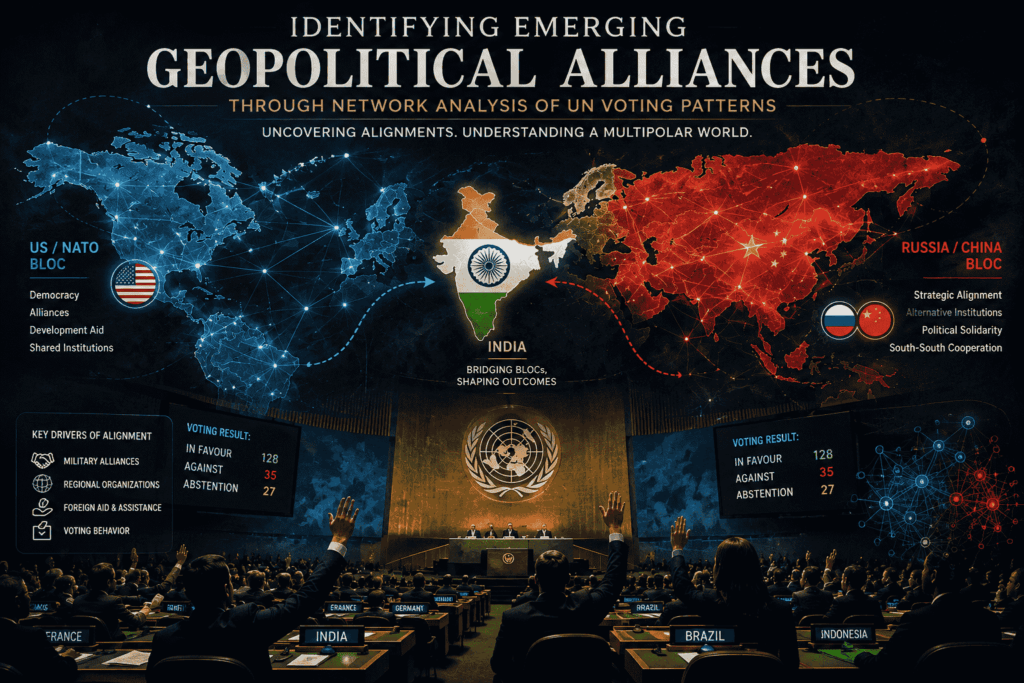
Network methods applied to UN General Assembly (UNGA) voting data reveal changes in global geopolitical blocs between 2020 and 2023, particularly in response to the Russia-Ukraine war. Using UNGA dyadic agreement matrices as a basis, this study applies the Louvain community detection method to identify voting blocs. The results show how membership in regional economic organizations, military alliances, and foreign aid from US/NATO-aligned or China-aligned states shapes voting blocs. We find that the Russia-Ukraine War significantly alters the average pairwise agreement on voting resolutions, which decreases from 0.863 in 2020 to 0.828 in 2023. While during this period voting blocs become less cohesive in general, the bloc led by the US/NATO surpasses that of the Russia-China bloc in size, mainly due to changes in alignment for small and middle-income countries. We also show that military alliances lead to higher voting alignment among members, but India still aligns with the Russia-China bloc even though it is a part of the Quadrilateral Security Dialogue (Quad) led by the US. Additionally, we find that while both China and the US provide foreign aid to countries that then vote in alignment with them, the country of origin is a stronger predictor of alignment than the total amount of aid. This study contributes to network-based applications of state preference theory, which can help us analyze the changing polarities of international relations in an increasingly fluid and multipolar global context.
Background of the Study
The United Nations General Assembly (UNGA) is the only forum in the international system where every state, regardless of size or power, casts a single formal vote. Researchers have been utilizing this universal practice of continuous voting as a way of studying state preferences and diplomatic alignments (Adarkwah, Sabel, & Zilja, 2026). The analytical interest towards the voting trend has increased as the international landscape has been moving from a structure of a single hegemon towards a structure of multiple impactful countries competing with one another (Adarkwah, Sabel, & Zilja, 2026).
Russia’s invasion of Ukraine in February 2022 became one of the triggering factors leading to such a shift in the world order. The analysis of UNGA emergency special sessions reveals that the Global South, countries with military ties with Russia, and illiberal democracies were less inclined to support the resolution condemning the invasion (de Oliveira, Geiger, & Ugar, 2025). American sources provide supporting evidence for this trend: during the years 2023 and 2024, the USA was voting against most of the resolutions adopted (U.S. Department of State, 2025).
The global transformation coincides with Global South actors, who have become prominent through their regional influences, such as the African Union’s entry into the G20 in 2024, the expansion of BRICS, and the trilateral summit of ASEAN, GCC, and China in 2025. The question arises whether these alignments should be viewed as real pluralities or reactive coalitions (Braveboy-Wagner, 2024; Banik & Mawdsley, 2023).
Statement of the Problem
To date, most available literature has been exploring humanitarian aid, military alliances, and regional grouping membership from their individual perspectives, ignoring their interconnectedness (Bailey et al., 2017; Pauls & Cranmer, 2017). It is still unknown whether the bloc shift that started in 2022 represents a more predictable kind of transition toward multipolarity or one-time convergence toward western, US-style institutions (Adarkwah et al., 2026).
Hypothesis
Post-2022 UNGA realignment reflects durable, self-led multipolar clusters, not temporary convergence toward US/NATO-led institutions (Adarkwah et al., 2026). It directly tests whether the post-2022 changes in UNCA voting constitute a structural transformation towards multipolarity or a reactive realignment with the existing US-led order.
Research Question
How do regional organization membership/leadership (EU, AU, ASEAN, GCC, MERCOSUR, 2000–2023) and states’ positions in humanitarian aid versus military alliance networks shape whether alternative power clusters become cohesive, self led poles or remain reactive coalitions that leave US hegemony intact?
Significance of the Study
The study carries multiplex, network-based applications of state preference theory (Gallop & Minhas, 2021) through the time of active realignment and provides a model of donor identity versus aid volume, emphasizing contrast between data-driven clusters and formal alliances. In terms of practice, it contributes to an ongoing policy discussion regarding the shift towards either true multipolarity or a fragmented order still centered on the US (Braveboy-Wagner, 2024).
Scope and Delimitations
The research encompasses roll-call voting for the UNGA from 2020 to 2023 (comparing the pandemic-time baseline with the period after the invasion) and covers data on regional organizations between 2000 and 2023. It relies only on secondary databases (Voeten/Strezhnev/Bailey UNGA data, AidData, ForeignAssistance.gov, and World Bank/OECD DAC) and the two-cluster Louvain solution; the results on the links between foreign assistance and voting are purely correlational.
Research Objectives
This study is driven by a range of objectives:
- To assess how the UNGA votes and how the interstate relations can be analyzed using network analysis (Fortunato, 2010).
- To assess the impact of regional structures on the alignment of voting (Pauls & Cranmer, 2017).
- To see if new clusters are going to be effective in forming geopolitical actors or remain reactive coalitions (Stuenkel, 2020).
- To understand the stability of the multipolar world after 2022 and what it means for the United States (Adarkwah et al., 2026).
Literature Review
Members of the UNGA offer researchers a wealth of information on international political orientations and the move towards geopolitical alignments that have been shifting away from institutionalized forms. UNGA voting provides systematic and comparable data representing the preference of states’ foreign policies with regard to global affairs, hence the greater application of network analysis in studying cooperation and political blocs (Voeten, 2000; Bailey et al., 2017).
The UN General Assembly voting represents differences in ideology and strategy among the members of the international system with voting similarity being a clear indication of diplomatic alignment. The process is dynamic and changes with the geopolitical interests of the states rather than being limited to any alliance structures (Voeten, 2000).
Network analysis methodology provides an appropriate basis for analyzing political data. Notions like nodes, edges, centrality, modularity and clustering are useful in modeling voting similarity (Newman, 2010). Graph theoretical concepts become readily translatable into IR terms when we treat states as vertices and voting agreement as weighted edges. For instance, network centrality and modularity represent realist structural balancing, in which states form cohesive clusters to counter hegemonic threats (Waltz, 1979). Network density reflects the concepts of stable multilateral interdependence and regime durability associated with liberal institutionalist theory (Keohane & Nye, 1977). Social network analysis operationalises the constructivist argument that state identities are formed via the diffusion of shared voting norms over time (Wendt, 1999).
Community detection techniques such as modularity optimization, spectral clustering, and hierarchical clustering have been extensively used to uncover patterns not visible when conducting large-scale network analysis. When applied to UNGA voting records, they can provide easily understandable visualisations of existing and forming geopolitical blocs which statistical techniques fail to discover (Fortunato, 2010).
Although UNGA voting records have long since proven to be an established tool in evaluating political alignment, and network analysis an effective tool in discovering geopolitical communities, only a few works employ the techniques of advanced community detection together with recent voting data to uncover the influence of emerging powers and issue-specific alliances on contemporary multipolarity (Fortunato, 2010; Bailey et al., 2017).
The scope of investigation has changed from analysing plain country-to-country voting ties towards using computational methods to uncover multilateral voting patterns, thereby making it possible to investigate geopolitical blocs formation and evolution within the context of a multipolar world (Newman, 2010; Bailey et al., 2017). Therefore, we can observe a simple linear progression between theory, methodology, and results: IR theories of balance-of-power and institutional coalition building inform the general expectations about state behavior; computational network techniques such as modularity optimization and ideal point estimation via IRT allow us to model the behavior of the UNGA votes in a highly detailed and nuanced way; and these network characteristics allow us to generate results that indicate specific, non-ideological, issue-based groupings that change over time to avoid the Western hegemonic consensus.
UNGA Voting as a Measure of Geopolitical Alignment
UNGA votes have always been seen as indicators of geopolitical alignment, and the dataset constructed out of those voting records represents one of the most frequently used measures of inter-state cooperation and conflict in the field (Adarkwah et al., 2026).
While scholars generally concur that voting behavior reflects something about the state’s preferences, they strongly disagree regarding the measurement of that alignment, and this disagreement represents a true methodological gap rather than an aggregation of results.
The previous wave of research was based on the calculation of dyadic similarity indices where the number of overlapping votes between two states served as an indicator of similar foreign policy preferences. This methodology presupposed that the UNGA alignment is a fairly stable indicator that can be measured consistently across time periods. However, the similarity indices turn out to be very much dependent on the changing agenda of the UN so that an index can substantially change despite the fact that the actual preferences of the state remained stable (Bailey et al. 2017).
This is a clear departure from the similarity index approach rather than an improvement on it. In turn, a dynamic ideal point model based on item response theory was introduced, estimating states’ preferences on a common scale across time while also giving weights according to how discriminant each vote is (Bailey et al. 2017).
While the similarity index approach sees all votes as equally informative about changes in preferences, the ideal point framework allows researchers to see votes as different in their informativeness – which enables the separation of genuine preference shifts from fluctuations caused by changes in the agenda. This approach was taken, making the case that ideal points are more suitable for discovering fundamental differences in preferences (as in the case of the Cold War East-West divide or the contemporary cracks in the liberal international order) (Adarkwah et al. 2026).
Network Analysis of UN Voting Patterns
One of the biggest benefits of network analysis is that it accounts for the multidimensional relations between countries, which makes it possible to identify voting communities previously uncharacterized and test if international organizations provide any indirect cooperative effect on state voting (Pauls & Cranmer, 2017; Newman, 2010).
Continuing along this line of reasoning, a body of literature has employed network analysis to investigate the impact of political, economic, and security factors on UNGA voting with a specific emphasis on patterns of cooperation and voting communities with similar geopolitical preferences (Pauls & Cranmer, 2017; Newman, 2010). In the context of this body of knowledge, ideal point estimation has contributed significantly to modeling aid-voting alignment (Bailey et al., 2017); nonetheless, recent studies reveal that the effect remains insignificant, particularly in the post-Cold War era (Adarkwah et al., 2026).
In another strand of research, attention is paid to the complementary interplay between military alliances and UN voting behavior. Specifically, community detection methods have helped to establish a close connection between voting similarities and defensive alliances. Studies also show this relationship to be mutual, as sharing voting behavior fosters trust and decreases uncertainty in negotiations over alliances, which further contributes to converging policies in the alliances that follow and, thus, creates an even more powerful reinforcement cycle between cooperation and alliance creation (Pauls & Cranmer, 2017).
Recent studies have broadened their focus from foreign aid and military cooperation to new geopolitical alliances that alter the traditional order of global governance. Specifically, the increasing interest in BRICS and South-South cooperation has led to further research into understanding how such groupings are manifested in UNGA voting behavior (Chatin & Gallarotti, 2016; Gray & Gills, 2016).
Emerging Geopolitical Blocs: BRICS and South–South Cooperation
Recent studies have concluded that international alignment is undergoing a major shift due to the rise of new coalition formations. Indeed, many new alliances are emerging today not as ideological blocs, but rather as coalitions that oppose certain aspects of the liberal order led by the West and cooperate for pragmatic strategic reasons (Adarkwah et al., 2026). The world is moving towards multipolarity, as the BRICS states start using soft power, engage in multilateral diplomacy, and cooperate in the building of institutions to improve the voice of the Global South in international governance (Stuenkel, 2020; Chatin & Gallarotti, 2016).
The results of empirical analysis and comparisons of the latest UNGA resolutions on issues of international security, economic sanctions, and territorial sovereignty also confirm the ongoing shift in global political alignment. A comparative analysis of UNGA resolutions indicates that the BRICS countries (in addition to the existing countries such as Brazil, India, and South Africa, the newly admitted members) show increasing voting alignment with each other (in more than 80% of cases, countries vote identically or similarly regarding the most critical issues related to security and sovereignty) and decreasing alignment with Western power blocs (Ferdinand, 2014; Hoover Green & Cranmer, 2019). Comparative longitudinal analysis shows that this trend is particularly evident when considering votes related to economic sanctions, human rights interventions, and global financial institutions, confirming the structural character of the observed changes rather than attributing them to one-time or short-term events.
The increase of South–South cooperation, in turn, reinforces cooperation among developing nations for the purpose of implementing institutional changes, achieving economic progress, and gaining political independence (Gray & Gills, 2016; Nurullayev & Papa, 2023). Recently, scholars have suggested that these evolving networks go beyond purely military alliances and are increasingly reflected in multilateral institutions such as the UN General Assembly, whose voting patterns shed light on the emerging geopolitical coalitions (Bailey et al., 2017; Adarkwah et al., 2026). However, the issue of whether these coalitions represent stable geopolitical centers or temporary movements remains an open question, indicating the necessity for conducting network analyses of contemporary international relations (Gallop & Minhas, 2021).
Research Gap
Recent studies have made progress in studying UNGA voting behaviour, network analysis, and newly evolved geopolitical orientations; however, important gaps exist within this field. While most analyses utilize the notion of voting similarity or investigate the effects of factors like foreign aid, military alliances, BRICS, or regional organizations in isolation, not many studies provide an integrated presentation of all these elements that could be employed in the explanation of how new powers as well as South–South cooperation and issue-based coalitions create the new multipolar order (Bailey et al., 2017; Fortunato, 2010; Adarkwah et al., 2026). Moreover, the issue of how countries within humanitarian aid and military alliance networks interact with regional organizations has been minimally discussed (Pauls & Cranmer, 2017; Stuenkel, 2020). Therefore the question still remains whether the emerging clusters are structurally autonomous and durable or merely reactive coalitions and external geopolitical crises.
To fill the existing gaps, the current research employs UNGA voting data from the years of 2000-2023 and combines it with humanitarian aid, military alliances and regional organizations networks by means of community detection methods. The study inspects the interrelations between the mentioned networks in order to analyze how these networks determine the coherence and leadership of new geopolitical clusters and if they can be considered stable centers of influence or reactive coalitions (Pauls & Cranmer, 2017; Stuenkel, 2020).
Research Approach
This study incorporates the quantitative research method to analyze how geopolitical alliances are established and develop over periods of voting in the UNGA. The quantitative methods can be employed for measuring similarities of voting, cooperation of states, and emerging alliances from a large quantitative dataset (2000–2023) systematically (Creswell & Creswell, 2018). The study identifies the established patterns of cooperation among states by focusing on the numerical indicators rather than subjective aspects of interpretation (Bailey et al., 2017; Gallop & Minhas, 2021). The emphasis on the quantitative network metrics enables one to compare the emerging and established power centers in the world system (Maoz, 2023).
Research Design
The research follows a descriptive and analytical research design. Initially, it describes long-term UNGA voting behaviour by constructing networks based on voting similarity between states. Subsequently, analytical techniques drawn from Social Network Analysis (SNA) are employed to examine the structural relationships among states and identify cohesive geopolitical clusters (Borgatti et al., 2018). The analysis incorporates variables such as membership and leadership within regional organizations including the European Union (EU), African Union (AU), Association of Southeast Asian Nations (ASEAN), Gulf Cooperation Council (GCC), and MERCOSUR, as well as humanitarian aid partnerships and military alliance networks. These variables are assessed to determine whether they contribute to the formation of autonomous geopolitical poles or reinforce existing US-led international structures (Gallop & Minhas, 2021; Pauls & Cranmer, 2017).
Data Sources
The research mainly bases itself on secondary provisions. The primary dataset is represented by a dataset that includes UNGA roll call voting records from 2000 to 2023 and public data on regional organization membership, alliances and humanitarian aid. The literature on the subject and international datasets have served as contextual materials for more profound understanding of network structures and geopolitical events (Bailey et al., 2017; Voeten, 2023).
Analytical Framework
The analysis was conducted in Python using pandas, NetworkX, python-louvain, and matplotlib for data processing, network construction, community detection, and visualisation. Thus, this form of analysis allows determining whether new alliances are able to form their independent leadership or keep following traditional magnates of world power (Fortunato, 2010; Gallop & Minhas, 2021).
Nature of the Study
The research is empirical, explanatory and exploratory in nature. It is empirical in that it looks at observable data such as voting patterns and institutions instead of relying on theoretical models (Bailey et al., 2017). It is explanatory, as it seeks to analyse how regional organisations, humanitarian cooperation and military alliances create conditions for cohesive geopolitical groupings (Gallop & Minhas, 2021). At the same time, it is exploratory since it seeks to determine whether the latest trends in international cooperation are signs of the formation of genuinely multipolar power centres or adaptive coalitions working within the existing US-led world order (Stuenkel, 2020; Ikenberry, 2023).
Data Analysis
1. Data Source and Preparation
The empirical basis of this chapter is the United Nations General Assembly (UNGA) roll-call voting dataset compiled by Voeten, Strezhnev, and Bailey (2009), covering the period 2020–2023. This timeframe captures two distinct phases: the COVID-19 period (2020–2021) and the post-Russia–Ukraine invasion period (2022–2023), allowing comparison between a pandemic baseline and a geopolitical realignment phase.
Cleaning and Country Code Mapping
Country names were standardised using a single naming convention to eliminate duplicate entries arising from spelling variations and alternative country names. Observer entities were excluded, and countries were retained only if they cast at least one recorded vote in a given year. The final dataset comprised 193 countries in 2020 and 2021, 192 in 2022, and 187 in 2023. The decline in 2023 reflects missing participation rather than substantive geopolitical realignment.
COVID-19 Procedural Effects on Data Density
The General Assembly operated under modified voting procedures during 2020–2021, resulting in only 38 abstentions (0.04%) and two non-recorded votes among 85,173 vote instances. Similar abstention levels persisted after normal voting procedures resumed, suggesting that the pattern cannot be explained solely by COVID-era procedures. These observations were excluded from the agreement calculations and are treated as a study limitation.
Country codes were subsequently standardised, and roll-call records were converted into a relational matrix. Non-recorded votes were treated as missing observations and excluded from the dyadic agreement calculations.
Dyadic Matrix Construction
Each country’s vote was coded as Yes, No, or non-recorded. Annual pairwise agreement scores were calculated by comparing only resolutions where both countries cast recorded Yes or No votes, producing one symmetric agreement matrix for each year (N = 193, 193, 192, and 187, respectively). These matrices form the basis of the community detection analysis.
2. Descriptive Analysis: Two Phases
Overall Vote-Type Distribution, 2020–2023
Across 85,173 recorded vote instances, 86.5% were cast in favour, indicating broad agreement across most UNGA resolutions.
| Vote Type | Count Percentage |
| In favor | 73,707 86.5% |
| Against | 11,426 13.4% |
Abstaining 38 0.04%
| Not voting | 2 0.00% |
| Total | 85,173 100% |
Table 2a: Overall Vote-Type Distribution, 2020-2023
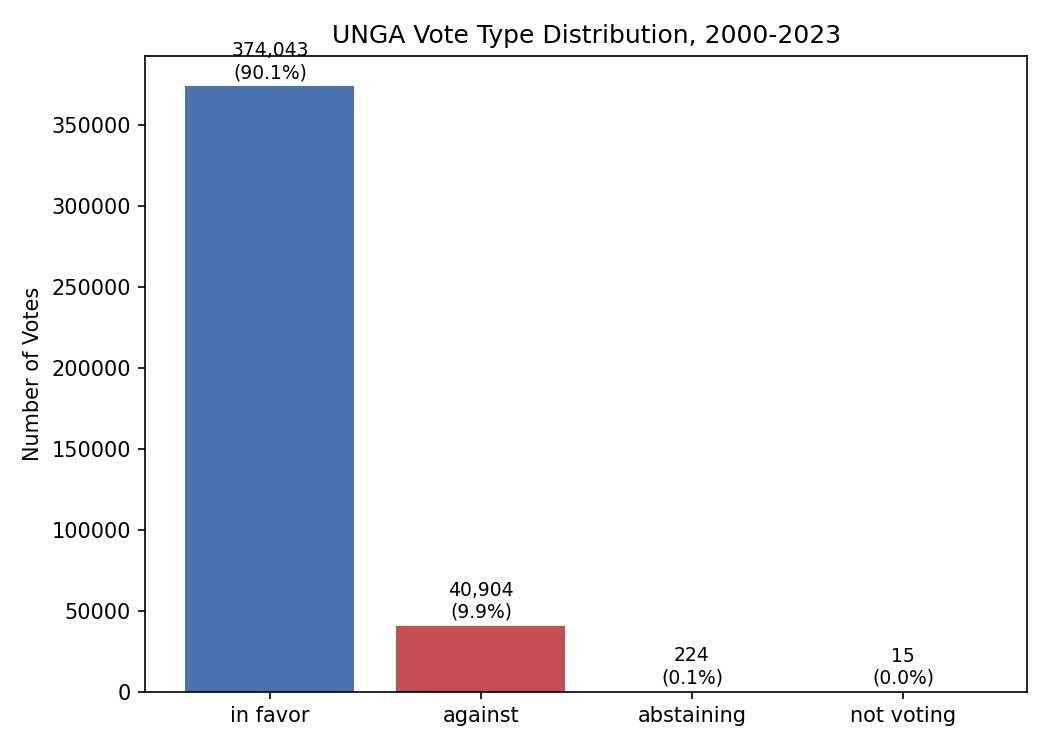
Figure 2a: Distribution of Vote Types, 2020-2023
Phase Comparison
To examine the impact of the Russia–Ukraine war, the study period was divided into the COVID Era (2020–2021) and the Ukraine War Era (2022–2023). The proportion of “Against” votes increased from 12.4% during the pandemic period to 15.1% after 2022, while “In Favour” votes declined from 87.5% to 84.9%, indicating increased contestation within the General Assembly.
| Phase | In Favor | Against Abstaining | Not Voting | Total |
| Phase 1: COVID Era(2020-2021) | 47,156 (87.5%) | 6,705 (12.4%) 27 (0.1%) | 1 (0.0%) | 53,889 |
| Phase 2: Ukraine War Era (2022-2023) | 26,551 (84.9%) | 4,721 (15.1%) 11 (0.0%) | 1 (0.0%) | 31,284 |
Table 2b: Vote Distribution by Phase
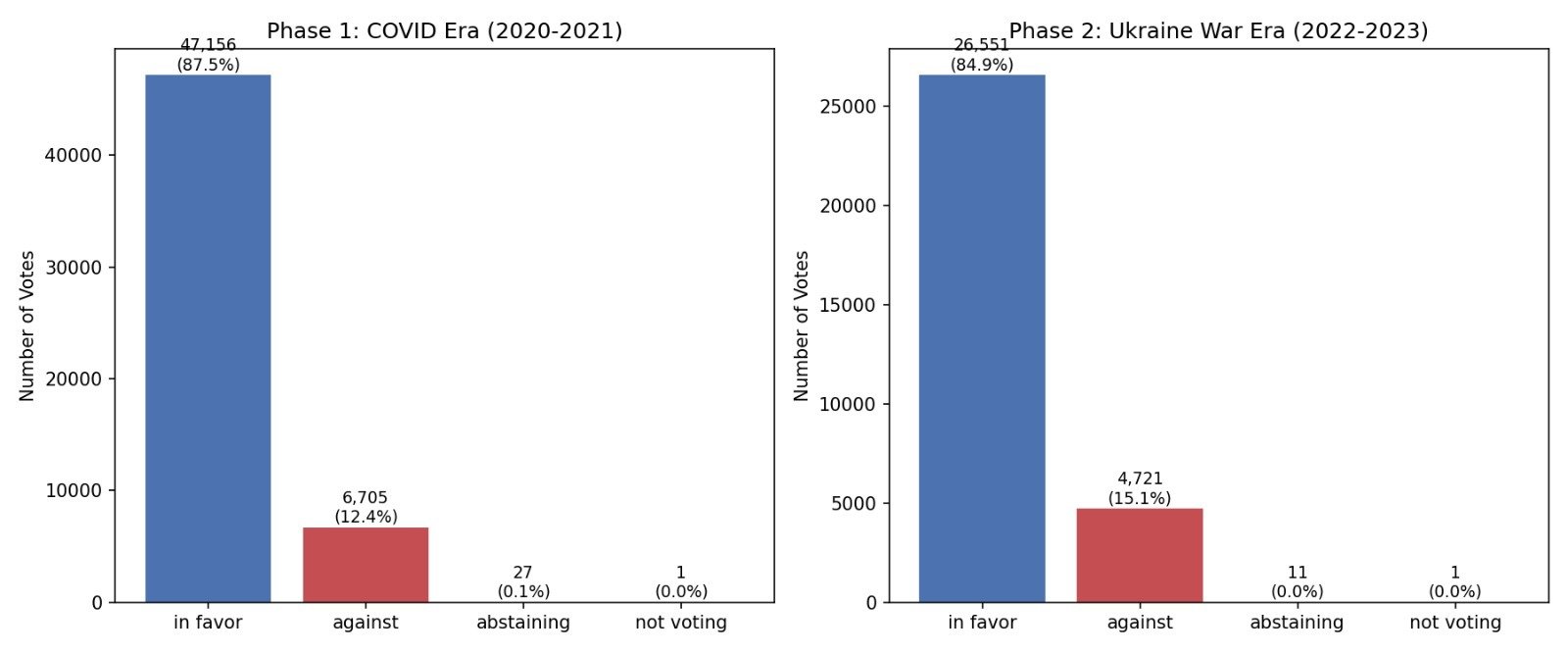
 Figure 2b: Phase 1 (COVID Era) vs. Phase 2 (Ukraine War Era) Vote Distribution
Annual Agreement Trend
Average pairwise voting agreement declined steadily throughout the study period.
| Year | Average Pairwise Agreement Score |
| 2020 | 0.863 |
| 2021 | 0.854 |
| 2022 | 0.839 |
| 2023 | 0.828 |
Table 2c: Annual Agreement Trend
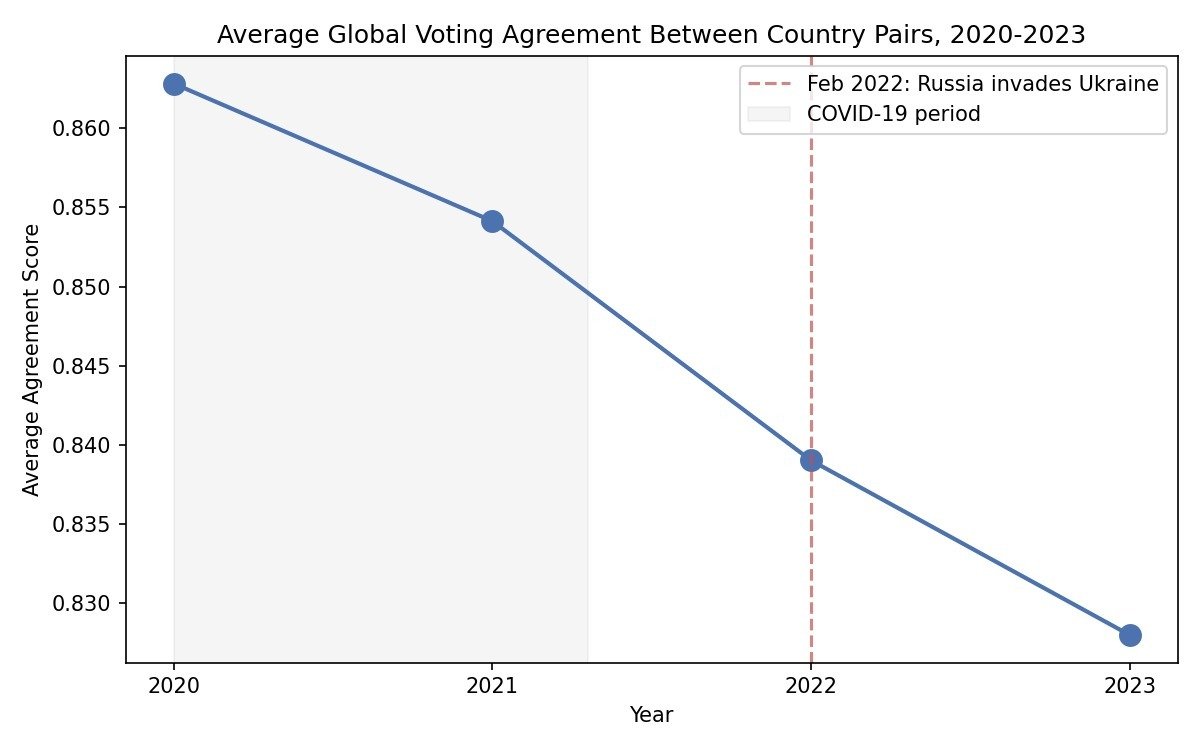
Figure 2c: Average Pairwise Voting Agreement, 2020-2023
Average pairwise agreement declined from 0.863 (2020) to 0.828 (2023), with the largest decline occurring between 2021 and 2022.
3. Network Construction
To construct the geopolitical voting network, a dyadic agreement score was calculated for every pair of countries for each year between 2020 and 2023. The network is based on recorded voting agreement and follows the general approach of dyadic similarity measures used in UNGA voting studies (Gartzke, 1998, 2000), while excluding non-recorded votes from the calculation.
Agreement Score(i,j) = (Y(i,j) + N(i,j)) / R(i,j)
Where:
- Y(i,j) = number of resolutions where both countries voted Yes
- N(i,j) = number of resolutions where both countries voted No
- R(i,j) = total number of resolutions where both countries cast recorded votes
4. Community Detection
Communities were identified using the Louvain modularity optimisation algorithm applied to annual weighted agreement networks. For visualisation, only edges with agreement scores ≥0.85 were retained (Fortunato, 2010; Pauls & Cranmer, 2017).
Across all four years, the algorithm consistently identified two stable voting communities. Cluster labels were standardised across years using the positions of the United States, Russia, and China.
Cluster Size Trajectory
| Year Russia/China-aligned bloc (n) | US/NATO-aligned bloc (n) | Total active countries |
| 2020 134 | 59 | 193 |
| 2021 137 | 56 | 193 |
| 2022 132 | 60 | 192 |
| 2023 89 | 98 | 187 |
Table 4a: Cluster Size Trajectory, 2020-2023
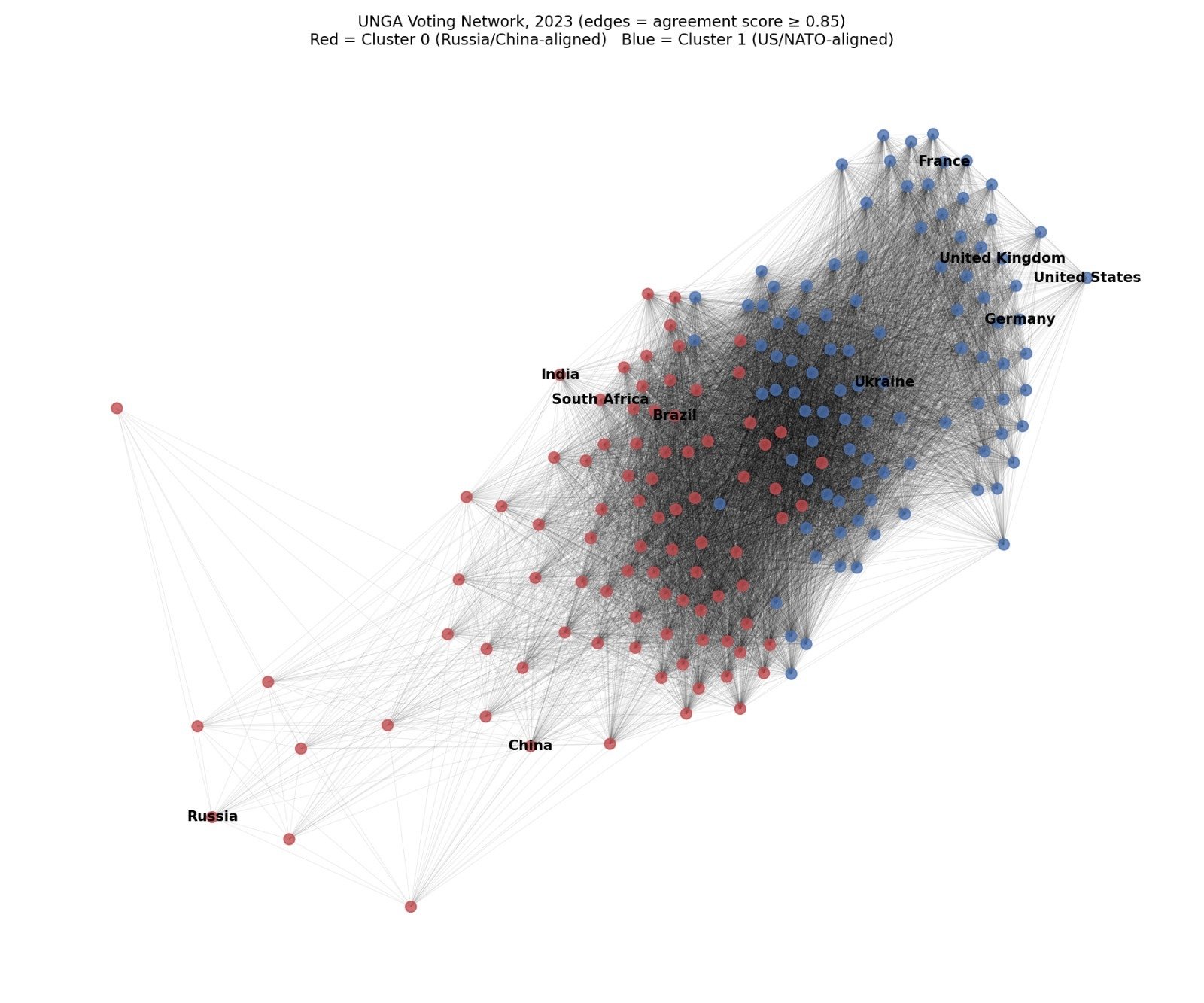
Figure 4: UNGA Voting Network, 2023 (edges = agreement score >= 0.85). Red = Russia/China-aligned bloc; Blue = US/NATO-aligned bloc
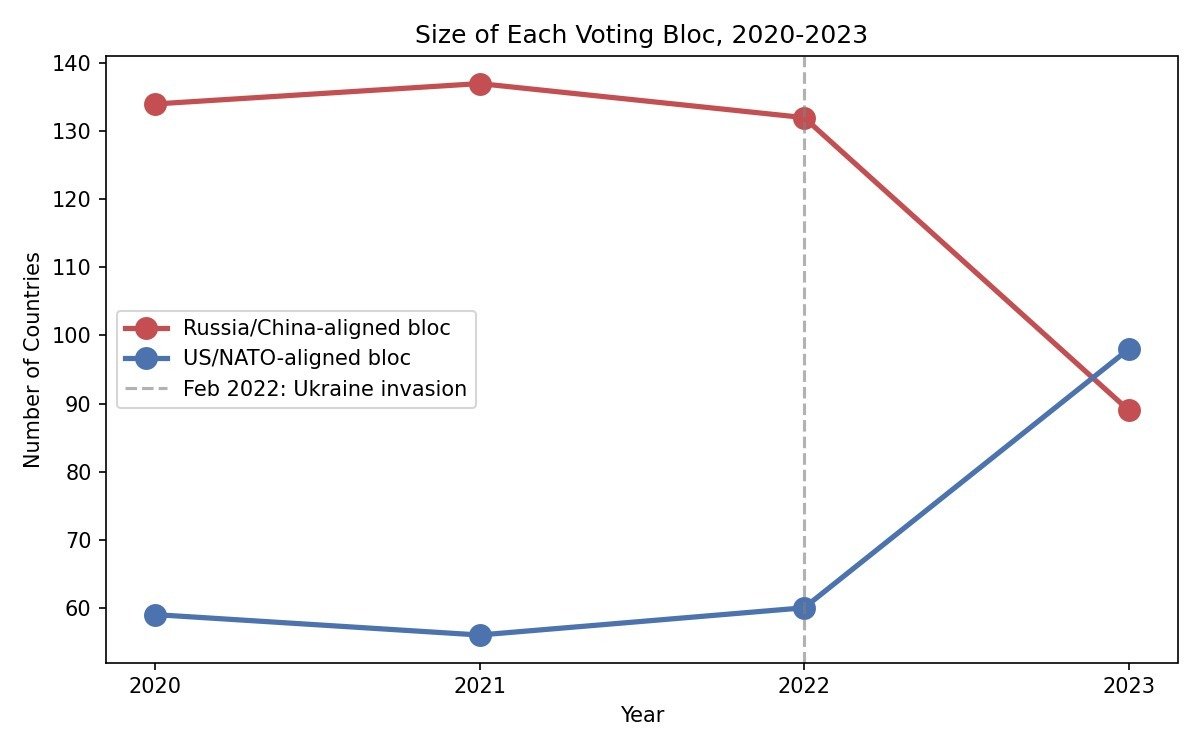
Figure 4a: Size of Each Voting Bloc, 2020-2023
The Russia/China-aligned bloc remained larger between 2020 and 2022 before being overtaken by the US/NATO-aligned bloc in 2023, indicating substantial post-war voting realignment.
Country-Level Cluster Assignments (Table 4.4b, abridged)
The 2020 cluster assignment serves as the pre-war baseline.
| Country | Historic Bloc (2020) 2020 2021 | 2022 | 2023 |
| United States | US/NATO-bloc 0 1 | 1 | 1 |
| Russia | Russia/China-bloc 1 0 | 0 | 0 |
| China | Russia/China-bloc 1 0 | 0 | 0 |
| Ukraine | US/NATO-bloc 0 1 | 1 | 1 |
| India | Russia/China-bloc 1 0 | 0 | 0 |
| Brazil | US/NATO-bloc 0 0 | 0 | 0 |
| South Africa | Russia/China-bloc 1 0 | 0 | 0 |
| Indonesia | Russia/China-bloc 1 0 | 0 | 0 |
| Israel | US/NATO-bloc 0 1 | 1 | 1 |
| Afghanistan | Russia/China-bloc 1 0 | 0 | 1 |
Table 4b: Country-Level Cluster Assignments (Abridged)
5. Alliance Validation
To assess the validity of the detected voting communities, the data-driven clusters were compared with membership in NATO, CSTO, SCO, QUAD, and AUKUS. Cohesion was measured as the proportion of alliance members assigned to the alliance’s majority voting bloc for each year.
| Year | Alliance | Members Found | Majority Bloc | Cohesion Mismatched Countries |
| 2020 | NATO | 32 | US-bloc | 100.0% None |
| 20202020
2020 2020 |
CSTOSCO
QUAD AUKUS |
69
4 3 |
Russia-blocRussia-bloc
US-bloc US-bloc |
100.0% None100.0% None
75.0% India 100.0% None |
| 2021 | NATO | 32 | US-bloc | 100.0% None |
| 2021 | CSTO | 6 | Russia-bloc | 100.0% None |
| 2021 | SCO | 9 | Russia-bloc | 100.0% None |
| 2021 | QUAD | 4 | US-bloc | 75.0% India |
| 2021 | AUKUS | 3 | US-bloc | 100.0% None |
| 2022 | NATO | 32 | US-bloc | 100.0% None |
| 2022 | CSTO | 6 | Russia-bloc | 100.0% None |
| 2022 | SCO | 9 | Russia-bloc | 100.0% None |
| 2022 | QUAD | 4 | US-bloc | 75.0% India |
| 2022 | AUKUS | 3 | US-bloc | 100.0% None |
| 2023 | NATO | 32 | US-bloc | 100.0% None |
| 2023 | CSTO | 6 | Russia-bloc | 100.0% None |
| 2023 | SCO | 9 | Russia-bloc | 100.0% None |
| 2023 | QUAD | 4 | US-bloc | 75.0% India |
| 2023 | AUKUS | 3 | US-bloc | 100.0% None |
Table 5: Alliance Cohesion Against Data-Driven Clusters, 2020-2023
NATO, CSTO, SCO, and AUKUS maintained 100 per cent coherence during the entire period of four years despite being impacted by the very same event that affected 42 other countries in 2022.
The India–QUAD Anomaly
QUAD remained the only alliance with incomplete cohesion (75%) across all four years, with India consistently assigned to the Russia/China-aligned bloc despite its membership in QUAD.
This trend existed even before the conflict started, indicating that India’s non-aligned status holds more value than both the country’s security interests with QUAD and its institutional preference for the groups. The six countries that were not included in the voting sample for 2023 were not members of either of the groups analyzed.
6. Aid Ties as a Predictor of Voting Bloc Alignment
To examine whether development assistance predicts voting-bloc membership, bilateral aid data from China and the United States were compared with the voting communities. Chinese aid data (2000–2021) were obtained from AidData, while US aid data (2020–2023) were obtained from ForeignAssistance.gov. Recipient countries were matched with the detected voting blocs to assess whether aid relationships corresponded with voting alignment.
| Year | China recipients matched | % in Russia-aligned bloc | US recipients matched | % in US-aligned bloc |
| 2020 | 127 | 86.6% | 161 | 23.0% |
| 2021 | 123 | 90.2% | 160 | 21.2% |
2022 unavailable – 159 25.2% 2023 unavailable – 155 47.7%
Table 6a: Aid Recipient Alignment with Donor’s Voting Bloc, 2020-2023
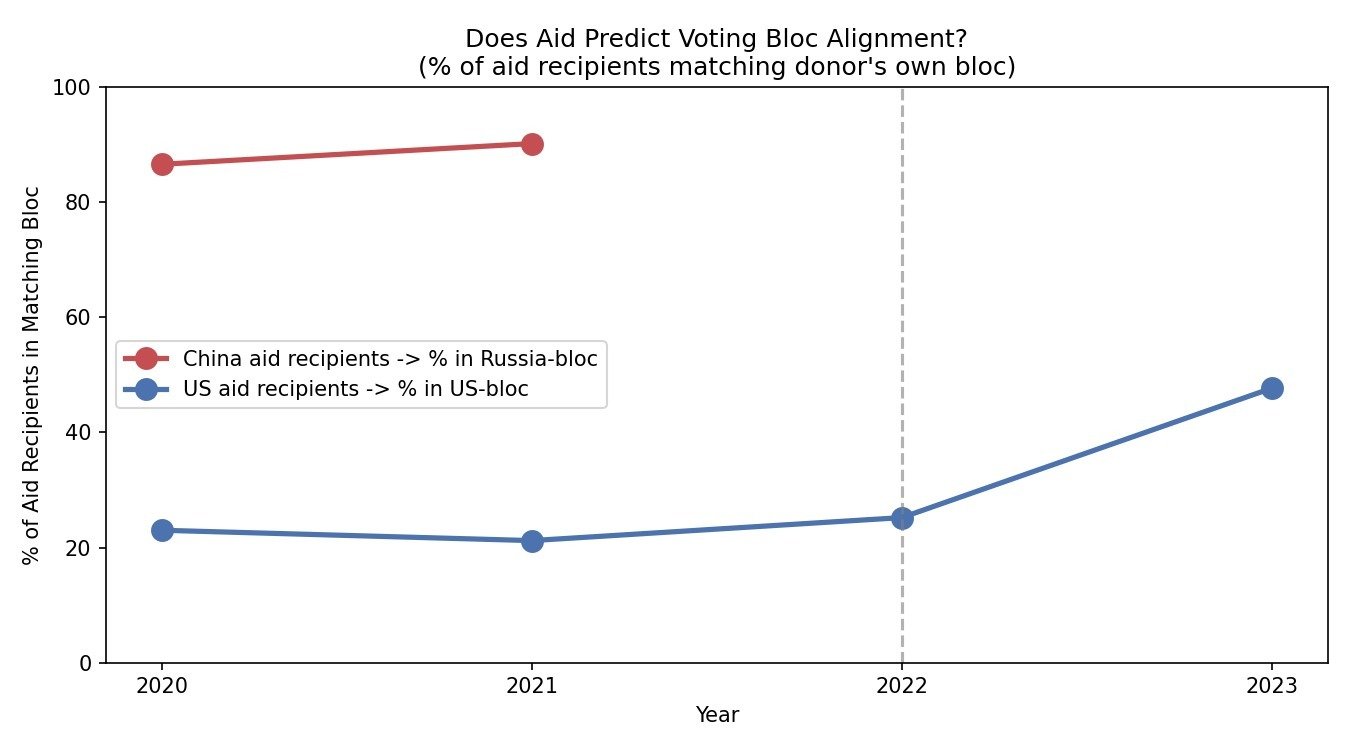
Figure 6a: Aid Recipient Alignment with Donor’s Bloc Over Time
Chinese aid recipients showed consistently stronger alignment with the Russia/China voting bloc than US aid recipients did with the US/NATO bloc. Because Chinese aid data are unavailable after 2021, direct comparison is limited to 2020–2021. These findings are broadly consistent with previous studies showing that US aid has a weaker relationship with UNGA voting behaviour than donor-specific aid relationships generally assumed (Kegley & Hook, 1991; Wang, 1999; Dreher et al., 2008; Dreher & Sturm, 2012; Adarkwah et al., 2026).
Control Check: Overall Aid Dependency versus Donor-Specific Ties
To determine whether the observed relationship reflects general aid dependence rather than donor-specific ties, total official development assistance received from all donors was compared across the two voting blocs using World Bank/OECD DAC data.
| Year | Median aid – Russia-aligned bloc (USD) Median aid – US-aligned bloc (USD) |
| 2020 | 516,394,590 552,854,980 |
| 2021 | 451,950,530 602,513,500 |
| 2022 | 557,884,740 308,190,270 |
| 2023 | 584,025,030 410,184,400 |
Table 6b: Median Total Aid Received by Voting Bloc, 2020-2023
(All Donors Combined)
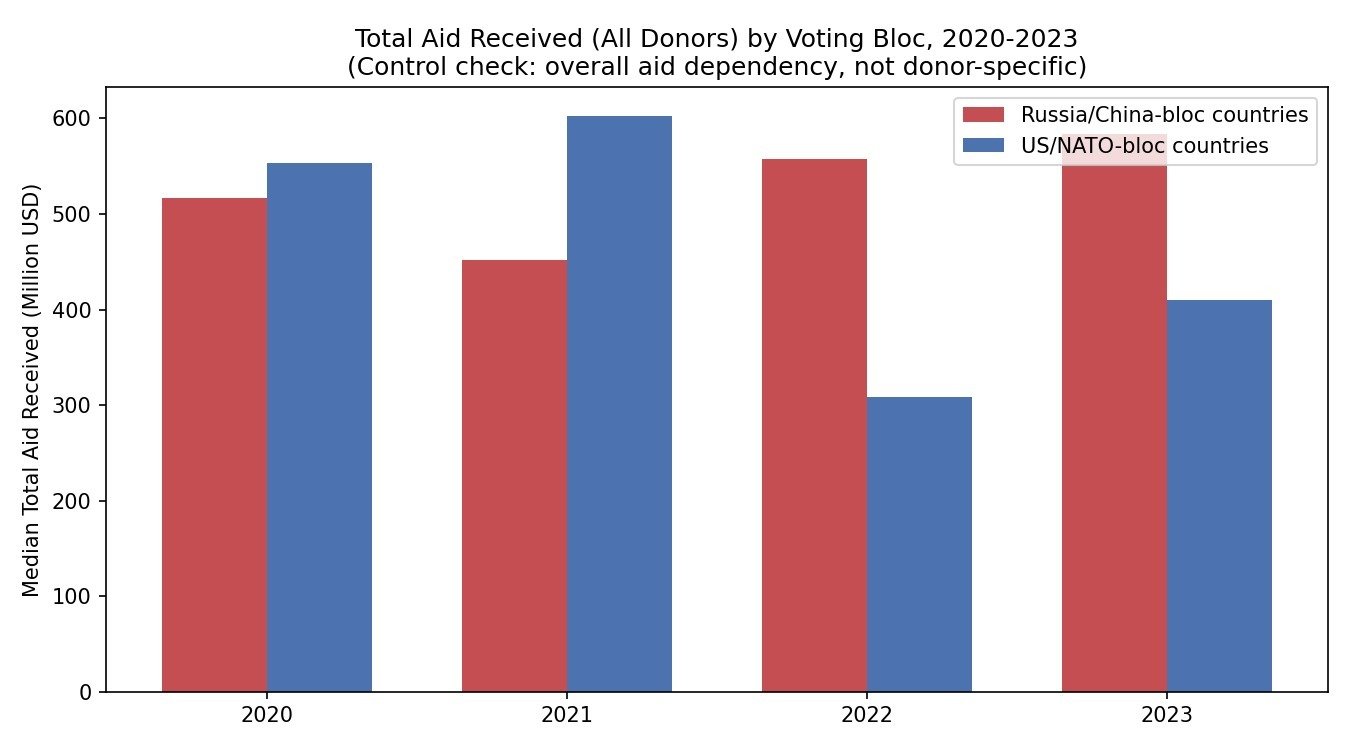
Figure 6b: Total Aid Received (All Donors) by Voting Bloc
Median aid levels were broadly comparable across both voting blocs throughout the study period, with neither bloc consistently receiving greater overall assistance. This indicates that general aid dependence does not explain voting-bloc membership. Instead, the findings suggest that the identity of the donor, rather than the total volume of aid received, is more closely associated with voting alignment.
7. Phase Comparison: COVID Era versus Ukraine War Era
Sections 2 and 4 showed that the study period spans two distinct phases: the COVID-19 period (2020–2021) and the Ukraine War period (2022–2023).
Year-to-Year Switching Rate
| Transition | Countries switching bloc | Countries present in both years |
| 2020 to 2021 | 7 | 193 |
| 2021 to 2022 | 6 | 192 |
| 2022 to 2023 | 38 | 187 |
Table 7a: Countries Switching Voting Bloc, Consecutive Year PairsFigure 7a: Countries Switching Voting Bloc, Year to Year
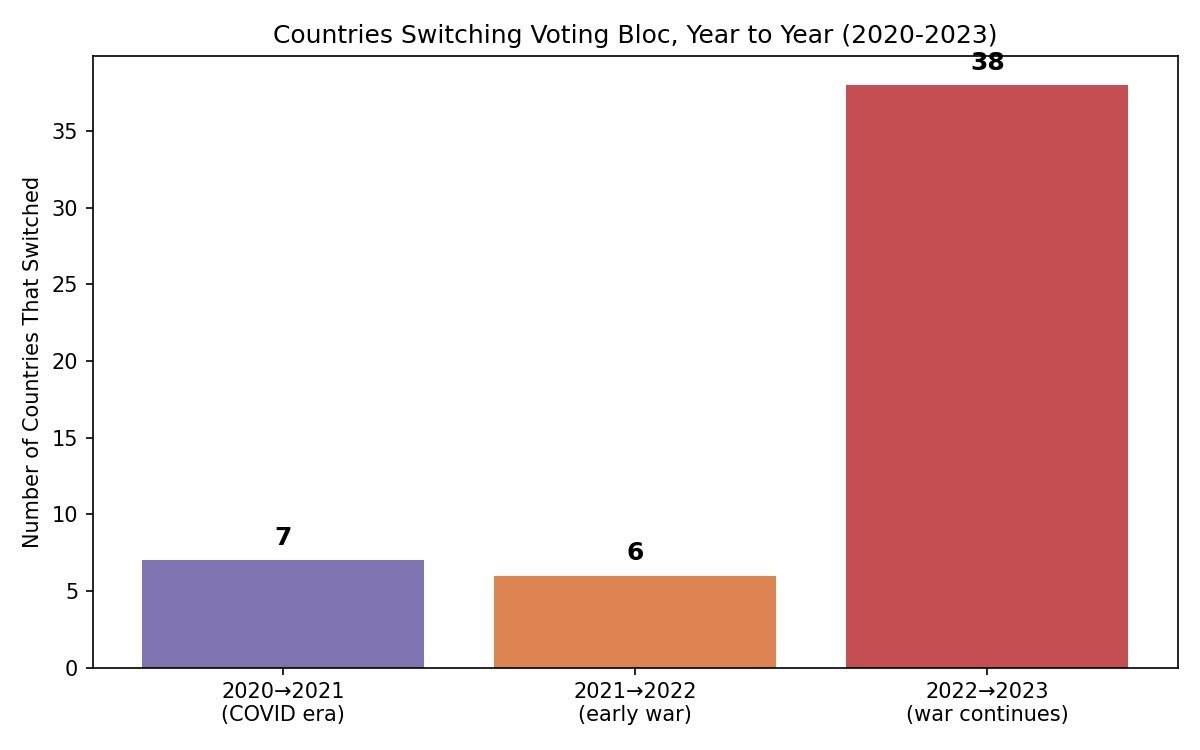
Switching remained limited during the COVID period, with 7 countries changing blocs between 2020 and 2021 and 6 countries between 2021 and 2022. In contrast, 38 countries switched between 2022 and 2023, indicating that the Russia–Ukraine war was the principal catalyst for geopolitical realignment.
Composition of the Switching Group
The comparison of the cluster assignment in 2020 and 2023 revealed that 42 countries changed their alliances: 41 countries joined the US/NATO-led alliance from the Russian/Chinese-led bloc, which was still the smaller bloc at that point, and only Brazil switched back. Because countries joined the bloc that is smaller in number of its members, this is in line with balance of threat theory and cannot be explained as bandwagoning because it was the invasion rather than bloc size that triggered the shift (Tawat, 2025; de Oliveira et al., 2025).
Relationship to the Broader Literature on Determinants of the Post-2022 Vote
The observed realignment is consistent with previous studies identifying political, economic, and strategic factors as key determinants of UNGA voting following Russia’s invasion of Ukraine (Farzanegan & Gholipour, 2023; Tawat, 2025). The broader pattern is also consistent with the U.S. Department of State’s assessment of UN member voting alignment during the same period (U.S. Department of State, 2024).
The COVID-Era Baseline in Context
The relatively low switching rate during 2020–2022 should be interpreted cautiously because COVID-era procedural changes reduced recorded voting opportunities, affecting visible bloc differentiation (Carayannis & Weiss, 2021).
8. Treatment of Abstentions
Abstention and other non-recorded votes were excluded from the agreement score because they accounted for only 38 of 85,173 recorded vote instances. Although this prevents the analysis from capturing strategic abstentions, their limited frequency is unlikely to materially affect the detected voting communities.
Limitations
- Exclusion of abstentions: Abstentions were excluded from the agreement score, limiting its ability to capture strategic non-alignment, although their relatively low frequency reduces this impact.
- Restricted aid analysis: The foreign aid analysis focuses only on China and the United States, with Chinese aid data unavailable after 2021, constraining comparisons during the main period of geopolitical realignment.
- Community detection: It is possible that the algorithm does not detect any other substructures, and a predefined two-bloc solution might mask a distinct third pole if there is such.
- Interpretation and data availability: The agreement score is symmetrical and measures voting similarity but not causality or leadership; hence, although it is possible to detect whether a country has deviated from its pole, it will not help prove that the country is leading another pole as asked by the research question. There are six countries missing data for 2023.
Conclusion
The research found that the Russia-Ukraine war reshaped UNGA voting power dynamics, though not in the direction the study’s hypothesis anticipated (de Oliveira et al., 2025; Farzanegan & Gholipour, 2023; Tawat, 2025). Rather than durable, self-led multipolar clusters, the shift reflects balance-of-threat behaviour: the US/NATO-aligned bloc, though still the numerically smaller grouping, overtook the Russia/China-aligned bloc as the voting majority in 2023, as small and middle-income states responded to the invasion itself rather than shifting toward the already-larger bloc (Tawat, 2025). The near-perfect clustering of formal alliance blocs (NATO, CSTO, SCO, AUKUS) under network community detection reflects a liberal-institutionalist pattern, in which binding formal institutions produce far stronger cohesion than looser ties such as aid (Fortunato, 2010; Pauls & Cranmer, 2017). Voting blocs are well predicted by Chinese aid; however, US aid is a weaker predictor (Dreher et al., 2008; Kegley & Hook, 1991; Wang, 1999). Aid quantity does not predict blocs, whereas the donor of aid does, meaning who the donor was is a more effective predictor of voting blocs than the volume of aid given (Dreher et al., 2008). India also exhibits an element of voting independence in their Russia-bloc voting patterns, despite being in the QUAD alliance (Tawat, 2025). As a point of the research, we must consider if the large shift seen in 2023 of Russia-bloc votes to US/NATO bloc votes is a structural change or whether it is due to territorial aggression (de Oliveira et al., 2025). In terms of strategic alliances, the voting bloc vote of a middle power will provide insights as to whether India and other like-minded nations can vote independently (Tawat, 2025).
Furthermore, including Chinese aid data from 2021 onwards can add another level to research into aid and bloc alignment shifts. Longitudinal study designs with lagged variables or instrumental variables might help provide answers on if Chinese aid has causal effects on voting alignment or simply reflects bloc affiliation (Dreher et al., 2008). One recommendation is that bilateral assistance be analyzed in terms of profiles and not only as a quantity of aid given, as the former appears to be the better predictor of diplomatic voting alignment, particularly for China aid. An additional possible direction for further research is to explore other network analysis tools, such as multilayer networks or varying the number of clusters, such as 2, to be used in modularity clustering (Fortunato, 2010).
This will allow us to look for multi-polar sub-blocs or shifting regional alliances, which the 2-cluster Louvian modularity cannot currently be used to detect.
References
Acharya, A. (2017). After liberal hegemony: The advent of a multiplex world order. Ethics & International Affairs, 31(3), 271–285. https://doi.org/10.1017/S089267941700020X
Acharya, A., Estevadeordal, A., & Goodman, L. W. (2023). Multipolar or multiplex? Interaction capacity, global cooperation and world order. International Affairs, 99(6), 2339–2365. https://doi.org/10.1093/ia/iiad242
Adarkwah, G. K., Sabel, C. A., & Zilja, F. (2026). Measuring geopolitics: The promise and limits of UNGA voting data for IB research. Journal of International Business Policy. https://link.springer.com/article/10.1057/s42214-025-00237-3
Bailey, M. A., Strezhnev, A., & Voeten, E. (2017). Estimating dynamic state preferences from United Nations General Assembly votes. Journal of Conflict Resolution, 61(2), 430–456. https://doi.org/10.1177/0022002715595700
Banik, D., & Mawdsley, E. (2023). South–South cooperation and global development in a multipolar world: China and India in Africa. Journal of International Development, 35(4), 539–548.
Borgatti, S. P., Everett, M. G., & Johnson, J. C. (2018). Analyzing social networks (2nd ed.). SAGE Publications.
Braveboy-Wagner, J. A. (2024). Introduction: The Global South and the multipolar moment. In Diplomatic strategies of rising nations in the Global South. Springer International Publishing.
Carayannis, T., & Weiss, T. G. (2021). The “Third” UN: Imagining post-COVID-19 multilateralism. Global Policy, 12(1), 5–14. https://doi.org/10.1111/1758-5899.12919
Carter, D. B., & Stone, R. W. (2015). Democracy and multilateralism: The case of vote buying in the United Nations General Assembly.
Chatin, M., & Gallarotti, G. M. (2016). The BRICS and soft power: An introduction. Journal of Political Power, 9(3), 335–352. https://doi.org/10.1080/2158379X.2016.1232284
Creswell, J. W., & Creswell, J. D. (2018). Research design: Qualitative, quantitative, and mixed methods approaches (5th ed.). SAGE Publications.
Danquah, M., & Ouattara, B. (2023). Aid and social cohesion. The Quarterly Review of Economics and Finance, 87, 118–131.
de Oliveira, A. N. C., Geiger, L. M., & Ugar, E. T. (2025). The United Nations General Assembly in a multipolar world order: An analysis of roll call votes on UNGA resolutions addressing Russia’s military actions in Ukraine. Chinese Political Science Review. https://doi.org/10.1007/s41111-025-00292-4
Dijkhuizen, F., & Onderco, M. (2019). Sponsorship behaviour of the BRICS in the United Nations General Assembly. Third World Quarterly, 40(11), 2035–2051. https://doi.org/10.1080/01436597.2019.1622411
Dreher, A., Nunnenkamp, P., & Thiele, R. (2008). Does U.S. aid buy UN General Assembly votes? A disaggregated analysis. Public Choice, 136(1–2), 139–164. https://doi.org/10.1007/s11127-008-9286-x
Dreher, A., & Sturm, J.-E. (2012). Do the IMF and the World Bank influence voting in the United Nations General Assembly? Public Choice, 151(1–2), 363–397. https://doi.org/10.1007/s11127-010-9750-2
Farzanegan, M. R., & Gholipour, H. F. (2023). Russia’s invasion of Ukraine and votes in favor of Russia in the United Nations General Assembly. International Interactions, 49(4), 454–470. https://doi.org/10.1080/03050629.2023.2179046
Fortunato, S. (2010). Community detection in graphs. Physics Reports, 486(3–5), 75–174. https://doi.org/10.1016/j.physrep.2009.11.002
Gallop, M., & Minhas, S. (2021). A network approach to measuring state preferences. Network Science, 9(2), 135–152. https://doi.org/10.1017/nws.2020.44
Gartzke, E. (1998). Kant we all just get along? Opportunity, willingness, and the origins of the democratic peace. American Journal of Political Science, 42(1), 1–27.
Gartzke, E. (2000). Preferences and the democratic peace. International Studies Quarterly, 44(2), 191–212. https://doi.org/10.1111/0020-8833.00155
Gray, K., & Gills, B. K. (2016). South–South cooperation and the rise of the Global South. Third World Quarterly, 37(4), 557–574. https://doi.org/10.1080/01436597.2015.1128817
Hanneman, R. A., & Riddle, M. (2005). Introduction to social network methods. University of California, Riverside.
Kegley, C. W., Jr., & Hook, S. W. (1991). U.S. foreign aid and U.N. voting: Did Reagan’s linkage strategy buy deference or defiance? International Studies Quarterly, 35(3), 295–312.
Kim, S. Y., & Russett, B. (1996). The new politics of voting alignments in the United Nations General Assembly. International Organization, 50(4), 629–652.
Maoz, Z. (2023). Networks in international relations. Cambridge University Press.
Mulakala, A., & Waglé, S. (2015). The rise of the South and a new age of South–South cooperation. In Contemporary Asian perspectives on South–South cooperation (pp. 118–139).
Newman, M. E. J. (2010). Networks: An introduction. Oxford University Press.
Nurullayev, D., & Papa, M. (2023). Bloc politics at the UN: How other states behave when the United States and China–Russia disagree. Global Studies Quarterly, 3(3), 1–12. https://doi.org/10.1093/isagsq/ksad034
Pauls, S. D., & Cranmer, S. J. (2017). Affinity communities in United Nations voting: Implications for democracy, cooperation, and conflict. Physica A: Statistical Mechanics and Its Applications, 484, 428–439. https://doi.org/10.1016/j.physa.2017.05.045
Signorino, C. S., & Ritter, J. M. (1999). Tau-b or not tau-b: Measuring the similarity of foreign policy positions. International Studies Quarterly, 43(1), 115–144. https://doi.org/10.1111/0020-8833.00117
Stuenkel, O. (2020). The BRICS and the future of global order. Bloomsbury Publishing.
Tawat, M. (2025). The Russia–Ukraine war: Understanding the Global South’s vote at the UN and its implications for the current world order. Third World Quarterly, 46(16), 2019–2036. https://doi.org/10.1080/01436597.2025.2549357
U.S. Department of State. (2024). Voting practices of UN members: 2023 report. https://www.state.gov/wp-content/uploads/2024/10/Voting-Practices-of-UN-Members_2023-Report.pdf
U.S. Department of State. (2025). Voting practices in the United Nations for 2024. https://www.state.gov/wp-content/uploads/2025/07/Voting-Practices-in-the-United-Nations-for-2024.pdf
Voeten, E. (2000). Clashes in the Assembly: International organization and the United Nations General Assembly. International Organization, 54(2), 185–215.
Voeten, E. (2023). United Nations General Assembly voting data (Version 2023). Harvard Dataverse. https://dataverse.harvard.edu/dataverse/UNVotes
Voeten, E., Strezhnev, A., & Bailey, M. A. (2009). United Nations General Assembly voting data.
Wang, T. Y. (1999). U.S. foreign aid and UN voting: An analysis of important issues. International Studies Quarterly, 43(1), 199–210. https://doi.org/10.1111/0020-8833.00117
World Bank/OECD Development Assistance Committee. (2026). Net official development assistance and official aid received. Our World in Data. https://ourworldindata.org/grapher/net-official-development-assistance-and-aid-received
Yin, R. K. (2018). Case study research and applications: Design and methods (6th ed.). SAGE Publications.