Authors:
Md Mostafijur Rahman Naeem1, Rohit vyas2, Deepshikha Chauhan 3, Siddhi Ajay Dighe4, Juhi Dhiman5
1Department of Oceanography, Shahjalal University of Science and Technology, Sylhet, Bangladesh
2Department of Political science, Rajasthan University
3 Department of English, Indira Gandhi National Open University, New Delhi
4Department of Sociology, Savitribai Phule Pune University, Pune
5Department of Political Science, Indira Gandhi National Open University, New Delhi
1. INTRODUCTION
The COVID-19 pandemic changed how schools worked across the world. Teachers moved to distant learning to keep classes going after schools and universities were closed. This shift showed how important it is for every student to have chances to use technology for learning. The need to give all students the tools they need for learning was highlighted. Some learners had their devices and reliable internet while others had to share a family phone use mobile data or find other ways to access online resources. This pattern was clear in India, where social, economic and digital progress levels shape how well students can join classes (Jafar, Ananthpur & Venkatachalam 2023; Datta & Kingdon 2022).
Therefore, it is essential to look at the divide to understand how students can access online education in India. The digital divide is not about having an internet connection. It appears when students do not have devices have shaky internet have small data plans or lack digital skills (Jafar et al. 2023; Muralidharan et al., 2021). During the pandemic these problems showed up as students who had internet. No proper devices or who used their own phones that did not connect well. Some students faced barriers because they had no devices or enough data. Others struggled because they did not know how to use tools (Dhaygude, Lapsiya & Chakraborty 2022; Jafar et al., 2023). These issues hurt students’ ability to join classes get materials finish assignments and keep learning.
The digital divide in education is particularly pronounced in some areas. Statistics show gaps between urban and rural places in terms of internet, computers, personal use of the internet and taking part in online learning in India (Jafar et al., 2023; MoSPI, 2019 2024). These gaps come from levels of infrastructure with cities having better access to learning resources online. At the time a student’s income how much they spend on devices and data power availability, digital skills and help from others also add to the differences in education. These factors limit how well students can join learning and use its tools. The divide also depends on the availability of low-cost devices.
In the course of the COVID-19 pandemic, smartphones became an essential way of gaining access to online education, especially for those students who did not have computers, tablets, or other digital devices. Yet the extent to which smartphones functioned as learning tools was not just a matter of whether the students had a device but also of whether they could use it regularly for educational purposes. As a result, the digital divide in online education in India is due to inequalities in terms of device ownership, internet access, affordability and digital skills. These factors influence students’ ability to join online classes, access learning materials, and take an active part in digital education. For a great many students, these difficulties are linked and build on one another, setting up a number of obstacles that can negatively impact their learning outcomes and educational opportunities.
With this findings the digital and infrastructure divide severely restricts the rural students’ access to quality education in India by creating massive gaps in device ownership, internet connectivity,and school-level readiness . Research paper will look at how the divide affects students’ access to education in rural India using existing data. It will combine data from the Telecom Regulatory Authority of India (TRAI) the Ministry of Statistics and Programme Implementation (MoSPI) the TRAI-based Dataful dataset and a study of Tamil Nadu by Jafar et al. (2023). The analysis will focus on technology and personal access differences in taking part in learning and getting tools and obstacles that stop students from using online learning. The Tamil Nadu study by Jafar et al. (2023) Is used as an example of data; it shows the traits of one region rather, than the whole country.
1.1 Research objectives:
- To examine the rural–urban digital divide in India in terms of internet connectivity, household internet access, computer ownership, and individual internet-use capability.
- To assess differences in access to and participation in online education between rural and urban students, including differences by educational level, social group, and device used.
- To identify the major technological, socioeconomic, and institutional barriers affecting rural students’ participation in online education, including device affordability, digital knowledge, connectivity, data costs, and availability of online classes.
2. LITERATURE REVIEW
Digital technology has become deeply ingrained in modern education as it facilitates a wider array of learning methods beyond the classroom. At the same time, not all students are in a position to equally exploit its potential. This is specifically the case for the students in rural areas who often face challenges with internet connectivity, access to devices, digital literacy, and financial constraints. Each of these issues complicates the online learning process for students in need of continuing their formal education. As the educational sector is progressively leaning towards digitization, rural students are encountering extreme difficulties when accessing learning materials, engaging in virtual classes, and reaping the benefits of digital learning.
This paper will leverage the literature review on digital inclusion and access to online education in rural India to generate a comprehensive understanding of the issue. The themes explored by the reviewed articles and reports will include the digital divide, online education, digital inclusion, rural India, and socioeconomic barriers. At the same time, the chosen literature will provide insight into the students’ demographic characteristics and living conditions as well as the prevailing physical and digital infrastructure. The combined effect of these themes will demonstrate how the absence of digital accessibility and the inability to engage in online education impedes the learning process of rural students.
2.1 Digital Divide
Recent research reports on the digital divide highlight the fact that it consists of a range of factors associated with achieving sustainable and effective digitization. In his article, Kinal (2021) discusses the gap in access to resources while emphasizing the role of teachers’ digital proficiency in enabling student participation. The author achieves this objective by analysing the data from the National Sample Survey (NSS) 2017–18. In contrast, Mandal (2022) adopts the 77th round of the National Sample Survey (NSS) data to identify the digital literacy level and land access in rural India. The author’s findings reveal a significant rural-urban divide in terms of internet access and overall digital inclusion. Mandal (2022) discovers that students’ participation in online education is overwhelmingly determined by their socioeconomic status, which is closely related to the income level and access to physical infrastructure. A similar conclusion is drawn by Reddy et al. (2021), who examine rural and urban disparities in online education through the lens of digital device ownership.
The findings of the three cited articles suggest that the digital divide is multifaceted. It is evident from the reports that the lack of devices and poor digital literacy rates in rural areas contribute significantly to the disparity in students’ online learning experiences. Indeed, Korkmaz, Erer, and Erer (2022) address the correlation between income inequality and the likelihood of students gaining access to the internet by implementing the spatial econometric analysis. This method allows the authors to explore the association between online education and a range of factors influencing it in depth. Korkmaz et al. (2022) report a negative relationship between the GINI index and the baseline level of internet access as well as an exacerbation of educational inequality. The study demonstrates that the abrupt transition to remote learning increased the divide between the students from low, middle, and high-income households due to their different levels of institutional and technological adaptability.
Moreover, the digital divide literature includes research investigating the influence of digital inclusion on students’ academic performance as well as its association with gender, educational status, and access to physical infrastructure. An insightful example is the empirical study conducted by Dadhe and Kuthe (2021), who analyse the role of electricity, internet access, and smartphone ownership in facilitating the online education of 678 undergraduate students in rural Maharashtra. The results of the survey conducted by the researchers reveal the dramatic impact of the abrupt transition to virtual classes on students. In particular, Dadhe and Kuthe (2021) document that 94.84% of rural students are dependent on smartphones for online learning, whereas 19.6% of them do not have access to the internet due to financial constraints. Cappelle et al. (2021) make a similar discovery concerning gender disparities in students’ access to distance education. According to the authors’ findings, only 62% of rural adolescents are able to access some form of distance education compared to 77% of their urban peers. Additionally, a significant disparity between male and female students was revealed, as well as the difference in online education utilization between government- and private-school students. These findings align with the report by Dr. G. Nagoji (2026), who explores the current state of digital infrastructure and online education in India. Nagoji (2026) discovers a significant gap between urban and rural areas in terms of internet access: 35% and 70%, respectively. According to the author, the low level of digital literacy in rural areas (27%) contributes to the gap in online education utilization among students (Nagoji, 2026). Nonetheless, the findings of Jafar et al. (2023) offer a more optimistic view of the situation in Tamil Nadu. Altogether, the literature review demonstrates that the digital divide is indeed widening due to the gaps in access to physical infrastructure, devices, and digital literacy.
2.2 Online Education
The reviewed literature highlights the role of the online education platform in bridging the learning gap between urban and rural students. For example, Shah et al. (2013) promote information and communication technology (ICT)-based open and distance education as a solution to the problem of geographical isolation of rural students from educational facilities. However, the article also discusses the requirements associated with the successful implementation of online education, which include access to reliable electricity, the internet, and physical infrastructure, as well as the teachers’ digital proficiency. In line with this finding, Bhanotu (2021) highlights the potential of online education in meeting the needs of remote rural students while presenting an alternative to formal education without compromising on their livelihood activities.
Despite the perceived benefits of online education, the reviewed literature indicates that students are often faced with barriers to its successful utilization. These barriers include the absence of reliable internet, access to appropriate devices, and electricity, as well as students’ and teachers’ digital literacy. Such difficulties were especially acute during the COVID-19 pandemic, as the sudden transition to online classes challenged students and teachers to adapt to the new learning environment. Das et al. (2021) conducted a qualitative case study in a government school in Odisha to explore the challenges of online education from the perspective of students and teachers. The results of the study highlight the fact that students and teachers experienced adverse effects of online education due to the inadequate availability of devices, internet access, electricity, and financial stability. According to the findings, the lack of parental literacy and teacher proficiency also significantly impacted students’ ability to participate in online education.
Overall, the review of the literature on online education suggests that the application of the online platform helps to ensure learning accessibility for students regardless of their location. However, due to the lack of appropriate digital technologies and electricity, the sudden transition to online education brought to light the large educational divide between urban and rural students. The findings of the reviewed literature also demonstrate that the successful implementation of online education is contingent upon the availability of public infrastructure, affordable devices, and digital literacy. For example, Venugopal et al. (2026) suggest that localized digital literacy, low-cost smartphones, and teacher training are essential to online learning. Thus, this review reveals critical issues related to online education and students’ ability to participate in it.
2.3 Digital Inclusion
The discussed challenges in online education lead to the topic of digital inclusion, which is a concept that implies that individuals should be equipped with the necessary resources to engage in the digital world. Nedungadi et al. (2018) focus on digital literacy by discussing an inclusive approach to bridging the digital divide. The article describes digital literacy as a key element required to empower individuals and contribute to their overall wellbeing. In line with this finding, Das et al. (2021) describe the role of digital inclusion in providing equal education access to students. The article’s results demonstrate that the availability of digital infrastructure is not sufficient to ensure the digital inclusion of rural students. According to the findings, online education is associated with significant socioeconomic disparities, which affects students’ motivation to learn. Navaneeth et al. (2022) make an important contribution to the discussion by emphasizing the fact that online education can cause social exclusion of students due to their limited access to devices, the internet, electricity, and digital literacy.
Therefore, it is evident that the reviewed literature provides an inclusive perspective on digital education by exploring the students’ socioeconomic characteristics that are integral to their digital inclusion. Sindakis et al. (2024) also conduct a study that highlights the relevance of the topic by demonstrating the association between demographic features and digital inclusion in the context of Kalahandi, Odisha. According to Sindakis et al. (2024), local socioeconomic characteristics and digital literacy mediate the relationship between perceived usefulness and technology adoption. Moreover, the findings demonstrate that the utilization of smartphone-based services is higher among the respondents due to their availability and affordability. In this regard, the author suggests that the government should play an active role in ensuring a stable ecosystem for residents. Dr. G. Nagoji (2026) describes the government’s role in promoting online education and digital literacy, which has enabled many students to gain access to formal learning. G. Nagoji (2026) discusses the concept of digital inclusion in India, which has been enhanced by the introduction of DPI and the expansion of Bharat Net. The author highlights the importance of programs, such as PMGDISHA, in promoting digital literacy. According to G. Nagoji (2026), the government’s initiatives have facilitated the digitization of several government services, such as healthcare and financial ones. However, the researchers conclude that the high level of institutional investment in digital infrastructure has failed to address the last-mile connectivity issue. This conclusion suggests that the government’s attempts to bridge the digital divide at the national level have limited relevance to the residents of rural areas, who experience the issue at the local level. Therefore, the literature review demonstrates that digital inclusion can effectively bridge the gap between the availability of online education and student accessibility if the former considers the diverse opportunities required by the latter.
2.4 Rural India
The literature review on online education and digital divide demonstrates that the former is capitalizing on the former to bridge the gap between rural and urban students. Saigal (2012) discusses the need for highly qualified teachers in rural government schools to promote overall literacy. The author concludes that human resources play a critical role in ensuring that rural students receive quality education. This aspect is also considered by Ghose (2017), who examines the state of infrastructure in rural India and discovers significant disparities across the country. In particular, the author’s findings reveal that there is a wide gap in terms of electricity and telecommunication in rural areas. These factors are critical to online education and overall literacy, as they facilitate the smooth functioning of the digital ecosystem while contributing to the improvement of the living standards of the residents.
The significance of this aspect is also recognized by Richmond et al. (2020) , who conduct a study that explores the association between electricity and the utilization of durable goods in rural Bihar, Odisha, Rajasthan, and Uttar Pradesh. The authors’ findings demonstrate that access to electricity has a considerable impact on the use of durable goods and overall infrastructure. Rajkhowa et al. (2022) address the influence of smartphones on the residents of rural India. The article highlights the role of nonfarm income in promoting the overall literacy of the population. Rajkhowa et al. (2022) reveal the positive association between the utilization of mobile phones and the enhancement of nonfarm income, which supports the idea of smartphones being instrumental in economic growth.
A study conducted by Kumar et al. (2024) examines the level of digital literacy in the villages of Madhya Pradesh and Odisha. It is revealed that promoting digital literacy is essential for the social and economic growth of rural areas. The article emphasizes the importance of physical infrastructure, technology, and qualified teachers as enablers of social justice. Altogether, the reviewed literature offers compelling evidence that can help improve the literacy rate in rural India. It demonstrates the role of infrastructure, smartphones, and qualified teachers in promoting digital literacy. Kumar et al. (2024) highlight the importance of online education in equalizing the rights of every individual to receive a standard of living. Given the evidence, it is evident that improving the conditions of rural India requires combined efforts to develop its digital and physical infrastructure and enhance the digital literacy of its residents. This goal can be achieved through a comprehensive analysis of the concept of digital literacy, which will highlight the opportunities for its improvement.
2.5 Socioeconomic Barriers
The previous section of the literature review indicates that the availability of online education is increasing, which is evident from the growing number of students who can exploit its potential. At the same time, the findings of the literature review on digital inclusion and access to online education reveal the vast rural-urban gap in terms of the former. Namely, the absence of appropriate digital infrastructure and digital literacy often prevents students, especially those in rural areas, from accessing online education. It is necessary to explore the literature on socioeconomic barriers in order to obtain a better understanding of the relationship between students’ socioeconomic status and their ability to participate in digital education.
According to Jafar et al. (2023), the uneven distribution of devices and internet access produces significant socioeconomic disparities in terms of online education. In turn, Tiwari (2008) discovers that the deprivation of access to information and communication technology produces severe economic, social, and gender inequalities that prevent the rural population from benefiting from technological advancements. In line with the findings of the previous two articles, Balasundaram et al. (2026) explore the gap between boys’ and girls’ access to education technology. The results of the study demonstrate the presence of significant disparities in terms of access to education technology in rural Tamil Nadu. Balasundaram et al. (2026)’s evidence is complemented by the findings of Sindakis et al. (2024), who conducted a similar study in rural Odisha. Although Sindakis et al. (2024) discovered a wide gap in terms of gender in regard to technology utilization, which is not evident in the findings of Balasundaram et al. (2026), the authors conclude that the use of technology is especially high among women.
The literature on socioeconomic barriers also includes the reports that highlight the connection between income inequality and the likelihood of students to experience educational disparities. Fuch (2009) addresses the impact of income inequality and its effect on digital inequality, while Korkmaz, Erer,& Erer (2022) elaborate on the relationship between unequal income distribution and the access to education. To summarize, the literature review on socioeconomic barriers reveals complex interconnections between income inequality, online education, and academic performance. Fuch (2009)’s findings suggest that the financial inequality between individuals and households is considerable in regard to the utilization of digital technology. Korkmaz et al. (2022)’s analysis of the same issue demonstrates that the aforementioned problem is especially acute in regard to access to online education. Altogether, the literature review demonstrates that the influence of socioeconomic barriers on students’ opportunities to engage in online education is significant to the extent that it may affect their overall academic performance.
2.6 Literature summary
Overall, the literature review demonstrates that students from rural areas are more likely to be deprived of the opportunity to participate in digital education. It can be asserted that the presence of online education does not guarantee equal learning opportunities for students, as there are several factors influencing the likelihood of their engagement in it. In this regard, the reviewed literature provides compelling evidence concerning students’ socioeconomic characteristics, the role of digital infrastructure and its impact on their online learning experiences. At the same time, the literature review highlights the complex interrelationships between students’ economic status, access to electricity, and online education. Given that, it can be concluded that the literature provides a comprehensive basis for further research into the contribution of digital education in equalizing opportunities for rural students.
2.7 Research Gap
To comprehensively address this gap, the present study adopts a mixed-methods research design that integrates macro-level spatial econometrics with micro-level household surveys. Following the spatial methodologies of Korkmaz et al. (2022), we begin by employing a spatial weight matrix to capture geographic contiguity and regional infrastructure dependencies across the target rural districts. Subsequently, by building upon the empirical foundation laid by Dadhe and Kuthe (2021), we conduct a detailed contextual analysis of the learner within their immediate material environment. This is achieved through the implementation of a structured socio-technical survey to quantify intersectional variables, including the household’s income tiers, monthly connectivity expenditure capacity, smartphone sharing ratios, daily electrical grid reliability, and gendered prioritization of device usage. Finally, these micro-level insights are interrogated against the macro-level intervention rollout indicators of India’s Digital Public Infrastructure (DPI) framework, as conceptualized by Nagoji (2026).By delineating the variances between top-down infrastructure availability and bottom-up socioeconomic, gendered capabilities, this study unravels the intricate structural alignment necessary for equitable digital inclusion.”
3. METHODOLOGY
3.1 Research Design
This study is designed by descriptive, thematic and documentary research design to study digital divide and access of online education in rural areas of India. The study does not have primary data collection from the students, teachers, households and educational institutions, it is based on the existing research published papers and secondary sources. The design allows for the systematic review, organization, comparison and synthesis of findings from existing studies to gain a more comprehensive understanding of digital inequality and online education participation.
The literature reviewed is arranged into five interrelated themes which are digital divide, online education, digital inclusion, rural India and socioeconomic barriers. These themes were chosen because they are the main themes of the studies reviewed and the problem of the research encompasses all these themes. The terminology used in the study is the digital divide, online education, digital inclusion, rural India, and socioeconomic barriers, which are respectively: differences in access to the internet and digital devices; accessibility, participation, cost, flexibility, and continuity of digital learning; skills, competencies, and resources needed for meaningful participation in the digital environment; and a geographic and contextual focus of the study; and a focus on the influence of costs related to technology, gender, parental education, and household income and poverty. When these themes are analysed and discussed together with the aim of identifying patterns, similarities and differences across the literature, it is possible to uncover the interactions between infrastructure, socioeconomic conditions, gender and digital skills and how these can affect the participation in online education.
3.2 Nature of Research
The type of the study is descriptive, thematic and secondary data. It doesn’t gather new empirical data from surveys, interviews, observations or experiments. Rather, it reviews the literature and secondary statistics to gain a holistic perspective on digital inequality in rural education.
The issues that are addressed in the reviews are access to the internet, digital devices, access to electricity, literacy in digital devices, engagement in online learning, household income, gender, social inequality, teacher readiness and educational infrastructure. Theme analysis approach is used to find similarities and differences between the findings of the studies and to elaborate common themes that highlight themes related to access and participation in online education among the rural population in India.
3.3 Sample and Sampling Technique
The sample comprises published research studies and secondary data about digital access and online education in rural India. Nationally representative data includes NSS 2017-18, NSS 77th Round, panel data from the Indian Human Development Survey (IHDS) and household-level survey data used for studies of rural communities. The review also includes research on digital and educational infrastructure indicators, composite indicators, and qualitative evidence on students, households, teachers and educational institutions.
These datasets and studies were chosen because they offer evidence for the key aspects of digital inequality: access to the internet and devices, electricity and telecommunications services, digital literacy skills, participation in online learning, household socioeconomic context, gender, and educational capacity. There are also a number of literatures on various rural areas of India like Maharshtra, Odisha, Tamil Nadu, Bihar, Rajasthan, Uttar Pradesh, Madhya Pradesh and Kalahandi. The data at the national, household, infrastructure, and regional level levels give a comprehensive framework for looking at patterns of digital access and participation in rural online education.
3.4.Data Collection Tool
Secondary data was collected using documentary analysis technique from the selected published secondary data sets and research evidence. The primary sources of data were the Telecom Regulatory Authority of India (TRAI), the Ministry of Statistics and Programme Implementation (MoSPI), and the panel study conducted by Jafar et al. (2023).The data used examined the internet subscriptions and the tele-density in rural and urban areas derived from TRAI data and the individual internet-use capability and individual computer possession and the presence of internet facilities at the household level from MoSPI data. The panel data allowed for direct evidence of access to online learning, device use, and barriers to online learning among students in Tamil Nadu.
The chosen data has been sorted and arranged by analytical unit, time period, and indicators, and then contrasted between rural and urban groups and various social and educational categories. The analysis was based on the connectivity, household access, digital capability, student participation in online education, device use, and barriers to participation. This enabled evidence at all stages of the digital-access process to be considered in relation to each other while preserving the difference between the types of measure (subscriber level, household level, individual level, and student level).
3.5 Variables Used
This study tested the following variables, concepts, themes and analytical dimensions related to digital access and participation to online education:
- The internet indicator is also grouped into two types: “Internet subscribers” and “Rural–urban tele-density.”
- Household Digital Access: household access to Internet facilities and to a personal computer.
- Individual Digital Capability: the ability to use the Internet, especially those 15 years and over.
- Online-Education Participation: Urban vs Rural student participation in online education.
- Device Use: Mobile phone, laptops/desktops and tablets for online learning.
- Educational Differences: Difference in the opportunities for online education based on educational level.
- Social Differences:Access to online education by social groups.
- The barriers to participation include: Absence of online classes, cost of electronic devices, lack of computer knowledge, poor network connectivity, and cost of Internet and mobile-data services.
- Technical and Learning-Environment Challenges: signal problems, lack of computer knowledge, lack of separate or quiet study space.
3.6 Ethical Considerations
Ethical standards were adhered to during the gathering, discovery and dissemination of secondary information. Data and results from previous studies and data sets were accurately reported without being misrepresented, fabricated, or selectively reported. Information and evidence cited and referenced from published sources was done in an appropriate manner with the correct author and/or publishing year. Comparisons were avoided for the purpose of interpretation because they may be false due to the geographical, population and methodological context of the findings. If multiple studies found conflicting results, the conflicts were fairly presented and not used to bolster one side or the other. Secondary evidence was also clearly distinguished from the analysis and interpretations made in the present study.
4. DATA ANALYSIS
4.1 Introduction
This chapter reviews the secondary evidence related to the digital connectivity and access to online education in rural India. The analysis is descriptive-comparative and uses data on internet subscribers and tele-density from the Telecom Regulatory Authority of India (TRAI), household internet-use data and individual internet-use data from the Ministry of Statistics and Programme Implementation (MoSPI) and Jafar et al.,2023 panel study on students’ use of internet for education in India and Tamil Nadu respectively . By utilising a highly structured approach, this analysis ensures a thorough evaluation of major regional shifts and spatial trends . This is not to try to calculate one national indicator of the digital divide, but to look at the rural-urban divide and the divide between the rural and the urban dimension of the online learning divide. Special focus on access and connectivity, digital capability, student participation, device dependence, and reported barriers. Findings are presented comparatively, due to the different years, population and indicators used in the datasets, and are not viewed as representing one common survey.
4.2 Data Overview / Sample Profile
The evidence therefore comprises elements of digital-access process which reflects the sequential stages of the process. While TRAI data establishes baseline network availability and subscriber scale, the national-level MoSPI datasets map household and individual capabilities, such as device ownership and essential digital skills. The Tamil Nadu panel then bridges these structural indicators with real-world impact, capturing actual participation in online learning. This layered connection is critical: having a network and a device (MoSPI/TRAI) creates the prerequisite conditions, but panel-level behavioural data (Tamil Nadu) confirms whether these capabilities successfully translated into meaningful educational engagement.
|
Source |
Period |
Analytical unit |
Main indicators |
|
TRAI / Dataful |
Mar-2022 to Mar-2025 |
Rural/urban service areas |
Internet subscribers; tele-density |
|
TRAI / Dataful |
Mar-2025 |
Selected service areas |
Rural, urban and total subscriber density |
|
MoSPI, NSS 75th Round |
2017–18 |
Households |
Internet facility; computer possession |
|
MoSPI, CAMS |
2022–23 |
Individuals |
Ability to use the internet |
|
Jafar et al. (2023) |
2020–2021 |
Students in Tamil Nadu panel |
Online-education access; devices; barriers; regression evidence |
There is no original respondent sample as the study is based on secondary data and published evidence. Analytical units are different across sources (internet subscriptions, households, persons 15 years and older, students, education level, and social groups). The most important datasets and their analysis purposes are summarized below.
According to data for March 2022 to March 2025, the number of internet subscriptions in rural areas rose by 75.88 million or about 22.9%, from 331.81 million to 407.69 million. The number of urban subscriptions grew 68.34 million (+13.9%).The urban subscriptions increased by 68.34 million (+13.9%). Hence, the subscriber base increased at a higher rate in the rural segment, although the urban subscriber base has remained high throughout the period (TRAI, 2025).
The overall expansion of the tele-density series is similar. The tele-density in rural areas rose from 37.06% to 45.03%, gaining 7.97 percentage points. Urban tele-density has also risen from 102.82% to 110.79% during the same period, but there is a slight decrease in urban tele-density from March 2024 to March 2025. The rural-urban gap for March 2022 is 65.76 percentage point and that for March 2025 is 65.76 percentage point.
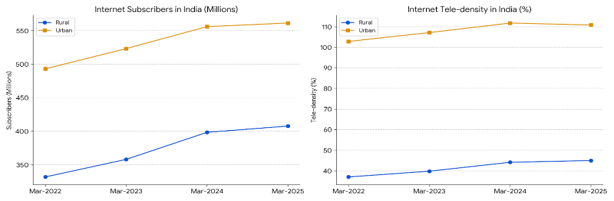
The convergence between the numbers of subscribers in rural and urban areas is not evident as there is still a gap of around two-thirds per person-equivalent (TRAI, 2025). The above values of more than 100% are not entered incorrectly in the source series. It is due to the fact that tele-density is based upon subscriptions per population. Persons and households can have more than one subscription. For this reason, the series is suitable for connectivity expansion, but shouldn’t be seen as the percentage of people who are online.
4.4 Regional variation in subscriber density
Telecommunication infrastructure serves as a foundational driver of the rural-urban educational divide. Across the selected TRAI service areas, the difference in rural connectivity is staggering: rural subscriber density ranges from a low of 33.66 per 100 population in Bihar to an exceptional 248.13 per 100 population in Kerala, creating a massive geographic deficit of 214.47 subscribers per 100 population. Across the 12 service areas, the average rural density stands at 65.54, though this mean is skewed upward by Kerala’s unusually high metrics the median of 51.73 offers a more accurate representation of the central trend.
|
S. No. |
State |
Rural / 100 |
Urban / 100 |
Total / 100 |
|
1 |
Kerala |
248.13 |
62.01 |
75.85 |
|
2 |
Gujarat |
98.77 |
52.55 |
86.05 |
|
3 |
Maharashtra* |
121.95 |
50.92 |
73.30 |
|
4 |
Jammu & Kashmir |
124.20 |
50.32 |
62.82 |
|
5 |
Rajasthan |
116.51 |
43.05 |
43.10 |
|
6 |
Bihar |
93.45 |
33.66 |
56.01 |
|
7 |
Madhya Pradesh |
108.13 |
34.88 |
55.84 |
|
8 |
Assam |
120.69 |
43.66 |
99.94 |
|
9 |
Himachal Pradesh |
341.95 |
59.16 |
88.45 |
|
10 |
Karnataka |
124.70 |
57.36 |
87.94 |
|
11 |
Punjab |
130.94 |
53.92 |
88.43 |
|
12 |
Andhra Pradesh |
106.06 |
58.83 |
78.96 |
Table 3 : rural and urban internet subscriber density by trai service area, march 2025
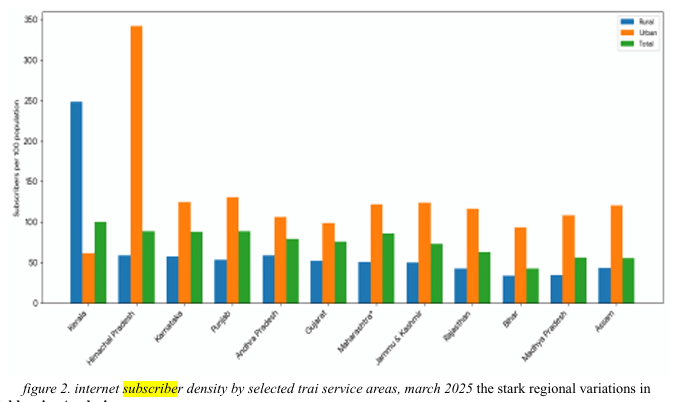
However, these baseline infrastructure metrics cannot be equated directly with equitable educational opportunities, as they mask a deeper digital divide. High subscriber density does not guarantee unique-user access for students within a household, and the mismatch between TRAI service area boundaries and state administrative borders further complicates local tracking. The vital takeaway for educational equity is that the baseline environment for digital learning is profoundly unequal; before a student even attempts to log into a virtual classroom, their geographic and residential location dictates a vastly different capacity to receive online instruction (TRAI, 2025). Consequently, this infrastructural imbalance cements a structural educational divide, where rural learners are systematically disadvantaged from the outset.
4.5 Variable-wise Analysis
4.5.1 Household internet and computer access
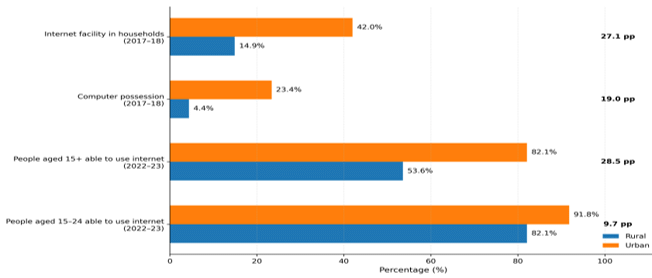
figure 3: rural–urban differences in household internet access, computer ownership and internet-use capability, mospi (2024) : cams 2022-23
Household level indicators show a greater access problem than subscriber numbers do. The difference between the percentages of rural and urban households with an internet facility is 27.1 percentage points (14.9% in rural areas and 42.0% in urban areas in 2017–18). The same was true for computer possession, with a difference of 19.0 percentage points. They are important for online learning because if a student is in a network service area, it doesn’t mean that their household has a connection or an appropriate device for learning (MoSPI, 2019).
53.6% of the rural population aged 15 years and above could use the internet in 2022-23, compared to 82.1% of the urban population of this age group. The urban-rural divide decreased to 9.7 percentage points amongst 15–24-year-olds. The smaller difference among the younger population is of interest because a high proportion of the younger population are potentially learners; the remaining difference suggests that there remains an unequal digital capability across the younger population (MoSPI, 2024).
|
Panel round |
Rural students |
Urban students |
Rural-urban gap |
|
Round II (Jun–Sep 2020) |
51.3% |
66.0% |
14.7 pp |
|
Round III (Oct 2020–Jan 2021) |
43.8% |
60.0% |
16.2 pp |
|
Round IV (Feb–Jun 2021) |
65.5% |
78.3% |
12.8 pp |
4.5.2 Direct access to online education
The Tamil Nadu panel data provides a critical, real-world stress test of the broader digital pipeline, moving beyond mere infrastructural access to measure actual educational participation. Across the three survey rounds, the data reveals a persistent rural-urban divide, demonstrating that structural inequalities directly translate into unequal learning outcomes. Specifically, rural participation fell from 51.3% in Round II to 43.8% in Round III, before recovering to 65.5% in Round IV. Urban areas experienced a mirrored trajectory, dipping before climbing to 60.0% and ultimately reaching 78.3% (Jafar et al., 2023).
While rural areas showed a marginally higher growth rate between Round II and Round IV (14.2 percentage points compared to the urban increase of 12.3 percentage points), this marginal catch-up failed to close the systemic gap. By Round IV, a substantial 12.8 percentage point deficit remained between rural and urban students.
Crucially, these fluctuations underscore the central motive of this paper: the lack of a consistent, upward trajectory in online learning highlights that organic adaptation alone cannot bridge the digital divide. The absence of a steady pattern toward equal participation proves that without targeted policy interventions at the capability level, structural barriers will continue to marginalize rural learners, irrespective of baseline network expansions.
4.5.3 Differences by educational level and social background
There was a gradual rise in online-education access from Anganwadi to Bachelor’s and above educational levels, with 39.5% of Anganwadi students, 91.2% of Bachelor’s level students, and 91.2% of Bachelor’s and above students having access. The difference in percentage points between these two groups shows a good amount of variation among the students themselves. The data provide an association with educational level; however, they do not necessarily demonstrate a trend because of age, devices, parental support, school provision or other factors.
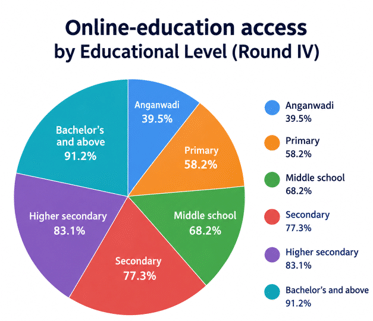
Beyond the broad geographic divide, a deeper layer of socioeconomic stratification heavily fractured online educational access within rural communities themselves. In Round IV of the panel data, digital participation rates varied significantly across different social and administrative categories, ranging from a low of 66.3% and 66.5% in the most historically marginalized segments to 69.6%, 69.8%, and 76.7% in intermediate groups, while peaking at 89.6% for the most privileged demographic (Jafar et al., 2023). This reveals a stark internal digital divide of 23.3 percentage points within the rural student population alone, proving that residential location is further complicated by internal socioeconomic hierarchies.Ultimately, these intra-rural disparities directly address our second research objective by demonstrating that macro network expansion does not benefit rural students equally; rather, existing socioeconomic positioning dictates a student’s actual capacity to translate infrastructure into meaningful educational participation.
4.5.4 Device use and mode of digital participation
In Round IV, mobile phones were by far the most common device reported for online education with 88.7% of rural students and 91.9% of urban students using the device. In contrast, the percentages of students using a laptop/desktop and tablet were 3.0% and 2.9% respectively among rural students. Analyzing the source through the lens of our research objectives reveals that educational exclusion among rural students is a compounding, multi-faceted phenomenon. The primary data shows that the most pervasive barrier was institutional supply-side failure, with 57.6% of rural students reporting that their school or college was simply not conducting online courses. Beyond this institutional deficit, acute socioeconomic and technological barriers severely constrained the demand side: 17.4% of students were excluded due to the unaffordability of electronic devices, 12.9% lacked basic computer knowledge, 12.4% suffered from a total lack of internet connectivity, and 4.2% could not afford ongoing Wi-Fi, modems, or mobile data plans. Because these categories are not mutually exclusive, individual students frequently experienced a combination of these hurdles simultaneously.
Our analysis extends the traditional definition of the digital divide by transforming these isolated metrics into a cascading matrix of educational exclusion. Rather than viewing these numbers as a simple list of complaints, we interpret them as a multi-layered barrier system where passing one hurdle does not guarantee educational access.
For instance, a student living in an area with robust network infrastructure is still functionally excluded if their institution fails to deliver online modules , or if the recurring costs of data and devices outpace household financial capacity .Ultimately, these findings fulfil our central objective by confirming that a critical distinction exists between nominal connection and meaningful access to education; structural equality cannot be achieved merely by expanding network coverage if institutional readiness, device affordability, and individual capability are left unaddressed.
4.5.5 Study-material channels and mixed-mode learning
The evidence also indicates that there was no substitution of the traditional education channels by online access. Among rural learners however, the number of personal visits to school/college increased from 56.5% in Round III to 77.9% in Round IV while the use of WhatsApp and Telegram or Google Classroom to access the study materials reduced from 50.8% to 33.8% respectively.
This movement reflects the hybrid learning model where blended learning was applied and did not fully replace online learning (Jafar et al., 2023). This is important for the research question because it helps to distinguish between having access to the internet and using the internet to learn. A student could have internet access but also use extensive physical usage of institutions to gain information, guidance and others.
4.5.6 Barriers to participation
The barriers reported show that being excluded from online learning is a multi-faceted phenomenon. The most common justifications were that the college or school was not conducting online courses (57.6%). The next most frequently reported barriers were the inability to afford electronic devices(17.4%), lack of computer knowledge (12.9%) and lack of internet connectivity (12.4%). 4.2% reported affordability of Wi-Fi, modem or mobile data.
|
Reported reason among rural students, Round IV |
Share |
|
School/college not conducting online classes |
57.6% |
|
Unable to afford electronic device |
17.4% |
|
Lack of computer knowledge among parents/students |
12.9% |
|
Lack of internet network connectivity |
12.4% |
|
Unable to afford Wi-Fi/modem or mobile-data charges |
4.2% |
|
Dropout due to financial status |
3.7% |
These percentages encompass barriers reported and are not mutually exclusive; more than one barrier could be reported. The pattern extends the definition of digital divide. Students can also be excluded if there is network infrastructure available, but it is not being provided; if devices are too expensive; if they don’t have the skills to use computers on their own; or if data costs are too high and occur too frequently. Results thus confirm the distinction between nominal connection and meaningful access to education.
4.5.7 Challenges after access has been established
The technical constraints were still applicable in the case of students engaged in online education. The technical problems of lack of signal occurred in 32.0% of the rural students in Round IV versus 25.5% of the urban students. Lack of separate or quiet study place (10.9%) and lack of computer knowledge either by parents or students (9.3%) were also reported by the rural students (Jafar et al., 2023).
These findings indicate that there is a continuum of the digital divide. Students may lack access to devices, digital skills, and IT systems or these resources may be unaffordable or fail to provide a suitable learning environment. This could therefore lead to an overestimation of how much connectivity actually equates to participation in online learning by subscriber numbers.
4.6 Econometric / Statistical Results
A new regression model is not estimated in the present study. Instead, it presents and explains the regression evidence collected in the reviewed study of Tamil Nadu. The retrieved model was composed of 4900 observations and the technique used in this model was regarding the dependent variable as access to online education (Jafar et al., 2023).
|
Variable |
Coefficient |
p-value |
Interpretation |
|
Technical issues |
-1.568 |
0.005 |
Negative, statistically significant association |
|
Knowledge gaps |
-2.006 |
0.040 |
Negative, statistically significant association |
|
Tablet use |
4.463 |
0.001 |
Positive, statistically significant association |
|
Laptop/desktop use |
5.496 |
<0.001 |
Positive, statistically significant association |
|
Television use |
6.545 |
<0.001 |
Positive, statistically significant association |
|
Mobile-phone use |
6.282 |
<0.001 |
Positive, statistically significant association |
The description evidence agrees with the reported regression results. The variables that were negatively associated with online-education access were technical issues and knowledge gaps, while the variables that were reported as device use variables were positively associated with online-education access. These coefficients were statistically significant, meaning that the relationships were not likely to have been due to random sampling variation, under the assumptions of the model. These are results of the analysed sources, however not estimates based on the present documentary analysis.
Coefficients also need to be interpreted as associations and not as automatic causes. For instance, some family factors, such as household income, may be correlated with the use of the device, which also may impact online-education participation. The regression indicates statistically associations between technical issues, knowledge gaps, device use and access to online education. However, these associations should not be interpreted as causal effects.
4.7 Diagnostic / Robustness Checks and Interpretation Limits
The multiple model designs and data limitations do not weaken the study; instead, they directly serve our research objectives by preventing a superficial analysis of the digital divide. By evaluating different indicators across distinct time spans, this multi-layered framework shifts the focus from simple connectivity numbers to a detailed assessment of actual educational equity. The integration of these measurement checks directly shapes the interpretation of our three research objectives:
Mapping the Structural Pipeline :
Our first objective is to examine the macro-level rural–urban digital divide. The data checks reveal that TRAI infrastructure indicators do not track unique-user access or student connectivity, and their service boundaries diverge from administrative state borders. Furthermore, MoSPI household indicators from 2017–18 offer an initial baseline rather than immediate, modern estimates of home connectivity. Far from being a drawback, acknowledging these gaps prevents us from falsely assuming that gross network expansion automatically equals student access. It proves that high regional subscriber counts often mask deep household shortages.
Differentiating Nominal Access from Real Participation:
Our second objective focuses on differences in online learning participation across social groups and educational levels. Here, the Tamil Nadu panel data provides crucial, ground-level evidence of student behaviour during the pandemic, but it represents a specific regional crisis context that cannot be generalized as a national average. By treating this data as a localized stress test rather than a national blanket metric, we can analyse the precise socioeconomic and educational divides that emerge when remote learning becomes mandatory, without making unsupported claims about other states.
Deconstructing Complex Barriers to Learning:
Our final objective is to isolate the technological, socioeconomic, and institutional barriers facing rural students. Because the reasons for missing online classes were collected as multiple-response options, they cannot be simplified into a neat, single-variable ranking. Additionally, the regression coefficients drawn from the literature indicate strong associations rather than clear, linear cause-and-effect relationships. This proves that educational exclusion is an overlapping matrix of obstacles. A student is rarely held back by a single issue; rather, they are marginalized by a combination of high data costs, poor infrastructure, low digital literacy, and institutional unreadiness occurring all at once.
Combined, these robustness checks eliminate the risk of over-relying on any single data source. The converging evidence across all levels – from TRAI’s infrastructure and MoSPI’s capabilities to Tamil Nadu’s direct student metrics – leads to a definitive conclusion that the rural-urban digital divide is highly unequal and heavily fractured across geographic and socioeconomic boundaries.
4.8 Key Findings
- The total number of rural internet subscribers rose by 75.88 million or approximately 22.9% from March 2022 to March 2025.
- The tele-density in rural areas rose by 7.97 percentage points, however the tele-density gap between rural and urban areas continued to be 65.76 percentage points in March 2025.
- The selected TRAI service areas also exhibited a great variation in the density of subscribers. The rural subscriber density varied from 33.66 to 248.13 subscribers per 100 population.
- The evidence from the NSS 2017–18 and 2022–23 showed that the proportion of households and individuals accessing the internet and computers was significantly lower in rural areas than in urban areas, and individual internet use capability was also lower than that in urban areas. While the learning through online-education access of rural students was lower than that of urban students in all of the reported rounds in the reviewed Tamil Nadu panel, it rose in Round IV.
- Access to online-education was highly dependent on educational achievement and social group, with mobile phones as the key access device.
- The challenges reported went beyond connectivity to the physical network and included: absence of online classes; device affordability; digital knowledge; and network connectivity and costs.
- By mapping these specific findings against our foundational framework, this study directly resolves all three core research objectives. The empirical evidence demonstrates that unequal access to online education is not a simple, single-variable failure of infrastructure, but rather a compounding matrix of digital inequalities.
Ultimately, these findings converge to answer the central query of this research. They confirm that meaningful access to online learning is an entirely different benchmark than nominal network presence. While infrastructure (TRAI) provides the baseline pipeline, it requires a supporting framework of household economic resources (device affordability), individual competence (digital literacy), and institutional readiness (consistent school execution) to achieve educational equity. Without these overlapping layers aligned, macro-level internet expansions will continue to leave rural learners structurally excluded from the modern educational landscape.
5. DISCUSSION
The results of this study show that the digital divide in rural India is multi-faceted issue, which is not just about availability of internet connectivity. The growing digital infrastructure has provided opportunities for online communication, information exchange and educational engagement but access to digital technologies is not equally distributed between rural and urban areas. The inequality can be linked to multiple socio-economic factors, such as income level of the household, access to and cost of digital devices, access to and use of digital literacy, availability of electricity, network reliability, educational infrastructure, and socio-economic conditions. Thus, having a network connection does not mean a person has access to digital services, or can use them efficiently for learning. This is in line with the scholarly works of Kinal (2021), Reddy et al. (2021), Mandal (2022), Dadhe et al. (2021), and van Cappelle et al. (2021) who have conceptualised digital inequality as an intricate phenomenon with three components – access to technology, capabilities to access technology, and opportunities to benefit from technology. Thus, the results point to the need to adopt an integrated perspective of the technological infrastructure and the social context in which digital education is implemented, for a better understanding of digital exclusion in rural education. Among the most significant is the fact that internet connectivity has increased in rural India and there remains a significant digital divide between the rural and urban. The data from the Telecommunications Regulatory Authority of India (TRAI) used in this study shows that the number of rural subscribers rose from 331.81 million in March 2022 to 407.69 million in March 2025. Rural tele-density on the other hand rose from 37.06% to 45.03% over the same period. These numbers show significant progress in rural telecom access and indicate progress over time for digital infrastructure. The rising number of rural internet subscribers could be due to factors such as better mobile network coverage, broader availability of devices that could be internet connected, and an increasing reliance on internet communication in daily life. These are key stepping stones in increasing the education opportunities of people who may have geographical constraints on access to mainstream educational institutions and resources.
However, the rise of rural internet connections does not imply the digital divide is gone. Tele-density and subscription rates reflect aspects of telecommunications access, but do not necessarily indicate whether all people have access to a reliable, affordable and independent telecommunications access method to the internet. One person or family can have more than one subscription and several family members can use one device or one internet connection. Likewise, no information about the digital competence of learners, access to appropriate educational platforms, or the ability to attend online classes uninterrupted can be gained from subscriptions. These restrictions are especially significant for rural households that have limited resources and digital devices shared by multiple members within a household. While this is good news for enhanced connectivity, it is only a partial measure of access quality, distribution, and educational value. In fact, the disparities drawn from existing telecommunications and household data further underlines this distinction between network expansion and meaningful digital inclusion, with the rural–urban disparities further reinforcing the issue. The data from the Ministry of Statistics and Programme Implementation (MoSPI) 2017-2018 revealed that only 14.9% of rural households had an internet facility while 42.0% of urban households had an internet facility. There was also a significant disparity in the availability of computers, with just 4.4% of rural households having a computer, compared to 23.4% of urban households.
The figures show that there was a significant disadvantage when it came to the technological means that are needed for digital participation for rural households. When looking at educational activities, for example, it is critical to look at differences in Internet availability and computers for this, as learners may need to use the Internet to access materials, to attend virtual classrooms, to prepare assignments, communicate with teachers, or take assessments. The household-level evidence also underscores the need to measure the digital divide beyond just telecommunications statistics. Wireless Internet access using a mobile phone can allow access to basic education information, communication and websites. Mobile Internet access may not facilitate the same functions as a computer-based learning environment, however. Students might find it harder to read lengthy academic documents, create documents, research, operate specialized software, and/or complete assignments that require a larger screen and a physical keyboard. Also, there may be less time to study on the individual’s phone. However, where mobile internet services exist, households without computers might be at a disadvantage. The results therefore indicate that device ownership and suitability are significant components of digital inequality, and a greater amount of connectivity in the school should come with an increase in access to suitable educational technologies.
The gap between the figures of TRAI and MoSPI should also be understood based on the indicators and reference periods. While the statistics from MoSPI refer to the household level in 2017-2018, the figures from TRAI refer to internet subscriptions and tele-density in the following years. These measures cannot be directly compared to each other, nor does a comparison create a definite trend in household Internet ownership. Rather than that, they present two different facets of the digital divide: the growth of telecommunications access over time and the historical lack of internet facilities and computers for rural households. This is significant because network coverage may expand faster than the purchasing power of households, ownership of devices and the ability to access digital technologies for educational purposes. Another aspect of the digital divide is the disparity in the access to digital skills. The numbers listed below illustrate the differences in internet use skills between residents of rural and urban areas in the age group of 15-24 compared to the population in general. The figures below show a generally lower skill gap in using the internet between rural and urban residents in the age group 15-24 than between the total population. This trend could indicate that younger generations are more accustomed to digital technology via their mobile phones, social media and via the internet in their daily lives. Digital exposure might improve some of the differences in rural-urban Internet-use among young people and help them learn basic Internet operation skills. The presence of a relatively smaller difference between young people does not imply that all young learners have the skills needed for effective online learning. It is crucial to differentiate between some basic technological knowledge and a more complex set of skills required for being a successful learner. Using a smartphone, messaging apps, or the Internet doesn’t necessarily mean one can critically analyze information on the Web, locate high-quality academic sources, safeguard personal information, navigate digital learning environments, or create well-organized academic writing. Students may have no problems with using digital device for entertainment and communication, but struggle with using digital device for educational applications and independent online learning.
Thus, prior experience with technology, or age-related digital literacy should not be considered as a replacement for full digital literacy. The differences in capability to use the internet remain unequal between rural and urban populations, and opportunities remain to build and apply digital skills. In this regard, the observations made coincide with what Nedungadi et al. (2018), Navaneeth and Siddiqui (2022) and Sindakis and Showkat (2024) argue: the need for digital literacy, affordability and, the effective use of technology for meaningful digital inclusion. Their views are congruent with the view that digital access is not a simple issue of connection to a network. There is also a need for learners to acquire the knowledge, confidence and practical skills to utilize available resources to further their education. In rural communities, these skills might be impacted by the availability of trained teachers, opportunities to apply computers, familiarity of parents with digital technologies, and access to institutional support. However, if these resources are scarce, students might not be able to turn their access to the Internet into better learning results.
Online education is especially valuable in the context of digital literacy as learning online may necessitate a certain level of autonomy which is not reached in traditional classrooms. Students need to manoeuvre learning management systems, download study resources, interact with teachers and upload assignments electronically, and also handle technical issues at times. Those who don’t have these skills may not engage as often or may need to rely on others (family, teachers, peers) to help them. This dependency can lead to further disadvantages for pupils whose families lack digital literacy. Digital literacy programmes should therefore not only focus on basic training on how to operate a device. They should also be able to acquire skills of information-evaluation, online communication abilities, academic research practices, and confidence in using educational technologies. Incorporating these skills into school-based and community-based learning initiatives may contribute to bridging the divide between access to technology and effective use. It also reveals significant intra-rural disparities. While the concept of the rural area is often used as an undifferentiated category in digital-divide studies, these factors may create varying experiences of digital exclusion in rural settings. While some rural households may have smartphones and solid internet access, others might have difficulty accessing data or sharing a single smartphone among multiple members of their household. Thus, gains in the average rural connection can mask the persistent marginalization of poor and low-income families and students who do not have independent access to digital tools. Jafar et al. (2023) gave a valuable insight into these internal differences, including student engagement in online learning from various educational and social backgrounds. Mobile phones were identified as the main technological device used in online learning, highlighting the need for the availability of affordable and wide spread devices to ensure the continuity of education. With a smartphone, households can access online classes, learning videos, electronic textbooks, messaging applications, and other learning resources, without having to buy more expensive computers. Mobile technology can also help overcome some of the practical and geographical challenges of distance from education facilities for students living in geographically remote areas.
But the use of mobile devices can also exacerbate and perpetuate inequalities in education. Students might have to share a cell phone with siblings or other family members to get on the Internet. It may not be available for educational purposes due to parents’ work, household duties or competing users’ priorities. These constraints may also limit the educational activities that students can pursue due to limited storage, battery life, screen size and processing power. Furthermore, mobile data packages can create financial constraints for learners who require attending a video class or downloading big files. Students who rely on a mobile device might thus be able to access online learning in theory, but find it very hard to learn effectively and at regular intervals. This is not just about availability of devices, but the broader economic situation of rural households. Smartphones, computers, electricity, internet and mobile data bills can be expensive for poor and vulnerable families. While it may be feasible to afford a device, ongoing connectivity and maintenance costs can make it impractical to use it on a regular basis. Households may also choose to spend more on core needs (food, housing, and healthcare) during periods of economic insecurity than they do on the internet. This means that access to digital learning can add to the financial burden for low income families. Such restrictions imply that affordability is more than a corollary of digital inclusion and is a core element that should be addressed, and not automatically solved, through network expansion. This is aligned with the socio-economic interpretations presented by Tiwari (2008), Fuchs (2009), Korkmaz et al. (2022) and Balasundaram et al. (2026) which link digital inequalities to economic inequalities and social characteristics. Results support the hypothesis that access to digital media is strongly linked to the diversity of household income and other social benefits. Familiar households generally have the resources to acquire the appropriate device, to afford enough data to support their connectivity, to afford extra support to help their child learn. Conversely, students from low-income families can experience multiple disadvantages that hinder digital learning, such as limited access to devices, insufficient connectivity, and fewer opportunities to develop digital skills. The cumulative effects of these stacked barriers may exacerbate inequities in education and reduce the potential for the disadvantaged to access learning experiences through technology.
Cumulative inequality can also be used to explore the connection between socio-economic disadvantage and digital exclusion. Pupils who do not have appropriate devices may have the ability to practise digital skills less. However, limited skills can, in turn, make it harder for them to make the best use of available learning platforms. Unless such learners have a reliable internet connection or teacher/family support, this might further limit the ability of such students to learn online. These disadvantages can impact their educational information, assignment completion, technological skills, and future learning and work pathways over time. The digital divide can thus not only be a reflection of the unequal access to communication technologies but also generate wider social inequalities. Another important factor highlighted by the findings is institutional readiness. The obstacles of online learning did not only stem from the financial cost or access to technology. Additionally, evidence indicated that many schools were not operating online during the time frame, suggesting that the capacity of schools to offer online learning opportunities were uneven. Where students had a mobile phone or could access the internet this may mean that they were unable to access structured lessons, communicate with their teachers regularly and access a consistent curriculum. This implies that digital inclusion is partly dependent on the ability of education providers to help bring the opportunities of technology to learning services that are accessible and effective. Requirements for institutional readiness encompass: appropriate digital platforms, trained teachers, appropriate educational materials, technical support and administrative arrangements for online classes. Teachers’ knowledge of a specific subject may be insufficient, or the schools have poor technology equipment, or the school has not formed the procedure of online teaching. They can be even more of a problem when there are less institutional resources available in the rural areas. It is also important for teachers to have extra time and support to make changes to their traditional classroom curriculum into online formats and ensure that students who participate sporadically due to connectivity issues are monitored for their participation. The impact of digital teaching, however, relies not only on the motivation of the learner but also on the capacity of the school to provide a uniform, inclusive and pedagogically appropriate approach to teaching. Students are not only learning during a period of online classes, but also experiencing consequences of the absences. Students can miss out on teacher feedback, may not ask questions or keep up engagement with learning. Those who rely heavily on the school system for teaching and learning might be especially vulnerable if the supports are moved into the home and not provided in a way that is appropriate. Conversely, students in schools with established digital learning systems can take full advantage of learning opportunities when brick-and-mortar school attendance is impacted. These differences can indicate institutional capacity as a means by which socio-economic inequalities are reinforced as a mechanism of delivering differential educational opportunities.
The study results highlight the need for coordinated policy responses from the educational institutions, government, telecommunication and local communities. Network infrastructure investment is still key, especially in isolated areas where connectivity is unreliable or non-existent. But it is not only infrastructure that needs to be developed – there is a need to address device affordability, data costs, digital literacy, electricity access, and institutional capacity. Potential solutions range from providing relatively low-cost Internet connectivity to low-income students through Internet access packages, loaning devices to students, providing community-based centers that offer Internet access, training teachers, and creating educational resources that place relatively low demands on Internet bandwidth. Schools should also make available downloadable materials and flexible learning options for students who are not able to be continuously connected. These measures would promote the accessibility of digital education for different technological and economic situations and learners. Electricity and network reliability should also be taken into account. Even if a household has an internet capable device, they may still experience interruptions due to weak mobile reception or unreliable internet connections. While a household has an internet capable device, they may also experience internet interruptions due to power outages or poor mobile coverage. These challenges may make it difficult for students to attend in-class sessions, download coursework, and hand in work on time. When this is the case, access is not only about a network in the local vicinity, but also about the quality of the offered educational service, which is based on the network and the corresponding infrastructure. Enhancing rural electricity access, expanding mobile network coverage, and facilitating learning platforms that support low bandwidth would, therefore, help to increase participation’s equity. However, it is important to recognize that digital inclusion policies should not presume that every rural learner faces the same challenges or will need the same type of support. For some students, the devices they need are ones that are low cost, while for others they might need faster connectivity, or more consistent support from their schools in digital-skills development. A comprehensive strategy should be based on the needs of the local community, including a local assessment of household resources, student needs, school readiness, and connectivity conditions. Learners who are at risk of experiencing multiple disadvantages are particularly important to consider as these learners may not be able to participate in general improvements in infrastructure. Monitoring should also measure the use of digital resources and participation in learning not only through the distribution of an internet subscription or a device but by measuring actual use of digital resources and participation in learning.
Geographical and methodological scope of evidence is an important aspect to take into count when interpreting the present findings. It should be noted that the study of the Tamil Nadu panel in this study is a representative sample of its study context and not a direct representation of the national sample of rural learners in India. The results of its work offer valuable insights into the potential impact of technological, economic and institutional challenges on access to online education during the Covid-19 pandemic. However, the results cannot be generalised to all rural regions because there are differences in geographical coverage, timing of data collection and data sets used. The population of rural India encompasses communities that have a significant infrastructure gap, income disparity, lack of education, and limited access to digital technologies. The experiences recorded in Tamil Nadu may not therefore be exhaustive of rural learners’ experiences in other States or regions. This is important because there is a distinction between national statistical data on telecommunications and geographically specific data on education. The national evidence provides a wider context of rural–urban inequality, and the evidence from Tamil Nadu provides a picture of how this rural–urban inequality might be manifested in certain educational contexts. The sources as a whole offer a more complete picture of digital exclusion than would any one indicator. They should not be regarded as comparable measures of the same population and the same period, however. This analysis may be enhanced in the future by incorporating more recent household-level data, comparing several states, and analyzing the differences between rural districts that have a variety of infrastructure and economic development. Longitudinal research might also be able to establish whether connectivity and device ownership is associated with enduring changes in digital literacy, participation in learning and learning outcomes.
In addition, the context of the pandemic needs to be taken into account. The impact on traditional education highlighted the value of online learning and revealed shortcomings in the current digital learning structures. Roadblocks that previously impacted infrequent internet use had a greater impact when students were required to rely on digital platforms for routine learning. But the pandemic experience should not be taken as a true reflection of normal educational circumstances. How students use an online learning experience, how well schools are able to support this experience, and alternate instructional methods may be very different in emergency versus regular educational contexts.
The results are therefore relevant to an understanding of vulnerability in digital education in times of crisis and of the need for research to determine if these inequality gaps exist under normal conditions. Overall, the evidence indicates that the digital divide in rural India is best explained as a complex and multifaceted issue of technological, economic, social and institutional inequalities. While there has been some progress in the uptake of Internet connections in rural areas, there are still significant disparities in the availability of household Internet facilities, computer ownership, digital skills and the provision of education. The use of the smartphone provides an example of the possibilities, but also the constraints of mobile learning, while the examples of affordability and school readiness highlights the need for resources and enablers other than the network. This research confirms the main conclusions of the literature cited above regarding the central importance of digital literacy, socio-economic factors and institutional capacity to digital inclusion. The key message is that the digital education is just when students have a realistic chance of access, understanding, and utilization for educational growth. Reliable connectivity, affordable and appropriate devices, manageable data costs, access to electricity, practical digital-skills development, and schools that are able to offer consistent instructional support are all crucial to achieving this goal. The interventions planned must cater to the differences between the various rural communities, and the priority learners are those with multiple disadvantages. Technological investment, economic support and institutional development can help policymakers go beyond simply scaling up access to the Internet and promote meaningful and inclusive digital participation. This would not eradicate all sources of educational inequality, but could help to minimise the impact of current socio-economic disadvantage on the opportunities available to rural learners to reap the benefits of digital education.
6. CONCLUSION
The digital divide in rural India is a multifaceted, multidimensional issue, which is not only about internet connectivity. While the increasing advances in telecommunication infrastructure and rural household internet coverage show progress in digital development, there are still widespread disparities in the access to the internet in households, household Internet devices, Internet devices affordability, digital skills and using IT effectively for education. The results of this study show that access to an internet connection is not a right to equal access to on-line education. Rather, the key to meaningful digital participation relies on the interplay between technology, household resources, individual capacities and institutions. Thus, to tackle the rural digital divide, it is important to address both the ability to access the Internet and the resources and opportunities to leverage the digital technologies. Among the main outcomes of this study, it is crucial to take into account that the growth of internet connectivity should not be used as the only measure of digital inclusion. Rural Internet subscription and Tele-density are both improving, indicating greater access to telecommunications services in rural India. The rural and urban households, however, vary in their internet facilities and computer ownership, suggesting that the availability of suitable technological resources is not equal. The above information on households indicates that the rural population has always been at a significant disadvantage in acquiring internet facilities and computers than the urban population. The differences are significant and have implications for participation in education, as it is not simply a matter of having an internet connection. Students require appropriate devices, adequate data, adequate network services, and opportunities to access educational content with minimal financial or technical barriers. The difference between connectivity and meaningful access is crucial when talking about the online education. A student could be residing in a location where there is coverage from a mobile phone provider, but, for one reason or another, the student may not have a personal device and/or the connection may be unreliable or cost of internet data may be high, all of which may prevent participation in online classes. In the same way, pupils who rely on the shared smartphones could find it challenging to attend live lessons, complete assignments, read educational resources and take assessments. While mobile phones have been crucial to enhancing educational access, they are not always capable of substituting for the computer or other equipment needed for more sophisticated learning tasks. Thus, digital inclusion policy can’t just be about internet connections and should take into account the quality, cost and appropriateness of technology available.
The study also underlines the role of digital literacy in overcoming the educational inequalities. Having access to digital devices doesn’t necessarily mean students have the skills needed to use them effectively. Pupils should learn to use educational platforms, to research appropriately, to assess online information, to interact with teachers, to complete digital tasks and to safeguard their personal data. These are some of the things that learners require to make the most out of the learning opportunities presented by the internet if they don’t have these. Familiarity with digital technologies is not necessarily equated with the ability to participate independently and with success in online education, although younger populations could be more familiar with smartphones and social media. Digital literacy must thus be integrated as a mandatory skill in educational development and not as an additional one. In view of this challenge, it is important to incorporate digital literacy programmes into school curricula and community-based learning programmes. Such programmes should offer hands-on learning opportunities that allow students to utilize digital devices in the pursuit of academic research, communication, information evaluation and independent learning. Teachers must be trained for digital learning and to address common technical issues to support students in their learning. Care should be taken when addressing students with less prior computer or education technology experience. Policymakers can build technological access along with the development of digital competencies to ensure that technological access leads to meaningful educational participation. The other key finding is that the digital divide is not a gap between rural and urban residents, but within rural communities as well. However, the rural population is not a single entity; and the extent of individuals’ ability to engage in digital education will be affected by variations in household income, educational attainment, social background, geographical location, as well as access to institutional resources. Some families might have more than one Internet-connected device and a strong connection, while some might use a single smartphone for all their family members. These gaps imply that better performance in average rural connectivity hides further inequities in rural participation. Policies for rural students, therefore, need to take into account the differences in individual and household circumstances and not be based on an assumption that all students in rural areas face similar barriers.
The evidence that is discussed by Jafar et al. (2023) reinforces the importance of these internal inequalities and provides evidence of differences in participation in online education among social and education groups. Mobile phones are being widely used for online education in this case indicating that relatively available technologies can be successful in supporting education, especially in areas with limited traditional educational resources. However, being dependent on their mobile devices could also pose a challenge for students who do not have adequate data, the right equipment or independent access to technology. Students in low-income families might not be able to participate in online learning as often as other students or turn in assignments in proper conditions. Such restrictions show how the digital divide can exacerbate already existing socio-economic inequalities, and help to create an unequal educational opportunity. Accessibility is thus a crucial factor in any efforts to enhance digital inclusion. The expense of buying the devices, keeping internet subscriptions, buying mobile data and replacing damaged devices can be a significant burden for low-income households. If available, online education services can be costly and may not be used regularly by students if they are unable to afford the costs. It is thus necessary to think about financial support measures by government agencies and education institutions that will minimize the expenses involved in digital learning. These may involve making data packages available to subsidise data use, providing device loans, providing financial support for disadvantaged students and development of community digital learning centres. These programs might help prevent that household income is a major obstacle to education participation. Electric power and network services are also crucial. Supporting infrastructure is crucial for digital education, such as electricity for charging devices, internet networks to provide education content etc. Students may not be able to attend live classes, download learning materials and submit assignments on time due to interruptions in electricity supply, weak mobile signals and unstable connections. These challenges could be especially acute in geographically remote regions with partial infrastructure development. Growth in network reach should go hand in hand with services of improved reliability, quality and access to electricity. Furthermore, the schools and educational authorities should encourage the use of flexible learning models, enabling students to download materials, listen to recorded lessons and do assignment tasks when internet is available.
For digital inclusion to be effective, institutions need to be ready. With no trained teachers, platforms, and learning materials, access to technology alone does not guarantee the attainment of online learning. Teachers are expected to be ready to teach on-line, track student achievement, and provide appropriate assistance. Hence, building up institutional capacity is essential for making digital access a viable educational opportunity. Moreover, digital education policies should acknowledge the need for interagency, inter-school, telecom, local and community coordination. Growing infrastructure without tackling issues of affordability and digital literacy can yield only small gains; handing out devices without providing adequate connectivity or teaching support can fail to deliver the benefits we hope from digital devices in the long-term. A coherent approach should involve investments in Telecommunications infrastructure, financial support, training in digital skills, teacher training and making educational resources accessible. Community involvement should also be encouraged and interventions should be tailored to the specific needs of rural households and practical issues of the teachers and students. A greater understanding of how the digital inclusion can be measured should guide the implementation of policies. While Internet subscriptions, network coverage, and device ownership are still relevant indicators, they will not necessarily prove that a student has equal opportunities for participation in online education. Monitoring frameworks should also focus on the affordability of connectivity, access to appropriate devices, digital competencies of students, reliability of electricity and internet access, participation in online classes, and capacity for digital instruction within schools. The indicators would give a more rounded picture of the challenges faced by rural pupils. They would also enable policymakers to pinpoint those groups that still do not benefit from progress in overall connectivity.
The findings must also be interpreted in the light of geographical and temporal scope of the evidence. The Tamil Nadu panel in this study offers insights into the challenges to online education participation in its context, especially during the pandemic. But the outcomes of its study cannot be considered as the national estimates of rural communities in India. There are some variations in infrastructure, household resources, schools and educational institutions, and regional development that can lead to different experiences for children in rural areas across states. Likewise, the pandemic ushered in the unique situation where a reliance on digital forms of education has become even more significant as traditional classroom learning was interrupted. More extensive studies of a broader area, more recent family information and long-term analysis of these trends would contribute to understanding the evolution of these inequalities and to assessing whether better connectivity has led to more equal education outcomes. Other research opportunities should also be studied, such as how the multiple aspects of digital exclusion are interconnected. For instance, research might be conducted to determine if students who have their own computers have different learning experiences than those who are relying on shared smartphones, or if digital literacy training increases participation for students who have little previous experience. A comparison of the effect of institutional capacity between schools that are and are not technologically prepared may offer additional insight into the role of institutional capacity. Research that looks at gender, household income, parental education, and geographic differences could also help to identify groups who would benefit from targeted assistance. This evidence would help create policies that address the needs of rural learners, not as they are assumed to be, but based on the facts.
In conclusion, closing the rural digital divide is crucial to increase educational access to a digital society. E-Learning can enhance access to learning resources, offer communication for students and teachers and enable educational services for communities with geographical and institutional disadvantage. These benefits, however, cannot be achieved in the same way when learners are faced with chronic financial, technological, social and institutional constraints. If left unchecked, digital education can reinforce inequalities by giving higher value to those pupils who already have access to appropriate devices, a good internet connection and a level of educational support that is sufficient to benefit from digital learning. To conclude, the Indian rural digital divide must be narrowed down by adopting an all-encompassing approach to raising access to infrastructure, affordability, digital skills, and the availability of reliable power and suitable devices, along with institutional readiness. The increased extension of Internet connectivity is important but there is a need to make technology accessible and usable to learners regularly and efficiently to achieve meaningful inclusion. Policies also need to acknowledge inter-segregation and the need to prioritise those who are at risk of multiple disadvantage within rural communities. Technology investment along with the socio-economic support, teacher training, and efficient educational planning can help India shift towards an inclusive digital learning environment. This would contribute to minimising participation barriers, enhancing educational access for disadvantaged rural young people and contribute to the overall goal of increased equity in education.
7. LIMITATIONS
The study has the following limitations:
- Reliance on secondary evidence: The findings are based on secondary data and existing literature and therefore depend on the availability, quality, and scope of the selected sources.
- Differences across datasets: The datasets vary in their time periods, units of analysis, indicators, and methods, which limits direct comparison between them.
- Geographical variation: The studies cover different states, regions, and service areas of India. Therefore, their findings may not be fully generalisable to rural India as a whole.
- Differences in areas of measurement: The studies examine different aspects of digital education access, including digital literacy, internet connectivity and quality, infrastructure, device access, and educational content. As these factors are not measured consistently across sources, some aspects cannot be compared directly.
- Context-specific evidence: Some findings are linked to particular contexts and periods. For example, the Tamil Nadu online-education data from 2020–2021 reflect the conditions during the COVID-19 period and should not be assumed to represent the experiences of all rural learners in India.
8. REFERENCES
- Bhanotu, V. R. (2021). Online education in rural India: Issues and challenges. In Indian education system in the wake of COVID-19 (pp. 139–144). SSDN Publishers & Distributors. (Guru Ghasidas Vishwavidyalaya)
- Dadhe, P. P., & Kuthe, G. D. (2021). Assessment of availability and use of technology by students for online education during COVID-19 pandemic in rural India: A case study. Library Philosophy and Practice, 2021, 1–17. https://digitalcommons.unl.edu/libphilprac/6005 (IJEM)
- Dhaygude, M. S., Lapsiya, N. D., & Chakraborty, D. (2022). There is no app for that: Manifestations of the digital divides during COVID-19 school closures in India. Proceedings of the ACM on Human-Computer Interaction, 6(CSCW2), Article 415, 1–26. https://doi.org/10.1145/3555140 (DOI)
- Fuchs, C. (2009). The role of income inequality in a multivariate cross-national analysis of the digital divide. Social Science Computer Review, 27(1), 41–58. https://doi.org/10.1177/0894439308321628 (Sage Journals)
- Jafar, K., Ananthpur, K., & Venkatachalam, L. (2023). Digital divide and access to online education: New evidence from Tamil Nadu, India. Journal of Social and Economic Development, 25, 313–333. https://doi.org/10.1007/s40847-023-00236-1 (DOI)
- Korkmaz, Ö., Erer, E., & Erer, D. (2022). Internet access and its role on educational inequality during the COVID-19 pandemic. Telecommunications Policy, 46(5), 102353. https://doi.org/10.1016/j.telpol.2022.102353 (ScienceDirect)
- (2019). Key indicators of household social consumption on education in India (2017–18), NSS 75th round. Ministry of Statistics and Programme Implementation, Government of India.
- http://(2024). Comprehensive Annual Modular Survey (CAMS), 2022–23: NSS Report No. 590. Ministry of Statistics and Programme Implementation, Government of India.
- Nedungadi, P. P., Menon, R., Gutjahr, G., Erickson, L., & Raman, R. (2018). Towards an inclusive digital literacy framework for Digital India. Education + Training, 60(6), 516–528. https://doi.org/10.1108/ET-03-2018-0061 (ERIC)
- Navaneeth, M. S., & Siddiqui, I. (2022). How inclusive is online education in India: Lessons from the pandemic. In Socioeconomic inclusion during an era of online education (pp. 135–155). IGI Global. https://doi.org/10.4018/978-1-6684-4364-4.ch007 (ResearchGate)
- Rajkhowa, P., & Qaim, M. (2022). Mobile phones, off-farm employment and household income in rural India. Journal of Agricultural Economics, 73(3), 789–805. https://doi.org/10.1111/1477-9552.12480 (Wiley Online Library)
- Richmond, J., Agrawal, S., & Urpelainen, J. (2020). Drivers of household appliance usage: Evidence from rural India. Energy for Sustainable Development, 57, 69–80. https://doi.org/10.1016/j.esd.2020.05.004 (ScienceDirect)
- Saigal, A. (2012). Demonstrating a situated learning approach for in-service teacher education in rural India: The Quality Education Programme in Rajasthan. Teaching and Teacher Education, 28(7), 1009–1017. https://doi.org/10.1016/j.tate.2012.05.007 (ScienceDirect)
- Shah, S., & Dafouti, B. S. (2013). A study of open and distance education (ODE) for rural India. International Journal of Advanced Research in Computer Science and Software Engineering, 3(9), 1115–1118. (ResearchGate)
- Sindakis, S., & Showkat, G. (2024). The digital revolution in India: Bridging the gap in rural technology adoption. Journal of Innovation and Entrepreneurship, 13, Article 29. https://doi.org/10.1186/s13731-024-00380-w (Springer Link)
- Tiwari, M., & Sharmistha, U. (2008). ICTs in rural India: User perspective study of two different models in Madhya Pradesh and Bihar. Science, Technology and Society, 13(2), 233–258. https://doi.org/10.1177/097172180801300204 (Sage Journals)
- van Cappelle, F., Chopra, V., Ackers, J., & Gochyyev, P. (2021). An analysis of the reach and effectiveness of distance learning in India during school closures due to COVID-19. International Journal of Educational Development, 85, 102439. https://doi.org/10.1016/j.ijedudev.2021.102439 (IDEAS/RePEc)
- Reddy, A. B., Jose, S., & Vaidehi, R. (2021). Of access and inclusivity: Digital divide in online education. arXiv. https://arxiv.org/abs/2107.10723 (arXiv)
- Balasundaram, E., Gajendran, A., Kannan, A. S., & Raj, D. S. (2026). Digital divide and gender disparities in educational technology access among rural Tamil Nadu households: A multi-theoretical analysis. International Journal of Rural Management, 22(1), 51–73. https://doi.org/10.1177/09730052261420528 (ResearchGate)