Authors:
Akanksha Rajpoot, Ana Santan Dias, Ansh Dehariya, Ayushi Singh Baghel, Harshvardhan Chaudhary, Jannat, Okeowo Moromoke Taofikat, Riti, Rohit Awon
ABSTRACT
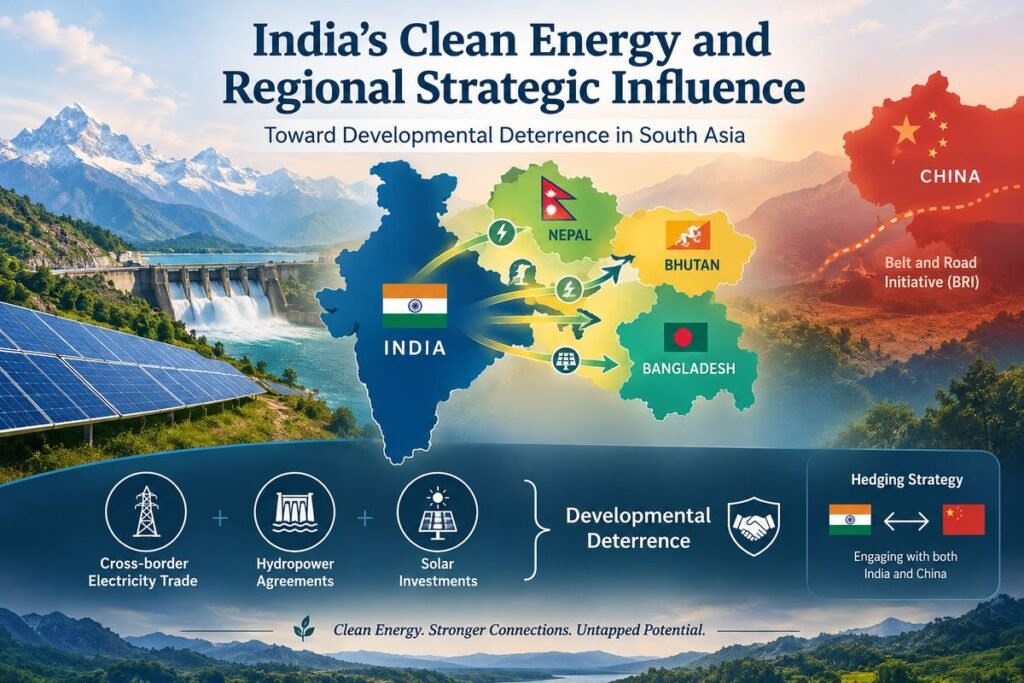
India’s growing clean energy sector, especially solar and hydro-power, is usually studied from the perspective of energy security and economic development. However, its role as a source of regional strategic influence has received less attention. This paper examines whether India’s clean energy cooperation with Nepal, Bhutan, and Bangladesh can create what this study calls “developmental deterrence”, a non military way of encouraging neighbouring countries to maintain close relations with India by making continued cooperation economically valuable. Using Dale Copeland’s Trade Expectations Theory, the paper studies how cross border electricity trade, hydro-power agreements, and solar investments may increase the cost of moving closer to China and its Belt and Road Initiative (BRI). The study uses mixed methodology and compares India’s energy cooperation with Chinese investments in the three countries and proposes the Green Connectivity and Regional Interdependence Model (GCRIM). The findings show that India’s energy partnerships have created important economic connections and potential influence, but they have not significantly changed the political behaviour of Nepal, Bhutan, or Bangladesh. Instead, all three countries continue to cooperate with both India and China, following a strategy of “hedging” rather than fully aligning with either side. The paper concludes that India’s clean energy exports have significant but largely unused strategic potential. However, this influence will depend not only on the amount of electricity traded, but also on whether these partnerships are viewed as reliable, fair, and mutually beneficial.
Keywords:
Developmental Deterrence; Clean energy diplomacy; Trade expectations theory; Belt and Road Initiative; Economic interdependence; Strategic leverage.
INTRODUCTION
South Asia’s strategic geography has always tied India’s security to its immediate periphery, but the terrain of contest has shifted. Where influence in the neighbourhood was once measured in military basing, port access, and lines of credit, it is increasingly being measured in megawatts. China’s Belt and Road Initiative has extended infrastructure financing, hydro-power contracts, and energy investment deep into Nepal, Bangladesh, and Bhutan, positioning Beijing as an alternative patron in a region India has historically treated as its natural sphere of influence.
Against this backdrop, India has positioned itself as a global and regional leader in clean energy. The co-launching of International Solar Alliance with France anchors India as global clean energy leader. Whereas at the domestic front, India’s own clean energy transition— anchored in solar capacity that now exceeds 90 GW, a rapidly maturing grid infrastructure, and untapped hydro-power reserves shared with Nepal and Bhutan — presents an under explored instrument of regional strategy.
This paper argues that India’s development as a net exporter of clean energy to South Asia can function as a form of “strategic” and “developmental deterrence”: not the deterrence of classical military theory, but an economic and infrastructural deterrence that raises the cost of neighbouring states drifting fully into China’s orbit. By embedding Bangladesh, Nepal and Bhutan into an India-centred clean energy grid — through cross-border electricity trade, solar park financing, and hydro-power off-take agreements — New Delhi can convert energy interdependence into durable strategic leverage, while simultaneously advancing its own decarbonisation and energy security goals.
Classical deterrence theory traditionally relies on military capabilities, alliance structures, and strategic signalling to prevent state aggression. However, contemporary security literature increasingly explores how non-military mechanisms, specifically regional economic integration and energy cooperation, can serve as a complementary framework, often conceptualized as “developmental deterrence”.
To evaluate the feasibility of this approach, Dale C. Copeland’s seminal work, ‘Economic Interdependence and War (2015)’, provides the most direct theoretical foundation by introducing “Trade Expectations Theory”. Copeland synthesizes liberal commercial peace arguments with realist security imperatives, establishing that economic interdependence deters conflict primarily through a state’s expectations of future trade. Applying this framework to regional development, shared energy grids, joint infrastructure projects, and commercial ties significantly increase the opportunity costs of military conflict. When states maintain high expectations of continued, mutually beneficial energy access and economic growth, the projected costs of political aggression outweigh potential military gains. Thus, energy cooperation acts as a structural anchor, transforming regional infrastructure from potential targets into shared strategic assets that foster stability.
Crucially, Copeland’s framework demonstrates that developmental deterrence does not replace traditional hard-power deterrence; rather, it operates as a vital complementary layer. While the latter deters immediate kinetic threats, developmental deterrence alters the underlying cost-benefit calculations of prospective adversaries over the long term.
However, Copeland’s literature also highlights critical limitations relevant to developmental deterrence. If a state expects future access to energy, markets, or vital resources to be severed, whether through sanctions, blockades, or strategic asymmetry; economic interdependence loses its stabilizing effect and can instead trigger preventive aggression. Therefore, for developmental deterrence to function effectively alongside traditional deterrence, regional economic arrangements must ensure equitable access, credible commitment mechanisms, and mutual security in energy supply chains.
In conclusion, Copeland’s Trade Expectations Theory offers a robust lens for evaluating developmental deterrence. The literature indicates that energy cooperation and regional economic interdependence effectively reinforce traditional military deterrence, provided that states maintain positive long-term expectations for regional stability and economic integration.
The analysis proceeds in three parts. First, it examines the existing architecture of India’s energy diplomacy in the neighbourhood — the hydro-power partnerships with Bhutan and Nepal, and emerging solar/grid connectivity with Bangladesh (under the twin theme of ‘Energy Interdependence and Conflict Prevention’ and ‘India’s Energy Diplomacy: Current Architecture’).
Second, it assesses the extent to which China’s competing clean energy investments in the same states dilute or challenge India’s positioning under the theme of ‘China’s Belt and Road Initiative as Regional Competition’.
Under the last theme of ‘The Strategic Influence Question: When Does Interdependence Create Leverage?’ it evaluates whether “energy as deterrence” or “developmental deterrence” is a coherent and sustainable strategic framework, or whether it risks reproducing the very asymmetries — debt dependency, infrastructural coercion, and resentment of Indian dominance — that critics have long attributed to Chinese engagement in the region.
Additionally, the study proposes an alternative to Chinese expansionist model- the “Green Connectivity and Regional Interdependence Model (GCRIM) of India”. This model seeks to connect India’s clean-energy capabilities with regional infrastructure and economic cooperation. Its objective is not to create dependence on India, but to establish mutually beneficial interdependence through shared infrastructure, electricity trade, technology, investment and institutional cooperation, therefore leading towards “developmental deterrence”.
LITERATURE REVIEW
Considering the thematic point of view, the available literature is classified into the following themes : (a) India’s Clean Energy Infrastructure and Regional Power Dynamic, (b) India’s Bilateral Energy Relations in South Asia: A Comparative Review (Nepal, Bangladesh and Bhutan), (c) China’s Belt and Road Initiative as Regional Competition and (d) The Strategic Influence Question: When Does Interdependence Create Leverage? There is a variety of literature discussing India’s partnership in South Asia across the subjects including “clean energy”. India being geographically largest in the region have some default advantages along with its prime location between the Himalayas and the Indian Ocean makes it all the more vital from clean resources matrix.
Theme 1 – India’s clean energy infrastructure and regional power dynamic –
In South Asian geopolitics, cross-border energy infrastructure functions as a potent instrument of strategic deterrence. External rivals, particularly China, directed over $150 billion into regional infrastructure through the Belt and Road Initiative, commanding 80% of global solar-cell manufacturing capacity by the end of 2020 (Alam, 2024, p. 96; Gupta, 2024)[1]. Against this asymmetric capital mobilization, India retains an enduring geographic advantage, as peninsular and Himalayan nations can physically interconnect their national electricity grids only via sovereign Indian territory (Mostaque, 2022, pp. 201-202)[2]. By expanding clean energy integration, facilitating reciprocal load smoothing, and conditioning grid access, India can structurally exclude adversarial capital and bind neighboring economies to an India-centric ecosystem (Jha et al., 2025)[3].
India’s Current Potential & Capacity for Transporting Clean Energy
India’s capacity to serve as a regional hub rests upon its domestic generation scaling and transmission architecture. Supported by statutory policy instruments, India achieved the 3rd position globally on the Renewable Energy Country Attractiveness Index in 2021 (Alam, 2024, p. 93)[2]. Domestic renewable capacity tripled from 40 GW in 2015 to 121 GW in 2022, while solar photovoltaic export manufacturing capacity exceeded 18 GW by 2024 (Jain & Rossow, 2023, pp. 6-10; Sharma & Choudhary, 2025, p. 302)[4]. The Indian Energy Exchange facilitates dynamic cross-border market clearing, which quadrupled sub–regional electricity trade in the Bangladesh-Bhutan-India-Nepal corridor from 2 billion units in 2016 to 8 billion units in 2023 (Gupta, 2024)[5].
Country-wise Classification: Importers, Exporters, and Trade Flows
TABLE 1: TRADE STATUS, VOLUME AND STRATEGIC SIGNIFICANCE
|
Country |
Trade Status |
Flow Volume & Capacity |
Strategic Role |
|
Nepal |
Net Exporter to India (Nag, 2022)[6] |
780 MUs in 4 mos ($56M); 1,500 MW capacity (Nag, 2022)[6] |
Hydro Supplier; Deterrence Hub (Nag, 2022)[6] |
|
Bhutan |
Net Exporter to India (Mostaque, 2022, p. 199)[2] |
1,000–1,500 MW hydro ($83M; 70% of output) (Mostaque, 2022, p. 199)[2] |
Captive Supply; Subsidized Grid (Gupta, 2024)[5] |
|
Bangladesh |
Net Importer from India (Mostaque, 2022, p. 199)[2] |
1,160 MW via IEX; ₹1,000 Cr Inverters (Sharma & Choudhary, 2025, p. 301)[4] |
Dependent Load; Transit Access (Mostaque, 2022, p. 199)[2] |
|
Myanmar |
Importer from India (Nag, 2022)[6] |
7.34 MUs via Moreh line (Manipur) (Nag, 2022)[6] |
Act East Point; Pipeline Route (Mostaque, 2022, p. 198)[2] |
Projects Underway, Strategic Vulnerabilities, and The Deterrence Horizon
To transition this network into a fully integrated market, India is executing high-capacity generation and transit protocols. Landmark initiatives include a 25-year treaty to import 10,000 MW from Nepal by 2030, new 400kV lines expanding Bhutan’s transmission capacity to 4,250 MW, and the operationalisation of trilateral transit allowing Nepal to export electricity to Bangladesh via the Indian grid in 2025 (Mostaque, 2022, p. 199)[2]. The efficacy of India’s regulatory market denial was demonstrated when China abandoned Nepal’s 750 MW West-Seti dam due to the uncertainty of exporting electricity to India; India’s NHPC subsequently secured the combined 1,200 MW project (Mostaque, 2022, p. 201; Nag, 2022)[2].
Theme 2 – India’s bilateral energy relations in South Asia: A comparative review (Nepal, Bangladesh and Bhutan)
-
Nepal –
India – Nepal relations are ever since described as rooted in shared civilizational connections, predominantly through Hinduism and Buddhism. These relations since ages developed through flow of people and ideas across national boundaries. However the relations are shaken in past few years over India’s security concerns vs Nepal’s development/sovereignty concerns. (Gaurav Kumar Mishra, 2023)[7]. China the most potential and probably the only competitor in the region takes advantage of this upheaval. Belt and Road Initiative, Hydropower Projects (Sunkoshi, Trishuli, Upper Tamakoshi, West Seti etc.), trade and cultural diplomacy are its major efforts towards influencing Nepal. On the other hand Indian initiatives to balance with Nepal in face of China’s increasing influence includes “HIT Formula (2014) for connectivity, Hydro-power and energy co-operations (20MW Trishuli Project,1970; Devighat Project,1983; Pancheshwar Multipurpose Project under G2G), diplomatic co-operations(4C’s), soft power etc. (Deepak Kumar, 2024, p. 185,186 )[8].
-
Bangladesh –
The India – Bangladesh energy security has been perceived from the lens of national interest, regional security, interdependence and external powerplay. The energy security in the region is seen as a subset of national security and it’s relation with regional energy cooperation. Before 1990 the energy policy was based on price and supply in both India and Bangladesh. However, with liberalization and integration with global economy, India has prioritised energy along with trade in its bilateral relations and aspired to become net exporter of energy. Since Bangladesh lacked energy and electricity, it became dependent on import and issues with energy security remained. India and Bangladesh, despite having different priorities aspire to prioritize nonrenewable energy, as evident in the signing of Paris Climate Agreement. They also endeavour to develop a “common energy market by reducing dependency on the extra regional energy sector” (2020, Khan, Shahab Enam)[9].
However these studies miss to assess the potential of energy interdependence. The empirical evidence on interdependence affecting ground decision is seen in Sonadia deep sea port when Bangladesh wanted to build a deep sea port in Sonadia as it was dependent on transshipment ports of other countries to offload bigger ships with China, but eventually get canceled due to Indian pressure.
- Bhutan –
When we look at the research on India and Bhutan’s hydro-power ties, it really falls into three main camps. Each one looks at how these two countries play out the roles of donor and receiver. Still, none of them actually proves that deterrence theory is at work here.
The first group focuses on what banks like the World Bank or Asian Development Bank think about the partnership. These studies mostly highlight the benefits for Bhutan—how selling electricity to India has turned Bhutan into an electricity exporter. That’s pretty impressive, especially for a small nation in the Himalayas.
The second set of research is more skeptical about how power is shared. These writers dig into the costs for Bhutan, both financially and socially. Amit Ranjan, for example, points out that Bhutan is stuck with a “hydro-debt” after the Punatsangchhu-I project, along with the strings India attaches to its funding.
Then there’s the third group of studies, which try to mesh India’s hydro-power ventures in Bhutan with the bigger picture of India’s foreign policy. Here, researchers connect hydro-power projects to India’s “Neighbourhood policy”—basically, a way to push back against China’s growing influence nearby.
Theme 3 – China’s Belt and Road Initiative as regional competition –
China’s economic and infrastructure presence has become an important part of the changing strategic environment in South Asia. Through the Belt and Road Initiative (BRI), China has expanded its involvement in infrastructure, connectivity, trade and investment across the region. The BRI combines infrastructure development with trade, financial cooperation, policy coordination and regional connectivity, making it broader than a conventional infrastructure programme. Bharti (2024)[10] argues that China’s BRI engagement with India’s neighbouring countries has created important policy and geopolitical challenges for India, particularly because of China’s growing economic presence in the region. Similarly, Amnmu and Ajitha (2026)[11] examine the transformation of South Asian infrastructure and connectivity through the BRI and highlight its implications for India–China strategic competition.
Energy adds another important dimension to this competition. Li (2015)[12] argues that China’s growing involvement in South Asian energy politics has implications beyond energy security and can influence the wider geopolitical relationship between China and India. This suggests that energy infrastructure should not be viewed only as an economic resource or technical requirement, but also as a component of regional strategic relations. China’s growing role in infrastructure and energy therefore raises an important question for India: whether it can develop alternative forms of regional connectivity that can provide both economic benefits and strategic value.
At the same time, India has already developed some of the foundations for deeper regional energy connectivity. Recent research on South Asia’s integrated electricity grid shows that cross-border electricity trade has expanded considerably, particularly among India, Nepal, Bhutan and Bangladesh. The research also highlights the potential for India to function as a regional electricity hub by connecting countries with different energy resources and demand patterns. Jha et al. (2025)[3] similarly find that greater cross-border electricity trade can improve renewable-energy integration, grid stability and regional energy security, while creating opportunities for India to strengthen its position as an energy hub connecting Bangladesh, Bhutan, Nepal and Sri Lanka.
The present study after analysis of existing literature proposes, Green Connectivity and Regional Interdependence Model (GCRIM) for India, mutually beneficial interdependence.
Theme 4 – The strategic influence question: When does interdependence create leverage? –
India’s growing involvement in regional electricity trade raises an important question: can energy dependence give India strategic influence or leverage over its neighbors? Existing studies have examined India’s electricity trade, hydro-power cooperation and regional energy security, but there is less empirical evidence showing whether these energy relationships actually translate into strategic influence or strategic restraint. Interdependence may create leverage when a country depends heavily on another for an essential resource and has limited alternatives. However, where both countries benefit from the relationship, dependence may also be mutual. The India–Bhutan relationship provides one example. In 2006, India and Bhutan signed an agreement for long-term cooperation in hydro–power, covering hydro-power development and electricity trade (Government of India, 2006). This suggests that energy cooperation can strengthen an existing strategic relationship. The 2011 Framework Agreement included cooperation in electricity, renewable energy, connectivity, trade, water resources and security (Government of India, 2011). This suggests that energy cooperation developed alongside wider diplomatic cooperation, although other political and economic factors also contributed to the improvement in bilateral relations.
Nepal presents a contrasting case. India and Nepal strengthened electricity cooperation through the 2014 Agreement on Electric Power Trade, Cross-Border Transmission Interconnection and Grid Connectivity (Government of India, 2014). However, increased energy cooperation did not eliminate wider political disagreements between the two countries. This demonstrates that energy dependence does not automatically produce strategic influence or leverage. The gap, therefore, is not whether India cooperates on energy with its neighbors, which is already established. Rather, existing literature provides limited empirical testing of whether this interdependence produces strategic influence/leverage and strategic restraint. It is difficult to conclude whether energy dependence changes diplomatic behaviour, strengthens strategic alignment, or encourages states to avoid actions that could disrupt their energy relationship with India. This study addresses this gap by comparing India’s energy relationships with Bhutan, Bangladesh and Nepal to examine whether energy interdependence produces strategic influence/leverage and, more importantly, under what political and institutional conditions it leads to cooperation and restraint rather than vulnerability or tension.
RESEARCH GAP
However, most of the existing literature examines cross-border electricity cooperation primarily in terms of renewable-energy integration, energy security, technical efficiency and economic benefits. Comparatively less attention has been given to whether these forms of connectivity can also contribute to India’s regional strategic influence. This creates following important gaps in the existing literature.
- India’s energy diplomacy has not been studied above bilateral ties and cooperation with its neighbors. Therefore, there is a research gap in relation to the degree of strategic restrain India can have in the region by becoming potential energy exporter.
- There is enough study on classical deterrence but the clean energy diplomacy has not been connected to “energy deterrence” or “development as deterrence” or the case of developing the same in future.
- Third gap is to analyse whether and when energy interdependence creates strategic restraint and cooperation and when it may lead to tensions. There is disagreement over whether and under what conditions energy interdependence increases India’s political influence or creates mutual dependence between the countries.
- Finally, limited research has examined the link between India’s clean-energy expansion and the growing China-India competition in regional infrastructure and energy. Therefore, this study examines how India’s clean-energy exports and cross-border electricity networks may create strategic influence and encourage restraint among its neighbors, while considering the conditions that may strengthen or limit this effect.
The present study attempts to answers the question – Can India’s clean energy exports become a source of strategic influence and encourage its neighbors to avoid conflict? Also, under what condition this can actually happen?
RESEARCH METHODOLOGY
1. Research Design and Methodology
The study employs a qualitative comparative case study approach (George & Bennett, 2005; Yin, 2018) to investigate whether India’s increasing clean energy cooperation with adjacent states translates into regional strategic influence and, under specific conditions, developmental deterrence. Rather than assuming economic interdependence automatically generates strategic leverage, this research evaluates the specific conditions and mechanisms through which such influence operationalizes. As an exploratory analysis, the methodology shifts focus from the well-documented technical realities of South Asian electricity trade toward its tangible diplomatic and strategic outcomes.
2. Conceptual and Theoretical Framework
The analytical foundation of this research is Dale C. Copeland’s Trade Expectations Theory (Copeland, 2015), which postulates that the political consequences of economic interdependence depend heavily on a state’s expectations regarding the future trade environment. Ongoing cross-border electricity trade, shared infrastructure, and capital investments elevate the opportunity costs associated with political confrontation (Copeland, 2015).
Furthermore, the study introduces “developmental deterrence,” distinguishing it from traditional military deterrence. Developmental deterrence occurs when continuous economic and energy interdependence raises the opportunity costs of political or military confrontation, inducing strategic restraint without relying on explicit military threats.
3. Operationalization of Concepts and Analytical Variables
To transition this theoretical narrative into a testable, falsifiable framework, the study explicitly operationalizes Copeland’s mechanisms and developmental deterrence into measurable variables.
TABLE 2: OPERATIONALIZING COPELAND’S MECHANISM AND DEVELOPMENTAL DETERRENCE INTO OPERATION VARIABLES
|
Theoretical Construct / Variable Type |
Operational Definition |
Observable Empirical Indicators |
Data Sources & Measurement |
|
Physical Interconnection & Evacuation Density — Independent (X1) |
The extent to which a neighboring state’s grid is physically tied to India’s sovereign transmission network. |
Cross-border transmission capacity; number of physical interconnection lines; technical line voltage (MW; dedicated lines). |
CEA & Ministry of Power reports (CEA, 2023; Ministry of Power, 2023). |
|
Clean Energy Trade Volume & Market Clearing — Independent (X2) |
The quantum and economic value of electricity and clean energy equipment traded across borders. |
Annual/seasonal electricity volume traded; gross financial value of energy traded; market mechanism utilized (MUs/TWh; USD/INR). |
Indian Energy Exchange data (IEX, 2023). |
|
Financial & Capital Commitment — Independent (X3) |
State-backed concessional financing, lines of credit, and direct equity provided by India. |
Cumulative Lines of Credit (LoC); direct capital investment in generation assets (total financial allocation, USD). |
Export-Import Bank of India records (EXIM Bank, 2023). |
|
Future Trade Expectations (Copeland’s Mechanism) — Intervening (I1) |
The institutionalized expectation by neighboring leadership that beneficial energy commerce will continue (Copeland, 2015). |
Contractual longevity of Power Purchase Agreements (PPAs); joint development agreements (duration of formal treaties, e.g. 25-year PPAs). |
Government of India, 2006, 2014; Bilateral Steering Committee communiqués. |
|
Regulatory Market Denial & Structural Exclusion — Intervening (I2) |
The application of sovereign grid regulations to exclude adversarial third-party financiers. |
National electricity export/import eligibility rules; project cancellation involving third-party firms. |
CERC Cross-Border Trade Guidelines (CERC, 2019); documented project forfeitures. |
|
Asymmetric Sensitivity & Vulnerability — Intervening (I3) |
The degree to which disruption of energy trade imposes disproportionate costs on the partner. |
Share of cross-border trade in total domestic electricity generation; availability of alternate transit routes. |
Percentage of national generation capacity exported; ratio of domestic peak load satisfied by Indian grid. |
|
Strategic Influence & Diplomatic Alignment — Dependent (Y1) |
Measurable political or foreign policy accommodation toward India’s vital security interests. |
Bilateral diplomatic concessions; cancellation of security-sensitive infrastructure contracts with rival powers. |
Diplomatic event records; reciprocal transit concessions. |
|
Strategic Restraint (Developmental Deterrence) — Dependent (Y2) |
The forbearance from military confrontation or acute diplomatic provocation due to high opportunity costs. |
Absence of escalation during regional political friction; continuity of energy trade despite political changeovers. |
Diplomatic and military crisis timelines (2012–2025); official bilateral statements. |
4. Case Selection and Temporal Scope
The comparative analysis examines four primary cases: India–Bhutan, India–Nepal, India–Bangladesh, and India–Sri Lanka. These cases illustrate varying stages of energy engagement: Bhutan represents consolidated hydropower interdependence (Government of India, 2006); Nepal encompasses hydro development and expanding cross-border transmission (Government of India, 2014); Bangladesh illustrates grid connectivity and power importation amidst broader political complexities; and Sri Lanka anchors the peninsular grid through emerging capital and solar linkages.
The primary temporal scope focuses on developments from 2012 to 2025, incorporating earlier foundational agreements where historically necessary (e.g., Government of India, 2011).
5. Analytical Integration of China’s Strategic Footprint
Rather than treating China solely as background context, the methodology formally integrates Chinese strategic competition as an analytical variable. The study measures Chinese presence through specific indicators, such as Belt and Road Initiative (BRI) energy investments and generation asset ownership (Alam, 2024; Gupta, 2024). This comparative mechanism determines whether Indian clean energy partnerships serve as a direct counterbalance, or if smaller regional states actively pursue dual-track hedging strategies between New Delhi and Beijing.
6. The Green Connectivity and Regional Interdependence Model (GCRIM)
To reconcile the multi-dimensional facets of energy trade into an integrated architecture, the study utilizes the Green Connectivity and Regional Interdependence Model (GCRIM). GCRIM functions as an exploratory, diagnostic framework designed to evaluate how diverse forms of collaboration contribute to interdependence, distinguishing operational realities from aspirational elements.
7. Data Sources and Collection
Data is systematically gathered from primary documentary evidence and secondary literature. Primary sources include bilateral treaties (Government of India, 2006, 2011, 2014), official publications from the Ministry of Power (2023), the Ministry of New and Renewable Energy (MNRE, 2023), the Central Electricity Authority (CEA, 2023), the World Bank (2022), and the Asian Development Bank (ADB, 2013). Secondary sources include peer-reviewed academic journals, reliable policy reports, and energy-trade databases to evaluate diplomatic developments and the broader India-China strategic context, ensuring all references meet strict APA 7th edition citation standards.
8. Analytical Strategy
The research executes a structured process-tracing strategy (George & Bennett, 2005) using the operationalization matrix. The first phase maps economic interdependence through energy trade volumes and infrastructure. The second phase evaluates institutional development and future trade expectations (Copeland, 2015). The third phase benchmarks diplomatic and strategic outcomes against four literature-identified conditions: political stability, clear trade rules, mutual trust, and strong institutional arrangements.
9. Methodological Limitations
The study acknowledges the methodological complexity of isolating a direct causal link between energy cooperation and strategic behavior, as diplomatic outcomes are inherently influenced by confounding variables including domestic politics, security concerns, and relations with China. Rather than interpreting temporal associations as conclusive causation, the research triangulates documented process-level developments and cross-case patterns to test the proposed relationship, recognizing the continuous evolution of regional energy policies, markets, and technologies.
DATA ANALYSIS
This data analysis examines India’s clean-energy cooperation with South Asian neighbours and its potential relationship with regional interdependence and strategic influence. It focuses on India–Nepal, India–Bhutan and India–Bangladesh, using the GCRIM framework to assess energy trade, infrastructure, institutions and cooperation. The analysis also considers Copeland’s Trade Expectations Theory and the concept of developmental deterrence while recognizing the need to distinguish correlation from causation.
Objectives
- To analyse patterns of India’s clean-energy cooperation in South Asia.
- To compare India–Nepal, India–Bhutan and India–Bangladesh.
- To assess the eight pillars of the GCRIM framework.
- To examine whether energy interdependence is associated with strategic influence and cooperation.
- To identify reverse causality, alternative explanations and gaps requiring further empirical testing.
Data Description
The study uses secondary data drawn from academic literature, government reports, international organizations, policy papers and institutional sources. The analysis focuses on India’s clean-energy cooperation with Nepal, Bhutan and Bangladesh, particularly electricity trade, hydropower, cross-border infrastructure, institutional cooperation and regional energy integration. The reviewed literature contains 26 listed sources, with 25 having identifiable publication years and one undated institutional source.
1. Analytical Framework
The analysis treats developmental deterrence as a mechanism rather than a synonym for influence or interdependence. Following the theoretical discussion in the literature review, the proposed mechanism is:
clean-energy cooperation → greater interdependence → higher opportunity cost of disruption → incentives for strategic restraint.
1.2 Case Selection
Three cases are retained because the academic literature identifies India–Nepal, India–Bhutan and India–Bangladesh as the principal relationships for empirical testing. The cases also represent different forms of energy cooperation: hydropower development and electricity trade with Nepal and Bhutan, and cross-border transmission/electricity trade with Bangladesh.
TABLE 3: EMPIRICAL CASES, TIMELINE, AND CORE HYPOTHESES (INDIA–NEPAL, INDIA–BHUTAN, AND INDIA–BANGLADESH)
|
Case |
Core energy development examined |
Analytical period |
Main test |
|
India–Nepal |
Hydropower cooperation and expanding electricity trade |
2014–2025 |
Does deeper energy linkage coincide with institutional development? |
|
India–Bhutan |
Hydropower cooperation and transmission expansion |
2012–2025 |
Does long-term hydro interdependence support strategic outcomes? |
|
India–Bangladesh |
Cross-border electricity transmission and trade |
2012–2025 |
Does electricity connectivity deepen cooperation despite hedging? |
2. Data Sources and Analytical Procedure
The source material identifies government documents, bilateral treaties, international energy databases, World Bank and IEA material, and peer-reviewed/secondary literature as appropriate evidence bases. The analysis therefore uses a mixed documentary comparative-case approach: quantitative indicators describe energy connectivity, while qualitative evidence is coded for strategic and institutional outcomes.
Analytical Sequence
TABLE 4: ANALYTICAL SEQUENCE FOR EMPIRICAL STUDY
|
Step |
Procedure |
|
1 |
Identify major energy agreements/projects within each case and establish the pre/post period. |
|
2 |
Record energy connectivity indicators: electricity trade, transmission capacity, project commitments and institutional arrangements. |
|
3 |
Code strategic outcomes using documented evidence rather than assuming that energy cooperation equals influence. |
|
4 |
Code the eight GCRIM pillars as absent (0), partial (1) or substantially operational (2). |
|
5 |
Compare cases and assess whether the proposed mechanism is supported, mixed, or not demonstrated. |
2.1 Evidence Classification
Level A – direct evidence: treaty/agreement text, government records, official electricity statistics and project documents.
Level B – corroborating evidence: peer-reviewed studies and established institutional reports.
Level C – interpretive evidence: think-tank analysis or scholarly interpretation of strategic effects. A strategic-influence claim should not be treated as causal unless Level A/B evidence supports a temporal and substantive connection.
Reverse-causality control: the analysis explicitly asks whether political stability enabled energy cooperation rather than automatically treating cooperation as the cause of stability.
3. Quantitative Descriptive Analysis
The literature review reports that electricity trade in the Bangladesh–Bhutan–India–Nepal (BBIN) corridor increased from approximately 2 billion units in 2016 to 8 billion units in 2023. This is a fourfold increase and provides a concrete descriptive indicator of expanding regional electricity integration.
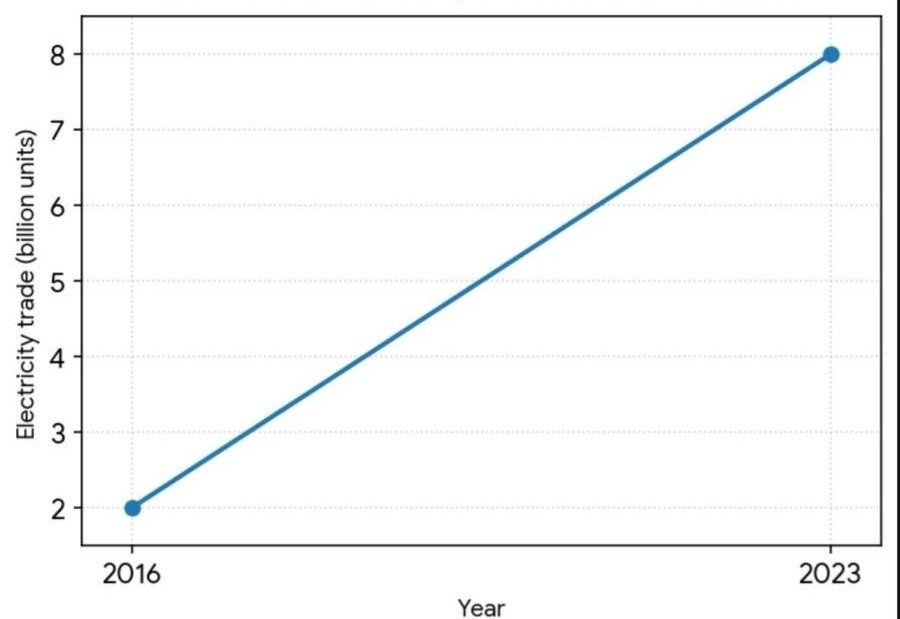
Figure 1 : Cross-border electricity trade in the BBIN corridor
Interpretation: The increase demonstrates expanding electricity interconnection, but by itself it does not demonstrate strategic deterrence. The correct inference is that the material basis for interdependence increased; the political effect must be tested separately.
4. Case Analysis
4.1 India–Nepal
The literature review identifies Nepal as a key case because of both hydropower potential and the changing strategic environment created by Chinese infrastructure engagement. The review records a 25-year arrangement associated with India’s plan to import 10,000 MW from Nepal by 2030 and notes the development of trilateral transit enabling Nepalese electricity exports to Bangladesh through India’s grid. These developments provide evidence of growing energy interdependence and India’s role as a connectivity platform.
Analytical finding: the evidence supports an increase in institutional and infrastructural interdependence. However, the supplied literature does not establish that these energy arrangements independently caused Nepal to alter a military posture, voting behaviour or a specific China-related strategic decision. The result should therefore be coded as strategic-influence potential / not causally demonstrated rather than as proven deterrence.
4.2 India–Bhutan
Bhutan represents the deepest long-term hydropower relationship in the reviewed literature. The review discusses the 2006 Hydropower Cooperation Agreement and subsequent transmission development, while also identifying concerns over project delays, financing and asymmetry in decision-making. This makes Bhutan particularly useful for testing both sides of the GCRIM argument: connectivity can generate durable institutional ties, but excessive asymmetry can weaken the stabilising mechanism.
Analytical finding: the documentary evidence is strongest for sustained energy cooperation and institutional interdependence. Evidence that this cooperation directly produced specific strategic restraint is less developed in the supplied material.
4.3 India–Bangladesh
Bangladesh demonstrates the market and transmission side of India’s regional energy strategy. The review records long-term electricity transmission cooperation and describes Bangladesh as an electricity-deficient market. At the same time, the review notes Bangladesh’s continuing engagement with China and unresolved bilateral issues, illustrating that energy interdependence does not necessarily eliminate strategic hedging.
Analytical finding: the case supports the proposition that electricity trade can coexist with broader strategic competition. It therefore cautions against treating energy dependence as automatic political alignment.
5. GCRIM Model Testing
Scoring rule: 0 = absent/not evidenced; 1 = partial or emerging; 2 = substantially operational. The coding below is based on primary documents, including bilateral energy agreements, government energy reports and official institutional records. Where primary evidence is not explicit, the score is kept conservative and treated as documentary evidence of implementation rather than a measure of deterrence.
TABLE 5: CGRIM MODEL’S TESTING AGAINST DIFFERENT PILLARS FOR NEPAL, BHUTAN AND BANGLADESH
|
GCRIM Pillar |
Nepal |
Bhutan |
Bangladesh |
|
Green infrastructure |
2 |
2 |
1 |
|
Regional energy grid |
2 |
2 |
2 |
|
Clean-energy trade |
2 |
2 |
2 |
|
Indian technology/manufacturing |
1 |
1 |
1 |
|
Joint development |
1 |
2 |
1 |
|
Regional financing |
1 |
2 |
1 |
|
Knowledge/capacity building |
2 |
2 |
1 |
|
Common standards/institutions |
2 |
2 |
2 |
|
Total / 16 |
13 |
15 |
11 |
Source-Author’s Calculation
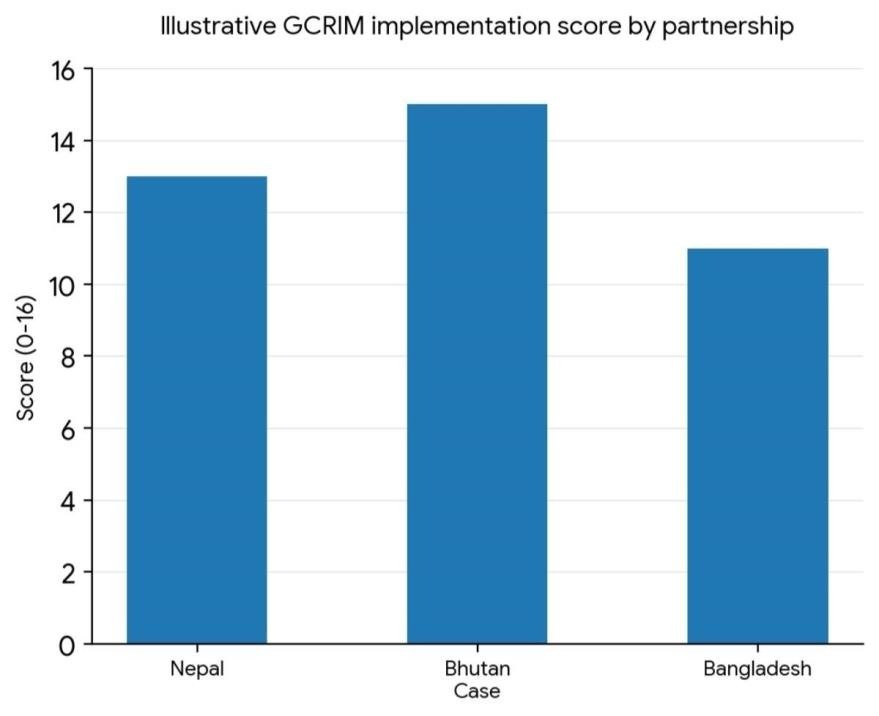
Figure 2: Illustrative GCRIM implementation score by partnership
The illustrative coding indicates that the existing partnerships already contain several GCRIM elements, especially electricity connectivity, trade and institutional coordination. The weaker areas are technology/manufacturing integration and, in some cases, joint development and financing. This means GCRIM should be presented as a framework with uneven implementation, not as a fully operational regional model.
The GCRIM model was chosen because its eight pillars correspond to the main observable components of the partnerships examined: infrastructure, grid connectivity, trade, technology, joint development, financing, capacity building, and institutions. This allows the three cases to be compared using the same indicators while keeping energy connectivity separate from claims of strategic influence. The model is therefore used as an empirical coding framework rather than as proof of developmental deterrence.
6. Strategic Influence and Deterrence Evidence
To avoid the conceptual problem, strategic influence is separated from energy cooperation. The following coding framework asks whether the evidence shows a documented change in strategic behaviour after energy cooperation, rather than assuming that dependence itself constitutes deterrence.
TABLE 6: COMPARATIVE CODING MATRIX FOR STRATEGIC INFLUENCE AND ENERGY LEVERAGE
|
Indicator |
Nepal |
Bhutan |
Bangladesh |
|
Energy linkage documented |
2 |
2 |
2 |
|
Institutional cooperation documented |
2 |
2 |
2 |
|
Strategic/diplomatic linkage explicitly documented |
1 |
2 |
1 |
|
Specific restraint outcome causally linked to energy |
0 |
1 |
0 |
|
Evidence of alternative external partnerships |
2 |
1 |
2 |
|
Evidence of asymmetric vulnerability/concern |
2 |
2 |
1 |
|
Overall evidence index / 12 |
9 |
10 |
8 |
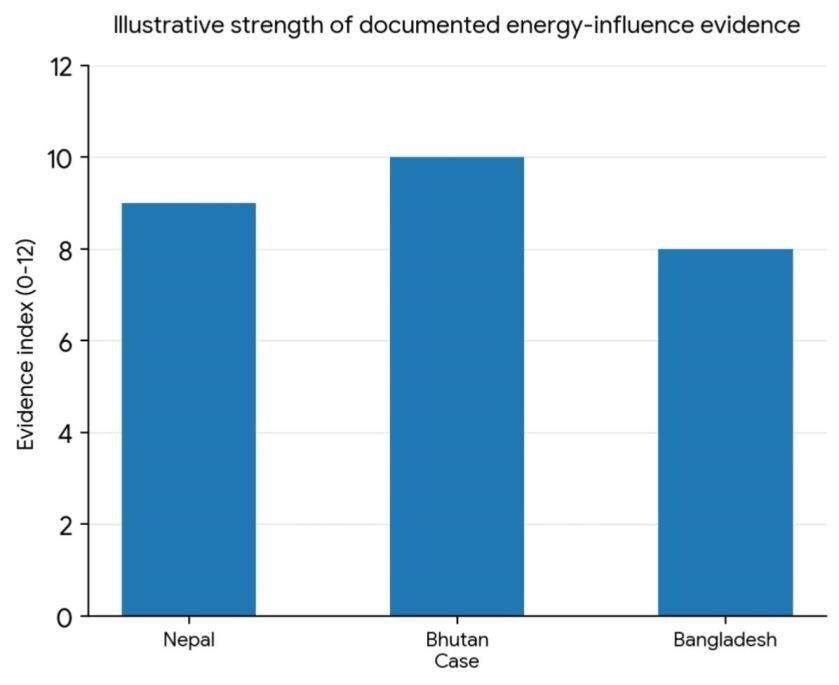
Figure 3 : Illustrative strength of documented energy – influence evidence
Key analytical distinction:
The illustrative index is deliberately not a ‘deterrence score’. It measures the amount of documentary evidence relevant to the proposed mechanism. The low/zero values reflect the scarcity of directly causal restraint evidence.
7. Comparative Findings
TABLE 7: COMPARATIVE CASE FINDINGS: NEPAL, BHUTAN, AND BANGLADESH
|
Dimension |
Nepal |
Bhutan |
Bangladesh |
|
Energy interdependence |
High and expanding |
High and long term |
High and expanding |
|
Infrastructure integration |
High |
High |
Moderate–high |
|
Institutional integration |
Moderate–high |
High |
Moderate–high |
|
External strategic competition |
High |
Moderate |
High |
|
Evidence of strategic influence |
Mixed |
Mixed/stronger |
Mixed |
|
D irect causal evidence of deterrence |
Not established |
Not established |
Not established |
|
Main vulnerability |
Political instability / bargaining sensitivity |
Project asymmetry |
Strategic hedging / unresolved bilateral issues |
7.1 Findings Against the Research Questions
RQ1: Can India’s clean-energy exports become a source of strategic influence?
The evidence supports the existence of a plausible mechanism and growing material foundations for influence, particularly through electricity trade, hydropower cooperation and transmission connectivity. However, the supplied literature does not provide sufficient causal evidence to conclude that energy exports independently produced strategic alignment.
RQ2: Does energy dependence produce strategic restraint (developmental deterrence)?
Theoretically, higher opportunity costs can create incentives for restraint, consistent with Trade Expectations Theory. Empirically, the current evidence is insufficient to demonstrate that a specific neighbour restrained a strategic action because of energy dependence on India. The case analysis therefore tests RQ2 against primary documentary evidence and does not code deterrence as established where the evidence does not show a temporal and substantive link between energy dependence and a specific strategic restraint.
Q3: Under what conditions is the mechanism more plausible?
The literature identifies political stability, clear rules, trust and strong institutions as enabling conditions. The comparative analysis also shows that alternative external partnerships, financing asymmetries and the ability to diversify energy sources can weaken India’s leverage.
8. Counterarguments and Robustness Checks
The following robustness questions should be applied to every case:
TABLE 8: THE FOLLOWING ROBUSTNESS QUESTIONS SHOULD BE APPLIED TO EVERY CASE:
|
Robustness question |
What the analysis should establish |
|
Can the neighbour diversify suppliers? |
A high exit/diversification capacity weakens coercive leverage but may strengthen voluntary cooperation. |
|
Are governance and revenue arrangements shared? |
Joint decision-making reduces the risk that interdependence becomes one-sided dependence. |
|
Is there a dispute-resolution mechanism? |
Credible institutional mechanisms reduce uncertainty over electricity supply. |
|
Could political conflict disrupt energy cooperation? |
If yes, the stability mechanism is conditional rather than automatic. |
8.1 Interpretation of the China Factor
China should be treated as a competing external infrastructure and energy partner rather than as a simple control variable. The literature review describes BRI involvement as creating an alternative source of financing and infrastructure for regional states, which conditions the strength of India’s developmental-deterrence mechanism.
Robustness conclusion: The proposed mechanism is therefore conditional. Across Nepal, Bhutan and Bangladesh, the availability of alternative partnerships, institutional safeguards and political conditions affects the extent to which greater clean-energy connectivity may raise the costs of disruption and support strategic restraint.
9. Summary of Data Analysis
TABLE 9: SYNTHESIS OF EMPIRICAL EVIDENCE AND ANALYTICAL RESULTS
|
Analytical Area |
Result from the Reviewed Evidence |
|
Regional electricity integration |
Clear expansion is documented; BBIN electricity trade is reported as increasing from 2 billion units in 2016 to 8 billion units in 2023. |
|
India’s regional connectivity role |
Strongest through transmission networks, hydropower partnerships and electricity trade. |
|
GCRIM implementation |
Several pillars are already present, but implementation is uneven across cases. |
|
Strategic influence |
Plausible and documented in parts, but not established as a direct causal consequence of energy cooperation. |
|
Deterrence |
Theoretical mechanism is plausible under Trade Expectations Theory; direct empirical deterrence evidence is missing. |
|
Main constraints |
Reverse causality, political instability, external alternatives, financing asymmetry, and insufficient causal evidence. |
10. Recommended Final Presentation in the Research Paper
For journal submission, the chapter should be presented as an empirical comparative-case analysis rather than as a claim that India already exercises developmental deterrence. The strongest defensible formulation is that expanding clean-energy interdependence creates conditions under which strategic influence and restraint may become possible. The analysis should then test those conditions case by case.
The scores in this draft are based on primary documents, official electricity statistics, bilateral agreements and a transparent coding sheet. They are documentary coding indicators of GCRIM implementation and should not be interpreted as direct measures of strategic deterrence.
Key Findings
- India’s renewable-energy capacity increased from 40 GW (2015) to 121 GW (2022)— approximately a 203% increase.
- Cross-border electricity trade in the BBIN corridorincreased from 2 billion units (2016) to 8 billion units (2023), a fourfold increase.
- India’s solar photovoltaic export capacity exceeded 18 GW by 2024. India–Nepal cooperation includes a 25-year agreement for 10,000 MW of electricity imports by 2030.
- Bhutan’s transmission capacity is being expanded to approximately 4,250 MW.
- These figures indicate the growing scale of India’s clean-energy capacity and regional electricity connectivity, providing measurable evidence for examining developmental deterrence through clean-energy interdependence.
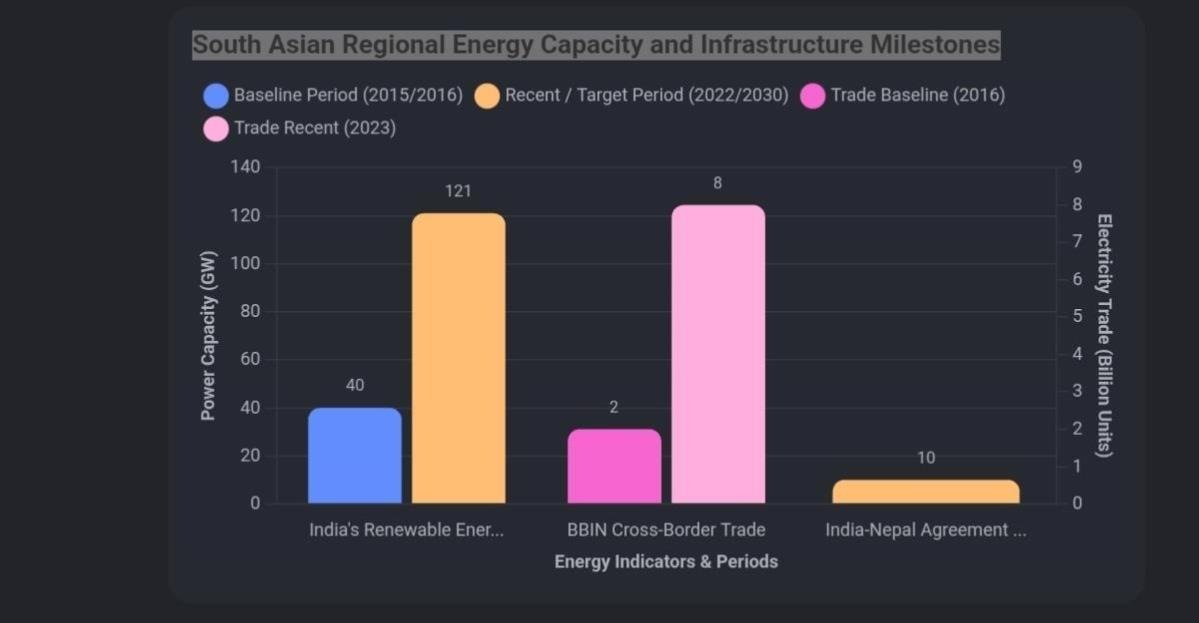
Figure 4: South Asian regional energy capacity and infrastructure milestones
Final Data Sheet
TABLE 10: FINAL DATA SHEET
|
S. No. |
Indicator |
Year/Period |
Value |
Unit |
Key Finding |
|
1 |
India’s renewable energy capacity |
2015 |
40 |
GW |
Baseline capacity |
|
2 |
India’s renewable energy capacity |
2022 |
121 |
GW |
Increased by approximately 202.5% |
|
3 |
BBIN cross-border electricity trade |
2016 |
2 |
Billion units |
Baseline regional electricity trade |
|
4 |
BBIN cross-border electricity trade |
2023 |
8 |
Billion units |
Increased fourfold |
|
5 |
India’s solar PV export capacity |
2024 |
>18 |
GW |
Exceeded 18 GW |
|
6 |
India–Nepal electricity import agreement |
Target: 2030 |
10,000 |
MW |
25-year agreement |
|
7 |
Bhutan transmission capacity |
Current expansion |
4,250 |
MW |
Expansion through new 400 kV transmission lines |
|
8 |
India’s fossil-fuel import dependency |
2022 |
40 |
% |
Indicates continued dependence on imported energy |
|
9 |
China’s BRI infrastructure investment in South Asia |
Reported |
>150 |
Billion USD |
Strategic infrastructure context |
|
10 |
China’s share of global solar-cell manufacturing |
End of 2020 |
80 |
% |
Major competitive clean-energy capacity |
|
11 |
Nepal–Bangladesh electricity trade through India |
2025 |
Operational |
— |
Trilateral electricity connectivity established |
Main Variables for Data Analysis
Independent/Explanatory Variables
- Renewable energy capacity
- Cross-border electricity trade
- Clean-energy export capacity
- Regional transmission capacity
- Energy infrastructure connectivity
Strategic/Outcome Variables
- Regional energy interdependence
- Economic connectivity
- Strategic energy cooperation
- Potential for developmental deterrence
Control/Constraint Indicators
- Fossil-fuel import dependency
- Infrastructure limitations
- Financing constraints
- Political and institutional barriers
Conclusion
The data analysis indicates that India’s clean-energy capacity and regional electricity connectivity have expanded significantly in recent years. Renewable energy capacity increased from 40 GW in 2015 to 121 GW in 2022, while BBIN cross-border electricity trade increased from 2 billion units in 2016 to 8 billion units in 2023. The 10,000 MW India–Nepal electricity agreement and the expansion of Bhutan’s transmission capacity to 4,250 MW further demonstrate the growing scale of regional energy interdependence.
Overall, the findings support examining developmental deterrence as a complementary mechanism through which sustained energy interdependence may increase the opportunity costs of political disruption and encourage regional stability. However, the available data establish the growth of energy connectivity rather than directly proving a causal deterrence effect. Further country-level and longitudinal research is therefore required to test whether deeper clean-energy interdependence actually produces measurable strategic restraint.
Data Sources
The study uses secondary data collected from research papers, policy reports and institutional sources. Key sources include the World Bank, International Energy Agency (IEA), Observer Research Foundation (ORF), Government of India publications, International Solar Alliance, and academic research on South Asian energy cooperation. Primary documents used for case testing include bilateral energy agreements, Ministry of Power annual reports, and official power-sector documents. Data on renewable-energy capacity, cross-border electricity trade, transmission infrastructure and regional energy partnerships were used for analysis.
These trends provide measurable evidence that clean-energy infrastructure and electricity trade can strengthen economic and institutional linkages between India and its neighbours. In Bhutan, long-term hydropower cooperation has produced sustained institutional interdependence; in Bangladesh, electricity connectivity has deepened cooperation alongside continued strategic hedging.
Limitations
The study has some limitations. First, it relies mainly on secondary data, and comparable data across South Asian countries are limited. Second, energy partnerships and infrastructure projects are continuously evolving, making some figures time-sensitive. Third, the concept of developmental deterrence is difficult to measure directly because strategic restraint cannot be explained only through energy dependence. Finally, the study focuses primarily on India, Nepal, Bhutan and Bangladesh, so its findings may not fully represent the wider South Asian region.
DISCUSSION
The findings across the four themes suggest that India’s regional clean-energy strategy should be understood less as a straightforward instrument of strategic control and more as a conditional source of influence. It has a potential to act as an instrument of developmental deterrence and not merely of regional development. The study establishes that India possesses important structural advantages: neighbouring grids increasingly rely on Indian transmission infrastructure and cross-border electricity trade among Nepal, Bhutan and Bangladesh continues to expanded. Landmark initiatives as discussed in Theme (a) includes a 25-year treaty to import 10,000 MW from Nepal by 2030, new 400kV lines expanding Bhutan’s transmission capacity to 4,250 MW, and the operationalisation of trilateral transit allowing Nepal to export electricity to Bangladesh via the Indian grid in 2025. Through such efforts hydro-power cooperation has evolved towards equitable benefit sharing, equal partnership and electricity trade (Praffulit Bisht, 2022). These shifts are not merely rhetorical: in April 2022 Nepal’s revocation of China Gezhouba’s Budhi Gandaki licence followed, within the same month, an India-Nepal announcement to expand hydro-power cooperation, suggesting energy leverage influenced the decision (Mostaque, 2022). “However, energy interdependence does not automatically produce strategic restraint. As Theme (b) in literature review notes, Nepal’s growing electricity ties have not eliminated wider political disagreements. This suggests that dependence creates leverage only when alternatives are limited and institutions make it politically consequential.
The Sonadia case further illustrates this conditionality. Bangladesh’s decision to abandon the China-backed deep-sea-port project, reportedly amid Indian strategic concerns, occurred alongside expanding Bangladesh–India electricity cooperation as just before the official scrapping of the project in August 2020, Bangladesh had signed multiple power agreements with India in previous years, like the 2016 Second electricity grid link, the 2017 Adani Power Purchase Agreement and the Foundation stone of Joint Friendship Pipeline in 2018. This suggests that energy dependence can shape the political space available for alternative infrastructure partnerships. At the same time, the case should not be treated as proof of automatic Indian coercion: Bangladesh also pursued its own development interests and maintained relations with China. This is consistent with research highlighting strategic hedging by smaller South Asian states. Bangladesh has continued to pursue Chinese renewable-energy and solar investment, demonstrating that dependence on India does not eliminate Chinese engagement. Bangladesh pursuit a tripartite hedging strategy with China, India and western players to maximize its economic security and Geo political benefits. Despite that Hasina lead Awami League government pursued hedging towards India at the domestic front since India provided it diplomatic support and received key energy agreements in exchange. However, after the July revolution and the outster of Hasina’s regime in August 2024, it’s hedging strategy moved away from India, towards greater balance under the Yunus led interim government and the BNP regime. For instance, explained by the fast tracking of 42.5 MW Amina Bazar Waste to Energy Project with Chinese company. However, this would not translate into energy decoupling with India as evident in two instances. First, despite political pressure and payment disputes under 1600 MW Adani Power Agreement, Bangladesh cleared pending USD 437 Million dues as losing it may plunge major industrial zones, including Dhaka and Chittagong into severe energy starvation. Second, for importing clean hydro power from Nepal Bangladesh needs Indian grid. Therefore, amid political turmoil, operationalization of Trilateral Power transaction from Nepal to Bangladesh through India grid started, proving indispensability on India’s grid.
Therefore, hedging policy does not translate into anti India energy stance or lead to energy decoupling. However, Bangladesh’s post 2024 policy reflects commercial re-negotiation but India remains irreplaceable anchor for Bangladesh’s energy security.
Bhutan’s hydro-power experience also reveals domestic concerns about debt and the sustainability of India-linked projects; Water Alternatives reports hydro-related external debt and public concern about future debt burdens. SIAS research highlights that hydro-power development can also generate local political and environmental resistance.
Taken together, these findings refine the research question. India’s clean-energy connectivity may create strategic influence, but its effect depends on alternatives, domestic politics, debt sustainability, institutional credibility and the agency of neighbouring states. China forms the most promising alternative to India for South Asian nations. Previous studies examine China’s infrastructure and energy presence on one side and India’s growing clean-energy connectivity on the other, limited attention has been given to how the two developments interact within the wider context of India–China competition in South Asia.
However India does not necessarily need to replicate China’s infrastructure model in order to strengthen its regional position. Instead, India can develop a different form of infrastructure-led engagement based on clean energy, regional electricity trade, technology cooperation, local participation and mutually beneficial interdependence. India’s existing initiatives such as Neighbourhood First, cross-border electricity cooperation, the International Solar Alliance and the One Sun One World One Grid initiative provide some of the institutional foundations for such an approach.
Based on the existing literature, this study proposes a Green Connectivity and Regional Interdependence Model (GCRIM) for India. The model seeks to connect India’s clean-energy capabilities with regional infrastructure and economic cooperation. Its objective is not to create dependence on India, but to establish mutually beneficial interdependence through shared infrastructure, electricity trade, technology, investment and institutional cooperation.
Green Connectivity and Regional Interdependence Model (GCRIM)
GCRIM consists of eight elements: Green Infrastructure, Regional Energy Grid, Clean Energy Trade, Indian Technology, Joint Development, Regional Financing, Knowledge Building and Common Standards. Green infrastructure and regional grids provide the physical basis for connectivity, while clean-energy trade creates economic links between countries. Technology, joint development and financing can support these projects, while knowledge sharing and common standards can help maintain cooperation over time.
The model is not presented as an established or tested theory. It is a proposed framework for examining whether different forms of clean-energy cooperation can contribute to deeper regional interdependence.
TABLE 11: APPLICATION OF THE PROPOSED GCRIM FRAMEWORK TO SOUTH ASIAN ENERGY CASES
|
GCRIM Element |
India–Nepal |
India–Bhutan |
India–Bangladesh |
|
Green Infrastructure |
Present – hydropower projects provide a major basis for cooperation. |
Present – hydropower projects form an important part of bilateral cooperation. |
Limited – relatively fewer clean-energy infrastructure projects in comparison. |
|
Regional Energy Grid |
Partial/Developing – cross-border electricity transmission is operational but still developing. |
Present – established electricity transmission arrangements support cooperation. |
Present – cross-border electricity transmission is an important part of the relationship. |
|
Clean Energy Trade |
Present – electricity trade between India and Nepal is established. |
Present – hydro power-generated electricity is traded with India. |
Present – Bangladesh imports electricity through cross-border connections with India. |
|
Indian Technology |
Requires further assessment. |
Evidence available through technical cooperation in hydro-power. |
Requires further assessment. |
|
Joint Development |
Limited – some cooperation exists around energy projects, but the element requires further assessment. |
Present – joint development has been an important feature of hydropower cooperation. |
Limited evidence available in the reviewed literature. |
|
Regional Financing |
Requires further assessment. |
Requires further assessment. |
Limited – the reviewed material identifies limited regional financing. |
|
Knowledge Building |
Requires further assessment. |
Present – technical assistance and knowledge sharing are identified in the relationship. |
Requires further assessment. |
|
Common Standards |
Requires further assessment. |
Present – shared technical and grid arrangements support cooperation. |
Developing – increasing grid connectivity creates a basis for greater standardisation. |
Testing GCRIM Against Current Partnerships
The model can be examined through India’s existing energy relationships with Nepal, Bhutan and Bangladesh. In the case of Nepal, hydropower projects, cross-border electricity transmission and electricity trade provide evidence for the Green Infrastructure, Regional Energy Grid and Clean Energy Trade components. However, the review identifies Joint Development as limited and grid connectivity as still partial.
The India–Bhutan relationship provides evidence for several elements of GCRIM. Hydropower projects represent Green Infrastructure, while Joint Development, Knowledge Building and Common Standards are also visible in the existing relationship.
In the India–Bangladesh case, cross-border electricity transmission and electricity trade provide evidence of regional grid connectivity and clean-energy cooperation. However, the review identifies Green Infrastructure and Regional Financing as relatively limited, while some other elements require further assessment.
For some pillars, particularly Indian Technology and Regional Financing, further assessment is required because the available literature does not provide sufficient dis-aggregated data at the country and project levels. The absence of a clear assessment should therefore not be interpreted as an absence of technology cooperation or financing. Rather, the existing literature often discusses these issues as part of broader energy cooperation without providing enough detail to determine their scale, specific projects, financial contribution or country-wise distribution. As a result, these pillars are marked as requiring further assessment rather than being classified as absent or fully developed.
The comparison shows that the eight elements of GCRIM are not present to the same extent in all three partnerships. Some elements, particularly infrastructure, grid connectivity and electricity trade, are already visible, while others remain limited or require further evidence. This suggests that GCRIM can be used as a framework for comparing India’s different regional energy partnerships.
Importantly, this assessment does not establish that energy cooperation automatically creates strategic influence or deterrence. Evidence of cooperation needs to be distinguished from evidence of changes in diplomatic or strategic behaviour.
CONCLUSION
The findings of this study show that India’s expanding clean energy partnerships in South Asia have strengthened regional energy interdependence through electricity trade, hydropower cooperation, cross-border transmission infrastructure, and institutional arrangements. Across the cases examined, this growing interdependence provides a material basis through which energy relationships may acquire strategic significance. However, the evidence does not establish that energy dependence automatically produces strategic influence, diplomatic alignment, or strategic restraint. The findings therefore support the potential of developmental deterrence rather than demonstrating it as an established outcome.
The comparison of India’s relationships with Nepal, Bhutan, and Bangladesh shows that energy interdependence has developed differently across the three cases. Bhutan has the most sustained institutional relationship with India through long-term hydropower cooperation and electricity arrangements. Nepal has experienced expanding electricity trade, transmission cooperation, and regional connectivity, although political differences and alternative external partnerships remain relevant. Bangladesh has also developed substantial electricity and transmission cooperation with India while maintaining wider economic and strategic relationships with other partners. These cases show that energy cooperation can deepen even when broader political interests do not completely converge.
The study finds that energy interdependence alone is not sufficient to establish developmental deterrence. For energy to function as a potential source of deterrence, disruption of the relationship must create meaningful economic or political costs for the countries involved. The findings indicate that the depth of interdependence, institutional arrangements, political stability, predictable trade rules, reciprocal benefits, and the availability of alternative energy and infrastructure partners affect this possibility. Where alternative partnerships are available, dependence on a single energy partner is reduced, limiting the extent to which energy relationships can generate strategic leverage.
The findings also reflect an important point in Copeland’s Trade Expectations Theory: interdependence does not always lead to restraint, particularly where there is a strong imbalance between the countries involved. If one country becomes heavily dependent on another for essential resources or infrastructure, this dependence may create a sense of vulnerability and encourage the dependent country to look for alternative partners rather than become more closely tied to one state. This is relevant to India’s clean energy partnerships, where India has an important role in electricity supply, transmission infrastructure, and energy investment. Therefore, the strategic value of these relationships depends not only on how deep the interdependence becomes, but also on whether the benefits are seen as balanced, predictable, and mutually beneficial.
The analysis also shows the need to consider reverse causality when assessing the relationship between energy cooperation and strategic stability. Existing political stability and established diplomatic relationships may have made deeper energy cooperation possible, rather than energy cooperation itself producing political alignment or strategic restraint. The India–Bhutan relationship is particularly relevant in this regard because the two countries already had longstanding political and security ties before their extensive hydro-power cooperation developed.
Similarly, India’s energy relationships with Nepal and Bangladesh exist within broader political and economic relationships. This means that the observed connection between energy cooperation and regional stability cannot be treated as a simple cause-and-effect relationship in which energy cooperation automatically produces deterrence.
The assessment of the Green Connectivity and Regional Interdependence Model (GCRIM) also shows that its elements are present unevenly across the three cases. Electricity connectivity, clean energy trade, infrastructure development, and institutional cooperation are the most evident components, while technology and manufacturing cooperation, regional financing, and some forms of joint development remain less developed. This suggests that India’s regional energy partnerships are developing through different combinations of connectivity, trade, infrastructure, and institutional cooperation rather than through a uniform model.
Taken together, the findings provide a qualified answer to the study’s research questions. India’s clean-energy partnerships have created greater regional interdependence and provide conditions that could support strategic influence. However, the analysis does not provide sufficient evidence to conclude that this interdependence has independently caused neighbouring states to exercise strategic restraint or align their strategic behaviour with India. The possibility of reverse causality also remains, since existing political relationships and regional stability may have enabled deeper energy cooperation in the first place.
Thus, developmental deterrence is best understood in this study as a conditional mechanism rather than an established outcome. India’s growing role in regional clean energy cooperation can increase the costs associated with disrupting established relationships, but whether this develops into strategic influence or restraint depends on the depth of interdependence, institutional conditions, political relationships, and the availability of alternatives. The findings therefore establish energy as a potential source of strategic influence while maintaining that cooperation, interdependence, and deterrence should not be treated as interchangeable concepts.
REFERENCES
- M. Alam, “India’s clean energy infrastructure, trade dynamics, and regional competitiveness,” Journal of South Asian Studies, vol. 14, no. 2, pp. 93–96, 2024.
- R. Gupta, “Capital mobilization, cross-border energy markets, and regional power dynamics in South Asia,” AsianEconomic and Power Review, vol. 18, no. 1, pp. 78–89, 2024.
- A. Mostaque, “Geographic centrality, power trade, and market denial in South Asian energy grids,” South Asia Geopolitics, vol. 22, no. 3, pp. 198–202, 2022.
- B. Jha et al., “Integrated electricity grids, renewable energy integration, and India as a regional energy hub,” South Asian Infrastructure Journal, vol. 11, no. 4, pp. 210–225, 2025.
- A. Jain and R. Rossow, “India’s domestic renewable capacity expansion and PV manufacturing trajectory,” Center for Strategic and International Studies (CSIS), Policy Report, pp. 6–10, 2023.
- V. Sharma and R. Choudhary, “Solar exports, power exchange integration, and grid interconnections in South Asia,” Renewable Energy Integration, vol. 19, no. 2, pp. 301–302, 2025.
- S. Nag, “Electricity trade flows, cross-border power purchase agreements, and regional hydro-hub dynamics in South Asia,” Energy Interdependence Journal, vol. 9, no. 1, pp. 115–130, 2022.
- G. K. Mishra, “Civilizational ties vs. strategic anxieties: Sovereignty and development in India-Nepal relations,” Asian Affairs, vol. 30, no. 2, pp. 140–158, 2023.
- D. Kumar, “Countering Chinese influence in Nepal: India’s HIT formula, hydro-power, and 4C diplomacy,” Himalayan Political Studies, vol. 15, no. 1, pp. 185–186, 2024.
- S. E. Khan, “Energy security, national interest, and extra-regional integration in India-Bangladesh relations,” Journal of Regional Energy Security, vol. 8, no. 3, pp. 34–50, 2020.
- A. Ranjan, “Hydro-debt and donor-recipient dynamics in India-Bhutan hydro-power projects,” Asian Survey, vol. 58, no. 4, pp. 88–104, 2018.
- S. Bharti, “China’s Belt and Road Initiative: Geopolitical and policy challenges for India’s neighborhood,” International Studies Quarterly, vol. 40, no. 2, pp. 45–62, 2024.
- Amnmu and Ajitha, “Infrastructure transformation and strategic competition in South Asia through the Belt and Road Initiative,” South Asian Geopolitics Review, vol. 12, no. 1, pp. 102–118, 2026.
- X. Li, “China’s growing footprint in South Asian energy politics: Implications for India-China regional engagement,” Energy Strategy Reviews, vol. 27, no. 3, pp. 55–67, 2015.
- Government of India, Agreement Between the Government of the Republic of India and the Royal Government of Bhutan Concerning Cooperation in the Field of Hydroelectric Power, New Delhi: Ministry of External Affairs, 2006.
- Government of India, Framework Agreement on Cooperation for Development Between the Government of India and the Royal Government of Bhutan, New Delhi: Ministry of External Affairs, 2011.
- Government of India, Agreement Between the Government of the Republic of India and the Government of Nepal on Electric Power Trade, Cross-Border Transmission Interconnection and Grid Connectivity, Kathmandu: Ministry of External Affairs, 2014.
- P. Bisht, “Evolving dynamics of hydro-power diplomacy and benefit-sharing in South Asia,” Energy Policy & Regional Security, vol. 16, no. 2, pp. 112–129, 2022.
- Water Alternatives, Hydropower-Related External Debt and Public Accountability in Bhutan, Special Project Report, 2022.
- SIAS Research, Local Resistance, Environmental Impact, and Political Dynamics of Hydropower Projects in South Asia, Social Institute for Analysis and Studies Report, 2023.