IISPPR

Category: Quality Education

Quality Education
Riddhika Bohra

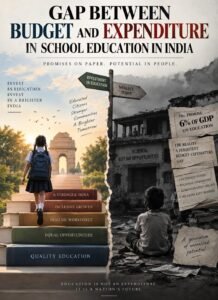
EVALUATION OF INDIAN SCHOOL EDUCATION SYSTEM THROUGH THE LENS OF ALLOCATED BUDGET AND EXPENDITURE MADE

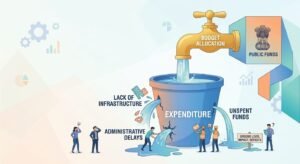
Authors: Riddhika Bohra, Dhanishtha Meena  ABSTRACT  This study evaluates the Indian school education system by analyzing the persistent execution gap between allocated Budget Estimates (BE) and Actual Expenditures (AE) using official Ministry of Education data from FY 2016–17 to FY 2020–21, the study tracks quantitative budget-expenditure gaps across Central, State/UT, and school levels. It complements this with a multi-source diagnostic analysis across five thematic case studies. Despite national policy targets to spend 6% of GDP on public education, persistent fund under-utilization severely weakens school infrastructure, teacher capacity, and student retention across the country.  Keywords: Budget-Expenditure Gap, Indian School Education, Samagra Shiksha Abhiyan, Fiscal Federalism, Fund Utilization. 1. INTRODUCTION 1.1. Background of Study  Education was assigned to the State List at the time of Independence, which meant state governments carried the primary responsibility for running schools, while the central government’s role remained largely advisory. The first few Five-Year Plans focused on industry and infrastructure, so education was not a fiscal priority in this period; public spending stayed close to 3.5% of GDP (PRS Legislative Research, 2022) for decades. This shifted after the Kothari Commission (1964-66) recommended raising education spending to 6% of GDP, a target later formalized in the National Policy on Education, 1968. That target remains unmet over fifty years later. This historical context establishes the foundation of this study: a persistent gap between policy commitments and actual funding, which predates the contemporary data analyzed herein.  The year 1991 serves as a significant dividing line in this history. India’s economic liberalisation coincided with a broader shift toward administrative decentralisation, raising critical questions in policy debates about whether education’s share of a rapidly growing economy was keeping pace. Empirical research on this period remains divided. A panel study of Indian states from 2002 to 2020 indicates that fiscal decentralisation reforms had a broadly positive effect on education and health service delivery, although outcomes depended heavily on local institutional quality and accountability (Singh, Bhattacharjee, & Nandy, 2024). Conversely, researchers examining school-level decentralisation present less optimistic findings. One recent study tracing the effects of the 73rd and 74th Constitutional Amendments on school management found mixed, and in some cases negative, effects on student achievement (Kameshwara, Shields, & Sandoval-Hernandez, 2023). Concurrently, the central government began playing a larger role through centrally sponsored schemes that required states to co-finance programmes; this shift highlights how education’s placement on the Concurrent List directly contributes to contemporary budget-expenditure mismatches.  Two indicators are utilized in this study to track this gap, chosen to capture different dimensions of the issue. Education expenditure as a share of GDP—which rose only slightly from about 3.8% in 2013-14 to 4.64% in 2020-21 (PRS Legislative Research, 2022), remaining well short of the 6% goal—measures whether education is being prioritised relative to the size of the economy over time. The second indicator, the variance between Budget Estimates (BE) and Actual Expenditure in a given year, captures implementation-level rather than policy-level shortfalls by measuring whether allocated funds are successfully deployed. Together, these two measures distinguish the issue of whether India allocates sufficient funds for education from the issue of whether it effectively spends those allocations. Furthermore, this execution gap varies significantly across the different stages of school education. Elementary education has generally received the strongest policy attention, supported by the legal mandate of the Right to Education Act, 2009. In contrast, secondary education faces greater challenges; enrollment ratios decline noticeably at this stage, and several centrally sponsored schemes designed to support it have repeatedly underspent their allocations (PRS Legislative Research, 2025). Higher secondary education exhibits even more severe disparities, marked by sharp enrollment declines and comparatively little budgetary focus. This historical pattern is corroborated by earlier state-level budget analyses, which demonstrate that elementary education is consistently prioritized over secondary education across most states (CBGA-CRY, 2016, 2018, as cited in Kundu & Rastogi, 2020). Given the distinct fiscal challenges at each stage, this study analyses elementary, secondary, and higher secondary education as separate analytical categories rather than a uniform system.  1.2. Statement of Problem  Despite constitutional provisions and recurring national policy targets aiming to devote 6% of GDP to public education, India’s public educational spending remains persistently low, hovering well below this threshold. However, the key challenge facing the Indian school education system is not merely the initial quantum of funds announced in annual budgets, but the systematic and recurring divergence between what is allocated (Budget Estimates) and what is actually spent on the ground (Actual Expenditure). This expenditure shortfall manifests across all administrative levels, driven by multi-layered bureaucratic red tape, delayed fund flows leading to a “year-end expenditure rush” and rigid matching-grant requirements between the Centre and States. Furthermore, public expenditure is severely skewed toward fixed revenue expenses such as teacher salaries, effectively crowding out essential capital investments in school infrastructure. Because this execution gap varies significantly across school tiers (elementary versus secondary) and regional economic boundaries, there is a critical need to evaluate how these fiscal mismatches occur and identify the structural, operational, and institutional factors causing allocated funds to lapse.  1.3. Research Questions  What are the trends of gap in education expenditure in the Indian school education system?  What do the trends of gap in education expenditure look like for three levels in Indian Schools?  What are the factors driving differences between actual and budgeted education expenditure?  1.4. Aim of Study  The primary aim of this study is to evaluate the Indian school education system through a comprehensive analysis of the gap between allocated budget estimates and actual expenditures. Specifically, the research seeks to analyze the longitudinal trends in education expenditure gaps at the macroeconomic level across Central, State, and combined governmental tiers. Furthermore, it aims to examine how these budgetary mismatches manifest across the distinct stages of school education—specifically comparing elementary and secondary levels. Ultimately, the study intends to conduct diagnostic qualitative and case-study evaluations to identify the systemic, operational, and institutional factors driving the divergence between budgeted and actual education spending.  1.5. Objectives of Study  To analyze the trend of gap
Read More »
Quality Education
Md. Shahanur Hosen

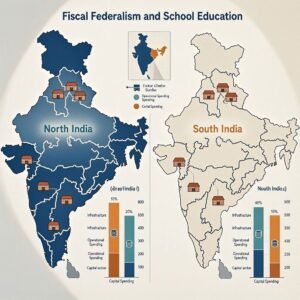
Fiscal Federalism and School Education: A comparative study of educational infrastructure and spending capacities in Northern and Southern India

This study examines how India’s fiscal federalism shapes school education budgets across states, revealing a stark North-South divide. While national allocations rose 56.5% between 2018-2024, only 92.26% of funds get utilized nationally — with southern states like Tamil Nadu and Karnataka spending far more efficiently (94.71%) than northern states like Uttar Pradesh and Bihar (91.19%), proving that bigger budgets alone don’t fix educational infrastructure gaps.

Read More »
Quality Education
AMREENA MANZOOR, MRUNMAI SANJAY THAKUR, NAHELA KHAN, SAUMYA TOMAR

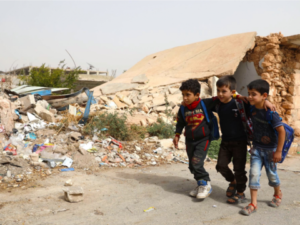
EDUCATION IN CONFLICT ZONES

Education in conflict zones is often disrupted by violence,displacement, and insecurity, depriving children of safe learning environments.This loss deepens existing inequalities and hinders long term recovery.Yet, education remains a crcial pathway to hope, resilience,and peace.

Read More »
Quality Education
Diksha Kashyap

Skill Education: Key to achieve Viksit Bharat by 2047

Skill education is the cornerstone of achieving Viksit Bharat by 2047. As India aspires to become a developed nation, empowering its youth with industry-relevant skills is crucial. Skill-based education bridges the gap between academic learning and practical application, fostering innovation, entrepreneurship, and employability. By nurturing a workforce that is adaptable, future-ready, and globally competitive, India can drive sustainable economic growth and social progress. Investments in vocational training, digital literacy, and upskilling initiatives will unlock the nation’s demographic dividend, ensuring inclusive development. A skilled India is not just a vision—it’s the engine that will power Viksit Bharat into reality.

Read More »
Quality Education
Ayush Burnwal

Assessing the Impact of Government Policies on Education: Effectiveness, Public Perception, and Outcomes

Ayush Burnwal, Zaheen Qureshi, Sanjula D, Pankhudi Jha Introduction Education has been recognized as a human right across the world under numerous conventions, declarations and laws. The universal declaration of human rights guarantees everyone the right to education under article 26. In the Indian context, the Right to Free and Compulsory Education Act highlights the importance of education for children between the age of 6 to 14 years in India. This right is guaranteed to every citizen under article 21A of the Indian Constitution. Government intervention helps ensure that all children, regardless of their socioeconomic background, have access to education. This is crucial for reducing societal inequities.  Education can be considered as an investment in the future of a nation. Well educated citizens will be productive members of a nation and will contribute to its stability and growth. Besides, the government of India is actively working towards ensuring that every citizen receives education to support their own needs and wants. To achieve the goal of full literacy, the government has been introducing a number of policies and programmes every year.  One such programme which has been successful throughout the years is Sarva Shiksha Abhiyaan (SSA) which is the Government of India’s flagship programme for achievement of Universalization of Elementary Education in a time bound manner, as mandated by the 86th amendment to the indian constitution making free and compulsory Education to the Children of 6-14 years age group, a Fundamental Right. It aims to address the problems faced during the initial phase of a child’s education, which is, elementary schooling, where children begin to develop their cognitive and social skills. SSA focuses on providing quality elementary education while bridging regional gaps in literacy by partnering with state governments throughout the country.  To address the nutritional needs of children, the government of Tamil Nadu introduced the mid-day meal scheme, which was soon implemented across the nation. By providing meals, this scheme increased the enrollment rates as hunger no longer served as a barrier to education. Furthermore, the Indian government introduced Kasturba Gandhi Balika Vidyalaya or KGBV which reduced gender disparities in education. Setting up residential schools with boarding facilities has been of assistance in encouraging girls from disadvantaged sections to get educated. All the above-mentioned policies are a few among many policies being introduced by the Indian government to make education accessible to every child in the country. Research Methodology 1. Research Design This study employs a descriptive and evaluative research design to assess the effectiveness of the Education system and Sarva Shiksha Abhiyan (SSA) based on public perception. The study does not focus on quantitative indicators such as enrollment rates or dropout rates but rather evaluates stakeholders’ opinions regarding SSA’s implementation and impact. A mixed-method approach was used, integrating quantitative survey responses with qualitative insights from personal interviews and discussions. The data was refined using a double-random selection process to enhance accuracy and reliability. 2. Data Collection The research relies on primary data collection, gathered through random selection of participants across various states using both online and personal investigations. 2.1. Primary Data Collection: (a) Online Surveys: A structured questionnaire was designed to collect responses from students, teachers, school administrators, and parents about their opinions on SSA’s effectiveness. The survey included questions on: Accessibility and inclusivity of education under SSA Perceived improvements in school infrastructure and facilities Quality of teaching and teacher training programs Challenges faced in policy implementation Overall satisfaction and suggestions for improvement (b) Personal Interviews & Field Surveys: In-person discussions and interviews were conducted to gain deeper qualitative insights into the challenges and successes of SSA and the education system. Respondents were encouraged to share their personal experiences with the policy’s impact. 2.2 Data Selection Process After the initial data collection, a random selection technique was applied at two levels: First Selection: An initial 100 responses were collected from various states. Final Selection: To eliminate potential biases and data inconsistencies, a computer-based random selection process was used to filter and refine the dataset. A final 30 responses were selected for analysis to ensure a more accurate and representative understanding of public opinion. 2.3 Secondary Data Collection Although the study primarily focuses on primary data, secondary sources such as government policy documents and past research reports were reviewed to understand the context of SSA’s implementation. 3. Data Analysis The collected data were subjected to general analysis to assess stakeholders’ opinions about SSA’s effectiveness. 4. Study Limitations Limited Sample Size: The final selection of 30 responses may not fully capture national trends. Subjectivity of Opinions: The study relies on personal perceptions, which may not always align with actual policy outcomes. Regional Variations: Since responses were collected from different states, regional disparities in SSA’s effectiveness may not be fully accounted for. 5. Policy Implications and Future Scope The findings provide a people-centric assessment of SSA’s impact, offering valuable feedback for policymakers. The study highlights key strengths and challenges in policy implementation, which can inform future education reforms. By employing random selection at multiple stages, this methodology ensures objectivity and reliability in evaluating public opinion on SSA. Findings and Insights The study analyses the real-world impact of the government policies aimed at the education sector, specifically focusing on Sarva Shiksha Abhiyan. The dataset encompasses educational qualifications, general awareness, and personal experiences with the education system. The objective is to analyse the effectiveness of policy implementations and assess the level of awareness of the education policies across different demographic groups. There were 100 responses, and a sample of 31 was randomly selected, taken in an online and physical interview format, of individuals from diverse backgrounds. Mainly, the data comes from Tamil Nadu, Madhya Pradesh, and West Bengal. By gender distribution, 74% were female and 26% were male. The majority were graduates (48%), while others had completed higher secondary. 1/2 of the individuals were between the 20-40 age group.  Among state-specific schemes, Kanyashree Prakalpa, Sabooj Saathi, Prakalpa, Mid-Day Meal Scheme were most well known in West Bengal and Gaon ki Beti yojana was

Read More »
Quality Education
SANGA PUTATUNDA

Towards Equity in Education: Strengthening Education for Tribal and Differently-Abled Students

By Antony Rithick, Asmita Singh and Sanga Putatunda ABSTRACT: Inclusive education in the Indian context is guided by the Government of India, aligning with the global push for educational equity and seeks to ensure that children with disabilities can access and benefit from quality education alongside their peers. Various models fostering inclusive education aim to include children with disabilities into the general classroom to create a richer and more diverse learning environment. This paper explores the significant strides for expanding educational opportunities for children with special needs (CSWN) in rural areas, with special reference to tribal children demonstrating a strong commitment to inclusivity and equity. Policies like Right to Education and initiatives under the Samagra Siksha Abhiyan highlights India’s commitment for inclusivity and integration. Additionally, this paper underscores the roles of the local governments, self-help groups (SHGs) and non-governmental organizations (NGOs) in supplementing education to the CWSN. While substantial progress has been witnessed and despite policy advancements, inclusive education in India faces numerous barriers, particularly in rural areas. Widespread social stigma, limited resources, and a lack of trained educators remain significant hurdles. By addressing these gaps, this study analyses the spheres of improvement, for India to move closer to a truly inclusive education system where every child, regardless of ability or background, has the opportunity to learn and thrive. INTRODUCTION: India has made significant strides in expanding access to education in rural areas, with various policies and grassroots initiatives working together to reach underserved communities. Among the most vulnerable are disabled children and tribal children with disabilities, who often face compounded barriers due to both their physical or cognitive challenges and their socio-economic background. In this context, the role of local governments, self-help groups (SHGs), and NGOs becomes crucial. Their on-ground efforts in awareness building, inclusive teacher training, transportation support, and community engagement have started to bring meaningful change. This article aims to explore the multifaceted problems faced by disabled and tribal children with disabilities under the broader framework of rural education, while also highlighting the need for inclusive policies and community driven solutions. Besides, international mandates and policy proclamations have spurred changes at the national level in India. Over the last 25 years, numerous laws and policies have directly impacted the education of persons with disabilities. Critically important has been the Right to Education Act (Ministry of Law and Justice), which is legally binding, and a 2012 amendment categorized children with disabilities under ‘disadvantaged group’. The Rights of Persons with Disabilities Act (Ministry of Law and Justice [MLJ], 2016), underscored the government’s commitment to inclusive education, stating: Students with and without disability learn together and the system of teaching and learning is suitably adapted to meet the learning needs of different types of students with disabilities (Section 18 of 23). These laws and policies have been implemented through a number of national programs, focusing on different stages of schooling primary (years 1 to 8) and/or secondary (years 9–12). The most recent, Samagra Shiksha Abhiyan, oversees the implementation of the Right to the Education Act from preschool to year 12. It has a broader goal to improve school effectiveness in terms of equal opportunities for tribal disabled students, and equitable learning outcomes. This also states that, general school teachers will be sensitized and trained to teach and involve children with special needs in the general classroom. This is not a new idea, as teacher training has been mentioned as a facilitative measure for inclusive. ROLE OF LOCAL GOVERNMENTS AND SELF-HELP GROUPS: Local Governments through the Panchayati Raj Institutions (PRIs) and Self-Help Groups (SHGs) play a pivotal role in fostering education to Children with Special Needs (CWSN). It should be one of the top priorities of PRIs to get every child with disability enrolled into a primary school for their comprehensive evaluation. This is done by a team consisting of a qualified physician, clinical psychologist and a special educator. The process of evaluation also determines the best setting of education suited to each of child – from children with mild to moderate disabilities and severe disabilities joining normal schools and special schools respectively while children who drop out or have problems learning in the normal school have an option to join either an open or remedial school. Some of the initiatives taken under the government of India are: The Scheme of Inclusive Education for Disabled at Secondary Stage (IEDSS), under the Samagrah Siksha Abhiyaan, launched in 2009-10, provides assistance for the inclusive education of the disabled children in classes IX-XII. This scheme has now subsumed under Rashtriya Madhyamik Shiksha Abhiyan (RMSA) from 2013. The States/UTs are also in the process of subsuming under RMSA as RMSA subsumed Scheme. ‘Simulation Park’ in Tamil Nadu, under the Sarva Siksha Abhiyaan have been built to facilitate inclusion where local schools has been involved in building those which can be used by all children. The main aim of this simulation park is to give CWSN and their peers a chance to be able to experience various kinds of play equipment jointly. Since this playground is for the benefit of both disabled and able-bodied children, each BRC in the State has this playground at a low cost. (Sanjeev and Kumar, 2007) The Child Friendly Panchayat Initiative (CFPI) in Rajasthan, launched by the Rural Development and Panchayati Raj Department (RDPR) to institutionalize children’s participation in local governance, works on 5 primary principles set out by the United Nations Convention on the Rights of Child (UNCRC) including discrimination and respect for the views of the child. This has created space and opportunities for child participation where a proportion of children with special needs actively participate in Bal Sabha and other forums of children. The Nayanthara Village level SHG in Assam and Sampige Vikalachetanara Sangha in Karnataka exemplified self-reliance achieved through collective action by facilitating education for children with disabilities, these SHGs demonstrate the transformative power of coming together as a community. The Eklavya Model Residential Schools (EMRS) were initiated as a response to the educational disparities faced

Read More »
Quality Education
Gargee Deshpande

Student Dropout Rate in Rural India

Student Dropout Rate in Rural India Gargee Deshpande, Parth Mayekar, Priyanshi Jha and Rewa Sharma Abstract The student dropout rate in rural India is one of the major challenges of society. It affects the growth and future of the young population and sustainable development of the nation. This research aims to study the socio-economic, cultural, infrastructural challenges. The method of Secondary Data Analysis has been used for the study. It includes the available data from similar studies and reports. The research is significant because of its understanding of challenges of the rural students regarding their education. It also attempts to provide possible solutions for them. IntroductionEducation is most important factor for the development of every person. As per the SDG-4 of United Nations Sustainable Development Goals, quality education should be provided to all. India has a Youthful Demographic Profile. Its young population has impact on the nation’s economy, workforce, and social dynamics. While the urban youth is enjoying the benefits of education, the rural one is getting away from it day-by-day. From the previous studies, it has been seen that a greater number of students from the rural area of India are quitting schools than the urban. Which makes an urgent call for the development in education infrastructure. In this article we are addressing the challenges and solutions for this issue.Literature ReviewThe dropout rate in rural India is influenced by various socio-economic factors like poverty, lack of access to quality education, gender disparities, early marriages in girls, financial responsibilities in early age, lack of awareness, etc. (Sukanya Mahalanabis and Shreejita Acharya, 2021) Efforts are being taken from the side of government such as Direct Benefit Transfer (DBT), multilingual education in early-grade education to ease the understanding of students. (NEP 2020) Along with these measures, there is a need to improve teaching quality, infrastructure and awareness and involvement of people is necessary tasks. MethodologyThe study uses the method of Secondary Data Analysis. The data is collected from the similar studies, survey reports of government ministry, governmental institutions and international organization. It is a qualitative secondary research as it is based on the data published and gathered previously by others. The sources have been used are:Governments Reports: Data collected by the Ministry of Education, Governments websites of Government of India.International Organizations: Such as UNESCO.Existing Research Studies: Research work from the International Journal of Policy Science and Law. In the next step, we analyse the findings and try to build possible solutions that can help reduce the dropout rate and improve the educational opportunities.ResultsThe study results in the finding of the challenges faced by the rural students i.e. the factors affecting the students to quit schools. Also, it discusses the possible solutions to be built for the improvement.CAUSES FOR HIGHER DROPOUT RATES IN RURAL INDIA Poverty & Financial ConstraintsA significant number of dropouts is seen due to financial hardships. According to the census “Annual Status of Education Report (ASER) 2021” highlights that round-about 27.4% of children tend to discontinue education due to financial issues. Although free-schooling is available families struggle with expenses related to uniform, books, transport, etc. Child Labour & Seasonal MigrationMany children in most rural families are expected to knock off household bills and part-take in household income. The International Labour Organisation, an independent United Nation (UN) body during its survey in India concluded that around 101 lakh children aged, 5-14 are engaged in child labour. *According to the ILO 2020 census. Seasonal migration, when parents are transferred from once branch to another, it disrupts the education of the child, Due to the frequent transfers children have to repeat multiple grades. Social & Cultural FactorsGender DisparitiesIndia being a majorly dominated patriarchal society, there has always been slight inclination towards the dominance of the male gender, even when it comes to education girls are usually forced to drop out, due to societal pressure. The UNICEF report on Girl’s Education (2021) stated that 40% of the girls drop out before completing even secondary education. (That is 10th grade.) This Often occurs due to early marriage, household responsibilities & other concerns. Caste & Social DiscriminationAlthough India has far progressed into the 21st century, there is still heavy discrimination occurring in the country, children from marginalised communities such as scheduled tribes (ST), scheduled castes (SC) often become victims of discrimination in schools. The National Family Health Survey (NFHS-5, 2019-21) found that only 68.3% of SC & 65.7% of ST children complete Secondary Education. Compared to 79.5% of General, OBC & Open caste students.Challenges in The Educational SystemInadequate School FacilitiesA number of rural schools do not have basic amenities like toilets, drinking water, and suitable classrooms. The Ministry of Education (2021) stated in their survey that 21% of government funded schools in rural regions of India lack toilets, and 16% have unhealthy & unsanitary drinking water facilities.Lack of Competent TeachersSchool dropout and untrained teachers is one of the biggest issues. UNESCO Global Education Monitoring Report (2021) states that India has approximately only 10lakh trained teachers in rural regions, which causes degradation of education standards.Nutrition and Health IssuesConcerns on Malnutrition and HealthTargets for health and nutrition are very crucial to school attendance. The stunting malnourished children suffer in rural India, affects over 35% children below the age of five, significantly hampering their ability to learn and develop intellectually (Global Nutrition Report, 2021).Limited Facilities for Hygiene During MenstruationThe lack of facilities for hygiene during menstruation is another factor that results in adolescent girls dropping out of school. As per the Water Aid India Report, 2020 more than 23% of girls stop attending educational institutions because of absence of proper sanitation and menstrual hygiene education. TRENDS IN STUDENT DROPOUT RATES IN INDIA According to 2024 data India has seen significant improvement in secondary education completion rate 80 out of 100 girls and 77.2 out of 100 boys completed secondary education in rural India.Upper primary (6-8 years) with 3 percent and primary (1-5 years) with 1.5 percent, the dropout rate is higher for girls than boys at all levels

Read More »
Quality Education
SANGA PUTATUNDA

Decoding NEP 2020: Analyzing the Prospects and Challenges

By Antony Rithick, Asmita Singh and Sanga Putatunda ABSTRACT: The National Education Policy (NEP) 2020 aims to rebuild the existing India’s education system by emphasizing holistic development. This paper emphasizes on the nuances of – multilingualism, digital learning, cultural studies and agricultural education under the broader umbrella of NEP. Barriers to implementation includes infrastructure limitations, teacher shortages, and incompatibility between public and private organizations hindering the effective implementation process. As NEP 2020 seeks to balance tradition with modernity, this paper critically analyses the underlying loopholes and highlights the need for strategic policy execution, increased funding, and stakeholder collaboration to bridge the gap between policy design and practical outcomes. INTRODUCTION: The National Education Policy 2020 aims to address the many growing developmental imperatives of India. It proposes the revision and revamping of all aspects of the education structure of the nation. Development of the creative potential of each individual is expected through this policy. It is based on the principle that education must develop not only cognitive capacities but both the ‘foundational capacities of literacy and numeracy’ and ‘higher-order cognitive capacities’, such as critical thinking and problem solving but also social, ethical, and emotional capacities and dispositions. EMPHASIS ON MULTILINGUALISM: The National Education Policy (NEP) 2020 focuses on using the mother tongue or regional language for teaching. The debate on using local languages in education started during Lord Macaulay’s time and it was the Radhakrishnan Committee (1948-49) which suggested that Indian languages should replace English as the language of higher education. Later, reports like the Official Language Commission, Emotional Integration Committee, ΝΕΡ (1968), ΝΕΡ (1986/1992), and NEP (2020) also discussed this issue. NEP pushes Indian languages to become stronger, widely used, and more respected. Private institutions are encouraged to teach in Indian languages or offer bilingual programs so that both government and private institutions follow the same standards. Teachers are encouraged to teach in both languages. The Indian Institute of Translation and Interpretation (ITI) will be set up to translate and create study materials in different Indian languages. [Mandavkar,2023] Teaching in the mother tongue will help build an equal education system for everyone. The Ministry of Education will work to make sure that students’ personal or social backgrounds do not affect their education. While Indian languages should be strengthened, students must also learn English because it is important in the 21st century. Yet, English should not replace Indian languages; instead, both should be balanced to give students the best education. Barrier to its Implementation: While NEP 2020 advocates for multilingualism through the implementation of a language formula, in response to demands from Non Hindi-speaking states of the south, such as Karnataka and mainly Tamil Nadu, yet Tamil Nadu never implemented a language formula. The language policy is not only an issue but also a barrier in education. (Nitika, 2024). Under NEP 2020, private school pupils are exposed to English at a much younger age, but, academic curriculum will be taught to government school students in their native regional tongues. (Thirupathi and Kumar, 2022). While this support for the mother tongue is good, it needs to be balanced so that students are not handicapped in a global job market in which proficiency in English and other international languages may be required. (Ahmed, 2020). Introducing mother tongues for each subject in academic institutions is a challenge because of India’s troublesome teacher-to-student ratio. Finding qualified teachers can be difficult, and the inclusion of study materials in mother tongues presents a new obstacle. (Thirupathi and Kumar, 2022) Designing a new curriculum that strikes a balance between the old and the new, yet disseminating, is a gigantic task. To shift from rote learning to a more holistic assessment system, there has to be a sea change at the level of teachers, students, and parents. Ensuring equal quality education to the marginalized communities like economically backward classes students and differently-abled is still a far-fetched dream. Engaging all children can be difficult without cultural competency-focused professional development for teachers. (Ahmed, 2020) ALLIGNMENT WITH CULTURAL STUDIES: As NEP addresses the unique needs of rural students through its focus on multilingual education – prioritizing instruction in a child’s mother tongue or regional language until Grade 5, while recognizing the significance of cultural enrichment and national integration, seeking to “decolonize education” and foster a sense of pride in our languages, culture, and knowledge. Besides, students have the freedom to choose subjects across disciplines, including vocational subjects, making education more relevant to individual career paths, have access to Internships and Apprenticeships and integrated technologically sound learning. Thus, it stipulates how imperative cultural awareness and sensitization are to education. Some potential advantages of its integration into the curriculum include: Deepens Understanding: It can deepen students’ knowledge of their cultural heritage and various cultures around them. This can foster a sense of identity and belonging, leading to social cohesion and harmony. Develops Critical thinking and Analytical Skills: Going through the prolonged process of explanation with different perspectives makes students begin to adopt a critical stance towards cultural phenomena. This helps in nurturing basic independent, creative, and innovative thinking. Engendering Empathy and Raises cultural awareness: Students will understand diversity more clearly and hence be more nurturing on learning different cultures and views. This would decrease prejudice and discrimination while promoting a mandate for society that is based upon diversity and equality. Developing Global Citizens: In this fast, interconnected world, students need to gain a global perspective and know the cultural contexts in which global issues are debated. Being able to participate effectively in this increasingly globalized world means contributing toward global peace and development. This is very closely matched with the commitment of NEP 2020 to an inclusive and equitable education. Therefore it aims not only at honoring our heritage but also strengthening our nation’s identity. (Ahmed, 2024) Is it a balanced alignment? As we discuss about the happenings and forthcomings, there lies a big gap between written documents and the actual implementation of policies. Even though, fostering cultural diversity is essential to creating

Read More »
Quality Education
Megha Agarwal

Breaking Barriers: Unleashing Women’s Education for Sustainable Change in India

Women’s education is a milestone for sustainable change. Education provides wisdom, clarity, and brings awareness into everyone’s life. Education gives empowerment to women, and empowerment creates a healthy lifestyle in women’s lives. Women play a significant role in the development of a sustainable society. At present, we couldn’t create a greater pathway without providing equitable, justifiable, and inclusive education to women. Women face a lot of challenges in their lives in regards to completing their education. In order to provide a safe atmosphere, along with government initiative, we also need to tackle all the barriers and have to remove social stigma, gender disparities, etc.

Read More »