IISPPR

Category: Blog

International Relations
Abhishek Kulkarni

French Colonial Legacy in Africa: A Deep Dive into Françafrique and Post-Colonial Influence

Discover the enduring impact of French colonial legacy in Africa, exploring Françafrique, migration patterns, military interventions, and cultural assimilation. This in-depth analysis reveals how historical ties continue shaping security, economics, and cultural identity, highlighting both resistance and influence in post-colonial Africa’s evolving relationship with France.

Read More »
Public Policies
Piyush Chaudhary

Child Digital Safety Policy in India

This article comprehensively addresses the issue of child digital safety policy in India. It explores the problems of cyber abuse and cybercrime faced by children, identifies gaps in current Indian policies, and provides recommendations to address them effectively.

Read More »
International Relations
Manjiri Phansalkar

WOMEN AND CHILDREN UNDER ISIS

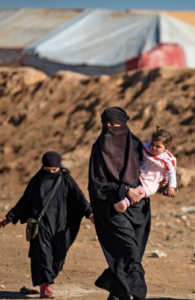
WOMEN AND CHILDREN UNDER ISIS __________________________________________________________________ By Manjiri Phansalkar ABSTRACT ISIS, also known as ISIL – the Islamic State of Iraq and the Levant (terrorist organisation) is a Sunni jihadist group with a particularly violent ideology that calls itself a caliphate and claims religious authority over all Muslims. With the quantum of attacks, incidents and undercover – sleeper cells persisting in the transient nexus of the twenty-first century, a very striking component of such an organisation is known to bear great repercussions as well as contribute significantly to its working. Women and children – generally considered to be the ‘softest targets’ in any area of conflict, are subjected to excessive torture and are awarded unforeseen, dreadful consequences on committing an apparent act of crime, which is deemed to be against the rules as dictated by their extremist law. It is such an unbecoming setting that calls for the long – due synthesis and analysis of the treatment offered to women and children under ISIS. This paper looks at three prime areas of detailed study, encountering the framework and mechanisms of ISIS, followed by the extremities experienced by women and children and finally a constructive analysis of the atrocities.  __________________________________________________________________ INTRODUCTION ISIS is short for the Islamic State of Iraq and Syria and is concurrently also known as ISIL or the Islamic State of Iraq and the Levant. Towards June 2014, ISIS chose to rename itself as the “Islamic State” accounting to the fact that it proclaimed the creation of a global caliphate. Abu Bakr al-Baghdadi, who was their leader since 2010, declared that he was the new caliph and, resultantly,  was now ruling all Muslims. ISIS, ISIL and IS appear to be mostly synonymous, however, in the particular case of ISIS, it has been long established that Abu Musab al-Zaqawi was the (extremist) founder of this organisation – in 1999 Within the next  five years, al-Zarqawi’s new group rapidly advanced in their recognition through their barbaric activities and simultaneously also chose to associate with Osama bin Laden and Al-Qaeda (AQI). They are known to and considered to be Islamic extremists, Islamists or Jihadists, closely linked to the dramatically popularised concept of Jihad or “struggle.” Various other terrorist organisations, such as the Taliban, Boko Haram, the Al-Qaeda, Hamas and Hezbollah have also been participating in the global realm of affairs and have been making the news for decades(especially now, considering the ongoing Israeli war in Gaza). However, ISIS appears to be in a strata of its own. In 2014, Al-Qaeda officially dissociated itself from ISIS, and subsequently became a self-sustained entity. Al-Qaeda refused to take responsibility for ISIS’ actions which they deemed to be “too extreme” in some cases. ISIS has proven to be a rather negatively growing potential in the acts of terror across the expanse of the globe, considering which, it has now become a force to be reckoned with. Women and children have always been a significant catalyst in events throughout history. In the case of women, it can be observed that women take various roles for the recruitment, and in that sense become agents for a shift towards radicalization and counter-extremism (Saltman, 2019). Women are the silent driving forces of society. Their involvements and dynamics directly impact the children of the society. Children are seen as the beacon to carrying such radicalised and extremist views forward for society. Focusing particularly on minors, adolescents, it is understood that they are indoctrinated for future jihad, emphasising the influential role that children can also play in terrorist operations (Spencer, 2016) . In this chapter, we attempt to analyse these roles and their impacts in current incidents, in relation to ISIS operations. DECODING : WOMEN AND CHILDREN UNDER ISIS While ISIS poses threats to the world in many ways that are manifested through unexpected scenarios, it is noticeable that not all of it is possible without the necessary requirement of manpower, which would / does essentially engage in acts of terror, in the name of an extremist-jihadist law. Although, from time immemorial, society has known itself to be patriarchal by nature, a similar algorithm applies to the mechanisms of ISIS as well. However, a surprising fact represents itself in the form of participation by women and children in acts of terror across the globe. Considering the popular opinion of women being the suppressed fraction of population under the ISIS, it is rather unlikely to witness women (and children) participation alongside men. Two reasons may be considered here. As a first, women may be subjected to forced participation, as a mandate enforced by the patriarchal guidance of laws, or perhaps they do so willingly, out of their personal choice. On the other hand, in the case of children, it is understandable that – a provocative environment- such as that of ISIS would demand only so much from a child so as to follow the traditions long-established by their forefathers, while also keeping in mind the fact that the children from those women who themselves indulge heinous acts of terror, are bound to bring their children up in a manner similar to theirs. In this section of examining the activities and treatment offered to women and children under the ISIS, a synthesis is observed through a framework of three sequential categories. Primarily, we dive into the ideology that ISIS aims to propagate, followed by the understanding of the linkage as established by the ISIS with women and children and finally produce a simple analysis of the  established linkage. ISIS – WHEREABOUTS ISIS follows a very extreme form of Islam known as Salafism (in Arabic al salaf al salih means the “pious forefathers”). It promotes violence and bloodshed to establish and maintain Qur’anic hegemony through a very strict adherence to the Qur’an and Shari’a law. ISIS adheres to an apocalyptic theology and believes that the Mhadi or “guided one” will soon arrive and redeem Islam. ISIS has declared jihad against all infidels. That includes westerners, Christians and Jews. But it also includes any

Read More »
International Relations
Manjiri Phansalkar

GWADAR: A CHINESE GIBRALTER

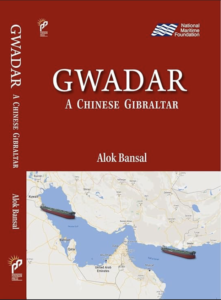
“GWADAR: A CHINESE GIBRALTER” Alok Bansal. New Delhi. Pentagon Press LLP, 2023. 224 pages, ISBN 978-81-951894-8-9. Rs 995 (Hardcover) Reviewed by: Manjiri Abhay Phansalkar In the current scenario of 21st century geopolitics and geostrategy, where countries and personalities are trying to establish their foothold as a global leader, China has delicately partnered with Pakistan to attain its goals of global leadership, economic hegemony as well as establish its geostrategic supremacy by means of mobilizing and exercising the deep-sea port of Gwadar on Pakistan’s Makran coast. The text by a retired Indian Naval Captain Alok Bansal, Gwadar: A Chinese Gibraltar highlights the strategic, economic and political attributes of Chinese operation of the Gwadar port while also representing the security concerns of the bordering nations and addresses the implications and influences of the operation of the upcoming deep-water port. The book, in totality discusses the importance of the Gwadar port especially with reference to the geopolitical entities in the neighborhood. “An established South Asian expert on Pakistan and a well-known defense analyst, Captain Bansal possesses impressive academic and experiential knowledge of multiple facets of South Asian geopolitics”. His book, Gwadar: A Chinese Gibraltar introduces and discovers various facets such as geopolitical significance, geostrategic implications, economic prowess, security matters and influences on neighboring entities in a series of six compact segments. In the initial phase, the book attempts to draft out a brief context of the region of Gwadar as well as the surrounding region in reference to the erstwhile occupants, the dynamic history, demographic evolution as well as geographic features of the arena.  The author continues to bring out the significance of the Gwadar deep-sea port. This aspect is practiced in relevance with the firstly the geographical location (and the possibility of  the port being exercised as an alternative to the previously existing ports at Omara and Karachi), secondly the advancements and innovations being implemented during the development of the deep-sea port (inviting investments and partnerships from key players in the global arena) and thirdly, presenting the short comings and limitations of the operation of the port post the idealization of the state-of-the-art facilities being established at the location. Further, the book delves into the security implications for Pakistan, in both the dimensions of Internal and External Spheres. On the External Sphere of security, the main highlights are presented in the form of Maritime security-whereby Pakistan envisages a respite from possible naval blockades and trade hinderances faced by the Indian Navy. In the context of Reducing Economic Vulnerability whereupon the operation of Gwadar port in addition to the ports at Omara and Karachi provides not only an added factor of security, but also guarantees flexibility and extravagance in matters of international trade, commerce and an option of transshipment leadership Finally, merging Pakistan’s security strategies with that of China’s so as to establish safety, stability, as well as superiority in the region of tumultuous events. On the Internal Sphere of security, the author introduces the two main aspects of development of Gwadar and the impact on the region of Balochistan as well as the rection of the Balochi locals to the developments taking place on their land. It is noticeable herein, that the Balochis are particularly apprehensive of the developments on the Gwadar port, as it comes as an action to jeopardies their land so that the owners reap negligible benefits of the port. China, a decisive player in the upgradation of Balochistan via the development of the Gwadar deep-sea port is shown to have heightened importance in the book. China’s efforts to assist Pakistan in this developmental project is viewed to be firstly, an attempt to enhace its geostrategic as well as economic standing on the global sphere and secondly, allow Pakistan to establish itself as a major stakeholder in global trade while also act as a lynchpin in the commerce of the land-locked countries within the Asian continent. The author addresses the Gwadar port as a major stakeholder in China’s CPEC, i.e. China-Pakistan Economic Corridor and is considered to be a leading project under China’s BRI i.e. Belt and Road Initiative. Venturing into the latter section of the book, the author attempts to bring out the primary impacts on Regional Security that majorly concern the bordering region of Pakistan, as well as the influences on the extra-regional powers. With regards to Afghanistan and Central Asian Regions (once a part of the Soviet Union), it is discovered that the Gwadar port emerges as the soul of their trade and commerce with regions outside of Asia. However, the issue of resistance by the local Baloch population remains a matter of concern for the development of the deep-sea port. In context of Iran, the Gwadar port is a clear competitor to the Chabahar port being developed by the Iranian government, in collaboration with the Indian government. Referring to the United States, the book brings out the intricacies of the global economic competition between China and the US, because of which China’s rise as a global hegemon is becoming inevitable. Also citing the intricate relationship with Russia, the Gwadar port emerges as a combined effort to exercise relations on economic forums. In the last section of the book, the author deals with the implications of the deep-sea port on India and states prime issues such as naval surveillance not only by the Pakistani Navy but the Chinese Navy as well, coupled with an attempt to jeopardies the maritime trade of the Indian subcontinent by mobilizing Gwadar as the hotspot for Asian commerce. Lastly, Chinese efforts on the Gwadar deep-sea port is visible intent to promulgate the concept of String of Pearls which aims to detrimentally harm India’s geostrategic posturing. In the concluding segment of the text, the author presents certain engaging theories and fruitful recommendations for India to effectively negate the detrimental influence of the Gwadar port on Indian trade. One striking feature is the suggestion for India to engage with Baloch nationals and promote Chabahar port over Gwadar as a preferred gateway to

Read More »
International Relations
Sifat Patel

The Role of International Labour Law in Regulating Gig Economy Workers’ Rights

This article examines the critical intersection of international labour law and the gig economy, focusing on the urgent need for protections for millions of platform-based workers. It highlights the role of the International Labour Organization (ILO) in addressing the challenges faced by gig workers, identifying existing legal gaps and proposing essential reforms. The discussion underscores the importance of establishing equitable labour standards to ensure that gig workers receive the rights and protections they deserve in an evolving labour landscape.

Read More »
International Relations
Sifat Patel

International Labour Standards for Protecting Migrant Workers: A Global Perspective.

This article delves into the role of international labour standards in protecting migrant workers, with a focus on frameworks developed by the International Labour Organization (ILO) and the United Nations (UN). It highlights key conventions like ILO’s Migration for Employment Convention and the UN’s International Convention on the Protection of the Rights of All Migrant Workers. Additionally, it addresses challenges in implementing these standards, particularly in regions like the Gulf Cooperation Council (GCC) and the European Union, while advocating for a core rights approach to enhance migrant worker protections globally.

Read More »
Blog
Theresa Jose

Delhi’s Monsoon: An Urban Nightmare

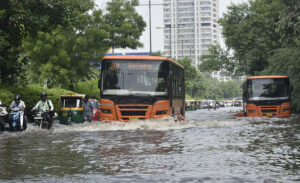
By Theresa Jose Delhi is a very densely populated city and there has been a growth of informal settlements throughout the city which has led to many urban challenges including waterlogging. These challenges mainly arise due to poor urban planning by the civic authorities which is creating a nightmare for the people living in the city. Especially in the areas which are the main hubs of the UPSC coaching centres like Karol Bagh, Patel Nagar and Rajinder Nagar which have recently been in the media for the concerns raised by the residents and people on the issues of exposed open wires, overflow of manholes and sewage and the problem of high rents but with poor facilities. This lack of quality living conditions has increased the demand for affordable study spaces for students, resulting in many libraries being set up in basements (Bhandari, 2024). So when the new centre of Rau’s IAS was established in the Old Rajinder Nagar on the request of the students they also set up a library that was illegally operating in the basement of the building which was supposed to be utilised for parking and storage (Menon, 2024).  On July 27th night, heavy rainfall led to waterlogging in Old Rajinder Nagar. The high force of water led to it entering the basement of  Rau’s IAS Study Circle in Old Rajinder Nagar and this led to flooding in the library which had 30 students in it but only 27 managed to escape or were rescued by the fire department, National Disaster Response Force (NDRF) and Delhi Police while the 3 UPSC aspirants who were trapped lost their lives (Tewari, 2024; ET Online, 2024). The gross negligence by the MCD officials was brought to light by the revelation that a month before this tragic incident a student from the coaching centre filed a complaint regarding the illegally operating library in the basement but the authorities did not take any appropriate actions (Herald, 2024). The negligence of the MCD officials was strongly reprimanded by the Delhi High Court  (The Hindu Bureau, 2024). In the aftermath, immediate actions were taken by the Municipal Corporation of Delhi (MCD) including shutting off at least 13 coaching centres which were violating the rules under the Delhi Master Plan 2021 which mandates statutory clearance to use the basement and was strongly against using the basement for commercial purposes (Sharma, 2024; Tewari, 2024).  In Old Rajinder Nagar the property owners construct buildings which cover the drains which is also a common issue in Delhi as revealed by the MCD’s investigation. This obstruction by buildings on the drains has made it difficult to clean the drains and also affects the flow of stormwater which results in waterlogging. So there is a need to implement legislative frameworks like the ‘Storm Water and Drainage Act for the NCT of Delhi’ which emphasizes preventing any future illegal barrier on the city’s drainage system (Press Trust of India & Business Standard, 2024). The Coaching Centre tragedy is alleged to be mainly due to the inefficient drainage system and the violation of the building laws but this is not an isolated incident. 27 people’s lives were claimed due to electrocution past year as per the reports  (Ujwal Jalali et al., 2024). On July 22nd, a UPSC aspirant was electrocuted when he slipped while walking on a waterlogged street of Patel Nagar and held on to an iron gate which was in contact with an exposed motor wire (Tewari, 2024). The city also witnessed an incident where two fires broke out in Mukherjee Nagar last year which resulted in 61 students of a caching centre injured, the latter incident led to the fire department conducting a survey which showed that 461 coaching centres did not have any proper safety measures (Tewari, 2024). All this put the city’s civic body authorities in the spotlight for their failure to address the urban crisis that has been affecting the city’s residents and their lack of action against the violation of building regulations.  The solution to the recent waterlogging in the capital city when there are heavy downpours is not just by desilting the drains which is just a temporary solution but also through revamping the city’s drainage system which could help prevent the recurring waterlogging in the long term. However, the construction of a new drainage system that has to be suitable for the densely populated and unplanned colonies of Delhi could be a task that needs at least 4 years to be fulfilled and large investments (Mathur, 2024). When it comes to funds required to implement the new project the city authorities don’t have enough because of the freebie culture that is supported by the government which keeps the revamping of the city’s infrastructure on hold and this action of the government was strongly reprimanded by the Delhi High Court. Presently the existing drainage system of the city faces problems like outdated design with the sewerage system being combined and the inability of the system to handle heavy rains as the existing one’s designed to only handle 50 mm of rainwater within 24 hours in a city which has witnessed a downpour of 228 mm of rainwater in a day which underscores the immediate need to design a drainage system which could help handle more water and lessen the vulnerability of the city to the monsoon waterlogging crisis (Ujwal Jalali et al., 2024). The sewerage system is of two types, combined and separate sewerage with the former which carry both the stormwater and wastewater together while the latter carries both separately. Currently, separate sewage systems are in demand as they help in controlling the stormwater separately, prevent combined sewer overflow and stop sewage from getting into the environment. This could help in avoiding flooding during heavy downpours in low-lying areas, even after this flooding occurs it would just be rainwater and not sewage waste which could spread diseases (Stauffer & Spuhler, n.d.). However, there is a downside to the construction of a separate

Read More »