IISPPR

Category: Blog

STRATEGIC BIFURCATION AND HEGEMONIC CONTESTATION: DECIPHERING THE MULTIPOLAR REALIGNMENTS IN US-CHINA GEOSTRATEGIC FRICTIONS ACROSS THE INDO-PACIFIC

The South China Sea, a geostrategic cauldron in which the United States’ doctrine of a liberal-internationalist maritime regime clashes with neo-Chinese claims of jurisdictional hegemony manifest in the virtually spurious nine-dash line doctrine, has become the arena of power contestation, both kinetic and otherwise. There, territorial conflicts go beyond territory and map onto the complex networks of economic hegemony, environmental securitization, and infrastructural hegemony. The contrast of Beijing’s Belt and Road Initiative with Washington’s Blue Dot Network indicates the new divide in global infrastructure diplomacy, where development paradigms oscillate somewhere in between state-directed economic patronage and multilateral regulatory stringency. At the same time, the securitization of the maritime commons compounds environmental vulnerability, converting militarization and resource extraction into an ontological crisis for the coastal states. Such a tangled geopolitical tableau affords an argument for a polycentric analytical lens that transcends the bounds of orthodox realist dogma and embraces a constructivist dialectic that synthesizes competing sovereign narratives into a coherent multilateral framework.

Read More »
Public Policies
asmeet kaur

Policy Implementation: Challenges and Opportunities

This article examines the barriers to effective climate change policy implementation, including political, economic, regulatory, and social challenges. It highlights the conflict between short-term political goals and long-term environmental strategies, the influence of powerful industries, and socio-economic inequalities. The article emphasizes the importance of governance reforms, stakeholder engagement, and international cooperation to enhance policy effectiveness. Successful approaches include decentralized decision-making and equity-driven frameworks to improve transparency and inclusivity.

Keywords: climate policy, policymaking, political barriers, economic constraints, regulatory challenges, equity in policymaking, governance reforms, stakeholder engagement, international cooperation, Paris agreement

Read More »
International Relations
Vaibhav puri

Gender Apartheid in Afghanistan: The Taliban’s War on Women’s Rights

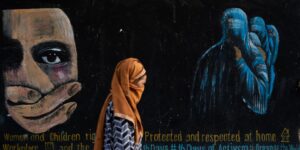
Gender Apartheid in Afghanistan: The Taliban’s War on Women’s Rights Introduction The Taliban, an extremist militia, first seized control of Herat in 1994 before capturing Kabul, the capital of Afghanistan, on September 27, 1996. Their rule plunged Afghanistan into a brutal totalitarian regime, imposing gender apartheid that stripped women and girls of their fundamental human rights. Under Taliban rule, women were banned from education and employment, denied healthcare, forced into seclusion, and subjected to severe violence and oppression. The erasure of women from public life not only violated human rights but also led to devastating social and economic consequences for the entire population. This paper will explore the systematic oppression of women, the wider societal impact of Taliban policies, and the long-term consequences of their gender-based restrictions on Afghan society. Historical Background Women in Afghanistan have experienced significant shifts in status and rights over the past century. In the early 20th century, King Amanullah Khan (1919–1929) promoted women’s education and discouraged veiling. His wife, Queen Soraya, was a key advocate for women’s rights. However, these reforms faced backlash, and subsequent rulers reversed many of them. During the 1960s and 1970s, urban Afghan women gained more rights, including access to education and employment. The 1964 constitution granted them the right to vote. However, the Soviet invasion (1979–1989) and ensuing civil war (1990s) disrupted these advancements. While the communist government promoted gender equality, the rise of mujahideen factions and later the Taliban (1996–2001) led to severe oppression—women were banned from working, attending school, and appearing in public without a male guardian. After the U.S.-led invasion in 2001, efforts to improve women’s rights gained traction. By 2021, millions of Afghan girls were attending school, and women were active in politics and the workforce. However, the Taliban’s return to power in August 2021 reversed many gains. Women were once again restricted from education beyond sixth grade, barred from many jobs, and required to follow strict dress codes. Afghan women have continually resisted oppression, with activists advocating for education and rights despite severe restrictions. Their struggle remains a central issue in Afghanistan’s ongoing political and social landscape. (International Journal), (UN women).                                                      Women’s Rights in Afghanistan Before 2001 Women in Afghanistan were not always restricted in their rights. In fact, Afghanistan was once considered one of the more progressive countries in the region regarding gender equality. Women were granted the right to vote as early as 1919, a milestone that placed Afghanistan ahead of many Western nations at the time. The 1964 Constitution further strengthened women’s rights, guaranteeing equal opportunities in education, employment, and politics. During the 1970s and early 1980s, Afghan women in urban areas, especially in Kabul, had access to higher education, and many worked as doctors, teachers, and government officials. However, these advancements were not universal. In rural areas, conservative traditions remained strong, and many families still kept women from pursuing education or working outside the home. Despite legal protections, the gap between urban and rural women’s experiences was stark.   The political shift in 1978, when the communist-backed People’s Democratic Party of Afghanistan (PDPA) took power, brought a wave of reforms aimed at modernizing Afghan society. The government encouraged women’s education and participation in the workforce, but these changes were met with resistance from conservative factions. Many saw the PDPA’s policies as an attack on traditional Afghan values, fuelling unrest that eventually led to the Soviet invasion in 1979. During the Soviet-Afghan War (1979-1989), women’s rights remained a deeply contested issue. While the Soviet-backed government continued promoting gender equality, the Mujahideen—Afghan resistance fighters who opposed Soviet rule—held much more conservative views. When the Mujahideen took control after the Soviet withdrawal, Afghanistan descended into civil war, and women’s freedoms were gradually stripped away. The situation worsened when the Taliban emerged victorious in 1996. Under their strict interpretation of Sharia law, women were completely removed from public life. They were banned from attending school, working, or even leaving their homes without a male guardian. The Taliban imposed a strict dress code, forcing women to wear the all-encompassing burqa, and those who disobeyed faced severe punishment, including public beatings and executions. In just a few years, decades of progress had been erased.  Changes Under the U.S.-Backed Government The fall of the Taliban in 2001, following the U.S.-led invasion, brought a new chapter for Afghan women. The new government, backed by international support, prioritized gender equality. The 2004 Constitution granted men and women equal rights, and efforts were made to rebuild Afghanistan’s education system, ensuring that girls could return to school. By 2011, approximately 2.7 million Afghan girls were enrolled in school, a dramatic increase from zero under Taliban rule. Women also re-entered the workforce, taking on roles in journalism, politics, and education. For the first time in decades, Afghan women held government positions, and a quota system was introduced to ensure female representation in parliament (Brookings Institution).                                                 Despite these achievements, challenges remained. Security threats, cultural opposition, and the ongoing war made it difficult for many women to exercise their rights, especially in rural areas. Women in public roles often faced threats and violence from extremist groups. While the government promoted gender equality, many Afghan families still followed traditional customs that limited women’s freedoms.                                       The situation of women after the Taliban In the last 3 years and 6 months after regaining power in Afghanistan, the Taliban, have created the world’s most serious women’s rights crisis. Afghan women and girls now face institutionalized gender apartheid, with restrictions on almost all spheres of normal life. The education ban has denied millions of Afghan girls the right to learn. Girls beyond sixth grade are barred from attending school and the Taliban has officially banned young women from attending universities. This ban has effectively removed women from formal education removing all their chances of being employable and reinforcing patriarchy. Along with the educational ban, there’s a ban on women from the workforce except few sectors like healthcare and primary educators. This has further intensified poverty as many

Read More »
International Relations
Vaibhav puri

Role of International Institutions in conflicting resolutions

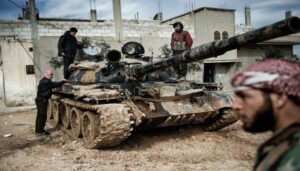
INTRODUCTION: The Syrian Civil War, which began in 2011, stands as one of the most catastrophic conflicts of the 21st century, resulting in massive loss of life, widespread displacement, and a humanitarian crisis. The war has drawn in various international actors, thus increasing the complexity of the crisis and complicating the dynamics of conflict resolution and humanitarian intervention. Amidst this turmoil, the United Nations (UN) has played a central role, attempting to mediate peace talks, provide humanitarian aid, and uphold international law. Yet, the UN’s effectiveness in addressing the Syrian crisis has sparked considerable debate among scholars, policymakers, and humanitarian organizations. This research article aims to analyse the role of the United Nations in the Syrian Civil War, exploring its strategies, challenges, and the broader implications of its actions on the ground. RELEVANCE: This research on understanding the United Nations’ role in the Syrian Civil War is crucial for comprehending the complexities of international intervention in conflicts. By examining the UN’s strategies and the challenges it faces, this research provides important insights that can inform future peacekeeping and humanitarian initiatives in similar crises like the Ukrainian-Russian War. Additionally, it contributes to the broader discourse on the efficacy of diplomacy and mediation in resolving conflicts, especially as global governance contends with mounting pressures from national interests and geopolitical rivalries. RESEARCH OBJECTIVE: This paper evaluates the challenges faced by UN in facilitating the political resolution in Syria particularly, examining the influence of external powers, the fragmentation of conflicting parties and the implications of the constitutional committee’s stalled progress in the peace process. It specifically focuses on UN’s lack of enforcement mechanisms, the political deadlock within the United Nation Security Council (UNSC), and the challenges in ensuring the accountability for war crimes. THE ACCOUNTABILITY OF THE UNITED NATIONS IN ADDRESSING HUMAN RIGHTS VIOLATIONS DURING THE SYRIAN CIVIL WAR Major Human Rights Violations in the Syrian Civil War: The Syrian civil war has resulted in significant human rights violations and a substantial loss of life. According to the United Nations Human Rights Office, at least 306,887 civilians were killed between March 2011 and March 2021, representing about 1.5% of Syria’s pre-war population. Estimates of the total number of deaths, including combatants and non-civilians, vary. The Syrian Observatory for Human Rights reported approximately 617,910 deaths from March 2011 to March 2024. Widespread human rights abuses have marked the conflict. All parties involved have conducted unlawful attacks on civilians and civilian infrastructure, resulting in numerous deaths and injuries. The Syrian government, in particular, has been implicated in mass killings, torture, and the use of chemical weapons against civilian populations. The war has also led to a massive displacement crisis, with millions of Syrians forced to flee their homes, seeking refuge both within and outside the country. Analysis of the UN’s Accountability on War Crimes:For over 13 years, the government of Syria, its allies, and armed opposition groups have perpetrated countless attacks on civilians and civilian infrastructure, violating international law. Government forces have committed murder, torture, and sexual violence as a matter of state policy. All parties to the conflict continue to commit acts that may amount to war crimes and crimes against humanity, and repeated violations of ceasefires heighten the risk of recurrence of large-scale conflict. It remains unsafe for Syrians to return to their country. As various armed groups attempt to consolidate their control over territory in a fragmented Syria, civilians are facing indiscriminate hostilities and systematic human rights violations in Syria. Detention and disappearance are used by the government and other parties as a strategy to control and intimidate civilians, confirming ongoing patterns of crimes against humanity and war crimes. Despite the ICJ provisional measures order, the Syrian government continues to perpetrate enforced disappearance, torture, and ill-treatment against detainees and deliberately obstruct families’ efforts to learn the fate and whereabouts of their loved ones. The grave situation across Syria is partly a consequence of the UN Security Council’s (UNSC) inability to hold perpetrators accountable. Since 2013, the UNSC has passed dozens of resolutions on the situation in Syria; however, none have been fully implemented, and the Syrian government has directly violated many of them. Russia and China have jointly vetoed ten draft resolutions, and Russia has independently vetoed an additional eight, shielding Syria from international accountability. To close the accountability gap, on 21 December 2016, the UNGA established an International, Impartial, and Independent Mechanism to assist in the investigation and prosecution of perpetrators of atrocities in Syria. Several countries have initiated proceedings or convicted suspected Syrian perpetrators under universal jurisdiction. In June 2023, Canada and the Netherlands jointly initiated proceedings against Syria before the International Court of Justice (ICJ) concerning alleged violations of the Convention against Torture and Other Cruel, Inhuman or Degrading Treatment or Punishment. On 16 November 2023, the ICJ issued provisional measures calling on the government of Syria to prevent acts of torture and other cruel, inhuman, or degrading treatment or punishment, and ensure its officials do not commit any acts of torture while preserving relevant evidence. [Un report by global center] United Nations Mediation in Syria: The UN mediation efforts are generally guided by preventive diplomacy, impartiality, and consensus-building among conflicting parties. Mediation efforts are complicated in situations like civil war; it becomes more challenging due to the fragmented nature of the parties involved (Becovitch and Jackson, “Conflict Resolution in Civil Wars”). The Geneva Process:The earliest attempt of the UN was the Geneva Process in 2012. The cornerstone of the initial mediation was the Geneva Communiqué, which was adopted at an international conference by Kofi Annan. This communiqué outlined a six-point plan for peace, which included measures aimed at de-escalating violence and paving the way for a political transition. The plan, introduced by then-UN-Arab League Special Envoy Kofi Annan in 2012, emphasized the following key points: Commitment to a Syrian-led political process: Syrian government and the opposition were urged by the United Nations to engage in an inclusive dialogue to resolve the conflict peacefully. Cessation of violence: All parties

Read More »
International Relations
Tanuj Samaddar

NORMATIVE DISRUPTIONS IN THE INDO-PACIFIC

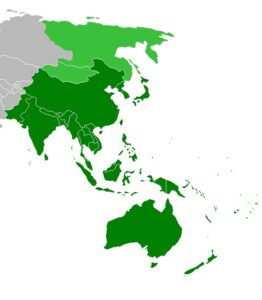
In this geo-political context of dynamism the Indo-Pacific region indeed becomes a crucible of multifaceted normative disruptions that center on the intricate interplay between complex power dynamics, other economic stratagems and sociopolitical paradigms to create a landscape which in nature is transformative. The article presents a systematic and theoretical analysis of the paradigmatic shift from the erstwhile Asia-Pacific framework to the emerging Indo-Pacific construct holding that such a transition is not a simple superficial rebranding but a deep metamorphosis underscored by the ascendant influence of the United States and its allies.
This treatise studies the geopolitical ramifications of Belt and Road Initiatives and its concomitant implications in terms of regional stability as a whole so that the precarious state of balance surrounding India’s current strategic posture has been defined despite its tumultuous neighbourhood. This further questions the effectiveness of QUAD as a normative mechanism in bringing about an inclusive and rules-based order yet still dealing with the tensions inherent in the neoliberal economic imperatives versus the exigencies of national sovereignty.
This paper navigates through the convoluted hallways of food security climate change and socio-economic disparities and holds that the future of the Indo-Pacific is irrevocably entwined with the resiliency of the constituent countries This exposition strives to contribute to the growing body of literature on the Indo-Pacific paradigm and provides a richly textured analysis that cuts through the old-fashioned dichotomies and speaks to the rapidly changing geopolitics.

Read More »
International Relations
Samriddhi Shet

Global Counterterrorism Policies with special emphasis on the Sub-Saharan Region

Global counter-terrorism policies in Sub-Saharan Africa focus on combating groups like Al-Qaida and Boko Haram through military intervention, capacity-building, and socio-economic initiatives. International coalitions and local governments collaborate to dismantle militant networks, address root causes like poverty and governance challenges, and enhance security for long-term regional stability.

Read More »
International Relations
Abhishek Kulkarni

French Colonial Legacy in Africa: A Deep Dive into Françafrique and Post-Colonial Influence

Discover the enduring impact of French colonial legacy in Africa, exploring Françafrique, migration patterns, military interventions, and cultural assimilation. This in-depth analysis reveals how historical ties continue shaping security, economics, and cultural identity, highlighting both resistance and influence in post-colonial Africa’s evolving relationship with France.

Read More »
Public Policies
Piyush Chaudhary

Child Digital Safety Policy in India

This article comprehensively addresses the issue of child digital safety policy in India. It explores the problems of cyber abuse and cybercrime faced by children, identifies gaps in current Indian policies, and provides recommendations to address them effectively.

Read More »
International Relations
Manjiri Phansalkar

WOMEN AND CHILDREN UNDER ISIS

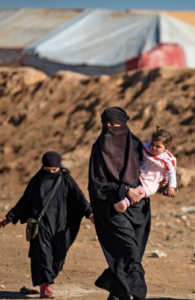
WOMEN AND CHILDREN UNDER ISIS __________________________________________________________________ By Manjiri Phansalkar ABSTRACT ISIS, also known as ISIL – the Islamic State of Iraq and the Levant (terrorist organisation) is a Sunni jihadist group with a particularly violent ideology that calls itself a caliphate and claims religious authority over all Muslims. With the quantum of attacks, incidents and undercover – sleeper cells persisting in the transient nexus of the twenty-first century, a very striking component of such an organisation is known to bear great repercussions as well as contribute significantly to its working. Women and children – generally considered to be the ‘softest targets’ in any area of conflict, are subjected to excessive torture and are awarded unforeseen, dreadful consequences on committing an apparent act of crime, which is deemed to be against the rules as dictated by their extremist law. It is such an unbecoming setting that calls for the long – due synthesis and analysis of the treatment offered to women and children under ISIS. This paper looks at three prime areas of detailed study, encountering the framework and mechanisms of ISIS, followed by the extremities experienced by women and children and finally a constructive analysis of the atrocities.  __________________________________________________________________ INTRODUCTION ISIS is short for the Islamic State of Iraq and Syria and is concurrently also known as ISIL or the Islamic State of Iraq and the Levant. Towards June 2014, ISIS chose to rename itself as the “Islamic State” accounting to the fact that it proclaimed the creation of a global caliphate. Abu Bakr al-Baghdadi, who was their leader since 2010, declared that he was the new caliph and, resultantly,  was now ruling all Muslims. ISIS, ISIL and IS appear to be mostly synonymous, however, in the particular case of ISIS, it has been long established that Abu Musab al-Zaqawi was the (extremist) founder of this organisation – in 1999 Within the next  five years, al-Zarqawi’s new group rapidly advanced in their recognition through their barbaric activities and simultaneously also chose to associate with Osama bin Laden and Al-Qaeda (AQI). They are known to and considered to be Islamic extremists, Islamists or Jihadists, closely linked to the dramatically popularised concept of Jihad or “struggle.” Various other terrorist organisations, such as the Taliban, Boko Haram, the Al-Qaeda, Hamas and Hezbollah have also been participating in the global realm of affairs and have been making the news for decades(especially now, considering the ongoing Israeli war in Gaza). However, ISIS appears to be in a strata of its own. In 2014, Al-Qaeda officially dissociated itself from ISIS, and subsequently became a self-sustained entity. Al-Qaeda refused to take responsibility for ISIS’ actions which they deemed to be “too extreme” in some cases. ISIS has proven to be a rather negatively growing potential in the acts of terror across the expanse of the globe, considering which, it has now become a force to be reckoned with. Women and children have always been a significant catalyst in events throughout history. In the case of women, it can be observed that women take various roles for the recruitment, and in that sense become agents for a shift towards radicalization and counter-extremism (Saltman, 2019). Women are the silent driving forces of society. Their involvements and dynamics directly impact the children of the society. Children are seen as the beacon to carrying such radicalised and extremist views forward for society. Focusing particularly on minors, adolescents, it is understood that they are indoctrinated for future jihad, emphasising the influential role that children can also play in terrorist operations (Spencer, 2016) . In this chapter, we attempt to analyse these roles and their impacts in current incidents, in relation to ISIS operations. DECODING : WOMEN AND CHILDREN UNDER ISIS While ISIS poses threats to the world in many ways that are manifested through unexpected scenarios, it is noticeable that not all of it is possible without the necessary requirement of manpower, which would / does essentially engage in acts of terror, in the name of an extremist-jihadist law. Although, from time immemorial, society has known itself to be patriarchal by nature, a similar algorithm applies to the mechanisms of ISIS as well. However, a surprising fact represents itself in the form of participation by women and children in acts of terror across the globe. Considering the popular opinion of women being the suppressed fraction of population under the ISIS, it is rather unlikely to witness women (and children) participation alongside men. Two reasons may be considered here. As a first, women may be subjected to forced participation, as a mandate enforced by the patriarchal guidance of laws, or perhaps they do so willingly, out of their personal choice. On the other hand, in the case of children, it is understandable that – a provocative environment- such as that of ISIS would demand only so much from a child so as to follow the traditions long-established by their forefathers, while also keeping in mind the fact that the children from those women who themselves indulge heinous acts of terror, are bound to bring their children up in a manner similar to theirs. In this section of examining the activities and treatment offered to women and children under the ISIS, a synthesis is observed through a framework of three sequential categories. Primarily, we dive into the ideology that ISIS aims to propagate, followed by the understanding of the linkage as established by the ISIS with women and children and finally produce a simple analysis of the  established linkage. ISIS – WHEREABOUTS ISIS follows a very extreme form of Islam known as Salafism (in Arabic al salaf al salih means the “pious forefathers”). It promotes violence and bloodshed to establish and maintain Qur’anic hegemony through a very strict adherence to the Qur’an and Shari’a law. ISIS adheres to an apocalyptic theology and believes that the Mhadi or “guided one” will soon arrive and redeem Islam. ISIS has declared jihad against all infidels. That includes westerners, Christians and Jews. But it also includes any

Read More »