Authors: Aryan, Yash, Pooja, Vasu, Parth, Ayetri, Lavanya, Kanak, Priyal, Srija
ABSTRACT
This study evaluates plastic pollution present in water bodies worldwide. The impact and the negative nature of microplastics on Mother Nature and human lives make this thing that needs to be tackled like an emergency. These larger sizes of plastics, which go into the water bodies, tend to become smaller and smaller pieces, which are called microplastics, through various kinds of natural and human-made things like sunlight, chemicals released in water bodies, etc. This process leads these big amount of plastics to become smaller and smaller ones, which tends to become the cause of infertility in both men and women and sometimes cancer in people. Both these categories of plastic pose serious risks to aquatic organisms and can also enter human food and water systems.
In this study, the occurrence, transport pathways, detection technologies, and research gaps associated with plastic contamination in aquatic environments are examined. This is conducted through a comprehensive review of recent literature and secondary analysis of 4 major global datasets. A secondary data analytical approach is used following these recognised databases: the United Nations Environment Programme (UNEP) global marine litter model, the Atlas of Ocean Microplastics (AOMI), the Organisation for Economic Co-operation and Development (OECD) Global Plastics Outlook dataset, and the National Oceanic and Atmospheric Administration (NOAA) National Centres for Environmental Information marine microplastics database. These long-term trends in plastic production and waste generation were analysed. It was also used to identify the global hotspots of plastic contamination. Further, transboundary transport pathways for plastic pollutants were mapped, and modelled pollution distributions were compared with real field-based observations.
Findings of this study also account for anthropogenic factors such as urbanisation, industrial discharge, agricultural runoff, and improper waste disposal. While technologies like the Fourier transform infrared spectroscopy, deep learning detection systems and automated monitoring systems have improved the detection of plastics more smoothly, there are still a few methodologies that are not able to compare between the studies. Due to dissimilarity between the mesh sizes, digestion protocols and other techniques, the results are not reliable. This can easily complicate the policy formulation. It is seen that the main reason behind the pollution in water bodies is the unstandardized methods used for monitoring the pollution in water.
INTRODUCTION
Plastics are made by humans, produced with the help of petroleum-based chemicals, which is why they are so stretchable and durable, making them a daily used product. The same properties that make them useful (they don’t break down easily) make them a serious environmental hazard (Barnes et al., 2009). When plastics enter water bodies, they don’t disappear. Sunlight (UV radiation), physical friction, wave action, and microbial activity break them into smaller and smaller pieces – but the plastic molecules remain intact, potentially for hundreds to thousands of years. A single plastic bottle can eventually fragment into millions of microplastic particles, each capable of being ingested by tiny organisms (Peters and Bratton, 2016, Sanchez et al., 2014; Silva-Cavalcanti et al., 2017).
Plastic debris is generally assessed according to size, like macro-plastics, i.e., plastic items larger than 5mm. Bigger than a grain of rice, and microplastics – 1um, i.e., plastic items smaller than a sesame seed, down to invisible (Arthur et al., 2008; Barnes et al., 2009; Thompson et al., 2009). Microplastics can be classified as (i) primary microplastics which are intentionally manufactured to be tiny, example – microbeads used in facial scrubs, cosmetic glitter, and industrial plastic pellets (nurdles), and as (ii) secondary microplastics that are created when larger macro-plastic break down, example – sunlight (UV rays), waves, and weathering degrade larger plastic items over time, breaking them into specks (Cooper and Corcoran et al., 2010, Derraik et al., 2002, Napper et al., 2015, Williams and Simmons et al., 1996).
Macro-plastics directly cause physical damage to wildlife, such as birds, turtles, and marine life. The animals usually get trapped in them or accidentally ingest them, filling their stomachs, which leads to starvation. Microplastics are small enough to be eaten by the smallest marine creatures (like plankton) and work their way up the food chain. Microplastics have also been found in human organs, placentas, and bloodstreams, and studies are underway to explore their links to inflammation, cancer and cell damage (Jabeen et al., 2017; Jemec et al., 2016).
Both the detection and categorisation of plastic contamination are still technical challenges. Visual representation, pyrolysis-gas chromatography-mass spectrometry, scanning electron microscopy and many more techniques are used for identifying the microplastics in the water bodies. There are alternative methods for monitoring the macro-plastics. There has been a reallife field deployment, which is cost-efficient and scalable to an extent, including the UAV-based platforms, which are used for spatial coverage of the large water bodies. Helping with on-site assessment. In addition, some architectures have demonstrated considerable automation in identifying and classifying the microplastics, with the help of methods like the Canny edge detection algorithm and Nile red fluorescent, substantially increasing the detection process across difficult-to-understand environmental matrices.
There are many ways by which the water gets contaminated by the plastics, these are municipal waste, uncleaned drainage systems in regions (area-wise), littering of plastic waste by street shops and throwing them into the pipelines, which ultimately goes inside the larger water bodies. (Andrady, 2011; Cole et al., 2011). The plastic waste, which is increasing day by day due to the fast urbanisation, gets collected in one place, which chokes the flow of the river and other smaller water bodies inside the city region, helping various diseases to grow. Here, the important role is played by the water drainage pipelines that flow inside the cities and are the ones needed to be assessed in regular intervals. (Wagner et al., 2014).
This is a big concern for all of us that plastic, which was once a part of human settlements, can now be seen far beyond the regions where there are no human traces found, for miles away all thanks to the ships and the water bodies which gets our waste to far lands and affect the marine life and the humans which are living in isolation far from the urbanised cities. (Law and Thompson, 2014; Allen et al., 2019). These plastics can absorb the heavy metals in the environment and harmful chemicals due to their large surface areas, which directly affect the food chain in the marine bodies (Rochman et al., 2013). Even though there are many people who do not use plastic at all, these are in such micro fragments that they can travel in the atmosphere like air, affecting the lives of people and animals.
However, there is development in techniques, but there are still challenges for the detection and determination of pollutants (plastic). There are differences between the procedures and techniques used for collecting the samples of plastics and analysing them, making the studies more difficult to compare (Hidalgo-Ruz et al., 2012). Moreover, the lack of systemised methodologies and long-term monitoring programs creates a hindrance to a detailed understanding of the partial and temporal distribution of both macroplastics and microplastics. As a result, developing dependable, cost-cutting, and automated monitoring techniques is important for efficient pollution control and prevention.
Even though there are a couple of disadvantages still remain for the estimation of pollution. The variability observed is quite common. Because the sampling site, method of separation, plastic size, and method for analyse were differed in each research, and then comparison of their actual data is unable to conclude.
(Hidalgo-Rutz et al., 2012) Yet, even in the macro-plastics, spatial and temporal distribution are quite unclear due to without standardised methods, neither for inspections nor dedicated investigations.
(Hidalgo-Rutz et al., 2012) Development of economic, easy-to-apply and high-efficiency technologies for the monitoring and surveillance of those pollutants seems crucially important for their pollution mitigation. So, while the pollution of the plastic’s in freshwater is of increasing interest, the lack of a standard procedure regarding sifting-net size choice, extraction protocol, and methods to determine the polymer characteristic would need more progress regarding standardized identification methods to conduct meaningful inter-study comparison, since all aspects related to sampling, work-up and analysis will influence results and their environmental consequences up to 2-9 fold increases in retrieval rates of the plastic polymers for instance, the choice of appropriate methods should be designed to optimize MPs recovery as the nature and extent of the organic matter varies in surface waterbodies of the world(e.g. Urban ditch, pond, stream) and is believed to have a significant impact on the MP recovery rates(Raczanska et al., 2016) The fact, that, as reported in (Prata et al., 2020) that the identification of the polymer is possible via their unique infrared “fingerprint”, yet differences in analytical methodologies could generate additional variability due to different protocols. It was the purpose of this work to contribute to an overall effort toward addressing this research gap by examining MP contamination in different aquatic environments and assessing data relevance and applicability by using standard data sampling methodologies.
Literature Review
POLLUTION OF PLASTIC A WORLD-WIDE CRISIS
The studies even now categorise plastic pollution as a systemic crisis rather than a region-wise waste management problem. Microplastics are the ones that are connected in all terms; whether it is a local area pipeline or a marine ecosystem, it’s all over the place, from land to water, which gives it full exposure to the ecosystem (Lee et al., 2022). The understanding of plastic pollution goes from the ( Great Pacific Garbage Patch) to the oceans and the coastal ecosystems (Rochman, 2020). This crisis has gone beyond the level of expansion because now the plastic is produced by the fossil fuels and outpaces the waste management system, leading to health risks and accumulation of plastics (CIEL, 2024). Recycling is one of the best ways to reduce the toxic gases from spreading in the air by reducing the production of plastics, but due to economic and governmental barriers, the effectiveness of recycling is limited to an extent (Broussard, 2025). If seen properly, these studies advocate for the systematic intervention that will help in the reduction of plastic production and coordination between the government mechanisms.
The production of plastic was on top in 2023 and continues to rise. It is only a matter of time till it enters the water bodies because after that, it continuously gets into smaller and smaller pieces which can only be seen with the help of scientific lab equipment, which is far more dangerous than we all can think of. The more concerning thing is that these microplastics do enter the freshwater ecosystems, which are also a source of life for the animals and humans.
Microplastics in Freshwater Systems: Sources and Distribution
The presence of microplastics has emerged as a major environmental concern in freshwater ecosystems worldwide. Previous research papers have reported the contamination of rivers, lakes and urban systems through microplastics. A research study conducted by Tamminga et al. (2021) depicted the microplastic concentration, characteristics and fluxes with regard to different sampling systems in the Tollense catchment area of Germany. Microplastic concentration was affected by the presence of a higher proportion of land cover, especially if construction activities were involved.
Another study conducted by Niu et al. (2024) in Beijing, China, aimed to trace microplastics sources and combine their diversity, fragmentation and stability. Spatial distribution of microplastics was mainly affected by dams and wastewater treatment facilities, contributing to increased wastewater discharge into water bodies.
Similarly, Hassan et al. (2025) conducted a comparative study of fluorescent and FTIR (Fourier Transform Infrared Spectroscopy) microscopy in drinking water to investigate the presence and characteristics of microplastics in the Perak River, Malaysia. Plenty of reasons have been added to the microplastic pollution, such as municipal and industrial wastewater, agricultural runoff and human-based activities such as urbanisation, etc.
Furthermore, Lechthaler et al. (2021) examined the microplastics in Indian rivers of Kerala and Tamil Nadu under different anthropogenic influences to compare the microplastic concentration in urban and rural areas using FTIR spectroscopy. This research reported significant differences in microplastic concentrations affected by the velocity and flow of the river in accordance with the seasonal variation, still missing out on the long-term analysis.
In freshwater ecosystems worldwide, Wagner et al. (2017) stated that micro and macro plastic are often seen in freshwater and on land, focusing that investigation is mandatory to clarify where the micro and macro plastic come from, how they move from one place to another, and what impacts they create on ecosystems. Yang et al. (2021) the activities associated with people, such as the growth of the city, an increasing number of urban population, and littering practices, slowly increase the microplastics in rivers, showing that cities like Delhi play an important role in polluting freshwater with plastic. Duan et al. (2021) elaborated on how bigger plastic items slowly become smaller pieces via natural and human-made processes, such as particles remaining in nature for long durations and potentially harming aquatic animals. Bhardwaj et al. (2024) compiled multiple investigations of plastics in freshwater and wrote that the main contributors include discarded plastic waste, manmade clothing fibres and many more things, while also drawing attention to risks for ecosystems and for humans that may result from contact with microplastics.
In a study focused on a specific area, Mandal et al. (2025) examined rivers and ponds in Malda, West Bengal, and found micro and macro plastics in every sample. The analysis pointed out that sediment from ponds contained larger amounts than the water on the top. The most frequently observed polymers were nylon and polyethene (PE). They connected the contamination with the growth of urbanised areas, the release of wastewater, and the unregulated dumping of municipal waste.
Khan et al. (2024) provided a review of the classification, starting point and potential ecological impacts of microplastics inside the freshwater, indicating that wastewater disposal, industrial and agricultural activities contributed significantly to the development of freshwater microplastic pollution. Ncube et al. (2024) examined the development and parts of microplastics found in different water bodies, such as ponds and lakes, finding that marine species were found to regularly eat microplastic material, resulting in anxious physiological responses leading to ecological disturbances. Zhang et al. (2024) addressed the origin, moving mechanisms, and elimination of microplastics, indicating that physical factors have a strong effect on the distribution of microplastics. This is further supported by Liu et al. (2024), who indicated that microplastic particle properties such as size and density have a significant impact on the transport and fate of these particles in fresh water.
Detection and Quantification of Microplastics: Methods and Challenges
Microplastics and macroplastics contamination detected across marine, freshwater and remote ecosystems has emerged as a critical environmental challenge, yet detection remains methodologically fragmented and economically inaccessible. Microplastics are defined as synthetic polymer particles ranging from 1µm to 5mm, mentioned by Winiarska et al. (2024).
Studies have shown that microplastics originate as primary particles, such as microbeads from cosmetics, or secondary particles derived from the degradation of larger plastic debris. Studies have reported microplastic concentrations ranging from <0.001 to >1000 particles per litre in surface water along with polyethene, polypropylene, and polyethene terephthalate as dominant polymer types, driven by industrial discharge, untreated sewage, and degradation of mismanaged plastic waste. Recent studies under the WHO 2019 detected microplastics in drinking water.
Elizalde-Velazquez & Ganez-Olivian et al. (2021) have stated microplastics as prevalent pollutants in aquatic ecosystems globally, with their distribution influenced by complicated interactions between human-made activities, hydrodynamic factors & geographical factors. Detection methods are separated fundamentally by size: macroplastics (>5 mm) leverage deep learning and remote sensing approaches, including satellite spectral indices, drone-based YOLOv11 models, and U-Net segmentation, offering scalability and decreased cost barriers for regional monitoring. Microplastics detection traditionally depended on FTIR spectroscopy (about 50 lakh cost and 97% accuracy), excluding most third-world country researchers. However, emerging cost-effective alternatives using multi-spectral near-infrared sensors combined with M.L ( machine learning) achieve comparable around 90% accuracy at a cost of ₹ 0–50k, democratising college-level research participation.
Even though the NOAA has prioritised research on Microplastic impacts & detection methods under their role in adsorbing & transporting toxic chemicals, detection and quantification of microplastics remain challenging due to the variability in sampling methods, particle sizes and polymer types. Techniques such as FTIR spectroscopy, Raman spectroscopy and pyrolysis-GCMS are widely preferred for microplastics identification, yet there are many inconsistencies in protocols.
Microplastics are a major concern in oceans and other aquatic water bodies, and pollution by plastic is a growing problem worldwide. According to Bhardwaj et al. (2024), there are a few sources of freshwater microplastics and a few other sources from plastic degradation. They have discovered that small particles, which are around (<100µm) PP (polypropylene) and polyethene particles, present greater risks to humans after investigating different approaches, which are FTIR, Raman, SEM, and Pyro-GC-MS. It was recommended to integrate community-based, technology- and policy-based approaches for the solution of this problem.
There should be greater emphasis on the detection and mitigation strategies of microplastics in marine and freshwater systems, as shown by Picó and Barceló (2019). They also reported that membrane bioreactors can eliminate 99.4% of the microplastics, whereas conventional wastewater treatment plants can only remove up to 98%. They also described several smaller plastic bioremediation strategies. As Kye et al. (2023) pointed out, microplastics are still a major issue all over the world. This paper explicitly mentions irreversible cell damage caused by particles that are smaller than 1.5µm, thus highlighting the need for plastics detection methods that can work on the smallest scale possible and even beyond. Furthermore, new methods of detecting land plastic waste need to be developed. Using a combination of hyperspectral imagery and neural networks in a riverine environment, as mentioned by Hanson et al. (2023), created a method to detect and classify the litter with an accuracy that surpasses the standard methods. The research is more into the causes and consequences of plastic pollution has come to a critical intersection, and the focus now lies in the development of automated monitoring methods, solutions for remediation, and methods for standardising the detection process.
The participation of the public in these kinds of programmes to reduce plastic is considerably lower despite the information about the aftereffects of plastic pollution on both the environment and humans. This is especially the case for cities like Delhi. Such collective endeavours to reduce pollution are impeded by issues such as a lack of environmental knowledge, improper disposal of garbage and a lack of support to volunteers. Hence, it will be essential to reduce the impediments and be able to increase the participation of the public in long-term waste management and environmental protection programmes.
For microplastics specifically, FTIR and Raman spectroscopy remain the workhorses of labbased detection, together appearing in the vast majority of published research. FTIR identifies polymer types reliably but struggles below 20 micrometres and needs heavy sample preparation, while Raman catches smaller particles but suffers from reproducibility issues and fluorescence interference. Outside the lab, IoT systems such as TEMPT use turbidity sensors to flag contamination in real time, which is useful as a first screen, though turbidity alone cannot confirm that plastic is actually present. On the macroplastic side, deep learning detection, mostly YOLO-based models, has shown promise for spotting floating debris in river footage, including a lightweight YOLOv8 system built to run on ordinary hardware; however, these models generalise poorly outside the rivers on which they were trained, and almost none of them estimate actual plastic mass flux.
Overall, studies show a shift from understanding the problem toward developing solutions for microplastics, such as detection methods and automated monitoring systems.
Research Gaps and Future Directions
The studies have given major insights into microplastic pollution globally and origin identification through distinct techniques, and limitations remain regarding the presence of microplastics impacted negatively by seasonal variation, including macroplastic pollution, and origin contribution analysis, which shows that further and more elaborate research is required in this field. Even though many published papers have verified microplastics in freshwater ecosystems, details about exact origins and movement routes in urban settlements remain limited; much of the research emphasises amounts and physical features instead of pinpointing the specific actions that cause these particles to enter the environment. Moreover, neighbourhood ponds and small city water bodies have gained less attention than large water bodies, so studies related to particular locations are needed to trace origins and inform management approaches that can lower plastic pollution. Further research should also be aimed at further investigating the life-long ecological impacts of microplastic pollution as well as the presence of microplastics within aquifers.
Pulling a summary of literature together, four intersecting gaps keep showing up across recent studies on plastic detection, not as a defect in any single paper, but as problems showing how the field currently operates.
The first is the lack of standardisation. Each study seems to use its own mesh size for filtering water body samples, its own digestion chemistry, and its own spectral library for matching polymers. That becomes the difference between a worldwide picture of contamination and a heap of incompatible local snapshots, since a microplastic count from a European river and one from an Indian lake are not really comparable till the method is the same. A kind of international protocol, through ISO, would change that; until it exists, the field is collecting data that it cannot optimally use.
The second are the available tools do not talk to each other. Spectroscopy identifies the polymer type but requires a proper place and time; IoT sensors can give real-time data, but cannot differentiate plastics from algae and sediments; computer vision cannot detect the polymer of a floating bottle in the frame. We need to create something that connects all these tools, a field unit that flags a contamination event, automatically holds a sample for the lab, and logs everything centrally. The pieces are there, but there is a need to put all these together so that a puzzle is solved, which will be helpful in future, likely because doing so requires people from very different domains who will work together as a team for a sustainable future.
The third is a geography bias towards the data provided. The training data behind most deep learning detection models is heavily inclined towards the European and ocean environments, while some of the most contaminated rivers are in South and Southeast Asia, very far from where the models are trained. A model that has not seen the Yamuna or the Ganga in the rainy season cannot calculate or give the correct data on contaminated water in it, which directly sets the limitation where AI-based monitoring can actually be deployed for working, and tends to leave out the places that are the most important.
The fourth, and important one, is that the question of health remains wide open. Microplastics have already turned up in almost everything a person can imagine, yet what has not been worked out is what any of that actually means: how much of it is dangerous, for how long it remains in the body, for which particle sizes and polymer types. There is no point-to-point data one needs; people are totally exposed to it.
None of these four gaps stands alone: a lack of standard methods makes it difficult to build combined datasets, little datasets make geographic bias even worse, siloed tools make integrated and scalable monitoring harder to justify, and without unified monitoring, the health question stays as it is because nobody has the best data to study it properly.
Surpassing the practical and scientific gaps, the literature also points to a social dimension of the problem. Despite growing evidence of the environmental and health impacts of plastic pollution, public participation in mitigation efforts remains very low, especially in highly populated cities such as Delhi. Limited environmental awareness, poor waste disposal practices, and without enough support for environmental volunteers hinder collective action. Therefore, addressing plastic littering requires not only technological and policy interventions but also many more things to promote sustainable waste management and environmental protection.
As a whole, the useful contribution to this field is unlikely to be simply a better sensor or a more accurate model; it is more likely to be something that connects what already exists and is tested in an area where it has not been tested before. For a research effort in India, that gap also represents an opening to contribute meaningfully to a field still searching for inclusion, standardisation, and a crystal-clear understanding of human health risk.
METHODOLOGY
3.1 Research Design and Approach
The study uses data from the well-known worldwide databases to inspect how plastic pollution is spread, where its origins are, and where it will go in the future. By combining these different types of data sets, which include ocean current models, real-life measurements, and economic forecasts. This is the study that connects both environmental science and policy planning. The analysis used methods such as inspecting trends over time, mapping locations with pollution, and comparing distinct regions of the world.
The study mainly looks at the period from 1990 to 2019, with farsighted projections extending to 2060. The four datasets used are free to use online and quality-checked by data scientists to ensure reliability and robustness of the results. This study considers both plastics (plastic debris greater than 5mm in size) and (less than 5mm in size) in the plastic pollution in different marine environments.
3.2 Data Sources
The four primary datasets are selected to address different analytical dimensions of plastic pollution. Each set has been evaluated based on its temporal coverage, spatial resolution, methodological transparency, and policy relevance.
The first set of data, Tracking Marine disposal with a Global Ocean Model (UNEP/Chassignet et al., 2021), was sponsored by the United Nations Environment Programme and published in the journal Frontiers in Marine Science. This set of data uses the ( L=T-V) method, which is called ‘Lagrangian’ particle-tracking simulations, which is built on the HYCOM global ocean forecast systems, to track mishandled plastic waste across 190+ countries from 2010 to 2019. By simulating the ocean currents, winds, and waves, it maps transboundary plastic pathways to make it a useful tool for identifying the true source and destinations of marine pollution.
The second dataset is the Atlas of Ocean Microplastics (AOMI), which was launched in May 2024 by the Ministry of the Environment in Japan. It serves as a detailed, open-access global database for surface microplastic monitoring data, which is used by researchers, institutions, and governments worldwide and is also contributed to by all these. It is different because of its commitment to data harmonisation, with all submitted records quality-controlled according to Japan’s Guidelines for Harmonising Marine Surface Microplastic Monitoring Methods, which standardise sampling instruments, mesh sizes, and particle identification techniques.
The third set of data is the OECD Global Plastics Outlook (1990–2060) (OECD, 2022), which serves as the main policy-driven resource in this collection. It contains six sub-datasets that provide approximations of plastic use, waste and environmental leakage. The data covers a historical time period (1990–2019) and includes predictions up to 2060.
The fourth set of data is the National Centres for Environmental Information (NCEI) Marine Microplastics Database (NOAA NCEI, n.d.). It is the most widespread and longest-running archive of in-situ measurements that is available. It tracks microplastic particles across four environmental compartments: marine water, sediments, beaches, and nurdle surveys. By early 2025, this online, freely available resource had grown to include over 8,000 records, all accessible via an interactive ArcGIS software.
3.3 Analytical Methods
Researchers used time-series data from the OECD to study plastic use and waste trends from 1990 to 2019. Moreover, the study projected these metrics through 2060, allowing for a regionwise comparative analysis to identify major hotspots for plastic leakage and rapid industrial expansion. Geospatial analysis of AOMI and NOAA NCEI data was used to identify hotspot regions of microplastic accumulation and to map the global distribution of pollution across different ocean and coastal areas.
Transport pathway analysis was conducted using the UNEP/Chassignet model outputs, which provided quantitative estimates of plastic origin and destination for each country modelled. This enabled an assessment of transnational plastic flows and the identification of major accumulation zones, including the North Pacific Garbage Patch. Cross-dataset validation was employed to compare modelled predictions from the UNEP ocean model with field measurements from NOAA NCEI and AOMI, allowing an assessment of the degree of concordance between modelled and observed distribution patterns.
Findings and Discussion
There are three protocol variations in the available method-comparison literature that created differences in concentration and composition great enough to rival the variability of environmental conditions across sites, the most notable being sample mesh size. Attributable to changing sample mesh size, microplastic trawl samples increased by orders of magnitude when the sample mesh size shifted from 500 µm to 100 µm (Lindeque et al., 2020). When a 100 µm mesh size was used, microplastic trawl samples were 2.5 times greater than those collected using a 333 µm mesh size (Lindeque et al., 2020). Up to an 8.5-fold difference in seawater sampling was also found when comparing sampling buckets and jars; this was largely attributable to fibres passing through a coarser mesh (Covernton et al., 2019). A synthesis of 5,365 observations in freshwater across 301 studies named sample mesh size as a leading reason for variance between studies. A 60–90 µm sample mesh width was recommended for study comparability, standardising within that range (Jin et al., 2025).
Chemistry digestion caused a considerable difference. Using strong bases like KOH or NaOH will discolour and damage polystyrene, polycarbonate and cellulose acetate. Also, nitric acid will degrade and nitrates many polymers. Fenton’s reagent and mid-temperature H2O2 tend to preserve polymer integrity, but have a big range and inconsistent efficacy for the removal of organic matter, from less than 60% in certain instances to greater than 95% in highly optimised, iron-catalysed procedures (Pfeiffer & Fischer, 2020; Larrea et al., 2025).
Spectral identities created the most difference in composition. The estimated rate of misclassification from physically done stereomicroscopy is 20-70%. Transparent fragments are underestimated, and fibres are misidentified as synthetic fibres (Song et al., 2015). Automated FTIR and Raman classification removes human biases, but some automation biases are introduced. Fully automated processes had direct false positive identification rates of 80%, while carefully cutoff, fully manual correlation processes had rates of under 5% (Song et al., 2021).
The impacts of these methods are not equal across all types of aquatic bodies. Field studies reported urban stormwater drains contain about 2 orders of magnitude more concentrated microplastics and are more diverse than the neighbouring rivers (Koutnik et al., 2021; Wang et al., 2022). The matrix most responsive to choice of mesh size and digestion—urban runoff rich in sediment, oil, and organics—is typically compared to cleaner systems, such as ponds or rivers, without a matched protocol (Table 1).
Table 1. Documented effect sizes of sampling and analytical protocol choice on reported microplastic concentration and polymer composition.
| Protocol Variable | Documented Effect on Measured Concentration / Composition | Source |
| Mesh size (sampling net) | A 100 µm mesh captured ~2.5× more particles than a 333 µm mesh and ~10× more than a 500 µm mesh in identical coastal trawls; an 8.5× difference was found between bucket- and jarbased protocols, driven mainly by fibres passing through coarser meshes. A global meta-analysis of inland-water studies confirms mesh size as the dominant source of between-study variance. | Lindeque et al. (2020); Covernton et al. (2019); Jin et al. (2025) |
| Digestion chemistry | Strong alkalis (KOH, NaOH) discolour or erode polystyrene, polycarbonate, and cellulose acetate; nitric acid degrades and nitrates several polymers; organic-matter removal efficiency ranges from under 60% to over 95% depending on reagent, temperature, and matrix — directly biasing recovered particle counts and apparent polymer identity. | Pfeiffer & Fischer (2020); Larrea et al. (2025) |
| Spectral/visual identification | Manual stereomicroscopy misclassifies an estimated 20–70% of particles, underestimating transparent fragments while overestimating natural fibres as synthetic. Fully automated FTIR/Raman routines can produce false-positive rates as high as 80%, compared with under 5% for carefully thresholded semi-automated matching. | Song et al. (2015); Song et al. (2021) |
| Water-body matrix sensitivity | Urban stormwater drains carry microplastic concentrations roughly two orders of magnitude higher, and morphologically more diverse (including rubbery fragments absent elsewhere), than adjoining rivers — meaning the matrix most sensitive to method choice is also the one least often sampled with a protocol matched to that sensitivity. | Koutnik et al. (2021); Wang et al. (2022) |
This evidence says that, by using a single protocol which has a fixed mesh size, digestion method, and spectral matching criteria, differences in concentrations and in the polymer composition observed between various water bodies would be minimised. It would appear that a lot of variation present in the datasets in this study is more associated with the method and not attributed to the ecology. NOAA NCEI has cautioned that some of their concentration estimates may not be directly comparable with others. The OECD has said that its leakage estimates may be, conservatively, 4-9 times lower than the actual land-to-sea transport, once fragmentation and the effects of diffuse runoff are taken into account. The implementation of Japan’s 2019 Guidelines for Harmonising Ocean Surface Plastic Monitoring Methods, now formalised through AOMI, is a step in the right direction to closing the gap. That said, we should not use a single fixed protocol to be optimal in every case.
The findings say that it may take more digestion on ponds and lakes that are rich in organics to not miss settled particles. Urban drains contain sediments and various kinds of oils. They require finer mesh and spectral quality assurance for urban drains to avoid both undercounting the small plastic particles and overcounting false ones that are caused by organic matter. Because of their lower organic and particulate loads, rivers may allow faster and coarser mesh and still not lose the information that is needed. This demonstrates that standardisation on a matrix-specific basis is required, where, even if sampling methods are different by environment, there is consistency within the methods of reporting and validating.
Table 2. Future Trends and Monitoring Improvements for Plastic Pollution Assessment
| Indicator | Current Status (2019–2025) | Projected/Future Status (2060) | Implication |
| Plastic leakage into aquatic environments | 22 Mt/year | 44 Mt/year | Approximately 100% increase in environmental leakage if current trends continue. |
| Global plastic use | 460 Mt/year | >1000 Mt/year | Plastic consumption is projected to more than double. |
| Microplastic monitoring coverage | Fragmented and region-specific | Expanding through global databases such as AOMI | Improved international data availability and comparability. |
| Detection technology | Visual inspection and manual analysis dominate | Increased use of FTIR, Raman, AI, and ML-based systems | Higher accuracy and faster processing of environmental samples. |
| Monitoring standardization | Limited harmonisation between studies | Greater adoption of unified protocols and quality-control measures | Enhanced reliability of cross-study comparisons. |
The findings presented in Table 2 show that global plastic leakage into aquatic environments is projected to increase from 22 Mt/year in 2019 to 44 Mt/year by 2060, while plastic consumption is expected to exceed 1000 Mt/year. The results show a rapid increase in advanced monitoring technology, including A. I based detection and many more. In addition, international initiatives are increasing the availability of microplastic data.
The datasets clearly demonstrate that pollution by plastic has now become one of the most concerning environmental issues, which is affecting the marine ecosystems all over the world. The analysis of the data from various databases has shown a constant increase in the rate of polythene manufacturing and its waste generation during the last several years and decades.
Figure 1 – Growth of Global Plastic Waste Generation (1990–2060). The figure shows year-wise plastic leakage in the environment in the whole world.
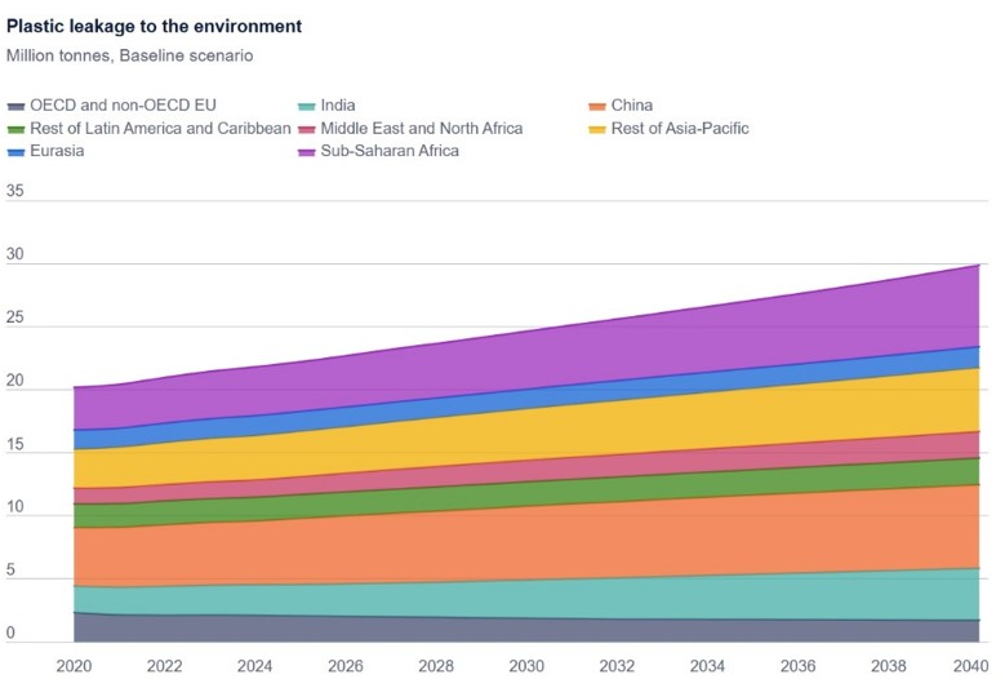
After analysing the aquatic plastic data, many areas were found to have high levels of plastic pollution. Big deposits of polythene waste were in the Northern Oceans, the Mediterranean Sea, and some regions of the Indian Ocean. These areas frequently experience high human population, industrial activities and many other things.
This analysis suggests that microplastics are a considerable portion of plastic pollution observed in aquatic ecosystems. Microfibers, microfragments, microfilms, and micro-pellets have been commonly observed within many different monitoring data sets. These microplastic particles are formed through the breakdown of large plastic objects through physical weathering, UV light exposure, and biological means.
Figure 2 – Pathway of Plastic Contamination in Aquatic Ecosystems and Transfer of Microplastics Through the Marine Food Web. The diagram clearly demonstrates how humanmade plastic waste can travel through the rivers and the coastal areas and disintegrate into smaller pieces known as microplastics. These microplastics then become a part of the aquatic ecosystem.
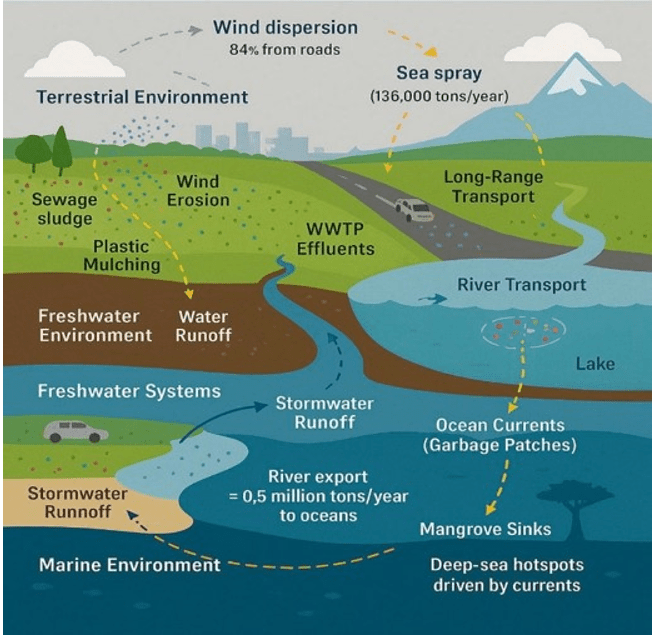
The ecological consequences linked with the presence of plastic waste are varied and complex. The macro-plastic litter causes habitat destruction, entanglement and physical injuries to marine life forms, while microplastics cause further damage through the processes of ingestion and bioaccumulation. There are several studies in the selected datasets that suggest that plastic waste may have adverse impacts on feeding behaviour, growth patterns, reproduction and physiological well-being of organisms.
1. Why the Four Project Datasets Cannot Directly Answer the research question
The four datasets used in the project, the Chassignet ocean transport model, AOMI, the OECD Global Plastics Outlook, and NOAA NCEI, are global, aggregated, and, in UNEP’s case, modelled rather than directly measured. None of them sampled the same river, pond, and urban drain within one region using varied mesh sizes, digestion reagents, or spectral matching protocols.
2. What the Published Method-Comparison Literature Shows
Many strands of research have tested exactly the variables that the research question raises, mesh size, digestion reagent, and spectral identification, by holding the sample constant and varying only the method.
| Method Variable | Compared Conditions | Reported Effect on Concentration / Composition | Source |
| Mesh/pore size | 0.45 µm direct filtration vs 20 µm sieve vs 150 µm Manta trawl (same seawater site) | 1600–4000 items/m³ (0.45 µm) vs 10–50 items/m³ (20 µm) vs 0.13– 0.24 items/m³ (150 µm) — roughly a 10,000-fold spread from mesh choice alone | Shi et al., 2023 |
| Mesh/pore size | 330 µm vs 50 µm submersible pump mesh | 553 ± 19 n/m³ (50 µm) vs 357 ± 119 n/m³ (330 µm) — finer mesh retained more fibres specifically | Comparative seawater sampling study, 2023 |
| Mesh/pore size | 8 µm vs 65 µm field filtration | 1-L samples at fine mesh estimated concentrations ~8.5x higher at site level (5.8x when pooled) | Sci. Total Environ. preliminary analysis |
| Sample volume/ method | Small-volume grab samples vs larger net samples | Grab samples measured up to 10⁴ particles/L higher than net samples — strong log-linear relationship between volume and measured concentration. | NSF-funded meta-analysis |
| Digestion reagent | 10% KOH vs 15% H2O2 (biological/organic-rich matrix, 4 labs) | Mean recovery: KOH 96.67% vs H2O2 88.75%; interlab CV <11% for most samples | Plastic Busters MPAs harmonisation exercise |
| Digestion reagent | H2O2+Fe vs KOH vs HNO3 vs SDS (organic-rich matrix) | Digestion efficiency: H2O2+Fe 65.9%, KOH 58.3% at 50°C/1h — efficiency strongly reagent- and matrix-dependent | Organic matter removal comparison study |
| Digestion reagent | 30% H2O2 vs 10% KOH vs 65% HNO3 (landfill leachate matrix) | H2O2 gave the least polymer mass loss (3–4%) and the best-preserved FTIR spectral peaks vs KOH/HNO3 | Landfill MP digestion protocol study |
| Spectral / detection method | ISO-approved thermoanalytical vs spectroscopic methods, 84 labs, same reference material | Substantial inter-lab spread in reported polymer mass fraction and particle count despite identical samples | VAMAS interlaboratory comparison, 2025 |
| Combined sampling + analysis | 12 labs, identical spiked seawater sample | Particles <1 mm were underestimated by ~20% on average across labs, even with a shared protocol. | European interlaboratory exercise |
2.1 Concentration is driven far more by mesh size than by location
The biggest effect size in the literature comes from mesh selection. Shi et al. (2023) ran three sampling methods, 0.45 µm direct filtration, a 20 µm sieve, and a 150 µm Manta trawl, on the same saltwater and found concentrations ranging from about 0.24 items/m³ at the coarsest mesh up to 1600–4000 items/m³ at the finest, a difference of a bare minimum of four orders of magnitude. A different submersible-pump comparison found 50 µm mesh retained about 1.5x more particles by mass than 330 µm mesh, with the gap focused almost entirely in fibres.
2.2 Digestion reagent can change both what is recovered and what is going to survive
A second, separate source of variation is introduced by digestion choice. This Plastic Busters MPAs harmonisation exercise, which ran across four labs, found a mean recovery of about 96.67% using 10% KOH versus 88.75% using 15% H2O2, on the same samples. A different organic-matter removing study found H2O2 with an iron catalyst, and KOH topped out at about 65.9% and 58.3% efficiency. The choice of reagent also impacts polymer integrity going into the spectral matching: one study found that about 30% H2O2 caused only around 4% mass loss in PE, PP, and PET while protecting the FTIR peak quality better than KOH or HNO3 (Pfeiffer & Fischer, 2020; Larrea et al., 2025).
2.3 Variation is not eliminated by the similar protocols
The protocols were held constant in interlaboratory comparisons. A 2025 VAMASorganised exercise analysing the same reference material with the methods approved by ISO still found a meaningful spread in polymer mass fraction and particle counts. A separate exercise including 12 European labs using similar kinds of spiked seawater samples found that particles below 1 mm were underestimated by 20% on average, even with a shared protocol (Song et al., 2021).
3. Discussion: Answering Q3
After the findings are put together, evidence suggests that a meaningful share of the composition differences that are reported between water body types in the published literature is a methodological artefact and not a real signal. The mesh-size literature shows order-of-magnitude swings from the sampling choice (Lindeque et al., 2020; Jin et al., 2025); the digestion literature shows the recovery differences of about 10 percentage points between common reagent pairs (Pfeiffer & Fischer, 2020); and even fully standardised interlaboratory exercises retain a residual about 20% spread (Covernton et al., 2019).
4. Proposed Small-Scale Protocol for the SRC Team
Instead of treating this as a theoretical point, our team can directly test the gap with a realistic field design mentioned above. The proposal is only for student research and not for any MNC.
- Site selection: choose any of the river segments, one pond, and an urban stormwater drain that is there in the same catchment near campus, ideally within a few km of each other, to control for regional plastic loading.
- Method A, which is a current practice: sample each of the sites using any of the mesh sizes suitable and the digestion reagent is locally available (likely a 333 µm net and H2O2 digestion, matching a common combination identified in the review above).
- Method B is a standardised protocol: it is like the same three sites that use a fixed protocol across all of them, if there is a 100 µm mesh, 10% KOH digestion at 50°C, and FTIR spectra are matched against a shared reference library, similar kinds of equipment and the same type of operator for all three sites.
- We have to calculate the ratio of method A to method B for each site, which gives the concentration and the degree of the polymer composition agreement.
- After the expected outcome, the gap between method A and method B has to be the biggest for the drain and the smallest for the river, which gives us a rough idea about how much of any riverpond drain difference is artefact vs the real signal.
CONCLUSION
Plastic pollution in water bodies is now the first concern for people after doing all the possible things to control the contamination because this pollution is increasing constantly and affecting the overall health of animals and humans, due to which different unknown diseases are spreading across the globe, leading to a reduction in the life expectancy of people from 100 years to a maximum of 75 years. By reviewing the studies across different literature and findings, it is found that the freshwater ecosystems, which are the main source of life for the marine and land life, are being contaminated by these macro and microplastics in huge amounts.
Human activities like industrial waste disposal, agricultural waste, and no efficient manner for waste management are found to be the major contributors to the contamination of the environment with plastics, according to a recent study. By reviewing the studies about the analysis of datasets, it is found that even after the use of advanced methods, there is a need to include standard methods for monitoring, detection and elimination of microplastics.
The focus of the research paper was the gaps between the irregular samplings and protocols. Mesh size and spectra matching techniques can easily influence the measurements of microplastics, making it difficult for anyone to say whether the differences are natural or due to the methods used. So it is very important to implement uniform protocols for freshwater ecosystems that are different from each other to improve the monitoring and policy making.
In general, this study shows that the problem of plastic pollution requires an integrated approach that combines scientific standardisation, technological advancement, effective waste management strategies, and stronger environmental awareness. Future research should address long-term ecological impacts, freshwater-to-human exposure pathways, and region-specific monitoring frameworks to support sustainable management of aquatic ecosystems.
The plastic pollution data collection process directly shapes the environmental policy. The analysis of method-comparison literature demonstrated that differences in the mesh size alone can cause discrepancies in the plastic concentrations by several orders of magnitude (Lindeque et al., 2020; Jin et al., 2025). The study proposes a small-scale protocol, taking the typical locally convenient sampling and testing them directly against the fixed standardised methods. This test performed across the rivers, ponds and urban drains with the same catchment offers the researchers a practical and low-cost approach to disentangle the ambiguity.
The conclusions here are extracted based on the existing literature and secondary datasets rather than on-field sampling or testing methods. Therefore, the conclusions and discussions about the methodological versus environmental variance are evidence-based inferences rather than direct measurements. The global datasets analysed vary significantly in the time the data were collected, the geographical representations and the assumptions they built upon the aggregated datasets, which ultimately limits the precision with which cross-dataset comparisons can be made.
Looking ahead to this research study, three main priorities emerge. First, the development and adoption of internationally accepted monitoring protocols for specific environments such as urban drains, ponds and rivers, as each of these areas requires different sampling and digestion techniques despite their shared reporting standards. Second, investment in automatic technologies for detection, including FTIR, Raman spectroscopy, and AI-based classification systems. Third, extension of future research beyond detection and quantification and moving towards understanding long-term ecological consequences and the pathways to human exposure, specifically in freshwater environments, as they act as a pipeline between terrestrial trash and human health.
For addressing the pollution in the water bodies, a team will be required, which will have policy makers, environmental scientists and other reliable practitioners related to this kind of field. Strengthening the methodological foundation of monitoring efforts is not a peripheral technical concern but a bedrock of environmental assessment.
REFERENCES
Introduction References
Barnes, D. K. A., Galgani, F., Thompson, R. C., & Barlaz, M. (2009). Accumulation and fragmentation of plastic debris in global environments. Philosophical Transactions of the Royal Society B, 364(1526), 1985–1998.
Peters, C. A., & Bratton, S. P. (2016). Urbanisation is a major influence on microplastic ingestion by sunfish in the Brazos River Basin, Central Texas, USA. Environmental Pollution, 210, 380– 387.
Sanchez, W., Bender, C., & Porcher, J.-M. (2014). Wild gudgeons (Gobio gobio) from French rivers are contaminated by microplastics: Preliminary study and first evidence. Environmental Research, 128, 98–100.
Silva-Cavalcanti, J. S., Silva, J. D. B., de França, E. J., de Araújo, M. C. B., & Gusmão, F.
(2017). Microplastics ingestion by a common tropical freshwater fishing resource. Environmental Pollution, 221, 218–226.
Arthur, C., Baker, J., & Bamford, H. (Eds.) (2008). Proceedings of the International Research Workshop on the Occurrence, Effects and Fate of Microplastic Marine Debris. NOAA Technical Memorandum NOS-OR&R-30.
Thompson, R. C., Swan, S. H., Moore, C. J., & vom Saal, F. S. (2009). Our plastic age. Philosophical Transactions of the Royal Society B, 364(1526), 1973–1976.
Cooper, D. A., & Corcoran, P. L. (2010). Effects of mechanical and chemical processes on the degradation of plastic beach debris on the island of Kauai, Hawaii. Marine Pollution Bulletin, 60(5), 650–654.
Derraik, J. G. B. (2002). The pollution of the marine environment by plastic debris: A review. Marine Pollution Bulletin, 44(9), 842–852.
Napper, I. E., Bakir, A., Rowland, S. J., & Thompson, R. C. (2015). Characterisation, quantity and sorptive properties of microplastics extracted from cosmetics. Marine Pollution Bulletin, 99(1–2), 178–185.
Williams, A. T., & Simmons, S. L. (1996). The degradation of plastic litter in rivers: Implications for beaches. Journal of Coastal Conservation, 2(1), 63–72.
Jabeen, K., Su, L., Li, J., Yang, D., Tong, C., Mu, J., & Shi, H. (2017). Microplastics and mesoplastics in fish from coastal and fresh waters of China. Environmental Pollution, 221, 141– 149.
Jemec, A., Horvat, P., Kunej, U., Bele, M., & Kržan, A. (2016). Uptake and effects of microplastic textile fibres on freshwater crustacean Daphnia magna. Environmental Pollution, 219, 201–209.
Andrady, A. L. (2011). Microplastics in the marine environment. Marine Pollution Bulletin, 62(8), 1596–1605.
Cole, M., Lindeque, P., Halsband, C., & Galloway, T. S. (2011). Microplastics as contaminants in the marine environment: A review. Marine Pollution Bulletin, 62(12), 2588–2597. https://doi.org/10.1016/j.marpolbul.2011.09.025
Wagner, M., Scherer, C., Alvarez-Muñoz, D., Brennholt, N., Bourrain, X., Buchinger, S., et al.
(2014). Microplastics in freshwater ecosystems: What we know and what we need to know. Environmental Sciences Europe, 26(1), 12. https://doi.org/10.1186/s12302-014-0012-7
Law, K. L., & Thompson, R. C. (2014). Microplastics in the seas. Science, 345(6193), 144–145.
Allen, D., et al. (2019). Atmospheric transport and deposition of microplastics in a remote mountain catchment. Nature Geoscience, 12, 339–344.
Rochman, C. M., Hoh, E., Kurobe, T., & Teh, S. J. (2013). Ingested plastic transfers hazardous chemicals to fish and induces hepatic stress. Scientific Reports, 3, 3263.
Hidalgo-Ruz, V., Gutow, L., Thompson, R. C., & Thiel, M. (2012). Microplastics in the marine environment: A review of the methods used for identification and quantification. Environmental Science & Technology, 46(6), 3060–3075.
Literature Review References
Lee, J., et al. (2022). Microplastic contamination of the marine environment: A transboundary challenge.
Rochman, C. M. (2020). Microplastics research: From sink to source. Science, 368(6496), 1184– 1185.
Centre for International Environmental Law (CIEL). (2024). Plastic & Climate: The Hidden Costs of a Plastic Planet. CIEL.
Broussard, W. (2025). Recycling myths and governance barriers.
Tamminga, M., Hengstmann, E., Deuke, A.-K., & Fischer, E. K. (2021). Microplastic concentrations, characteristics, and fluxes in water bodies of the Tollense catchment, Germany, about different sampling systems. Environmental Science and Pollution Research, 29(8), 11345– 11358.
Niu, J., Xu, D., Wu, W., & Gao, B. (2024). Tracing microplastic sources in urban water bodies, combining their diversity, fragmentation and stability. npj Clean Water, 7, 37.
Hassan, I., Sethupathi, S., Bashir, M. J. K., Ahmad, A. L., & Parthasarathy, P. (2025). Tracking microplastics at the source: a comparative study of fluorescent and FTIR microscopy at a drinking water intake in the Perak River, Malaysia. Environmental Monitoring and Assessment, 197, 702.
Lechthaler, S., Waldschläger, K., Sandhani, C. G., Sannasiraj, S. A., Sundar, V., Schwarzbauer, J., & Schüttrumpf, H. (2021). Baseline Study on Microplastics in Indian Rivers under Different Anthropogenic Influences. Water, 13(12), 1648.
Wagner, M., et al. (2017). Microplastics in freshwater and terrestrial ecosystems: overlooked contaminants? Environmental Science & Technology, 51(1), 1–3.
Yang, Y., Liu, W., Zhang, Z., Grossart, H. P., & Gadd, G. M. (2021). Microplastic pollution in the Yangtze River Basin: Heterogeneity of abundances and characteristics in different environments. Environmental Pollution, 287, 117580. https://doi.org/10.1016/j.envpol.2021.117580
Duan, J., Bolan, N., Li, Y., Ding, S., Atugoda, T., Vithanage, M., Sarkar, B., & Tsang, D. C. W.
(2021). Weathering of plastics and the formation of microplastics in the environment: A review. Environmental Pollution, 274, 116554. https://doi.org/10.1016/j.envpol.2021.116554
Bhardwaj, L. K., Rath, P., Yadav, P., & Gupta, U. (2024). Microplastic contamination, an emerging threat to the freshwater environment: A systematic review. Environmental Systems Research, 13, Article 8. https://doi.org/10.1186/s40068-024-00338-7
Mandal, M., Roy, A., & Sarkar, A. (2025). Comprehensive study of the microplastic footprint in the urban pond and river of Eastern India. Scientific Reports, 15, 8645. https://doi.org/10.1038/ s41598-025-87452-3
Khan, M. A., et al. (2024). Microplastics in freshwater systems: A review of classification, sources, and environmental impacts. Environmental Challenges, 16, 100971. https://doi.org/ 10.1016/j.envc.2024.100971
Ncube, S., Kanda, E. K., & Adelodun, B. (2024). Microplastic contamination: An emerging threat to the freshwater environment. Sustainable Environment Research, 34(1), 38. https:// doi.org/10.1186/s42834-024-00338-7
Zhang, Y., Li, J., Wang, F., & Chen, X. (2024). Microplastics in freshwater systems: Sources, fate, transport and removal strategies. Groundwater for Sustainable Development, 25, 101186. https://doi.org/10.1016/j.gsd.2024.101186
Liu, H., Wang, Y., Zhang, J., & Zhao, L. (2024). Dynamic behaviour and transport processes of microplastics in freshwater ecosystems: A review. Resources, Conservation and Recycling, 205, 107634. https://doi.org/10.1016/j.resconrec.2024.107634
Winiarska, E., et al. (2024). Microplastics in aquatic environments — definitions, sources and size classification.
Elizalde-Velazquez, A., & Ganez-Olivian, J. L., et al. (2021). Microplastics as pervasive pollutants in aquatic ecosystems.
Picó, Y., & Barceló, D. (2019). Analysis and prevention of microplastics pollution in water:
Current perspectives and future directions. ACS Omega, 4(4), 6709–6719. https://doi.org/10.1021/acsomega.9b00222
Kye, H., Kim, J., Ju, S., Lee, J., Lim, C., & Yoon, Y. (2023). Microplastics in water systems: A review of their impacts on the environment and their potential hazards. Heliyon, 9(3), Article e14359. https://doi.org/10.1016/j.heliyon.2023.e14359
Hanson, N., Demirkaya, A., Erdoğmuş, D., Stubbins, A., Padır, T., & Imbiriba, T. (2023). A vision for cleaner rivers: Harnessing snapshot hyperspectral imaging to detect macro-plastic litter. arXiv. https://arxiv.org/abs/2307.12145
Singh, R., Sharma, P., & Gupta, V. (2025). Microplastics in freshwater and marine ecosystems:
Occurrence, ecological impacts and mitigation approaches. Ecotoxicology and Environmental Safety, 290, 117604. https://doi.org/10.1016/j.ecoenv.2025.117604
Neelavannan, K., and I. S. Sen. (2023). Microplastics in freshwater ecosystems of India: Current trends and future perspectives. ACS Omega, 8(36), 32895–32913. https://doi.org/10.1021/ acsomega.3c01214
Marye, M., et al. (2025). Remote sensing for monitoring macroplastics in rivers: A review. WIREs Water, 12(3), e1702. https://doi.org/10.1002/wat2.70020
Martinez-Hernandez, U., G. West, and T. Assaf. (2024). Low-cost recognition of plastic waste using deep learning and a multi-spectral near-infrared sensor. Sensors, 24(9), 2821. https:// doi.org/10.3390/s24092821
Results and Discussion References
Chassignet, E. P., Xu, X., & Zavala-Romero, O. (2021). Tracking marine litter with a global ocean model: Where does it go? Where does it come from? Frontiers in Marine Science, 8, Article 667591. https://doi.org/10.3389/fmars.2021.667591
Lindeque, P. K., Cole, M., Coppock, R. L., Lewis, C. N., Miller, R. Z., Watts, A. J. R., WilsonMcNeal, A., Wright, S. L., & Galloway, T. S. (2020). Are we underestimating microplastic abundance in the marine environment? A comparison of microplastic capture with nets of different mesh sizes. Environmental Pollution, 265, Article 114721. https://doi.org/10.1016/ j.envpol.2020.114721
Covernton, G. A., Pearce, C. M., Gurney-Smith, H. J., Chastain, S. G., Ross, P. S., Dower, J. F., & Dudas, S. E. (2019). Size and shape matter: A preliminary analysis of microplastic sampling technique in seawater studies with implications for ecological risk assessment. Science of the Total Environment, 667, 124–132. https://doi.org/10.1016/j.scitotenv.2019.02.346
Jin, X., Li, Z., Peñuelas, J., Sardans, J., Wu, Q., Peng, Y., Heděnec, P., Li, Z., Yuan, C., Yuan, J., Chen, Z., Zhao, Z., Wu, F., & Yue, K. (2025). Quantitative assessment of the distribution patterns of microplastics in global inland waters. Communications Earth & Environment, 6, Article 331. https://doi.org/10.1038/s43247-025-02320-2
Pfeiffer, F., & Fischer, E. K. (2020). Various digestion protocols within microplastic sample processing—Evaluating the resistance of different synthetic polymers and the efficiency of biogenic organic matter destruction. Frontiers in Environmental Science, 8, Article 572424. https://doi.org/10.3389/fenvs.2020.572424
Larrea, G., Elustondo, D., & Durán, A. (2025). Extraction methods of microplastics in environmental matrices: A comparative review. Molecules, 30(15), Article 3178. https://doi.org/10.3390/molecules30153178
Song, Y. K., Hong, S. H., Jang, M., Han, G. M., Rani, M., Lee, J., & Shim, W. J. (2015). A comparison of microscopic and spectroscopic identification methods for analysis of microplastics in environmental samples. Marine Pollution Bulletin, 93(1–2), 202–209. https:// doi.org/10.1016/j.marpolbul.2015.01.015
Song, Y. K., Hong, S. H., Eo, S., & Shim, W. J. (2021). A comparison of spectroscopic analysis methods for microplastics: Manual, semi-automated, and automated Fourier transform infrared and Raman techniques. Marine Pollution Bulletin, 173, Article 113101. https://doi.org/10.1016/ j.marpolbul.2021.113101
Koutnik, V. S., Leonard, J., Alkidim, S., DePrima, F. J., Ravi, S., Hoek, E. M. V., & Mohanty, S.
K. (2021). Distribution of microplastics in soil and freshwater environments: Global analysis and framework for transport modelling. Environmental Pollution, 274, Article 116552. https:// doi.org/10.1016/j.envpol.2021.116552
Wang, J., Bucci, K., Helm, P. A., Hoellein, T., Hoffman, M. J., Rooney, R., & Rochman, C. M. (2022). Runoff and discharge pathways of microplastics into freshwater ecosystems: A systematic review and meta-analysis. FACETS, 7, 1473–1492. https://doi.org/10.1139/ facets-2022-0140
Shi, Y., et al. (2023). Comparison of microplastic sampling methods in coastal seawater: mesh size, direct filtration, and manta trawl.
Organisation for Economic Co-operation and Development. (2022). Global plastics outlook:
Economic drivers, environmental impacts and policy options. OECD Publishing. https://doi.org/10.1787/de747aef-en
National Centres for Environmental Information. (n.d.). Marine microplastics. National Oceanic and Atmospheric Administration. Retrieved June 20, 2026. https://www.ncei.noaa.gov/products/ microplastics
Ministry of the Environment, Government of Japan. (2024). Atlas of Ocean Microplastics (AOMI) [Data set]. https://aomi.env.go.jp/
Geyer, R., Jambeck, J. R., & Law, K. L. (2017). Production, use, and fate of all plastics ever made. Science Advances, 3(7), e1700782. https://doi.org/10.1126/sciadv.1700782
Jambeck, J. R., Geyer, R., Wilcox, C., Siegler, T. R., Perryman, M., Andrady, A., Narayan, R., & Law, K. L. (2015). Plastic waste is input from land into the ocean. Science, 347(6223), 768–771. https://doi.org/10.1126/science.1260352
Lebreton, L., & Andrady, A. (2019). Future scenarios of global plastic waste generation and disposal. Palgrave Communications, 5(1), 6. https://doi.org/10.1057/s41599-018-0212-7