
AUTHORS:
DIVYA VASHISHT, ANUSHKA DESHMUKH, BARNIK ROY, HARENDRA SINGH YADAV, SAROJ KUMAR DAS
ABSTRACT
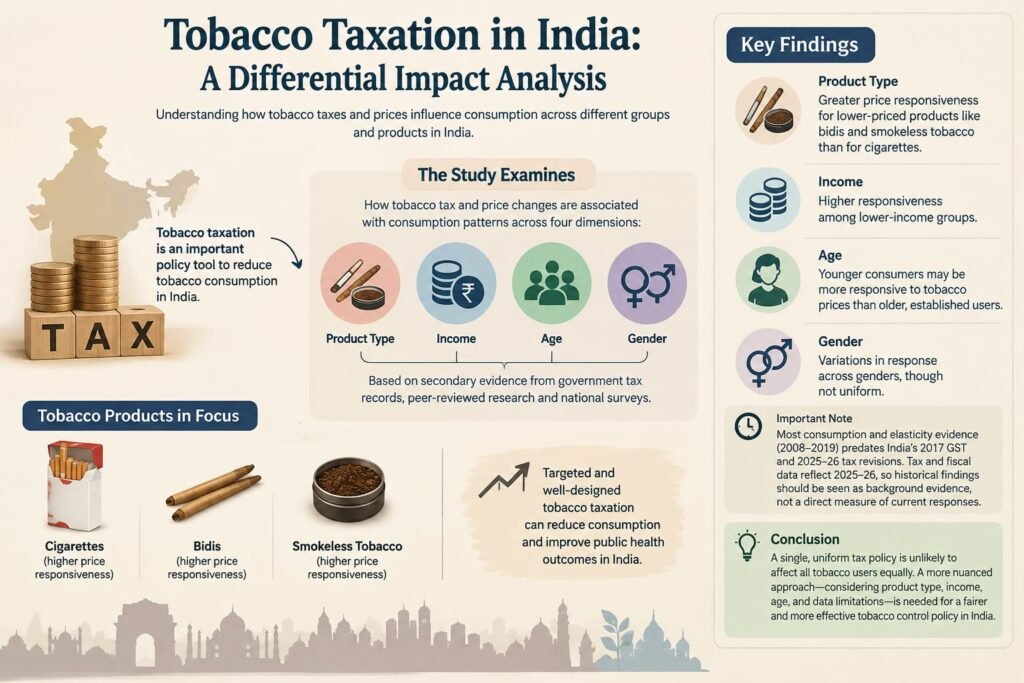
Tobacco taxation is an important policy instrument for reducing tobacco consumption in India, but available evidence suggests that responses to tobacco prices and taxes may vary across different groups of consumers and tobacco products. This study examines how changes in tobacco taxes and prices are associated with consumption patterns across four dimensions: product type, income, age, and gender. The study draws on secondary evidence from government tax records, peer-reviewed research and national surveys.
Using a qualitative, descriptive, non-experimental approach, the study synthesizes existing evidence on tobacco price responsiveness across these dimensions. The available literature indicates that price responsiveness varies by product type, with some studies reporting greater responsiveness for lower- priced products such as bidis and smokeless tobacco than for cigarettes. Price responsiveness also appears to vary across income groups, with several studies reporting greater responsiveness among lower-income groups. Evidence further suggests that younger consumers may be more responsive to tobacco prices than older established users. With respect to gender, available data show differences in tobacco-use prevalence between men and women; however, the existing evidence does not provide sufficient basis for estimating gender-specific price elasticities or for attributing these differences directly to taxation.
It is important to note that most of the consumption and elasticity evidence synthesised here comes from surveys and studies conducted between 2008 and 2019 — largely pre-dating both India’s 2017 GST regime and the further tax revisions of 2025-26 — while the tax and fiscal data reflect the current 2025-26 structure. The two bodies of evidence cannot be directly matched in time, so findings on historical price responsiveness should be read as background evidence on how Indian tobacco consumers have behaved in the past, not as a direct measure of how they are responding to the current tax system. Overall, the evidence indicates that a single, uniform tax policy is unlikely to affect all tobacco users equally, and a more nuanced approach — one that accounts for product type, income, age, and the limits of the available data — is needed to make tobacco taxation a fairer and more effective public health policy in India.
INTRODUCTION
1. Background
Tobacco consumption remains one of India’s most pressing public health challenges, causing millions of preventable deaths and imposing a severe economic burden on the healthcare system. The gargantuan size of consumption, a complex market of cigarettes, bidis, and smokeless tobacco products, has long been the reason for policy makers to have always depended on tobacco taxation as the most reliable and effective policy instrument. Taxation is designed to reduce the affordability of tobacco products, to discourage initiation and promote cessation. However, the special nature of the Indian market, its great socioeconomic diversity and a preference for particular products across various regions make it difficult to make broad claims about the effectiveness of such fiscal policies. It is, therefore, essential to grasp the effect of tax policies on actual behavior for any public health strategy to be effective.
2. Research Problem and Question
India’s tobacco tax policy often assumes that price increases will unvaryingly reduce consumption across all users. However, this overlooks the reality that consumers differ widely in product preferences, income, age, and gender. While low-income households, younger consumers, and bidi users often demonstrate high price sensitivity, wealthier groups and cigarette users may absorb tax hikes with minimal behavioural change. Moreover, these demographic factors have often been explored individually in the literature, and much of that evidence pre-dates the 2020 tax system, meaning it does not necessarily reflect the impact of the current tax structure. With this in mind, this study seeks to examine the impact of tobacco tax and price changes on the consumption behaviour of different products, age groups, income groups, and gender groups in India, and who appears to be most or least affected by taxation. To address this question, this review synthesises existing research and survey data around four key themes. It first examines how price elasticity varies across different tobacco products. Next, it explores income-based differences in consumption behaviour and the resulting tax burden. The review then analyses how tax responsiveness fluctuates across distinct age groups, before finally assessing how gender and socio cultural norms shape consumption in response to price changes.
LITERATURE REVIEW
Overview
Tobacco use is one of India’s biggest public health challenges, causing millions of preventable deaths and heavy economic losses each year. While raising taxes on tobacco is considered the most effective way to lower consumption, tax hikes do not affect everyone in the same way. The purpose of this literature review is to examine how tobacco taxation influences smoking and chewing habits across different groups in India. Specifically, this review organizes existing research around four key themes: variations in price elasticity across different tobacco products, income-based differences in consumption behaviour, and how tax responsiveness differs across both age groups and gender lines.
Theme 1: Variation in Price Elasticity Across Tobacco Products
Existing research suggests that tobacco products in India do not respond equally to price increases, indicating that the effectiveness of taxation depends on the type of product being consumed. Cigarettes, bidis and smokeless tobacco have different degrees of price elasticity and hence different responses to tobacco prices as affected by taxes. Research shows that cigarettes are less price- elastic than bidis and smokeless tobacco, meaning that changes in price have a smaller impact on cigarette consumption than on alternative tobacco products.
Key Details on Tobacco Elasticity:
- Cigarettes: Exhibit lower price elasticity (often estimated around -0.2 to -0.4), meaning demand changes very little when prices go up.
- Bidis: Show higher price elasticity (often exceeding -0.8 to -1.0), meaning consumers who are often more price sensitive or lower income- reduce consumption more significantly when price rises.
- Smokeless Tobacco: Generally displays higher elasticity than cigarettes, making users more responsive to price and tax adjustments.
Therefore, the tax effect is not the same for all tobacco products. Rather, literature indicates that price differentials between the tobacco products can be reduced by proper taxation measures and the implementation of higher excise taxes, so that the consumers are less likely to switch to the cheaper alternative of tobacco upon increases in the prices of tobacco products. Since the price elasticity of each demographic group differs, it is important to explore why various factors like income, age, and gender may influence elasticity to tobacco taxation.
Theme 2: Tobacco Consumption Behaviour in India by Income Group
Income is the first demographic prism through which it is possible to understand tobacco tax responsiveness in India, and this is tightly linked with the product-level differences discussed previously as income level is a key determinant of product use. A length-based tax on cigarettes combined with a much lower tax on bidis is creating a built-in substitution loophole, as India’s poorer and middle-income users tend to switch to bidis when cigarette prices increase, whereas those in more prosperous households do not change their behaviour as income rises, may switch to more expensive cigarette brands, seeing cigarettes as more of a luxury than bidis.
Selvaraj, Srivastava and Karan (2015) also observed this trend on the basis of expenditure-tertile data, which showed that own-price elasticity for bidis and cigarettes was the highest for the poorest households and progressively decreased with the increase in income, with the wealthiest households showing little responsiveness to price changes at all.
This imparts a sense of fairness issue: If the poor are more price-sensitive, are they also paying a larger share of tax? Tobacco taxation is found to be structurally regressive, that is, it absorbs a larger proportion of the income of the poor compared to the rich (Kaur et al., 2020).
However, the extended cost-benefit approach taken by Fuchs, Gonzalez Icaza and Paz (2019) across a number of low and middle income countries suggests tax increases can benefit poorer households overall when medical savings and gains of better health due to the tax increase are included, making the simple regressivity story more complicated. Still, a note of caution must be added by Rout and Parhi (2020) who said that the positive impact of the increase in income was also able to compensate for part of the impact of the tax hikes since the implementation of the GST in India, and thus affordability did not fall as planned.
Theme 3: Age and Tobacco Tax Responsiveness
Beyond income, age is a second demographic dimension along which tobacco tax responsiveness varies considerably in India — a variation worth understanding given that nearly half the country’s population is under 25. John (2008) established a national baseline elasticity of -0.4 to -0.9 without breaking this down by age, and Jha et al. (2011) suggested that, because consumption patterns differ, a uniform tax policy might not affect all consumer groups equally. These studies generated the hypothesis that age-specific responses might diverge from the national average — a hypothesis later supported directly by subsequent research.
The Global Youth Tobacco Survey analysis conducted by Joseph found participation elasticity for bidis among 13-15 year-olds as high as -2.70 — several times the adult baseline — with elasticity even higher among girls than boys. Dauchy and John’s initiation and cessation study corroborates this, identifying early adulthood as the most price sensitive window, with an average initiation age of 18-19 years compared with older adults. GATS-2 data show that tobacco-use prevalence increases with age, from 12.4% among those aged 15-24 to 41.4% among those aged 65 and above. This should not be interpreted as evidence that price elasticity increases or
Decreases with age, because these prevalence figures are not elasticity estimates. Taken together, these studies point to a consistent trend of younger people being more price-sensitive. Despite youth being the most to a great extent studied group, there remains a prominent gap in data and research on middle-aged and older populations using recent (post-2020) evidence — a gap this study seeks to address.
Theme 4: Gender Differences in Tobacco Use and Implications for Tobacco Taxation
While age is an important determinant of tobacco tax responsiveness, gender is another key demographic factor influencing tobacco consumption and responses to price changes. Men and women differ in tobacco use prevalence, product preferences, and the socioeconomic and cultural factors affecting their consumption behaviour, so examining gender differences is important for understanding the effectiveness of tobacco taxation in India. According to the Global Adult Tobacco Survey (GATS-2, 2016-17), 42.4% of men and 14.2% of women aged 15 years and above were current tobacco users (MoHFW, 2017). Men have higher rates of both smoking and smokeless tobacco use, whereas women predominantly consume smokeless tobacco products, particularly in rural and north eastern regions. NFHS-5 (2019-21) further reports that tobacco use among women is more common among older, less-educated, and economically disadvantaged groups (IIPS & ICF, 2021). It is worth being explicit here: none of the literature reviewed for this study estimates price elasticity separately for men and women.
The findings above describe gender differences in tobacco-use prevalence and product choice, but they do not provide evidence on gender-specific price responsiveness. Since none of the literature reviewed for this study estimates price elasticity separately for men and women respond differently to tobacco taxation, but this relationship requires direct gender-specific elasticity estimates. Future research using gender/disaggregated data could therefore examine whether tobacco and tax changes have different effects on tobacco consumption among men and women in India.
Literature Summary
In all four themes, the literature has suggested that tobacco taxes are one of the most effective measures to reduce tobacco use in India. The price elasticity of each product varies across all income levels, age groups and both sexes, as cigarettes are less price- elastic than bidis and smokeless tobacco, while tobacco consumption among men is concentrated in relatively price-elastic smoked products, female consumption is predominantly smokeless and governed by deep-seated socio-cultural dynamics, though empirical studies have yet to isolate gender-specific price elasticities directly. But there are differing interpretations of the impact of the tax on the resulting tax burden: some view the growth of the tobacco tax as regressive, as it takes a proportionate and greater share of the incomes of poor households, while others argue that once health gains and productivity benefits are accounted for, tax increases can leave low-income groups better off overall, complicating any straightforward reading of fairness. Overall, the evidence indicates that the same level of uniform policy will not be equally effective on the population of tobacco consumers in India and the same price adjustment may have contradictory behavioural impacts across different populations and types of products.
RESEARCH GAP
The study has done limited research by comparing different tobacco products like (Cigarettes, bidis and smokeless tobacco) respond to tax increases over different factors. Middle-aged and older adults have received less attention compared with youth. Insufficient focus on smokeless tobacco because smokeless tobacco is consumed widely in India. Most income-based elasticity estimates also rely on data from around 2011-12 to 2019, leaving open how these patterns hold under India’s current tax structure.
This study integrates the most recent publicly available national survey evidence with current tax and fiscal information, while explicitly recognizing that the demographic and elasticity evidence largely predates the current tax regime.
RESEARCH METHODOLOGY
Research Design
The design focuses on documenting and interpreting existing evidence on tobacco taxation and consumption in India without manipulating variables directly. By synthesising academic literature, national survey data, and government policy documents, the study builds a structured, thematic account of how tax changes relate to consumption across different population groups, keeping the investigation grounded within its intended scope.
Nature of Research
The research is qualitative, descriptive, and non-experimental, drawn entirely from secondary sources. Rather than running statistical models or primary experiments, the study synthesises existing survey findings, elasticity estimates, and policy data to describe patterns of tobacco tax responsiveness across demographic groups.
- Qualitative and descriptive: emphasises thematic synthesis and interpretation of existing findings over new statistical testing.
- Secondary-data based: uses pre-existing national surveys, peer-reviewed studies, and government publications, suited to the study’s time and resource constraints.
- Non-experimental: no intervention, primary respondents, or control groups are involved; the focus is on comparative analysis of published evidence.
Sample & its Technique
As the study relies on secondary data rather than primary respondents, the “sample” consists of purposefully selected data sources rather than individuals. Sources were selected using purposive sampling, chosen specifically for their relevance to tobacco taxation and consumption in India and their ability to disaggregate findings by age, gender, income, or product type.
- National surveys: GATS-1 (2009-10), GATS-2 (2016-17), NFHS-5 (2019-21), GYTS, and NSSO Household Consumption Expenditure Surveys (HCES).
- Peer-reviewed studies and government/institutional reports covering price elasticity, taxation structure, and affordability.
- Official tax notifications and revenue records (CBIC, GST Council, and Ministry of Finance) for the income and fiscal-policy dimension.
Sources were included only if they were nationally representative, India-specific, and provided data broken down by at least one of the study’s four demographic/product themes.
Data Collection Tool
Data was collected entirely through desk-based secondary research, drawing on publicly available national surveys, peer-reviewed journal articles, and official government/tax records. No questionnaires, interviews, or field instruments were administered directly by this study.
|
Category |
Key Sources |
Used For |
|
National surveys |
GATS-1, GATS-2, NFHS-5, GYTS, NSSO/HCES |
Prevalence, expenditure, and initiation data by age, gender, income |
|
Peer-reviewed studies |
John (2008); Jha et al. (2011); Selvaraj et al. (2015); Joseph; Dauchy & John (2020); Grover et al. (2020); Ghosh (2022); Rana et al. (2023), PGIMER-HRIDAY (2025) |
Price elasticity estimates, affordability trends, policy analysis |
|
Government/tax records |
CBIC GST notifications, GST Council outcomes, Lok Sabha replies, Ministry of Finance Data |
Tax rate changes, revenue share, fiscal burden |
|
International body reports |
WHO Tobacco Epidemic Report |
Global tax-burden benchmarks (e.g., 75% WHO floor) |
|
Post-GST price trends |
PGIMER-HRIDAY (2025), Tob.Induc.Dis |
GST-era price growth and affordability |
Variables Used
The study examines tobacco tax/price as the key independent variable and tobacco consumption (prevalence, expenditure, or initiation) as the dependent variable, with age, gender, income, and product type treated as demographic/categorical variables that condition this relationship. Findings are organised below by theme.
1. Product Type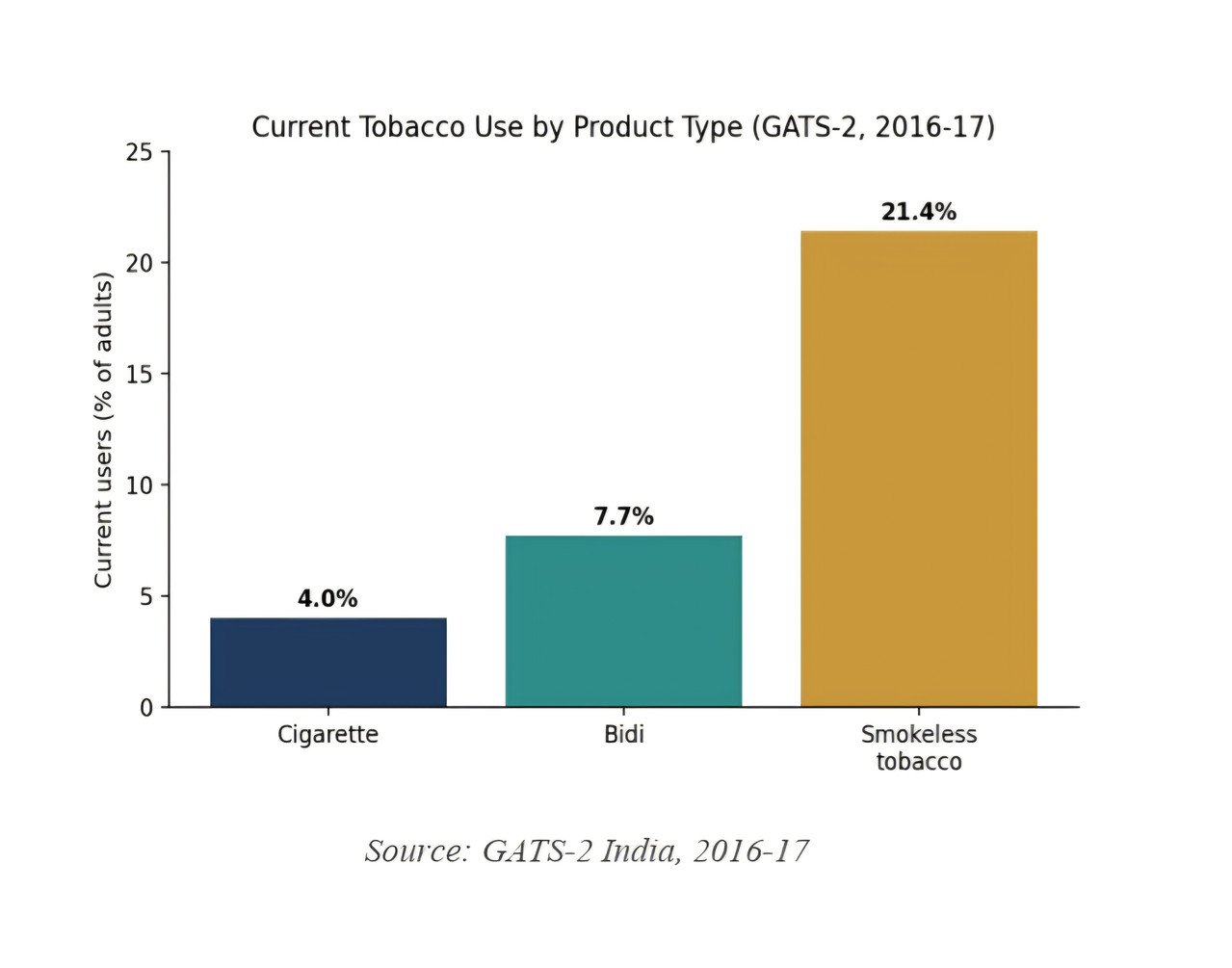
.jpg)

Indicator |
Value |
Source |
| Current cigarette smokers |
4.0% |
GATS-2, 2016-17 |
|
Current bidi smokers |
7.7% |
GATS-2, 2016-17 |
|
Current smokeless tobacco users |
21.4% |
GATS-2, 2016-17 |
|
Avg. monthly expenditure – cigarette |
Rs 1,192.5 |
GATS-2, 2016-17 |
|
Avg. monthly expenditure – bidi |
Rs 284.1 |
GATS-2, 2016-17 |
|
Cigarette own-price elasticity |
(-0.34 to -0.41) |
John, 2008 |
|
Bidi own-price elasticity |
(-0.86 to -0.92) |
John, 2008 |
|
Leaf tobacco own-price elasticity |
(-0.87). |
John, 2008 |
|
Tobacco affordability, 1990-2011 |
Increased over time |
Jha et al., 2011 |
Tobacco products in India differ sharply in prevalence, cost, and price sensitivity: smokeless tobacco is most widely used (21.4%), while cigarettes, though costlier (Rs 1,192.5/month), are less price elastic (-0.38) than bidis (-0.89). Rising affordability between 1990 and 2011 further suggests that tax increases alone may not curb consumption if real prices fail to outpace income growth. This indicates a uniform tax policy is unlikely to affect all tobacco products equally.
2. Gender
.jpg)
Indicator |
2009-10 |
2016-17 |
Change |
| Male Tobacco use |
47.9% |
42.4% |
-5.5 pp |
| Female Tobacco use |
20.3% |
14.2% |
-6.1 pp |
| Overall tobacco use |
38.4% |
28.6% |
-9.8 pp |
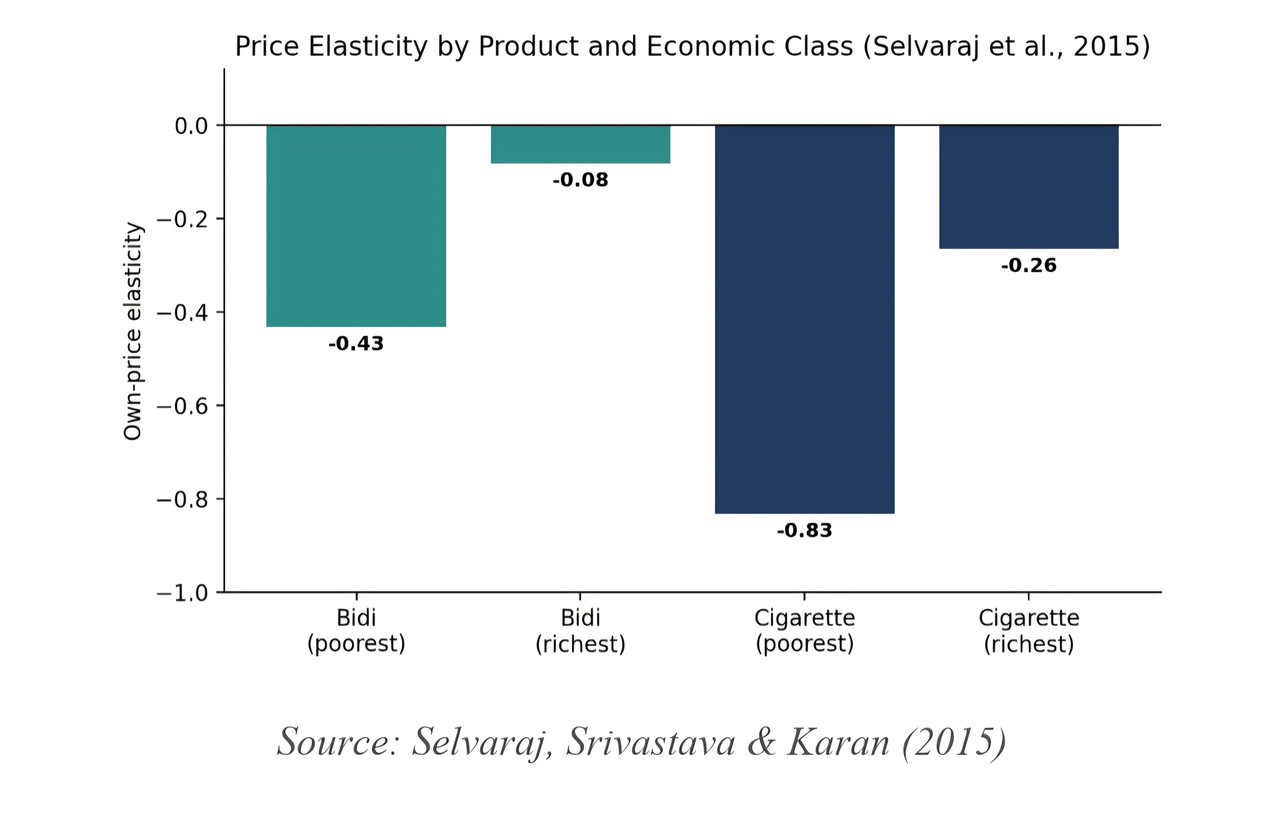
Tobacco use fell for both sexes between GATS rounds, but remains far higher among men (42.4%) than women (14.2%). Price elasticity also varies by economic class within gender-relevant products: poorer users of both bidis (-0.43) and cigarettes (-0.83) are markedly more price-sensitive than richer users (-0.08 and -0.26, respectively), with cigarettes more elastic than bidis at every income level
3. Age
.jpg)
.jpg)
Indicator |
Value |
Source |
|
Prevalence, 15-24 yrs |
12.4% |
GATS-2, 2016-17 |
|
Prevalence, 25-44 yrs |
30.1% |
GATS-2, 2016-17 |
|
Prevalence, 45-64 yrs |
39.9% |
GATS-2, 2016-17 |
|
Prevalence, 65+ yrs |
41.4% |
GATS-2, 2016-17 |
|
Youth prevalence, GATS-1 (2009-10) |
22.1% |
GATS-1, 2009-10 |
|
Own-price elasticity, general population (bidis) |
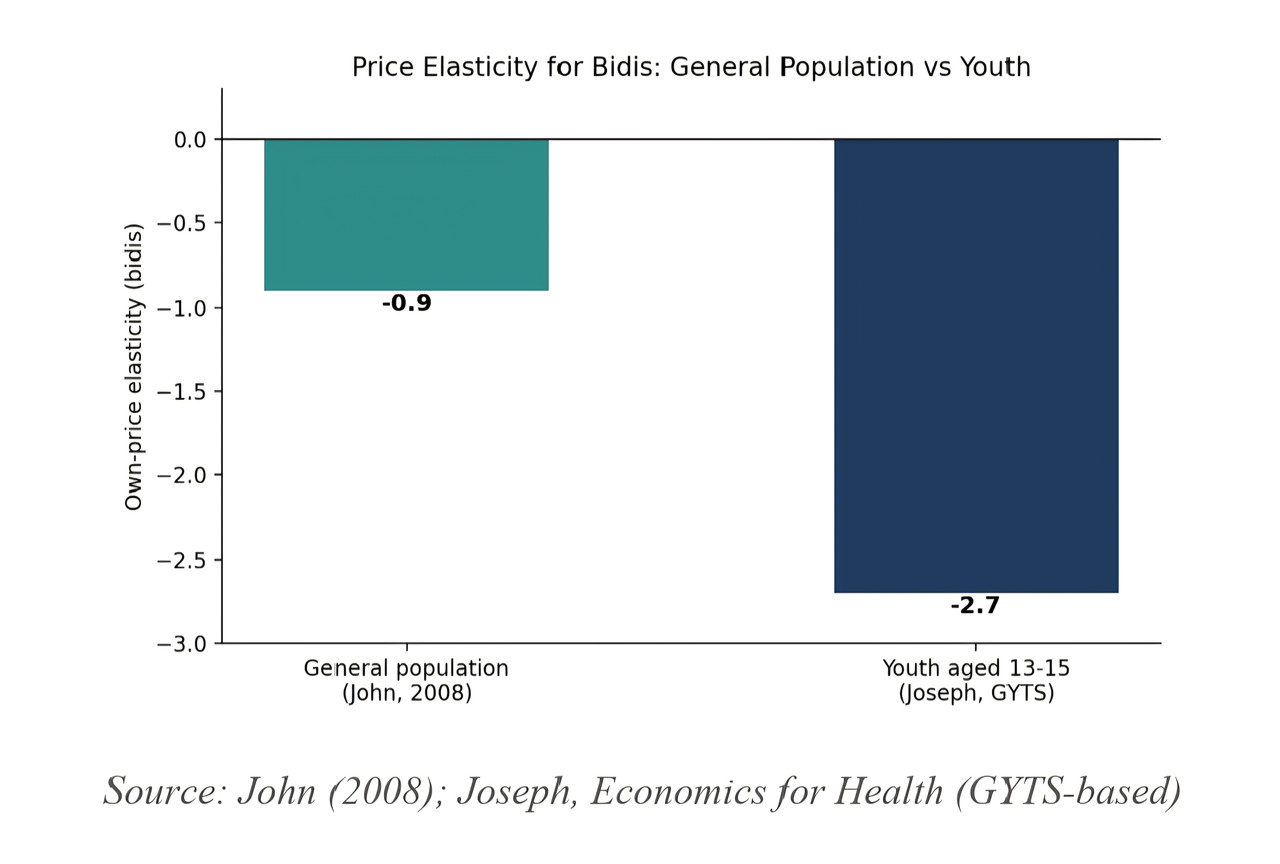
-0.9 |
John, 2008 |
|
Own-price elasticity, youth 13-15 (bidis) |
-2.70 |
Joseph, GYTS-based |
|
Mean initiation age, GATS-1 / GATS-2 |
17.8 / 19.3 yrs |
GATS-1 & GATS-2 |
Tobacco use prevalence rises steadily with age (12.4% at 15-24 to 41.4% at 65+), yet price responsiveness moves the opposite way: youth aged 13-15 show a bidi elasticity of -2.70, far sharper than the general population’s -0.4 to -0.9. Youth prevalence nearly halved between GATS rounds alongside a later initiation age, indicating taxation most effectively deters or delays uptake among the young, while older, established users remain comparatively unresponsive.
4. Income
.jpg)
.jpg)
Indicator |
Finding |
Source |
|
Tax on cigarettes (pre/post Feb 2026) |
~53% → ~70% of retail price |
CBIC |
|
Tobacco spend share, rural households |
5-9% of monthly expenditure |
NSSO HCES |
|
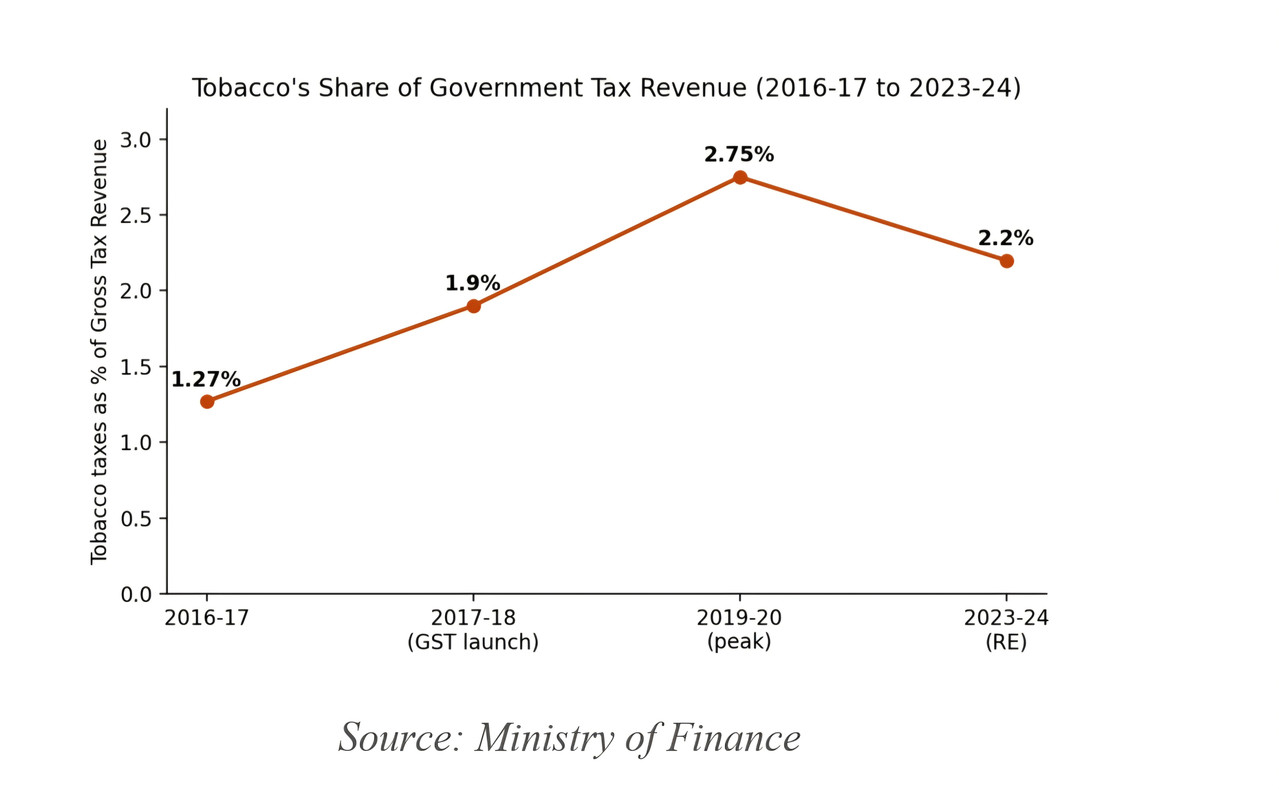
Tobacco’s share of Gross Tax Revenue |
1.27% (2016-17) → 2.75% (2019-20) → 2.20% (2023-24) |
Ministry of Finance |
|
Tax burden vs WHO benchmark |
~70% vs WHO floor of 75% |
WHO |
Following the February 2026 shift to a 40% GST slab with added excise duty, cigarette tax incidence rose from about 53% to 70% of retail price, still short of the WHO’s recommended 75% floor. Rural households already spend 5-9% of their budgets on tobacco, often exceeding spending on pulses, indicating a disproportionate burden on lower-income consumers. Government revenue from tobacco has stayed a stable 1.3-2.8% of gross tax revenue, showing taxation functions simultaneously as a steady fiscal anchor and an uneven consumption hindrance across income groups. This is consistent with recent evidence that tobacco price growth slowed markedly after GST implementation – decelerating from pre-GST monthly growth rates of roughly 0.6–0.8% across products to about 0.2–0.4% post-GST – resulting in a substantial rise in tobacco affordability between 2020-21 and 2022-23.
Ethical Considerations
As this study relies solely on secondary, ethical considerations centre on the responsible use and representation of existing data rather than participant protection.
- Accurate attribution: all statistics and findings are clearly sourced and cited to their original survey, study, or government publication to avoid misrepresentation or plagiarism.
- Data integrity: figures are reported as published, with no alteration, selective omission, or extrapolation beyond what the original sources support.
- Objectivity and non-maleficence: findings are presented without ideological bias, and no harmful or stigmatising claims are made about any age, gender, income, or regional group.
- Use of public data: all sources used (government surveys, tax notifications, peer-reviewed journals) are publicly accessible and used strictly within their intended scope for academic research.
Limitations
- Cross-survey inconsistency: GATS-1, GATS-2, NFHS-5, and GYTS use slightly different age bands and methodologies, limiting precise comparability across rounds and themes.
- Data recency gap: Much demographic (age/gender) data is from earlier years, while tax and fiscal data reflect 2025-26 changes, meaning the two cannot be directly matched in time.
- No primary testing: The study relies entirely on secondary data, hence it cannot independently verify findings or run its own statistical/causal analysis; conclusions are descriptive and interpretive rather than causal.
- Small-sample secondary sources: Some gender-theme findings draw on a source (Ghosh, 2022) based on only nine expert interviews, which may limit generalisability.
- No gender-specific Elasticity Data- none of the reviewed sources estimate price elasticity separately by gender; gender-related conclusions in this study are inferred from income-, age-, product level patterns and should be treated as tentative.
- Emerging data not yet available: GATS-3, India’s third national tobacco use survey, completed fieldwork in 2025 across all states and union territories; however, results were not publicly released at the time of writing, so this study relies on GATS-2 (2016-17) as the most recent available prevalence data.
DATA ANALYSIS
1: Product type
The data show that cigarettes, bidis and smokeless tobacco differ in both consumption and price responsiveness. Smokeless Tobacco is used most (21.4%) followed by bidi (7.7%) and cigarette (4.0%). There is also a significant gap in expenditure; people are spending ₹1,192.5 per month on cigarettes while spending ₹284.1 per month on bidis. The elasticity estimates show a similar difference, as cigarettes are less price elastic (-0.34 to -0.41) than bidis (-0.86 to -0.92) or leaf tobacco (-0.87).
This could be related to the difference in prices between these products. Unfortunately, bidis are far more affordable than cigarettes and a slight rise in the price of bidis can have a significant impact on the number of bidis consumed. John (2008) also determined the bidis to be more price elastic than cigarette consumption.
Taxation should take the differences in price and price elasticity between products into account. Reducing the price gap between cigarettes and cheaper products such as bidis could also reduce the incentive for consumers to switch to cheaper tobacco products after a tax increase.
2: Gender
The available evidence indicates substantial differences in tobacco-use prevalence and product-use patterns between men and women. The higher prevalence of tobacco use among men and the differences in product consumption may reflect several factors, including differences in product preferences, income, accessibility, social norms and other behavioural or structural characteristics. These factors should consider when interpreting the gender dimension of tobacco taxation.
Accordingly, this study does not estimate whether tobacco taxation has a stronger behavioural effect on men than on women. Gender – specific price-elasticity estimates would be required to establish such a difference.
3: Age
Youth aged 13-15 show a measured bidi price elasticity of -2.70 (Joseph, GYTS-based) — several times higher than the general population’s estimated range of -0.4 to -0.9 (John, 2008). Separately, GATS data show that youth (15-24) tobacco use prevalence nearly halved between 2009-10 and 2016-17, alongside a rise in the average age of first use. This decline coincided with a period of rising tobacco taxes, but also with expanded tobacco-control regulation and awareness campaigns over the same period. It cannot isolate the price/tax contribution to this trend from these other factors; the falling youth-initiation trend is therefore consistent with, rather than direct proof of, taxation acting as a deterrent to initiation. Taken together, the high measured youth elasticity for bidis and the falling youth-prevalence trend point in the same general direction — that price is likely to matter most at the point of uptake — but only the elasticity figure is a directly estimated price effect; the initiation trend is correlational. On this basis, tax policy should prioritise consistent, meaningful price increases across all products, including bidis and smokeless tobacco, to close the substitution routes younger users might otherwise use to avoid the price signal.
4: Income
The income estimates lead to a paradox: Although the incidence of the GST on cigarettes has increased from ~53% to ~70% of retail price since the February 2026 increase in the GST rate, rural households’ tobacco spending remains 5-9% of their monthly expenditure, and in some cases, higher than spending on staple pulses. Why haven’t the households who are the least able to afford it been similarly dissuaded from consumption due to the same amount of taxes?
The elasticity data deepens rather than resolves the puzzle. Poorer users are far more price-responsive than richer ones, bidi elasticity of -0.43 versus -0.08, cigarette elasticity of -0.83 versus -0.26 (Selvaraj et al., 2015). Low-income consumers should be the group most likely to cut back when prices rise, so persistent high spending isn’t indifference to price, it points elsewhere.
Part of the explanation of the man in what ‘tax incidence’ actually measures against real affordability. Rout and Parhi (2020) found that in the years following India’s 2017 GST rollout, rising per-capita income partly offset the effect of higher tobacco taxes, meaning affordability did not decline as the reform intended. The elasticity was there; it simply wasn’t triggered strongly enough, because income growth worked against the price signal taxation was meant to create.
This point to a distributional burden: the most price-responsive households are also the most affordability-exposed, absorbing a disproportionate share of tobacco’s cost without a strong enough price signal to change behaviour. Policy should therefore favour substantial, front-loaded tax hikes over incremental ones, paired with earmarked revenue for public health programs to offset the regressive burden on poorer households.
Cross-Theme Synthesis
The following table provides an illustrative conceptual synthesis based on separate findings relating to product type, age, income and gender. The study does not directly estimate the combined behavioural response of individuals belonging simultaneously to these subgroups, nor does it estimate interaction effects between age, income and gender and product type.
Factor |
What the literature says |
| Product |
Price Responsiveness differs between bidi, cigarette and smokeless tobacco |
| Age |
Tobacco-use patterns differ across age groups |
| Income |
Lower income groups generally shower greater price sensitivity |
| Gender |
Tobacco-use patterns differ between males and females |
The reviewed literature identifies differences in tobacco use and price responsiveness across age, income, gender and product categories. These findings are based on separate evidence strands and should not be interpreted as evidence of a combined effect among these factors.
The reviewed literature reports differences in tobacco use across age groups and greater price responsiveness among lower income groups. Price responsiveness also varies across tobacco products, while gender differences have been reported in tobacco use patterns. The gender analysis reports higher use of low-cost bidi and cigarette products among male consumers, with these platforms also occurring across differences in income and product access.
Overall, the reviewed evidence indicates that tobacco use and price responsiveness vary across product type, age, income and gender. However, these findings are based on separate evidence and do not establish a combined effect or interaction among these factors. Therefore, no specific behavioural response is predicted for a combined subgroup.
Answering the Research Question
Based on the data reviewed, the evidence indicates that tobacco taxation is associated with differing consumption patterns across age, income, and gender in India, though the descriptive, secondary-data design of this study means these associations should not be read as proven causal effects. Young and lower-income consumers show the strongest measured price sensitivity — for example, bidi price elasticity among youth aged 13-15 is -2.70 — while lower income consumers also respond more strongly than higher-income groups on the available evidence. The reviewed evidence shows that tobacco-use prevalence declined among both men and women across the relevant survey periods. However, because the study does not estimate gender-specific price elasticities, the observed changes cannot be attributed specifically to taxation or used to conclude that one gender is more responsive to tobacco prices than the other.
Findings:
- Tobacco products respond differently to rising prices, bidis and leaf tobacco are more price sensitive than cigarettes.
- Tobacco use has declined among both males and females, but male use remains higher; taxation alone may not close this gender gap.
- Young consumers appear to be more price sensitive than adults, suggesting that taxation may be associated with meaningfully lower tobacco use among this age group.
- Lower-income consumers are more price sensitive than higher-income ones, but tobacco still represents a large burden on poor households, and rising income can partly offset the effect of higher taxes.
DISCUSSION
1: Product type
The findings from this study are consistent with John (2008), who found that cigarettes were less price elastic than bidis and leaf tobacco. This suggests that the differences in price responsiveness found in earlier research are also seen in the data used in this study. However, John’s study was based on older household-level data, while the GATS 2016–17 data provide a more recent picture of tobacco consumption and expenditure. This makes it possible to see whether the differences found in earlier research are still present in more recent data. The findings are also consistent with Jha et al. (2011), who linked differences in tobacco products to their prices and tax structures, especially the large price gap between cigarettes and bidis. Earlier studies mainly focused on estimating price elasticity and examining the existing tax structure, while the data used here also show differences in more recent consumption and expenditure patterns. Overall, this adds to the existing literature by showing that product type continues to be an important factor when looking at price responsiveness of tobacco products.
2: Gender
According to GATS India data, despite overall reductions in tobacco consumption in both men and women between 2009-10 and 2016-17, there was still a clear gender gap with males still using tobacco at about three times the rate of females. This is consistent with the literature as a whole, which suggests that there are other causes of gender disparities in tobacco use beyond economic factors. The present analysis focuses, however, on the differential effect of these factors; it does not create a formal decomposition of the gender gap after controlling for income, age and other factors, but rather analyses the gender gap in terms of income elasticities of prices and access to products. The analysis is based on the newer GATS rounds and is based on proxy measures of gender rather than actual estimates of elasticity for each gender sub-sample; therefore, they should be viewed with caution. The gender disparity in consumption of bidi and low cost cigarettes could be driven strongly, if at all, by structural factors in the availability of income and product, rather than by the extent of price responsiveness, as the consumption of these products was concentrated among low income, rural, and predominantly male users. However, both approaches end with the same conclusion, that while economic factors have an impact on tobacco use, more complex sociocultural and behavioural factors are likely to be contributing to the continued gender disparity. Therefore, this analysis contributes to the literature by confirming that a combination of price and consumption data can suggest similar structural dynamics as a formal decomposition model—namely, that economic characteristics alone cannot account for disparities in tobacco use between men and women. That the economic characteristics of the situation cannot account for differences in tobacco use between men and women.
3: Age
The finding that youth aged 13-15 show a bidi price elasticity of -2.70, far higher than the general population’s -0.4 to -0.9 (John, 2008), directly aligns with Joseph’s youth-specific estimates drawn from the Global Youth Tobacco Survey. This agreement reinforces the fundamental economic reality that price sensitivity among Indian consumers is inversely related to age and income stability. However, while John’s (2008) baseline elasticity covered the general population without an age breakdown, the current finding extends this by linking the youth elasticity gap to a specific behavioural margin, initiation rather than cessation, using GATS-1/GATS-2 trend data showing youth prevalence nearly halving alongside a later average initiation age. Consequently, this adds to existing knowledge by showing that tobacco taxation appears to function not only as an economic deterrent for established users, but also in nicotine initiation among youth across all product classes.
4: Income
The finding that lower-income consumers are more price-sensitive than higher-income consumers agrees strongly with Selvaraj, Srivastava and Karan (2015), who found that price elasticity for both bidis and cigarettes was highest among poor households and declined when income increased. At the same time, the continuous tobacco consumption burden among poor households creates an important connection with Rout and Parhi (2020), who argued that income growth following the GST reform partly offset the effect of higher tobacco taxes and prevented affordability from falling as intended. Thus, the present findings largely confirm the existing literature rather than contradicting it, but they extend it by examining the relationship along with more recent tax and expenditure evidence. The continued tobacco expenditure among lower-income households, although they show stronger price responsiveness suggests that responsiveness alone does not guarantee a sufficient reduction in consumption or affordability. This shows that income also affects outcomes of tobacco taxation through two related mechanisms: poor consumers respond strongly to price changes, but rising income can offset that responsiveness by keeping tobacco affordable regardless of the tax. The finding provides a more detailed understanding of how income affects tobacco tax responsiveness in India.
CONCLUSION
This study set out to understand the differential impact of tobacco taxes on consumption behaviour by age, income, gender, and tobacco product type in India, and the evidence across all four themes points toward differential effects, within the limits of a descriptive, secondary-data design. Price responsiveness appears highest among younger and lower-income consumers, with a youth bidi elasticity of -2.70 compared with a range of -0.4 to -0.9 for the general population; poor consumers consistently show greater measured price sensitivity than rich consumers. The tobacco product category also shows uneven responsiveness: bidis and leaf tobacco are more price-sensitive than cigarettes, and tobacco use has declined for both men and women without closing the gender gap between them. Combined, these results are consistent with the conclusion that no single, uniform tax policy is likely to produce a uniform behavioural response across India’s tobacco-using population — though, given the study’s descriptive design and the age of much of the underlying elasticity data, this should be read as a well-supported pattern rather than a proven causal claim. The key practical implication is that tobacco tax policy in India could usefully move away from a uniform approach toward one that accounts for how product type, income, and age interact — for instance, by narrowing the price gap between cigarettes and cheaper alternatives like bidis to close substitution pathways for some groups, while considering different tools (such as MRP regulation or targeted cessation support) for groups, like older established users, whose consumption appears less responsive to price alone. These conclusions are subject to the limitations described earlier, including the use of secondary data spanning different years and survey methodologies, the mismatch in timing between older consumption/elasticity evidence and the current 2025-26 tax regime, the absence of direct gender-specific elasticity data, and the correlational (not causal) nature of the analysis throughout. Further research based on more recent, primary, and gender-specific data — ideally collected under the current tax structure — would help establish whether these patterns persist.
REFERENCES
Cruces, G., Falcone, G., & Puig, J. (2022). Differential price responses for tobacco consumption: Implications for tax incidence. Tobacco Control, 31(Suppl. 2), S95–S100. https://doi.org/10.1136/tobaccocontrol-2021-056846
Dauchy, E. P., & John, R. M. (2020). Price elasticity of initiation and cessation of tobacco in India. Tobacco Prevention & Cessation, 6(Suppl.), A3. https://doi.org/10.18332/tpc/128281
Dauchy, E. P., & John, R. M. (2022). The effect of price and tax policies on the decision to smoke or use smokeless tobacco in India. Prevention Science, 23(7), 1101–1114. https://doi.org/10.1007/s11121-022-01360-w
Goodchild, M., Sinha, P., Gill Munish, V., & Tullu, F. T. (2020). Changes in the affordability of tobacco products in India during 2007/2008 to 2017/2018: A price-relative-to-income analysis. WHO South-East Asia Journal of Public Health, 9(1), 73–81. https://doi.org/10.4103/2224-3151.283001
Goods and Services Tax Council. (n.d.). Goods and Services Tax Council. https://www.gstcouncil.gov.in/
International Institute for Population Sciences, & ICF. (2021). National Family Health Survey (NFHS-5), 2019–21: India. International Institute for Population Sciences. https://www.nfhsiips.in/nfhsuser/nfhs5.php
John, R. M. (2008). Price elasticity estimates for tobacco products in India. Health Policy and Planning, 23(3), 200–209. https://doi.org/10.1093/heapol/czn007
Joseph, R. A., & Chaloupka, F. J. (2014). The influence of prices on youth tobacco use in India. Nicotine & Tobacco Research, 16(Suppl. 1), S24–S29. https://doi.org/10.1093/ntr/ntt041
Lahoti, S., & Dixit, P. (2021). Declining trend of smoking and smokeless tobacco in India: A decomposition analysis. PLOS ONE, 16(2), e0247226. https://doi.org/10.1371/journal.pone.0247226
Ministry of Statistics and Programme Implementation. (n.d.). National Sample Survey Office. https://www.mospi.gov.in/
Rana, K., Goel, S., & Prinja, S. (2023). Effect of tobacco taxation on smoking prevalence and smoking-attributable deaths in India. Indian Journal of Public Health, 67(2), 278–283. https://doi.org/10.4103/ijph.ijph_93_22
Selvaraj, S., Srivastava, S., & Karan, A. (2015). Price elasticity of tobacco products among economic classes in India, 2011–2012. BMJ Open, 5(12), e008180. https://doi.org/10.1136/bmjopen-2015-008180
Sharma, N., Nazar, G. P., Chugh, A., Chopra, M., Mdege, N. D., John, R. M., Arora, M., & Karan, A. (2023). Socio-economic status differences in changing affordability of tobacco products from 2011–2012 to 2018–2019 in India. Nicotine & Tobacco Research, 25(4), 709–717. https://doi.org/10.1093/ntr/ntac230
Tata Institute of Social Sciences, & Ministry of Health and Family Welfare, Government of India. (2018). Global Adult Tobacco Survey (GATS-2) India, 2016–2017. https://www.mohfw.gov.in/sites/default/files/GATS_.pdf
World Health Organization. (n.d.). Tobacco control. https://www.who.int/teams/health-promotion/tobacco-control
https://documents.worldbank.org/ curated/en/358341554831537700/pdf/Distributional-Effects-of-Tobacco-Taxation-A-Comparative-Analysis.pdf
https://pmc.ncbi.nlm.nih.gov/articles/PMC7928156/
https://pmc.ncbi.nlm.nih.gov/articles/PMC12703278/
https://www.tobaccoinaustralia.org.au/chapter-13-taxation/13-1-why-increasing-tobacco-prices-matters