Authors: Harsh Agarwal, Lekshmy Iyer, Thakur Diksha, Sakshi Singh, Aman Sharma, Srishti Yadav
ABSTRACT
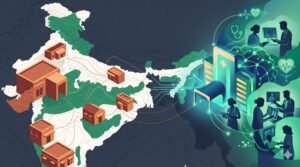
This paper provides a socio-legal evaluation of the Deendayal Antyodaya Yojana-National Rural Livelihoods Mission (DAY-NRLM) and its direct impact on the financial autonomy of rural women in India. Moving beyond standard metrics of basic financial inclusion, such as the mere opening of bank accounts, this study defines true financial autonomy through measurable indicators: subjective control over loan expenditure, influence in household financial decision-making, and the successful graduation to sustainable micro-enterprise management. Central to this evaluation is a comparative methodology analyzing two divergent state-level frameworks: Bihar’s “Mass Saturation” model, which prioritizes broad social mobilization, and Madhya Pradesh’s “Economic Intensity” model, which focuses on deeper capital investment. By evaluating empirical data on Self Help Group (SHG) outcomes, the study demonstrates that while Bihar has successfully mobilized over 1.48 crore women, its low average loan disbursement of ₹0.93 Lakh per SHG limits women’s capacity to scale their businesses. In contrast, Madhya Pradesh’s higher average loan disbursement of ₹1.62 Lakh and intensive digital tracking have yielded a higher entrepreneurial success rate, converting 37.7% of its SHG members into “Lakhpati Didis” (women earning over ₹1,00,000 annually) compared to Bihar’s 28.6%. Ultimately, this research argues that overcoming deeply entrenched socio-legal and patriarchal barriers requires transitioning policy focus from mass SHG formation to ensuring deeper credit linkage and genuine financial decision-making power for rural women.