

Authors: Tanushree Keshan, Bhumika Sharma, Satyam Kumar, Ritika Sahani
Abstract
The Make in India initiative was launched in 2014 to strengthen India’s manufacturing sector, attract investment, and reduce dependence on imports, particularly from China. Import tariffs were adopted as an instrument to encourage domestic production. This study evaluates whether tariff rates increased following the implementation of the initiative and examines their impact on India’s import dependence on China across selected manufacturing sectors. Using secondary data from the World Integrated Trade Solution (WITS) database and the World Bank over 2010–2023, the study analyses trends in applied tariff rates and import patterns across food products, footwear, machinery and electronics, textiles, transportation, and chemical sectors. An independent sample t-test compares pre and post-policy tariff rates, while panel regression models assess the relationship between tariffs and China’s share in India’s imports. Findings indicate that tariff increases were statistically significant only in the footwear sector. Others experienced no significant change.
Furthermore, tariff measures did not reduce India’s dependence on Chinese imports. The study concludes that the objectives of Make in India are more likely to be achieved through complementary measures such as infrastructure development, technological advancement, and improvements in the overall business environment rather than through tariff protection alone.
Introduction
Over the last few decades, increasing globalization has changed the dynamics of international trade and manufacturing. It has reduced the cross-border trade barriers and created new markets for businesses, allowing countries to access wider markets. The integration of global supply chains enabled nations to produce and manufacture the products beyond national borders, in sectors where they have comparative advantage. This became an essential contributor in economic growth and industrial development of the nations. As strong manufacturing sectors draw both domestic and foreign investment, it also leads to innovation and infrastructure development. These developments have created opportunities for employment and income generation in many sectors.
Along with these benefits, globalisation has also created various challenges for the national economy. Even after being one of the largest economies, India’s manufacturing sector’s contribution to the GDP remained below expectations. While import dependence on other nations, particularly from China, for various strategically important products increased over time, today China is an influential trading partner of India. This dependence on imports highlighted the vulnerability and need to strengthen India’s domestic sector. To reduce this dependence and build resilience, the Government of India launched Make in India initiative, in 2014. The main objectives of this program were to raise the contribution of the manufacturing sector in the economy, attract investments, decrease unemployment, improve ease of doing business and reduce dependence on imports.
Although the Make in India initiative introduced several measures to strengthen domestic manufacturing, questions remain regarding its effectiveness in reducing import dependence. Tariffs were used as a policy instrument to protect and promote domestic manufacturing. As a result, different rates of tariffs were applied in different sectors, but debate about the effectiveness of these effects remained unanswered. Dependence on Chinese imports in various sectors didn’t show much reduction, and existing literature has given mixed findings about policies effectiveness. But, whether tariffs actually increased after 2014 and whether this helped reduce import dependence remained unclear, particularly as import patterns may also be influenced by factors such as global supply chains and exchange rate movements.
The previous studies have explored India’s trade and industrial policies and analysed them. Studies about the Make in India initiatives were mostly regarding its objectives and design. While some also evaluated the tariffs and dependence on China for import. But certain gaps remained, these literatures were mainly focused on few sectors only, other sectors remained unexplored, while comparative analysis for effectiveness of tariffs also remained a blank spot. Tariffs were analysed, but its effect on imports remained unclear. A new study is required to fill these gaps and to explore these blank spots.
Therefore, this study is to examine whether tariff measures introduced under the Make in India initiative increased after 2014 and to assess their impact on India’s imports and dependence on Chinese imports across manufacturing sectors. It uses the secondary data obtained from the World Integrated Trade Solution (WITS) database and the World Bank for the time period 2010-2023. It attempts to answer two research questions that are: Did tariffs increase after the Make in India policy and what was the impact on imports? Did
India reduce its import dependence on China?
This study attempts to contribute to existing literature by providing an analysis of whether tariff measures implemented under the Make in India initiative were associated with changes in import patterns and India’s dependence on Chinese imports.
Literature Review
1. Theoretical Foundations of Tariffs and Trade Policy, and India’s Tariff Evolution
Tariffs sit at the center of one of the oldest debates in economics: the conflict between the welfare gains of free trade and the political forces that push governments toward protection. Classical economics, from Ricardo (1817) onward, treats tariffs as a source of inefficiency. Yet political economy models such as Grossman and Helpman (1994) show why governments impose them anyway. India illustrates this tension well. Since 1947, its trade policy has swung between heavy protectionism and periods of genuine liberalization, shaped as much by crisis and geopolitics as by economic reasoning.
This review draws on five core studies to trace that story: the political economy hysteresis model of Nah and Willmann (2026), the cross-country macro evidence of Furceri, Hannan, Ostry, and Rose (2018), the India-specific liberalization work of Alessandrini, Fattouh, Ferrarini, and Scaramozzino (2009), the antidumping findings of Topalova and Khandelwal (2011), and the recent analysis of U.S. tariff shocks on India by Dhulia, Dadhania, and Parsana (2025). Together these studies move from theory, to global empirical evidence, to India’s own liberalization experience, and finally to the disruptions of the last several years.
1.2 Theoretical Foundations
The case against tariffs is well established. Comparative advantage and the Heckscher-Ohlin framework treat tariffs as deadweight loss, since they raise domestic prices above world prices without adding real value. Bhagwati (1971) extends this to small open economies like India, and the Stolper-Samuelson theorem adds that protecting capital-intensive sectors can hurt labor-abundant economies overall. These results are largely uncontested, so the more useful question is why tariffs persist despite being inefficient.
Grossman and Helpman (1994) answer this politically: concentrated industries secure protection through lobbying because the costs, though larger in aggregate, are too diffuse among consumers to organize against. Nah and Willmann (2026) extend this dynamically, showing that a single tariff shock can damage competitiveness enough to lock an economy into a high-tariff trap that is politically hard to reverse. This aligns with Furceri et al. ‘s (2018) finding that tariff-driven productivity losses persist for years, and with Gopinath et al. (2024) and the WTO (2024), who find post-pandemic trade barriers have expanded rather than unwound. Together, these studies suggest protection is sticky once introduced.
The infant industry argument adds one caveat: temporary protection can help young industries scale, but only with discipline. South Korea and Taiwan paired protection with export targets and sunset clauses; India’s early import substitution regime did not, helping explain why it produced scale without matching productivity.
1.3 Macroeconomic Evidence
Furceri et al. (2018) provide the most direct cross-country evidence on what tariffs actually do. Using a panel of 151 countries from 1963 to 2014, they find that tariff increases reduce output and productivity, raise unemployment and inequality, and barely move the trade balance, since tariffs push up the real exchange rate in a way that offsets the drop in imports.
This holds up against recent evidence. Gopinath et al. (2024), using gravity model estimates on bilateral trade and investment data, find that since Russia’s invasion of Ukraine, trade flows between geopolitically distant countries have fallen by roughly 12 percent and FDI flows by roughly 20 percent relative to flows within the same bloc. The WTO’s 2024 staff study similarly finds that trade is fragmenting along geopolitical rather than regional lines. Both update Furceri et al.’s point that tariff costs compound rather than resolve quickly: barriers introduced since 2020 have persisted rather than reversed once their immediate trigger passed.
Interpreting India’s Tariff Reforms
Alessandrini et al. (2009) interpret India’s post-1991 tariff cuts as a genuine success, using revealed comparative advantage data to show India’s exports shifted from low-technology goods toward chemicals, vehicles, and pharmaceuticals, with the largest gains in industries where tariffs fell the most.
Topalova and Khandelwal (2011) complicate this. They find India became the world’s most frequent user of antidumping and safeguard measures after its own tariff cuts, with the sharpest cuts often followed by antidumping filings on the same products, effectively reversing liberalization through a different, WTO-legal channel. This is a clean example of the Grossman-Helpman (1994) logic, and it supports Nah and Willmann’s (2026) argument that protection resurfaces through new routes rather than disappearing. Read together, these two studies show that liberalization produced real gains while the political demand for protection simply moved to a different instument.
1.5 Global Disruptions and Recalibration
Dhulia et al. (2025) examine the U.S. tariff measures imposed on India between 2018 and 2025 and find that affected Indian exports fell by an average of 16.2 percent, concentrated in globally integrated sectors like steel and aluminum, while pharmaceuticals were largely unaffected, consistent with Furceri et al.’s (2018) finding that tariff costs fall unevenly across industries. This fits the broader post-pandemic pattern described by Gopinath et al. (2024) and the WTO (2024): the tariffs functioned less as a one-off shock and more as the start of a longer period of defensive adjustment, echoing Topalova and Khandelwal’s (2011) finding that India’s own liberalization triggered a similar wave of protection in the 2000s.
2. The Make In India Initiative
The Make in India initiative brought about a revolutionary shift in India’s industrial policy by focusing on manufacturing at the heart of India’s economy. Import tariff escalation is a significant tool used to achieve the objective of lowering dependence on foreign imports and boosting domestic production in several sectors of the economy such as electronics, automobile and solar energy.
2.1 Sectoral Impact
A study by Amighini (2012) assessed India and China’s position in the international fragmentation of automobile manufacturing and highlighted that India’s role in the global fragmentation process for automobiles follows the quality ladder hypothesis, wherein India exports low unit value auto components and imports high unit value components. It highlights the structural weakness of India’s auto value chain, thus justifying the Make in India strategy of increasing import tariffs on cars and car components in order to protect domestic players.
While the automobile sector provides evidence supporting tariff protection to strengthen domestic manufacturing, the effectiveness of similar measures has been questioned in other strategic industries, particularly renewable energy. Tandon (2025), in analysing India’s solar PV manufacturing eco-system via a PESTEL analysis and stakeholder consultations, found that instruments like Make in India’s basic custom duty (40%) and PLI scheme, attracted significant investment in the solar PV manufacturing; however, the policy reversals have deterred the investors and made tariff measures inefficient to develop a self-reliant solar supply chain.
Furthermore, Rana and Jindal (2025) have presented data indicating that India’s average solar levelized cost of electricity has dropped by 90 per cent since 2010 to USD 32/mwh despite being highly dependent on Chinese solar imports, primarily due to the effect of reverse bidding mechanisms instead of manufacturing strength. These findings suggest that tariff protection alone may not be sufficient to achieve industrial self-reliance, highlighting the importance of complementary industrial and institutional policies.
The paradox of a fall in solar levelized cost of electricity with rising reliance on imports makes evident the fact that the Make in India’s protectionist strategy, via increasing tariffs, not only increases the cost of imports, but also fails to translate it to competitive domestic production without adequate accompanying industrial policy.
A recent study on India’s import dependence by Gopinathan and Jalal (2026) revealed how external shocks, such as global financial crisis, oil price shock of 2014, and the russia-ukraine conflict impacted india’s import dependent energy market using mtnardl modelling; thus showing that dependence on imports is not only a function of the trade policy but is also significantly driven by international economic and political factors, thereby posing a challenge to the effectiveness of make in india policies on imports.
Similar concerns regarding the limitations of protectionist measures are also evident in the electric vehicle sector. Majid et al. (2024), in their analysis of electric vehicle adoption in India identified the main impediments to EV adoption as high initial costs of evs, and lack of adequate charging infrastructure and for make in india inevitably increased costs of imported ev parts lead to higher overall prices for domestic ev manufacturers.
Overall, there is mixed evidence regarding the effectiveness of the Make in India’s tariff initiative. While tariff-based protection has encouraged investment and provided support to selected manufacturing sectors, several studies suggest that tariffs alone cannot ensure competitiveness or reduced import dependence without complementary infrastructure development and policy stability.
3. India’s Import Dependence with a Focus on Chinese Imports
3.1 Introduction to India’s Import Dependence
Over the past few decades the trade relations between India and China have expanded significantly (Ahmad, Kunroo & Sofi, 2018). India’s dependence on China has increased extensively across various products (Pai, 2020; Ahmad, Kunroo & Sofi, 2018). These imports have helped in the growth of different sectors, giving access to affordable products and maintaining the price competitiveness of Indian producers (Joseph & Kumar, 2022). However, heavy reliance on a single nation for a larger proportion of imports exposes vulnerabilities. Consequently, import dependence has become an important area of academic and policy research, especially after
Covid-19 and global trade disruptions (Pai, 2020; Joseph & Kumar, 2022). Existing studies reveal that this dependence is concentrated in several critical sectors (Pai, 2020; Joseph & Kumar, 2022). The following sections discuss the extent of this dependence, its causes and policy initiatives aimed at reducing it.
3.2 Evolution and Nature of Import Dependence
Trade relations between India and China have evolved due to various economic reforms and trade agreements. The reviewed studies suggest that differences in industrial policies, manufacturing strategies and economic reforms influenced the trade evolution of both countries and contributed to China’s stronger position in manufacturing and trade (Ahmad, Kunroo & Sofi, 2018; Tripathy & Dastrala, 2023).
These studies also suggest that India’s dependence on Chinese imports is influenced not only by import volume but also by China’s strategic and comparative advantages. The Chinese manufacturing industry has advanced technology that enables production at lower cost, making products more competitive in the global market (Rawat, Raj & Agarwal, 2020; Joseph & Kumar, 2022).
Pai (2020) found that 375 product categories in India were dependent on China for 80% or more of imports. This indicates that import dependence is concentrated in certain strategic sectors
rather than being equally distributed across products. Therefore, examining sector-wise import dependence is essential.
3.3 Sector-wise Import Dependence
Chinese imports are concentrated in some strategic sectors of the Indian economy. These sectors gained attention due to the pandemic and global disruptions. This encouraged the Government of India to increase domestic manufacturing and trade resilience through manufacturing and supply chain initiatives (Pai, 2020; Joseph & Kumar, 2022).
The pharmaceutical sector received particular attention. Joseph & Kumar (2022) further evaluated dependence on Active Pharmaceutical Ingredients (APIs), Key Starting Materials (KSMs) and Drug Intermediates (DIs), highlighting challenges during the Covid-19 pandemic.
Ahmad, Kunroo & Sofi (2018) state that both countries are complementary and competitive in the global and bilateral market. However, China has a Revealed Comparative Advantage in technology-induced products, making substitutes difficult. This suggests that India’s dependence is not uniform across sectors and is influenced by the relative comparative advantages of both countries.
Overall, import dependence varies across different sectors and products. Therefore, strategies to minimise dependence should be based on sectoral requirements.
3.4 Structural Reasons for Continued Dependence
Dependence on China has continued despite different industrial and trade policies. Literature contends that it is a structural rather than temporary issue. China’s manufacturing environment provides strategic advantages that are difficult to replace (Rawat, Raj & Agarwal, 2020; Ahmad, Kunroo & Sofi, 2018).
Joseph & Kumar (2022) identified technological advancement as a major factor enabling Chinese manufacturers to produce pharmaceutical goods at lower cost, encouraging Indian firms to import while maintaining competitiveness. Ahmad, Kunroo & Sofi (2018) also identify China’s comparative advantage as a factor.
Rawat, Raj and Agarwal (2020) further explain that India’s manufacturing system faces challenges including inadequate infrastructure, logistics limitations, technology gaps and policy implementation issues. Pai (2020) suggests dependence can be evaluated through intensity, scale, criticality, strategic importance and availability of alternative suppliers.
Together these studies demonstrate that reducing dependence requires strengthening domestic manufacturing, technological development and a robust industrial ecosystem (Rawat, Raj & Agarwal, 2020; Joseph & Kumar, 2022).
3.5 Government Responses and Policy Evaluation
The Government of India introduced policies to strengthen domestic manufacturing and reduce dependence on China. Literature primarily discusses the Make in India policy, the Production Linked Incentive (PLI) Scheme and broader import substitution strategies (Rawat, Raj & Agarwal, 2020; Tripathy & Dastrala, 2023).
Rawat, Raj and Agarwal (2020) found that although Make in India showed positive effects, it did not achieve the expected outcomes because of implementation challenges and inadequate infrastructure. They concluded that the policy requires innovation and manufacturing competitiveness.
Joseph & Kumar (2022) analysed the PLI Scheme in the pharmaceutical sector and suggested better utilisation of existing manufacturing facilities, technological development and an integrated implementation strategy.
Tripathy and Dastrala (2023) argue that Make in India and the PLI Scheme should be viewed as long-term initiatives. These studies suggest such policies can support the reduction of dependence on China, but their effectiveness depends on implementation, technological development and manufacturing competitiveness. (Rawat, Raj & Agarwal, 2020; Joseph & Kumar, 2022)
4. Research Gap
The reviewed studies provide insights into India’s tariff policies, the Make in India initiative and growing dependence on Chinese imports. Previous studies explored tariffs, the objectives of Make in India, manufacturing challenges, India–China trade relations and dependence on Chinese imports in strategic sectors. They also analysed sectoral dependence, comparative trade advantages and policies to strengthen manufacturing (Pai, 2020; Joseph & Kumar, 2022; Rawat, Raj, & Agarwal, 2020; Tripathy & Dastrala, 2023; Ahmad, Kunroo, & Sofi, 2018; Amighini, 2012; Tandon, 2025; Rana & Jindal, 2025; Gopinathan & Jalal, 2026; Majid et al., 2024).
However, these studies examine these aspects individually. Most focus on specific manufacturing sectors, while others remain unexplored. Limited attention has been given to whether tariff levels changed after Make in India and what impact these changes had on imports. The relationship between tariff changes and India’s dependence on Chinese imports also remains insufficiently explored.
Therefore, the present study examines tariff trends under Make in India and their impact on India’s imports and dependence on Chinese imports across manufacturing sectors during 2010–2023. Through an integrated sector-wise analysis, it seeks to provide a more comprehensive understanding of tariff effectiveness in achieving the objectives of Make in India.
Methodology
The study adopts a quantitative research design to study the effectiveness of the Make in India scheme in reducing India’s import dependence and to promote domestic production of goods through tariff policies. The analysis was undertaken by utilising secondary data obtained from the WITS database and the World Bank for the time period 2010-2023. The period selected includes the years before the launch of the Make in India scheme in 2014, its execution phase, the following changes undertaken in tariff policies, the pandemic of COVID-19, and the recovery from the recession caused by it, therefore, making this period substantial for evaluating the effects of policies.
The study employs the Applied Harmonised System (AHS) tariff data. AHS represents the real tariffs imposed on imports, rather than the Most Favoured Nation (MFN) rates. Emphasis was given on industries such as textiles, footwear, chemicals, machinery and electrical equipment, transportation and food products, as they were heavily import-dependent and prioritised under the scheme. Therefore, the Make in India scheme was a direct response to tariff policies and aimed at promoting domestic manufacturing.
The following hypothesis forms the basis of the study:
H₀₁: The average tariff rates on Make in India-targeted products before and after the policy’s implementation do not differ significantly.
H₁₁: Following the policy’s introduction, the average tariff rates on goods targeted by Make in India increased.
H₀₂: Import tariffs under the Make in India initiative have no significant effect on India’s dependence on imports from China.
H₁₂: Import tariffs under the Make in India initiative significantly affect India’s dependence on imports from China.
Data analysis was undertaken using R. To evaluate the variations in the tariff rates, volume of imports, and the proportion of imports from China, descriptive statistics and trend analysis were used. An independent sample t-test is conducted to compare the mean tariff rates across the chosen product categories during the pre-policy period (2010–2013) and the post-policy period (2014–2023). Moreover, to investigate the interlink between tariff policy and India’s import reliance on China, a multiple linear regression model was used. Study’s dependent variable includes: the share of Chinese imports in India’s total imports. The independent variables include India’s Gross Domestic Product (GDP), applied tariff rates on Chinese goods, and a dummy variable for COVID-19 and implementation year of Make in India policy to consider the pandemic’s effect and the policy’s effect on trade, respectively. Statistical significance is evaluated at the 5% significance level (p-value < 0.05).
5. Pre and post Make in India policy tariff analysis for selected priority sectors:
5.1 Food products
Following graphs show the pre and post-policy comparison of tariffs and imports for product categories targeted under the Make in India Scheme. The green dotted vertical line at year 2014 demarcates the pre and post-policy period trends.
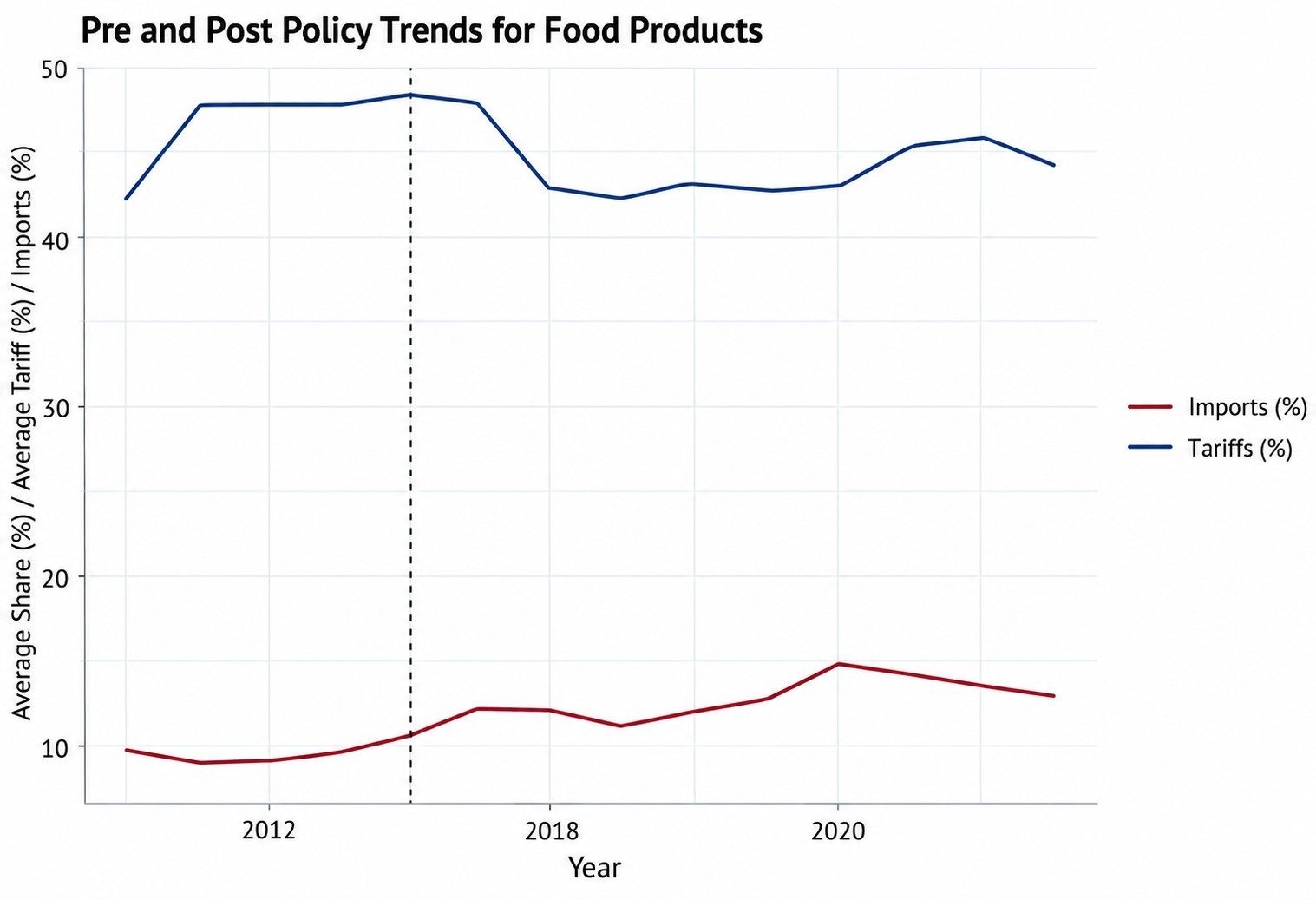
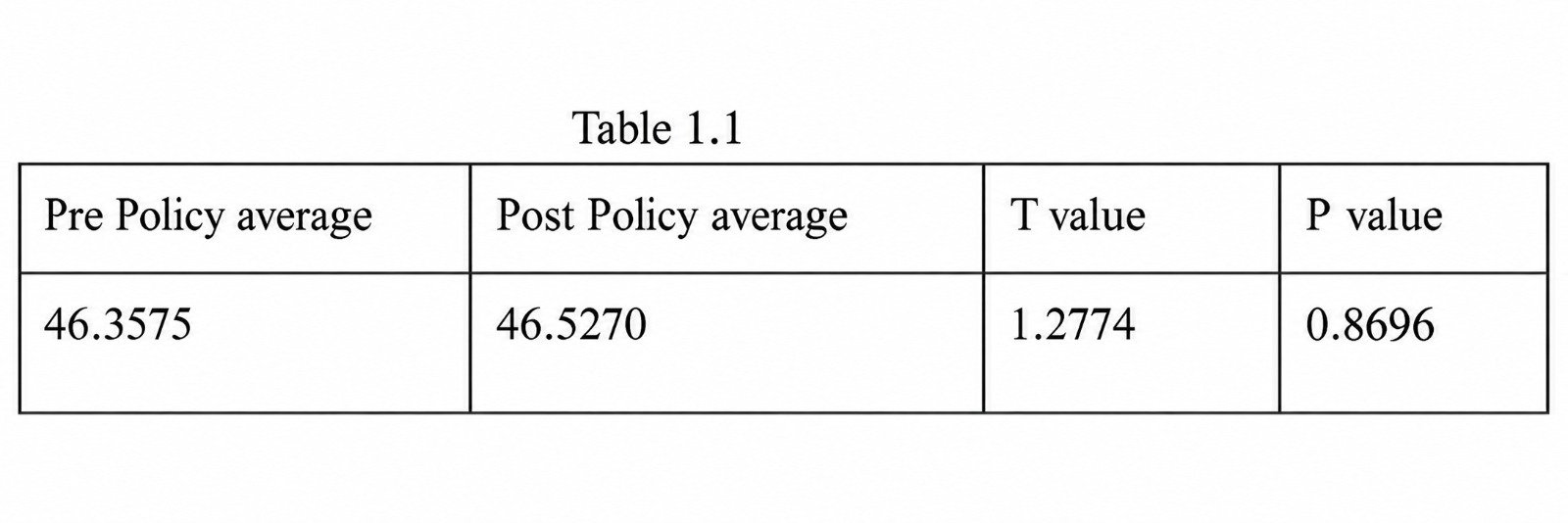
Since the p-value exceeds 0.05, we fail to reject the null hypothesis. There is insufficient statistical evidence to conclude that average tariff rates increased for food products after the implementation of Make in India initiative. However, imports show an increasing trend over time, despite being highly tariffed.
5.2 Footwear
Along with demographics, respondents were asked to indicate which shopping mode they generally prefer. The distribution of responses reveals the overall inclination of the sample towards online, offline, or a combination of both modes.
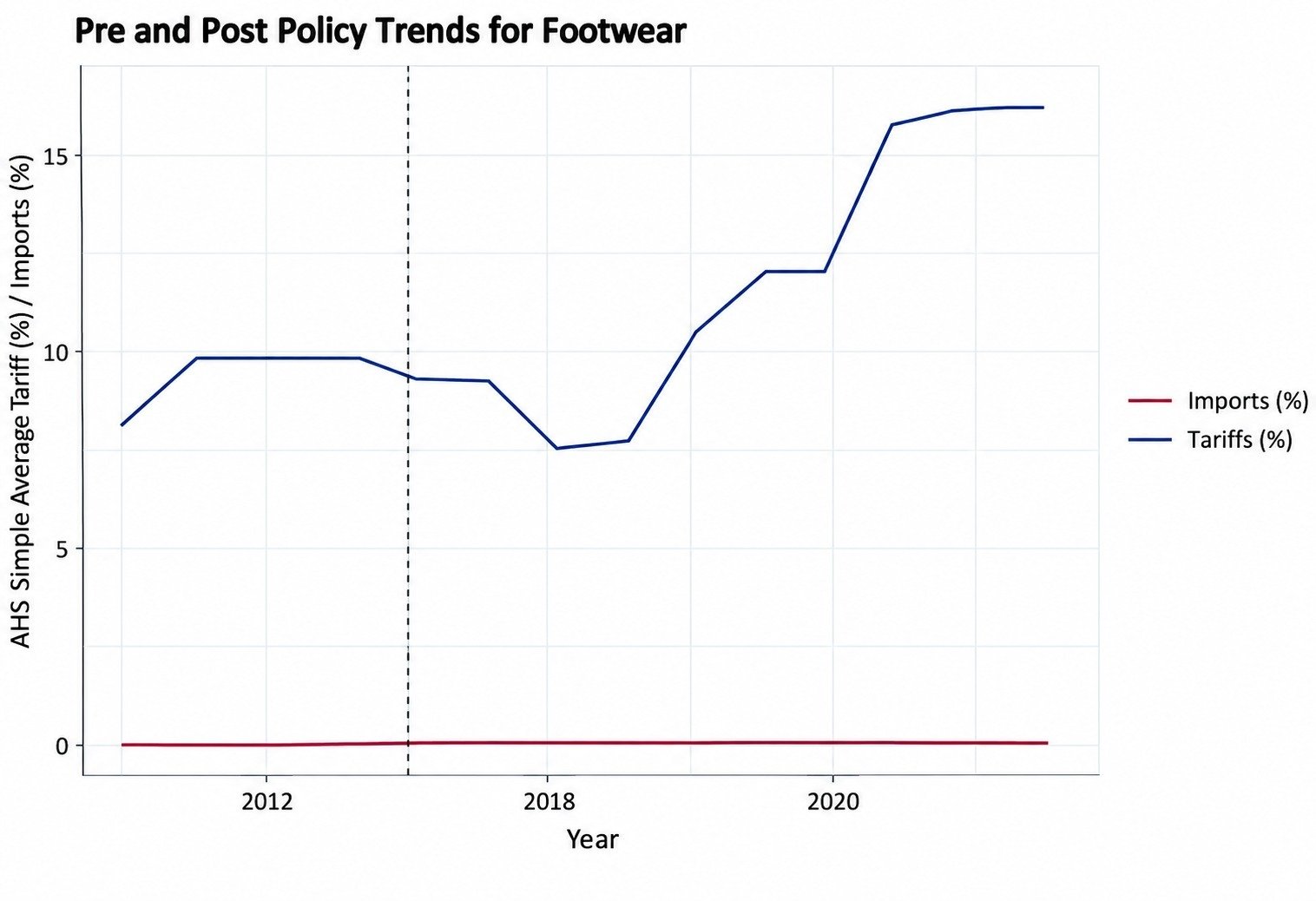
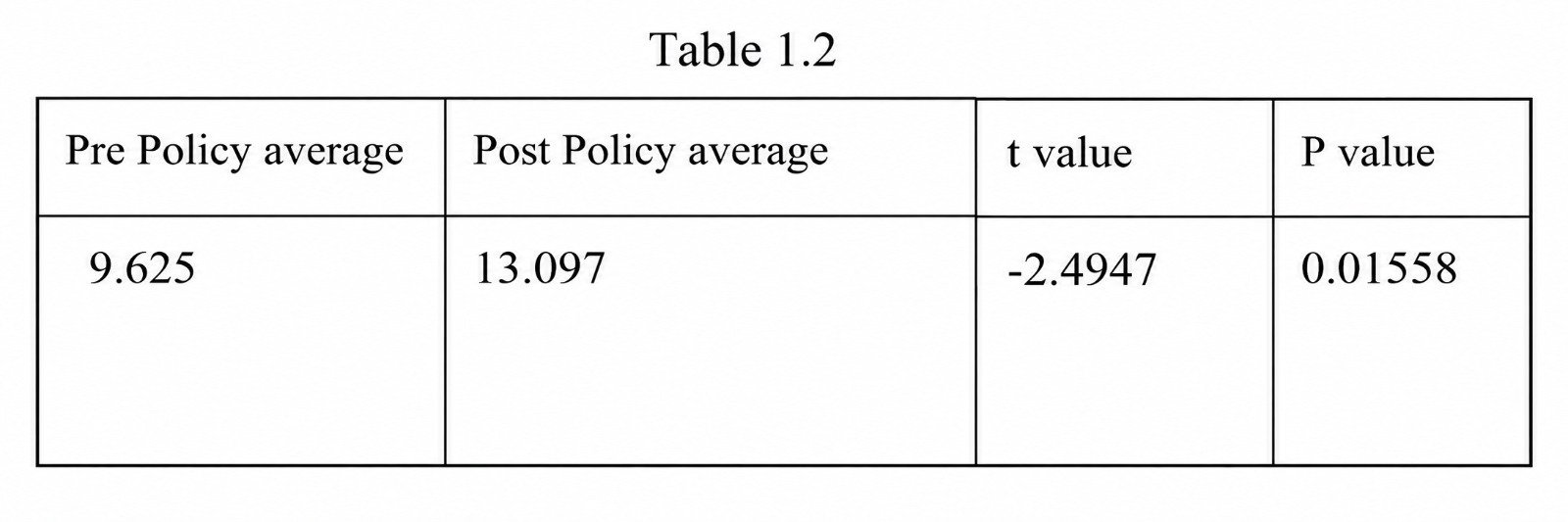
Since p value < 0.05 we reject the null hypothesis, ie, there is a statistically significant difference in the tariffs applied to footwear products pre and post-2014. Imports of footwear, however, remain a very minor portion of the total goods imported.
5.3 Machines and electronics
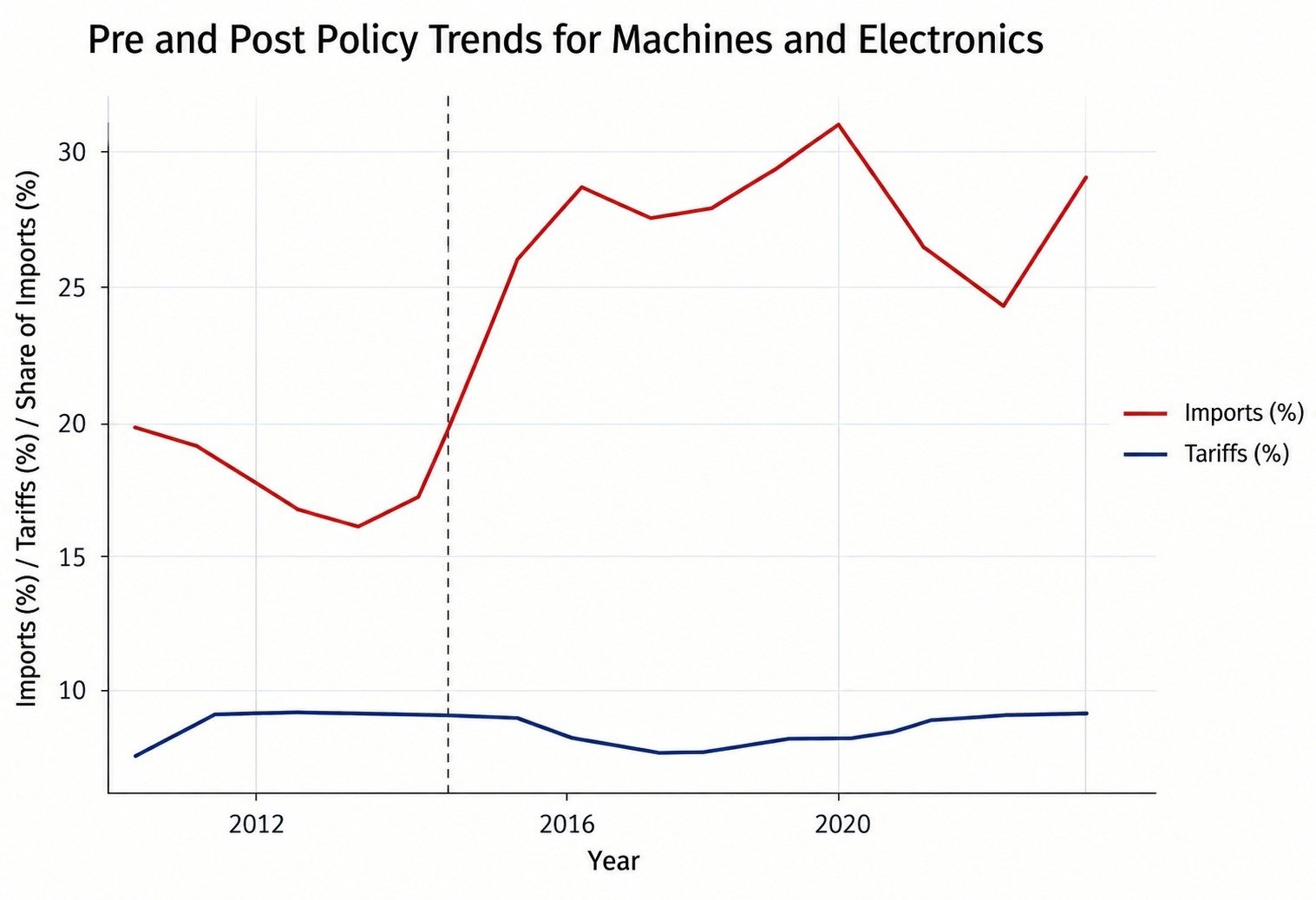
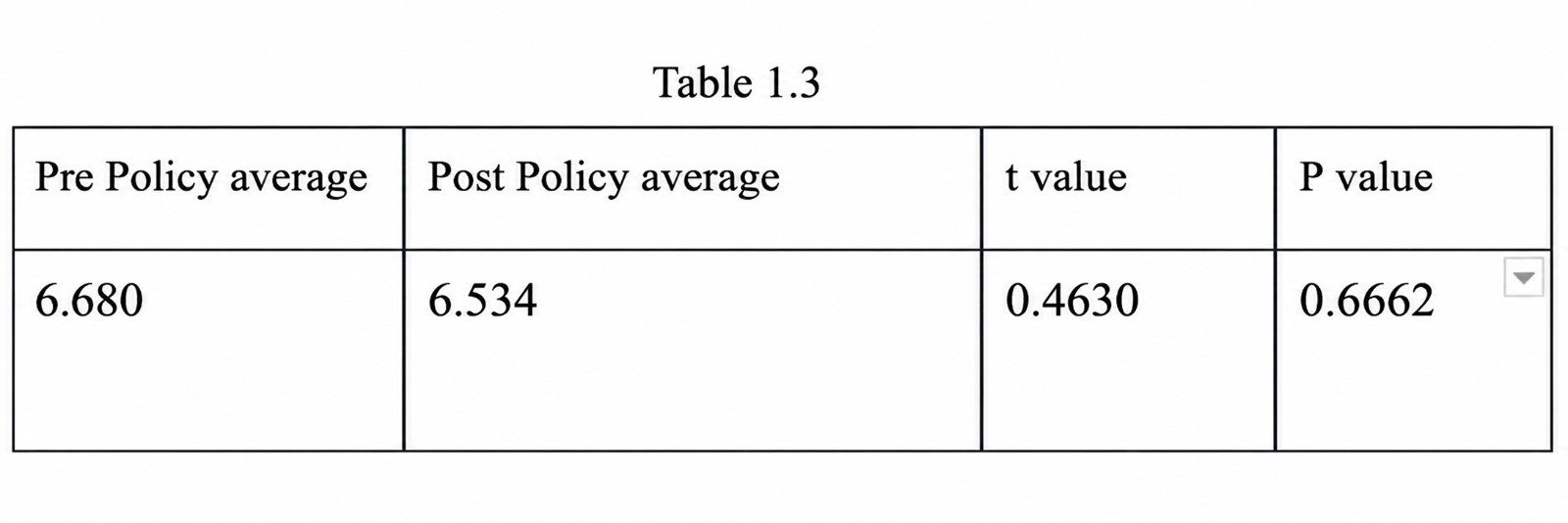
Since p value > 0.05 we cannot reject the null hypothesis. There is no statistically significant difference between the pre and post-policy tariff rates. However, the pre-policy tariff is higher than post-policy tariff, implying that tariffs decreased post-2014. Imports show an increasing trend over time.
5.4 Textile
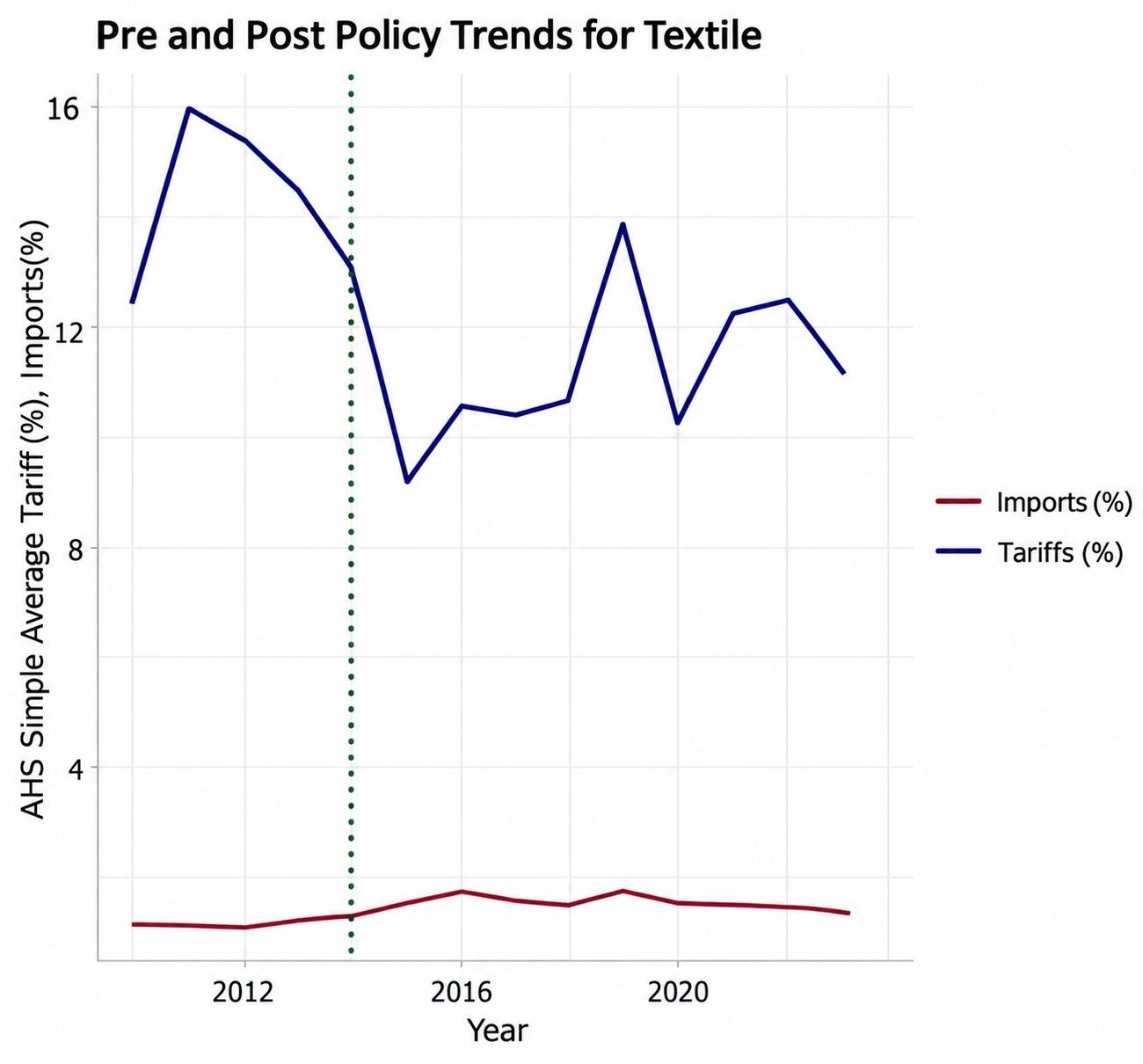
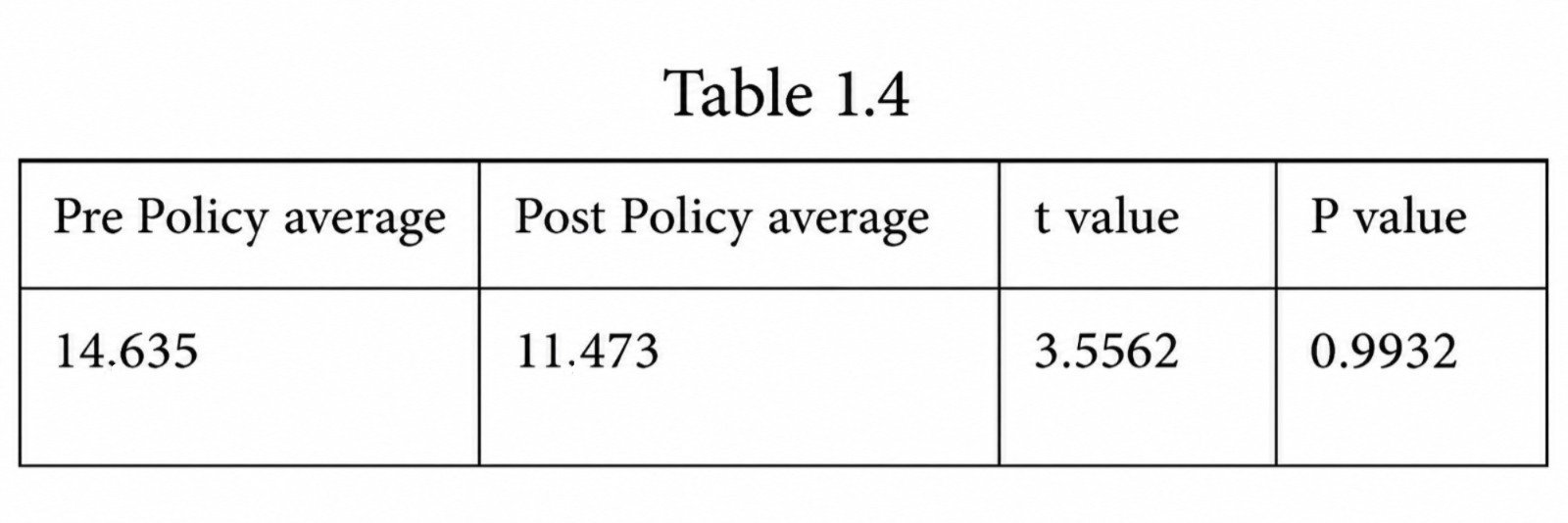
Since p value > 0.05 we cannot reject the null hypothesis. There is no significant difference between pre and post-policy tariffs imposed on textiles, but post-policy averages indicate that tariffs have reduced. Additionally, imports show a stagnating trend.
5.5 Transportation
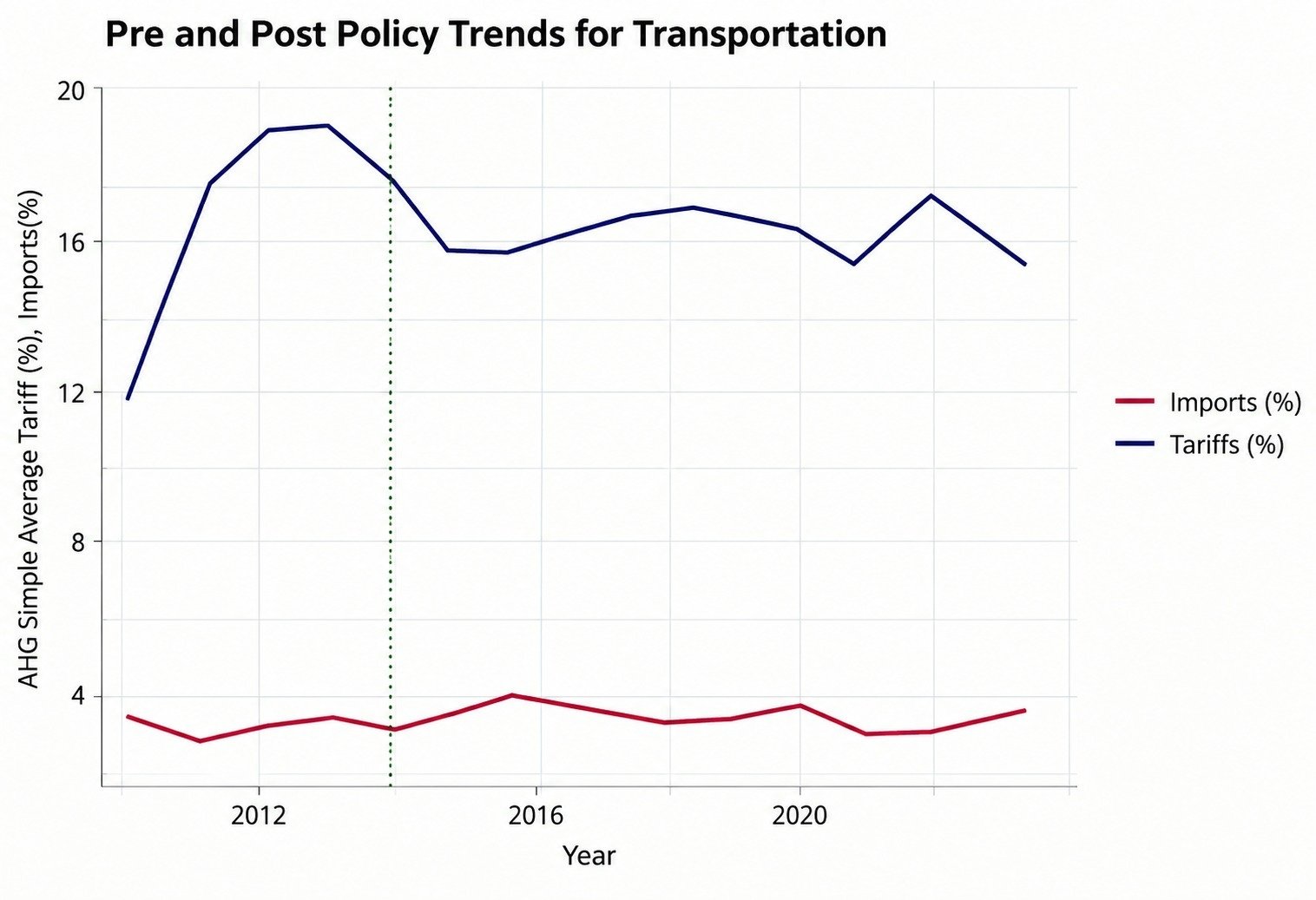
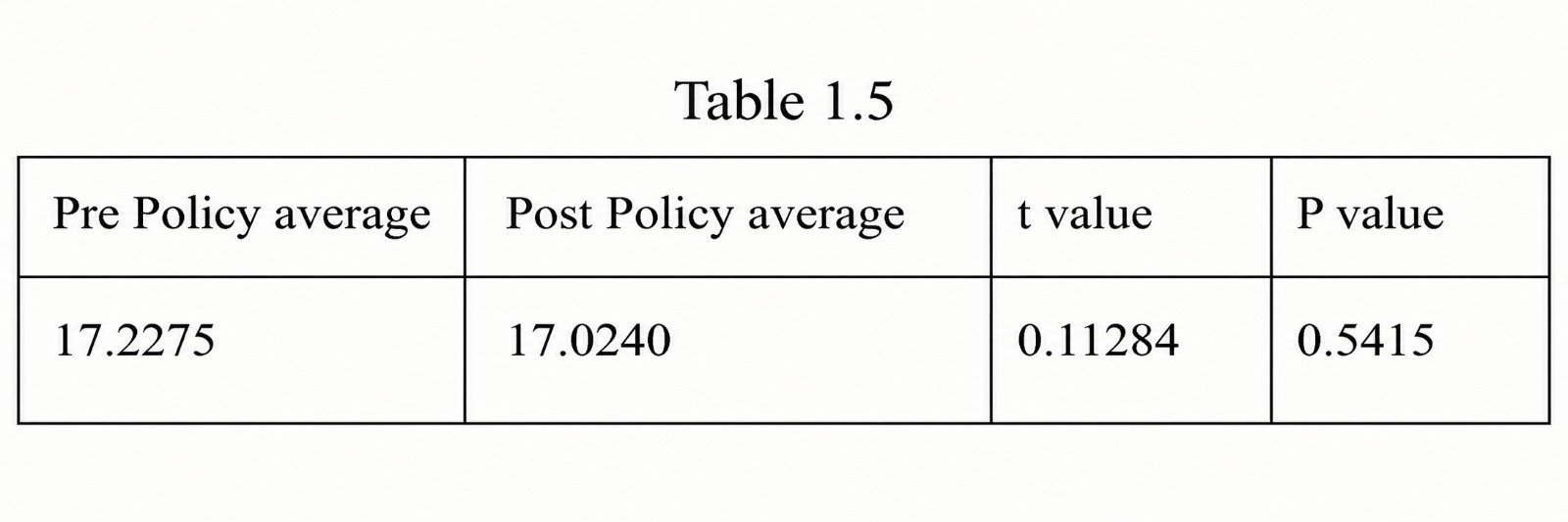
Since p value > 0.05 we cannot reject the null hypothesis. Tariff levels are not statistically significantly different between the pre and post-policy period, however the tariffs were marginally higher in the pre-policy period. Imports have fluctuated over time.
5.6 Chemical
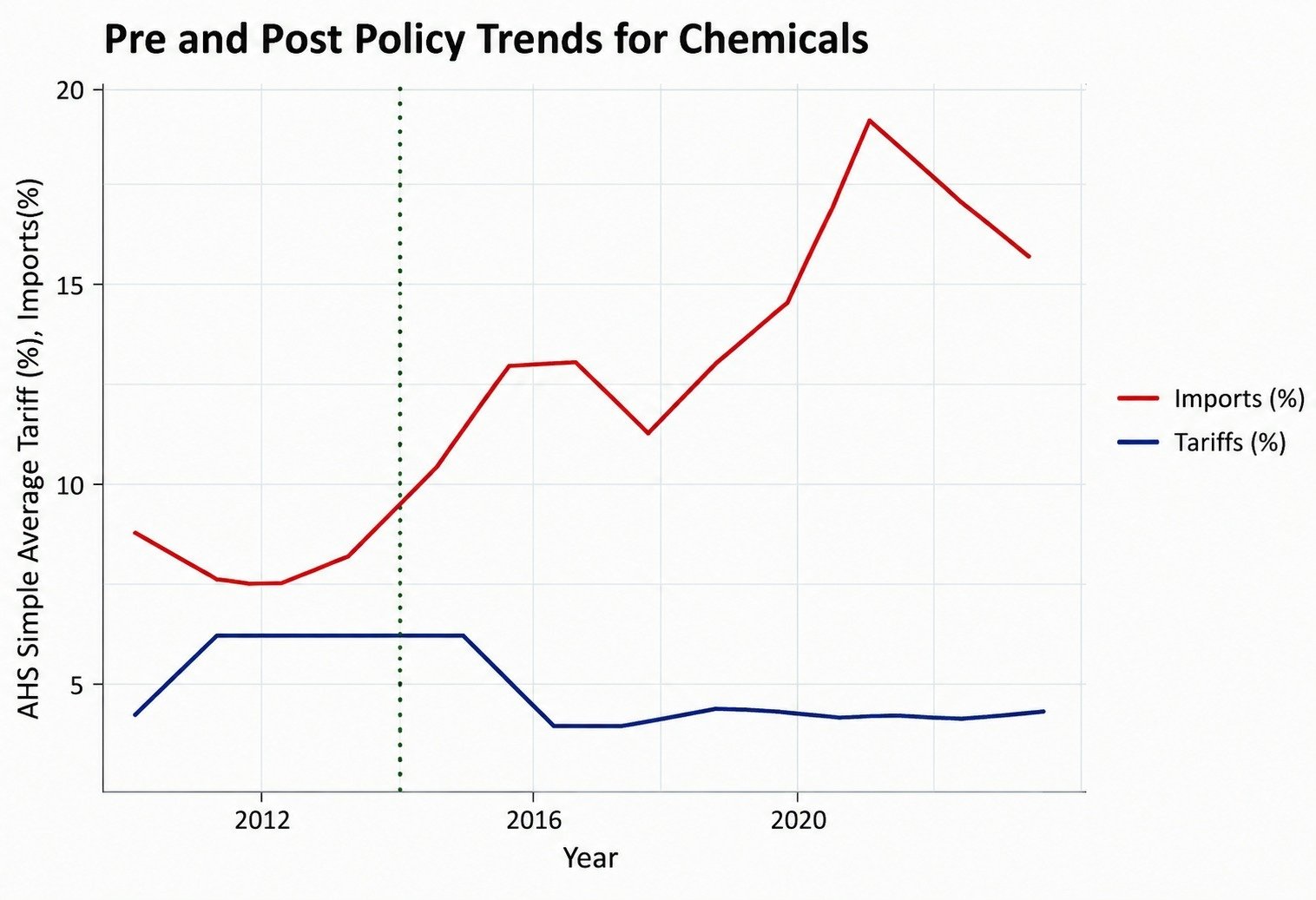
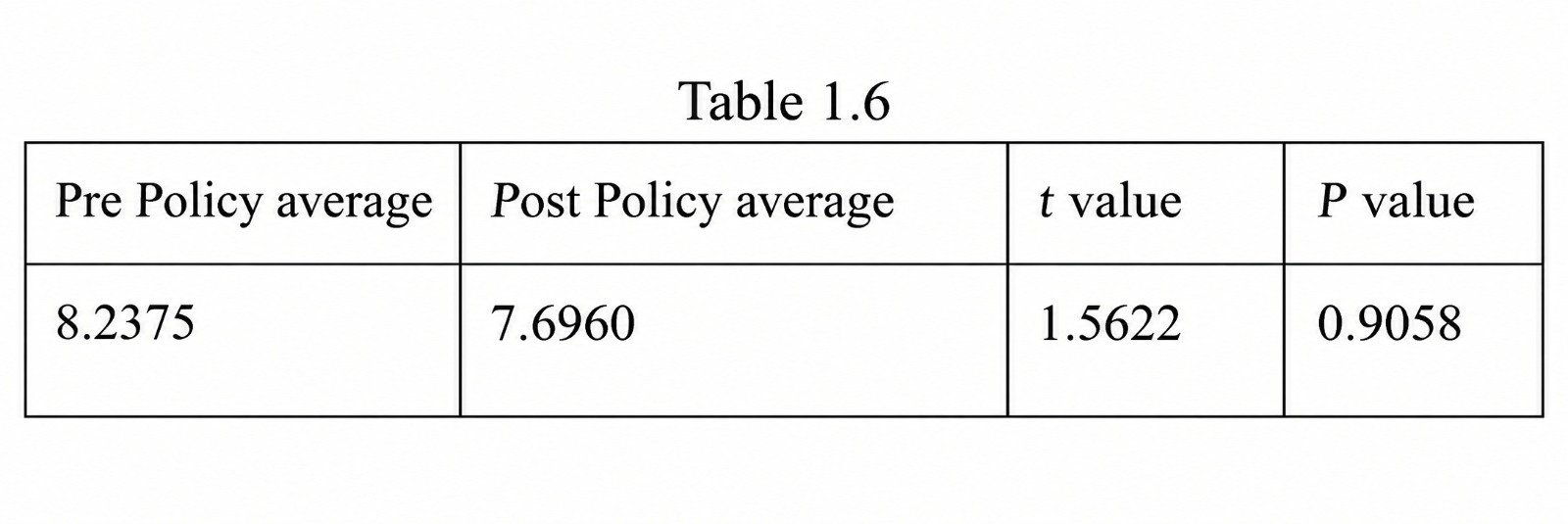
Since p value > 0.05, we cannot reject the null hypothesis. Pre and Post-2014 tariffs are not statistically significantly different. Additionally, pre-policy tariffs are higher than post-policy. Chemicals form a significant part of India’s imports and have shown an increasing trend over time.
6. India’s import dependence on China
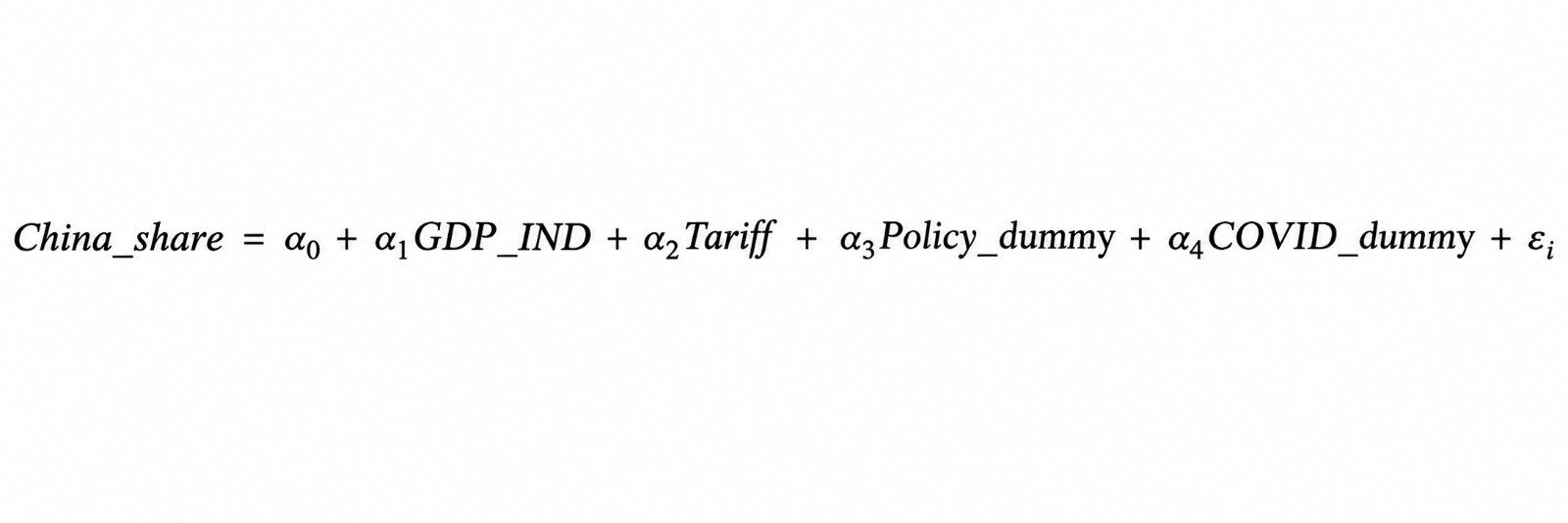
To assess this, the following model was used:
Where,
China_share is percentage share of total imports that come from china,
COVID_dummy = 0 for non covid years, 1 for covid years
Policy_dummy = 0 for years preceding 2014, 1 for year 2014 onwards
A panel dataset was constructed with 14 years and 4 cross sections. The product categories specifically used are those which were targeted under Make in India scheme and simultaneously include the most imported products from China (Mach and elec, Textile, Footwear, Chemical). For estimation, Pooled OLS, Fixed effects and Random effects were used. The following table summarises the results:
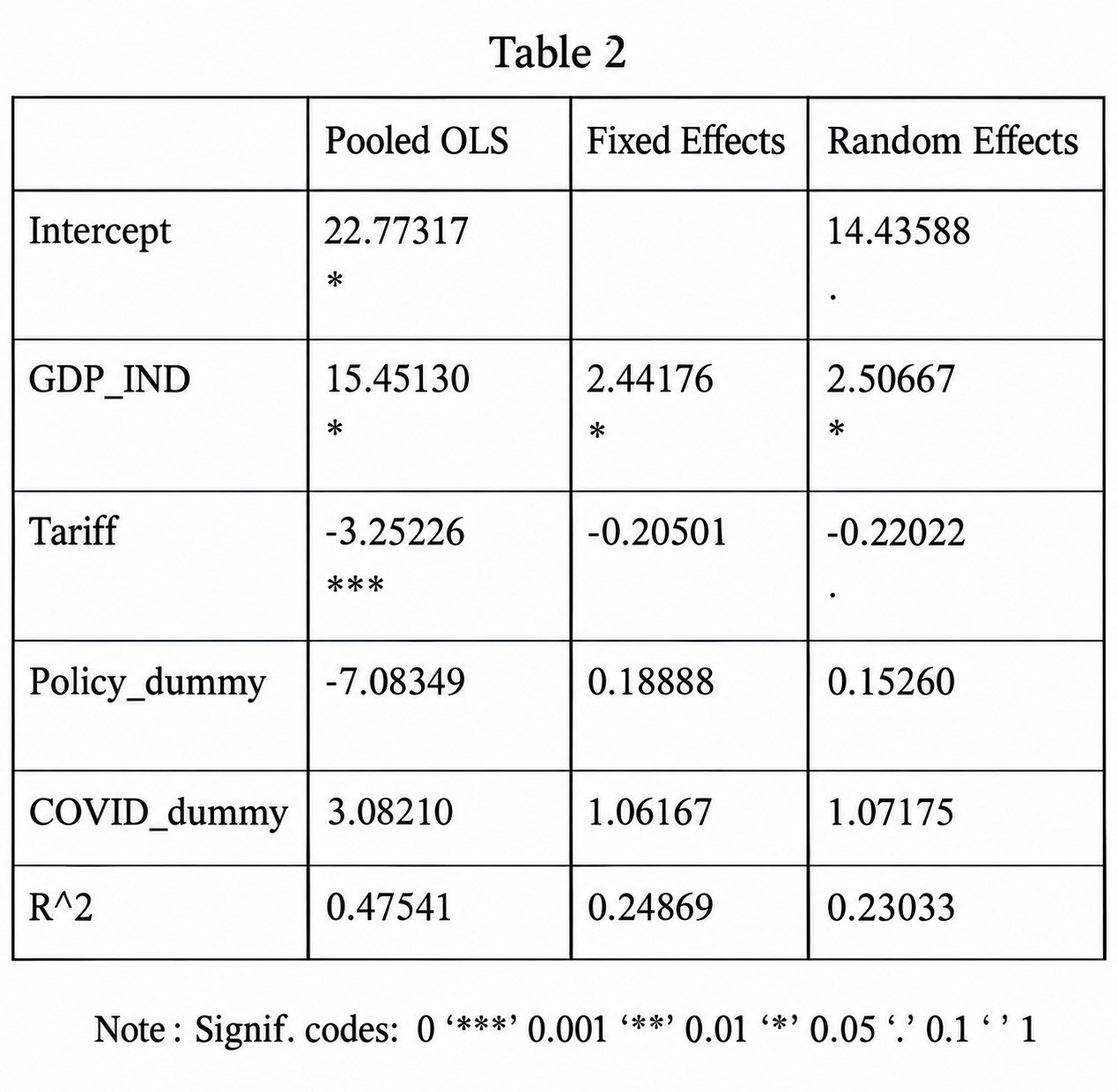
The Hausman’s test suggests that the Random Effect model should be used ( p-value = 0.9989 ), hence further analysis has been done on the basis of the random effects model.
At the 5% significance level, GDP is the only variable that has a positive and statistically significant association with China’s share in India’s imports. The tariff coefficient is negative but only weakly significant at the 10% level, while the post-2014 policy dummy and the COVID-19 dummy are statistically insignificant.
From the above analysis, it can be inferred that apart from footwear, there was no significant increase in tariffs post-2014, despite the sectors considered being the priority sectors under the Make in India policy. This indicates that tariff imposition might not have been the primary tool for promoting domestic manufacturing. The Make in India programme emphasised improving the ease of doing business, attracting foreign direct investment, and infrastructure development, rather than broad-based import substitution via tariff implementation (OECD, 2018). Tariffs seem to have played only a supplementary role in the policy framework.
It is also seen that India’s import dependence on China, for the goods that India usually imports from China and are simultaneously prioritised under the Make in India scheme, has not reduced significantly during the study period. While tariffs do seem to have a negative impact on Chinese imports, their impact is statistically insignificant at 5% significance level. Therefore, we cannot claim that tariffs imposed post-2014 have reduced import dependence from China. Previously, Batra (2012) has argued that India’s imports from China are concentrated in machinery, electronics, chemicals, and intermediate goods that are closely integrated into domestic production processes. As a result, import dependence is driven by structural production linkages rather than tariffs alone. World Bank (2020) also suggests that persistence of import dependence is due to factors beyond tariffs, such as China’s established cost competitiveness, well-developed manufacturing ecosystem, and India’s continued reliance on imported intermediate goods.
Conclusion
This study sought to find out whether the Make in India initiative was followed by an increase in tariff rates and whether it helped decrease India’s import dependence on China in the most relevant sectors over 2010-2023. The analysis suggests that, with the exception of footwear, tariff rates have not substantially increased during the post-2014 period, and, thus, tariff increases were not the main channel through which the policy achieved the stated objective of boosting domestic manufacturing.
Regression analyses suggest that China’s share in India’s imports were not significantly impacted by tariffs since it shows a minor and non-significant negative effect, while the policy and COVID dummies are both non-significant. In conclusion, we found that the Make in India policy did not influence imports in the surveyed sectors through tariff protection. It has the potential to affect imports but alternatively through non-tariff measures such as improvements in the business environment, infrastructure, or tax regime. It would seem, then, that lowering dependence on China requires fundamental changes in the productive structure to improve the competitiveness of domestic industry.
However, this study has some limitations. First, the tariff information extracted from WITS is categorised under broad HS product categories, but policy reforms to Make in India were generally specific to individual products. Second, the number of sectors analysed through a regression framework was four (machinery & electrical, textiles, footwear, chemical) over 14 years. This makes it difficult to generalise our findings to other Make in India-identified sectors.
Future studies could use more detailed HS 6-digit and 8-digit tariff lines and consider other non-tariff measures along with tariff impact for more accurate estimation of the policy effect.
References
- AI, S. (2020, October). Deciphering India’s dependency on Chinese imports (ICS Analysis120). Institute of Chinese Studies. https://www.icsin.org/publications/deciphering-indias-dependency-on-chinese-imports
- Joseph, K., & Arun Kumar, R. (2022). Reducing import dependence on APIs in the Indian pharmaceuticals sector: An analysis of early experience of the PLI Phase-I scheme (ISID Working Paper No. 239). Institute for Studies in Industrial Development. https://doi.org/10.2139/ssrn.4008180
- Rawat, , Raj, R., & Agarwal, T. (2020). A critical review of Make in India as an import substitute. SSRN. http://dx.doi.org/10.2139/ssrn.3569655
- Tripathy, , & Dastrala, S. M. (2023). Make in India: So far and going ahead (Working Paper No. 674). Indian Institute of Management Bangalore. https://www.iimb.ac.in/node/11471
- Ahmad, , Kunroo, M. H., & Sofi, I. A. (2018). An RCA analysis of India–China trade integration: Present, potential and prospects. Foreign Trade Review, 53(1), 49–58. https://doi.org/10.1177/0015732516681885
- Amighini, A. (2012). China and India in the international fragmentation of automobile production. China Economic Review, 23(2), 325–341. https://doi.org/10.1016/j.chieco.2012.01.002
- Gopinathan, R., & Jalal, R. (2026). Asymmetric impact of energy prices on energy imports in India: Evidence from multiple threshold non-linear Development and Sustainability in Economics and Finance. https://doi.org/10.1016/j.dsef.2026.100120
- Majid, A., Rajesh Kumar, C., & Ahmed, A. (2024). Advances in electric vehicles for a self-reliant energy ecosystem and powering a sustainable future in India. Prime – Advances in Electrical Engineering, Electronics and Energy, 10, Article 100753. https://doi.org/10.1016/j.prime.2024.100753
- Rana, S., & Jindal, R. (2025). Factors affecting solar levelized cost of electricity in India & policy recommendations. Energy and Climate Change, 6, Article 100207. https://doi.org/10.1016/j.egycc.2025.100207
- Tandon, (2025). Strategies for solar PV manufacturing in India: Harnessing stakeholder inputs. Sustainable Futures, 10, Article 101315. https://doi.org/10.1016/j.sftr.2025.101315
- Organisation for Economic Co-operation and (2018). OECD Economic Surveys: India 2018. OECD Publishing. https://doi.org/10.1787/eco_surveys-ind-2018-en
- World (2020). World Development Report 2020: Trading for Development in the Age of Global Value Chains. World Bank. https://doi.org/10.1596/978-1-4648-1457-0
- Batra, (2012). India–China trade: An Indian perspective. In India–China Economic Relations. Academic Foundation.
- Nah, , & Willmann, G. (2026). Tipping into protectionism: Tariff shocks and the fragility of free trade. Economics Letters. This is the theoretical hysteresis model of tariff policy. https://www.sciencedirect.com/science/article/pii/S0165176526001771
- Furceri, D., Hannan, S. A., Ostry, J. D., & Rose, A. K. (2018). Macroeconomic consequences of NBER Working Paper No. 25402. This provides cross-country macroeconomic evidence (151 countries, 1963 to 2014). https://www.nber.org/papers/w25402
- Alessandrini, , Fattouh, B., Ferrarini, B., & Scaramozzino, P. (2009). Tariff liberalization and trade specialization in India. ADB Economics Working Paper Series No. 177. This covers India’s post-1991 tariff cuts and trade specialization. https://www.adb.org/sites/default/files/publication/28258/economics-wp177.pdf
- Topalova, , & Khandelwal, A. (2011). Trade liberalization and firm productivity: The case of India. The Review of Economics and Statistics, 93(3), 995 to 1009. This examines India’s antidumping and safeguard measures after liberalization. https://doi.org/10.1162/REST_a_00095
- Dhulia, S., Dadhania, J., & Parsana, P. (2025). Economic effects of United States tariffs on India’s export and International Journal on Science and Technology (IJSAT), 16(3). This looks at U.S. tariff measures on India from 2018 to 2025. https://www.ijsat.org/papers/2025/3/8092.pdf