Authors:
Aelia Fatima, Ankita Sahu, Bommana Varun Kumar Reddy, K. Thrishank, Md Danish Tamanna, Pritam Sarkar, Shreshth Joshi, Swaleha Tabassum
Abstract
The current study analyzes the impact of changes in the taxation regime in accordance with Make in India strategy on the development and competitiveness of the manufacturing sector in India. Initiated in 2014, the program used several instruments such as GST, corporate tax cuts, customs duty and production-based incentives for compliance and strengthening of the domestic industries; however, the degree of success in attaining those goals is unknown. Using a mixed-method, descriptive-analytical-comparative research approach, the study uses secondary data retrieved from GSTN, WITS, World Bank including the tariff, import data from India, China and the US (2010-2023) and the survey on compliance costs of MSMEs. There was almost three-fold increase in the collection of GST from 2017-18 till 2024-25; thus, there is a more reliable tax revenue base. Reduction in tariffs was found to be not statistically significant in influencing imports. MSMEs of the manufacturing sector incurred the compliance costs more than twice higher than the world benchmark. Despite the increase in the tariffs, the share of Chinese imports in India increased. Those results point to the gap between the macro-indicators of success and firm-specific outcomes. Reform effectiveness is not associated with the level of tariffs but compliance costs reduction.
These findings are descriptive and correlational in nature: the study identifies patterns and associations between tax reforms and manufacturing outcomes, but does not establish that the reforms caused these outcomes.
Keywords: Make in India; GST; manufacturing competitiveness; MSME compliance costs; tax reforms; import tariffs; China+1 strategy
1. Introduction
The “Make in India” project was inaugurated on September 25, 2014, by Indian Prime Minister Narendra Modi. The purpose behind this program is to develop domestic manufacturing industries, attract investment and generate employment, and to make India a prominent manufacturing powerhouse globally. An increase in manufacturing activities can positively affect real GDP through greater domestic production.
Before the inception of this project, the Indian tax regime was a complicated one because there were various indirect taxes along with corporate income tax and customs duties. Thus, taxation played an important role because of the various changes in taxation regime like implementation of GST, reduction in corporate tax rate, modification in customs duties, and PLI.
It is important because if the Make in India initiative is not implemented successfully, it may cause various economic challenges. Reduced domestic production will mean higher reliance on imports, devaluation of the Indian rupee, and unemployment. Changes in taxation, regulation and customs duties are directly affecting domestic manufacturers and MSMEs, and government incentives encouraging domestic production are influencing the sector. Policy measures aimed at attracting investment are also affecting foreign investors. Tariff measures influence importers and exporters, while consumers might experience changes in pricing and availability of goods.
Make in India is a campaign designed to strengthen and make India competitive in terms of manufacturing; however, there are products, raw materials, parts, and technologies which are imported into India. Excessive reliance on imports exposes the country to higher international prices, possible disruptions in the supply chain, and fluctuations in exchange rates.
Despite the policy goals outlined above for these reforms, the effectiveness of such goals in improving manufacturing performance cannot be determined. Policy intent does not necessarily translate into policy outcome: a tax reform meant to reduce compliance costs can have different effects when it comes into contact with the practical realities of different companies and sectors.
The core research problem of this investigation is as follows: Have the tax reforms implemented within the framework of Make in India helped improve the competitiveness and growth of the manufacturing sector and its role in international trade, or have these tax reforms had the opposite effect? Answering this question is important for establishing whether there is factual support for the policy goals outlined at the outset. For the purposes of this study, manufacturing growth is operationalised through GST revenue trends, competitiveness through import volumes and China’s share of India’s imports, and firm-level impact through MSME GST compliance costs measured against the global benchmark.
Taken together, the body of literature offers useful insights into discrete elements of taxation, industrial policy, manufacturing growth, and import dependence under the Make in India policy. Nevertheless, these strands have largely been examined separately, leaving limited understanding of how tax and trade-related policy measures interact with the broader objectives of domestic manufacturing and industrial development. Consequently, this highlights the necessity of a comprehensive framework that connects policy changes with their observed outcomes.
Set against this context, this paper explores the broader effects of tax regime structure and complementary policies on advancing manufacturing under ‘Make in India’. It synthesizes data on GST, tariff, import trends, and MSME compliance to assess whether policy outcomes have aligned with the government’s objectives of strengthening domestic manufacturing and improving competitiveness. Furthermore, by combining trade patterns and China’s share of India’s imports, the study grounds its analysis in actual outcomes rather than judging Make in India in absolute terms. Rather than declaring the initiative a simple success or failure, the paper evaluates how effectively policy intent turns into measurable results — and where key execution gaps still lie. It should be noted that these outcomes are drawn primarily from aggregate secondary indicators, which cannot fully capture firm-level heterogeneity across the manufacturing sector; this constraint is addressed further in the Limitations section.
2. Literature Review
The Make in India initiative was introduced in September 2014 with the objective of increasing the contribution of manufacturing to GDP and making India an attractive place for manufacturing because of its relatively business-friendly environment, investments, and infrastructure (Ministry of Finance, Government of India, 2018). One of the key instruments used for this purpose has been taxation. This means that it is vital to examine the effect of tax policies on manufacturing with regard to GST, corporate taxes, duties and PLI. It is necessary to analyze their influence since how well they help to reach the stated purposes depends directly on the country’s success in reaching its economic objectives – employment, import replacement, and exports. This review is organized around five themes: taxation and manufacturing growth, taxation and competitiveness, effects on businesses and MSMEs, conflicting economic evidence, and remaining research gaps.
2.1 Taxation Policies under Make in India and Their Role in Manufacturing Growth
India announced Make in India as a campaign in 2014 to develop and promote its manufacturing belt, attract foreign direct investment, create employment opportunities, and reduce imports. Since the manufacturing industry is one of the most important pillars of the Indian economy, the government is taking all possible measures to formulate tax policies that will promote and incentivize the development of the domestic manufacturing sector. The significant indirect tax policy that had a major impact on the manufacturing industry is Goods and Services Tax (GST), introduced in 2017. The GST’s benefits of removing check posts and lowering logistics costs by removing various indirect taxes and claiming input tax credit have had a positive impact on the manufacturing sector (2018; OECD, 2025).
As a result, a thriving business-friendly ecosystem was created that saw increased manufacturing activities and investment in the manufacturing sector. The government has initiated various pro-manufacturing reforms such as incentives, and tax breaks for new manufacturing organizations, production-linked incentive (PLI), ease of doing business reforms, and others. The effects of the reforms made to boost manufacturing are well-documented in various research reports including the one conducted by Rao (2018), OECD, and NITI Aayog (2025). However, the review of literature also reveals some of the challenges that the taxation policies pose to the manufacturing sector. Some of the challenges include the high GST rates on certain products, the exemption of petroleum and electricity products from GST, complexities in GST compliance, and the slow refund of input tax credits, which raises the cost of production, especially on small and medium-sized enterprises (Aswathanarayana & Priyanka, 2026). In addition, some scholars explain that at the same time, high import duties lower the competitiveness of domestic products and do not create a healthy environment for competition, as well as increase the cost of production (Prabhakar, Kathuria & Srinivasan, 2025). It is evident from the literature that although the Indian government has made tremendous efforts to make taxation policies that ease manufacturing activities and boost their productivity, various shortcomings still hinder the manufacturing process. Therefore, the Indian government should continue to modify the tax policies in order to address the issues raised above.
Comparing these two strands of findings directly: the positive assessments (Rao, 2018; OECD, 2025) are drawn largely from aggregate, national-level indicators such as logistics costs and tax buoyancy, whereas the negative assessments (Aswathanarayana & Priyanka, 2026; Prabhakar, Kathuria & Srinivasan, 2025) are based on firm- or sector-level observations of compliance and production costs. This difference in the level of analysis — macro versus firm — rather than a genuine disagreement about GST’s effects, largely explains why the two sets of findings appear to point in opposite directions.
2.2 Taxation Policies and Manufacturing Competitiveness
The relationship between the fiscal policy and the manufacturing in India is discussed. The taxes and duties imposed on the production process, as well as the capital incentives, are intended to enhance the development and growth of the Indian manufacturing sector and attract investment both from within the country and abroad. The discussion about the negative and positive influence of taxes and duties on the local economy is very controversial. Some articles discuss the need for fiscal responsibility while others attempt to describe the detrimental effects taxation can have on the development of the manufacturing process. A significant percentage of published works and journals report positive implications of taxation on the development of the manufacturing sector. Rao (2018), emphasizes the role of fiscal responsibility and fiscal stability in development and attracting investment. Reports by OECD note that fiscal reforms promote overall productivity while reducing internal market complexities. Additionally, the NITI Aayog (2025) working paper reveals that appropriate taxation is a signalling mechanism that encourages foreign investors to support manufacturing processes. Several researchers report negative impacts of tax policies on the manufacturing sector. Although the OECD reports significant benefits of implementing indirect taxes like GST at the national level, they also reveal that small businesses face several challenges when adopting the new policies. The report highlights challenges associated with digitization and liquidity that hinder small enterprises from maximizing profit and growing further. Finally, the NITI Aayog (2025) working paper on the other hand addresses the challenges resulting from the legal complexities surrounding the new tax policies.
Therefore, the impact of tax reforms on the manufacturing sector can be viewed as mixed; while these reforms have strengthened efficiency, transparency, and market integration, their full benefits remain constrained by compliance, liquidity, and technological challenges faced particularly by MSMEs. This indicates that the success of tax reform depends not merely on reducing tax burdens but also on creating an enabling environment for businesses to adapt and grow.
Here too, studies reporting positive competitiveness effects (Rao, 2018; OECD) draw primarily on macro-level productivity and investment signalling, while studies highlighting negative effects (NITI Aayog, 2025) focus on compliance and legal-complexity burdens experienced at the firm level. This again suggests that the apparent conflict is partly a function of what is being measured and at what level, rather than a substantive contradiction in the underlying evidence.
2.3 Impact of Tax Reforms on Businesses, MSMEs and Manufacturing Firms
Various taxation reforms that have been initiated as part of the Make in India program such as GST, reduction in corporate tax, and customs duty have been done to create better business environment for manufacturing industry (Ojha & Vrat, 2019). Reduction in corporate tax rates from 30% to about 25% in 2019, and even further down to 22%, and even 17% for new manufacturing businesses increased profits and helped in expanding business (Ministry of Finance, 2019).
Yet, the benefits were not equally distributed among all companies. Many small enterprises had difficulty complying with the requirements of the GST tax returns because of their lack of resources and expertise, whereas large companies complied easily due to their resourcefulness and professional tax advisory services (Ministry of MSME, 2023). Compliance is an especially challenging issue for small taxpayers since, despite the use of the electronic system of returns filing and pre-populated returns, the complexity of the process may deter formal involvement in the reforms.
Generally, tax reform policies have had heterogeneous impact on industrial development and growth of MSMEs while achieving compliance in a very skewed manner, which highlights the relevance of financial capability as a moderating factor. It emerges as a key finding that the impact of tax policies on industrialization is conditional on the financial capability of firms. However, previous studies have emphasized the role of taxation on large corporations and MSMEs independently without establishing a comparative long-run relationship.
These differences become even more apparent when looking at the situation from a regional point of view, since states that were well-connected digitally and had access to GST Suvidha Providers made it easier for their MSMEs to cope, while those located in semi-urban regions with poor connectivity struggled due to their ignorance and dependence on third parties, resulting in increased costs, which were not part of compliance costs reported officially. Labour-intensive industries like textiles and handicrafts, which had smaller profit margins, experienced more difficulties moving towards the system of electronic billing compared to capital-intensive industries with accounting mechanisms in place. While these regional and sectoral disparities are described qualitatively here based on the reviewed literature, the present study’s own empirical analysis does not quantify the extent to which they affect productivity, investment, or export performance, nor does it construct a direct, matched firm-level comparison between MSMEs and large corporations. This remains an acknowledged limitation of the analysis (see Section 4.7).
2.4 Conflicting Views Regarding Tax Reforms and Economic Impact
There is no clear agreement among researchers on how rising taxes affect the economy, but part of this disagreement stems from the fact that studies differ substantially in scope, time period, and methodology, which makes direct comparison difficult and helps explain why findings point in opposite directions. At the theoretical and cross-country level, some economists argue that taxation supports long-term development when revenue is used efficiently. Stiglitz (1988) frames taxation as a mechanism for funding public services such as education, healthcare, and infrastructure, while Rodrik (2008) argues that taxes and tariffs can offer temporary protection to developing
domestic industries. On the other side, Barro (1990) and Djankovet al(2010) draw on general and cross-country evidence to argue that higher taxes reduce the profits available for investment and business expansion. These four studies are useful for framing the debate conceptually, but none of them examine India or the Make in India period specifically, so they establish competing hypotheses rather than direct evidence for or against the reforms.
At the India-specific, GST-era level, the evidence is more directly comparable, though still not consistent. Aggarwal and Mittal (2019) found that GST reduced logistics costs and improved manufacturer competitiveness, and a 2026 sectoral study linked harmonized GST rates and SME support to manufacturing growth. In contrast, a Bengaluru-based survey found manufacturing MSMEs bearing compliance costs of 4.2% of turnover more than double the global benchmark with ITC refund delays as the main driver. Singh (2018) linked rising compliance costs in Rajasthan to an actual decline in MSME numbers, and Vijay and Sengar (2019) found negative effects on cash flow and profitability in the same state.A likely reason these India-specific findings diverge is that they measure different things at different scales: the positive studies tend to look at aggregate or sector-wide indicators
(logistics costs, formalization, revenue), while the negative studies are firm-level surveys concentrated in specific states (Rajasthan, Bengaluru) and focus on compliance burden rather than output or revenue. This distinction matters for interpreting the reforms: macro-level gains and firm-level costs are not mutually exclusive, and a policy can look successful in aggregate terms while still imposing disproportionate costs on smaller manufacturers. This is consistent with the pattern this study finds elsewhere that reform effectiveness looks different depending on whether it is measured at the national or firm level.
2.5 Research Gap and Emerging Areas
In each of the above themes, however, a certain pattern emerges from the literature review on this topic: the introduction of tax reform as a component of the Make in India program (i.e., the introduction of the GST, cuts in corporate taxes, modifications to customs tariffs, and the PLI program) has contributed to creating favorable conditions for doing business and manufacturing growth overall, even though the effects differed in terms of the size of the enterprise. It is believed by most researchers that the GST has done away with cascading taxes and improved logistics (Rao, 2018; Aggarwal & Mittal, 2019), while cuts in corporate taxes have made capital available for business expansion (Ministry of Finance, 2019). However, there is a controversy with respect to which businesses have benefited more: large companies could easily cope with the changes due to their resources, but MSMEs had to pay most of the compliance costs and suffered from liquidity issues (Ministry of MSME, 2023; Singh, 2018; Vijay & Sengar, 2019). In the macroeconomic literature, the same debate exists. While some economists consider that taxation is favorable for the process of sustainable development (Stiglitz, 1988; Rodrik, 2008), others consider that high taxes indicate low investments (Barro, 1990; Djankov et al., 2010). Overall, the reforms are more favorable to manufacturing than equal, depending on the size of the firms and the extent of their adoption.
Note on data recency: the quantitative analysis in this study draws on GST collections through FY 2024-25 and tariff/import data through 2023, the most recent consistent series available across GSTN, WITS and World Bank sources at the time of writing. More recent qualitative sources, including the Economic Survey 2025-26 and Thakur & Devi (2025), have been incorporated into the literature review where available; however, comparable quantitative series beyond 2024-25/2023 were not yet published by these sources and could not be incorporated into the trend analysis.
Three gaps identified in the existing literature on taxation and Make in India
|
Research Gap |
What Existing Literature Does |
What Is Missing |
|
1. Fragmented Policy Analysis |
Studies examine GST, corporate tax, and customs duties as separate, standalone instruments (Rao, 2018; Ministry of Finance, 2019) |
No study measures their joint effect on manufacturing outcomes, even though firms experience all these taxes simultaneously |
|
2. Siloed Stakeholder Analysis |
MSMEs, large companies, and consumers are studied as separate, disconnected groups (Ministry of MSME, 2023; Singh, 2018; Vijay & Sengar, 2019) |
No study compares how the same tax reforms affect these groups differently, leaving the question of who ultimately benefits unanswered |
|
3. Missing China+1 Linkage |
Gupta (2026) is the sole exception connecting India’s strategic position to FDI and export growth in FY2024-25, though noting inconsistent performance relative to reshoring from China |
No research work has been done on the relation between India’s tax policy and the China+1 strategy despite both unfolding simultaneously |
This study aims to address these gaps by examining the joint effect of Make in India’s tax reforms on manufacturing competitiveness, with specific attention to how this taxation landscape aligns with India’s “China+1” positioning.
3. Research Questions
1. What role do taxation policies under Make in India play in manufacturing growth?
2. How do taxation policies affect manufacturing competitiveness?
3. What is the impact of tax reforms on businesses, MSMEs and manufacturing firms?
4. How and why do macro-level and firm-level findings on tax reform impact diverge, based on the evidence gathered in this study?
General Objective
A study on the impact of taxation reforms on the Indian manufacturing industry under Make in India policy
Specific Objectives
1. To determine the role of taxation policies on the growth of the manufacturing industry under the Make in India policy
2. To assess how the taxation policies influence the competitiveness of manufacturing in India
3. To evaluate the impact of the tax reforms on businesses, MSMEs, and manufacturing firms
4. To examine the factors underlying divergent findings on the effect of tax reforms on the economy, distinguishing genuine empirical disagreement from differences in scope, methodology, and level of analysis
4. Research Methodology
4.1 Research Design
The study will adopt a descriptive, analytical, and comparative research design to determine the effect of taxation reforms under Make in India on the country’s manufacturers. The descriptive research design will be used to study the trends of the selected variables, including the rates of goods and services tax (GST), tariffs, and imports. The analytical design will help establish the before-and-after effect of the reforms on the dependent variables. The research will also adopt a comparative design to evaluate the correlation between tariffs and the volume of imports. Overall, the study’s design is suitable for identifying variable trends and establishing whether the reforms produced the intended model.
It is important to note that before-and-after and correlational comparisons of this kind can identify association and trend alignment but cannot, on their own, establish that the Make in India tax reforms caused the observed changes. Other factors occurring over the same period such as the COVID-19 pandemic, global trade realignments, and exchange-rate movements may also have contributed, and the study’s design does not isolate their individual contributions.
4.2 Nature of Research
The study presented is mixed-methodology, investigating the impact of taxation reforms in the context of Make in India on the manufacturing sector. The quantitative analysis consists of examining trends, patterns, or relationships between tariffs, GST receipts, and the imports using percentage change, comparison, and statistical analysis. The qualitative analysis was done by reviewing the published literature on the subject with a particular emphasis on the contradictory claims on the impacts of the reforms on micro, small and medium enterprises. In combination, the two methods enable the production of compatible results.
4.3 Sample & its Technique
The study employs purposive sampling to select sources germane to taxation and manufacturing under Make in India. These include the consolidated tax revenues reports by Goods and Services Tax Network (GSTN), 2017-18 to 2024-25, and the World Integrated Trade Solution (WITS) and World Bank’s data repositories. In particular, the analysis uses 173,046 cleaned observations retrieved from India, China, and the US for the 2010-2023 period to determine the impact of tariffs on volumes of imports. The study also uses secondary information from a survey of Micro Small Medium Enterprises (MSMEs) compliance costs benchmarked against the World Bank’s (2022) global benchmark report on the same parameter conducted in Bengaluru South District for FY 2024-25.
As this MSME compliance-cost data is drawn from a single district, the compliance-burden findings reported in Section 5.3 should be treated as indicative rather than nationally representative. Generalising these figures to MSMEs in other states or regions, which may differ in digital infrastructure, sectoral composition, and access to GST Suvidha Providers, should be done with caution.
4.4 Data Collection Tool
The research includes secondary data from various published sources like reports, journals, and articles. Some of the major sources used for the research are government published sources by GSTN, WITS, Finance Ministry, MSME, NITI, Aayog, RBI, MOSPI, DPIIT, besides journals carrying contradictory articles about the impact of reform on MSMEs.
However, a formal, documented protocol for verifying data reliability or reconciling missing or inconsistent figures across sources was not applied; where sources were ambiguous, the most recent official figure was used. This is acknowledged as a limitation in Section 4.7.
4.5 Variables Used
Independent variables include GST rates, GST collections, customs duties, and tariffs. The dependent variables are manufacturing growth, MSME compliance cost, import volumes, China’s import share, and trade competitiveness.
4.6 Ethical Considerations
The study was conducted using the ethics of collecting and presenting information retrieved from credible sources correctly. Each work used as a source for the study has been properly cited by providing the author’s name, the title, and the year of publication according to the APA format. The study adheres to the ethics of not being manipulative with the information provided.
4.7 Limitations
Research bias may occur because it does not cover all the published documents on the subject since not all have been reviewed. Besides, the research is dependent on secondary information only, which may be limited or flawed.
Additional limitations include: (i) the study is descriptive and correlational in design and does not establish causation between tax reforms and manufacturing outcomes; (ii) the MSME compliance-cost data is geographically limited to Bengaluru South District and may not generalise nationally; (iii) regional and sectoral differences in MSME compliance burden are discussed qualitatively but not incorporated into the quantitative analysis; and (iv) source selection did not follow a formal data-reliability verification protocol.
5. Data Analysis & Interpretation
This chapter examines the effectiveness of India’s tax and trade reforms by analyzing the trends in GST revenues, tariff and import data, and MSME survey results. This analysis employs growth rates, before-and-after reforms comparisons, and a correlation analysis to assess which factors have driven the observed changes and which have not. Similarly to the previous two chapters, the current one follows the top-down approach, starting from the level of overall GST revenues, then moving to the specific taxes imposed on trade, and finally analyzing the impact of reforms on individual businesses.
Section 1: GST Revenue Growth
GST Collections and Year-on-Year Growth
GST collections have almost tripled since the tax began in July 2017, rising from ₹7.41 lakh crore in 2017-18 to ₹22.09 lakh crore in 2024-25. This steady growth gives real numbers behind the Make in India story. The government launched Make in India in 2014 to grow manufacturing, attract investment, and cut imports. GST was meant to support that goal by removing check posts, lowering logistics costs, and letting businesses claim back tax already paid known as input tax credit (ITC).
The numbers mostly support this story but need some explaining. The large 58.8% jump in 2018-19 looks big mainly because 2017-18 only counted 9 months of GST, while 2018-19 counted a full year. The E-Way Bill, introduced in April 2018, also helped by making it harder to hide sales, pulling more business activity into the tax count. The 7% drop in 2020-21 came from COVID-19, not any problem with GST itself. After that, growth returned, and from 2021-22 onward it settled into a steady 9-12% a year, a sign GST has become a stable, predictable source of revenue. This matches other research showing GST helped create a friendlier environment for manufacturing, alongside steps like the PLI scheme and easier business rules.
It should be noted that rising GST collections mainly reflect the overall performance of the tax system itself improved compliance, formalisation of the economy, and administrative efficiency and are not, by themselves, direct evidence that manufacturing output or competitiveness has improved. Part of this growth could also be explained by inflation and the gradual widening of the tax base rather than by manufacturing success specifically.
Still, rising totals don’t tell the full picture. Other research points to real problems a national total can hide: some products still carry high GST rates, petroleum and electricity sit outside GST entirely, the rules can be complex to follow, and refunds are often slow. These issues hit small and medium businesses hardest, raising their cost of doing business. So while the numbers show a tax system collecting more and running more smoothly, the policy itself still needs work so its benefits reach manufacturers more fairly.
| Financial Year | GST Collection (₹ lakh crore) | Growth over Previous Years (%) |
| 2017-18 | 7.41 | — |
| 2018-19 | 11.77 | 58.8% |
| 2019-20 | 12.22 | 3.8% |
| 2020-21 | 11.37 | -7.0% |
| 2021-22 | 14.88 | 30.9% |
| 2022-23 | 18.08 | 21.5% |
| 2023-24 | 20.18 | 11.6% |
| 2024-25 | 22.09 | 9.5% |
Source: GSTN, “8 Years of GST” presentation (Payments July’17 to Mar’25)
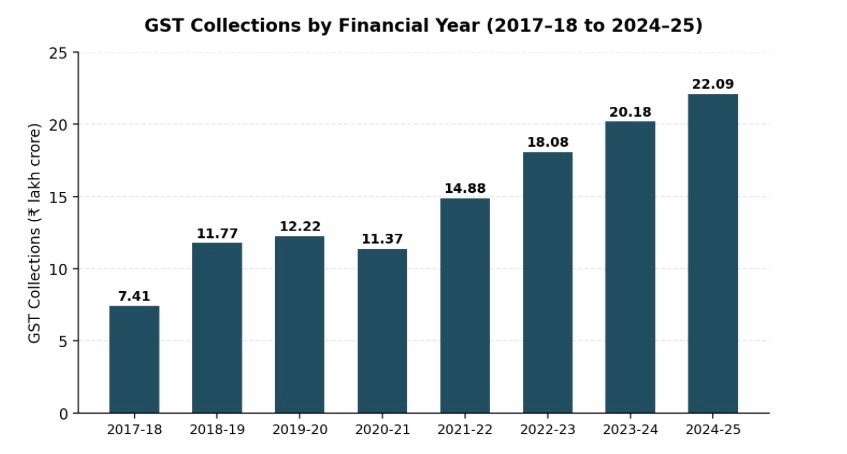
Figure 1.1: GST collections by financial year, 2017–18 to 2024–25 (₹ lakh crore).
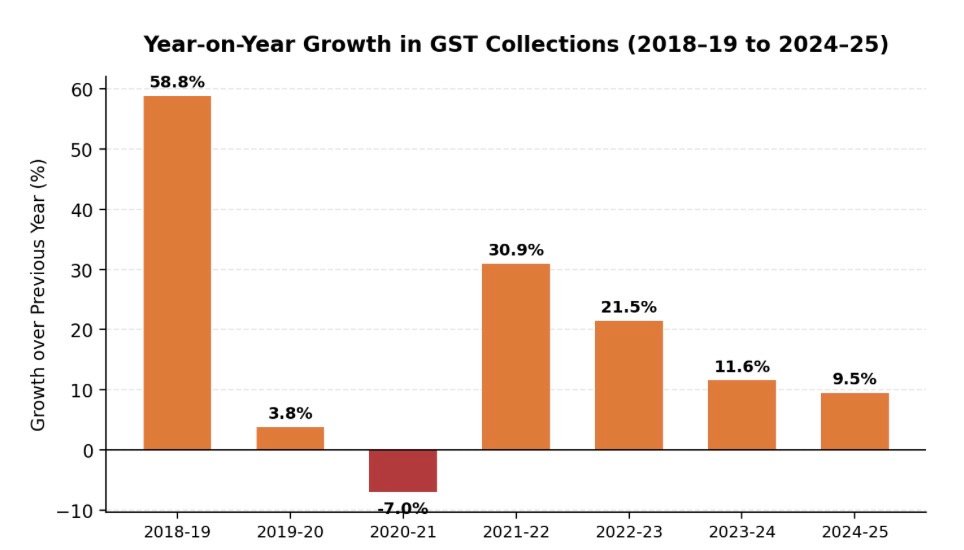
Figure 1.2: Year-on-year growth in GST collections, 2018–19 to 2024–25.
Section 2: Import Tariffs and Trade Competitiveness
Tariffs vs Imports — Before and After Make in India
|
Metric |
Before Make in India (2010–13) |
After Make in India (2014–23) |
|
Average Tariff Rate |
11.38% |
10.67% |
|
Average Annual Imports |
$1,276B/yr |
$1,478B/yr |
Source: WITS, World Bank (via IISPPR Tariff & Trade Report)
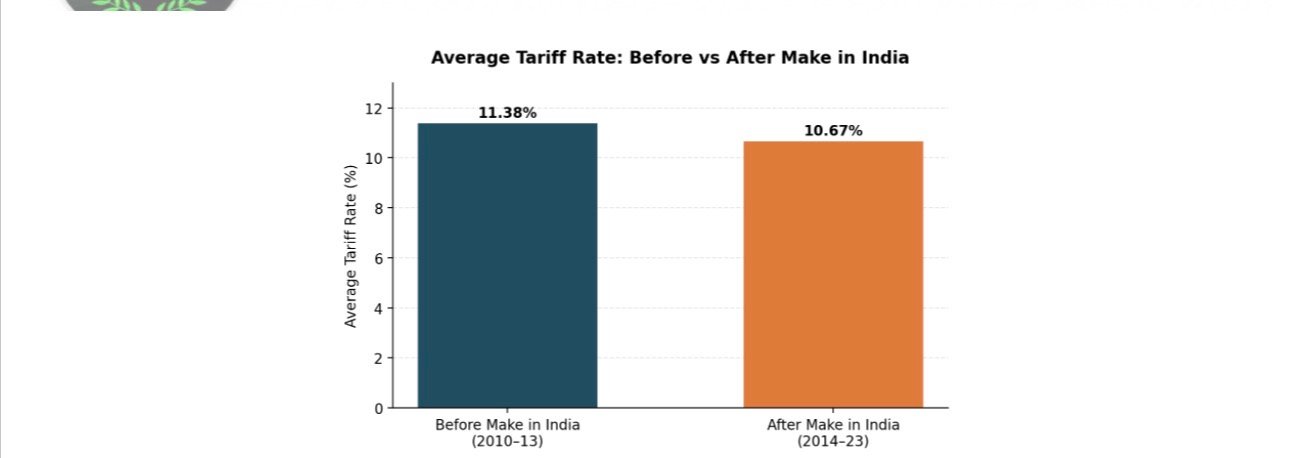
Figure 2.1: Average tariff rate, before vs after Make in India (2010–13 vs 2014–23).
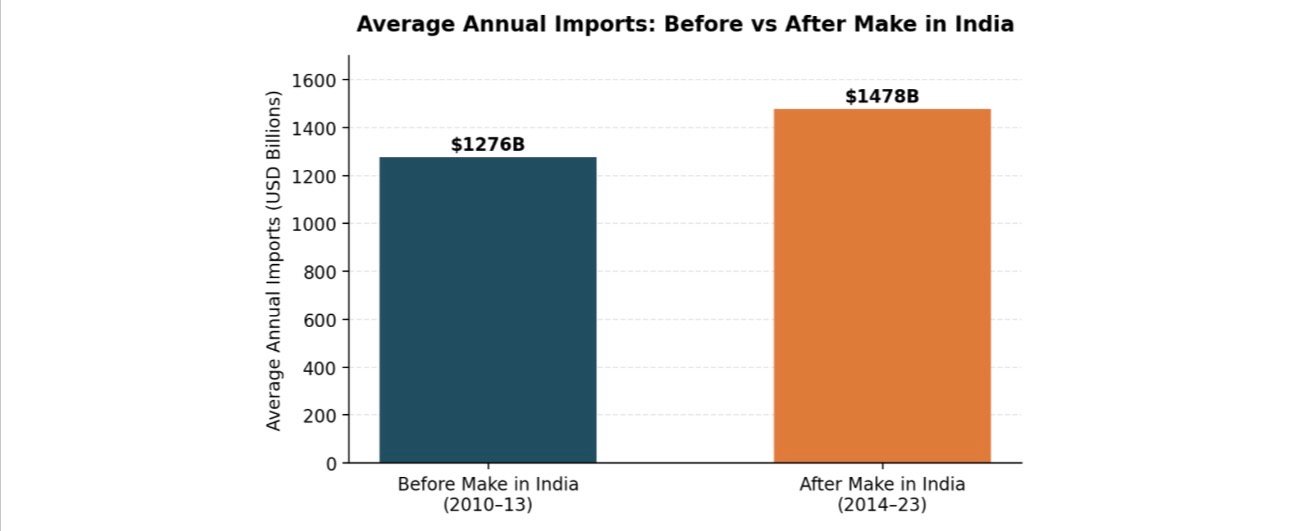
Figure 2.2: Average annual imports, before vs after Make in India (2010–13 vs 2014–23).
The average tariff rate barely moved between the two periods — in fact, it fell slightly, from 11.38% before Make in India to 10.67% after, while average annual imports rose by nearly 16%, from $1,276B to $1,478B a year. The two figures move in the opposite direction to what a tariff-suppresses-imports story would predict: tariffs down, imports up. The report’s own correlation check across 2010–2023 backs this up, finding essentially no statistical relationship between tariff levels and import volumes (r = -0.02, not significant) — reinforcing what the charts show visually.
As with the GST trend above, this before-and-after comparison identifies an association (or, here, an absence of one) rather than a causal effect; other drivers of import volumes, such as domestic demand growth and global commodity prices, were not isolated in this analysis.
Section 3: MSME Compliance Costs and Conflicting Views on Tax Reforms
This section applies a before-and-after style comparison — measuring MSME compliance costs against the global benchmark — alongside a review of conflicting literature, to test whether the aggregate gains described in Sections 1 and 2 actually reach individual businesses.
MSME GST Compliance Cost
|
Sector |
GST Compliance Cost (% of Turnover) |
|
Manufacturing MSMEs |
4.2% |
|
Trading MSMEs |
3.6% |
|
Services MSMEs |
3.1% |
|
Global Benchmark (Well-designed Tax System) |
1-2% |
Source: GST Compliance Burden and Its Impact on Business Operations of MSMEs: A Study in Bengaluru South District (FY 2024-25); Global benchmark based on World Bank (2022).
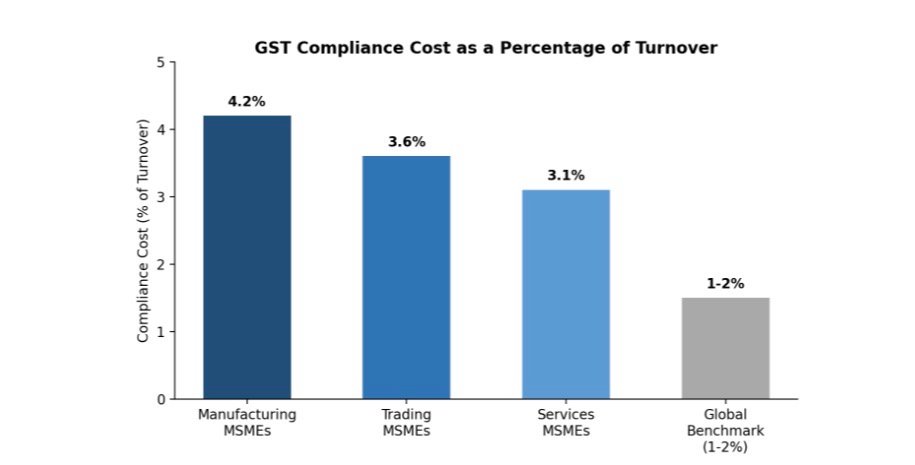
Figure 3.1: GST compliance cost as a percentage of turnover, by MSME sector, compared to the global benchmark.
The table above shows Manufacturing MSMEs in India pay a GST compliance cost of 4.2% of turnover, more than double the 1–2% global benchmark for a well-functioning tax system. Most of this comes down to input-output matching, which is complicated enough that most small manufacturers end up paying a tax consultant to stay compliant, adding to their overall cost of doing business. Trading (3.6%) and services (3.1%) MSMEs don’t face the same burden, mainly because their invoicing is simpler and they don’t have as many input-tax-credit transactions to track. So the pattern here is that the more complex a firm’s supply chain, the more compliance eats into its margins, meaning smaller manufacturers, the ones GST formalisation was supposed to help, end up carrying the highest cost of that same formalisation.
Manufacturing MSMEs clearly stand out above the global benchmark, with trading and services in between. These figures are attributed here specifically to GST-related compliance processes, as reported by the source survey; the analysis does not rule out that other regulatory, tax, or administrative requirements unrelated to GST may also contribute to the overall cost burden that manufacturing MSMEs report.
Conflicting Studies on the Impact of Tax Reforms
|
Tax Reforms Helped |
Tax Reforms Hurt |
|
Aggarwal & Mittal (2019) indicate that Indian tax reforms improved revenue efficiency, minimized distortions, and expanded the tax base by simplifying regulations and lowering compliance barriers. Key improvements included enhanced tax buoyancy, increased formalization of the economy, and better corporate investment environments. |
Singh (2018) reported that frequent changes in GST Rules created compliance difficulties for MSMEs increasing paperwork and operational costs. The implementation of GST had changed the financial performance of Indian companies after one year of implementation. |
|
NITI Aayog (2025) concluded that taxation reforms encourage formalization of firms, improve tax transparency and increased competitiveness of Indian manufacturers in the long run. |
Vijay & Sengar (2019) observed that small businesses faced cashflow problems, delays in input tax credit refunds, and higher accounting expenses after GST implementation. |
Impact of Tariffs on China Dependence
|
Policy Goal |
Actual Finding |
Interpretation |
|
Reduce India’s dependence on Chinese imports. |
China’s share of India’s imports increased from 11.1% in 2010 to 16.1% in 2023, despite tariff increases. |
The policy objective of reducing dependence on China was not fully achieved, suggesting that tariffs alone were insufficient to significantly change India’s import patterns. |
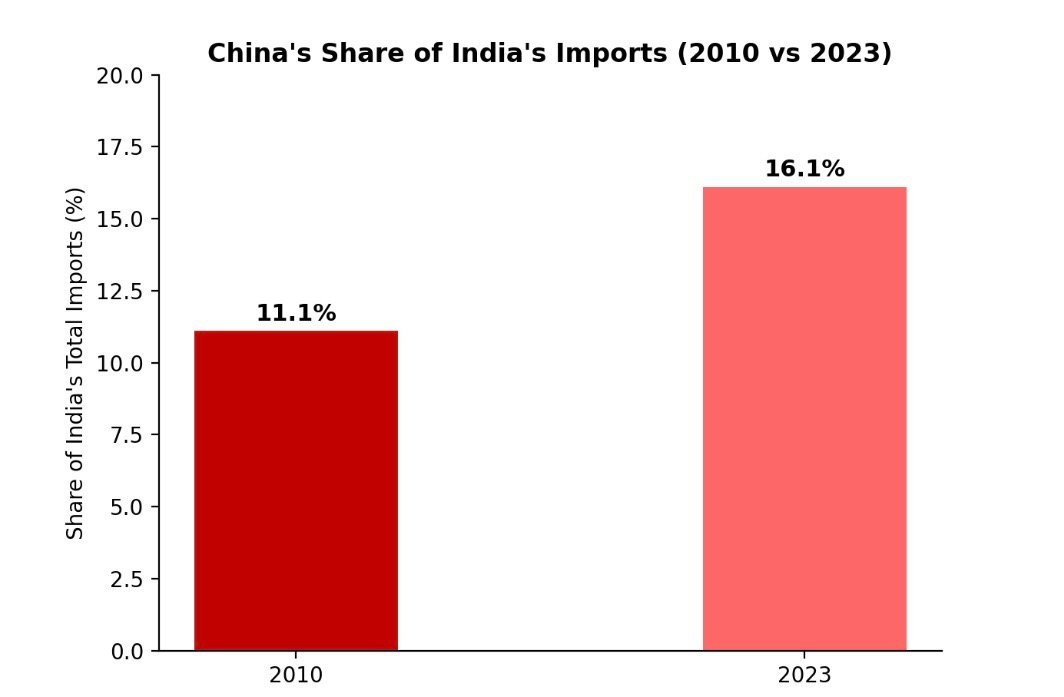
Figure 3.2: China’s share of India’s total imports, 2010 vs 2023 (Source: India Tariff & Trade Analysis Report, Finding 3, p.5).
China’s share rose from 11.1% in 2010 to 16.1% in 2023. This shows that despite increased tariffs under the Make in India initiative, dependence on Chinese imports did not decline as expected.
This analysis is based on aggregate, economy-wide import-share data and does not examine product-level strategic dependence — for example, on critical inputs such as electronics components or active pharmaceutical ingredients (APIs) — or the extent of domestic substitution achieved within specific sectors. A more granular, product-level study would be needed to fully assess India’s dependence on Chinese imports.
Overall Explanation for the Conflicting Findings
Overall, the trends appear to be different due to the fact that macroeconomic indicators tend to improve even when the situation in businesses remains bleak. For example, manufacturing MSMEs bear the GST liability of 4.2% of turnover as compared to 1-2% in the global practice, which demonstrates that despite overall improvements on the governmental level, the situation for specific players remains challenging. In another example, the share of Chinese imports in India’s total imports increased from 11.1% to 16.1% in the case of increased tariffs, which is contradictory to the set goal. Overall, the trends demonstrate that despite improvements in aggregate performance, specific areas and objectives may underperform.
5. Discussion
Tax policy has been one of the key factors determining the development of manufacturing industry in India under the Make in India program. The adoption of the Goods and Services Tax (GST) in 2017 helped to solve the structural problem of cascading taxes. The elimination of inter-state check-posts and the establishment of GST helped to reduce logistics costs and facilitated the work of manufacturers, as confirmed by NITI Aayog (2025) that presents a simple tax policy as an important sign that is likely to attract domestic and foreign investors.
Import duties are believed to protect domestic manufacturers from competition because higher duties make the importing of products less attractive. This statement does not find its confirmation in the statistical analysis that shows the absence of correlations between import duties and import volumes. Fluctuations in exchange rates, involvement in global supply chains and necessity to purchase certain components in India could explain this situation.
These explanations are offered here as plausible interpretations rather than empirically tested findings: exchange-rate movements, global supply-chain configurations, and component-sourcing requirements were not directly measured or tested in this study, and confirming them would require a dedicated empirical analysis, which is left for future research.
Uneven distribution of benefits has also been observed, whereby larger firms had a smooth time complying with GST rules thanks to specialized accountants and compliance departments, while the micro, small, and medium-sized firms had higher costs of compliance and cash flow problem as a result of delays in receiving input tax credit refund. The difference highlights the debate between economists regarding the role of taxation in development.
This inconsistency in policy and outcome exists in India’s approach towards its relationship with China. In spite of the increased taxes in order to reduce the dependency on imports, China has increased its market share of imports in India. In addition to the above findings, it can be concluded that tariffs as policy tools may not work when there is a goal of changing the sources which depend more on cost and production capacity than tariff levels.
6. Conclusion
This study shows that taxation reforms under the Make in India policy have had both positive and negative effects on the manufacturing sector. GST has helped in bringing different indirect taxes under one system and has increased government revenue. GST receipts rose from ₹7.41 lakh crore in 2017-18 to ₹22.09 lakh crore in 2024-25, indicating that the GST has been a relatively reliable form of government income.
The three-fold increase in GST receipts since 2017-18 and stabilization of receipts at around 9-12% growth after 2021-22 is consistent with — though does not, on its own, prove — the broader success of Make in India’s tax reforms, given the descriptive and correlational nature of this analysis. There have been considerable developments. But taking a closer look at areas where the policy should have made a difference, one can see a different picture.
Manufacturing MSMEs are paying GST compliance costs more than double the global benchmark, not because rates are punishing, but because input-tax-credit matching is genuinely hard to navigate without hiring outside help. China’s share of India’s imports rose from 11.1% to 16.1% over the same years tariffs were going up, which is close to the opposite of what the policy was meant to achieve. The literature reflects this same split: some researchers point to better formalization and tax buoyancy, others to refund delays and cash-flow strain for smaller firms, and neither side is wrong. What this suggests is that macro-level success and firm-level success aren’t the same measurement, and treating them as interchangeable is where the disconnect comes from.
A tax system can be collecting more, running smoother, and still be failing the small manufacturers it was designed to help. Conclusions are drawn solely based on secondary data, and the review of literature does not exhaust all published studies on the topic. If the second decade of Make in India is going to address this issue, it will likely need something other than more tariff adjustments — a compliance system simple enough that a small manufacturer doesn’t need an accountant just to stay compliant.
References
Aggarwal, A., & Mittal, M. (2019). Impact of Goods and Services Tax (GST) on manufacturing sector in India. International Journal of Management Studies, 6(3), 1–10.
Barro, R. J. (1990). Government spending in a simple model of endogenous growth. Journal of Political Economy, 98(5), S103–S125.
Djankov, S., Ganser, T., McLiesh, C., Ramalho, R., & Shleifer, A. (2010). The effect of corporate taxes on investment and entrepreneurship.
American Economic Journal:
Macroeconomics, 2(3), 31–64.
Goods and Services Tax Network. (2025). 8 years of GST: Payments July ’17 to Mar ’25.
Government of India, Ministry of Finance. (2018). E-Way Bill [Press release]. Press Information Bureau.
Government of India, Ministry of Finance. (2019). Corporate tax rates slashed to 22% for domestic companies and 15% for new domestic manufacturing companies and other fiscal reliefs [Press release]. Press Information Bureau.
https://pib.gov.in/PressReleasePage.aspx?PRID=1585641
Government of India, Ministry of Finance. (2025). Eight years of GST: Record gross GST collection in 2024–25; survey finds 85% industry approval [PIB Backgrounder]. Press Information Bureau.
https://www.pib.gov.in/PressNoteDetails.aspx?NoteId=154789&ModuleId=3
Government of India, Ministry of Finance. (2026). Industry’s next leap: Structural transformation and global integration. In Economic Survey 2025–26 (Chapter 8).
https://www.indiabudget.gov.in/economicsurvey/doc/eschapter/echap08.pdf
Government of India, Ministry of Micro, Small & Medium Enterprises. (2014). Contribution of MSMEs to GDP, exports and employment [Press release]. Press Information Bureau.
https://www.pib.gov.in/newsite/PrintRelease.aspx?relid=107201
Government of India, Ministry of Micro, Small & Medium Enterprises. (2021). Contribution of MSMEs to GDP [Press release]. Press Information Bureau.
https://www.pib.gov.in/PressReleasePage.aspx?PRID=1744032
Invest India. (n.d.). The PLI scheme: A game-changer for India’s manufacturing sector.
https://www.investindia.gov.in/team-india-blogs/pli-scheme-game-changer-indias-manufacturing-sector
Mishra, S., Gable, S. L., & Anand, R. (2015). Make in India: Which exports can drive the next wave of growth? (IMF Working Paper No. 15/119). International Monetary Fund.
https://www.elibrary.imf.org/view/journals/001/2015/119/article-A001-en.xml
NITI Aayog. (2025). NITI Tax Policy Working Paper Series-I: Enhancing certainty, transparency and uniformity in permanent establishment and profit attribution for foreign investors in India. Government of India.
OECD. (2017). Making income and property taxes more growth-friendly and redistributive in India (OECD Economics Department Working Papers No. 1385). OECD Publishing.
https://doi.org/10.1787/5jldrz1h6c3f-en
OECD. (2019). OECD economic surveys: India 2019. OECD Publishing.
Ojha, R., & Vrat, P. (2019). Implications of Goods and Services Tax reform on the Make in India initiative: A system dynamics perspective. Systems Research and Behavioral Science, 36(4), 551–563.
https://doi.org/10.1002/sres.2570
Parihar, A. S., & Gujar, C. P. (2022). Goods and Service Tax (GST): Make in India by making one India. International Journal of Innovative Research in Technology, 9(7), 431–436.
PRS Legislative Research. (2019). The Taxation Laws (Amendment) Ordinance, 2019.
https://prsindia.org/billtrack/the-taxation-laws-amendment-ordinance-2019
Rodrik, D. (2008). Normalizing industrial policy (Commission on Growth and Development Working Paper No. 3). World Bank.
Singh, N. (2018). Goods and Services Tax (GST) and its impact on MSMEs in Rajasthan.
International Journal of Engineering and Management Research, 8(5), 84–88.
Stiglitz, J. E. (1988). Economics of the public sector (2nd ed.). W. W. Norton & Company.
Thakur, T., & Devi, A. D. (2025). GST reforms 2025 and the new tax regime in India: Towards simplified taxation or added complexity.
Journal of Economics, Management and Trade, 31(12), 94–113.
https://doi.org/10.9734/jemt/2025/v31i121375
Vijay, [initial needed]., & Sengar, [initial needed]. (2019). Impact of GST on the performance of MSMEs in Rajasthan. International Journal of Management and Applied Research, 6(1), 1–11.
World Bank. (n.d.). World Integrated Trade Solution (WITS): Tariff and trade data [Data set].
World Trade Organization, International Trade Centre, & UN Trade and Development. (2024). World tariff profiles 2024. WTO.
Gupta, A. (2026). Impact of the China+1 strategy on India’s export opportunities and manufacturing growth. SSRN.
https://papers.ssrn.com/sol3/papers.cfm?abstract_id=6942898
Investigating the Implications of Goods and Services Tax Revenue on Economic Growth: Empirical Insight from Indian Economy 2025Goods and Services Tax in India: Progress, Performance & Prospects 2019
The role of FDI in the growth of Indian manufacturing under Make in India 2020.