Authors: Devine Odiley, Kushaal Kackar, Palak
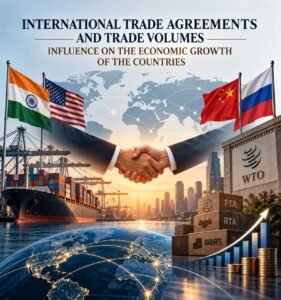
Since its establishment in 1995, the World Trade Organization (WTO) has functioned as the central institutional pillar of the multilateral trading system, tasked with promoting trade liberalisation, reducing uncertainty in international commerce, and supporting economic development. The organisation’s institutional framework is formally grounded in the principles of sovereign equality and consensus-based decision-making, suggesting a rules-based system in which all member states participate on equal footing (Maswood, 2005). In practice, however, scholars in international political economy have long questioned whether this formal equality translates into substantive equality in influence and outcomes.
A substantial body of literature argues that the WTO operates within broader global power hierarchies that privilege economically dominant states. These hierarchies manifest in agenda-setting practices, technical capacity disparities, and informal negotiating procedures that allow powerful members to shape outcomes in ways that align with their domestic economic interests (Wolfe, 2007; Kahler, 2013). As a result, the WTO has often been characterised less as a neutral arbiter of trade rules and more as a site of strategic bargaining in which structural power is reproduced through institutional processes (Balaam & Dillman, 2019).
This paper examines how power relations within the WTO influence global development outcomes, with particular attention to industrialisation and export diversification in developing and least-developed countries. By combining institutional analysis with comparative economic indicators, the study seeks to connect the politics of trade governance with observable patterns of structural transformation. The central argument is that although the WTO has contributed to the expansion of global trade and the consolidation of a predictable legal framework, its institutional practices and rule structures continue to reflect asymmetries that constrain the development strategies of weaker members.