Authors: Avadhutha Nikhil, Akshita Verma
Abstract
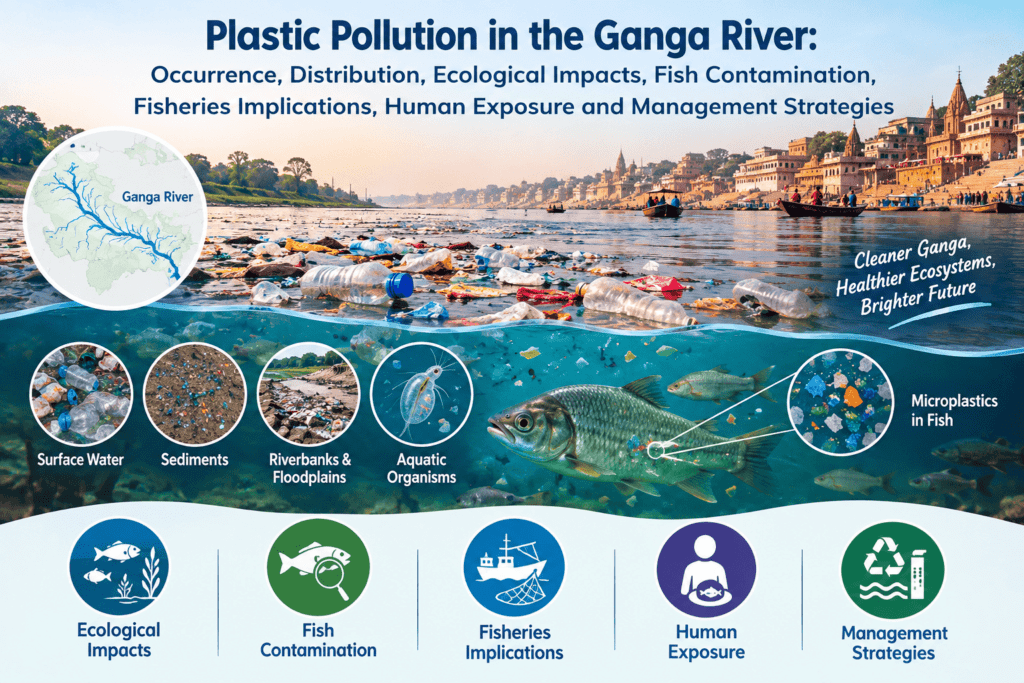
Plastic pollution is an increasing environmental challenge for freshwater ecosystems and the Ganga River is particularly vulnerable because of its extensive human, agricultural, industrial, fisheries and religious activities. This study provides existing information on the sources, occurrence, detection, distribution and potential impacts of plastic pollution on aquatic ecosystems, fisheries, human health and river-dependent livelihoods, while also examining management strategies. A narrative literature review was conducted using research and review articles, government reports and relevant institutional publications addressing plastic and microplastic contamination in the Ganga River. The examined information demonstrates that plastic contamination occurs across multiple areas, including surface water, sediments, riverbanks, floodplains and aquatic organisms, with considerable spatial and seasonal variation. Reported microplastic concentrations varied among locations and environmental matrices, ranging from 17–36 particles/L in surface water at Varanasi during the pre-monsoon period and 50–1300 particles/kg in sediments across the upper Himalayan Ganga. Microplastics have also been detected in commercially consumed fish, including gastrointestinal and muscle tissues, indicating potential pathways for biological and dietary exposure. Household waste was identified as a major observed source of plastic debris, alongside religious activities and discarded fishing gear. Overall, the data highlight the need for source reduction, improved solid-waste and wastewater management, standardised monitoring procedures and focused control of plastic deposition in riverine and floodplain ecosystems. However, substantial uncertainties remain regarding long-term ecological effects, human-health risks and socioeconomic consequences. Future interdisciplinary research integrating environmental monitoring, fisheries science, toxicology, food safety and socioeconomic assessment is therefore essential for developing effective, evidence-based strategies for reducing plastic pollution and supporting the sustainable management of the Ganga River.
Introduction
The rapid expansion of plastic manufacturing and consumption has contributed to the widespread occurrence of plastic waste across terrestrial and aquatic environments. Unlike many naturally occurring materials, plastic residues can remain in the environment for prolonged periods, gradually fragmenting into smaller particles and accumulating across diverse habitats, including soils, inland waters and marine ecosystems (Geyer et al., 2017). Freshwater ecosystems are increasingly recognized as major pathways for transporting plastic debris from terrestrial sources to marine environments, making riverine pollution a growing global concern.
The Ganga River extends approximately 2,500 km from the Himalayas across northern and eastern India and supports a wide range of ecological, economic and social activities within its basin, including agriculture, fisheries, domestic water supply, industry, hydropower, tourism and religious activities. The Ganga basin supports the livelihoods and well-being of hundreds of millions of people who depend on the river and its resources (Balkrishna et al., 2024). However, rapid urbanization, industrialization, population growth, inadequate waste management and other anthropogenic activities have contributed to the degradation of the river ecosystem and threatening its ecological integrity (Anand et al., 2026).
Although several studies have reported plastic contamination in the Ganga River, most have focused on individual aspects such as pollution sources, occurrence, detection methods, ecological impacts, fisheries or human health. Consequently, a comprehensive synthesis integrating these interconnected dimensions remains limited. Such an assessment is essential for improving the understanding of plastic pollution and supporting evidence-based conservation and sustainable river management.
This study contributes to the existing scientific literature on plastic pollution in the Ganga River, focusing on its sources, detection methods, impacts on aquatic ecosystems and fisheries, implications for human health, socioeconomic consequences and sustainable river management strategies. It further identifies existing research gaps and highlights future research priorities to support policy development and effective management of the Ganga River.
Research Questions
- What are the major sources, distribution patterns and transport pathways of plastic pollution in the Ganga River?
- What evidence exists for biological exposure and ecological, fisheries, livelihood and potential human-health implications?
- What key evidence gaps and management priorities emerge from the available literature?
Literature Review
Plastic pollution has increasingly affected freshwater ecosystems, with microplastics (MPs) receiving particular attention because of their persistence and potential effects on aquatic organisms, human health and ecosystem functioning. The Ganga River supports millions of people through fisheries, agriculture, water supply, hydropower and tourism, while rapid urbanization and inadequate waste management have increased plastic inputs into the river system (Anand et al., 2026). The ecological and socio-economic importance of the Ganga therefore makes it necessary to examine plastic pollution as a connected process, beginning with its sources and movement through the river system and extending to biological exposure, ecological and socio-economic implications and management measures.
Economic Importance of the Ganga River
The Ganga River basin provides important ecological resources and ecosystem functions that support livelihoods and economic activities. Sustainable management of these resources is therefore closely linked with the well-being of river-dependent communities. Recognizing this relationship, the Government of India introduced the Arth Ganga initiative in 2019 to promote community participation while linking river conservation with livelihood improvement and economic growth (Balkrishna et al., 2024). The importance of the river extends beyond environmental conservation to fisheries, livelihoods, tourism and other economic activities. Consequently, deterioration of river ecosystems and water quality associated with increasing plastic pollution can potentially affect these ecological and economic functions.
Conceptual Framework for Plastic Pollution: Sources, Pathways, Exposure, Impacts and Management
Plastic enters the Ganga River system through different sources, including household waste, urban activities, religious practices and fishing-related activities. Following entry into the river environment, plastic materials can be transported by river flow, runoff and seasonal hydrological processes. Some material can also accumulate in sediments, shorelines and floodplain environments, where it may remain temporarily and potentially redistributed during subsequent hydrological events, creating different exposure pathways across environmental compartments. Plastic and microplastics have been reported in surface water, sediments and aquatic organisms, including commercially consumed fish. The occurrence of microplastics in gastrointestinal tracts provides evidence of biological exposure through ingestion, while their detection in edible muscle represents a potential dietary exposure pathway.
The consequences of this contamination need to be considered at both ecological and socio-economic levels. Available Ganga-specific studies provide stronger evidence for the occurrence and exposure of microplastics than for direct population-level ecological effects or specific human-health outcomes. Similarly, fisheries and livelihood studies demonstrate the socio-economic importance of the river and concerns associated with declining fish availability, but they do not establish plastic pollution as the sole cause of fisheries decline.
Source reduction and improved solid-waste management can address plastic entering the river from settlements, while location-specific measures can address religious activities and discarded fishing gear. Monitoring of water and sediment is required to understand microplastic contamination, while floodplain and shoreline accumulation areas also require attention. Standardized and long-term monitoring can improve comparison among studies and strengthen understanding of the links between plastic sources, transport, exposure and consequences.
Sources and Pathways of Plastic Pollution
Microplastics are generally classified as primary or secondary according to their origin, with primary microplastics being intentionally manufactured at small sizes for specific industrial and commercial applications, such as microbeads and plastic pellets used in plastic production, whereas secondary microplastics are generated through the fragmentation of larger plastic items, including packaging materials, bottles, fishing gear and synthetic textiles. Exposure of these materials to sunlight, wave action and weathering can progressively fragment them into microscopic particles (Anderson et al., 2016).
These different sources can contribute to plastic occurrence across water, sediment, shoreline and floodplain environments and contamination reported in river water, sediments and aquatic organisms does not necessarily represent the same exposure conditions. Differences in sampling locations, environmental compartments, sampling periods and analytical approaches are therefore important when comparing reported plastic abundances among studies.
Evidence from the Ganga also indicates that visible plastic debris originates from different human activities, as Sharma et al. (2025) identified household waste as the largest observed source category in the surveyed riverine environments, followed by discarded fishing gear and religious waste. These observations indicate that plastic pollution is connected to both general land-based waste generation and river-associated activities.
However, the identified source categories should be interpreted within the spatial scope of the survey. They represent observed debris sources in the surveyed areas and should not be treated as quantitative estimates of their contribution to the entire Ganga basin.
Transport, Distribution and Fate of Plastic in the Ganga River System
The Ganga River extends across India and Bangladesh and represents an important freshwater ecosystem in South Asia. It provides water for drinking and irrigation and supports fisheries, aquatic biodiversity and the livelihoods of river-dependent communities (Badola et al., 2023). Plastic pollution enters the river through several human activities, including urban development, industrialization, inadequate waste management and large-scale religious activities.
The Ganga also acts as a pathway for transporting plastic debris from terrestrial sources towards downstream aquatic and coastal environments. Previous studies have reported substantial quantities of plastic entering the river system and being transported towards the Bay of Bengal (Kumar & Ram, 2025). However, reported estimates should be compared cautiously because they may differ in study period, geographical boundary, sampling approach and estimation methodology. Differences between estimates therefore do not necessarily represent contradictory findings and may partly reflect differences in how plastic inputs and transport were measured or estimated.
The available evidence further indicates that plastic distribution is not determined solely by continuous downstream movement. River flow, runoff and seasonal hydrological conditions can redistribute plastic, while sediments, shorelines and floodplains can act as locations of accumulation.
Occurrence and Spatial Distribution of Plastic Pollution
Microplastics have been detected in different environmental compartments of the Ganga River and its tributaries, including water, sediments and fish. However, the available studies differ considerably in their sampling locations, environmental matrices, sampling periods and reported contamination patterns. These methodological differences are important when interpreting quantitative results. Sarkar et al. (2019) detected meso- and microplastics in sediments at several locations in eastern India, including Buxar, Patna, Bhagalpur, Nabadwip, Barrackpore, Godakhali and Fraserganj. In contrast, Nayal and Suthar (2022) investigated tributaries around Dehradun, representing a different geographical and environmental setting. Badola et al. (2023) examined the upper Ganga and reported MPs in water, sediment and fish, thereby providing evidence across several environmental and biological compartments. Singh et al. (2024), in comparison, focused on Varanasi and reported spatial and seasonal variation in MP abundance.
These studies collectively demonstrate contamination across different sections of the wider Ganga system, but their results should not be treated as measurements of a single longitudinal concentration gradient. Sediment-associated contamination, water-column concentrations and fish-associated concentrations represent different environmental matrices and exposure conditions. The physical characteristics of the particles also vary, fibres and fragments were commonly reported, while polyethylene (PE) and polypropylene (PP) were frequently identified among dominant polymers (Nayal & Suthar, 2022; Badola et al., 2023), such differences may reflect variation in local sources and environmental conditions.
Evidence from fish further extends the contamination pathway from environmental compartments to aquatic organisms. Badola et al. (2023) detected MPs in fish from the upper Ganga, whereas Kumar and Ram (2025) reported MPs in commercially important fish species from the Varanasi region. Both studies demonstrate biological exposure, although their different geographical settings and sampled fish populations should be considered when comparing their findings.
Overall, the literature demonstrates widespread occurrence of plastic contamination in investigated sections of the Ganga system. However, the reported abundances cannot be directly equated because the studies differ in location, matrix, sampling period, particle characteristics and analytical procedures.
Research Methodology
Research Design
This study is based on a narrative literature review with qualitative and quantitative evidence synthesis to examine plastic pollution in the Ganga River through the analysis and synthesis of published secondary data. The review brings together scientific evidence on the sources of plastic pollution, methods used for its detection and its impacts on aquatic ecosystems, fisheries, human health and sustainable river management. A narrative literature review was adopted to combine findings from diverse studies, identify existing knowledge gaps and provide a comprehensive understanding of the current state of research on plastic pollution in the Ganga River without undertaking primary data collection.
Data Sources
The study was based mainly on secondary sources of information obtained from peer-reviewed journal articles, review papers, government reports, policy documents and publications from national and international organizations. Scientific literature was accessed through widely recognized academic databases, including Google Scholar, Scopus, Web of Science and publisher platforms such as Elsevier, Springer Nature, Wiley, Taylor & Francis and MDPI. Government reports and policy documents related to river conservation and plastic waste management were also included to provide policy and management perspectives.
Literature Search Strategy
The literature search covered publications from 2015 to 2026, using combinations of keywords related to the research topic, including plastic pollution, microplastics, Ganga River, freshwater pollution, aquatic ecosystems, fisheries, human health, river management, plastic waste and sustainable development. Reference lists of relevant publications were also examined to identify additional studies. Priority was given to recent publications while including important earlier studies that have significantly contributed to understanding microplastic pollution and its environmental impacts.
Selection of Literature
The selected literature focused on studies directly related to plastic pollution in the Ganga River and other freshwater ecosystems with comparable environmental conditions. Publications addressing the occurrence, sources, detection techniques, environmental distribution, ecological impacts, fisheries, public health implications and management strategies were included in the review. Articles lacking relevance to the objectives of the study, duplicate publications and sources with insufficient scientific information were excluded. Preference was given to peer-reviewed research and authoritative reports to ensure the reliability and credibility of the information presented.
Data Analysis and Synthesis
Information extracted from the selected literature was organized and analyzed using a thematic approach. The available evidence was grouped into major themes, including the economic importance of the Ganga River, sources of microplastic pollution, detection and characterization techniques, impacts on aquatic ecosystems, fisheries and livelihoods, human health risks and sustainable river management strategies. Findings from different studies were compared to identify common patterns, emerging trends, methodological differences and existing research gaps. The synthesized information was then used to provide an integrated understanding of the current status of plastic pollution in the Ganga River and to highlight important areas for future research and policy intervention.
Results and Discussion
Source, Transport and Spatial Distribution of Plastic Pollution in the Ganga River
The reviewed studies demonstrate that plastic contamination occurs across different sections of the Ganga River, although reported abundance varies substantially among locations, environmental matrices and sampling periods. Because the studies used different sampling designs, particle-size ranges, environmental matrices and analytical procedures, the reported concentrations should not be treated as directly comparable measurements of a single longitudinal gradient. Nevertheless, comparison of the studies provides evidence of spatial heterogeneity and helps identify differences in contamination patterns and potential accumulation zones.
Upper Himalayan Ganga
In the upper Himalayan stretch, Chaudhary et al. (2025) investigated microplastic contamination at 19 sites distributed across Devprayag, Rishikesh and Haridwar. A total of 228 samples were analysed over six months. Microplastics were detected in all investigated water and sediment samples and concentrations ranged from 100 to 1550 particles/L in water and from 50 to 1300 particles/kg in sediment.
Unlike studies that primarily reported concentrations at individual locations, Chaudhary et al. (2025) reported an increasing microplastic flux from Devprayag through Rishikesh to Haridwar. This pattern indicates greater contamination towards the more densely populated downstream locations within the investigated upper Himalayan stretch. Microplastics in water were predominantly within the 500–5000 μm and 250–500 μm size categories during the post-monsoon period. Fibres were the dominant particle form, while polyethylene (PE) and polyamide (PA) were among the abundant polymers. Elevated ecological-risk indicators were also reported at most sampling stations.
Middle Ganga and Varanasi
Microplastic contamination has also been documented in the middle Ganga, where Mahesh et al. (2021) reported microplastics in surface-water samples from Haridwar, Kanpur and Varanasi. The mean abundance was 1.30 ± 0.518 MPs/m³ in Haridwar, 2.16 ± 0.500 MPs/m³ in Kanpur and 2.42 ± 0.405 MPs/m³ in Varanasi. Thus, among the three investigated locations, Varanasi had the highest reported concentration and Haridwar the lowest.
The particle characteristics reported by Mahesh et al. (2021) differed from those reported by Chaudhary et al. (2025). Fragments were predominant in the surface-water samples examined by Mahesh et al. (2021), followed by films and fibres, whereas fibres predominated in the upper Himalayan study. Particles smaller than 300 μm represented the most frequently observed size category in the Mahesh et al. (2021) study. Approximately 40 polymer types were reported, with EVOH, polyacetylene, PIP, PVC and PVAL among the predominantly identified polymers.
The numerical concentrations from Mahesh et al. (2021) and Chaudhary et al. (2025) should not be interpreted as evidence that one location necessarily has higher contamination than another because the reported values use different units and arise from different sampling and analytical approaches. Their value lies primarily in demonstrating differences in contamination patterns among investigated locations.
Seasonal variation at Varanasi
Singh et al. (2024) provided further evidence of spatial and seasonal heterogeneity in microplastic contamination at Varanasi. During the pre-monsoon period, microplastic concentrations ranged from 17 to 36 particles/L in water and from 160 to 312 particles/kg in sediment, with higher concentrations reported at most sampling sites during the post-monsoon period. The composition of particles also varied between sampling locations and seasons in terms of shape, colour and size. These findings complement the spatial patterns reported by Mahesh et al. (2021), who observed differences among Haridwar, Kanpur and Varanasi. While Mahesh et al. (2021) highlighted differences among locations along the Ganga, Singh et al. (2024) showed that contamination can also vary within Varanasi according to sampling location and season. Taken together, these studies indicate that spatial comparisons of microplastic contamination should consider both geographical location and sampling period.
Shoreline and floodplain accumulation
Plastic pollution was also evident beyond the active river channel. Sharma et al. (2025) surveyed river shorelines and floodplain settlements along the Ganga. Across two river-shoreline survey periods, 9,904 litter items weighing 126.8 kg were recorded, while a separate floodplain survey documented 27,826 items weighing 75.93 kg. Plastic accounted for 99.8% of the shoreline debris and 90.6% of the floodplain debris. Household waste was the largest observed source category, accounting for 87% of the identified sources in the surveyed areas, followed by discarded fishing gear (4.5%) and religious waste (2.6%). These percentages represent observed debris sources within the surveyed areas and should not be interpreted as quantitative estimates of their contribution to plastic pollution across the entire Ganga basin.
The spatial distribution of debris also differed between river shorelines and floodplains. Sharma et al. (2025) reported approximately 6.95 items/m² in floodplains, compared with 0.25 items/m² along river shorelines. This difference indicates considerable retention of plastic debris within floodplain environments. Plastic deposited during high-flow or flood conditions may remain in floodplain environments and may subsequently be redistributed during later hydrological events. These findings strengthen the transport component of the conceptual framework, indicating that plastic in the Ganga should not be viewed solely as material continuously moving downstream. Instead, it can be transported, deposited, retained, fragmented and potentially redistributed under changing hydrological conditions.
Comparison of Plastic Characteristics and Polymer Composition
The reviewed studies identified substantial variation in the physical characteristics and polymer composition of plastic particles in the Ganga. Microplastics occurred mainly as fragments, fibres and films, while larger plastic debris included consumer and household-related materials. The predominance of fragments in the surface-water samples reported by Mahesh et al. (2021), together with the predominance of fibres in the upper Himalayan Ganga reported by Chaudhary et al. (2025), indicates that plastics occur in multiple physical forms across the river system. Singh et al. (2024) further demonstrated differences in particle shape, colour and size among sampling locations and seasons.
Polymer composition also differed among studies. Chaudhary et al. (2025) reported PE and PA among abundant polymers in the upper Himalayan stretch. Singh et al. (2024) identified multiple polymer categories in Varanasi, while Mahesh et al. (2021) reported approximately 40 polymer types across Haridwar, Kanpur and Varanasi. These differences demonstrate the diversity of plastic materials present in the river system. However, polymer composition alone cannot establish the precise source of an individual particle because the same polymer can occur in several consumer, domestic and industrial products.
Sharma et al. (2025) provided additional source-specific evidence for visible plastic debris. Household waste constituted the largest identified source category, followed by discarded fishing gear and religious waste. These categories demonstrate contributions from everyday consumption, river-associated cultural activities and fisheries-related activities. Importantly, these percentages represent observed debris sources within the surveyed areas and should not be interpreted as quantitative estimates of their contribution to the entire Ganga basin.
Seasonal and Hydrological Transport
Seasonal hydrological conditions appear to influence plastic distribution within the Ganga. Singh et al. (2024) reported higher microplastic concentrations at most sampling sites in Varanasi during the post-monsoon period than during the pre-monsoon period. Similarly, Chaudhary et al. (2025) documented seasonal differences in microplastic characteristics between the pre- and post-monsoon periods in the upper Himalayan stretch. Together, these findings suggest that seasonal changes in river discharge, runoff and monsoon-related redistribution may influence the transport and deposition of plastic particles. However, plastic movement within the Ganga is not simply a process of continuous downstream transport. The high debris accumulation in floodplains reported by Sharma et al. (2025) further indicates that plastic can also be retained outside the main channel.
Therefore, the Ganga can be considered a dynamic plastic system in which plastic is introduced from multiple sources and subsequently transported, deposited, fragmented and potentially redistributed according to local hydrological conditions.
Exposure of Aquatic Organisms and Fish Contamination
The occurrence of microplastics in fish provides evidence that plastic contamination extends beyond water and sediments to aquatic organisms. Badola et al. (2023) detected MPs in fish from the upper Ganga, with fibres identified as the predominant particle type. Kumar and Ram (2025) similarly reported MPs in commercially important fish species from the Varanasi region.
Kumar and Ram (2025) investigated four commonly consumed fish species Cyprinus carpio, Sperata aor, Johnius coitor and Labeo bata using 62 specimens collected from the Varanasi region. Microplastics were detected in the gastrointestinal tract of approximately two-thirds of the fish examined, whereas 15% of the fish contained microplastics in dorsal muscle tissue. The highest microplastic concentration reported in gastrointestinal tract samples was 19.04 items/g in Johnius coitor. The corresponding concentrations in Labeo bata, Sperata aor and Cyprinus carpio were 8.46, 3.74 and 3.68 items/g, respectively. Cyprinus carpio showed the highest microplastic concentration in muscle tissue, at 0.60 items/g.
Fibrous particles predominated in both gastrointestinal and muscle samples, with black and blue being the dominant colours. Raman spectroscopy identified poly(m-phenylene terephthalamide) as the most abundant polymer, accounting for approximately 35% of the identified microplastics, followed by polytrimethylene terephthalate at 23% (Kumar & Ram, 2025).
The differences among fish studies should be interpreted carefully, as Badola et al. (2023) and Kumar and Ram (2025) both establish biological exposure, but they investigated different geographical settings and fish populations. Consequently, their findings demonstrate occurrence across the Ganga system rather than providing a basis for a single river-wide estimate of fish contamination.
Potential Dietary Exposure
The detection of microplastics in fish muscle is particularly relevant because muscle represents an edible tissue and may therefore contribute to human dietary exposure. Kumar and Ram (2025) reported a mean microplastic concentration of 0.03 particles/g in edible dorsal muscle. Based on this concentration, consumption of 250 g of fish per week would correspond to an estimated intake of 7.5 microplastic particles per week. This value represents a concentration-based estimate of potential dietary exposure and should not be interpreted as a direct measurement of the number of particles ingested by an individual consumer.
Microplastic exposure in humans can occur through different pathways, including drinking water and consumption of contaminated aquatic organisms such as fish and crustaceans (Chaukura et al., 2021; Witczak et al., 2024). The occurrence of microplastics in edible fish therefore represents a potential dietary exposure pathway. Witczak et al. (2024) also indicates that microplastics are not necessarily restricted to the gastrointestinal tract of fish and that some particles may occur in edible tissues. Consequently, removal of the gastrointestinal tract before cooking may not completely eliminate potential exposure.
However, occurrence of microplastics in fish should be distinguished from demonstrated human-health effects. The presence of MPs in edible aquatic organisms establishes a potential exposure pathway but does not by itself demonstrate specific adverse health outcomes in human consumers.
Ecological Implications and Evidence of Biological Effects
The occurrence of microplastics in water, sediment and fish indicates exposure pathways across different components of the Ganga ecosystem. The detection of microplastics in fish gastrointestinal tracts demonstrates ingestion, while their detection in muscle indicates that particles can also occur in edible tissues. Studies from aquatic systems have reported that microplastic exposure can be associated with physical injury, feeding disturbances and physiological changes (Jovanović, 2017; Witczak et al., 2024). However, these findings should be distinguished from evidence obtained specifically from Ganga fishes.
The studies by Badola et al. (2023) and Kumar and Ram (2025) establish the occurrence of MPs in fish but do not, based on the evidence reviewed here, provide sufficient evidence to establish physiological, metabolic or reproductive effects in Ganga fishes. The ecological significance of microplastic contamination depends on particle concentration, size, shape, polymer type, exposure duration and species-specific characteristics. Experimental observations from other aquatic systems cannot be directly extrapolated to environmentally realistic conditions in the Ganga. Therefore, the presence of microplastics should not be interpreted as direct evidence of a particular disease or population-level ecological decline without corresponding field or toxicological evidence.
Kumar and Ram (2025) reported a polymer hazard index indicating that approximately 37% of detected polymers were categorized as hazardous. However, hazard categorization should be distinguished from established human-health effects. Further exposure assessment and toxicological research are required to determine the significance of dietary microplastic exposure.
Fisheries, Livelihoods and Economic Implications
Plastic contamination is relevant to fisheries because fish and other aquatic organisms are exposed to contaminated water, sediments and associated debris. The detection of microplastics in commercially consumed fish demonstrates that plastic contamination occurs within organisms of direct importance to fisheries and food consumption.
The Ganga basin comprises 3,795 fishing villages and supports approximately 2.82 million fisherfolk, indicating the substantial socio-economic importance of fisheries in the basin (Das et al., 2022). Choudhary and Shukla (2025) reported that fish production within the basin had declined by nearly 20%. Das et al. (2022), in a survey conducted among fishing communities between Nabadwip and Fraserganj, reported that 72% of respondents believed that declining fish availability had adversely affected their occupational security and increased their dependence on limited fishery resources.
These findings address a different dimension from studies measuring plastic concentrations. Environmental studies document plastic contamination and biological exposure, whereas livelihood studies focus on fish availability, occupational security and dependence on fishery resources. The available evidence does not support attributing changes in fisheries productivity exclusively to plastic pollution. Fisheries in large river systems are affected by multiple interacting pressures, including habitat alteration, changes in hydrology, fishing pressure and other forms of pollution. Plastic pollution should therefore be considered one potential environmental stressor rather than a demonstrated single cause of fisheries decline.
At the same time, Sharma et al. (2025) identified discarded fishing gear as one of the observed source categories of plastic debris. Reduction of abandoned or discarded fishing materials could therefore provide both ecological and fisheries-management benefits.
Tourism and Economic Burden
Plastic pollution also has implications for the aesthetic and recreational value of the Ganga. Floating plastic debris can reduce the visual quality of river environments, potentially affecting their attractiveness as tourist destinations. Shivhare and Sharma (2023) highlighted the importance of tourism to riverine economies and the potential economic implications of environmental degradation. Government responses to pollution and river degradation have included conservation and rejuvenation programmes under the National Mission for Clean Ganga (NMCG). According to Choudhary and Shukla (2025), ₹20,430 crore had been disbursed to state agencies for river rejuvenation and pollution management. At the local level, river-cleaning activities can also involve substantial financial requirements; annual cleanup costs in cities such as Kanpur have been estimated at $10 million (Choudhary & Shukla, 2025).
These observations demonstrate the progression from environmental contamination to broader socio-economic implications. However, the available literature does not establish that the reported economic costs are attributable exclusively to plastic pollution.
Management Response within the Source, Transport, Exposure and Impact Framework
The evidence synthesized in this review indicates that plastic-pollution management in the Ganga should address both the sources of plastic and locations where plastic accumulates. The dominance of household waste in the debris source analysis of Sharma et al. (2025) highlights the importance of improving solid waste management and reducing the entry of plastic into the river from settlements along the Ganga. Religious activities and fisheries should also be considered in location-specific waste-management strategies because these were among the observed source categories. The occurrence of microplastics in water and sediment at multiple locations further supports the need for monitoring of wastewater and other pathways through which plastic enters the river. Management should therefore extend beyond visible shoreline litter because microplastics can occur in water and sediments.
Floodplain accumulation should also be considered in river management programmes. The high debris density reported by Sharma et al. (2025) demonstrates that floodplains are important locations for plastic retention. Monitoring before and after major hydrological events could help identify accumulation hotspots and evaluate redistribution between the river channel and surrounding floodplain environments. Fisheries related plastic sources also require attention, as reducing abandoned or discarded fishing materials identified among the observed source categories could contribute to both pollution reduction and fisheries management.
A further management requirement is methodological standardization, as the reviewed studies used different sampling strategies, particle size classifications, environmental matrices, analytical techniques and reporting units. These differences make quantitative comparison between studies difficult. Standardized sampling designs, contamination-control procedures, particle-size categories, polymer-identification methods and reporting units would improve the comparability of future monitoring.
Research Gaps and Future Priorities
The literature collectively demonstrates substantial progress in documenting plastic pollution in the Ganga but also reveals important gaps across the source, transport, exposure and impact pathway. Spatial coverage remains uneven, with limited long term datasets covering the entire river system, while seasonal and hydrological processes require further investigation through coordinated sampling before, during and after monsoon periods, and the occurrence of smaller plastic particles, including those below the detection limits of commonly used analytical methods, remains insufficiently investigated. Fish-based studies also remain geographically and taxonomically limited. Kumar and Ram (2025) provided important evidence of microplastics in gastrointestinal and muscle tissues, but broader investigations involving additional species, tissues, seasons and locations are required. Future research should also integrate polymer characterization with exposure assessment and biological-response measurements.
Similarly, evidence for physiological, metabolic and reproductive effects specifically in Ganga fishes remains limited. Laboratory findings and observations from other aquatic systems should therefore be complemented by species- and site-specific field investigations before conclusions about population-level ecological consequences are drawn. Human exposure studies also require further investigation, as the occurrence of microplastics in edible fish indicates a potential dietary exposure pathway, while further research is needed to assess the extent and significance of this exposure and determine whether it is associated with any human health effects.
Finally, socioeconomic research directly linking plastic pollution with fisheries, fish markets, food security and river-dependent livelihoods remains comparatively limited. Such interdisciplinary research would improve understanding of the consequences of plastic pollution beyond measurements of environmental abundance.
Table.1 Plastic pollution in the Ganga River
Study |
Location |
Matrix |
Plastic abundance /concentration |
Polymer types |
Major finding |
|
Sarkar et al. (2019) |
Buxar, Patna, Bhagalpur, Nabadwip, Barrackpore, Godakhali and Fraserganj, lower Ganga |
Sediment |
Mass fraction: 11.48–63.79 ng/g sediment; numerical abundance: 99.27–409.86 items/kg |
PET (39%) and PE (30%) were the major polymers identified by FT-IR in mesoplastic debris |
All investigated sediment samples contained mesoplastics (>5 mm) and microplastics (<5 mm). Microplastic abundance showed a strong correlation with BOD and available phosphate. |
|
Singh et al. (2024) |
Varanasi, Uttar Pradesh |
Surface water and sediment |
Premonsoon: 17–36 particles/L in water; 160–312 particles/kg in sediment. |
PET, rayon, polyester and PVC were among the polymers reported |
MP occurrence, shape, colour and size composition varied among sites and seasons. Higher concentrations were observed at most sites during the post-monsoon period. |
|
Chaudhary et al. (2025) |
Devprayag, Rishikesh and Haridwar, upper Himalayan Ganga |
Water and sediment |
Water: 100–1550 particles/L; sediment: 50–1300 particles/kg |
PE, polyamide (PA) and polystyrene (PS) were among the dominant polymers reported |
MPs were investigated at 19 sites (n = 228). MP flux showed an increasing trend from Zone I (Devprayag) to Zone II (Rishikesh) and Zone III (Haridwar). Fibres were the predominant particle type. |
|
Sharma et al. (2025) |
Ganga River shoreline and floodplain sites, including the Lal Bathani–Radhanagar survey stretch |
Total debris/litter |
37,730 Total debris/litter recorded overall; floodplain: 6.95 items/m²; river shoreline: 0.25 items/m² |
Polymer identification was not the principal analytical outcome |
Packaging debris was dominant (52.46%), followed by fragments (23.38%), tobacco-related debris (5.03%) and disposables (4.73%). |
|
Kumar & Ram (2025) |
Varanasi region, Ganga River |
Fish gastrointestinal tract and dorsal muscle |
62 fish examined. Highest GIT concentration: 19.04 items/g in Johnius coitor; highest muscle concentration: 0.60 items/g in Cyprinus carpio. |
Raman spectroscopy identified several polymers; poly(m-phenylene terephthalamide) was the most abundant identified polymer in the study |
MPs were detected in approximately two-thirds of GIT samples and in 15% of fish muscle samples. Fibres were predominant, with black and blue being the dominant colours. |
Integrated Synthesis
The evidence reviewed in this study supports a connected pathway from plastic sources to environmental transport, biological exposure and potential ecological and socio-economic implications. Plastic enters the Ganga system through multiple human activities, with household waste, religious activities and discarded fishing gear identified among the observed sources in surveyed areas. Once introduced, plastic can be transported through the river system and redistributed by seasonal hydrological processes. The evidence from floodplains demonstrates that plastic can also be retained outside the active river channel rather than being continuously transported downstream.
Environmental monitoring studies have detected microplastics in water and sediment across different sections of the Ganga. However, the reported concentrations differ considerably among studies because of differences in sampling locations, environmental matrices, sampling periods, particle-size categories, analytical methods and reporting units. Consequently, these values should not be treated as directly comparable measurements of a single river-wide gradient.
The occurrence of microplastics in fish demonstrates biological exposure. In particular, detection in gastrointestinal tracts indicates ingestion, while detection in dorsal muscle provides evidence of occurrence in an edible tissue and therefore represents a potential dietary exposure pathway. Nevertheless, current Ganga-specific evidence is stronger for occurrence and exposure than for demonstrated physiological, population-level ecological or human-health effects. The socio-economic literature demonstrates the importance of fisheries and river-dependent livelihoods and identifies concerns related to fish availability and occupational security. However, available evidence does not establish plastic pollution as the sole cause of fisheries decline. Plastic should therefore be considered within the broader set of environmental and anthropogenic pressures affecting the Ganga River system.
The management response should consequently operate across the same pathway: reducing plastic at source, improving solid-waste and wastewater management, addressing location-specific religious, fisheries-related inputs, monitoring water and sediment, managing floodplain accumulation and developing standardized long-term monitoring. Greater integration of environmental, biological and socio-economic research would allow future studies to move from documenting contamination towards a clearer understanding of exposure, consequences and effective management.
Conclusion
Plastic pollution occurs across different investigated components of the Ganga River system, including water, sediments, shorelines, floodplains and aquatic organisms. The available evidence indicates that plastic enters the river through multiple human activities and is subsequently transported, deposited and potentially redistributed according to local and seasonal hydrological conditions. Studies from different sections of the Ganga demonstrate spatial and seasonal variation in plastic abundance and characteristics. However, differences in sampling locations, environmental matrices, particle-size categories, analytical approaches and reporting units limit direct quantitative comparison among studies. The detection of microplastics in commercially consumed fish, including edible muscle tissue, demonstrates biological exposure and indicates a potential dietary exposure pathway. Nevertheless, the current Ganga-specific evidence is insufficient to directly attribute particular physiological effects, fisheries decline or human-health outcomes solely to plastic pollution.
Effective management therefore requires a source-to-impact approach that combines source reduction, improved solid-waste and wastewater management, attention to religious and fishing-related plastic inputs, management of shoreline and floodplain accumulation and standardized long-term monitoring. Future research should integrate environmental occurrence, transport, biological exposure, ecological responses, human exposure and socio-economic consequences to provide a stronger evidence base for sustainable management of plastic pollution in the Ganga River.
References
Anand, S., Sharma, H. B., & Dubey, B. K. (2026). Plastic pollution in the Ganga River: Modeling the town-level impact of population and waste management systems using region-specific parameters. Marine Pollution Bulletin, 222, 118577.https://doi.org/10.1016/j.marpolbul.2025.118577
Anderson, J. C., Park, B. J., & Palace, V. P. (2016). Microplastics in aquatic environments: implications for Canadian ecosystems. Environmental Pollution, 218, 269-280.http://10.1016/j.envpol.2016.06.074
Badola, N., Sobhan, F., & Chauhan, J. S. (2023). Microplastics in the River Ganga and its fishes: Study of a Himalayan River. Science of The Total Environment, 901, 165924.http://10.1016/j.scitotenv.2023.165924
Balkrishna, A., Singh, S. K., Ghosh, S., Banerjee, S., Verma, S., & Arya, V. (2024). An analytical review on the integrated management of river resources through Namami Gange. Water Policy, 26(5), 462-479.http://10.2166/wp.2024.209
Chaudhary, M., Rawat, S., & Suthar, S. (2025). Microplastic in upper Himalayan Ganga river: Occurrence, seasonal dynamics and ecological risk. Science of the Total Environment, 967, 178824.http://10.1016/j.scitotenv.2025.178824
Chaukura, N., Kefeni, K. K., Chikurunhe, I., Nyambiya, I., Gwenzi, W., Moyo, W., … & Abulude, F. O. (2021). Microplastics in the aquatic environment—the occurrence, sources, ecological impacts, fate and remediation challenges. Pollutants, 1(2), 95-118.http://doi.org/10.3390/pollutants1020009
Choudhary, S., & Shukla, P. (2025). Plastic pollution in the Ganga river: sources, impacts and sustainable mitigation strategies in the Himalayan regions. Proceedings of the Indian National Science Academy, 1-18.http://doi.org/10.1007/s43538-025-00600-1
Das, B. K., Debroy, P., Roy, A., Bayen, S., & Chakraborty, H. (2022). Livelihood status and socio-economic condition of fishers of River Ganga. Science and Culture, 88(11–12), 410–414.http://DOI: https://doi.org/10.36094/sc.v88.2022.Livelihood_Status_and_Socio-Economic.Das.410
Geyer, R., Jambeck, J. R., & Law, K. L. (2017). Production, use and fate of all plastics ever made. Science advances, 3(7), e1700782.http://doi.org/10.1126/sciadv.1700782
Jovanović, B. (2017). Ingestion of microplastics by fish and its potential consequences from a physical perspective. Integrated environmental assessment and management, 13(3), 510-515.http://doi.org/10.1002/ieam.1913
Kumar, A., & Ram, K. (2025). Microplastics in Commercial Fishes in the River Ganga and Their Human Health Risk Assessment. ACS ES&T Water, 5(11), 6268-6277.http://doi.org/10.1021/acsestwater.5c00308
Mahesh, P., Saha, M., & Chauhan, A. (2021). Quantitative analysis of microplastics along the River Ganga. Toxics Link, New Delhi.http://Mahesh, P., Saha, M., & Chauhan, A. (2021). Quantitative analysis of microplastics along the River Ganga. Toxics Link, New Delhi.
Nayal, R., & Suthar, S. (2022). First report on microplastics in tributaries of the upper Ganga River along Dehradun, India: Quantitative estimation and characterizations. Journal of Hazardous Materials Advances, 8, 100190.http://doi.org/10.1016/j.hazadv.2022.100190
Sarkar, D. J., Sarkar, S. D., Das, B. K., Manna, R. K., Behera, B. K., & Samanta, S. (2019). Spatial distribution of meso and microplastics in the sediments of river Ganga at eastern India. Science of the Total Environment, 694, 133712.http://doi.org/10.1016/j.scitotenv.2019.133712
Sharma, E., Ramachandran, A., Dobriyal, P., Badola, S., Koldewey, H., Hussain, S. A., & Badola, R. (2025). Mapping the distribution and discharge of plastic pollution in the ganga river. Sustainability, 17(11), 4932.http://doi.org/10.3390/su17114932
Shivhare, S., & Sharma, A. (2023). Plastic Pollution from River to Ocean: A Comprehensive Review in Indian Scenario.http://Shivhare, S., & Sharma, A. (2023). Plastic Pollution from River to Ocean: A Comprehensive Review in Indian Scenario.
Singh, P. K., Singh, A., Tripathi, K., Basniwal, R. K., Chauhan, R., & Chauhan, A. (2024). Insights into the seasonal variation, distribution, composition and dynamics of microplastics in the Ganga River ecosystem of Varanasi City, Uttar Pradesh, India. Environmental Monitoring and Assessment, 196(11), 1134.http://doi.org/10.1007/s10661-024-13307-5
Witczak, A., Przedpełska, L., Pokorska-Niewiada, K., & Cybulski, J. (2024). Microplastics as a threat to aquatic ecosystems and human health. Toxics, 12(8), 571.http://doi.org/10.3390/toxics12080571