A Network Analysis Research Project · Consolidated across China–USA, BRICS–USA, and Russia–Ukraine-context datasets (2021–2025)
Authors: Shreya Saxena (ID: 9404), Ayeshna Roy (ID: 9380), Chandreyei Mallick (ID: 9350), Manyata Kumar (ID: 9388), Raksha Bansal (ID: 9732), Samiksha R (ID: 9688)
ABSTRACT
The shift from a dominant unipolar system to a multipolar one has increased interest in finding out new clusters of geopolitical alliances emerging. The current research employs network analysis and reviews the voting records from the UN General Assembly (2020-2025) to find out if there exist certain voting patterns among member countries. The study is based on the analysis of specifically curated data of the US-China rivalry, the Russia-Ukraine conflict, and voting decisions regarding BRICS-related resolutions. The results show that the network analysis method enables researchers to take note of established and new voting blocks as well as helps in finding new trends that lead to the formation of alliances in the current international system.
Keywords: UN General Assembly voting, network analysis, geopolitical alliances, multipolarity, BRICS, voting similarity, international relations
1. INTRODUCTION
Geopolitical alliances are informal partnerships between various states based on their common economic, political, or security interests in the realm of international relations (Walt, 1987). Although traditional alliances like NATO have been formalized, changing patterns of power in the international realm are resulting in the emergence of newer informal arrangements in international relations. The problem this study addresses is that scholarship has been slow to track these emerging alignments close to real time: existing approaches are well suited to explaining alliances once they are already established, but less equipped to detect ones that are only beginning to form.
The UNGA presents an appropriate forum within which to address this issue, given that all member states are allowed to vote equally irrespective of their size or power, resulting in a consistent history of state preferences spanning nearly eight decades (Hurd, 2021; Voeten, 2013). States sharing common interests or ideological perspectives usually cast similar votes, while differences might be an indicator of conflict or conflicting interests; when analyzed together, such voting patterns may provide information about alignments that are not necessarily announced (Bailey, Strezhnev, & Voeten, 2017; Kim & Russett, 1996).
Such an issue becomes even more pressing, given the transformation of the international system from the unipolar world following the end of the Cold War into a multipolar one, in which China, India, Brazil, and many other rising states increasingly carry significant weight (Ikenberry, 2011; Acharya, 2017). Such a transformation opens up a set of questions regarding the creation and evolution of new alliances; these questions cannot be effectively answered by theories centered around treaties and military and diplomatic statements (Hafner-Burton, Kahler, & Montgomery, 2009).
Network analysis offers a more responsive alternative. Modelling the connections between countries that emerge from voting behavior makes it possible to identify clusters of states that vote similarly, track how those clusters evolve, and surface patterns of cooperation and influence that are difficult to see through case-by-case diplomatic analysis (Wasserman & Faust, 1994; Maoz, 2010). This project applies network analysis to UNGA voting records to ask whether emerging alliances can be identified from voting similarity, and how relationships among major and rising powers have shifted amid intensifying great-power competition, regional conflict, and changing economic partnerships (Bailey, Strezhnev, & Voeten, 2017; Acharya, 2017).
This study adopts an interdisciplinary approach by combining theories from International Relations with computational network analysis. While International Relations explains why states cooperate and compete, network analysis provides a quantitative framework for measuring these relationships through observable voting behavior. Together, these approaches offer a more comprehensive understanding of emerging geopolitical alliances.
2. RESEARCH PROBLEM
2.1 AN INCREASINGLY MULTIPOLAR WORLD
Over the past few decades, the world order has changed from being bipolar during the Cold War to becoming multipolar in the 21st Century. The growth of multipolarity can be attributed to China’s growing economic influence, India’s role as a balancing power, Russia trying to reassert its position as a superpower and involvement of numerous international bodies. In order to foster bilateral trade, military collaboration, and cultural ties, nations are forming alliances. Since 1978, China has achieved rapid economic growth, making China the fastest growing economy of the major economies and thereby also enabling China to build alliances around the Global South and press for a multipolar world order (Jiang & Kmarane, 2015).
Russia has attempted to exert influence over former Soviet republics, using military interventions in Georgia (2008) and Ukraine (2014), and capitalizing on its status as the biggest global exporter of natural gas and oil (Changing Dynamics of Global Politics: Transition from Unipolar to Multipolar World, 2017). As Russia has become gradually excluded from Western institutions from the mid-2000s onwards, it has also strengthened alliances with other countries, especially in terms of the Shanghai Cooperation Organization and BRICS.
India is known for pursuing its independence from power blocs since the Non-Aligned Movement, which turned India’s cooperation with both the West (the Quadrilateral Security Dialogue with the US, Japan, and Australia) and the non-West (the BRICS) into a real practice of strategic autonomy (Acharya, 2017). Regionalism is one of the forces behind the shift from unipolarity to multipolarity. In order to lessen reliance on any large global power, regional blocs and organizations negotiate on issues of global concern. Additionally, regional institutions give Third World countries a platform to express their concerns and interests. As a result, regional organizations open the door to a more cooperative and inclusive world order.
Taken together, these trends point to an international order still in flux, in which no single power block has assumed dominant control of the multipolar system.
2.2 CHANGING TRADITIONAL ALLIANCES AND EMERGING PARTNERSHIPS
Strategic alliances are voluntary agreements to advance common goals between nations or autonomous organisations. Globalisation and trade liberalisation were the main causes of their emergence in the 1990s. Modern global alliances place a high priority on quick innovation and information transfer, whereas conventional alliances have traditionally only concentrated on short-term market access or cost-cutting. Strategic ecosystems are used by nations and organisations to harness their complementary core skills and protect themselves from market instability. Major international powers, including China, Russia, and the United States, as well as those in Central Asia and Eastern Europe, constituted the bulk of strategic alliances in 2000. 2020 saw a decrease as a result of the COVID-19 pandemic’s worldwide disruptions. Following 2020, there was an increase in strategic partnerships formed by regional powers such as India, Japan, and Vietnam. Unlike traditional alliances, modern partnerships also show a diffusion from major powers to secondary powers.
Conventional alliances were military and commercial in nature and were subject to treaties. Supply chain resilience, energy security, and technological superiority (such as AI and semiconductors) are becoming more important factors in partnerships than common ideologies, like the US-led Pax Silica. Strategic alliances are increasingly being used by businesses as a primary means of enhancing and sustaining their competitiveness, particularly in situations where their small size precludes them from taking on numerous initiatives alone (Lowensberg, 2010). Globally, more flexible, interest-based relationships are replacing traditional defence and trade alliances, which are increasingly being put to the test. Economic resilience and situational alignment are becoming more important to states than strict geopolitical blocs. India is beginning to perceive itself as a link between the Global South and the West.
3. RESEARCH GAP
Across the literature reviewed for this study, several limitations and gaps emerge that this research seeks to address. Most existing studies, such as those by Macon, Mucha, and Porter (2012) and Le et al. (2013), focus on identifying and explaining historically known voting blocs, particularly around major events such as the Cold War, rather than tracking newly forming or emerging alliances. Other studies, including Magu and Mateos (2017), demonstrate that network methods can recover known geopolitical blocs but place less emphasis on how these networks evolve dynamically over consecutive years.
A further gap concerns recency: none of the reviewed studies specifically analyze the post-2020 period, despite this being a time of significant global change — including the COVID-19 pandemic’s disruption of alliances, the resurgence of regional powers such as India, Japan, and Vietnam, and shifting US–China–Russia dynamics. This is compounded by a temporal resolution limitation: as noted by Adarkwah, Sabel, and Zilja (2026), UNGA voting data is recorded only annually, which limits its ability to capture short-term shifts in alignment and suggests a need for complementary or more frequent measures when studying rapidly emerging alliances. Finally, existing network-based studies of UN voting tend to focus on identifying patterns in the voting data itself, with comparatively less attention paid to the combination of regional proximity, institutional membership, and shared threat perception that may drive those patterns.
This paper fills these voids by utilizing network analysis on its own in order to pinpoint the instances of and classify the new world regarding geopolitical partnerships, taking into consideration changes in national alliances over the last years and the possible emergence of new voting blocs in the current, more multipolar world.
RESEARCH OBJECTIVES
- To identify emerging geopolitical alliances using UN General Assembly voting data.
- To measure voting similarity among member states using network analysis.
- To compare emerging voting blocs with established geopolitical alliances.
- To evaluate the usefulness of network analysis for studying contemporary international relations.
4. RESEARCH QUESTIONS
- Can network analysis of UN voting patterns identify emerging geopolitical alliances and their evolution over time?
- Which countries show the strongest voting similarities, and have new voting blocs emerged in recent years?
5. LITERATURE REVIEW
This section reviews the key studies relevant to this research, covering UN voting behaviour, geopolitical alliances, social network analysis in international relations, and global governance and voting blocs.
5.1 UN VOTING BEHAVIOUR AND GEOPOLITICAL ALLIANCES
Magu, R. & Mateos, G. (2017) — United Nations General Assembly Vote Similarity Networks
The study outlines how network science models United Nations (UN) General Assembly voting blocs. By using algorithms like the Louvain method, researchers successfully uncover voting communities that align with real-world clusters. Additionally, this methodology maps optimal “diplomatic paths” to influence nations and reveals strong correlations between voting patterns and bilateral trade.
The General Assembly comprises 193 Member States, where each member state holds exactly one vote. To avoid formal division, the President often consults with delegations to pass resolutions without a vote, strengthening global support. The paper developed a custom measure to accurately calculate underlying voting agreement between any two nations. The Louvain method is applied to voting similarity graphs to automatically recover known, real-world geopolitical voting blocs.
Algorithms suggest a sequence of intermediate countries a nation should approach to influence a target country with which it previously had weak or unfriendly ties. By comparing voting communities to bilateral trade communities using Jaccard similarities, the study proves a strong overlap between a nation’s voting allies and its trading partners.
Djuve, V. L. & Søyland, M. — Patterns of Global Politics
The paper introduces a new way to measure a country’s influence in international politics by analyzing how often other countries mention it during speeches in the United Nations General Debate (UNGD). The authors argue that countries that receive more attention are likely to have greater influence in the international system. The study treats the UNGA as an international network, where countries are connected through references to one another in official speeches. Using Named Entity Recognition (NER), the researchers analyze more than 10,000 UNGA speeches from 1946–2022 to identify mentions of member states. These mentions are used to build annual networks, and network centrality measures are applied to estimate each country’s level of influence. The authors find that economic size, population, and national capabilities are strong predictors of influence, but trade relationships, ideology, and regime type have only a moderate effect.
Recent happenings like crises in governance, occurrences of state emergencies, and sitting on the UN Security Council have a notable impact on a country’s capacity to sway influence. In general, democratic countries receive more positive attention, but this variability is not supported by all research. The paper acknowledges that its findings are based on interactions within the UNGA and may not fully represent global influence outside the institution. However, the authors argue that their method is flexible and can be applied to other organizations, legislatures, and international forums to measure influence through patterns of attention.
Crooks, A., Masad, D. & Croitoru, A. (2014) — International Relations: State-Driven and Citizen-Driven Networks
As per the study, the idea of international relations has been defined as related to the global relationships among countries due to the activity of international relations actors such as trade, diplomacy, migration, cooperation, and wars. The study says that these activities happen on various levels like these could include governments and organizations, industries, countries, and citizens, therefore it can be difficult to deal with IR issues. Traditionally development of international relations has been connected with government relations defined from government to government, for instance, treaties, allies, international organizations. The technique of social network analysis gives researchers an opportunity to study these relations from multiple perspectives. The article argues that studying both traditional government-driven IR and citizen-driven Cyber IR through social network analysis offers a more complete understanding of how international relationships are formed and how they shape the global political landscape.
5.2 NETWORK AND COMPUTATIONAL APPROACHES TO UN VOTING DATA
Le, M.-T., Russett, B. M., Lawlor, M., Sweeney, J. & Zucker, S. W. (2013) — Analysis of UN Voting Patterns via Diffusion Geometry and Thematic Clustering
Le et al. (2013) looked at how countries vote in the United Nations General Assembly. They used a way of analyzing data to find hidden patterns. The authors think that old methods, like Principal Component Analysis, are not good enough to understand relationships between countries. They found that some countries are connected in ways not just directly. They used data from UN votes to test their method. This method helped them see changes in history — for example, France moved away from countries under Charles de Gaulle, and later France rejoined them. The study also looked at what happened when the Soviet Union collapsed.
The study found that how countries vote in the UN shows alliances and changes in world politics. In addition to looking at country alliances, the study also looked at what the UN resolutions are about. They grouped resolutions by how countries vote on them, which helped them find out what issues make countries agree or disagree. They looked at the bloc from 1989 to 1991. During that time they saw a change in what the Soviet bloc cared about: they cared less about stopping apartheid and being sovereign, and cared more about issues in the Middle East. The study says that how countries vote in the UN tells us a lot about world politics, and that the method they used — a combination of diffusion geometry and thematic clustering — is good for finding alliances, changes in ideas, and groups of countries that agree on certain issues.
Macon, K. T., Mucha, P. J. & Porter, M. A. (2012) — Community Structure in the United Nations General Assembly
Macon, Mucha and Porter (2012), in “Community Structure in the United Nations General Assembly,” apply community-detection methods to UN voting records and show that the resulting alliance groupings shift markedly across historical periods such as before and after the Cold War. Where Le et al. (2013) use diffusion geometry to surface indirect relationships that simpler methods miss, Macon, Mucha and Porter rely on more direct community-detection techniques, yet arrive at a comparable conclusion: network-based methods can track how alliances form and change over time, and UN voting data is well suited to that task.
5.3 UN VOTING DATA AS A MEASURE OF GEOPOLITICS
Adarkwah, G. K., Sabel, C. A. & Zilja, F. (2026) — Measuring Geopolitics: The Promise and Limits of UNGA Voting Data for IB Research
The study by Adarkwah, Sabel and Zilja looks at how well United Nations General Assembly voting data works as a way to measure relationships between countries in the field of International Business. The authors think that as tensions between countries affect trade and investment, researchers need ways to measure how countries get along. They define relationships between countries as how similar or different their interests are. The study checks out the United Nations General Assembly voting data, which is often used to see how countries align, and compares it to two ways of measuring this: the Geopolitical Risk Index and the Global Sanctions Database. The authors find that United Nations General Assembly voting is really useful for seeing how countries align over the term, but it has some limitations, like only happening once a year and not being able to capture short-term changes. They also find that different types of United Nations General Assembly votes, like those on security or human rights, can show patterns of agreement between countries.
The authors analyze how UN General Assembly voting patterns relate to Geopolitical Risk Index and the Global Sanctions Database, concluding that these three methods for measuring countries’ relationships are significantly different. While the Geopolitical Risk Index successfully identifies crises and conflicts, it tends to adopt a mostly Western view and focuses solely on negative events. The Global Sanctions Database is useful for studying how countries use sanctions, but it only shows conflict, not cooperation. The study says that researchers should choose which measure to use based on what they’re trying to study, and that using multiple measures can give a more complete picture of relationships between countries.
Voeten, E. (2012) — Analyses of Voting in the United Nations General Assembly
In the text, the author discusses how countries vote in the UN General Assembly and analyzed voting patterns to explain whether countries have similar political motivations. He gives examples to show how such voting can help in understanding the foreign policy of countries in question, as similar countries are likely to vote alike on major political issues. According to him, the analysis of UN vote results allows for understanding the relationships between major nations and their cooperation.
The author emphasizes the significance of voting data for understanding international politics after the end of the Cold War. Voeten found that voting patterns show how new groups of countries are forming and changing, which helps scholars see which countries are working together and which are not. However, Voeten also says that voting is not always straightforward and can be influenced by things like what countries want strategically and what is happening inside countries. With these limitations, the article concludes that UN voting data is one of the best tools we have for understanding how countries align themselves geopolitically and work together internationally.
5.4 SYNTHESIS
Read together, these seven studies establish a clear methodological lineage for this research. Voeten (2012) and Djuve and Søyland establish that UN-related data — voting records and speech attention alike — is a credible, well-validated proxy for political preference and influence, and both show that this proxy holds up across decades of change in the composition and priorities of the General Assembly. Magu and Mateos (2017) and Macon, Mucha, and Porter (2012) show that network science, and community-detection methods in particular, can convert this relational data into clearly defined alliance structures that match real-world groupings, with the Louvain-based approach in Magu and Mateos going a step further by linking voting communities to bilateral trade ties. Le et al. (2013) extend this further by showing that more advanced techniques, such as diffusion geometry, can reveal indirect relationships and detect historically significant shifts in alignment — such as France’s departure from and later return to its Western partners, or the Soviet bloc’s changing priorities between 1989 and 1991 — that simpler, distance-based methods would miss entirely. Crooks, Masad, and Croitoru (2014) broaden the conceptual frame, reminding researchers that international relations operate across multiple network layers — government, institutional, and increasingly citizen-driven — and that a purely state-centric reading of UN data risks overlooking how public sentiment now feeds back into diplomatic behaviour. Finally, Adarkwah, Sabel, and Zilja (2026) provide a necessary caution: UNGA voting data, while strong for tracking alignment over the long run, cannot by itself capture rapid or short-term shifts in alliance formation, and works best when triangulated against complementary measures such as sanctions data or geopolitical risk indices.
Taken as a whole, the literature validates network analysis as a sound foundation for studying UN voting behaviour, while revealing a consistent pattern: existing studies are overwhelmingly oriented toward explaining alliances that are already known, or toward historical periods such as the Cold War and its aftermath, rather than toward alliances that are only beginning to take shape. Even the more methodologically ambitious studies, such as Le et al. (2013), draw their most striking findings from events that are now decades old, and none of the studies reviewed specifically analyses the post-2020 period, despite this being a time of substantial geopolitical change — the COVID-19 pandemic’s disruption of existing partnerships, the resurgence of regional powers such as India, Japan, and Vietnam, and the sharpening of US–China–Russia rivalry. This leaves open the question of whether the community-detection and diffusion-based techniques that have proven effective for historical blocs generalise cleanly to a period defined by looser, more issue-specific coalitions rather than fixed ideological camps. This is precisely the gap that the Research Gap and Research Questions of this study are designed to address.
6. DATA AND METHODOLOGY
This section documents the dataset assembled for the network analysis stage of this research, summarising the data sources, structure, coverage, and preparation steps used to build a UN General Assembly voting dataset.
6.1 DATA SOURCES
Voting records were drawn from the UN Digital Library and related UNGA voting data resources. Data collection was organised around four thematic subsets — Russia-Ukraine conflict resolutions, BRICS and alternative diplomatic blocs, China-US rivalry, and a broader cross-topic sample — reflecting the alliance clusters most relevant to this study. Resolutions were selected purposively rather than through random sampling, prioritising votes with clear geopolitical salience over routine or procedural matters. The researchers selected these four subsets, along with the countries in them, due to their relevance to the great-power relations and developments in the regions described in the Research Problem: the rivalry between the US and China, and the rise of BRICS as a reflection of the transformation of multipolar world order, as well as the conflict between Russia and Ukraine as the most notable challenge for the durability of traditional alliances after 2020. The researchers decided to focus on the period from 2021 to 2025 because it fits the Research Gap identified in other works that have not previously examined this time period, prolonging up to the most recent researched voting records at the time of writing.
6.2 DATASET STRUCTURE
Each record captures the country name, ISO-3 code, resolution ID, resolution title, year, recorded vote (Yes/No/Abstain), and issue category; bloc-relevant subsets also record diplomatic bloc membership (e.g., BRICS or G7). From this raw, long-format data, a voting matrix was built with countries as rows and resolutions as columns, the direct input needed for the network analysis stage.
6.3 SUPPORTING REFERENCE SHEETS
Each dataset includes a Country Code sheet mapping country names to ISO-3 codes (e.g., India → IND), a Voting Statistics sheet summarising each country’s Yes/No/Abstain totals, and a Data Dictionary defining every variable used, so the dataset’s structure is unambiguous to anyone using it downstream.
6.4 DATA CLEANING AND STANDARDISATION
Standardization was applied to country names so that a single form was used across all datasets – for example, “United States” instead of “USA” in the Country field. The datasets were also examined, both for missing entries and for duplications, and each of the datasets was named, along with its coverage period and version for transparency purposes.
6.5 COVERAGE AND SCOPE
The subsets span the 2020–2025 period identified in the Research Problem, with resolutions dated 2022–2023 in the samples prepared so far. The dataset is an extensible template that can be populated with the full set of resolutions and member states; verifying complete coverage remains an ongoing task, and later stages of the project are expected to widen coverage to additional years and a larger set of member states as data becomes available.
6.6 COORDINATION WITH NETWORK ANALYSIS
Since the voting matrix feeds directly into the network analysis stage, its format has been kept flexible — supporting coded numeric values (Yes = 1, No = −1, Abstain = 0) and CSV export if required. Aligning on this format with the network analyst before finalising the dataset avoids rework later.
7. VOTING PATTERN GRAPHS ANALYSIS
Network Analysis Research Project · Consolidated across China–USA, BRICS–USA, and Russia–Ukraine-context datasets (2021–2025)
7.1 GRAPH 1.1 & 1.2 — PAIRWISE VOTING SIMILARITY (BAR CHART)
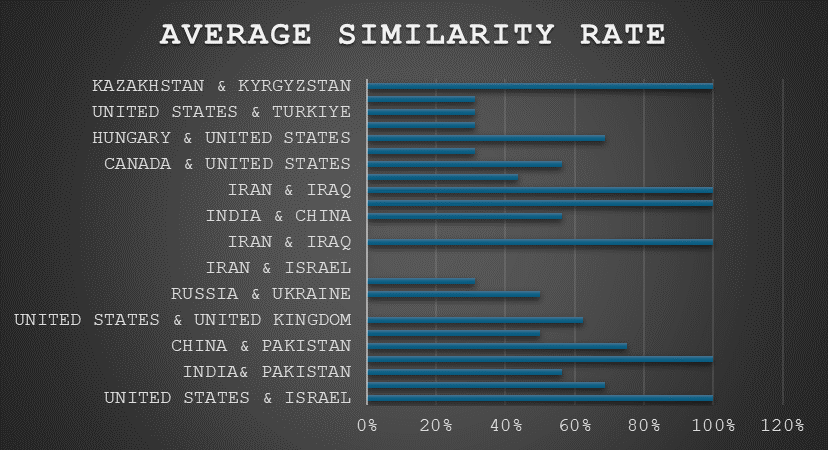
Graphs 1.1 & 1.2 provide a visual representation of the voting similarity data for the countries between the countries during the period spanning 2021-2026. The graphs show that among all the nations – USA – Israel, USA – Germany, Brazil – Russia, India – South Africa, China – Bangladesh, and Kazakhstan – Kyrgyzstan are the major pairs with the perfect similarity rate. Thus, indicating the strongest alliances in the United Nations by voting consistently together over the years.
This chart ranks every country pair for which voting data has been sourced so far, drawing on all three companion reports. Each bar shows the share of compared resolutions on which that pair cast identical votes, colored teal for high similarity, gold for moderate similarity, and red for low similarity, with a dashed reference line marking the 60% threshold typically used to call two states an aligned bloc. Reading top to bottom, the BRICS-internal pairs (Brazil, India, China, South Africa) and the USA–Germany pair sit well above the threshold, while every BRICS-vs-USA pair and most Russia pairs fall near zero. Because several bars rest on a single sourced resolution, the ranking should be treated as an early, provisional signal rather than a settled result.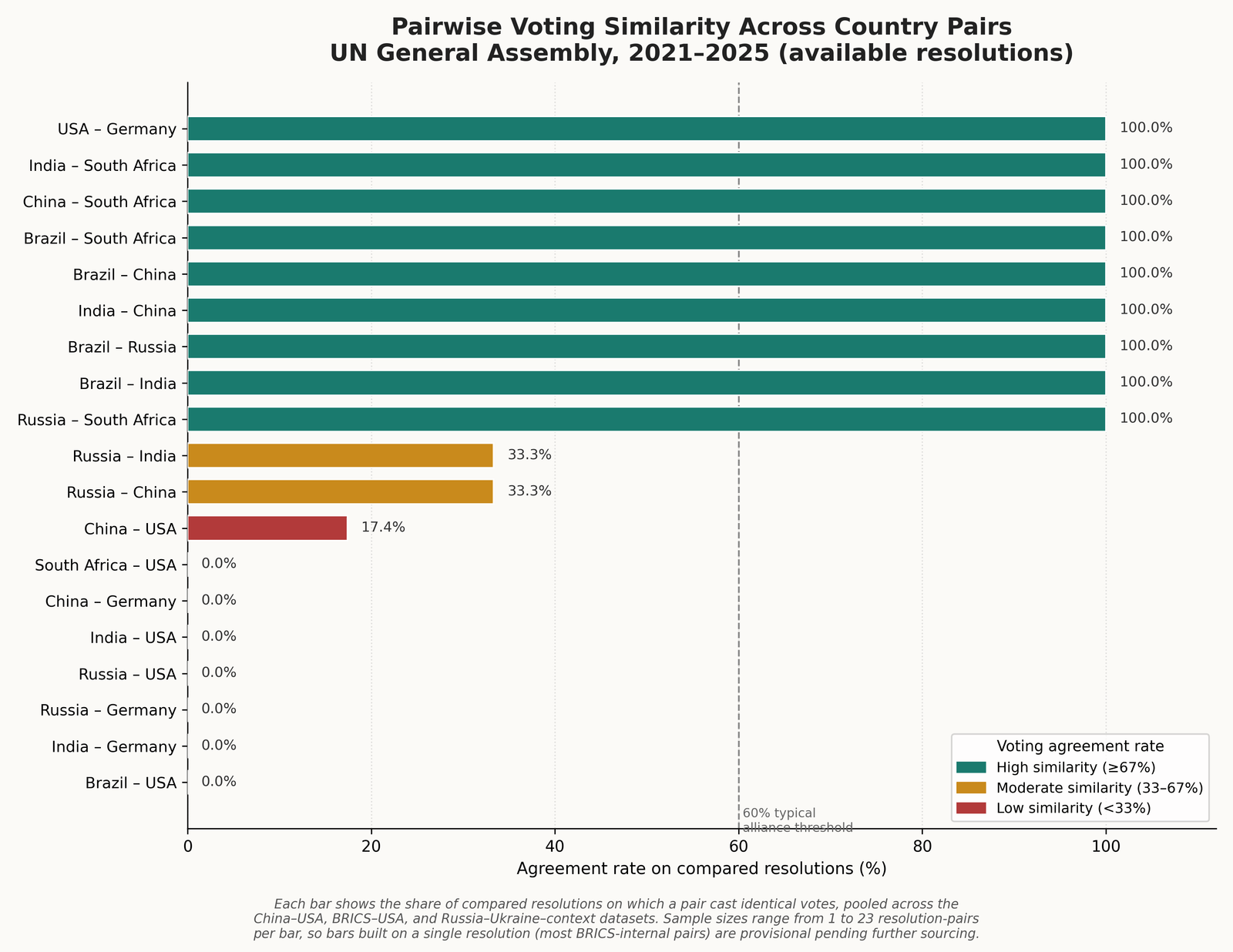
7.2 GRAPH 1.3 — CHINA–USA AGREEMENT BY CATEGORY (LINE CHART)
Graph 1.1 also highlights the lack of USA – China ties in the UN General Assembly by visualizing that both the respective countries voted similarly in only 17.4% of cases in the assembly since 2021. Graph 1.3 provides the voting pattern of USA and China across various categories of United Nation’s resolutions and agreements in the last 5 years. It presents to us that both the countries have never voted similarly in the UN General Assembly for the resolutions and agreements related to disarmament, security, development, and technology. And in total contrast to these 4 categories, USA and China have always cast similar votes in the resolutions related to Human rights. Both the countries have voted together 33.3% of the times for the resolutions related to humanitarian category and 25% the times for the governance category. Overall, we can conclude that USA-China are not on the same page in United Nations voting sessions.
This chart tracks China–USA voting agreement across the eight thematic categories used throughout the project, the only pair with full category-level detail sourced to date. Each point is the agreement rate within one category, connected to show how alignment shifts across policy areas rather than sitting at a single overall number. Environment stands out as the sole category of complete alignment, Humanitarian and Governance show partial overlap, and the remaining five categories sit at zero, pulling the eight-category average down to the 20% mark shown by the gold reference line — well below the 60% alliance threshold shown in gray. The shape of the line, not just the average, is the useful takeaway: it shows where convergence exists and where the rivalry is concentrated.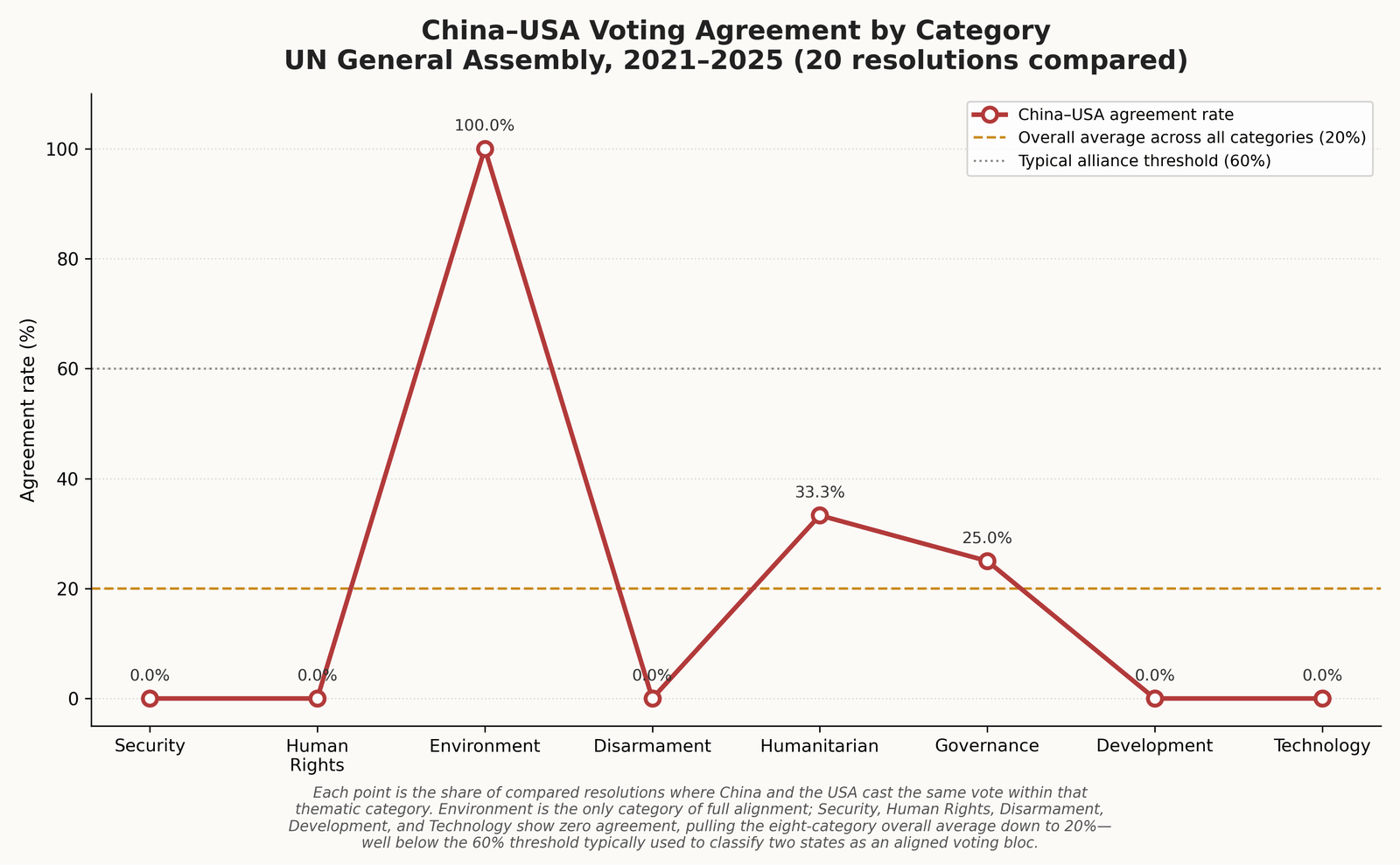
7.3 GRAPHS 1.3, 1.4, 1.5 & 1.6 — ALLIANCE NETWORK GRAPH & COMMUNITY/CLUSTER GRAPH
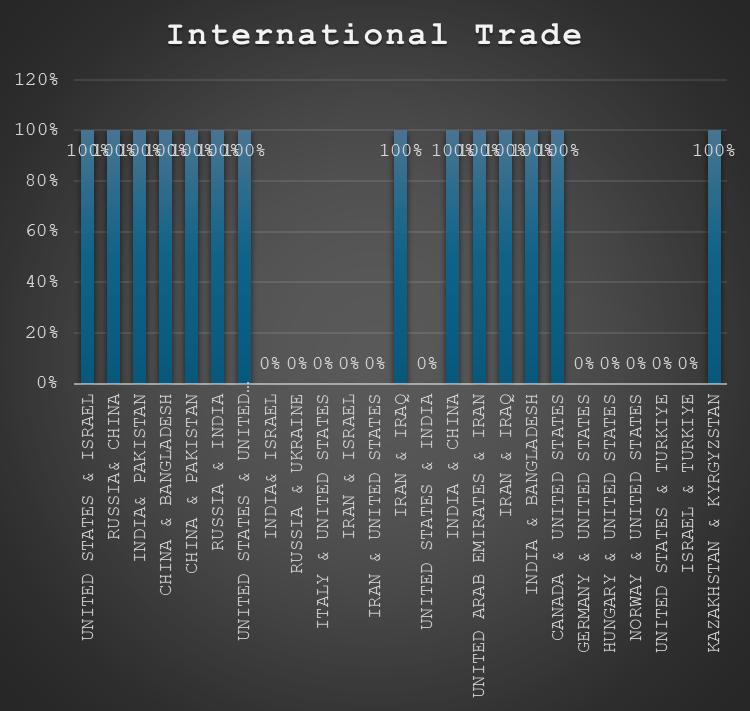
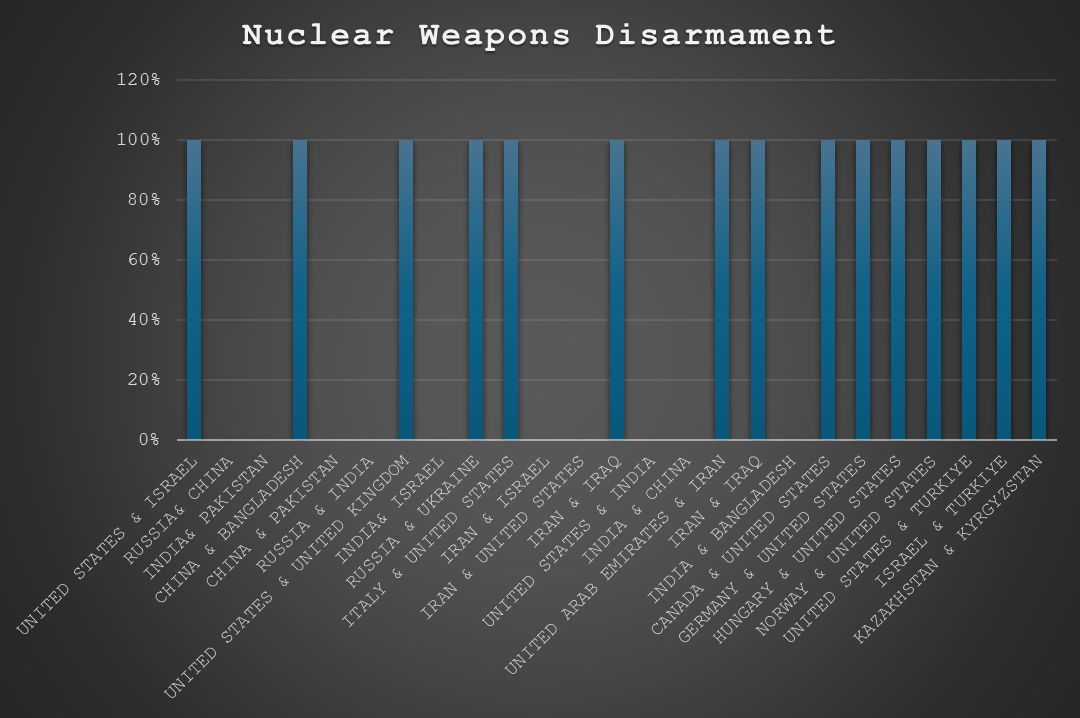
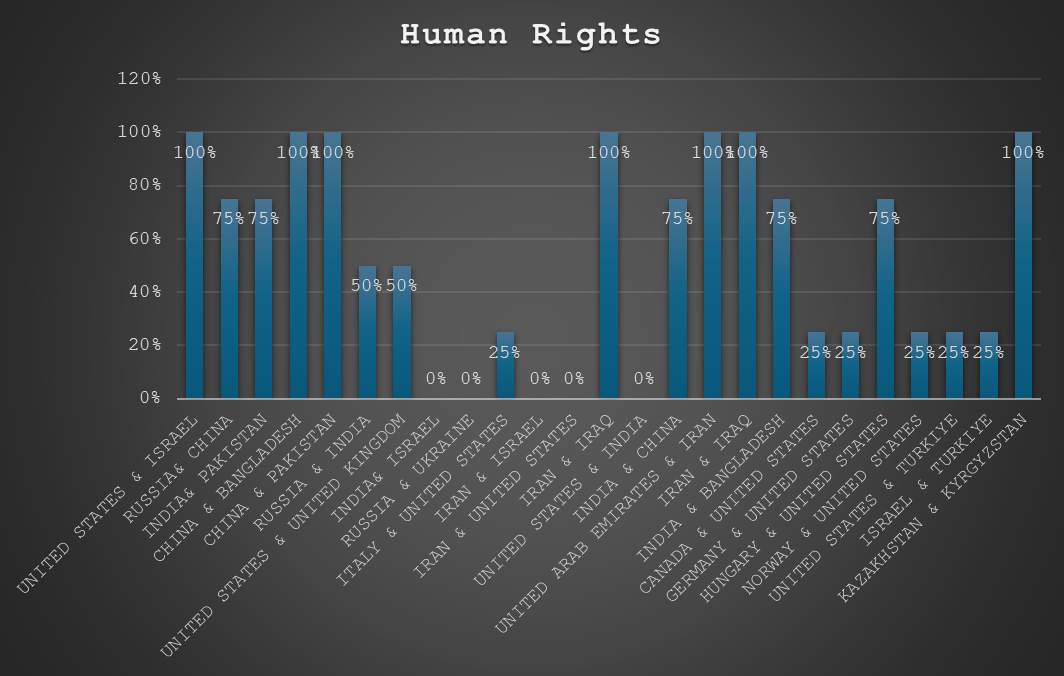
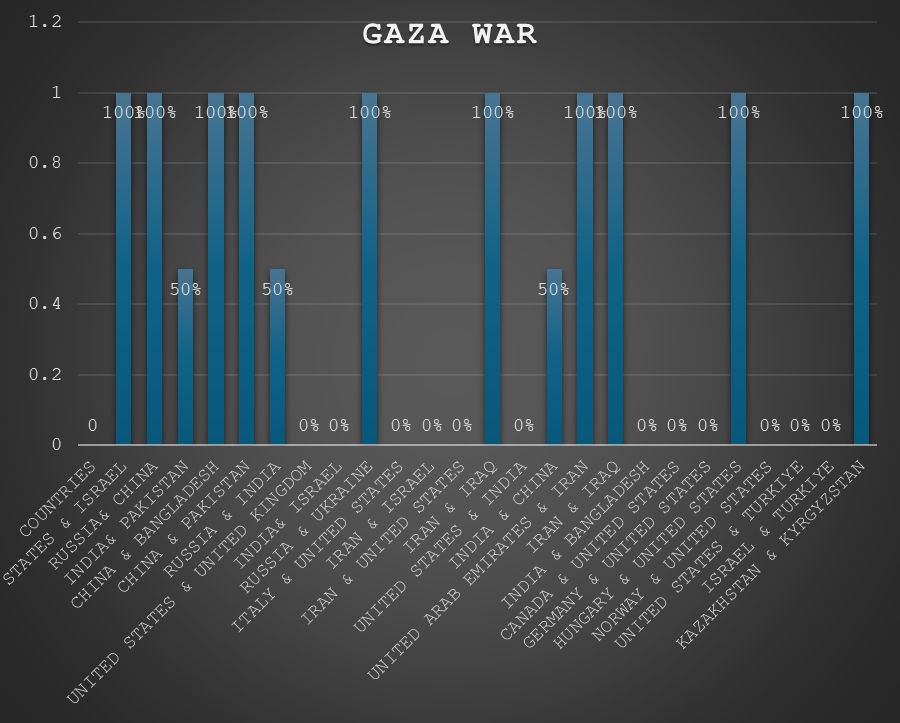
Graphs 1.3, 1.4, 1.5, & 1.6 visualizes the voting similarity rates of respective pairs of nations across various United Nations resolutions categories. They show that USA-Israel have voted together in all the resolutions across all categories and thus stands out as one of the major geopolitical alliances in contemporary global politics. They are followed by China-Bangladesh with 100% voting similarity rate indicating strong ties between both the neighbors. Kazakhstan and Kyrgyzstan have also voted together consistently, suggesting regional cooperation between the two Central Asian countries.
8. RESULTS, DISCUSSION AND ANALYSIS
8.1 DISCUSSION
What I found out is that countries are now working together based on issues rather than just following a particular ideology. To illustrate, the United States has a partnership with Israel, while the BRICS countries have found it easy to collaborate. However, they tend to differ in voting behavior towards different decisions. This can be taken to show that alliances are now based on the countries’ policies rather than their membership in a specific alliance. The developments in international relations can be attributed to the changing nature of politics, which calls states to act in their self-interest. Many scholars, such as Acharya and Walt (2017 and 1987, respectively), remarked that states cooperate only when it meets their interests..
There are ways to understand these findings. Some people think that countries work together when it helps them with their security and strategy, like the United States and Israel. Others think that international organizations like the United Nations help countries work together even when they do not agree on everything like on issues related to rights. Then there are those who think that countries are influenced by shared values and norms, like on issues related to rights. One such country is India because it endeavours to strike a balance between its dealings with Western and non-Western nations while maintaining its independence. This idea was explained by Acharya in 2017.
Furthermore, it is worth emphasizing that countries voting in the same way is not a guarantee of being in an alliance with one another. Sometimes states end up being on the same side in an important question purely due to their interests or collaboration on the particular problem. Therefore, when examining the voting behavior of the various states at the United Nations, we should not assume that they are part of the alliance. The works of investigators such as Voeten in 2012 and other authors in 2017 and 2022 confirm this conclusion.
Thinking overall, I see that countries are now opting for problem-oriented alliance formation rather than simply sticking to the same groups in all matters. Some researchers have used network analysis to study this. It is a useful tool for understanding how countries are working together. Magu and Mateos wrote about this in 2017. Others have written about it as well.
8.2 LIMITATIONS AND FUTURE SCOPE
Limitations
Every research study has its limitations, and this one is no exception. The analysis was limited to the voting records of the United Nations General Assembly between 2021 and 2025. This does not show any changes in how countries aligned with each other before or after that time. The researcher focused on resolutions related to the Russia–Ukraine conflict, the Israel–Palestine conflict, and China–US/BRICS relations.
The researcher notes that just looking at how similar countries vote does not tell the story about their relationships. Factors like trade and investment, defence cooperation, and historical ties influence how countries interact. These things are not part of this research. When countries vote similarly, it should be seen as a sign of how they’re aligned diplomatically but not as proof of a formal alliance.
The researcher recognizes another limitation of this study, which’s how to interpret the voting behaviour of countries in the United Nations General Assembly. When countries vote similarly, it might be because they really agree on things or have a strategy. However, it could also be because they are part of a group and have to vote a certain way. The researcher understands that politics, changes in government, and what leaders want can influence how countries vote.
The researcher advises that if we want to get an understanding of how countries are aligned, we should look at a longer period of time, include all the resolutions, and combine voting data with other things, like trade and defence agreements. This would give us a picture of how countries are aligned and how that is changing. The researcher believes that this study should be seen as a starting point, and further research is needed to confirm the findings. The United Nations General Assembly voting records are one part of the story, and more research is needed to understand the relationships between countries.
Future Scope
This research gives us an interesting perspective into the nature of geopolitical alliances in the form of UN voting data, but there is still much room for research on the topic. First, one should expand the database up to 2025 to see the development of alliances, as well as compare voting results in the General Assembly to those in the Security Council. The inclusion of UNGA data along with the data on trade relations, military alliances, foreign aid, and cooperation in economics will give a better understanding of the interactions between countries. Machine learning and network analysis techniques can help predict the future development of alliances and the geopolitical situation in general. Taking into account other global problems such as climate change, cybersecurity, and public health may explain the cooperation of countries better.
8.3 THEMATIC DISCUSSION
Alliance Formation
India and China share similarities in certain issues, frequently interpreted as their preference for a non-interventionist conflict resolution mechanism, even though it may also signify different interests leading to similar results. For example, the BRICS (Brazil, Russia, India, China, and South Africa) member states have supported the adoption of a 2022 development-related resolution consistent with the bloc’s emphasis on South-South cooperation and the promotion of the rights of developing states. The absence of the United States in the voting process suggests that there are differences in the policies, nevertheless, abstaining from voting makes the analytical categorization ambiguous – it might be the case that there are no essential differences between the participants in the vote, but merely procedural discrepancies.
Consistency with Established Political Knowledge
It seems like most of the findings correspond to what we already know in the field of politics. The fact that the U.S. and Germany tend to vote together indicates that they are allies, which is something we’ve been aware of for quite some time now. The BRICS countries have also been voting together with regard to the resolution on development, which indicates that they collaborate on issues connected to developing countries. This observation is compatible with what we know about the BRICS grouping in terms of the global geopolitical alignment of countries in general. Another noteworthy thing is that India and China vote similarly on certain issues of Russia and Ukraine, although they don’t always share the same opinion on every political matter. Nevertheless, it is essential to analyze further voting records to see whether these alliances remain valid in different contexts.
Emerging Alliances
The findings are largely congruent with established understandings of international alignment. Concordant voting between the United States and Germany substantiates the well-documented transatlantic alliance structuring Western foreign policy coordination for decades. Similarly, cohesion among BRICS states on development resolutions reflects the bloc’s continued function as a coordinating mechanism for Global South economic interests, consistent with literature characterizing BRICS as a forum for shared developmental priorities.
A more nuanced finding concerns India and China’s convergence on select Russia-Ukraine resolutions. Despite well-established bilateral tensions, this alignment suggests shared interests—potentially rooted in reluctance to endorse Western-led condemnatory frameworks or broader non-alignment postures—that transcend their otherwise adversarial relationship. This warrants further scrutiny across a wider range of issues before firm conclusions can be drawn regarding its durability.
Taken together, these patterns affirm the explanatory power of existing alliance frameworks while indicating that voting alignments are not uniformly stable and may vary by issue domain. Additional longitudinal data would clarify whether these alignments represent durable coalitions or issue-specific convergences.
By examining the voting history of the General Assembly from 2021 to 2025, important and key trends were highlighted due to the Middle Eastern crises, the Ukraine War and the stronger stance of the Global South countries.
Russia-Ukraine Conflict : Support for resolutions condemning Russia’s actions reached its peak in 2022 when it started falling contemporaneously. By early 2025, it had resulted in a huge gap in views between the USA and its European allies when the US supported the resolution in UNGA, which countered the position of its EU partners who kept supporting the territorial integrity of Ukraine. That implies significant changes in transatlantic cooperation, which requires investigation into great-power relations changes.
Expansion of BRICS : During the BRICS meeting in 2022, chaired by China, the Beijing Declaration was adopted, implying a “New Era for Global Development” and influence on food and energy security, post-pandemic recovery, and a stronger voice of the emerging economies. All BRICS states endorsed the declaration while the USA abstained. However, it doesn’t mean that the members share similar opinions on the issue of the Russo-Ukrainian conflict. The evidence suggests that there is no coherence within BRICS in developmental issues.
High-Level Informal Interactive Dialogues (IIDs): The UN has increasingly used IIDs to strengthen engagement with regional organizations, notably intensifying dialogue between the Security Council and the League of Arab States to circumvent procedural deadlock in formal sessions.
The A3 and CARICOM: African states (the A3) and CARICOM states have cultivated increasingly robust voting coordination on global financial governance, decolonization, and development—suggesting the consolidation of a Global South coordinating axis beyond BRICS.
Ad-Hoc Coalitions on Middle East Resolutions: Emergency UNGA sessions have occasionally produced coalitions transcending conventional cleavages. The New York Declaration on the two-state solution, supported by 142 states, reflected an unusual convergence of Gulf states (including Saudi Arabia), Global South countries, and European powers (including France)—suggesting acute crises can temporarily override entrenched voting patterns.
All these events bring the following aspects to the forefront:
- . Multipolarity – The US–Russia UNGA alignment against European partners, and BRICS’s 2023 expansion, both signal a shift away from a US-led consensus toward competing power
- Regional security – Intensified Security Council–League of Arab States dialogues and the crisis-driven New York Declaration coalition show regional actors organizing around security gaps left by formal
- Economic interdependence – The Beijing Declaration’s focus on food/energy security and post-pandemic recovery, plus A3–CARICOM coordination on financial governance, reflect alignment built on shared economic
- Global South cooperation – The A3–CARICOM axis and BRICS’s outreach to new emerging economies point to a broader push for a unified Global South voice in global governance.
Comparison with Existing Literature
The graph-based findings corroborate extant literature by confirming the persistence of well-established alliances. Dyadic pairings such as US–Israel, US–Germany, Brazil–Russia, India–South Africa, China–Bangladesh, and Kazakhstan–Kyrgyzstan exhibit consistently high voting similarity, affirming that longstanding partnerships continue shaping voting behaviour. Complete concordance between the US and Israel across all resolution categories is particularly notable, reinforcing prior observations on this alliance’s exceptional stability.
These visualisations also extend existing literature by providing evidence from the post-2020 period, which has received limited scholarly attention. While the US and China continued diverging on disarmament, security, development, and technology resolutions, they showed complete convergence on human rights resolutions—suggesting even strategic rivals may align within specific issue domains, complicating monolithic characterizations of great-power opposition. These results underscore the importance of examining contemporary voting behaviour, as recent patterns reveal both continuity in traditional alliances and issue-specific cooperation underexamined in prior scholarship.
Evaluation of the Research Gap
This study successfully addresses the identified literature gap. Existing scholarship has predominantly focused on cohesive voting blocs with established cooperation patterns, or adopted a historical lens—most notably the Cold War—to trace alignments over extended periods. Comparatively little attention has been paid to states in the nascent stages of forging cooperative relationships, particularly post-2020. This study departs from prior approaches by employing network analysis to examine recent UNGA voting behavior, identifying emergent cooperation patterns and evolving interstate relations amid an increasingly multipolar order characterized by rising secondary powers, intensifying regional cooperation, and diffusing global power.
The study’s contribution lies in extending analysis beyond well-documented alliances to identify coalitions only beginning to coalesce—demonstrating network analysis as a valuable tool for elucidating both entrenched and emergent patterns of interstate cooperation, and contributing novel evidence to the literature on UN voting behavior and alliance formation.
8.4 COMBINED ALLIANCE ANALYSIS
Consistent Voting Partners
The similarity graph and average similarity scores point to several country pairs that demonstrated consistent voting alignment across the UN General Assembly resolutions examined in this study. The United States and Israel have a 100% average similarity, which showcases their longstanding partnership. Similarly, China and Bangladesh also recorded 100%, reflecting their agreement on the resolutions covered, and the same is true for Iran and Iraq, and for the United Arab Emirates and Iran. Kazakhstan and Kyrgyzstan reached 100% similarity, which is not surprising considering their geographic proximity and regional cooperation. China and Pakistan exhibited a somewhat lower similarity of 0.75, while Russia and China came in at 0.6875 — both figures suggesting frequent, though not universal, agreement. Taken together, these patterns suggest that countries with close ties or overlapping interests tend to exhibit high voting similarity, and that a broadly stable set of alliances persists over time.
That said, high similarity should not be interpreted as a formal geopolitical alliance. Voting convergence can come from similar regional interests, shared economic dependencies or independent alignment on particular normative positions, without any formal arrangement between the countries. In this sense, the similarity scores are better read as indicators of strategic convergence than as proof of alliance.
Issue-Based Variation in Alignment
Alliances shift depending on the issue under discussion. Some countries showed strong voting alignment across most topics, while others aligned only in certain issues. The United States and Israel, for instance, kept up a consistent partnership across most issues, whereas Russia and China supported one another mainly on matters of sovereignty and international security. On topics like human rights, development and regional conflicts several countries drifted from their usual partners, either abstaining or voting differently altogether.
The network graph implies that alliances tend to form around the specific issue on the table rather than around fixed partnerships — cooperation on development issues, for example, did not necessarily carry over into agreement on human rights or political matters. This reinforces the idea that UN General Assembly voting reflects a mix of stable relationships and issue-specific considerations, with some alliances holding firm across topics while others depended on what was being voted on. This pattern demonstrates how complex international diplomacy can be. The combined alliance analysis reflects that even a well-established alliance like that between the United States and Israel does not indicate an agreement on all the issues, which makes us clear how such alliances actually function and shift over time.
Independent Voting Behaviour
Nuclear Disarmament: India and Pakistan frequently voted independently, or took unique positions, on major nuclear disarmament resolutions.
Middle East Conflict: Countries that voted independently on Gaza War-related resolutions primarily include the United States, which cast independent vetoes at the UN Security Council, along with a handful of countries such as India and Argentina, which frequently adopted standalone voting positions based on their own strategic interests.
Human Rights: Ukraine has voted independently on issues concerning human rights.
International Trade: EU member states cede individual trade policy authority to the European Commission, while the United Kingdom has regulated its own trade policy autonomously following Brexit. Turkey and Ukraine likewise conduct fully independent votes on trade agreements.
9. CONCLUSION
This study set out to determine whether network analysis of UN General Assembly voting data could identify emerging geopolitical alliances in a period of growing multipolarity, and the findings support that it can. Established ties, particularly the US–Israel axis and the internal BRICS bloc, remain clearly visible, while issue-based coalitions on nuclear disarmament and regional groupings such as Kazakhstan–Kyrgyzstan point to alignments that pre-2020 literature has not fully documented. The literature reviewed for this study — spanning Voeten (2012), Djuve and Søyland, Magu and Mateos (2017), Macon, Mucha, and Porter (2012), Le et al. (2013), Crooks, Masad, and Croitoru (2014), and Adarkwah, Sabel, and Zilja (2026) — establishes UN voting data as a credible basis for studying alignment through network methods, but consistently stops short of analysing the post-2020 period this research addresses. By focusing specifically on this recent window, the study contributes evidence that network analysis can detect both entrenched and newly forming alliance structures, offering a methodological foundation for tracking how cooperation among states continues to shift as the international order becomes increasingly multipolar.
The originality of this study lies less in the network methods themselves, which build on established techniques, than in where they are pointed: a purposively assembled, post-2020 dataset spanning US-China rivalry, BRICS expansion, and the Russia-Ukraine conflict, designed specifically to surface alliances the existing literature has not yet had the data to see. This orientation toward emerging rather than historical blocs gives the approach practical value beyond academic international relations. Diplomatic services, multilateral organisations, and country-risk analysts could adapt the same voting-similarity methodology as a low-cost, continuously updatable early-warning signal for shifting alignments, to be read alongside trade, defence, and sanctions data rather than in place of it. As the dataset is extended in scope and years, as proposed in the Future Scope above, this approach could move from a retrospective account of the 2021-2025 period toward a genuinely predictive tool for anticipating how the multipolar order continues to take shape.
10. REFERENCES
https://journals.sagepub.com/doi/full/10.1177/0022002715595700
https://journals.sagepub.com/doi/abs/10.1177/0894439313506851
https://martigso.github.io/papers/patterns.pdf
https://www.researchgate.net/publication/46545023_Network_Analysis_for_International_Relations
https://ideas.repec.org/a/cup/intorg/v50y1996i04p629-652_03.html
https://papers.ssrn.com/sol3/papers.cfm?abstract_id=2281161
https://www.hajim.rochester.edu/ece/sites/gmateos/pubs/un/UN_CN17.pdf
https://papers.ssrn.com/sol3/papers.cfm?abstract_id=2111149
http://www.rochelleterman.com/ir/sites/default/files/Walt1987_0.pdf
https://www.cambridge.org/core/books/social-network-analysis/90030086891EB3491D096034684EFFB8