

Authors:
Muskan Gautam, Kanishtha Bhatnagar, Nikita Gupta, Sreya KH, Jassica Lama, Arnav Dey
ABSTRACT
The global learning crisis is not merely a crisis of access, but a crisis of sustained institutional neglect. Despite global commitments to inclusive education under SDG4, educational exclusion remains a persistent challenge. An estimated 273 million children and youth remain out of school, showing that the learning crisis extends well beyond access. It encompasses other key factors such as participation, learning quality, school environment, and teacher engagement, as well as parents’ role in providing the key support necessary for schooling. This study examines how parents and teachers, the two institutional stakeholders closest to students, interact with each other, with pre-existing sociodemographic factors, and with students’ learning difficulties to reinforce educational exclusion. Existing research mostly treats parental involvement, teacher–student relationships, and learning difficulties as separate topics. This paper argues that they form one interconnected process: a weakened parental role and teacher disengagement, combined with sociodemographic disadvantage, perpetuate learning difficulties, psychological dissociation from the classroom, reduced participation, and absenteeism, and over time may lead to dropout. Through a cross-thematic synthesis, the paper focuses on how key institutional and relational stakeholders can either act as agents of change or contribute to the continuation of this exclusion. The paper focuses less on each stakeholder alone than on the relationships between them and the structural conditions through which their disengagement forms a reinforcing feedback loop. The paper addresses how proximal institutions in the learning crisis sustain this exclusion.
INTRODUCTION
Education is recognised as a fundamental human right and plays an important role in shaping individual opportunities and wider social development. This commitment is reflected in Sustainable Development Goal 4 (SDG 4), which calls for inclusive and equitable quality education and lifelong learning opportunities for all (United Nations, 2015). Despite considerable progress in expanding access to education, millions of children continue to remain outside the education system (UNESCO, 2026). In 2024, an estimated 273 million children, adolescents, and young people were out of school worldwide, showing that universal access to education remains an unfinished global challenge (UNESCO, 2026). However, the learning crisis cannot be understood through enrollment figures alone. Educational exclusion is a multidimensional phenomenon that extends beyond whether a child is formally enrolled in school. Enrollment is an important first step, but it does not necessarily ensure regular attendance, meaningful participation, effective learning, or a sense of belonging. A child may be enrolled yet experience exclusion through irregular attendance, difficulties in learning, disengagement from the classroom, or persistent negative experiences at school. When such experiences accumulate over time, they can gradually weaken students’ connection with education and increase the risk of dropping out. Exclusion, therefore, can occur both outside and within educational institutions, shaped by the experiences and barriers that determine whether children are able to participate in and benefit from education. These experiences are shaped by a combination of structural, institutional, family, and individual factors. Structural conditions such as poverty can restrict children’s ability to access and remain in education (UNESCO, 2012). At the institutional level, the quality of teacher–student relationships, the support available within schools, and the wider school environment can influence how students experience learning (García-Rodríguez et al., 2026). The home environment also matters, particularly through communication between families and schools and the extent to which parents are able to support their children’s education (Marlow & Rehman, 2021). Alongside these factors, individual circumstances such as learning difficulties, psychological and emotional challenges, and health-related concerns may affect students’ ability to participate consistently. Importantly, these factors do not operate independently. Difficulties in one area may be compounded by challenges in another, gradually affecting a student’s engagement and connection with education.
This broader understanding is particularly important in the context of the global learning crisis. While access to education has improved in many parts of the world, enrollment does not necessarily translate into meaningful participation, learning, or successful completion. The continued scale of the out-of-school population demonstrates that expanding access alone is insufficient to achieve the aims of SDG 4 (UNESCO, 2026). A student can be physically present in school while still struggling to engage with classroom learning or benefit fully from the education being provided. Similarly, persistent learning difficulties, particularly when adequate educational support is unavailable, may affect students’ academic trajectories and increase the risk of later dropout (Hakkarainen et al., 2015). Over time, these experiences may contribute to absenteeism, disengagement, and an increased likelihood of leaving school. School dropout should therefore not be viewed simply as the outcome of an individual decision but as a complex process that can develop through the interaction of circumstances within schools, families, and students’ own learning experiences. The role of relationships and support is particularly important in understanding this process. Teachers are central to students’ everyday experiences of school, while parents and families influence the learning environment beyond the classroom. Positive teacher–student relationships have been associated with students’ academic, behavioural and motivational outcomes, while positive family processes such as parental involvement and support are associated with lower levels of absenteeism and dropout (Emslander et al., 2025; Marlow & Rehman, 2021). At the same time, learning difficulties and other individual challenges can make participation more difficult, particularly when appropriate academic or emotional support is unavailable. Looking at these dimensions together therefore provides a more complete understanding of how disengagement can develop and how educational exclusion may persist.
This paper brings these dimensions together to examine the global learning crisis through four interconnected areas: the role of teachers, the role of parents, learning difficulties and student disengagement, and the relationship between disengagement, educational exclusion, and dropout. Rather than examining these factors as isolated causes, the paper considers how experiences across school, family, and individual contexts may interact over time. Such an approach can help move the discussion beyond simply asking why children are out of school and towards understanding why some students who are enrolled are still excluded.
To frame this analysis, the paper draws on Bronfenbrenner’s (1979) ecological systems theory, which views a child’s development as shaped by several nested environments and, just as importantly, by the connections between them. For a student, the home and the classroom are the most immediate of these settings, or microsystems, and it is here that parents and teachers deal with the child directly. How well these two settings work together, through contact between parents and teachers or through support at home for what is taught in class, forms the mesosystem. Other conditions reach the child only indirectly, such as parents’ working hours or a teacher’s workload and training, and these sit in the exosystem. Beyond these lies the macrosystem of poverty, education policy and the distribution of resources, while the chronosystem captures change over time, including disruptions such as COVID-19. Applied to educational exclusion, this lens shifts attention away from any single actor and towards the weakening of links across these levels. It also helps explain why disengagement by parents or teachers may stem from constraints in the exosystem and macrosystem rather than from unwillingness.
LITERATURE REVIEW
Education is a fundamental human right and a key part of SDG 4. Yet, despite global efforts and commitments, 273 million children remain out of school worldwide. This highlights that the learning crisis is not only about getting children into classrooms but also about helping them stay, participate, and learn once they are in the system. This paper looks at four interconnected factors that shape this crisis: parental involvement, teacher disengagement and pedagogical capacity, learning difficulties and student disengagement, and the link from disengagement to exclusion and dropout. Studies within each strand are compared rather than simply listed, and the final synthesis asks how the strands connect.
Parental Disengagement, Family-School Relationships, and Educational Continuation
The significance of parental engagement in a child’s academic development involves elements such as educational support, monitoring of actions, moral support, communication, and cooperation with educational institutions. The literature indicates that there are some positive effects of parental involvement on academic success, but its influence varies according to the form and quality of involvement, children’s age, and family circumstances. According to the literature review, there are five types of parental involvement: educational support, parent-child connection, cooperation with school, parental monitoring, and socioeconomic and educational obstacles. Using data from the National Longitudinal Survey of Youth 1997 (NLSY97), Kantová (2024) describes the connection between parental engagement and education. The author surveyed 1,868 participants and focused on how parents monitor children’s daily lives. The results show that parental involvement enhances the likelihood of completing high school. Nonetheless, the research further indicates that parental involvement does not mean strict control, as stricter behaviour of parents is associated with a smaller chance of finishing school.
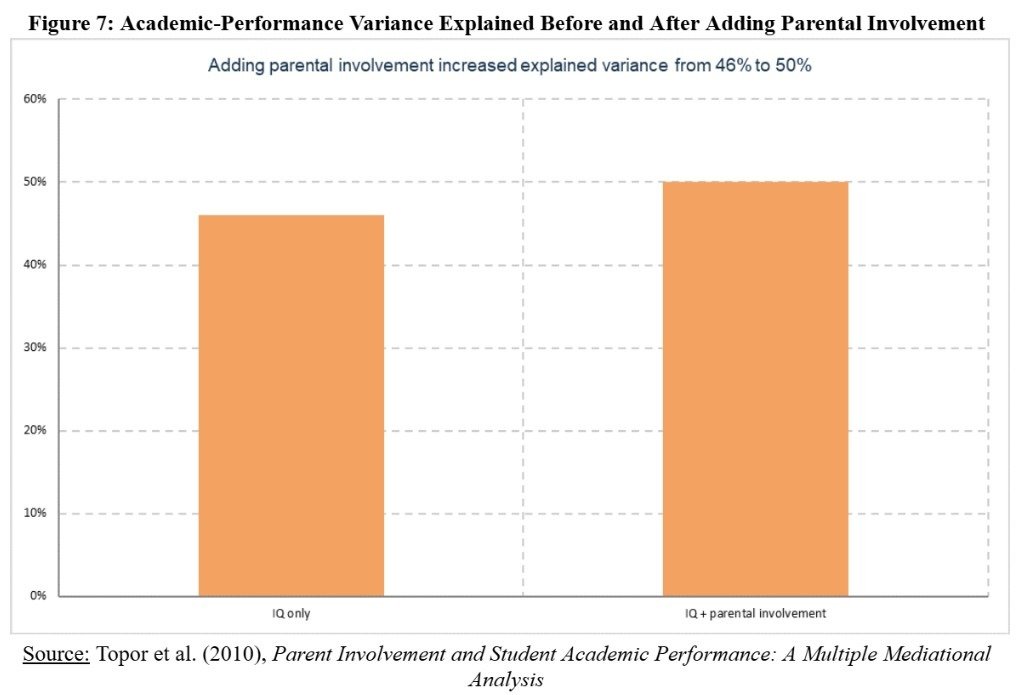
Likewise, Topor et al. (2010), in their study of 158 seven-year-olds, their mothers, and teachers, found a significant link between parental involvement and children’s academic performance even after taking intelligence into account. Their results suggest that children’s perceptions of their cognitive competence are an important mediator in this process. More specifically, parental involvement can enhance children’s achievements by improving their self-confidence in their own academic abilities. Furthermore, the research points out that a good student-teacher relationship is another mediation through which parental involvement can affect school achievements. The psychological and emotional impact of parental involvement is explored in detail by Menheere and Hooge (2010). Their review confirms that parental involvement influences not only academic performance but also the motivation and well-being of children at school. They also stress the importance of the partnership between parents and teachers in the educational process. However, the review also points out obstacles to parental involvement from the perspective of parents with low literacy skills, who may have problems helping their children with homework or engaging in educational activities. It then suggests various means of boosting parental involvement in educational activities, including parental and teacher training, family interventions, and modifications in school organisation. Koivuhovi et al. (2024) provide additional evidence that parental involvement is a developmental construct. In their study based on the longitudinal data concerning 2,887 Finnish children, the authors found that parental involvement tends to decrease as children develop. They have also identified variations in parental involvement depending on parents’ education level, with more involved parents having university degrees rather than vocational qualifications.
These studies agree that parental involvement matters, but they measure different things and should not be read as confirming one another. Using longitudinal data from the United States, Kantová (2024) found that parental monitoring was associated with a higher likelihood of completing high school, whereas strict control was associated with a lower one. Erdem and Kaya’s (2020) meta-analysis of 55 studies points in the same direction: parental expectations had the strongest effect, control had a negative effect, and the overall effect of involvement was small. The type of involvement therefore appears to matter more than the amount. Other studies shed light on how involvement works. It can raise achievement by strengthening children’s belief in their own ability (Topor et al., 2010) and by shaping adolescents’ educational aspirations (Otani, 2020). Since these studies differ in outcomes, age groups and design, their findings are complementary rather than overlapping. A further group of studies shows that involvement is shaped by family circumstances. In Finland, involvement declined as children grew older and was higher among university-educated parents (Koivuhovi et al., 2024). In Latin America, attending school meetings and activities was associated with higher achievement (Murillo & Hernández-Castilla, 2020), yet this kind of participation requires time and flexibility that not all families have. Erdem and Kaya (2020) also report that the effect of involvement varied with a country’s level of development. This is where the present paper departs from much of the literature: it treats low involvement as a possible sign of structural constraint, not only of disengagement.
To sum up, the existing literature recognises parental involvement as a multidimensional factor affecting children’s educational development. Effective involvement comprises increased monitoring, providing academic guidance, emotional support, and good parent-school relationships without excessive control. Socioeconomic inequalities, parental literacy, and limited educational resources can hinder parents’ ability to participate. Thus, the key to increasing parental involvement lies in the need to overcome not only motivation barriers but also the structural obstacles that do not allow families to be sufficiently involved in their children’s education.
Teacher Disengagement, Pedagogical Capacity, and Student Learning
Teacher disengagement is less often studied within the wider school and family context of the global learning crisis, yet it affects not only classroom instruction but also student participation, achievement, and continued access to education. Students might find it difficult to develop foundational skills, lose confidence, and withdraw from classroom participation due to inconsistent instruction, insufficient feedback, or lack of emotional support. Vulnerable students, especially students from low-income and minority backgrounds and students with mental health challenges, reported more negative teacher-student relationship (TSR), and the gender findings were mixed. TSR quality was strongly linked to students’ academic engagement and disengagement over time but was less influential on academic achievement (Di Lisio et al., 2025). This study examined the effects of teacher-student relationship quality on academic engagement for high-ability students, especially those at risk due to low socioeconomic status or learning and developmental issues. Negative teacher–student relationships were related to behavioural disengagement of low-SES students but less to emotional disengagement of students with learning disabilities or developmental disorders (Steenberghs et al., 2023). The study says teacher burnout, stress, and disengagement hurt student learning, including reduced motivation, lower academic achievement, and a less effective learning environment (Vallejo et al., 2023). Teachers face problems in the implementation of differentiated pedagogy due to lack of knowledge, low confidence, classroom management problems, time constraints, curriculum constraints, and lack of teaching aids. These constraints restrict the ability of teachers to meet the varied learning needs of students (Omar & Jamaludin, 2024). The traditional way of teaching by rules and rote learning restricts students from applying grammatical knowledge in practical situations. Inadequate teacher training and ineffective teaching practices, along with linguistic differences and exam-oriented education, lead to persistent learning difficulties, low student motivation, and anxiety (Jabborovich, 2026).
Most teachers said that they had not had enough ICT training, and many did not have the necessary skills to use computers effectively for teaching purposes. Therefore, the incompetence of teachers in productively integrating ICT into classroom practices becomes a constraint to effective teaching and has a negative impact on teaching and learning (Too et al., 2024). Insufficient AI experience during teacher training and misconceptions about AI can reduce teachers’ usefulness, obstruct the classroom integration of AI, and lead to poor pedagogical decision-making (Kotsis, 2025). Teachers understood AI conceptually but lacked practical skills in AI tool use, personalised learning, prompt engineering, and ethical application, largely due to inadequate training and the absence of a standardised framework for training (Nguyen, 2026). What these studies do not explain is why teacher support declines in the first place. Research on burnout, training and resources (Vallejo et al., 2023; Omar & Jamaludin, 2024; Too et al., 2024) offers a partial answer, suggesting that much of what appears to be teacher disengagement may reflect constraints on capacity rather than individual choice. Accordingly, this paper uses “teacher disengagement” to mean reduced instructional or emotional support, whether it stems from reluctance or limited capacity, and treats it as an institutional condition rather than a personal failing.
Learning Difficulties and Student Disengagement
School dropout is often linked to poverty, social disadvantage, and difficulties in accessing education. However, the difficulties children face within the learning process can also influence whether they remain engaged with school. At the academic level, research has linked weaker literacy, numeracy, reading, and mathematical performance with lower educational continuation and a greater likelihood of dropping out. In a mixed-methods study of upper-primary students in rural Kenya, Zuilkowski et al. (2016) found that poorer baseline performance in literacy and numeracy was associated with a higher risk of subsequent dropout. Similarly, Korhonen et al. (2014) found that students with low academic performance and negative academic well-being were more likely to leave education. Longitudinal evidence from Finland further found an association between reading and mathematical difficulties and later dropout, with school achievement playing an important role in this relationship (Hakkarainen et al., 2015). This indicates that learning difficulties may affect more than students’ marks; repeated struggles in the classroom can also shape how students view their own abilities and their experience of school.
However, difficulties related to learning are not limited to academic performance. Neurodevelopmental and emotional difficulties also affect how consistently students take part in school. Children with ADHD show poorer reading achievement, greater absenteeism, and higher dropout rates than their peers, particularly when other learning or psychiatric difficulties are present (Barbaresi et al., 2007). Children with disabilities face substantial disadvantages in school participation and completion, especially in low- and middle-income countries where systems may not accommodate diverse learning needs (UNICEF, 2021). Autistic learners are more likely to experience chronic absenteeism and exclusion, especially where support is inadequate, bullying occurs, or other conditions co-exist (Nordin et al., 2023), while anxiety and depression are linked to truancy and school refusal (Finning et al., 2019). Taken together, these findings suggest that disengagement does not follow from a diagnosis alone but develops through the combined influence of learning, individual, and school-level factors. The COVID-19 pandemic intensified these concerns. Di Pietro (2023) found learning losses across 39 studies and 19 countries, with students still not having fully recovered their initial losses a year or more after the disruption. Similarly, declines in academic performance were reported alongside changes in motivation and behaviour during remote learning. At the same time, the disruption to social interaction and everyday routines affected children’s psychosocial well-being. Longitudinal studies reported increased loneliness, with loneliness also being associated with depression and anxiety among children and adolescents (Loades et al., 2020).
Overall, the literature suggests that learning difficulties, neurodevelopmental conditions, and psychosocial challenges can influence students’ participation in school. However, these factors are often examined separately, leaving less clarity on how they interact over time to contribute to disengagement and dropout (Korhonen et al., 2014; Hakkarainen et al., 2015). This points to the need for a more connected understanding of how persistent learning difficulties may lead to disengagement. What happens when persistent learning difficulties translate into disengagement?
Cross-Thematic Synthesis
Taken together, the previous literature suggests that the weakened role of important stakeholders can eventually lead to disengagement by students. This can be understood as a process rather than one isolated event. However, it should not be interpreted that teacher and parent disengagement directly leads to student dropout. These forms of disengagement interact with socio-demographic factors and further perpetuate this exclusion. The interaction between parents, teachers, school, and home environment shapes the education of a student. When these interactions form a reinforcing feedback loop, the environment for student development deteriorates. The literature on teacher disengagement can be understood through a meta-analytic approach used by Roorda et al. (2011), who suggest that limited teacher support may create negative emotional associations with the classroom, reducing their willingness to engage in classroom and academic activities. When teacher disengagement intersects with parental disengagement, it creates a sustained pattern of reduced engagement. Paul et al. (2021) highlighted that insufficient participation by parents in PTA meetings or homework supervision may be linked to later dropout.
Three themes emerge across the literature. First, teachers act as institutional stakeholders who shape a student’s relationship with education; when their engagement weakens, demotivation, absenteeism, and unidentified learning difficulties follow. Second, parents act as relational stakeholders who link a student’s experience at school with support at home, sustaining attendance, retention, and follow-through on teachers’ feedback. Third, when both fall short, students lose the support they need to keep up: lessons are missed, homework accumulates, and learning gaps compound. Students then become disconnected from school, the classroom, and learning itself, and this psychological dissociation may end in dropout as they stop seeing the significance of learning. Dropout therefore does not emerge from a single decision. The cross-thematic synthesis does more than combine the studies: it proposes a reinforcing cycle linking factors that are usually examined separately. The existing literature does not explain how disengagement at home and school may contribute to learning difficulties, which can in turn intensify student disengagement, increasing the risk of dropout and perpetuating educational exclusion. This integrated approach allows the study to identify relationships between stakeholders that may remain invisible when each relational actor is examined in isolation.
Table 1: Literature Review Matrix
|
Author(s) & Year |
Country |
Theme |
Major Findings |
Limitations |
|
Zuilkowski et al. (2016) |
Kenya |
Learning difficulties, literacy, student dropout |
In a study of upper primary rural students in Kenya, poorer literacy and numeracy performance led to higher risk of dropout |
Focus is majorly on rural students of Kenya which can be different from other socio demographic and geographical settings. Did not consider wider factors such as family, school and teachers. |
|
Hakkarainen et al. (2015) |
Finland |
Learning difficulties, educational support, and dropout |
Longitudinal evidence from Finland showed that reading and mathematical difficulties were associated with later dropout. |
Findings from Finland can not be generalised to other countries as well. The cause of learning difficulties is not well established. |
|
Koivuhovi et al. (2024) |
Finland |
Parental involvement, child development, and parental education |
Parental involvement decreased as children developed. Parental involvement also varied according to parents’ educational background. |
The findings may be influenced by Finland’s particular social and educational context. |
|
Di Pietro (2023) |
19 countries |
COVID-19 learning loss, academic achievement, motivation, and student behaviour |
A meta-analysis of 39 studies across 19 countries found learning losses after COVID-19-related disruption. Students had not fully recovered their initial losses one year or more after the disruption. Changes in motivation and behaviour were also reported. |
Differences among the 19 countries, education systems, samples, and measures may make direct comparisons difficult. role of parents and teachers’ support in perpetuating loss of motivation is missing. |
|
Paul et al. (2021) |
India |
Parental involvement and student dropout |
The study found that students were more likely to drop out when parents did not attend parent–teacher association meetings, discuss academic progress with teachers, or supervise homework. |
The study could not examine some school factors, such as teacher availability, learning resources, school facilities, and the school environment. It also measured parental involvement only in a limited way and showed an association rather than direct causation. |
|
Kantová (2024) |
USA |
Parental monitoring and high-school completion |
Using NLSY97 data (n = 1,868), parental monitoring was linked to higher odds of completing high school (mothers’ monitoring more strongly than fathers’), while strict control was linked to lower odds. |
Shows association, not causation; US sample only; some youths reported breaking limits that their parents reported were never broken, so reports differ. |
|
Topor et al. (2010) |
USA |
Parental involvement, perceived competence, academic performance |
In 158 seven-year-olds, parental involvement was linked to academic performance beyond intelligence, partly through children’s perceived competence and the teacher–student relationship. |
Small sample of young children; cannot show whether the pattern holds for adolescents or for dropout. |
|
Di Lisio et al. (2025) |
Multiple countries (systematic review) |
Teacher–student relationships, engagement, vulnerable students |
Relationship quality was strongly linked to engagement and disengagement over time and less to achievement; vulnerable students reported more negative relationships. |
Included studies differ in design and measures; focuses on relationships and does not explain why teacher support weakens. |
|
Steenberghs et al. (2023) |
Belgium |
Teacher–student relationships, high-ability students at risk |
Negative relationships were related to behavioural disengagement in low-SES students, but less to emotional disengagement in students with learning disabilities or developmental disorders. |
Sample is high-ability students, which limits generalisation to the wider student population. |
Research Gap
In the previous literature, the factors relevant to educational exclusion, including parental involvement, student-teacher relationships, learning difficulties, and student disengagement, are often examined through separate analytical pathways. Although these factors are recognised as important influences on students’ educational experiences, they are frequently studied as distinct issues. Research on parental involvement generally focuses on emotional support, attendance, communication between school and family, and academic outcomes. Existing evidence also establishes an association between limited parental involvement and student dropout, as shown by Paul et al. (2021). However, parental involvement should not be understood as a direct cause of dropout, because students’ educational experiences are also shaped by teachers, school environments, classroom conditions, and wider socioeconomic factors. Similarly, research on teacher engagement generally focuses on teacher-student relationships, classroom interaction, pedagogical practice, and emotional support. Examining teacher engagement separately from the wider school and family context may therefore provide only a partial understanding of the conditions that shape students’ educational experiences.
This study addresses this gap through a cross-thematic synthesis of the literature. It examines how parental and teacher disengagement may interact with learning difficulties and student disengagement within an interconnected process rather than treating these factors as entirely separate events. Although disengagement by parents and teachers is not the sole explanation for educational exclusion, examining their interaction provides a way of understanding how difficulties may be sustained across school, family, and individual contexts. The study does not claim that teacher or parental disengagement directly causes dropout. Rather, it investigates how these forms of disengagement may interact with socioeconomic disadvantage, institutional limitations, and students’ learning difficulties in a reinforcing process. The central research gap therefore lies in examining how proximal institutions may interact in ways that contribute to the persistence of the global learning crisis. The study analyses not only the institutions themselves but also the relationships between them and how these relationships may deepen learning difficulties and reinforce educational exclusion. In this way, it moves from examining individual factors towards an interconnected analysis of the educational processes surrounding students. Its contribution is to show how parental constraints, teacher capacity, and student difficulties may compound one another, and why low parental involvement may signal structural constraint and not only disengagement, a reading grounded in the ecological perspective outlined above.
RESEARCH METHODOLOGY
This study examines the relationship between stakeholder disengagement and educational exclusion, with particular attention to parental and teacher disengagement, learning difficulties, and school dropout. It is based entirely on secondary data drawn from international education datasets, institutional reports, and relevant academic literature. Quantitative evidence is used to examine patterns and changes in educational exclusion across different years, age groups, regions, and socioeconomic contexts, while qualitative evidence is examined to understand the factors associated with disengagement and exclusion. No primary data were collected; therefore, the study focuses on analysing and synthesising existing evidence rather than establishing direct causal relationships.
Research Design
This research paper adopts a mixed-method secondary data design, and quantitative analysis of UNESCO out-of-school data, which is being checked by the Global Education Monitoring Report, to identify numerical patterns, according to age and geography. Qualitative thematic analysis is used to analyze parents’ and teachers’ disengagement leading to children’s education exclusion. The study follows a non-experimental, descriptive, exploratory research design. It is non-experimental because no variable is manipulated and no experiment is conducted, and because it does not claim a direct causal link between any single factor and educational exclusion. The descriptive component is used to examine the distribution and changing patterns in school dropouts; the exploratory component investigates how teacher and parental disengagement, as possible contributors to school dropout, relate to one another and to other common factors.
Nature of Research
The research is secondary, mixed-method, comparative, and cross-national in nature. Its quantitative component analyses data from the UNESCO Institute for Statistics and the Global Education Monitoring Report, which combines household data, enrollment records, and UN Population projections covering 98 percent of countries; the UNESCO GEM Report, 2026 and 2025, covering 2024 and 2023 data. The analysis examines year, education level, sex, region, and income group. While the qualitative analysis uses these data to interpret how low parental income is associated with children’s school dropout or discontinuation.
Sample and Techniques
Since the study uses existing aggregated data, no individual participants are sampled. Instead, sources were selected in two ways. Purposive selection was used because sources were chosen deliberately, such as the UNESCO report on the global learning crisis. Criterion-based selection was used because sources had to meet predetermined conditions, such as being reports or datasets from 2015–2026. The quantitative figures are reported by age group and region, following the categories used in the original UNESCO data.
Data Collection
This research draws entirely on secondary sources. On the quantitative side, it uses UNESCO figures on the number of children and young people who are out of school. These numbers are looked at across different years, age groups, and regions so that shifts in the scale and location of educational exclusion can become clearer. The same figures are also set against the picture given in the Global Education Monitoring (GEM) Report, mainly to check whether the statistical trends line up with the broader evidence on global education. The qualitative side rests on published academic work that deals with parental disengagement, teacher disengagement, learning difficulties, student disengagement, absenteeism, dropout, and educational exclusion. Relevant studies were found through keyword searches around these topics and kept only if they spoke directly to the research question using an inclusion and exclusion checklist. Once selected, the material was read and organized thematically so that findings from different strands of the literature could be brought together for organizing, comparing, and synthesizing research papers and other academic sources, which helped find common findings and research gaps across studies. No interviews, questionnaires, observations, or other forms of primary fieldwork were carried out. The main methods used are therefore secondary data extraction, documentary review, thematic analysis, and a literature-review matrix.
Variables Used
Educational exclusion refers to the different ways in which students are prevented from fully accessing, participating in, or benefiting from education. In the quantitative component, it is captured through the out-of-school population, broken down by age group and region. Stakeholder disengagement, particularly among parents, teachers, and students, is examined as an important factor that may be associated with educational exclusion.
Rather than treating these concepts as statistically tested independent and dependent variables, the study explores how they are discussed and connected across existing academic studies, reports, and secondary sources. Particular attention is given to parental and teacher disengagement, as reduced involvement and support may contribute to difficulties in student participation and learning.
The study also considers learning difficulties, weak educational support, absenteeism, withdrawal, and dropout as related themes that can reflect declining student engagement and increasing educational exclusion. These factors are examined in relation to one another rather than as formally tested mediating variables.
In addition, the analysis takes into account broader contextual factors, including socioeconomic conditions, gender, demographic circumstances, disability and additional learning needs, conflict, migration, and institutional capacity. These factors are important for understanding why levels of stakeholder engagement and educational participation may differ across communities and educational settings.
Overall, the study uses these concepts and themes to identify patterns in the existing literature and understand how stakeholder disengagement, learning difficulties, declining student participation, and educational exclusion may interact over time. The study does not claim that stakeholder disengagement directly causes educational exclusion; instead, it examines whether the secondary evidence suggests a recurring relationship between these issues.
Ethical Considerations
Given that this study relies entirely on secondary data (both quantitative and qualitative) derived from published academic literature, reports, and international databases, primary ethical concerns such as informed consent, participant distress, and direct risk of harm are managed at the original data collection stage. However, key secondary ethical obligations remain:
- Data Integrity and Attribution: Accurate attribution of secondary datasets (e.g., UNESCO Institute for Statistics) and peer-reviewed studies (e.g., Roorda et al., Di Pietro) is required. Researchers must avoid selective framing or misrepresenting modelled statistical estimates as absolute headcounts.
- Avoidance of Stigmatization: Findings analyzing disengagement, learning difficulties, or dropouts in vulnerable populations—such as low-income groups, disabled students, or conflict- affected regions—must be presented without reinforcing deficit narratives or biased stereotyping.
- Contextual Framing of Sensitive Data: Analyses dealing with gender disparities, regional exclusion, or socioeconomic background require nuanced interpretation to prevent localized policy misapplications or oversimplified victim-blaming.
- Responsible Secondary Data Use: Although individual informed consent is not applicable when using aggregated, anonymized public reports, researchers are ethically obligated to respect the original intent of the data sources and transparently acknowledge missing populations, such as children in active conflict zones.
Research Limitations
A primary limitation of this research stems from its mixed-method, secondary design, which restricts direct control over data quality, underlying definitions, and sampling methodologies used in the primary sources. Because variables such as “teacher disengagement,” “parental engagement,” and “learning gaps” are operationalized as qualitative analytical dimensions rather than precise numerical measurements, the study cannot establish strict causal relationships or control for omitted confounding variables across settings. Furthermore, synthesizing studies from diverse contexts—ranging from rural Kenya and Finland to global COVID-19 impact reports introduces cross-contextual inconsistency, making it difficult to generalize the findings globally without masking localized structural nuances. Finally, reliance on pre-existing literature leaves the study susceptible to publication bias; localized grey literature and severe crisis zones where data collection is impossible are inherently underrepresented in the analysis.
DATA ANALYSIS AND INTERPRETATION
This research paper is based on secondary evidence on the global learning crisis, including three connected themes: teacher-related and parental disengagement leading to student learning and participation difficulties. The evidence base consists of the team’s compiled data derived from international organizations such as UNESCO, UNICEF, OECD, WHO, and the World Bank, along with peer-reviewed journal articles and published research reports. Qualitative findings are coded into recurring themes, such as factors influencing teachers’ disengagement, including pedagogical and content knowledge gaps, limited capacity to use digital and teaching aids, parental disengagement, process dynamics, and learning disabilities as a form of school exclusion of children.
Quantitative findings are described and compared in their original units; Microsoft Word is used for manual coding and thematic organization, and Microsoft Excel for tables and graphs and organizing numerical data and references. The study primarily uses descriptive statistical methods. Including frequency and counts of no. of out-of-school children, percentages and proportions to share age groups and regions, comparative analysis, and trend analysis.
Scale of educational exclusion and foundational learning:
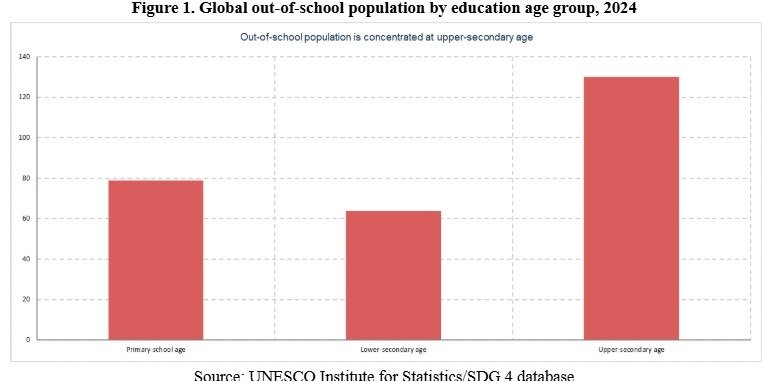
UNESCO also reports that 273 million children and youth were out of school in 2024: 79 million primary-age, 64 million lower-secondary-age, and 130 million upper-secondary-age. The highest number of out-of-school-age groups are of the upper secondary age group. Education exclusion is not limited to primary school. It shows that failure is not only at entry level, but continuation while growing older is also important.
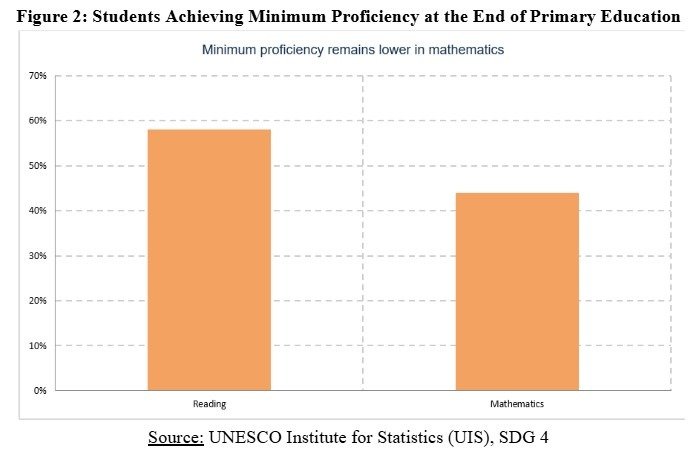
Globally, only 58% of students achieve minimum proficiency in reading and 44% in mathematics by the end of primary school. UNESCO notes that these figures have not yet been updated post-COVID because of limited comparable learning data. Learning difficulties affect not only the process of studying but also learners’ state of mind and self-image, since weak foundational skills are associated with early school leaving and exclusion.
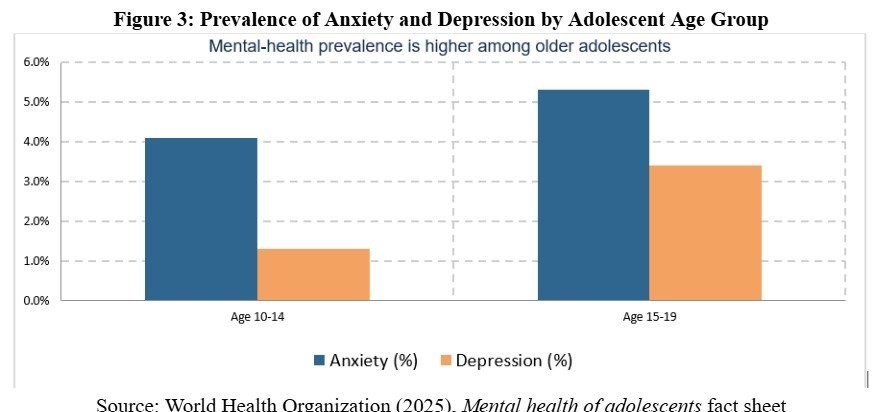
(i) Adolescent mental health: 1 in 7 aged 10-19 experiences a mental health condition; anxiety and depression may affect attendance and schoolwork.
(ii) Comorbidity: Comorbidity of untreated neurodevelopmental disorders (ADHD, ASD) and mental disorders (anxiety, depression) is associated with absence and avoidance of school, which may lead to exclusion from education. WHO specifically notes that anxiety and depressive disorders can affect school attendance and schoolwork (WHO, 2025a). In 2021, approximately 1 in 127 people globally had autism (WHO, 2025b). About 1 in 3 learners are bullied monthly (UNESCO, 2019); violence is linked to mental health and educational outcomes.
(iii) Exogenous Shocks Influence on the Path of Learners: Exogenous shocks, such as isolation after the pandemic, changes in routine, and bullying, influence the path of learners. As per the latest UNICEF evidence, children with functional difficulties generally have lower school attendance, with the disadvantage becoming particularly visible at higher levels of education. (UNICEF, 2021) An older cross-country analysis covering 15 low and middle-income countries (LMC) found that disability reduced the probability of primary and secondary school attendance by a median of 31 percentage points (Mizunoya et al., 2018). In that analysis, about 90% of children with disabilities who were out of school had never attended school.
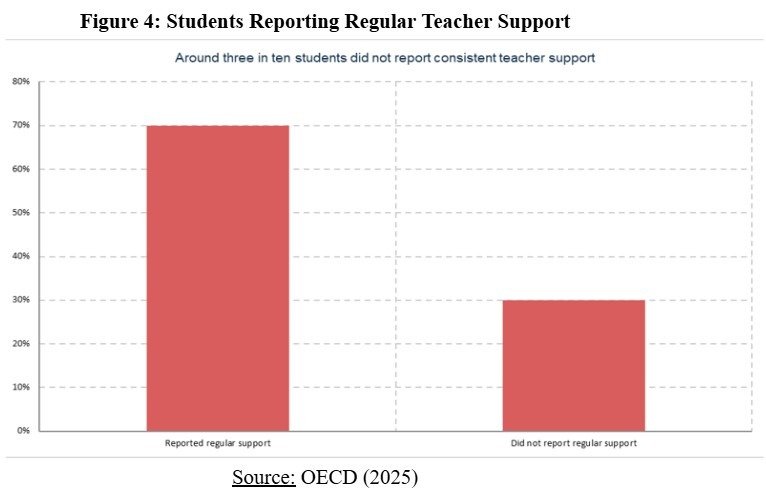
(iv) Work Conditions and Stress: Poor infrastructure in the classroom, high teacher-student ratios, and professional stresses cause teachers to suffer from burnout syndrome, which restricts teachers’ ability to provide individualized support to struggling students.
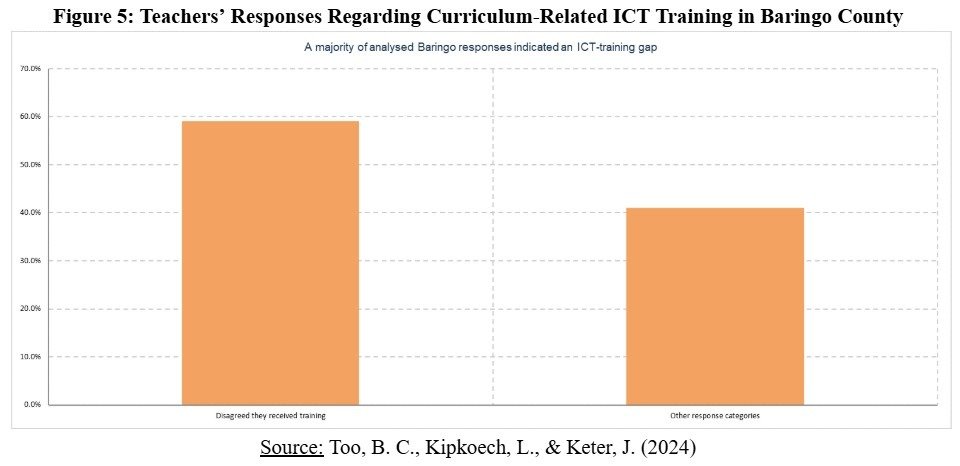
(v) Educational and Technological Knowledge Deficiency: Lack of knowledge about early development assessments and classroom management techniques makes it difficult to develop an effective pedagogical strategy. Lack of technological knowledge does not allow integrating information and communication technology (ICT) into the curriculum.
(vi) Resource Distribution in Educational Institutions: Lack of separate classrooms for special-needs students and insufficient teaching resources prevent teachers from providing differentiated instruction, and, as a result, they have to use standardized strategies of teaching, which restrict vulnerable groups of students.
Parental Monitoring of Education:
One of the clearest forms of parental involvement is monitoring children’s educational and social activities. As reviewed above, Kantová (2024) illustrates this quantitatively, using data from the National Longitudinal Survey of Youth 1997 (NLSY97; n = 1,868). Parental monitoring included knowledge of children’s friends, their friends’ parents, where children spent time, and their teacher’s/school activities. Monitoring was measured separately for mothers and fathers.
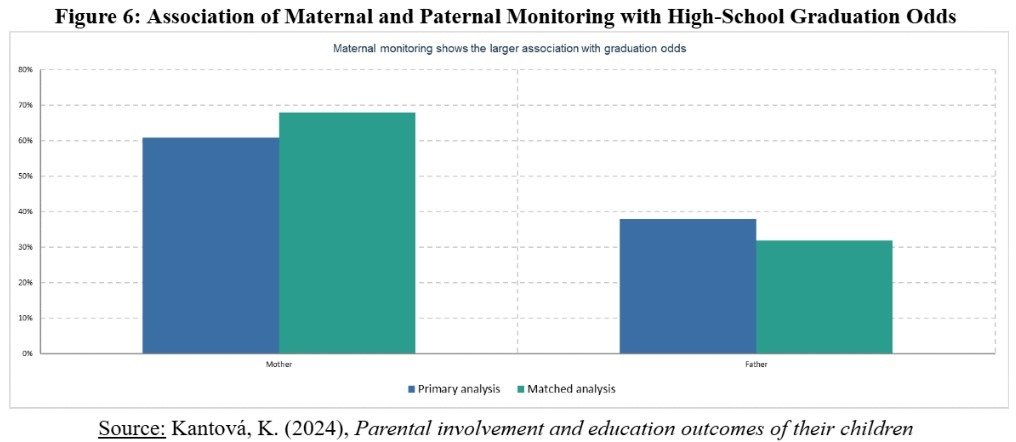
The empirical results were particularly strong for maternal monitoring:
- Mother monitoring: approximately 61% higher odds of high school graduation.
- Father monitoring: approximately 38% higher odds of graduation.
- In the propensity-score matching analysis, maternal monitoring increased the odds by approximately 68%, while paternal monitoring increased them by approximately 32%.
Topor et al. (2010) add that children’s perception of their own cognitive competence mediates the relationship between parental involvement and achievement, so involvement may work indirectly by strengthening children’s confidence in their academic abilities.
The negative association between strict parental control and school completion was even clearer for adolescents who reported breaking parental limits.
-
- Interestingly, approximately 13% of youths reported breaking at least one parental limit even though their parents reported that they had not broken any.
- Analytical significance: Parental involvement is beneficial when it involves monitoring and support, but involvement based on excessive control may have different or even negative associations with educational outcomes.
- Taken together, these results support the idea that appropriate parental awareness and monitoring can support educational attainment.
- Financial Issues: Increased financial pressure is an obstacle to the active participation of parents in the learning process of their children.
- Stigma and Discrepancy: Stigma and expectations regarding children’s academic performance lead to parents’ disengagement at home.
- Screening and Disconnect: Frequent use of screens by parents, as well as lack of information regarding curricular changes, limits their ability to help children learn.
- Parental Literacy and Barriers to Involvement: Menheere and Hooge (2010) look into the position of parents with low literacy and have found that, although parental involvement generally benefits children, these parents face particular difficulties in taking part in their children’s education.
The review identifies interventions including:
- Parent training
- Teacher training
- Restructuring school organization
- Family interventions
- Practices specifically designed to facilitate involvement among parents with limited literacy.
Structural barriers to parental involvement include lack of parental literacy, educational background, lack of confidence, limited ability to assist with schoolwork, school accessibility, and the need for parent training.
Integrated Interpretation Across Students, Teachers, And Parents:
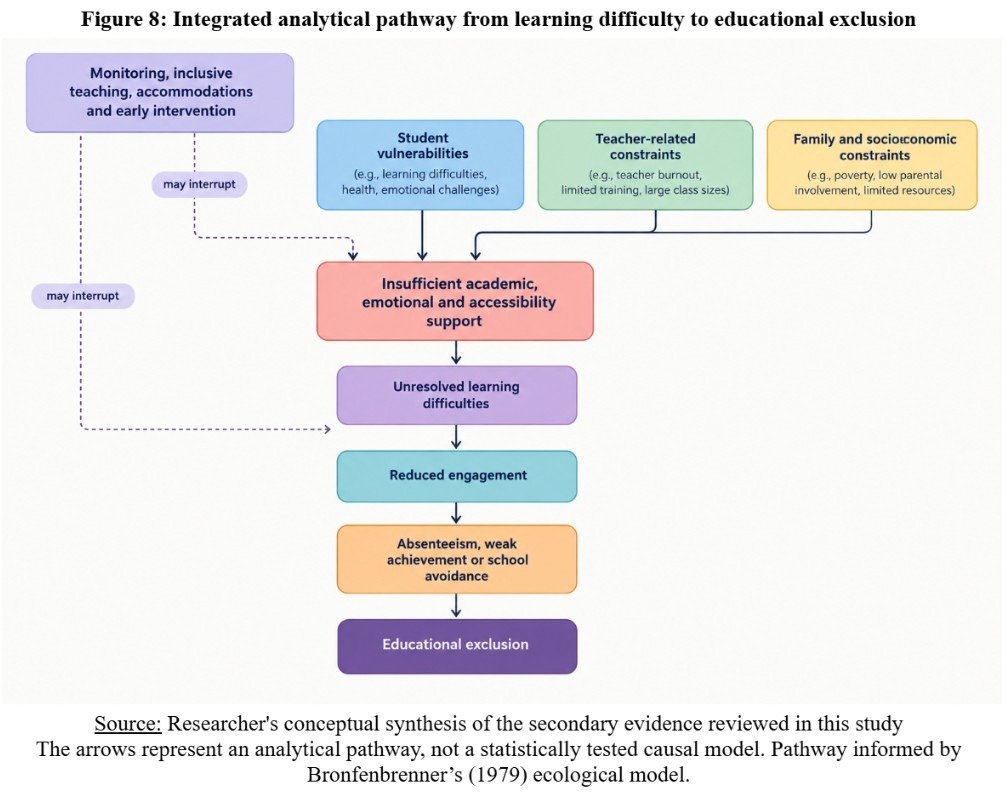
The figure brings the three evidence streams together:
- Student vulnerabilities can create learning and participation difficulties;
- Teacher-related constraints can reduce instructional or emotional support; and
- Family constraints can weaken monitoring and family-school communication.
These conditions can converge in unresolved learning difficulties and lower engagement, which may appear as poor achievement, anxiety, weak belonging, lateness, or absenteeism before final exclusion.
Across the evidence, disengagement appears less as a single behavior than as a connecting process. A child who is struggling academically or psychosocially may require differentiated teaching, regular feedback, and sustained family-school support. When these supports are weak or inaccessible, the difficulty can persist and gradually reduce participation. Conversely, supportive teacher-student relationships, parental monitoring, appropriate accommodations, and early intervention can interrupt the pathway. This integrated interpretation directly addresses the research question by showing how learning difficulties and stakeholder disengagement can reinforce one another without claiming that any single factor independently causes the global out-of-school total.
FINDINGS AND POLICY RECOMMENDATIONS
Research Findings:
- Compound Disengagement Loop: Educational exclusion appears to be sustained by a feedback loop where unresolved student learning gaps, teacher burnout, and parental financial stress reinforce one another.
- Institutional Accommodation Gap: Mainstream educational systems frequently lack the physical, pedagogical, and psychological infrastructure required for neurodivergent learners, which is associated with chronic absenteeism and school refusal.
- Capacity and Resource Deficits: Teachers and parents face structural constraints—such as digital illiteracy, lack of specialized pedagogical training, and economic strain—that impede effective academic and emotional support.
These findings should be interpreted in light of several limitations. The evidence was drawn from different countries, age groups, research designs, and outcome measures. International estimates, local surveys, and longitudinal studies are therefore not directly comparable and should not be statistically combined. Moreover, the non-experimental nature of most of the evidence prevents direct causal conclusions. The findings identify associations and plausible pathways through which learning difficulties and stakeholder constraints may contribute to educational exclusion.
Policy Recommendations:
Addressing key barriers to inclusive education requires policy interventions that strengthen teacher capacity, enhance parental support, and improve school infrastructure to meet diverse learning needs.
- Improving Training Programs for Special Education and Early Diagnosis: Ministries of Education must ensure that teacher training programs include courses in early child development assessment, accommodating neurodiversity, classroom stress management, and inclusive teaching methods, and the practical use of digital tools and AI, including how to integrate them into the curriculum.
- Parental Support Program Development: The policy should provide programs that help combat the stigma of learning disabilities, improve digital literacy skills, and set up flexible home-based learning support.
- Infrastructural Development for Inclusive Education: There should be infrastructural provisions for counseling facilities, anti-bullying programs, teaching resources, and digital infrastructure in schools.
DISCUSSION
The role of the teacher holds an institutional position in determining students’ engagement in the classroom. A positive student-teacher relationship fosters a positive outlook towards the classroom in the minds of students as they receive appropriate support, instruction, and adequate responses to different learning needs. The literature consistently supports this link. However, teachers’ disengagement should not only be understood from an individual lens. Teacher disengagement may also reflect larger institutional conditions (exosystem-level constraints, in Bronfenbrenner’s terms) that affect pedagogical capacity. At the same time, the role of other relational stakeholders is important to understand the sustained exclusion. Parental engagement presents a distinct dimension of students’ educational experiences. Adequate parental support can lead to increased attendance, emotional adjustment, and enhanced educational experiences. Kantová (2024) reports that parental involvement enhances the likelihood of completing high school. However, weak parental involvement should not be taken automatically as evidence of parental negligence, since it could indicate that structural constraints prevent families from being able to support schooling. The findings hence suggest that family–school relationships should be examined as a shared responsibility rather than as an issue located exclusively within the household.
The study, through a cross-thematic synthesis, suggests that educational exclusion develops through the interaction of all relational stakeholders with each other, along with already existing socioeconomic factors. It suggests a reinforcing relationship between proximal institutions that can sustain itself over time. When students experience learning difficulties, psychological challenges, and academic apprehension; experience disengagement by teachers in the classroom; and weakened support from parents at home, it creates a psychological dissociation from the process of learning. It may eventually lead to dropout. This paper moves from an individualistic, deterministic cause established in existing literature to examining the interconnected relationship among educational stakeholders. This study identifies relationships in existing research but doesn’t establish direct causal connections. Reliance on pre-existing literature leaves the study susceptible to publication bias. Educational exclusion should therefore be understood not as an individual failure, but as a relational and cumulative process shaped by the interaction of families, schools, teachers, students, and wider social conditions. Addressing it requires coordinated support across these contexts rather than isolated interventions.
CONCLUSION
Educational exclusion is rarely the result of a single event or a single factor. Rather, it can develop gradually as learning difficulties, student vulnerabilities, limited support, teacher-related constraints, family barriers, and wider socioeconomic inequalities interact over time. The scale of the challenge remains significant, with 273 million children, adolescents, and young people estimated to be out of school globally in 2024 (UNESCO, 2026a). However, the issue extends beyond whether children enter school. Persistent learning gaps, difficulties in participation, weak support systems, and negative school experiences can gradually reduce students’ engagement and increase the risk of absenteeism, withdrawal, and eventual exclusion.
The findings also suggest that educational exclusion should not be understood as a failure of students to adapt to education. Instead, disengagement may reflect gaps in the systems surrounding them. Teachers play an important role in creating supportive and inclusive learning environments, while families can provide important academic and emotional support. At the same time, students with learning difficulties or other vulnerabilities may require additional academic, emotional, and accessibility support to participate fully in education. When these forms of support are limited or unavailable, difficulties that could potentially be addressed early may become more persistent and contribute to disengagement.
At the same time, the evidence used in this study is largely secondary and non-experimental. The findings therefore identify associations and plausible pathways rather than establishing direct causal relationships between teacher or parental disengagement, learning difficulties, and educational dropout. The study does not suggest that teachers, parents, or students independently cause exclusion. Rather, it highlights how disadvantages across different settings may accumulate and reinforce one another, creating what can be understood as a compound disengagement loop in which unresolved learning difficulties can contribute to reduced engagement, absenteeism, and, ultimately, educational exclusion.
Breaking this cycle requires a shift from responding to exclusion only after students have already disengaged towards identifying and addressing difficulties earlier. This includes strengthening teacher training and well-being, improving systems for early identification of learning difficulties, providing inclusive academic and emotional support, developing accessible school infrastructure, and strengthening partnerships between families and schools. Digital tools and assistive technologies can also support more responsive and inclusive teaching when educators are adequately trained to use them. Ultimately, addressing the global learning crisis requires looking beyond the question of why students leave school and asking whether the education system is equipped to recognise their difficulties, respond to their needs, and help them remain meaningfully connected to learning.
REFERENCE
Barbaresi, W., Katusic, S., Colligan, R., Weaver, A., & Jacobsen, S. (2007). Long-Term School Outcomes for Children with Attention-Deficit/Hyperactivity Disorder: A Population-Based Perspective. Journal of Developmental & Behavioral Pediatrics, 28(4), 265–273.https://doi.org/10.1097/DBP.0b013e31811ff87d
Bronfenbrenner, U. (1979). The Ecology of Human Development: Experiments by Nature and Design. Harvard University Press. https://doi.org/10.2307/j.ctv26071r6
Di Lisio, G., Halty, A., Berástegui, A., Milá Roa, A., & Couso Losada, A. (2025). The longitudinal associations between teacher-student relationships and school outcomes in typical and vulnerable student populations: a systematic review. Social Psychology of Education, 28(1). https://doi.org/10.1007/s11218-025-10107-8
Di Pietro, G. (2023). The impact of COVID-19 on student achievement: Evidence from a recent meta-analysis. Educational Research Review, 39, 100530. https://doi.org/10.1016/j.edurev.2023.100530
Emslander, V., Holzberger, D., Ofstad, S. B., Fischbach, A., & Scherer, R. (2025). Teacher–student relationships and student outcomes: A systematic second-order meta-analytic review. Psychological Bulletin, 151(3). https://doi.org/10.1037/bul0000461
Erdem, C., & Kaya, M. (2020). A Meta-Analysis of the Effect of Parental Involvement on Students’ Academic Achievement. Journal of Learning for Development, 7(3), 367–383. DOI: https://doi.org/10.56059/jl4d.v7i3.417
Finning, K., Ukoumunne, O. C., Ford, T., Danielson-Waters, E., Shaw, L., Romero De Jager, I., Stentiford, L., & Moore, D. A. (2019). Review: The association between anxiety and poor attendance at school: a systematic review. Child and Adolescent Mental Health, 24(3), 205–216. https://doi.org/10.1111/camh.12322
García-Rodríguez, L., Reparaz, C., & Iriarte, C. (2026). Teacher–student relationship quality and classroom climate from the student perspective: Adaptation of the SPARTS-E in the Spanish context. Child: Care, Health and Development, 52(1), e70214. https://doi.org/10.1111/cch.70214
Hakkarainen, A. M., Holopainen, L. K., & Savolainen, H. K. (2015). A Five-Year Follow-Up on the Role of Educational Support in Preventing Dropout From Upper Secondary Education in Finland. In Journal of learning disabilities (Vol. 48, Issue 4, pp. 408–421). PubMed. https://doi.org/10.1177/0022219413507603
Jabborovich, J. Y. (2026). The Difficulties of Teaching Grammar at High Schools. Akademik Litseylar Va Raqamli Talim Texnologiyalari, Suniy Intellektni Joriy Etish: Innovatsiyalar, Muammolar Va Istiqbollar Mavzusidagi Respublika Ilmiy-Amaliy Anjuman, 1(1), 33–36. https://doi.org/10.5281/zenodo.20206359
Kantová, K. (2024). Parental involvement and education outcomes of their children. Applied Economics, 56(48), 1–16. https://doi.org/10.1080/00036846.2024.2314569
Korhonen, J., Linnanmäki, K., & Aunio, P. (2014). Learning difficulties, academic well-being and educational dropout: A person-centred approach. Learning and Individual Differences, 31, 1–10. https://doi.org/10.1016/j.lindif.2013.12.011
Koivuhovi, S., Kilpi-Jakonen, E., Erola, J., & Vainikainen, M.-P. (2024). Parental involvement in elementary schools and children’s academic achievement: A longitudinal analysis across educational groups in Finland. Research in Social Stratification and Mobility, 95, 101007. https://doi.org/10.1016/j.rssm.2024.101007
Kotsis, K. T. (2025). Misconceptions about Artificial Intelligence from Preservice Teachers: A Literature Review. EIKI Journal of Effective Teaching Methods, 3(2). https://doi.org/10.59652/jetm.v3i2.565
Loades, M. E., Chatburn, E., Higson-Sweeney, N., Reynolds, S., Shafran, R., Brigden, A., Linney, C., McManus, M. N., Borwick, C., & Crawley, E. (2020). Rapid Systematic Review: The Impact of Social Isolation and Loneliness on the Mental Health of Children and Adolescents in the Context of COVID-19. Journal of the American Academy of Child & Adolescent Psychiatry, 59(11), 1218–1239. https://doi.org/10.1016/j.jaac.2020.05.009
Marlow, S. A., & Rehman, N. (2021). The relationship between family processes and school absenteeism and dropout: A meta-analysis. The Educational and Developmental Psychologist, 38(1), 3–23. https://doi.org/10.1080/20590776.2020.1834842
Menheere, A., & Hooge, E. H. (2010). Parental involvement in children’s education: A review study about the effect of parental involvement on children’s school education with a focus on the position of illiterate parents. Journal of the European Teacher Education Network JETEN, 6, 144-157.
Mizunoya, S., Mitra, S., & Yamasaki, I. (2018). Disability and school attendance in 15 low- and middle-income countries. World Development, 104, 388–403. https://doi.org/10.1016/j.worlddev.2017.12.001
Murillo, F. J., & Hernández-Castilla, R. (2020). Does parental involvement matter in children’s performance? A Latin American primary school study. Revista de Psicodidáctica (English Ed.), 25(1), 13–22. https://doi.org/10.1016/j.psicoe.2019.10.002
Nguyen, T. A. (2026). AI Competence of Teachers in a Developing Nation. International Journal of Knowledge and Systems Science, 16(1), 1–37. https://doi.org/10.4018/ijkss.398009
Nordin, V., Palmgren, M. S., Lindbladh, A., Bölte, S., & Jönsson, U. (2023). School absenteeism in autistic children and adolescents: A scoping review. Autism, 28(7). https://doi.org/10.1177/13623613231217409
Omar, Y., & Jamaludin, K. A. (2024). Use of Differentiated Pedagogical Approaches by Malay Language Teachers: Issues and Challenges. International Journal of Academic Research in Progressive Education and Development, 13(3). https://doi.org/10.6007/ijarped/v13-i3/21979
Otani, M. (2020). Parental involvement and academic achievement among elementary and middle school students. Asia Pacific Education Review, 21(1), 1–25. https://doi.org/10.1007/s12564-019-09614-z
Paul, R., Rashmi, R., & Srivastava, S. (2021). Does lack of parental involvement affect school dropout among Indian adolescents? Evidence from a panel study. PLOS ONE, 16(5), e0251520. https://doi.org/10.1371/journal.pone.0251520
PISA (2022): What can we learn about teacher support for students from PISA data?
https://www.oecd.org/content/dam/oecd/en/publications/reports/2025/06/what-can-we-learn-about-teacher-support-for-students-from-pisa-data_94f0eb24/506b03a1-en.pdf
Roorda, D. L., Koomen, H. M. Y., Spilt, J. L., & Oort, F. J. (2011). The Influence of an Affective Teacher–Student Relationships on Students’ School Engagement and Achievement. Review of Educational Research, 81(4), 493–529. https://doi.org/10.3102/0034654311421793
Steenberghs, N., Lavrijsen, J., & Verschueren, K. (2023). Teacher-student relationships and engagement of high-ability students: An exploration from the perspective of the academic risk hypothesis. High Ability Studies, 34(2), 249–273. https://doi.org/10.1080/13598139.2023.2189573
Too, B. C., Kipkoech, L., & Keter, J. (2024). Level of teachers’ ICT competency in the implementation of competency-based curriculum in public primary schools in Baringo County, Kenya. Journal of Research Innovation and Implications in Education. https://www.jriiejournal.com/level-of-teachers-ict-competency-in-the-implementation-of-competency-based-curriculum-in-public-primary-schools-in-baringo-county-kenya/
Topor, D. R., Keane, S. P., Shelton, T. L., & Calkins, S. D. (2010). Parent Involvement and Student Academic Performance: A Multiple Mediational Analysis. Journal of Prevention & Intervention in the Community, 38(3), 183–197. https://doi.org/10.1080/10852352.2010.486297
UNESCO. (2026). More children out of school for the 7th year in a row, up to 273.. https://www.unesco.org/en/articles/more-children-out-school-7th-year-row-273-million
UNESCO Institute for Statistics. (2026). SDG 4 data https://uis.unesco.org/
UNESCO. (2019). Behind the numbers: Ending school violence and bullying. UNESCO. ISBN 978-92-3-100306-6. https://unesdoc.unesco.org/ark:/48223/pf0000366483
UNICEF. (2021, December 21). Education for children with disabilities. UNICEF DATA. https://data.unicef.org/resources/education-for-children-with-disabilities/
United Nations. (2015). Transforming our world: The 2030 Agenda for Sustainable Development (A/RES/70/1). https://sdgs.un.org/2030agenda
U.S. Bureau of Labor Statistics. (1997). National Longitudinal Survey of Youth 1997 [Data set]. https://www.nlsinfo.org/content/cohorts/nlsy97
Vallejo, M. P., Madigan , P. J., & Lavian, S. B. (2023). Teacher Burnout and Student Learning in Secondary Education in Kalundborg, Denmark. Journal of Education, 6(5), 1–11. https://doi.org/10.53819/81018102t5260
World Health Organization. (2025a, September 1). Mental health of adolescents [Fact sheet]. https://www.who.int/news-room/fact-sheets/detail/adolescent-mental-health
World Health Organization. (2025b, September 17). Autism [Fact sheet]. https://www.who.int/news-room/fact-sheets/detail/autism-spectrum-disorders
Zuilkowski, S. S., Jukes, M. C. H., & Dubeck, M. M. (2016). “I failed, no matter how hard I tried”: A mixed-methods study of the role of achievement in primary school dropouts in rural Kenya. International Journal of Educational Development, 50, 100–107. https://doi.org/10.1016/j.ijedudev.2016.07.002