Authors:
1. Hafsha Rahman, Independent Researcher
2. Manashi Parashar, Assistant Professor, Assam Don Bosco University
3. Thal Blankson, Independent Researcher
4. Faisal Mahmood, Assistant Professor, Jamia Hamdard University, New Delhi
5. Ceren Kale, Independent Researcher
6. Sandeep Singh
ABSTRACT
This paper examines the reconfiguration of strategic diplomacy in an era defined by the transition
from unipolarity to multipolarity. The diffusion of power which is marked by the rise of India,
China, Russia and the expanded role of the European Union has challenged the institutional
architecture built during the post World War II and the post Cold War eras. While traditional
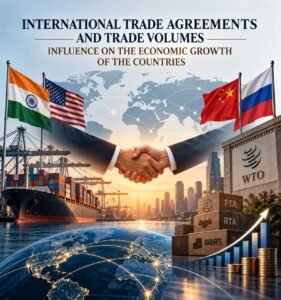
multilateral forums such as the United Nations and the World Trade Organization remain pillars
of international legitimacy in world politics, their operational capacity is increasingly constrained
by geo-political contestation and institutional challenges. This study is an investigation of two
interrelated dimensions: first, the ability of established multilateral organisations, including
BRICS, to facilitate cooperation among competing powers, and second, the emergence of adaptive
strategies such as digital diplomacy, climate diplomacy and minilateralism–that seek to circumvent
or complement institutional inertia. The paper explores recent scholarship and content analysis of various secondary data available. It argues that diplomacy in a multipolar world is not defined by
the decline of old forums but by their coexistence with innovative, flexible mechanisms tailored
to specific issues and coalitions. By conceptualising strategic diplomacy as hybrid and adaptive,
this study highlights the need to rethink global governance as a process of institutional layering
rather than wholesale replacement in a fragmented international order.