Authors: Dr. Rajwinder Kaur, Kurabalakota Paarthu Sai, Devangi Dugar, Thushitha, Varada Swami, Akshaya Mallavarapu, Shobayo Elizabeth Oluwatomi
ABSTRACT
The Make in India (MII) initiative was launched in 2014 and India has been increasingly using import tariff policy changes to boost manufacturing, encourage industries to be self-reliant and less dependent on imports especially from China. Empirical studies of the effect of tariff protection to reduce dependence on imports and promoting competitiveness of Indian manufacturing are scanty and inconclusive, despite the growing prominence of tariff protection in the country’s industrial policy. This study attempts to fill the gap by testing whether import tariff hikes under the Make in India framework have helped in import substitution, decreased the degree of import dependence and reduced imports from China from 2010 to 2023.
This study used a quantitative retrospective longitudinal research design with secondary data gathered from World Integrated Trade Solution (WITS) database of World Bank. For analysis, a cleaned data set of 173,046 observations was used, which was obtained from the tariff schedules and import statistics of India. The changes in the tariff rates, sector-wise comparisons and trend analysis along with Pearson correlation analysis were done using SQL, Python and Power BI to analyze the tariff changes, the volume of imports, the degree of protection to various sectors and the share of China in India’s imports before and after the policy Make in India was implemented.
The results reveal that the average applied rates of tariff have risen over the study period in India, especially after 2018. But an increase in tariff did not result in a statistically significant drop in the aggregate volume of imports and the volume of imports rose with tariff hikes. Likewise, reliance on Chinese imports remained high during the study period with absolute imports rising and the share of China’s imports in India fluctuating only marginally. However, from a sectoral perspective, it was found that there was an uneven level of tariff coverage across product categories with agricultural products having the highest level of protection (32.69%) despite contributing a small proportion of total imports and industrial goods having the lowest level of protection (7.91%) and contributing to the bulk of total import value. A Pearson correlation test was used to determine whether there is a significant relationship between the tariff rates and the volumes of total imports. Pearson correlation analysis indicated that tariff rate changes alone had no significant effect on changes in total imports.
Overall, the findings of the study suggest that tariff protection has failed to accomplish the main goals of decreasing import reliance and boosting domestic manufacturing competitiveness. Rather, India’s import dynamics seem to be driven by the larger structural dynamics such as global value chains, domestic production capacity, technological capacity, infrastructure limitations and the demand for intermediate goods. The results indicate that industrial policy should go with selective tariffs and that ongoing public investments in manufacturing productivity, technology upgrading, logistics and innovation and supply chain resilience are needed. This research will fill a significant gap in the existing studies on India’s economic self reliance by bringing empirical evidence in the form of longitudinal data on the post-2014 trade policy to the forefront and will provide policy-relevant insights for formulating more balanced and effective policies to achieve long-term economic self reliance.
Keywords: Make in India; import tariffs; industrial policy; import substitution; manufacturing competitiveness; trade policy; economic self-reliance.
INTRODUCTION
Background of India’s Trade Policy (2014-2025)
In the last three decades, the Indian trade policy has gone through a significant transformation, shifting from being a very protected trade policy to a more integrated and market oriented trade policy. The economic reforms in the early 1990s greatly lowered the barriers to trade, increased foreign investment and brought India into the world economy. These reforms stimulated economic growth, while simultaneously deepening India’s ties with the rest of the world. They also revealed enduring structural issues such as rising use of imported intermediate goods, rising trade balances in some industries and the import of manufacturing goods, especially from China. These concerns increased in intensity and India’s trade policy started evolving from trade liberalization towards supporting domestic economic growth and resiliency. This policy shift was more pronounced in 2014, as trade policy started to be more than just about trade, it became used to enhance domestic manufacturing. While promoting trade facilitation, India’s tariff regime grew more complex, with an average of 12% Most Favoured Nation (MFN) tariff in 2010-11, compared to 13% in 2014-15, noted the World Trade Organization (WTO). The study also highlighted that domestic supply conditions and price were increasingly determining the tariff decisions and frequent changes in tariff through DGFT and customs notifications created uncertainty for traders (World Trade Organization, 2015). These developments were part of a general trend in policy with tariffs increasingly being employed as a means of advancing industrial growth and the interests of the domestic economy.
The Foreign Trade Policy (FTP) 2015-2020 further strengthened this direction by building on the national initiatives like Make in India (MII), Digital India and Skill India. The policy was not only about trade promotion, but also about promoting export facilitation and ease of doing business, within the overall framework for industrial development. This policy continued under the Foreign Trade Policy 2023, which provided for a liberal trade regime, subject to the government’s regulatory control on imports and exports as required for the protection of the national interest (Government of India, 2015; Government of India, 2023). Similarly, the WTO reviews reveal that India remained to be using trade policies, such as tariffs, licensing etc., to control domestic supply and ensure the protection of strategic industries. The Goods and Services Tax (GST) introduced several changes in the indirect tax regime, but the tariff regime is still a crucial aspect of India’s trade policy. Average MFN applied tariff remained high at 16.2% in India in 2024 confirming that tariff protection is still part and parcel of the industrial policy in India (World Trade Organization, 2020; World Trade Organization, 2024). Within this changing policy landscape, the Government of India (GoI) initiated the Make in India (MII) policy on 25 September 2014 for the aims of making India a globally competitive manufacturing hub by fostering innovation, attracting investment, boosting industrial productivity and delivering large scale employment prospects (Prime Minister of India Office, 2024). The goal was to raise manufacturing’s contribution to GDP growth to 25%, create almost 100 million manufacturing jobs and achieve secure yearly growth in manufacturing of 12-14%. These goals were achieved via four general categories: Making business easier, building infrastructure, fostering priority manufacturing sectors and establishing a more business friendly governance structure.
Make in India (MII) has come in two major phases of implementation. The initial phase (2014-2019) focused on the regulatory changes and investment promotion to enhance the investment. In this period, investments of Rs/- 5.2 lakh crore were received from 68 countries during the Make in India Week and there was also a growing confidence in India’s manufacturing capabilities (Government of India, 2014). In the second phase (2019 onwards), there was a greater focus on developing domestic value chains, advanced manufacturing and reducing strategic reliance on imports. The policy gathered further momentum after the COVID-19 pandemic with the implementation of several complementary policies and programmes aimed at enhancing the competitiveness of the industrial sector, technological capability and supply chain resilience including the Production Linked Incentive (PLI) Scheme, Atmanirbhar Bharat, the Semicon India Program, PM Gati Shakti, the National Logistics Policy and others (Government of India, 2014; India Semiconductor Mission, 2021; PM Gati Shakti, 2021). These policy efforts have been successful in making significant strides and The contribution of Micro, Small and Medium Enterprises (MSMEs) to India’s GDP, manufacturing and total exports has remained in the range of 30%, 36-37% and 45% respectively over the past few years (Government of India, 2014) and foreign direct investment (FDI) has risen significantly from US$ 45.14 billion in 2014-15 to US$70.95 billion in 2023-24. But the share of manufacturing in GDP has still not reached the original target of 25% and has been stuck between 16-17%, reflecting the continued structural constraints to India’s manufacturing transformation.
While the program Make in India (MII) is well known for investment promotion and for industrial development and growth of manufacturing, little empirical attention has been paid to one of the main policy tools of MII, especially import tariffs. The existing research studies have focused on the program from the perspective of foreign direct investment (FDI) or ease of doing business or on general manufacturing performance (Nagarjuna, 2022; Srinivasu & Prathyusha, 2025). These studies give a good insight into the policy framework, but have limited evidence of the effect of the tariffs imposed under Make in India on the reduction of dependence on imports or the boost to manufacturing in India. Research for Atmanirbhar Bharat, on the other hand, has been mostly limited to policies and trade trends rather than assessing the efficiency of tariff protection as a tool for import substitution (Kumar, 2026). Existing empirical research can also be used to explore certain sectors or short-term policy effects, but there is a lack of understanding of the longer-term effects of tariff policy on import dependence and manufacturing performance. This study is also reflected in the analysis of the World Integrated Trade Solution (WITS) database. Despite the changes in tariffs, the average tariff rate after implementation of Make in India was not significantly different from the pre-policy period and the correlation between tariff rates and import volumes was statistically insignificant (r = -0.02; p = 0.94). Meanwhile, China’s participation in India’s imports did not decline but was raised or lowered depending on the product categories and tariff protection was not a clear pattern. The results of these findings pose an interesting question whether the higher import tariffs have an actual impact on reducing India’s import dependence or there are other structural factors that have continued to influence India’s trade pattern. In the present global context, characterized by supply-chain disruptions, geopolitical tensions and economic uncertainty, alongside technological competition, there is a growing interest in the issue of industrial policy and strategic trade interventions. This systematic appraisal of India’s tariff policy not only has implications for the effectiveness of Make in India but also provides insights for future trade and industrial policies that seek sustainable manufacturing growth and economic resilience (Mustafin et al., 2022; Olawore et al., 2025; Yakushev et al., 2024).
Research Problem/Gap
India has raised import duty on various manufacturing segments gradually since enactment of Make in India highlighting the intention to boost manufacturing capacities and dependence of imports on the same. But it is still uncertain if these tariff impositions have yielded the desired results in the reduction of overall imports and on Chinese products. There are no detailed empirical studies demonstrating that the assessment of effectiveness of these tariff interventions reduces informed policy making and subsequent policy design. While many studies have been carried out on trade liberalization and manufacturing performance in India as well as industrial policies, very few studies have assessed the long term effects of tariff hikes implemented under the Make in India initiative on overall trade pattern of imports and China’s share of India’s imports. Previous studies are limited in scope and are either sector specific or are cross-sectional or descriptive in nature and are limited in providing evidence of longitudinal change at the national level. This study aims to fill this gap by using secondary trade data for the period 2010-2023 to assess the impact of tariff increase on import substitution and import dependence.
The objective of the study is to assess the impact of implementation of import tariff of Make in India scheme on the importing dependency in the period 2010-2023 in India. Specifically, the aim of the study is to investigate the changes in import tariff rates over India after taking into account the implementation of the Make in India and Atmanirbhar Bharat initiatives. To check and verify if any changes in import tariff rates have helped in reducing India’s overall import dependence. To understand the transition of dependence of India on Chinese imports during the period of study. Finally, to analyze the distribution of the tariff protection across the major categories of products and analyze its implications for the competitiveness of the domestic manufacturing. The objectives of the study are accomplished by the following research questions, which are:
- Did India’s import tariff rates increase following the implementation of the Make in India initiative?
- Have higher import tariffs contributed to reducing India’s overall import dependence?
- Has India’s dependence on imports from China declined during the study period?
- Which product categories received the highest tariff protection and what do these patterns imply for India’s industrial and trade policy?
LITERATURE REVIEW
MAKE IN INDIA POLICY (MII)
Make In India (MII) policy is a very broad policy and has many objectives and components. In this research paper we are just focusing on import taxes, so our literature review should be limited to the import taxes research papers.
Objectives and Import Substitution Rationale
The Make in India policy initiative (MII) was launched in 2014 by the Government of India, a strategic policy aimed to transform the country into a global manufacturing hub and to strengthen industrial development. The program seeks to increase the share of manufacturing in Gross Domestic Product (GDP), attract domestic and foreign direct investment (FDI), generate employment opportunities, build up industrial productivity and intensify the global competitiveness of Indian industries (Mukherjee, 2018). While the Make in India Initiative covers several areas of economic reform, but this study focuses on the role of import tariffs in supporting domestic production and on why tariffs are used under the Make in India Initiative. Import tariffs serve as a preventive measure for local producers and manufacturers by increasing the price of selected imported goods, these tariffs make locally manufactured products more appealing in the domestic market. The Make in India policy encourages firms to invest in production capacity within the country, with the goal of reducing dependence and relying on foreign goods and boosting local industrial growth. The base of this approach is linked to Import Substitution Industrialization (ISI). Despite the huge literature on trade protection, import substitution and India’s industrial development, relatively limited attention has been given to the post-2014 period in which tariff policy has operated specifically within the Make in India framework. Existing studies provide important evidence on the benefits and costs of tariff protection, but they do not fully establish whether tariff changes associated with Make in India have translated into increased domestic production. This study therefore examines the relationship between import tariffs and domestic production under the Make in India initiative, contributing to the argument on whether tariff protection has effectively supported India’s industrial development. Import Substitution supports that developing economies can help increase the speed of industrial development by producing goods domestically instead of importing them from other countries. Friedrich List (1841) argued that countries that are developing and emerging often need temporary protection so young industries can build the capacity to compete globally. Similarly, Raul Prebisch (1950) pointed out the heights of structural disadvantages faced by developing countries in global trade, particularly their reliance on exporting low-value goods while importing high-value manufactured products. From this perspective, import tariffs looks like a tool that can help in industrial growth by protecting domestic firms from strong foreign companies competition during the early stages of development. Hirschman (1958) noted that industrialization creates important connections across sectors, which can drive broader economic development, job creation and technological advancement. However, the studies also point out limitations, as Bruton (1998) and Irwin (2020) have long observed that prolonged protection in import tariffs may lessen the pressure on firms to innovate, resulting in inefficiencies and weaker global competitiveness over time by an organization. The Make in India initiative is a reflection of import substitution by emphasizing continual domestic production locally and reducing dependence on imports resulting in more economical advantage. “The effect of tariffs is particularly complex in an economy such as India, where manufacturers may rely on imported goods and capital equipment. While tariffs on final manufactured products may protect domestic producers, tariffs on imported inputs may increase production costs and reduce the competitiveness of downstream industries.” However, it does not completely follow traditional ISI models, it also encourages foreign direct investment and involvement in global value chains. This approach makes it a more flexible strategy that combines domestic industrial protection with global economic integration under the Make in India Initiative.
Import Tariffs and Manufacturing Growth
Import tariffs have been used by governments as an important trade policy tool to protect domestic industries from international competition and to promote industrial development. By increasing the price of imported goods, tariffs are expected to encourage consumers and industries to substitute imported products with domestically manufactured alternatives. Within the framework of the Make in India (MII) initiative, import tariffs were introduced not only to discourage over reliance on foreign products but also to strengthen India’s manufacturing sector, that was to stimulate domestic investment, generate employment and support long-term economic growth. Therefore, manufacturing was positioned as one of the central pillars of India’s industrial transformation strategy. The theoretical justification for tariff protection is that temporary protection can provide domestic industries with the time and market space needed to expand production, improve productivity, and become internationally competitive. Higher tariffs reduce the price advantage enjoyed by imported goods, thereby increasing the relative attractiveness of locally produced products. This protective environment can encourage firms to invest in production capacity, adopt improved manufacturing processes and strengthen domestic supply chains. In particular, emerging industries, small enterprises and new manufacturers may benefit from reduced foreign competition during their initial stages of development, enabling them to establish themselves within the domestic market before competing internationally. Nevertheless, the relationship between import tariffs and manufacturing growth remains considerably more complex than suggested by traditional protectionist theories. Although tariffs may provide short-term support for domestic industries, means do not automatically guarantee sustained improvements in manufacturing performance. Rawat et al. (2020) argue that while tariff protection may initially stimulate domestic production, long-term manufacturing growth depends on continuous improvements in productivity, technological capability, innovation and production efficiency rather than protection alone. Consequently, tariff protection should be viewed as a supportive policy instrument rather than a substitute for structural industrial reforms.
A significant challenge arises because many Indian manufacturing industries remain highly dependent on imported intermediate goods, capital equipment, advanced machinery and technology-intensive inputs. When tariffs are imposed on these imported components, production costs for domestic manufacturers may increase, reducing overall manufacturing efficiency and limiting international competitiveness. Higher production costs may also reduce the ability of firms to compete in outer markets, particularly in industries that operate within global value chains. Choudhury (2022) emphasizes that lowering tariffs on imported production inputs can, in some circumstances, improve manufacturing performance by facilitating technological upgrading, reducing production costs and encouraging innovation. The literature also suggests that international trade itself contributes significantly to industrial development by providing access to advanced technology, modem production techniques, specialized machinery and global knowledge networks. Exposure to international competition encourages firms to improve product quality, increase operational efficiency and invest in research and development. Conversely, prolonged protection through high tariffs may weaken competitive pressures, reducing incentives for firms to innovate or adopt more efficient production processes. As noted by Goldberg et al. (2010), long term whole productivity growth depends not only on protecting domestic industries but also on maintaining competitive pressures that encourage continuous technological advancement and efficiency improvements. In addition to tariff policy, several structural constraints continue to limit the growth of India’s manufacturing sector. Inadequate infrastructure, high transportation and logistics costs, shortages of skilled labour, regulatory complexities and technological gaps remain significant barriers to industrial competitiveness. These challenges cannot be addressed through tariff protection alone. Consequently, despite continuous tariff increases implemented under the Make in India initiative, manufacturing growth has remained below the policy’s original expectations. This suggests that tariff protection, while potentially beneficial in the short term, must be accompanied by broader structural reforms to produce sustainable industrial development (Choudhury, 2022).
The existing study therefore supports a balanced policy perspective. Import tariffs can provide temporary protection to strategically important industries and contribute to the development of domestic manufacturing capacity. However, long-term industrial competitiveness requires complementary investments in innovation, infrastructure, technology, skilled human resources, institutional reforms and integration with global production networks. Excessive reliance on tariff protection without parallel improvements in productivity and technological capability may reduce efficiency and weaken competitiveness over time (Rawat et al., 2020; Goldberg et al., 2010; Rijesh, 2019). Overall, the review indicates that the effectiveness of import tariffs should be evaluated within the broader context of industrial development rather than as an isolated trade policy measure. Although the Make in India initiative has used tariff protection to promote domestic manufacturing and encourage greater economic self-reliance, current evidence suggests that tariffs alone cannot ensure sustained manufacturing growth. Their success ultimately depends on the extent to which they are supported by comprehensive structural reforms that enhance industrial productivity, technological advancement, innovation and global competitiveness (Choudhury, 2022).
Impact Of Rising Tariffs On Domestic Industries
After decades of trade liberalization, India’s economic policy made a turnaround in 2014, when it created “breathing room” for domestic producers of certain goods. There are four trade-related research exploring the consequences of protectionism, each of which provides substantial evidence on how import tariffs affected domestic production and export performance after 2014. The studies demonstrate that tariff protection creates winners and losers within the same industry, with overall negative externalities for the economy, although to varying degrees depending on characteristics of firms and policies adopted at the national level. Mukherjee (2024) is the first author to provide evidence on how import tariffs affected India’s economy using aggregate data to show how protectionism shaped production and export performance at the industry level. The study suggests that trade barriers tend to increase a country’s value-added output while decreasing its export performance, which indicates that protectionism makes economies self-sufficient but lowers their competitiveness in international trade. Similarly, Lovely (2018) explores the impact of India’s 2018 tariff increases on electronics and toys, finding that they reduced the competitiveness of Indian exporters relative to China, which was deemed a “policy mistake” given India’s liberalization instincts since the mid-1990s. Unlike Mukherjee, who views “import protection as an intervening variable,” which makes economies insular, Lovely argues that India’s protectionist tum was a “reactive measure” to China’s growing market power. This nuance is significant, as it determines whether imposing tariffs is an active choice to make India self-sufficient or an involuntary step to offset China’s advantage. However, both conclude that import protectionism lowers a country’s competitiveness in international trade, although with differing implications for production volumes and the distribution of benefits in the domestic economy. While Mukherjee and Lovely discuss the aggregate effects of tariff increases, which are informative but simplistic, Viegelahn and Vandenbussche (2016) offer a more comprehensive perspective by analyzing how input tariffs affect individual firms. Their study is groundbreaking in that it determines how trade barriers impact both production and employment at the firm level, demonstrating that firms reduce input use by 40% and sales of related outputs by 50-80% when facing tariffs while also lowering employment by 20%. This finding is critical for testing the “breathing room” hypothesis advanced by the Indian government, which assumes that protectionism will make domestic manufacturers competitive enough to operate on larger scales.
The study shows that far from helping firms grow, import tariffs are costly to all domestic producers, including input suppliers who experience lower profits, which is a sign of lower resilience. This is an important limitation of protectionism as an instrument of industrial policy that Viegelahn and Vandenbussche unveil by analyzing firms rather than industries. When viewed through the lens of national economic strategy, India’s import tariffs do not appear to make much sense given that they offset the liberalization instincts informing its trade policy over the past two decades. Ghosh (2025) is the only author to discuss India’s protectionist tum in the context of international trade, which terms as “selective protection” that entailed “tariff walls around finished products” while “lower tariffs for high-tech inputs.” This is an important qualification to make when reviewing Mukherjee’s analysis, which portrays India as an increasingly protectionist economy. Ghosh’s nuance is critical as it explains the context in which import duties were imposed, which was dictated by the need to make domestic manufacturers competitive against China. In doing so, he contradicts both Mukherjee’s and Lovely’s arguments, which assume that India is committed to becoming self-sufficient or protecting its economy from international competitors. Ghosh suggests that selective protection is informed by India’s strategic and economic interests, which entails making choices in favor of certain industries over others to achieve long-term strategic goals. This study offers the most comprehensive assessment of how tariffs affect economies by demonstrating that their impact depends on firms’ characteristics, industries and government policies. Overall, the articles discussed above offer tangible insights into trade-related economic changes in India after 2014, each of which is unique in the research questions it asks, data it uses and conclusions it draws. None of the authors goes beyond 2020, which means that none of them considers post-2020 supply chain reconfigurations, the most important of which was “China plus one” that has affected India’s economy as well. Another limitation of the research is that Ghosh, Mukherjee and Lovely focus on the impact of tariffs on aggregate production, while Viegelahn and Vandenbussche analyze the effects at the firm level without attempting to reconcile the two findings. Finally, none of the authors assessed whether import duties undermined or facilitated India’s capacity to transform itself into a significant manufacturing economy which is the issue this project seeks to address.
Import Taxes and Dependency on Foreign Goods
Reducing dependence on imported goods has been one of the central objectives of the Make in India (MII) initiative since its launch in 2014. To achieve this goal, the Government of India gradually increased import tariffs on a range of products, including electronics, mobile phones, toys, furniture, machinery components and several other manufactured goods. The underlying assumption was that making imported products more expensive would encourage consumers and manufacturers to shift towards domestically produced alternatives, thereby strengthening local industries and reducing India’s reliance on foreign markets (Virmani et al., 2003). The existing literature suggests that this strategy has produced mixed outcomes. In a few sectors, tariff protection has contributed to visible improvements in domestic manufacturing. The mobile phone industry is frequently cited as one of the most successful examples. Before the implementation of the Make in India initiative, India relied heavily on imports of finished mobile phones. Following successive tariff increases and supportive industrial policies, many multinational companies established assembly facilities within the country. As a result, India emerged as one of the world’s largest mobile phone assembly hubs and imports of fully assembled handsets declined considerably (VARindia, 2023). However, a closer examination of this success story reveals a more complex reality. Although the final assembly of mobile phones increasingly takes place within India, the majority of high-value components including semiconductors, display panels, batteries, sensors and other electronic parts, continue to be imported from countries such as China, South Korea and Taiwan. Consequently, the apparent reduction in import dependence largely reflects a shift in the location of final assembly rather than complete domestic production. In other words, dependence on foreign goods has not disappeared, instead, it has moved further upstream within the global supply chain (Gulati et al., 2025).
This pattern is not unique to the electronics industry only, similar trends are observed across several manufacturing sectors where domestic firms continue to rely on imported raw materials, specialised machinery, advanced technologies and intermediate inputs. In such industries, higher import tariffs do not necessarily reduce dependence on foreign suppliers because many of these products currently have no viable domestic substitutes. Instead, tariff increases may raise production costs for Indian manufacturers, potentially reducing productivity and competitiveness rather than strengthening domestic industries (Nambiar et al., 1999). The study also highlights another important concern regarding prolonged tariff protection. While temporary protection may provide emerging industries with the opportunity to expand, excessive or long-term reliance on tariffs may unintentionally reduce competitive pressure on domestic firms. When industries operate in highly protected markets, firms may face fewer incentives to improve product quality, invest in research and development or adopt advanced technologies. As a result, dependence on foreign innovation and technological capabilities may continue even if imports of finished products decline (Topalova, 2003). This suggests that reducing visible imports alone should not be interpreted as evidence of industrial self-reliance. Collectively, the available evidence indicates that the impact of import tariffs on foreign dependence is more nuanced than often assumed. While tariff measures under the Make in India initiative have encouraged domestic production in selected industries and reduced imports of certain finished goods, they have not eliminated India’s dependence on foreign technology, industrial components and production inputs. Instead, the nature of dependence has changed, shifting from finished consumer products to raw and intermediate goods and critical manufacturing inputs that remain essential for domestic production.
These findings demonstrate that import substitution cannot be assessed solely by observing changes in final imports. A meaningful evaluation must also consider the structure of domestic value chains, technological capabilities and the extent to which local industries are able to produce high-value components independently. Consequently, the literature shows that tariff protection alone is unlikely to achieve long-term industrial self-reliance unless it is accompanied by sustained investments in technological innovation, domestic component manufacturing, research and development and industrial capability building. Overall, the existing evidence indicates that Make in India has contributed to reducing dependence on selected imported finished goods, but it has not fundamentally transformed India’s reliance on foreign technology and industrial inputs. This distinction is particularly important for evaluating the effectiveness of tariff based industrial policy as an economic self-reliance requires strengthening the entire manufacturing ecosystem rather than simply relocating the final stage of production. These observations provide an important foundation for the present study, which empirically examines whether the tariff measures introduced under the Make in India initiative have translated into measurable reductions in India’s overall import dependence during the period 2010-2023.
Global Comparison of Import Substitution Policies
The concept of Import Substitution Industrialization (ISI) has shaped the development strategies of many developing economies during the twentieth century. At its core, ISI was built on a simple but influential idea that countries could achieve sustainable economic development by producing manufactured goods domestically rather than relying heavily on imports. Governments pursuing this strategy commonly introduced import tariffs, import quotas, subsidies, exchange controls and state-led industrial policies to protect emerging industries from international competition. Although many countries shared this objective, their experiences differed considerably, demonstrating that the success of import substitution depended not merely on protection itself but on how those policies were designed and implemented. The intellectual foundations of ISI were laid by development economists such as Raul Prebisch (1950) and Hans Singer (1950) who argued that countries dependent on exporting primary commodities often experienced deteriorating terms of trade compared with industrialized economies. From their perspective, industrialization was not simply an economic choice but a necessity for achieving long-term economic independence and reducing structural inequalities within the global trading system. Building on this argument, Alexander Gerschenkron (1962) emphasized that governments in late industrializing countries often needed to play an active role in accelerating industrial development through strategic state intervention, particularly where private investment alone was insufficient to drive industrial transformation. Latin America became one of the earliest testing grounds for import substitution policies. Economists such as Albert Hirschman (1958) argued that industrialization could generate strong forward and backward linkages across the economy, creating employment opportunities, encouraging technological progress and stimulating wider economic development. During the early years, countries such as Brazil, Argentina and Mexico experienced notable industrial expansion under protected markets. However, these initial gains were gradually overshadowed by persistent challenges, including declining productivity, limited international competitiveness, fiscal pressures and excessive dependence on government support. Later scholars including Bela Balassa (1982) and Anne Krueger (1978), argued that prolonged protection reduced competition, weakened incentives for innovation and ultimately constrained long-term industrial growth. These experiences demonstrated that protection could support industrialization in the short term but was far less effective when maintained without continuous improvements in productivity and competitiveness.
The experience of East Asian economies presents a markedly different trajectory. Countries such as South Korea and Taiwan initially adopted selective forms of import substitution but gradually shifted towards export-oriented industrialization (EOI). As highlighted by Alice Amsden (1989) and Robert Wade (1990), these countries combined temporary protection with strict performance standards, technological upgrading, investment in human capital and strong export promotion policies. Rather than shielding domestic industries indefinitely, governments expected firms to become internationally competitive within a defined period. This balanced approach enabled both economies to build globally recognized industries in electronics, automobiles, semiconductors and advanced manufacturing. Their experience suggests that tariff protection can contribute to industrial development when it is accompanied by continuous improvements in productivity, innovation and international competitiveness. India’s own experience with import substitution reflects both the strengths and limitations of protection-based industrialization. Following Independence, India adopted extensive import substitution policies characterized by high tariffs, industrial licensing, foreign exchange controls and significant government involvement in industrial production. According to Bhagwati and Srinivasan (1975), these policies helped establish a diversified industrial base and reduced dependence on imported manufactured goods. However, over time the system also generated substantial inefficiencies, excessive bureaucratic controls and limited competition, reducing the ability of Indian industries to innovate and compete internationally. These structural weaknesses became one of the major reasons behind the economic reforms initiated in 1991, which marked India’s gradual transition towards greater trade liberalization and integration with the global economy. More recent scholars have moved beyond the traditional debate between protectionism and free trade by emphasizing the importance of strategic industrial policy. Dani Rodrik (2008) argues that industrial policy can remain an effective development tool when governments focus on addressing market failures, encouraging innovation and supporting sectors with long-term growth potential rather than protecting industries indefinitely. Similarly, Ha Joon Chang (2002) observes that many of today’s advanced economies relied on protectionist measures during the early stages of industrialization before later advocating free trade. These perspectives suggest that the effectiveness of import substitution depends less on the existence of tariffs themselves and more on the quality of institutions, governance, policy implementation and complementary investments in technological capability and industrial upgrading. Compared with international experience demonstrates that there is no single model of successful import substitution. Countries that relied on prolonged protection without improving productivity often experienced industrial stagnation and declining competitiveness. In contrast, economies that combined temporary protection with technological advancement, export orientation, institutional strengthening and gradual market integration achieved more sustainable industrial growth. These contrasting experiences offer valuable lessons for contemporary industrial policy.
For India, these global experiences are particularly relevant. The Make in India initiative represents a modem and more flexible form of industrial policy rather than a return to traditional import substitution. Unlike earlier ISI models, it combines selective tariff protection with foreign investment, participation in global value chains, technological modernization and infrastructure development. Nevertheless, international studies consistently suggest that tariffs alone cannot ensure long-term industrial competitiveness. Their effectiveness ultimately depends on whether they are accompanied by structural reforms that strengthen domestic manufacturing capacity, technological innovation, workforce skills and industrial productivity. Viewed in this broader international context, India’s tariff strategy should be assessed not simply by whether tariffs have increased, but by whether they have contributed to sustainable industrial transformation and reduced structural dependence on imported goods. This comparative perspective provides an important foundation for interpreting the empirical findings of the present study and for understanding the broader implications of tariff-based industrial policy in developing economies.
Table 1. Comparison of Import substitution policies across Countries
|
Country |
Period of ISI |
Major policies adopted |
Outcomes |
Key lessons |
|
South Korea |
1950s–1960s
|
The country used a way of developing its industries in the 1950s and 1960s which is called Selective Import Substitution Industrialization and then it moved to Export-Oriented Industrialization. The government helped the industries by giving them money and other kinds of support like subsidies and protection from products of countries. |
South Korea built a base in industries like steel, automobiles and electronics.
South Korea was very successful in moving to export-led growth with companies like Samsung and Hyundai.
|
Import Substitution Industrialization works best if it is for a short time and if it helps the industries to become more productive and then the country opens up to the global economy.
|
|
Taiwan |
1950s–1960s
|
The government put restrictions on imports, changed the way land was owned, invested in manufacturing and helped medium-sized businesses. The country also encouraged exports gradually. |
Taiwan had rapid industrialization, it became very advanced in technology and its exports grew steadily. The electronics industry in Taiwan became one of the best in the world. |
For Taiwan to remain competitive in the term it used Import Substitution Industrialization promoted exports and invested in its people.
|
|
Brazil |
1930s–1980s
|
Brazil used tariffs, import quotas, state-owned enterprises and subsidies to help its domestic industries.
|
This led to a diversification of industries in areas like automobiles, steel and chemicals. But the industries in Brazil remained inefficient, the country got into a lot of debt and inflation became a problem in the 1980s. |
If a country is protected from competition for too long it can become inefficient and have big fiscal problems. |
|
India |
1950–1991
|
The country had taxes on imports and businesses needed special permission to operate. The tariffs were very high. There was something called Industrial Licensing also known as License Raj The government controlled exchange The government also controlled many industries.
|
This approach helped India to make things and become self-sufficient in some areas. However India did not make things efficiently. The government was very slow in making decisions. There was also no competition, which slowed down the country’s progress until 1991, when the economy was opened up. |
India’s way of doing things, which is called Import Substitution Industrialization can help the country to make things for itself. When the government controls things too much and protects industries for too long it can hurt India’s ability to compete with other countries and come up with new ideas. |
Source : Authors compilation based on National Bureau of Economic Research (NBER) and multiple sources.
Although many reviews of literature examine India’s trade policy, manufacturing performance and industrial development, several important gaps remain. First, much of the existing research focuses on theoretical discussions of protectionism or sector specific case studies, providing limited evidence on national level trade outcomes following the implementation of the Make in India initiative. Secondly, previous studies frequently analyze manufacturing growth or export performance independently while comparatively little attention has been devoted to assessing whether increased import tariffs have actually reduced India’s aggregate import dependence or its reliance on Chinese imports. To understand the third reason, many investigations rely on short observation periods, making it difficult to capture the long-term effects of trade policy changes. Given that tariff reforms under Make in India were introduced gradually over several years, longitudinal analysis is essential for understanding their cumulative impact. Finally, relatively few studies combine comprehensive secondary trade data with statistical techniques to examine the relationship between tariff rates, import volumes and import dependence over time. This methodological limitation constrains evidence-based evaluation of India’s industrial policy.
METHODOLOGY
Research Design
This study employed a quantitative retrospective longitudinal research design to examine the relationship between India’s import tariff policy and import dependence during the period 2010-2023. A longitudinal design was considered appropriate because it enables the analysis of policy changes and trade outcomes over time rather than at a single point of time, thereby providing a more comprehensive understanding of long-term trends associated with the Make in India (MII) initiative. By analyzing multiple years of secondary data, the study captures the evolution of tariff rates, import volumes and China’s share in India’s imports before and after the implementation of the policy.
The research adopts an explanatory analytical approach, seeking not only to describe changes in tariff structures but also to examine whether these changes are associated with measurable variations in India’s import patterns. This design is particularly suitable for evaluating macroeconomic policy interventions where controlled experimental methods are neither feasible nor appropriate.
Data Sources
The study is based exclusively on secondary data obtained from the World Integrated Trade Solution (WITS) database, jointly maintained by the World Bank and the United Nations Conference on Trade and Development (UNCTAD). WITS is one of the most widely recognized international databases for tariff schedules, trade statistics and customs information and provides standardized and internationally comparable trade data.
Data Collection and Processing
Secondary datasets were extracted from the WITS database using standardized Harmonized System (HS) product classifications. The dataset initially consisted of 352,470 observations covering tariff rates and import values across countries and product categories, but after data cleaning and preprocessing, the 173,046 records remained for analysis. Following extraction, the data underwent systematic cleaning to ensure completeness, consistency and analytical accuracy. The data preparation process included removal of duplicate observations, treatment of missing or inconsistent values, standardization of tariff and trade variables, verification of annual observations, classification of imports into major economic sectors and integration of tariff schedules with import statistics.
Variable Selection
The dependent variable was Total Import Volume (USD Billion), Total annual value of imports, China’s Share of Imports (%), Proportion of India’s imports sourced from China, Import Value by Category and Import value across product categories. These indicators collectively reflect the extent to which India’s economy relied on imported goods during the study period. The principal independent variable was the Average Tariff Rate (%), Applied tariff imposed by Government of India on imported products across different product categories. Although the primary analysis focused on tariff rates and import trends, the interpretation of findings acknowledges the influence of broader macroeconomic and structural factors. The Controlled variables also found out in Year (2010-2023), Partner Country such as China, USA and World Product Category, Agricultural, Industrial, Consumer Goods, Capital Goods, Intermediate Goods, Petroleum, Raw Materials and Product Code get by Harmonized System Classification. The cleaned dataset included key variables such as partner country, product category, tariff year, average tariff rate and import value in USD. These factors are recognized as potential influences on import behaviour beyond tariff policy alone.
Data Analysis
Data analysis was conducted using SQL, Python and Microsoft Power BI, enabling efficient management, statistical analysis and visualization of the large longitudinal dataset. The study employed descriptive statistics, trend analysis, category-wise comparisons and Pearson correlation analysis. The analysis consisted of following complementary stages:
Descriptive Analysis
Descriptive statistics were used to summarize tariff rates, import values and sector-wise trade patterns. Measures of central tendency and trend analysis were employed to understand changes over time and identify major shifts following the implementation of the Make in India initiative.
Trend Analysis
Longitudinal trend analysis examined annual changes in Average import tariff rates, total import values, China’s share in India’s imports, sector-specific tariff protection. Time series visualizations were developed to illustrate policy changes and trade dynamics throughout the study period.
Sectoral Comparative Analysis
Sector-wise comparisons were performed to evaluate differences in tariff protection across major product categories and their relationship with import intensity. This analysis enabled identification of sectors receiving relatively higher tariff protection and those continuing to exhibit substantial import dependence.
Correlation Analysis
To examine the relationship between tariff policy and import dependence, Pearson’s Product Moment Correlation Coefficient was employed. Pearson correlation was selected because both tariff rates and import values are continuous quantitative variables and the study sought to evaluate the direction and strength of their linear association over time. As the primary objective was to determine whether increases in tariff rates corresponded with changes in aggregate import volumes, Pearson correlation provides an appropriate and widely accepted statistical measure for assessing such relationships. The correlation coefficient ranges from -1 to +1, where:
- +1 indicates a perfect positive relationship
- –1 indicates a perfect negative
- 0 indicates no linear
Statistical significance was assessed using a conventional significance level (p < 0.05). Although correlation analysis does not establish causally, it offers valuable empirical evidence regarding whether tariff increases are associated with observable changes in import dependence. Given the macroeconomic nature of the study and the use of national longitudinal secondary data, Pearson correlation was considered an appropriate first-level analytical technique. The findings are interpreted cautiously alongside descriptive and trend analyses, recognizing that import behaviour is also influenced by multiple structural and economic factors.
Reliability and Data Quality
The reliability of the study is strengthened by the use of internationally recognized secondary data obtained from the World Integrated Trade Solution (WITS) database. The standardized methodology employed by WITS ensures consistency, comparability and transparency across countries and years thereby reducing measurement error and enhancing the credibility of the analysis. The study utilized only publicly available secondary data obtained from internationally recognized databases. No human participants, personal identifiers or confidential information were involved. Consequently, ethical risks were minimal and formal informed consent was not required. The research adhered to accepted principles of academic integrity through accurate reporting of findings, appropriate citation of data sources and transparent presentation of analytical methods.
FINDINGS AND RESULTS
The empirical findings derived from the analysis of secondary trade data obtained from the World Integrated Trade Solution (WITS) database for the period 2010-2023. The analysis evaluates whether the increase in import tariffs under the Make in India (MII) initiative contributed to reducing India’s dependence on imported goods, particularly imports from China. The findings are organized into five thematic areas- trends in tariff rates, import volumes, dependence on Chinese imports, sector-wise tariff protection and the statistical relationship between tariffs and import volumes.
Trends in India’s Import Tariff Rates
The annual trend in India’s average applied tariff rates from 2010 to 2023, highlighting the launch of the Make in India initiative in 2014, but the tariff peak in 2019 and the COVID-19 period in 2020. Tariffs increased, but not continuously after tariffs rose after Make in India (2014).
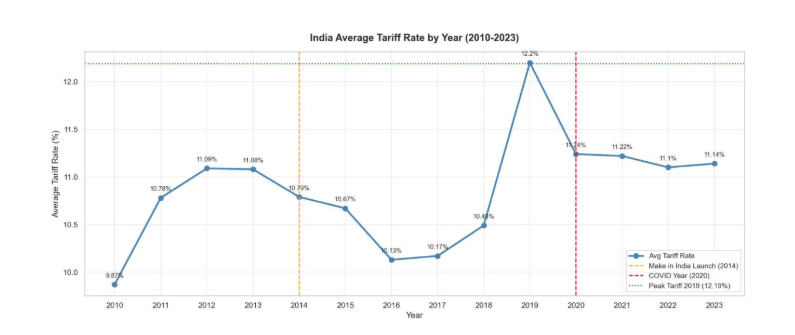
Figure 1. India’s average tariff rate by year (2010-2023).
Source: Compiled from WITS Database and IISPPR Data Science Analysis Report (2026).
The analysis indicates that India’s average applied tariff rate increased from 9.87% in 2010 to 11.14% in 2023, reflecting a gradual policy shift toward greater protection of selected domestic industries. However, the increase was neither uniform nor continuous throughout the study period. The most pronounced rise occurred between 2018 and 2019, when the average tariff rate reached its highest level of 12.19% before stabilizing at approximately 11% in subsequent years.
Interestingly, comparison of the pre- and post-policy periods revealed only a modest difference in average tariff levels. The mean tariff during the pre-Make in India period (2010-2013) was 11.38%, compared with 10.67% during the post-policy period (2014-2023). These findings suggest that although tariff revisions became more visible after the introduction of the Make in India initiative, the overall level of tariff protection did not increase consistently across the entire study period. Instead, tariff policy appears to have been implemented selectively in response to changing economic and strategic priorities.
Import Volumes Continued to Increase Despite Higher Tariffs
Shown in figure, India’s total annual import values during the study period, classified into the pre-policy period, the Make in India implementation phase, the COVID-19 year and the post-pandemic recovery period showed higher tariffs did not reduce import volumes.
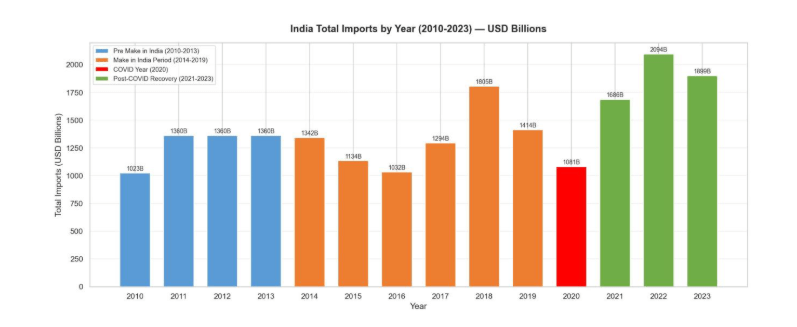
Figure 2. India’s total imports by year (USD billions), 2010-2023.
Source: Compiled from WITS Database and IISPPR Data Science Analysis Report (2026).
Contrary to the expectation that higher tariffs would discourage imports, India’s total import volume increased substantially during the study period. Imports rose from USD 1,023 billion in 2010 to USD 1,899 billion in 2023, reaching an all-time high of USD 2,094 billion in 2022. Temporary declines were observed during 2015-2016 and 2020, the latter corresponding with the disruptions caused by the COVID-19 pandemic. However, these reductions were associated with global economic contraction and supply chain disruptions rather than changes in tariff policy. Average annual imports increased from USD 1,276 billion during the pre-policy period to USD 1,478 billion on post policy implementation of Make in India. These findings indicate that tariff increases alone were insufficient to reduce India’s aggregate import demand, suggesting that broader economic and structural factors continued to influence import behaviour.
Dependence on Chinese Imports Remained High
One of the principal objectives of the Make in India initiative was to reduce India’s dependence on imports from China. The figure compares India’s imports from China and the United States while illustrating changes in China’s share of India’s total imports over time depict dependence on China increased rather than decreased.
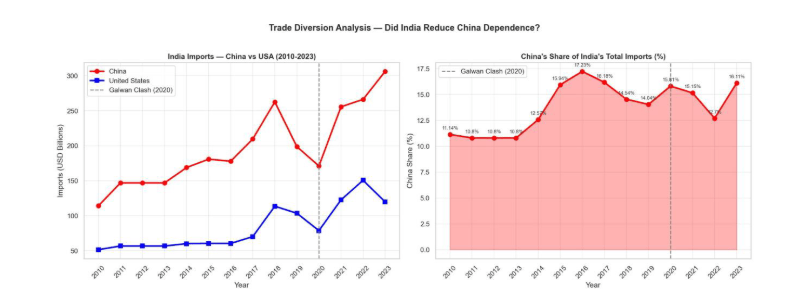
Figure 3. India’s imports from China and the United States, and China’s share in India’s total imports (2010-2023).
Source: Compiled from WITS Database and IISPPR Data Science Analysis Report (2026).
The findings demonstrate that dependence on Chinese imports did not decline during the study period. Instead, China’s share of India’s imports increased from 11.14% in 2010 to 16.11% in 2023. The highest share (17.23%) was recorded in 2016, followed by a temporary decline after the 2020 Galwan border conflict and the COVID-19 pandemic before recovering in subsequent years. In value terms, imports from China increased nearly threefold, rising from approximately USD 114 billion in 2010 to approximately USD 305 billion in 2023. Throughout the study period, imports from China consistently remained more than twice the value of imports from the United States. These findings suggest that despite policy efforts to encourage domestic production, China’s competitive manufacturing capacity and its central role in global supply chains continued to sustain India’s dependence on Chinese imports.
Tariff Protection Varied Across Product Categories
Sector-wise analysis revealed considerable variation in tariff protection across product groups, indicating that India’s tariff policy was selectively applied rather than uniformly implemented. The data presents the average tariff rate and cumulative import value for the seven major product categories.
Table 2. Average Tariff Rates and Total Imports by Product Category
Category |
Average Tariff |
Total Imports |
|
Agricultural Products |
32.69% |
USD 339B |
|
Consumer Goods |
12.54% |
USD 726B |
|
Raw Materials |
9.93% |
USD 2,473B |
|
Intermediate Goods |
8.12% |
USD 2,087B |
|
Industrial Goods |
7.91% |
USD 4,624B |
|
Capital Goods |
6.72% |
USD 1,291B |
|
Petroleum |
2.59% |
USD 1,690B |
Source : Compiled from WITS Database and IISPPR Data Science Analysis Report (2026)
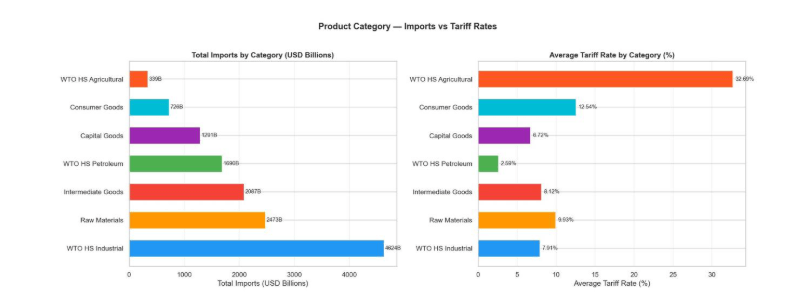
Figure 4. Total imports (left) and average tariff rate (right) by the seven major product categories, sorted by import value.
Source : Compiled from WITS Database and IISPPR Data Science Analysis Report (2026)
The analysis shows that agricultural products received the highest tariff protection (32.69%) despite representing the smallest import volume (USD 339 billion). Comparatively, industrial goods which accounted for the largest share of imports (USD 4,624 billion) were subject to lower tariff protection (7.91%). Similarly, relatively low tariff rates were maintained for capital goods, intermediate goods and petroleum, reflecting India’s continued reliance on these products for industrial production and energy security. These findings indicate that India’s tariff policy prioritized the protection of selected domestic sectors while maintaining lower trade barriers for strategically important industrial inputs.
Relationship Between Tariff Rates and Import Volumes
To evaluate whether tariff increases were associated with changes in import dependence, Pearson’s Product Moment Correlation analysis was conducted using fourteen annual observations. The analysis produced a correlation coefficient of r = – 0.0225 with a p-value of 0.939, indicating no statistically significant relationship between average tariff rates and total import volumes.
The Figure illustrates the scatter plot between tariff rates and import volumes together with a comparison of average tariff rates and import values before and after the implementation of Make in India analyze no significant relationship between tariffs and imports.
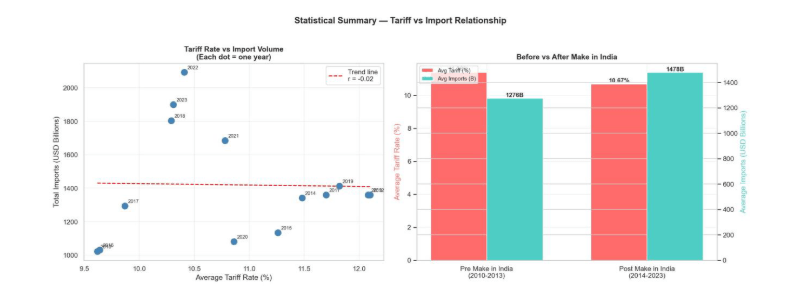
Figure 5. Relationship between average tariff rates and India’s total imports (2010-2023).
Source: Compiled from WITS Database and IISPPR Data Science Analysis Report (2026).
The pre-policy average for 2010-2013 was 11.38%, marginally higher than the post-policy decade average of 10.67%. There is not much difference in pre- and post-tariff rates. On the other hand, Average annual imports increased from USD 1,276 billion in the pre-policy period to USD 1,478 billion in the post-policy period. The import is basically higher than the pre-policy era. This analysis shows that there is no significant relationship between tariffs and imports.
Table 3. Comparison of Tariff Rates and Import Volumes Before and After Make in India
|
Metric |
Pre-Make in India (2010–13) |
Post Make in India (2014 – 23) |
|---|---|---|
|
Average tariff rate |
11.38% |
10.67% |
|
Average annual imports (USD billions) |
1,276 |
1,478 |
Source : Compiled from WITS Database and IISPPR Data Science Analysis Report (2026)
The correlation coefficient is extremely close to zero and statistically insignificant (p > 0.05), suggesting that annual changes in tariff rates were not associated with corresponding changes in aggregate import volumes. These findings imply that import demand was influenced by factors beyond tariff policy alone.
DISCUSSION
The present study evaluated whether the import tariff increases implemented under India’s Make in India (MII) initiative contributed to reducing import dependence and strengthening domestic manufacturing between 2010 and 2023. Overall, the findings indicate that although tariff rates increased during the study period, they did not produce a significant reduction in aggregate import volumes or dependence on Chinese goods. These findings suggest that tariff protection alone is not sufficient to achieve the broader objectives of industrial self-reliance without complementary structural and institutional reforms.
One of the most notable findings of this study is that India’s total imports continued to increase despite successive tariff revisions. While the Government introduced higher customs duties across several manufacturing sectors after 2018, aggregate imports rose from USD 1,023 billion in 2010 to USD 1,899 billion in 2023, reaching a record USD 2,094 billion in 2022. This finding challenges the conventional assumption that higher tariffs automatically discourage imports by increasing the cost of foreign goods. Instead, it suggests that import demand is determined by a broader set of economic forces including industrial expansion, domestic consumption and the demand for intermediate goods required for manufacturing. This observation is consistent with previous research arguing that tariff measures are most effective when accompanied by improvements in industrial productivity, technological capability, infrastructure and supply chain development. Studies on industrial policy have shown that countries achieving sustained manufacturing growth generally combine selective protection with investments in innovation, human capital, logistics and export competitiveness. The experience of several East Asian economies illustrates that tariff protection can support industrial development only when integrated into a comprehensive industrial strategy rather than implemented as a stand-alone policy instrument.
A second important finding is that India’s dependence on imports from China remained substantial throughout the study period. Despite policy efforts to promote domestic manufacturing, China’s share of India’s imports increased from 11.14% in 2010 to 16.11% in 2023, while the absolute value of imports from China nearly tripled. Although a temporary decline was observed following the COVID-19 pandemic and the Galwan border conflict, this reduction was short-lived and import levels subsequently recovered. These findings highlight the structural nature of India’s trade relationship with China. Rather than consisting of finished consumer goods, a considerable proportion of imports from China comprises intermediate goods, electronic components, machinery, chemicals and industrial inputs that support domestic production. Consequently, even when tariffs increase, Indian manufacturers often continue importing these products because comparable domestic alternatives are either unavailable or insufficient to meet industrial demand. This explains why higher tariffs did not substantially reduce dependence on Chinese imports during the study period.
The sectoral analysis provides additional evidence that India’s tariff policy has been implemented selectively rather than uniformly across all product categories. Agricultural products received the highest tariff protection despite accounting for a relatively small proportion of total imports, whereas industrial goods, capital goods, intermediate goods and petroleum, which collectively account for the largest share of imports continued to receive comparatively lower tariff protection. This pattern reflects the Government’s attempt to balance the protection of domestic producers with the need to maintain access to critical production inputs essential for economic growth and industrial development. The statistical analysis further reinforces these observations. Pearson’s correlation coefficient (r = -0.0225; p = 0.939) demonstrated no statistically significant relationship between average tariff rates and aggregate import volumes. Although correlation analysis does not establish causality, the absence of a meaningful statistical association suggests that annual variations in tariff rates were not a major determinant of changes in India’s import behaviour during the study period. Instead, import trends appear to have been influenced by a complex interaction of domestic and international factors including economic growth, exchange rate movements, commodity prices, global production networks, technological dependence and external shocks such as the COVID-19 pandemic.
The findings also show the limitations of relying solely on tariff-based protection as an industrial policy strategy in an increasingly interconnected global economy. Modem manufacturing systems operate within global value chains in which imported intermediate goods often contribute directly to domestic production and exports. Under such conditions, increases in tariffs may raise production costs for domestic industries without necessarily reducing import dependence. This highlights the importance of adopting a balanced trade policy that supports domestic manufacturing while preserving access to strategically important inputs required for industrial competitiveness. From a policy perspective, the study suggests that future industrial policy should place greater emphasis on strengthening domestic productive capacity rather than relying predominantly on tariff protection. Investments in technological innovation, industrial infrastructure, research and development, logistics efficiency, workforce skills and supply chain resilience are likely to produce more sustainable improvements in manufacturing competitiveness than tariff adjustments alone. In addition, continued implementation of complementary initiatives such as production linked incentive (PLI) schemes, ease of doing business reforms and investment in advanced manufacturing technologies may enhance the long-term effectiveness of the Make in India program. Overall, the findings indicate that import tariffs can serve as one component of a broader industrial policy framework, but they are unlikely to achieve lasting reductions in import dependence in isolation. Sustainable industrial transformation requires coordinated policy interventions that address the structural determinants of manufacturing competitiveness while simultaneously strengthening India’s integration into resilient and diversified global value chains.
CONCLUSION
The Make in India (MII) initiative marked a significant shift in India’s industrial policy by promoting domestic manufacturing, strengthening economic self-reliance and reducing dependence on imported goods through a combination of regulatory reforms, investment promotion and selective tariff protection. This study analyzed whether the import tariff increases implemented under the Make in India framework contributed to reducing India’s import dependence during the period 2010-2023. The empirical findings indicate that although India’s tariff rates increased during the study period, particularly after 2018, these increases were not accompanied by a corresponding decline in aggregate import volumes. On the contrary, total imports continued to grow, reaching historically high levels by the end of the study. Similarly, dependence on imports from China remained substantial despite successive tariff revisions, with China’s share in India’s imports increasing over the study period. Sector-wise analysis further demonstrated that tariff protection was applied selectively, with higher tariff rates concentrated in agricultural and consumer goods while industrial inputs, capital goods and petroleum continued to receive comparatively lower tariff protection because of their strategic importance for domestic production. Statistical analysis using Pearson’s Product-Moment Correlation further supported these observations by demonstrating no significant relationship between average tariff rates and India’s total import volumes. These findings suggest that tariff policy alone was insufficient to influence national import behaviour and that import dependence is shaped by a broader combination of structural, economic and institutional factors. Overall, the study concludes that import tariffs should be viewed as one component of a broader industrial development strategy rather than as an independent policy solution. Sustainable reductions in import dependence require strengthening domestic manufacturing capabilities through investments in technology, innovation, infrastructure, productivity enhancement, workforce development and supply chain resilience. Consequently, long-term industrial competitiveness is more likely to be achieved through comprehensive structural reforms than through tariff protection alone.
The findings of the study have several important implications for India’s future industrial and trade policy. First of all, tariff protection should continue to be used strategically rather than uniformly across all sectors. Tariffs may provide temporary support to emerging industries, however, their effectiveness depends on the availability of competitive domestic production capacity. Secondly, policymakers should prioritize strengthening India’s manufacturing ecosystem by promoting technological innovation, research and development, industrial modernization, logistics efficiency and skill development. These structural improvements are likely to have a greater long-term impact on reducing import dependence than tariff increases alone. At third, the continued reliance on Chinese imports highlights the need to diversify India’s import sources while simultaneously encouraging domestic production of critical intermediate goods, electronic components and industrial machinery. Expanding domestic manufacturing in these strategically important sectors would reduce supply chain vulnerabilities and improve economic resilience. Finally, future industrial policies should integrate tariff measures with complementary initiatives such as the Production Linked Incentive (PLI) Scheme, digital manufacturing, export promotion, infrastructure development and investments in advanced manufacturing technologies. A coordinated policy framework is essential for achieving the broader objectives of Make in India and Atmanirbhar Bharat.
Study Limitations
Although the study provides important empirical evidence regarding the effectiveness of India’s tariff policy, several limitations should be acknowledged. First, the analysis relied exclusively on secondary national-level trade data obtained from the World Integrated Trade Solution (WITS) database. Consequently, the study could not examine firm level responses, industry-specific behavioural changes or differences in production capacity across sectors. Secondly, the analysis primarily focused on the association between tariff rates and aggregate import volumes. While Pearson correlation is appropriate for measuring statistical relationships, it does not establish causal effects. Therefore, the findings should be interpreted as evidence of association rather than proof that tariff policy directly determined import behaviour. Further third, several external factors including global economic conditions, exchange-rate fluctuations, commodity price movements, geopolitical developments, international supply chain disruptions and the COVID-19 pandemic may also have influenced India’s import patterns during the study period. These factors were beyond the scope of the present analysis but likely contributed to the observed trends. Finally, the study evaluated import dependence at the national level and therefore does not capture regional or sector-specific variations in tariff effectiveness. Different industries may respond differently to trade policy depending on their technological capabilities, market structure and degree of dependence on imported inputs. Recognizing these limitations improves the transparency of the study and provides an appropriate context for interpreting its findings.
The present study opens several avenues for future research. Future investigations should employ firm-level and sector-specific datasets to examine how individual industries respond to tariff changes and whether tariff protection improves productivity, employment generation, investment or export competitiveness. Such analyses would provide a more detailed understanding of the mechanisms through which trade policy influences industrial performance. Further research should also incorporate advanced econometric techniques, including multiple regression analysis, panel data models, difference in differences (DiD) approaches, vector auto regression (VAR) and structural equation modelling, to better isolate the causal effects of tariff policy while controlling for broader macroeconomic factors. Comparative studies examining India’s experience alongside other emerging manufacturing economies, such as Vietnam, Indonesia, South Korea and China, would provide valuable insights into alternative industrial policy strategies and their relative effectiveness. In addition, future studies could investigate the interaction between tariff protection and complementary policy initiatives such as the Production Linked Incentive (PLI) Scheme, digital manufacturing programmes, export promotion policies and investments in research and development. Finally, future research should explore how global supply chain restructuring, geopolitical developments, technological transformation and the transition toward sustainable manufacturing may influence the effectiveness of tariff-based industrial policy in the coming decades.
Contribution of the Study
This study makes an important empirical contribution to the literature on industrial policy, international trade, and economic development by providing a comprehensive longitudinal assessment of India’s tariff policy under the Make in India initiative. Using nationally representative secondary trade data covering the period 2010-2023, the study demonstrates that tariff protection alone has not substantially reduced India’s import dependence or reliance on Chinese imports. These findings contribute to evidence-based policymaking by highlighting the importance of complementing tariff measures with structural reforms that enhance manufacturing competitiveness, technological capability and supply chain resilience. The study therefore provides practical insights for policymakers seeking to achieve the long-term objectives of Make in India and Atmanirbhar Bharat while enriching the broader discourse on industrial policy in developing economies.
Acknowledgment: Aanchal Singh, Anjali Sachdeva
REFERENCES
- Adams, S. (2009). Foreign direct investment, domestic investment, and economic growth in Sub-Saharan Africa. Journal of Policy Modeling, 31(6), 939–949. https://doi.org/10.1016/j.jpolmod.2009.03.003
- Amsden, A. H. (1989). Asia’s next giant: South Korea and late industrialization. Oxford University Press. https://global.oup.com/academic/product/asias-next-giant-9780195076035
- Bhagwati, J. N., & Srinivasan, T. N. (1975). Foreign trade regimes and economic development: India. National Bureau of Economic Research. https://www.nber.org/books-and-chapters/foreign-trade-regimes-and-economic-development-india
- Bown, C. P., & Irwin, D. A. (2015). The GATT’s starting point: Tariff levels circa 1947 (NBER Working Paper No. 21782). National Bureau of Economic Research. https://www.nber.org/papers/w21782
- Bruton, H. J. (1998). A reconsideration of import substitution. Journal of Economic Literature, 36(2), 903–936. https://www.jstor.org/stable/2565123
- Chang, H.-J. (2002). Kicking away the ladder: Development strategy in historical perspective. Anthem Press. https://anthempress.com/kicking-away-the-ladder
- Chang, H.-J. (2012). 23 things they don’t tell you about capitalism. Penguin Books.
- Choudhury, R. N. (2022). Why did Make in India scheme fail to attract FDI inflows in Indian manufacturing sector? Journal of Public Affairs, 22(4), e2341. https://doi.org/10.1002/pa.2341
- Financial Times. (2013). The rise of the BRICS economies. Financial Times. https://www.ft.com
- Furceri, D., Hannan, S. A., Ostry, J. D., & Rose, A. K. (2019). Macroeconomic consequences of tariffs (IMF Working Paper No. 19/9). International Monetary Fund. https://www.imf.org/en/Publications/WP/Issues/2019/06/24/Macroeconomic-Consequences-of-Tariffs-47055
- Ghosh, N. (2025, April 15). Emerging economies and the tariff taper: India’s subtle leadership. Observer Research Foundation. https://www.orfonline.org/expert-speak/emerging-economies-and-the-tariff-taper-india-s-subtle-leadership
- Goldberg, P. K., Khandelwal, A. K., Pavcnik, N., & Topalova, P. (2010). Imported intermediate inputs and domestic product growth: Evidence from India. Quarterly Journal of Economics, 125(4), 1727–1767. https://www.nber.org/papers/w14416
- Government of India. (2014). Make in India. Government of India. https://www.makeinindia.com
- Government of India. (2024). PM GatiShakti: About PM GatiShakti. Government of India. https://pmgatishakti.gov.in/pmgatishakti/about_pmgati
- Government of India. (2024). Semicon India Programme. India Semiconductor Mission. https://ism.gov.in/about-semiconindia
- Government of India, Ministry of Commerce and Industry. (2015). Foreign Trade Policy 2015–2020. Directorate General of Foreign Trade. https://www.mofpi.gov.in/sites/default/files/updated_ftp_2015-2020.pdf
- Government of India, Ministry of Commerce and Industry. (2023). Foreign Trade Policy 2023. Directorate General of Foreign Trade. https://www.dgft.gov.in/CP/?opt=ft-policy
- Gulati, A., Rao, S., & Suntwal, T. (2025). Navigating Trump’s tariff blow. Indian Council for Research on International Economic Relations (ICRIER). https://www.tribuneindia.com/news/business/indias-70-goods-export-exposed-to-trump-tariffs-icrier-suggests-negotiation-and-trade-diversification/
- Hirschman, A. O. (1958). The strategy of economic development. Yale University Press. https://archive.org/details/strategyofeconom00hirs
- International Monetary Fund. (2019). World economic outlook: Global manufacturing downturn, rising trade barriers. International Monetary Fund. https://www.imf.org
- International Monetary Fund. (2020). World economic outlook: A long and difficult ascent. International Monetary Fund. https://www.imf.org
- Irwin, D. A. (2020). The rise and fall of import substitution (NBER Working Paper No. 27919). National Bureau of Economic Research. https://www.nber.org/papers/w27919
- Irwin, D. A. (2021). The rise and fall of import substitution. World Development, 139, 105306. https://doi.org/10.1016/j.worlddev.2020.105306
- Kalra, S. (2024, September 9). India’s tariff history and the transformative power of liberalization. Medium. https://medium.com/@sanjaykalra/indias-tariff-history-and-the-transformative-power-of-liberalization-916071a2ed28
- Krueger, A. O. (1978). Foreign trade regimes and economic development: Liberalization attempts and consequences. National Bureau of Economic Research. https://www.nber.org/books-and-chapters/foreign-trade-regimes-and-economic-development-liberalization-attempts-and-consequences
- Kumar, R. (2026). Analysis of India, China, and USA trade post-COVID (2020–2025): A comparative study. ANWESH: International Journal of Management & Information Technology, 11(1), 26–40. https://doi.org/10.21863/anwesh/2026.11.1.004
- List, F. (1841). The national system of political economy. Liberty Fund. https://oll.libertyfund.org/title/list-the-national-system-of-political-economy
- Lovely, M. E. (2018, February 19). Narendra Modi’s rise in import tariffs will hurt India’s economy. Peterson Institute for International Economics. https://www.piie.com/commentary/op-eds/2018/narendra-modis-rise-import-tariffs-will-hurt-indias-economy
- Ma, J., & Roberts, I. (2018). Economic trends in India. Reserve Bank of Australia Bulletin. https://www.rba.gov.au/publications/bulletin/2018/jun/pdf/economic-trends-in-india.pdf
- Makwiramiti, A. (2011). The role of import substitution industrialisation in economic development. African Journal of Economic Review.
- Mukherjee, A. (2018). Make in India: Assessing the impact of the initiative on manufacturing and investment. Indian Council for Research on International Economic Relations. https://icrier.org
- Mukherjee, D. (2024). Do import tariffs increase domestic production or value in world consumption? A study of global value chain implications for selected sectors. Economic and Political Weekly, 59(34). https://www.epw.in/journal/2024/34/indias-industrial-transformation/do-import-tariffs-increase-domestic-production-or.html
- Mustafin, A. N., Kotenkova, S. N., Kravčáková Vozárová, I., & Kotulič, R. (2022). Impact of import substitution policy on economic growth. Economies, 10(12), 324. https://doi.org/10.3390/economies10120324
- Nagarjuna, B. (2022). The impact of Make in India on foreign direct investment: An analytical study. SEDME, 49(1), 7–29. https://doi.org/10.1177/09708464221084181
- Nambiar, R. G., Mungekar, B. L., & Tadas, G. A. (1999). Is import liberalization hurting domestic industry and employment? Economic and Political Weekly, 34(7), 417–424. https://www.jstor.org/stable/4407703
- Olawore, O. C., Aiki, T. R., Banjo, O. J., Okoh, V. O., Olafimihan, T. O., Okoh, V. O., & Ogunleye, D. O. (2025). Tariff policies and international trade flows: Impacts on developed and developing economies. Saudi Journal of Economics and Finance, 9(11), 457–474. https://saudijournals.com/media/articles/SJEF_911_457-474_Revised_06.03.2026.pdf
- Organisation for Economic Co-operation and Development. (2024). Trade and tariff indicators. OECD. https://www.oecd.org/trade
- Prebisch, R. (1950). The economic development of Latin America and its principal problems. United Nations Economic Commission for Latin America and the Caribbean. https://repositorio.cepal.org/handle/11362/29973
- Prime Minister’s Office. (2024). Make in India. Government of India. https://www.pmindia.gov.in/en/major_initiatives/make-in-india/
- Rawat, M., Raj, R., & Agarwal, T. (2020). A critical review of Make in India as an import substitute. SSRN Electronic Journal. https://papers.ssrn.com/sol3/papers.cfm?abstract_id=3569655
- Rodrik, D. (2008). One economics, many recipes: Globalization, institutions, and economic growth. Princeton University Press. https://press.princeton.edu/books/paperback/9780691142722/one-economics-many-recipes
- Shafaeddin, M. (2006). Does trade openness favour or hinder industrialization and development? UNCTAD Discussion Papers. https://unctad.org
- Srinivasu, K., & Prathyusha, M. (2025). Make in India strategy and its economic implications: A critical review. IUP Journal of Entrepreneurship Development, 22(2), 28–45. https://doi.org/10.71329/IUPJED/2025.22.2.28-45
- Startup India. (2024). Startup India initiative. Government of India. https://www.startupindia.gov.in
- Topalova, P. (2003). Trade liberalization and firm productivity: The case of India (Economic Growth Center Discussion Paper No. 839). Yale University. https://elischolar.library.yale.edu/egcenter-discussion-paper-series/839/
- Topalova, P. (2004). Trade liberalization and firm productivity: The case of India (IMF Working Paper No. 04/28). International Monetary Fund. https://www.imf.org/en/Publications/WP/Issues/2016/12/30/Trade-Liberalization-and-Firm-Productivity-The-Case-of-India-17176
- VARIndia. (2023). Apple vendors Foxconn, Pegatron and Wistron created 100,000 jobs in 19 months in India. VARIndia. https://varindia.com/news/apple-vendors–foxconn-pegatron-and-wistron-created-100000-jobs-in-19-months-in-india-report
- Viegelahn, C., & Vandenbussche, H. (2016, October 2). The impact of import tariffs on domestic production. CEPR VoxEU. https://cepr.org/voxeu/columns/impact-import-tariffs-domestic-production
- Virmani, A., Goldar, B., & Veeramani, C. (2003). Impact of tariff policy changes on the Indian industry (ICRIER Working Paper No. 172). Indian Council for Research on International Economic Relations. https://www.icrier.org/pdf/WP172.pdf
- Wade, R. (1990). Governing the market: Economic theory and the role of government in East Asian industrialization. Princeton University Press. https://press.princeton.edu/books/paperback/9780691025032/governing-the-market
- Wilson, D., Purushothaman, R., et al. (2011). Dreaming with BRICs: The path to 2050. Goldman Sachs Global Economics Paper. https://www.goldmansachs.com
- World Bank. (2024). World Development Indicators. World Bank. https://data.worldbank.org
- World Trade Organization. (2015). Trade policy review: India (WT/TPR/S/313). World Trade Organization. https://www.wto.org/english/tratop_e/tpr_e/tp413_e.htm
- World Trade Organization. (2020). Trade policy review: India (WT/TPR/S/403). World Trade Organization. https://www.wto.org/english/tratop_e/tpr_e/s403_e.pdf
- World Trade Organization. (2023). World trade statistical review 2023. World Trade Organization. https://www.wto.org/english/res_e/statis_e/wts2023_e/wts2023_e.pdf
- World Trade Organization. (2024). World tariff profiles 2024: India. World Trade Organization. https://www.wto.org/english/res_e/booksp_e/world_tariff_profiles24_e.pdf
- Yakushev, N. O., Ustinova, K. A., & Kochnev, A. A. (2024). Import substitution as a factor in the development of domestic digital technology. Economic and Social Changes: Facts, Trends, Forecast, 17(3), 82–101. http://library.volnc.ru/Files/articles/1721302791.pdf
- York, E. (2024, April 16). Separating tariff facts from tariff fictions. Cato Institute. https://www.cato.org/publications/separating-tariff-facts-tariff-fictions